Do Pellets Need a Binder?two of 24 do, and lignin is why the other 22 do not
A binder is the last thing to reach for, not the first. Wood carries 25–30 % lignin, straw 14–18 %, and above about 20 % the material welds itself under the die with nothing added. This page is what to add when it does not: six things people use, the two materials out of 24 that need one as a matter of course, what 2 % means in kilograms an hour, and what it costs a tonne of pellets.
- 20 of 24 materials bind on their own lignin
- Rice husk is the one that needs 2–3 % starch
- 2 % at 400 a tonne adds 8.00 to a tonne of pellets
- A calculator: your lignin, your dose, your cost
Test run in 2 working days · Die ratio, dose and output reported · No charge beyond the freight
The short answer
Lignin is the binder. Everything on this page is about what to do when there is not enough of it.
Most pellets need no binder at all. Lignin is a thermoplastic polymer in every plant cell wall: it softens at 140–180 °C under the pressure of the die and sets as the pellet cools, which is the whole mechanism. Wood carries 25–30 % of it and binds at nothing added; straw carries 14–18 % and binds if the moisture and the die ratio are right; rice husk carries the lignin of straw with 15–20 % silica on top and needs 2–3 % starch. Of the 24 materials we are asked about, two need a binder as a matter of course and the rest need one only when something else on the site is wrong — material too dry, a grind too coarse, or a die too short for the job.
Doses here are by weight of dry material going into the die, which is how a feed mixer is set. The prices are indicative trade figures for starch, lignosulphonate and lime in bulk — your own quote is the one to use, and the calculator below takes it.
What people add, and what each one is for
Six things, in order of what they cost a tonne of pellets. Only the first one is close to free, and it is the one most sites skip.
| What you add | How much | When it is the right answer | Cost a tonne of pellets |
|---|---|---|---|
| Water and steam | 1–3 points of moisture | Any material sitting at the dry edge of its window. Water is a plasticiser: it softens the lignin so the fibre can flow into the hole, and steam at the die does the same thing faster | Fuel only, a few |
| Cassava or wheat starch | 1–3 % | Rice husk, and straw or bagasse under 15 % lignin. It gels in the heat of the die and forms a bridge between particles that have nothing else to hold them | 30–60 |
| Lignosulphonate | 1–3 % | The industrial version of what wood already has, for husk and straw where starch is expensive or unavailable. It is a by-product of the paper industry, so supply follows pulp mills rather than farms | 60–120 |
| Molasses | 2–5 % | Feed pellets, where it pays for itself in palatability and in fines. Not for biomass: it is hygroscopic, so a molasses pellet sweats in the bag and grows mould | 15–30 |
| Bentonite or clay | 2–4 % | Feed pellets, and manure where the pellet also has to hold in water. It works, and it puts ash in the pellet — which is what fails a biomass certificate | 20–40 |
| Hydrated lime | 1–2 % | Poultry manure, where the pellet also has to be sanitised and the pH raised before it is bagged. Cheap, and it raises ash faster than anything else on this list | 40–70 |
The dose is a percentage of the material going in, so the cost per tonne does not move with output capacity — only the kilograms an hour do. The 24-material guide has the binder column for every one of them, and the compression ratio chart has the die that goes with each material, which is usually the cheaper half of the same decision.
Four columns of sentences will not fit a phone. Swipe the table sideways for the cost column, or read the first two, which are the numbers you came for.
A binder does one of three jobs, and it matters which one you are buying. Starch and lignosulphonate are glues: they melt or gel in the heat of the die and form a solid bridge between particles that have nothing else to hold them. Water is a plasticiser: it does not stick anything to anything, it softens the lignin already in the material so the fibre can flow. Clay and lime are fillers: they pack into the gaps and hold by friction and by absorbing water, which is why they raise ash.
Most sites that buy a binder need the second one. Material at 9 % moisture will not bind whatever you tip into the mixer, and a 1:5 die on straw will not build enough pressure to soften the lignin it has — both of those are cheaper to fix than a consumable you buy by the tonne for the life of the site. The order to try things in is water, then a longer die, then a binder, and the twelve causes of a crumbly pellet page is where to check which of the three you actually have.
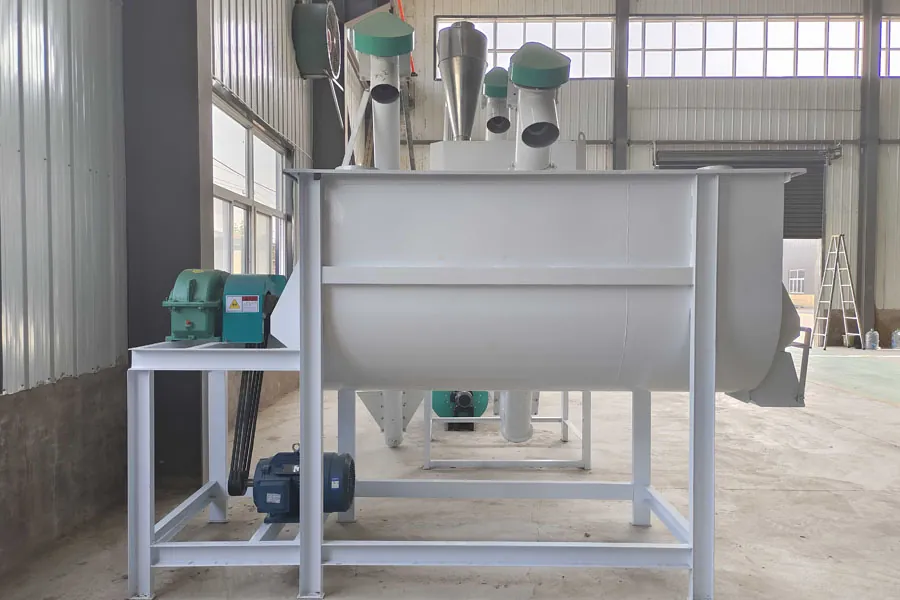
Which materials need one, and what to add
The same materials as the 24-material guide, sorted by what holds them together. Two need a binder as a matter of course. The other ten need one only when something upstream is wrong.
| Material | What binds it | Binder | What to add |
|---|---|---|---|
| Pine or hardwood sawdust | Lignin 25–30 % | None | Nothing. 12–15 % moisture and a 1:5–1:7 die |
| Wood shavings and chips, milled | Lignin 25–30 % | None | Nothing, once the wood hammer mill has it below 6 mm |
| Bark | Lignin 20–25 %, ash 3–6 % | Optional | 1–2 % starch when the bark is old and the fibre has gone short |
| Bagasse | Lignin 12–18 %, sugars | None | Nothing — but dry it to 12 % first, or it ferments in the pile |
| Palm fibre (EFB) | Lignin 20–25 % | None | Nothing. Press the water out before the die and it binds on its own |
| Rice husk | Lignin 12–15 %, silica 15–20 % | Starch 2–3 % | 2–3 % cassava starch, on a 1:9–1:12 die cut for the silica |
| Rice straw | Lignin 12–15 % | Optional | 1–2 % starch if the die is short; 14–16 % moisture helps more |
| Wheat straw | Lignin 14–18 % | Optional | 1–2 % starch, or steam at the die before anything else |
| Corn stover | Lignin 12–16 % | Optional | 2 % starch, and grind it finer than straw — the pith does not bind |
| Paper and card | Low lignin, long fibre | Optional | 1–2 % starch once the fibre has been cut short |
| Poultry manure | Fibre already broken down | 2–5 % | 2–5 % starch, or 1–2 % hydrated lime if it also has to be sanitised |
| Spent coffee grounds | Lignin low, oil high | None | Nothing, but the oil holds the die ratio down to 1:5–1:7 |
Two of these twelve need a binder as a matter of course: rice husk and poultry manure. The rest bind on their own lignin, and where a binder is listed as optional it is because the material sits at the bottom of its lignin range rather than because the material needs one. A straw pellet that crumbles is usually a straw pellet at 10 % moisture, not a straw pellet without starch.
Four columns will not fit a phone, and the one that says what to add is the last one. Swipe the table sideways for it, or read the binder column alone, which is the short answer.
Read the third column and the pattern is the ash, not the lignin. Rice husk is the only material on the list with silica at 15–20 %, and it is also the only one that needs starch as a matter of course — the silica does not soften, so the pellet has less lignin-and-fibre contact to weld with and the die has to be longer to compensate. Poultry manure is the other, and its problem is the opposite: the ferment has already done to the fibre what the die is supposed to do.
The one that surprises people is bagasse. It reads as a waste material with 12–18 % lignin, and it binds with nothing added — provided it reaches the die at 12 % moisture. Most bagasse that will not pellet is bagasse at 50 % that has been dried unevenly, so the outside of the particle is brittle and the inside is still soft. That is a biomass sawdust dryer problem, not a binder problem.
What 2 % means in kilograms an hour
A dose is a percentage of the material going in, so it scales with output capacity and not with the size of the bag. This is the table to take to whoever sells you the starch.
| Dose | 1,000 kg/h | 2,000 kg/h | 5,000 kg/h |
|---|---|---|---|
| 1 % | 10 kg/h | 20 kg/h | 50 kg/h |
| 2 % | 20 kg/h | 40 kg/h | 100 kg/h |
| 3 % | 30 kg/h | 60 kg/h | 150 kg/h |
| 5 % | 50 kg/h | 100 kg/h | 250 kg/h |
Kilograms of binder an hour at rated output capacity. A 2 % dose on a 1,000 kg/h production line is 20 kg an hour, which is 80 t a year at 4,000 hours — enough that the price is worth negotiating before the flat die pellet mill is ordered, and enough that a 30 % difference in the quote is a real number rather than a rounding error.
The figure that decides whether a binder is viable is not the dose, it is how much of it the site gets through. Two per cent sounds like nothing until it is 80 t a year on a single 1,000 kg/h production line, and at 400 a tonne that is 32,000 a year for the life of the site. Which is why the honest comparison is always against the alternative: a longer die costs a few hundred once, and a biomass sawdust dryer costs capital and fuel but no consumable at all.
The second thing is that a dose has to be weighed, and weighing 20 kg an hour into a stream of material is a feeder, not a shovel. On a small site that is a second-hand screw feeder over the feed mixer; on a large one it is a loss-in-weight unit that costs more than the starch. Budget for the feeder with the binder, because a dose that swings between 1 % and 4 % makes a pellet that swings with it.
Put your own lignin and your own price in
Six fields and no currency. The lignin figure decides whether you need a binder at all; the other five decide what it costs if you do.
At 18 % lignin the material is at the bottom of the straw range: it will usually bind on a 1:8–1:10 die at 14–16 % moisture, and a 2 % dose is what you add if it does not. That is 20 kg a tonne, 8.00 a tonne of pellets, and 80 t of binder a year on a 1,000 kg/h production line at 4,000 hours.
The lignin figures are dry-basis averages: 25–30 % for softwood and hardwood, 14–18 % for wheat and rice straw, 20–25 % for palm fibre, and close to nothing left in poultry manure after the ferment. A dose is a percentage by weight of dry material, which is how a feed mixer is set — and the cost a tonne does not move with output capacity, only the kilograms an hour do.
The number to watch is the third one, the cost a tonne. Eight a tonne sounds small against a pellet that sells for 300, and it is 2.7 % of the price — which is more than the electricity on a well-run site and about a third of the labour. That is why the cost per tonne page keeps a binder in its own line rather than folding it into consumables, and why the figure belongs in the payback calculation as a cost that never stops.
If the lignin figure comes back under 15 %, try the two cheaper routes before the binder. A die one ratio longer costs a few hundred and is replaced anyway; material taken from 9 % to 13 % moisture costs water. Both of them are one-off or near-free, and both of them fix the same problem a binder only papers over. The compression ratio chart has the die to try first for each material.
From a crumbly pellet to a priced dose
In this order. The first step costs a bag of material and settles the other three.
Run it with nothing added
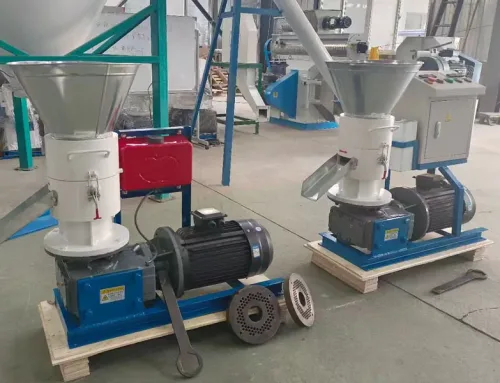
20 kg on a 7.5 kW flat die pellet mill, three die ratios, no binder. Half the materials that arrive with a binder in the quotation pellet perfectly well without one, and the trial is the only way to find out.
Find out what is actually missing
Lignin, water, grind, or die length. A pellet that crumbles wet is short of water; one that crumbles dry and dusty is short of lignin or of pressure. They need different things and only one of them is a binder.
Dose it in the mixer, weighed
Two per cent by weight of dry material, before the die, with a feeder rather than a shovel. A dose that swings between 1 % and 4 % makes a pellet that swings with it, and the swing is what people blame on the binder.
Price it per tonne of pellets
Not per kilogram of binder. 2 % at 400 is 8.00 a tonne, and on a 1,000 kg/h production line at 4,000 hours that is 32,000 a year, every year, for as long as the site runs.
The thing to hold on to is that a binder is a consumable and a die is a part. A die one ratio longer costs a few hundred once and is replaced on a schedule you already have; a binder costs every tonne you make for as long as you make it. On any site running more than a few hundred hours a year the die is the cheaper answer, and the only reason it gets skipped is that a die is ordered from a supplier who takes three weeks while a bag of starch is available on Monday.
The second thing is that the dose is the only part of this that has to be right. A pellet with 1 % starch where it needed 3 % is a pellet that fails in the bag a week later, and the failure looks like a moisture problem or a die problem rather than a dosing problem. Weigh the dose, log it, and change one thing at a time — the troubleshooting page assumes you can tell which variable you moved.
Making a weak material hold, cheapest first
In order of what they cost over the life of the site, not what they cost to try. Most sites start at the bottom of this list and work up.
-
Water and heat
1–3 points of moisture at the mixer, or steam at the die. Water softens the lignin already in the material, so this is not adding a binder — it is making the one you have work. Free apart from the fuel, and the first thing to try on anything reading under 10 %.
-
A longer die
1:9–1:12 instead of 1:6, which is more pressure and more dwell time in the hole. It costs a die, once, and it is what rice husk and straw are run on. The limit is the motor: a longer die on the same flat die pellet mill means more kW a tonne, and past a point the motor is the constraint rather than the die.
-
A binder
Starch, lignosulphonate, lime or clay, dosed and weighed. The only one of the three that works on material with no lignin left at all — poultry manure after fermenting, or a material that has been over-dried and lost the plasticity of its fibre. It also costs every tonne, for as long as the site runs.
The order matters because the three are not interchangeable in cost. Water is near-free and fixes the majority of crumbly pellets; a die is a one-off and fixes most of the rest; a binder is a permanent cost per tonne and is the only answer for material with no lignin in it. A site that buys a binder first usually ends up buying all three.
What buyers ask about binders
Eight questions, answered the way we answer them on the phone.
Do wood pellets need a binder?
No. Wood carries 25–30 % lignin, which softens at 140–180 °C under the die and sets as the pellet cools. A wood pellet with starch in it is a wood pellet somebody added starch to, not a better one.
What is the cheapest binder for pellets?
Water. One to three points of moisture at the mixer, or steam at the die, softens the lignin already in the material and costs nothing but the fuel to make the steam. It is also the first thing to check, because material at 9 % will not bind whatever else you add.
How much starch do I add to rice husk pellets?
2–3 % by weight of the material going in. Rice husk is the one common material that needs a binder as a matter of course, because it has the lignin of straw and 15–20 % silica, and the silica does not soften. On a 1,000 kg/h production line that is 20–30 kg an hour.
Can I use molasses in wood pellets?
No. Molasses is for feed pellets, where it pays for itself in palatability and in fines. In a biomass pellet it is hygroscopic — the pellet takes water out of the air, sweats in the bag and grows mould, and it raises the ash and the sulphur at the same time.
Does a binder make a pellet harder?
It makes it hold together, which is not the same thing. Hardness comes from density, and density comes from the die ratio and the moisture. A binder on material pressed at 1:5 gives you a soft pellet that does not crumble; a longer die gives you a hard one.
Will a binder fix crumbly pellets?
Only if the lignin is the reason they crumble. Of the twelve causes on the troubleshooting page, a binder addresses about four — the rest are moisture, grind, die ratio and cooling, and none of those improve with starch in the mixer.
Does bentonite work in wood pellets?
It holds a pellet together and it puts ash inside it. An ENplus A1 certificate stops at 0.7 % ash, and a 3 % bentonite dose will take a clean wood pellet past that on its own, so it is used on feed pellets and on manure rather than on certified biomass.
What is lignin and why does it bind?
Lignin is the polymer that stiffens a plant cell wall — around 25–30 % of dry wood, 14–18 % of straw. It is thermoplastic: at 140–180 °C, under the pressure of the die, it softens and flows around the particles, then sets as the pellet cools. That is the whole of pellet binding, and everything else on this page is a substitute for it.
Send 20 kg and we will tell you if it needs anything
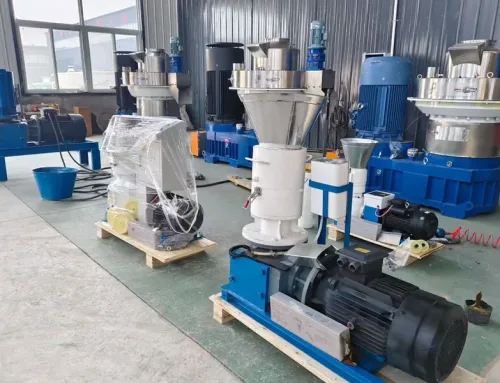
In a sealed bag, with a note of where it came from and when. We run it on a 7.5 kW flat die pellet mill with three die ratios and nothing added first — if it binds on its own lignin you will see that in the report, and if it does not we will tell you which of the three routes is the cheap one for your material.
What happens after you send it
We reply with the die ratio that holds at your lignin, the dose if one is needed, the kilograms an hour it works out to at your output capacity, and the cost a tonne at the price you are paying. If your material binds with nothing added, we say so and quote the flat die pellet mill on its own.
Your details are not shared. One follow-up, no mailing list.