Alfalfa Pellets: Protein, Fibre and Ashthe bag is a feed analysis, and every number in it can be lost at the die plate
A forage pellet is the one product on this site that is judged by an animal rather than by a stove or a spreader. That changes what the die plate is for: not density, not porosity, but a pellet hard enough to travel and cool enough that the protein in it is still protein. This page is the analysis, the six forages that go into the bag, and the three ways a good windrow turns into a bad pellet.
- Cut at 10 % bloom — a week late costs two points of protein
- 3–4 mm grind, and no finer, or the fibre stops working
- Under 70 °C at the die plate, or the protein binds to the fibre
- Ash under 10 % — above 12 % the bag is carrying soil
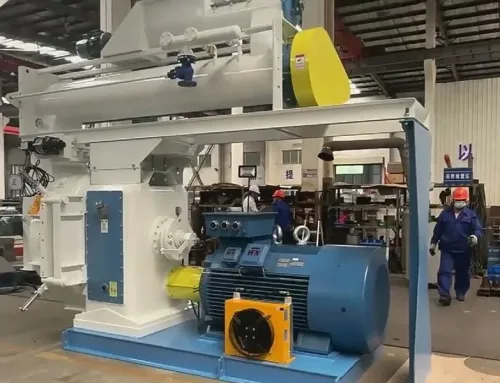
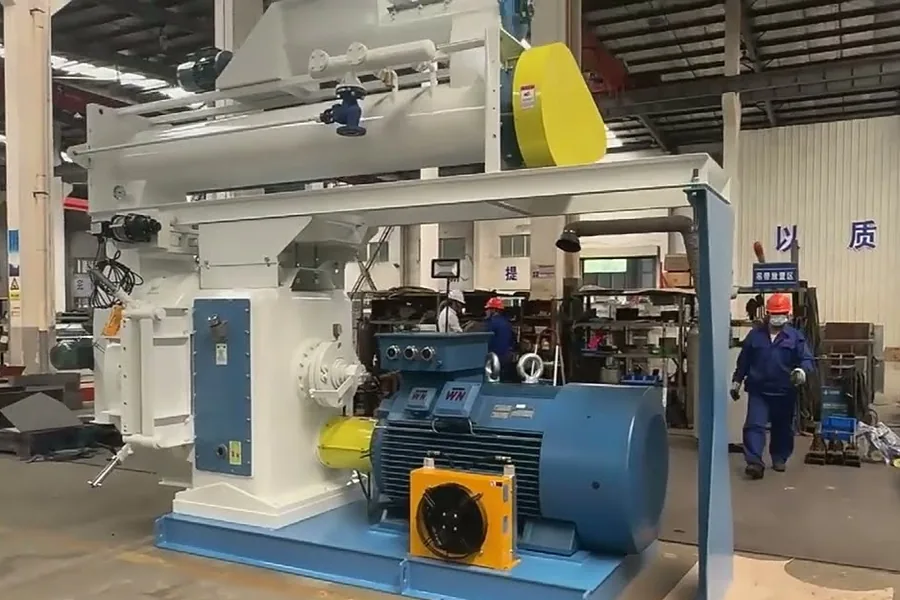
Alfalfa, grass hay, clover and straw all press · Protein, ash and die plate reported with the model · Flat die pellet mill to 800 kg/h, vertical ring die wood pellet mill above
The short answer
A forage pellet and a fuel pellet can come off the same die plate and go into the same kind of bag. One number explains why they are different products: what the buyer does with the ash.
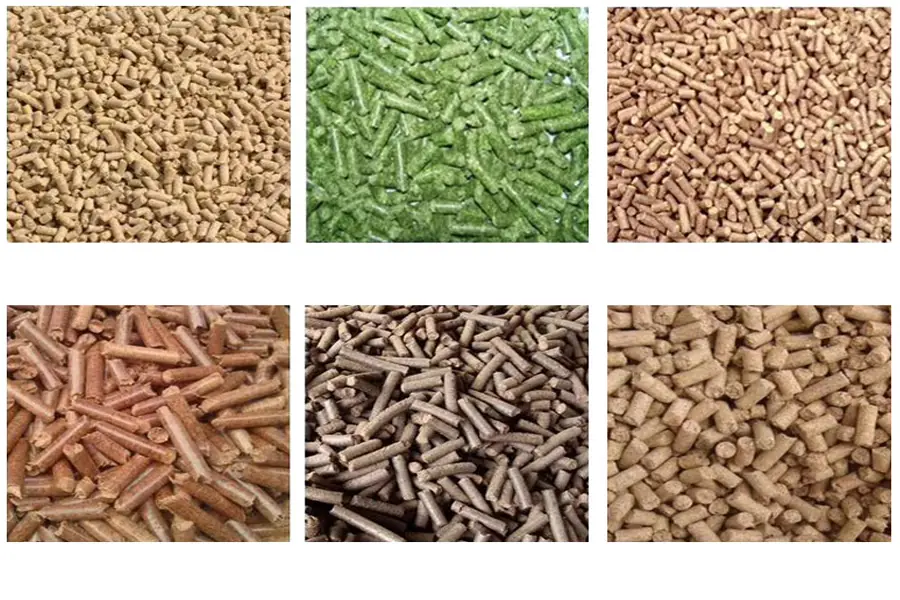
An alfalfa pellet is ground alfalfa, pressed on a flat die pellet mill at 12 to 15 % moisture on a 1:6 to 1:8 die plate, cooled and bagged under 12 %. Six to eight millimetres across, 10 to 20 mm long, 95 % durable, crude protein 15 to 18 % on alfalfa and 8 to 12 % on grass, and ash under 10 %. Those numbers are a feed analysis rather than a fuel certificate, and the difference matters because of one reaction. Forage carries sugar and protein side by side; heat drives them together, and the result is a compound the laboratory still counts as crude protein but the animal cannot digest. So a pellet pressed at fuel settings can read 17 % protein on the bag and deliver 14 % to the horse, and nothing on the label shows it. That is the inversion on this page: on a fuel pellet the die plate’s heat is the tool, and on this product it is the thing that quietly spends the customer’s money. The second difference is ash. A fuel buyer tolerates almost none of it, because ash is what is left after the heat. A forage buyer tolerates up to about 10 %, because some mineral is normal — but every point above that is soil, and soil is a harvesting fault that no feed hammer mill can grind out.
The protein and fibre ranges are published feed-table figures for each crop and they move with the variety, the cut and the season — a laboratory analysis of your own windrow is worth more than any table, and it is the document the bag copy should be written from. The moisture bands, the 1:6 to 1:8 die plate and the 200–350 hour die plate life are ours and they are what we press to. The temperature ceiling is neither: it comes from the chemistry, and it is the reason this product is built to a different brief from a fuel pellet. A 20 kg sample of your forage settles the grind, the binder question and the moisture band better than any of it.
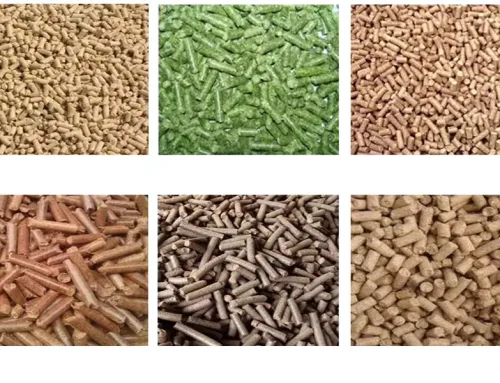
Six crops that go into a forage pellet, and what each one brings to the bag
All six press on the same frame. What separates them is the protein and fibre they arrive with, how late they were cut and how much soil came in with them — and those three decide the price of the bag rather than the speed of the pellet mill.
| Crop | Protein and fibre | What it needs | Whether to make it |
|---|---|---|---|
| Alfalfa the premium bag |
15–18 % crude protein, and 17–20 % on a first cut taken at 10 % bloom. ADF 28–35 %, NDF 40–50 % | A 3–4 mm grind and a 1:6 to 1:8 die plate. Binds on its own protein, so no binder is needed — and the die plate has to stay under 70 °C or that protein is bound to the fibre instead | The product to build a bag around. It carries the highest price per tonne of the six and it is the one a dairy or a horse owner asks for by name |
| Timothy and orchard grass the horse bag |
8–12 % crude protein, ADF 30–38 %, NDF 50–60 %. Long fibre, low sugar, and the pellet a horse owner recognises | A 3–4 mm grind and the same 1:6 to 1:8 plate. Grass carries silica in the leaf, so the die plate wears faster than it does on alfalfa | The volume bag in the horse market and the cheapest to grow. It sells on cleanliness rather than on protein, which makes the ash figure the whole argument |
| Meadow hay whatever the field gave |
9–13 % crude protein and a fibre figure that moves with the season. No two loads analyse the same | A 3–4 mm grind, a 1:6 to 1:8 die plate, and an analysis on every lot rather than on the first one | Possible, and only with a laboratory relationship. A mixed meadow is a variable product, so the analysis is the product and the bag copy has to be written from it every time |
| Red clover the one to blend |
14–17 % crude protein, and a fibre that is finer and dustier than alfalfa’s | A 3–4 mm grind, the top of the moisture band, and 20–30 % in a blend rather than straight. Clover dust is the complaint | Worth it as a blend and rarely as a straight bag. It brings protein up and durability down, and the dust is what a customer notices first |
| Cereal straw a filler, not a feed |
3–5 % crude protein. It is fibre and almost nothing else, which is exactly why it is bought | A 1:8 to 1:10 die plate, because there is no protein to bind it, and 3–5 % molasses or a lignin binder. The grind still has to be 3–4 mm | Make it as a mixing fibre or a bedding pellet, and price it as fibre. A bag that implies nutrition from straw is a complaint waiting to happen |
| Maize stover the cheap fibre |
4–6 % crude protein and a high ash figure if the field was worked wet | A 1:6 to 1:8 die plate and a harder look at the ash: stover picks up soil at the base of the stalk more than any other crop here | Make it where the stover is already on the farm. Check the ash before the bag copy, because stover is where a 14 % ash figure comes from |
The row that is missing from this table is the one that decides the protein figure before the pellet mill is switched on: when the crop was cut. Alfalfa loses roughly two points of crude protein between 10 % bloom and full flower, and a grass hay cut a fortnight late loses the same again. Both losses are invisible in a pellet, both are measurable in a laboratory, and neither can be recovered by anything downstream. The second missing row is the weather: a windrow that took rain leaches sugar, gains mould and loses the dry matter that the price was based on.
Four columns will not fit a phone. Swipe the table sideways for the analysis and the verdict.
The protein column is the one the buyer reads and the one the seller has least control over by the time the forage reaches the flat die pellet mill. It is set by the cut, the cure and the leaf-to-stem ratio, and a pellet made from stemmy, over-mature alfalfa cannot be rescued by a finer grind or a longer die plate. What the flat die pellet mill controls is how much of that protein survives — which is the temperature question below, and it is worth more than it looks: two points of digestible protein on a tonne is a different price bracket.
The fibre column is the one that decides whether the pellet is any use to a ruminant or a horse. ADF is the fraction that predicts digestibility and NDF is the fraction that predicts intake, and both fall when the crop is cut late and rise when it is cut early. Grinding finer than 3 mm does not change either figure on a laboratory report, but it does change what the animal can do with them — which is why the grind on this product is set by the animal rather than by the die plate.
One frame, two products, and the ten rows that point in opposite directions
Read the first row and the rest follows. A fuel pellet is judged on the heat it releases and a forage pellet on what an animal can digest, and the die plate is asked to do two different jobs.
| Dimension | Forage pellet | Fuel pellet |
|---|---|---|
| What the buyer judges it on | Crude protein, ADF and NDF, then ash and durability. An animal cannot argue with the analysis, which is why it is the whole sale | Megajoules per kilo and ash. Nobody opens the bag to look at the pellet |
| What the die plate is for | A pellet hard enough to survive a bulk bag, a scoop and a feed bucket — and no harder | Density, because every extra kilogram per cubic metre is energy in the same hopper |
| Heat at the die plate | The enemy. Under 70 °C, because sugar and protein bind together above it and the protein stops being digestible | The tool. A die plate running at 80–90 °C is doing its job |
| Ash | Under 10 %, and every point above that is soil. A fuel-level ash figure would be a remarkable feed | Under 0.7 % for ENplus A1, and ash is the one figure that has to be low |
| The grind | 3–4 mm, and deliberately not finer, because the fibre has to keep working in the gut | 4–6 mm, and finer is generally better because it makes a denser pellet |
| Moisture into the die plate | 12–15 %, and the top of that band is easier on the protein | 12–15 %, and the bottom of that band is better for the energy figure |
| Moisture in the bag | Under 12 %. Above it the bag moulds, and a one-tonne bulk bag is worse than a sack | 8–10 %, and the buyer accepts the top of that band if the price is right |
| Die plate and its life | 1:6 to 1:8, and 200–350 hours, because grass carries silica in the leaf | 1:6 to 1:8 on wood, and 500–800 hours on softwood because there is no silica in it |
| The bag | 20–25 kg printed for a horse owner, or a one-tonne bulk bag for a dairy. 25 kg is 40 bags to the tonne | 15 kg printed retail, or a bulk blower load into a silo |
| The mistake | Pressing at fuel temperature because the pellet comes out harder and glossier. It is a better-looking pellet with two points less digestible protein in it | Pressing wet material and blaming the die plate for the fines |
The heat row is the one that separates the two builds, and it is the only row on this page that cannot be seen in a bag. A forage pellet pressed at fuel settings comes off the die plate at 80 to 90 °C, which is exactly right for wood and exactly wrong here. At that temperature the reducing sugars in the forage react with the amino groups of the protein — the Maillard reaction — and the result is counted by the laboratory as crude protein while being unavailable to the animal. The number on the bag does not move. What moves is the acid detergent insoluble nitrogen, and that is the figure a dairy buyer’s nutritionist will ask for.
Three columns will not fit a phone. Swipe the table sideways for the fuel pellet column.
The ash row is the one that is a harvesting problem wearing a processing costume. A forage pellet at 11 % ash is not a mill fault: it is soil from raking, from bale bottoms, from a field worked wet, or from a loader bucket that scraped the yard. No screen removes it and no die plate hides it, and it is the cheapest thing on this page to fix — cut higher, rake less, and keep the bales off the ground.
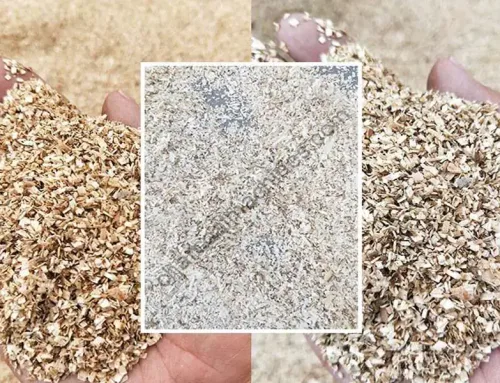
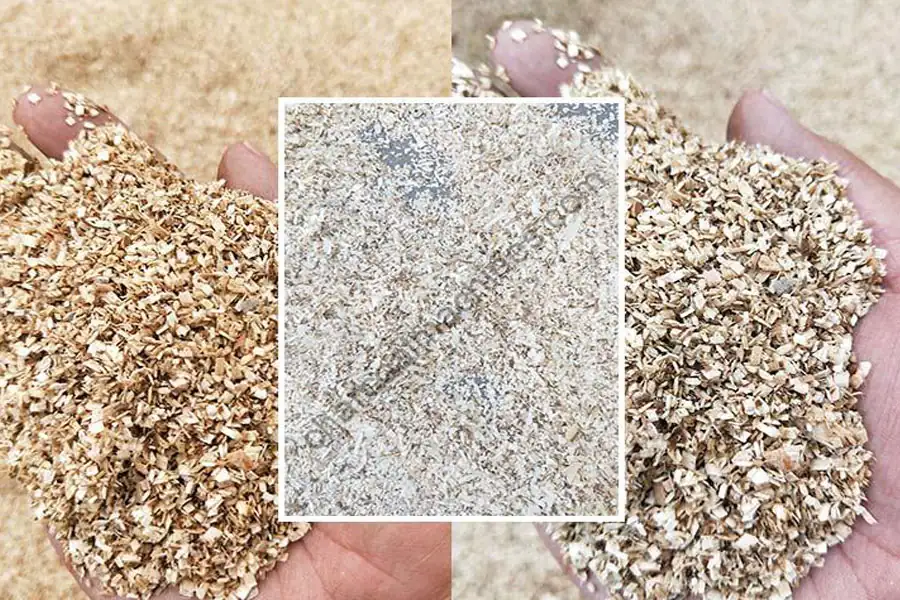
The grind row is the one where a feed background and a fuel background give opposite advice. On wood the grind is as fine as the feed hammer mill will go, because fine particles make a dense pellet. On forage, finer than 3 mm makes a pellet that is harder, glossier and worse: the fibre stops being effective in the rumen and a horse can bolt it. The feedstock page covers which of the 24 materials press at all; this one is about the ones that press too well.
Six numbers on a forage bag, and how to check each one yourself
Two of these need a laboratory and four do not. The two that need one are the two the buyer is actually paying for, which is why the analysis certificate is the sales document on this product.
| What is measured | Target | Common failure | How to check it |
|---|---|---|---|
| Crude protein | 15–18 % on alfalfa, 8–12 % on grass | A bag written from the seed label rather than from an analysis of the bale | Laboratory, by Kjeldahl. There is no field test, which is why the certificate is the sale |
| ADF and NDF | ADF 28–35 %, NDF 40–50 % on alfalfa | A late cut, which raises both and lowers the digestibility the buyer is paying for | Laboratory. ADF predicts digestibility, NDF predicts intake, and both are set in the field |
| Ash | Under 10 %, and under 8 % is a clean product | Soil from raking, bale bottoms or a wet field. Above 12 % the load is dirty | Burn 2 g at 550 °C in a muffle furnace and weigh the residue. A laboratory test, and a cheap one |
| Moisture | Under 12 % | 14–16 % out of a pellet cooler that is running too fast, which moulds in a bulk bag | 100 g in an oven at 105 °C for two hours, weighed before and after |
| Durability | 95 % or better | A pellet that arrives as a bag of crumb after a pallet and a lorry | A tumbling test at a laboratory; in the shop, 500 g shaken in a sieve for two minutes and the fines weighed is close enough to see a trend |
| Pellet size | 6–8 mm × 10–20 mm | A die plate worn oval, which gives a long pellet that a horse drops out of its mouth | A set of sieves and a handful through them, weighed at each size |
The ash test is the one to run before the bag copy is written, and it is the cheapest test on this page. Two grams of ground pellet in a muffle furnace at 550 °C leaves the mineral fraction, and everything above about 10 % is soil. A forage that tests at 14 % is not a milling problem: it is a harvest that picked up dirt, and the honest answer is to blend it down or sell it as fibre. The moisture side is on the moisture page.
Four columns will not fit a phone. Swipe the table sideways for the failure and the test.
The protein row is the one that gets written optimistically, and the optimism is usually honest. A producer takes a sample from the best part of the best field, sends it off, and prints the result on every bag for a year. The bag then carries a figure that the second cut cannot meet and the customer can test. The discipline is boring and it is the whole business: sample per lot, print per lot, and keep the certificate with the batch number.
The durability row is the one that a fuel producer has never had to think about, because a fuel pellet goes into a hopper and stays there. A forage pellet goes into a bulk bag, out of it with a scoop, into a bucket, into a feed mixer and across a stable. Every one of those steps makes dust, and dust at the bottom of a bag is what the customer photographs. The cooling and screening page is where the fines figure is worked out.
Six ways a good windrow turns into a bag of dust or mould
Three of these happen before the forage reaches the yard, two happen at the die plate and one happens at the bag. Only two of the six can be fixed by the flat die pellet mill, and one of those is fixed by running cooler.
| What it is | What goes wrong | What to do about it |
|---|---|---|
| Cutting late | Two points of crude protein go between 10 % bloom and full flower, and the fibre rises as the protein falls. The pellet looks the same | Cut alfalfa at 10 % bloom and grass at boot stage, and put the date on the bale. It is the cheapest quality decision on the page and the only one that cannot be bought back later |
| Rain on the windrow | Sugar leaches out, dry matter drops, mould grows and the mycotoxin risk arrives. A rained-on crop pellets perfectly and sells badly | Cure to 12–15 % before baling rather than chasing the weather, and test a rained-on lot before it goes into the feed hammer mill rather than after it is bagged |
| Soil in the bale | Ash climbs past 12 % and the load reads as dirty. Soil also grinds the die plate from the inside | Cut higher, rake less, keep bales off the ground, and sweep the yard. An ash test on every lot is what catches it before the customer does |
| Too hot at the die plate | Sugar and protein bind into a compound that tests as crude protein and passes through the animal. The bag figure does not move and the feed value does | Under 70 °C at the die plate, which means a shorter plate and the top of the moisture band rather than a slower motor. Probe the die plate rather than judging by hand |
| Too fine a grind | A harder, glossier pellet that a horse can bolt, and a fibre that no longer works in the rumen. The durability figure goes up while the product gets worse | 3–4 mm on the screen and no finer. Check the screen for holes on a schedule, because a torn screen gives a mixed grind that reads as nothing in particular |
| Bagging wet | Above 12 % the bag moulds in a warehouse, and a one-tonne bulk bag moulds through the whole tonne rather than the top layer | Cool to under 35 °C, bag under 12 %, and measure at the pellet packing machine rather than at the pellet cooler outlet |
The first three rows are decided before anything is milled, and they are where most of the money on this product is made or lost. A pellet made from a late-cut, rained-on, dirty windrow is a perfectly good-looking pellet that tests badly, and the flat die pellet mill has no way to improve it. The fourth row is the one the flat die pellet mill does control and the one that is invisible: pressing hotter gives a harder pellet and a worse feed, and the bag copy will not show it. The last two rows are ordinary discipline, which is why they are the ones that slip.
Three columns will not fit a phone. Swipe the table sideways for the remedy.
The temperature row deserves the blunt version, because it is the only one on this page where doing the obvious thing costs money. A hotter die plate gives a denser, harder, glossier pellet with better durability — every visible measure improves. What falls is the acid detergent insoluble nitrogen, which is the laboratory’s way of saying that some of the protein has been cooked onto the fibre. A dairy nutritionist reads that figure before the crude protein figure, so the pellet that looks best in the hand is the one that gets rejected at the feed desk.
The grind row is the other place where a fuel habit hurts. Every other product on this site wants a finer grind than the last one, because fines make density and density makes a better pellet. Forage is the exception: the fibre is the product, and grinding it to flour removes the thing the animal needs. The compression ratio chart covers the die plate side of the same trade-off.
Your output, your bag, and the protein the crop brought
Four fields. The output sets the pellet mill, the bag sets the bagging scale, and the crop sets the protein range and the die plate — which on this product is chosen for the temperature it runs at rather than for the density it reaches.
At 20 t a day over 10 hours the pellet mill has to make 2,000 kg/h of forage pellets: 80 bags of 25 kg an hour, 40 bags to the tonne. On alfalfa, cut at 10 % bloom, that is HML-600, rated 1.5–2.0 t/h, at 15–18 % crude protein and a 1:6 to 1:8 die plate held under 70 °C. Alfalfa binds on its own protein, so the plate only has to hold it together — and keeping the die plate under 70 °C is what keeps that protein digestible.
The output is finished bagged pellets, not hay in. The model is chosen on the rating for that frame, and on this product the die plate is chosen for the temperature it runs at rather than for the density it reaches — a hotter plate gives a harder pellet and a worse feed. The protein figure in the last box is set by the crop and the cut, not by the pellet mill.
The bag count is the number to take to a packaging supplier, because it is bags an hour that sets the bagging scale rather than t an hour. A 25 kg bag is 40 to the tonne, so retail sack filling runs at four times the bagging rate of the same output going into a one-tonne bulk bag — which is why a producer selling both runs two scales rather than one fast one.
The protein figure is the one this page exists for. It is set by the crop and by the cut, not by the motor, so the tool reports the range for the forage you picked rather than one number for all six. The die plate that goes with it is the part the flat die pellet mill controls, and on alfalfa and grass it is the same plate for a different reason.
Setting up a forage pellet line, in the order it has to happen
The first step is in the field and the last three are in the shed. Getting the order wrong means buying a rotary drum dryer to fix a crop that was cut a fortnight late.
Cut and cure to a band, and write the date down
Alfalfa at 10 % bloom, grass at boot stage, cured to 12–15 % before baling. Every point of protein on the bag is decided here, and the date on the bale is the only record that tells you which load made which analysis.
Grind to 3–4 mm and no finer
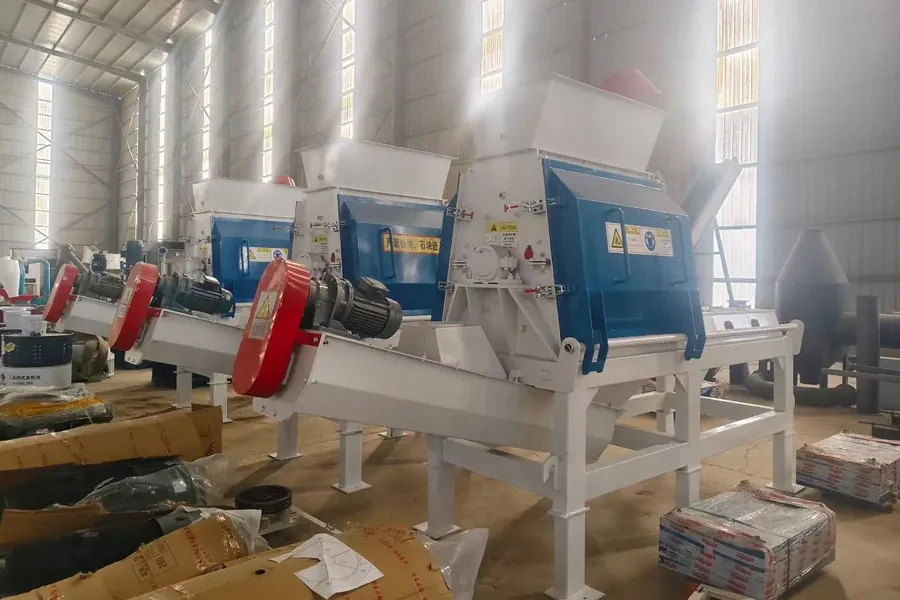
A screen in the feed hammer mill at 3–4 mm. Finer gives a harder pellet and a worse feed, and the durability figure will not warn you — it goes up while the product goes down.
Press at 1:6 to 1:8 with the die plate under 70 °C
The same ratio a fuel pellet uses, for a different reason: durability rather than density. Keep the moisture at the top of the 12–15 % band, which is the cheapest way to hold the temperature down, and probe the die plate rather than judging it by hand.
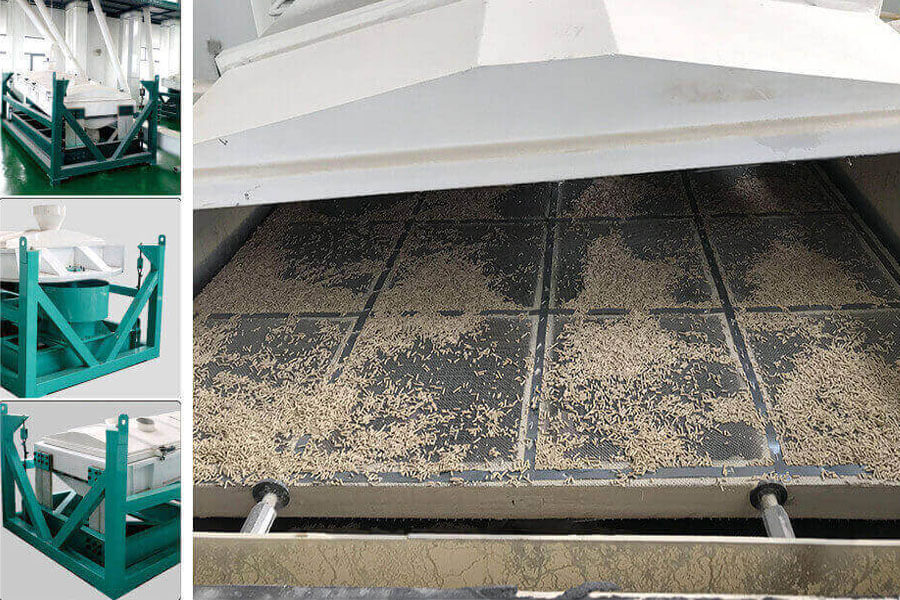
Then cool, screen at 2 mm and bag under 12 %
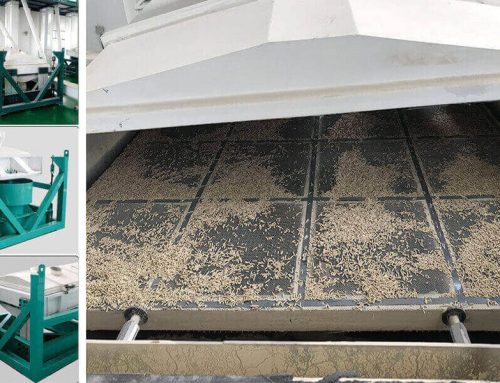
Cool to under 35 °C, take the fines out at 2 mm with the oversize back to the die plate, and measure the moisture at the bag. This is the stage that decides whether the pallet arrives as feed or as a mouldy block.
The first step is the one nobody can invoice for and the one that decides the price of the bag. A producer who cuts on time and cures properly sells a 17 % pellet; the neighbour who cut a fortnight later sells a 15 % pellet from an identical field, and no amount of die plate work closes the gap. The date on the bale matters because the analysis has to follow the batch: without it, a good load and a poor load get averaged into one number on one bag.
The third step is where a fuel background costs money twice — once in the pellet and once in the die plate. Running the plate at 85 °C gives a harder pellet with better durability and a worse feed, and it wears the plate faster because grass carries silica. The honest target is a pellet that is just durable enough at a temperature the protein survives, and that combination is a shorter plate and a wetter material rather than a faster run.
Three sizes of forage line, and what each one commits to
Almost every forage operation is one of these three. They differ in whether there is a drying step, and in whether the bag is a 25 kg sack for a stable or a one-tonne bag for a dairy.
-
300–600 kg/h, a farm pelleting its own crop
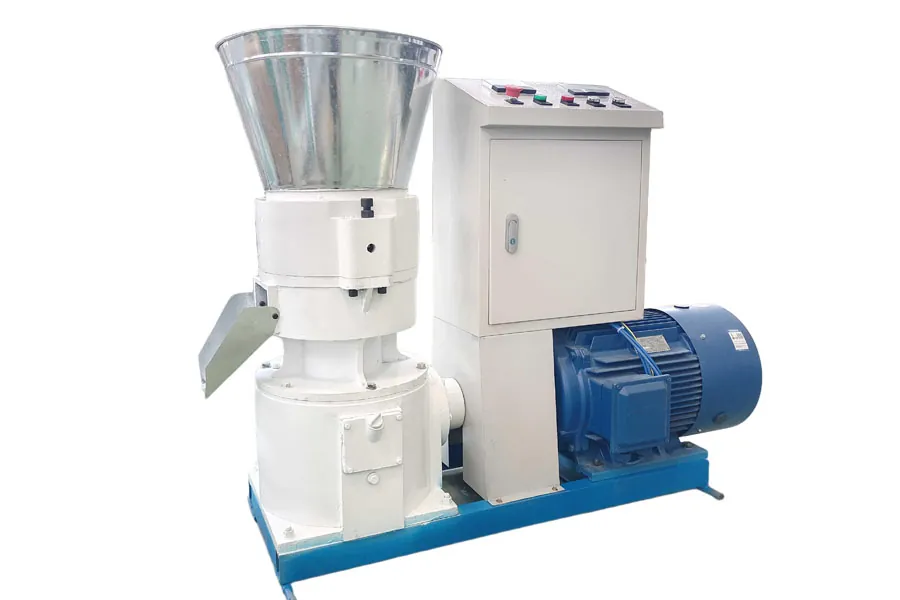
A grass pellet mill — the 300B at 18.5 kW gives 600–800 kg/h on forage at 12–15 % moisture — with a feed hammer mill ahead of it and a pellet cooler and screen behind. The crop is the capital cost here, and the product goes out in 25 kg sacks or a bulk bag.
-
1 t/h, bagged for a stable or a feed merchant
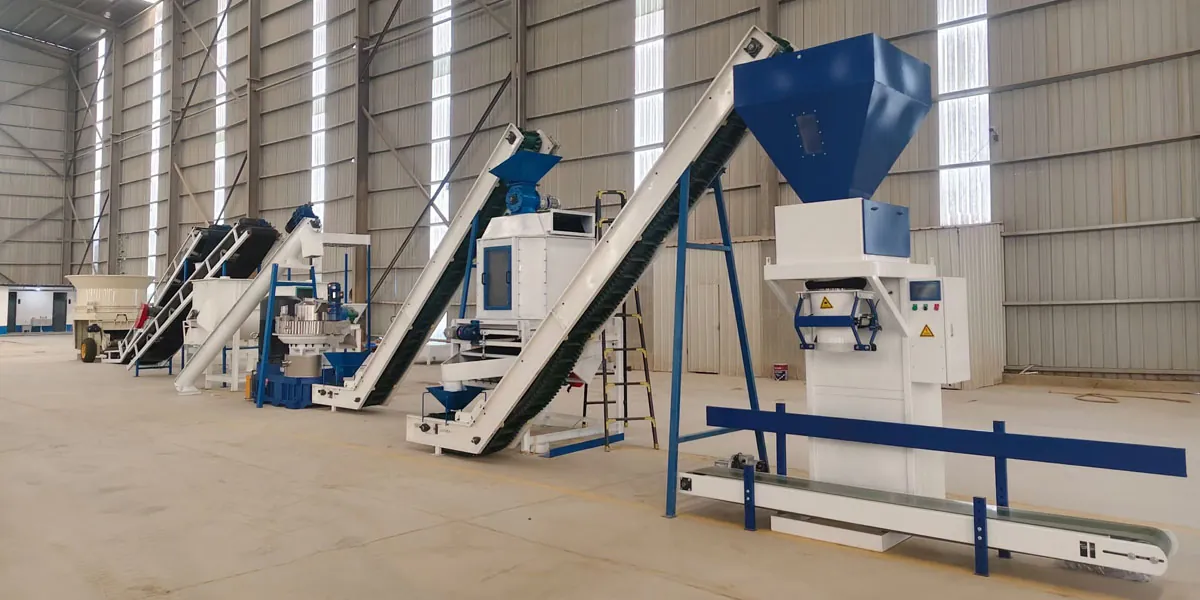
One PM-D450B pair or one HML-560, a rotary drum dryer sized on the water, a separate 2 mm deck and a pellet packing machine with a weighing head. This is where the drying stops being optional and the analysis starts being printed on the bag.
-
1.5 t/h and up, or a crop that arrives fresh
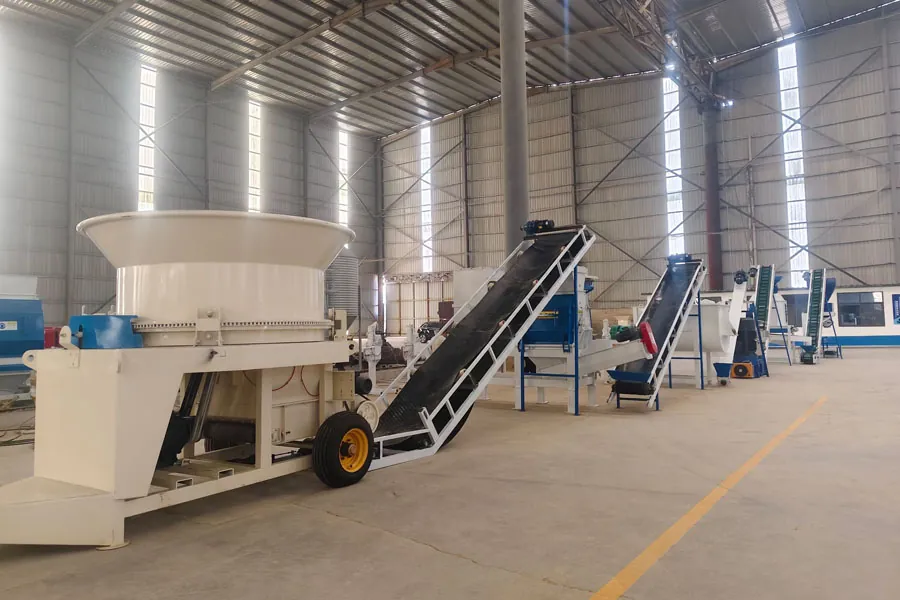
A vertical ring die wood pellet mill — HML-600 at 1.5–2.0 t/h — with a bale shredder, a 75 kW hammer mill on a 3–4 mm screen, a rotary drum dryer, a counterflow cooler and two screen decks. This is the build on the grass and alfalfa pellet production line, and it is the point where the analysis becomes a brand promise.
The three routes are separated by the rotary drum dryer and by whether the crop arrives as hay or as fresh grass, which is a different split from every other application on this site. A forage line without a drying step only works where the hay comes in at the right moisture, and hay does not come in at the right moisture twice in a season. The buying guide covers the choice of pellet mill; this page is about the crop and the bag.
What buyers ask about alfalfa and grass pellets
Eight questions, answered the way we answer them on the phone.
What are alfalfa pellets made of?
Ground alfalfa hay and nothing else, unless the bag says otherwise. Cut at about 10 % bloom, cured to 12–15 % moisture, ground to 3–4 mm and pressed at 1:6 to 1:8. The protein figure comes from the cut and the leaf-to-stem ratio rather than from anything added at the flat die pellet mill.
Can I make alfalfa pellets on a flat die pellet mill?
Yes, and it is the usual choice below about 1 t/h. Alfalfa binds on its own protein, so the die plate only has to hold it together: a 1:6 to 1:8 plate, 12–15 % moisture and a 3–4 mm grind. Above 1 t/h a vertical ring die frame is the better build, which is what the 1.5 t/h production line uses.
Grass pellets or alfalfa pellets — which should I make?
Alfalfa if the market pays for protein and the crop grows; grass if the market is horse hay and the argument is cleanliness rather than analysis. Grass carries silica, so the die plate wears faster, and it tests 8–12 % protein against 15–18 % on alfalfa. The two are often blended rather than chosen.
Why is the protein on the bag not what the animal gets?
Because heat binds protein to fibre. Above about 70 °C at the die plate the sugars in the forage react with the amino groups of the protein, and the laboratory still counts the result as crude protein while the animal cannot digest it. The bag figure does not change; the acid detergent insoluble nitrogen does, and that is what a nutritionist reads.
What moisture should forage pellets be?
12–15 % into the die plate and under 12 % into the bag. The first number is a process setting and the top of that band is easier on the protein; the second is a product specification, and above it the bag moulds. A one-tonne bulk bag moulds through the whole tonne rather than the top layer.
What size should forage pellets be?
6–8 mm across and 10–20 mm long for horses and cattle, 4–6 mm for poultry and rabbits, and 8–10 mm where the bag goes to a cattle feeder. The length matters as much as the diameter: a long pellet from a worn die plate is one a horse drops out of its mouth.
Do forage pellets need a binder?
Alfalfa does not — its own protein binds it. Grass usually does not either at 3–4 mm and the right moisture. Straw does, because there is almost no protein in it: 3–5 % molasses or a lignin binder, and a longer 1:8 to 1:10 die plate. A binder that is not declared is a labelling problem.
Can I sell a forage pellet that fails the analysis as fuel?
Sometimes, and at a fraction of the price. A load that comes in at 14 % ash is a poor feed and an acceptable fuel, so the honest route is to sell it into the fuel market rather than to print an analysis it cannot meet. The two products come off the same frame and the difference is what the buyer does with the ash.
Send 20 kg of your hay and we will analyse it and press it
What the crop is, when it was cut, how it cured and the bag it goes into. That is enough to name the die plate, the grind and the temperature the plate has to run at.
What happens after you send it
We grind it at 3–4 mm, press it on a flat die pellet mill at 1:6 to 1:8 with the die plate held under 70 °C, cool it, screen it at 2 mm and send you the pellet with the temperature it was pressed at. If the honest answer is that the crop was cut too late for the protein the bag would claim, we say so before you buy a die plate.
Your details are not shared. One follow-up, no mailing list.