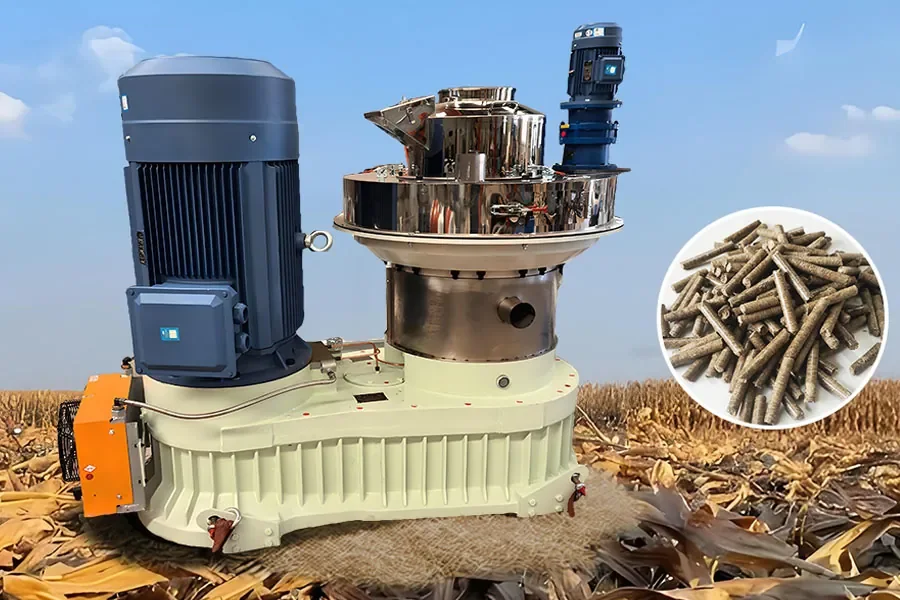
Grass Pellet Mill300B — 600 to 800 kg/h of grass pellets on 18.5 kW
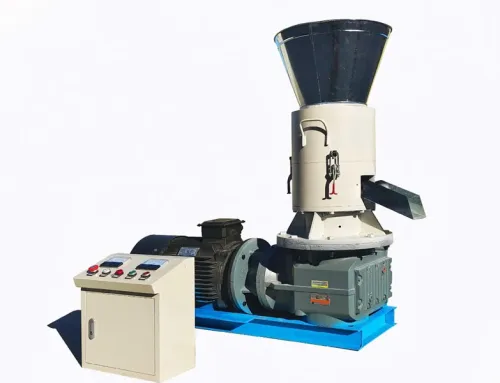
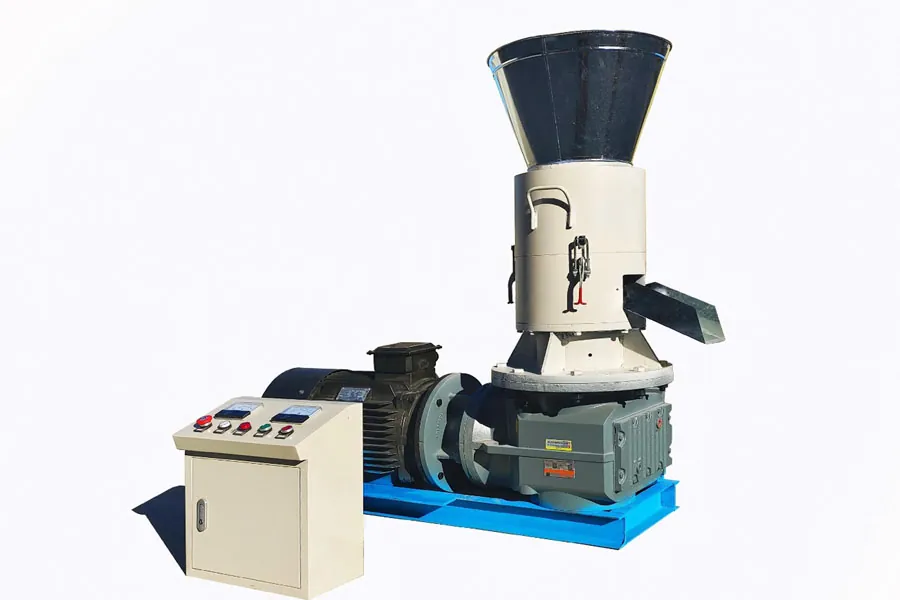
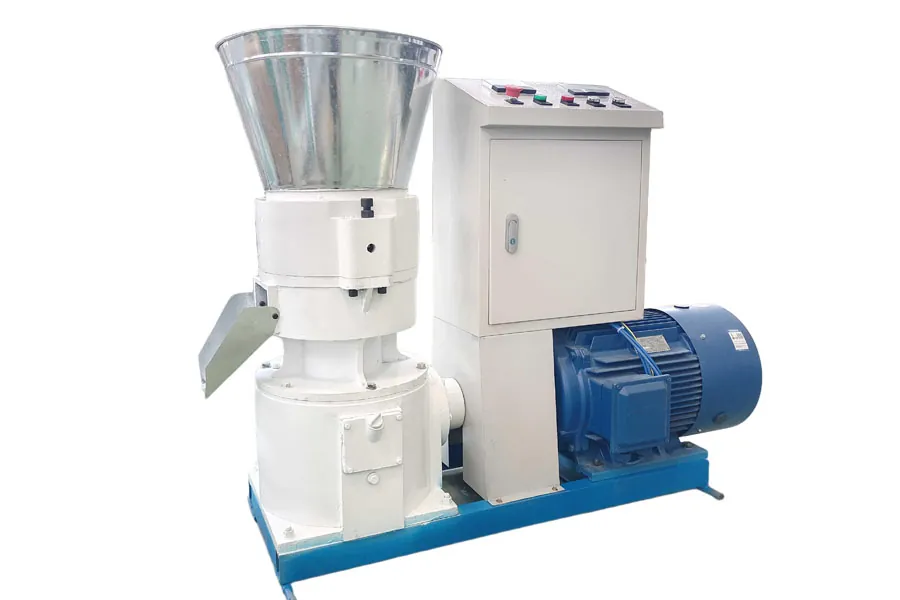
A grass pellet mill presses chopped grass, alfalfa, hay and straw into pellets for feed, bedding or fuel. The 300B is the frame we sell for it: one 18.5 kW motor, a Ø300 mm flat die, 600–800 kg/h of grass pellets and 250–300 kg/h on wood. One operator, one bag at the outlet.
- 600–800 kg/h of grass pellets, 250–300 kg/h on sawdust and wood chips
- Ø300 mm flat die, holes cut to Ø4, 6 or 8 mm for the pellet you sell
- Grass at 12–15 % moisture, chopped shorter than the die hole
- Die, rollers, knife and a spare die clamp ship with the machine
Reply in 12 working hours · Die cut to your material · Delivered to 40+ countries
Grass is bulky, seasonal and dusty — pellets fix all three
A bale of hay is mostly air. Pelletising it compresses the same feed value into a fraction of the volume, which is what makes grass worth moving, storing and selling off the farm.
Loose hay and chopped grass take space, catch fire and lose leaf as they are handled. Pellets are dense, flow through an auger and can be bagged and stacked. A farmer who pellets his own grass can carry a year of feed in a corner of the shed instead of a barn full of bales.
For feed, the pellet also stops sorting. Cattle, horses and rabbits cannot pick the leaf out and leave the stem, so every mouthful is the same ration. For bedding, pellets absorb far more than loose straw per cubic metre and break down into clean litter.
For fuel, grass pellets are a lower-grade pellet than wood — more ash, less energy per tonne — but they are made from a crop you already cut. On a farm with surplus grass and a boiler that will take them, the flat die pellet mill pays for itself on fuel alone.
What decides whether it works is not the press, it is the material in front of it: how wet the grass is, how long the chop is, and which die is in the machine. Those three are the rest of this page.
One frame, two capacities, three die sizes
The same machine is quoted at two capacities because grass and wood do not press the same. Grass at 12–15 % moisture flows through the die; dry sawdust needs more pressure for the same tonne, so the rate drops.
Grass pellet mill, 300B electric, three-phase
| Model | Motor | Grass / feed pellets | Wood pellets | Die diameter | Packing size |
|---|---|---|---|---|---|
| 300B | 18.5 kW | 600–800 kg/h | 250–300 kg/h | Ø300 mm | 1200 × 520 × 1050 mm |
Three-phase 380 V / 50 Hz as standard — tell us before the crate is built if your supply is 415 V, 440 V or 60 Hz. Capacity is quoted on grass at 12–15 % moisture, chopped shorter than the die hole; wetter or longer material runs slower and is the usual reason a machine under-delivers on site. Die holes are cut Ø4, 6 or 8 mm to order, and the knife that sets pellet length is adjustable without tools. Delivery is 7–15 working days; TT with 40 % deposit, balance before delivery; wooden case.
One frame, two capacities, three die sizes
The grass pellet mill is one frame — 300B, 18.5 kW — and the material sets the rate: 600–800 kg/h on grass and feed, 250–300 kg/h once it is wood. The die sets the pellet.
Send the material and the die you need
Tell us what goes in — grass, alfalfa, hay, straw — and the pellet diameter you sell. We reply with the die, the moisture to aim for and a price for the machine.
Reply within one working day. No obligation.
Five steps from a bale to a bag
A flat die press is the simplest pellet machine there is: a die with holes in it, rollers pressing material through those holes, and a knife cutting what comes out. Everything else on the frame exists to feed it evenly.
Chop
Grass goes in shorter than the die hole — 3–5 mm for a Ø6 mm die. Long fibre bridges over the holes and the rollers ride on it instead of pressing it.
Dry to 12–15 %
Grass carries more water than sawdust. Above about 15 % the pellet comes out soft and the die smears; below 12 % it will not bind without a binder.
Feed the die
The hopper drops material into the chamber. A slide gate sets the rate — the die wants a steady trickle, not a shovel every few minutes.
Rollers press
The rollers run round a Ø300 mm flat die and squeeze material into the holes. The pressure comes from the roller gap, which is set with a feeler gauge and checked weekly.
Knife and cool
A knife under the die cuts the extruding pellets to length. They leave warm and soft — spread them or run a cooler before bagging, or they cake in the bag.
The material decides the output, not the motor
Almost every grass pellet mill that disappoints on site was fed material that was too wet, too long, or both. These are the four numbers worth writing on the wall next to the machine.
Material, moisture and preparation for a Ø6 mm die
| Material | Moisture in | Preparation | Note |
|---|---|---|---|
| Grass, alfalfa, hay | 12–15 % | Chop to 3–5 mm | The main job — leaf and stem pellet well |
| Straw, stalk | 12–15 % | Chop to 3–5 mm | Harder fibre; expect 10–20 % less than grass |
| Rice husk, peanut shell | 10–14 % | Already short | Abrasive — die life drops, output is high |
| Sawdust, wood chips | 12–14 % | Under 5 mm | Needs a wood die; 250–300 kg/h on this frame |
| Corn cob, bagasse | 12–15 % | Crush to 5 mm | Good binding, useful for fuel pellets |
Moisture is measured as received, on a meter, not by squeezing a handful. Grass cut in the morning and baled in the afternoon can sit at 20 % for days — spread it, or run it through a dryer, before it goes near the die. Chop length matters as much as moisture: a wood hammer mill or a chaff cutter in front of the press is what turns baled grass into something the die can take.
The die is the specification — order it for the pellet you sell
A flat die is a wear part, and it is cut to order. The hole diameter sets what the pellet is good for; the hole length sets how hard the machine has to press. Get the die wrong and the machine either blocks or makes crumb.
Die holes for grass same frame, three products
| Die hole | What it is for | Pressing | Note |
|---|---|---|---|
| Ø4 mm | Rabbit, poultry, fish feed | Hardest to press | Slowest rate; best pellet quality |
| Ø6 mm | Cattle, horse, goat feed | The default | The die most grass machines leave with |
| Ø8 mm | Bedding and fuel pellets | Easiest to press | Highest rate, lowest density |
One die ships with the machine and a second can be ordered with it — the second die costs a fraction of a second machine, which is why farms that feed rabbits and cattle usually take both a Ø4 and a Ø6. Rollers are a wear part too: the roller gap closes as they wear, and a gap that is too wide is the second most common reason for soft pellets after wet material. Spare rollers and die clamps are kept in stock — see spare parts.
What has to stand in front of the press
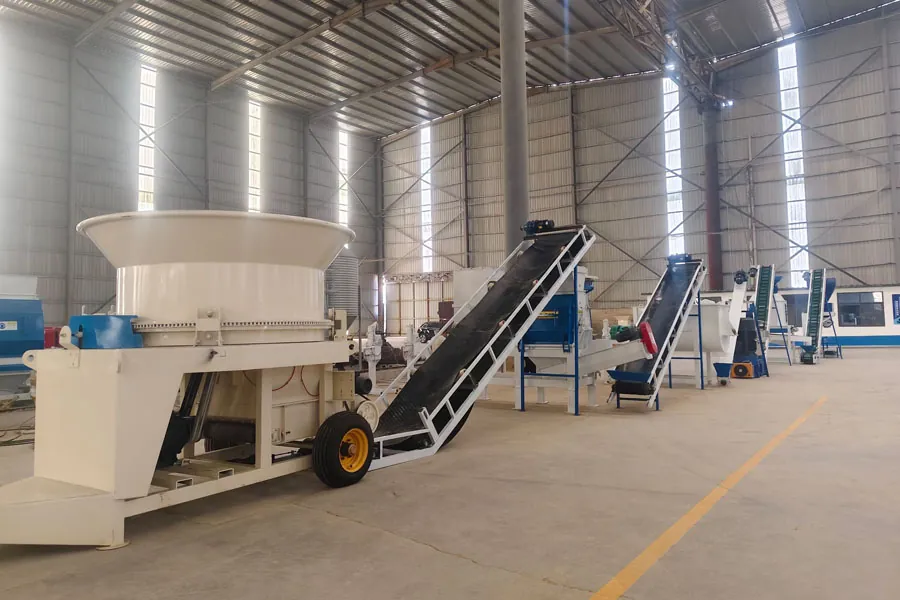
A 300B on its own makes pellets from material that is already chopped and dry. Most buyers need two machines in front of it, and that is the difference between a machine and a plant.
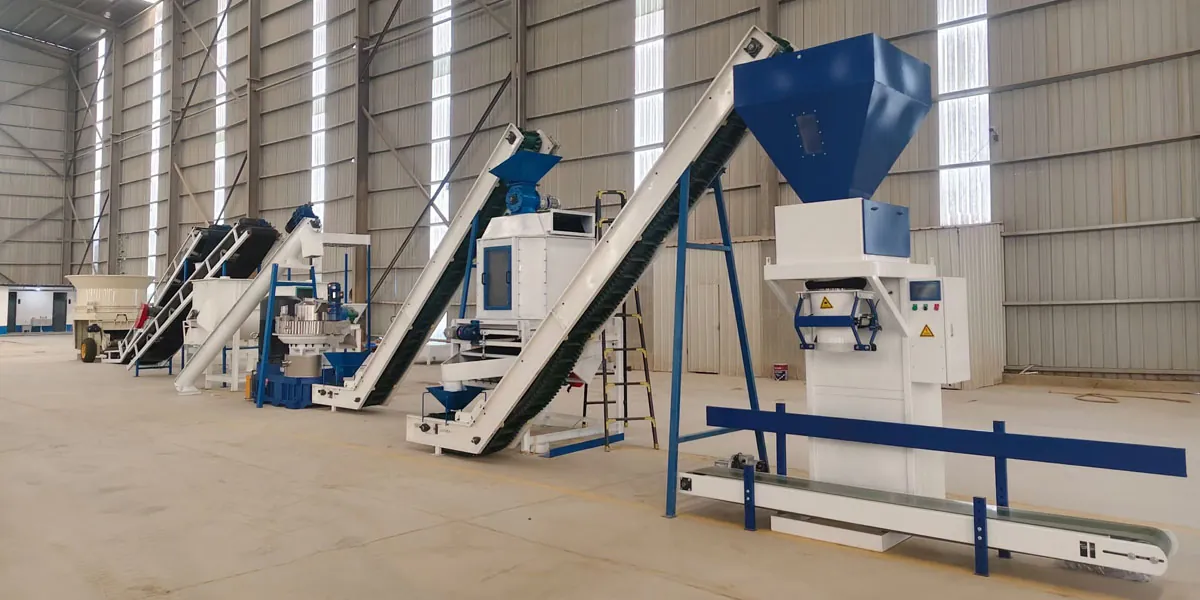
Above 800 kg/h the flat die frame runs out of die diameter and a vertical ring die pellet mill takes over — 90 to 160 kW, 1 to 2.5 t/h. Below that, a 500 kg/h wood pellet plant or a small pellet plant is this machine with the crusher, dryer, cooler and bagging already quoted together. For feed pellets rather than grass, the combined pellet mill and hammer mill puts the crusher and the press on one base plate under one drive.
One wooden case, and the wear parts inside it
The machine is small enough to ship as a single case. What people forget to check when they compare quotes is whether the die, the spare rollers and the knife are in that case or on the next invoice.
- Milling chamber on its base frameRollers fitted, die clamp and knife in place, guard bolted on.
- 18.5 kW motor and starterThree-phase 380 V / 50 Hz as standard; other voltages to order. Belt drive with a guard.
- One flat die, cut to orderØ300 mm, holes Ø4, 6 or 8 mm — the size you name on the order, not a stock die.
- Spare roller set and die clampRollers are a wear part; the set ships with the machine so a worn pair does not stop the week.
- Hopper, chute and knife setting gaugeThe gauge is what keeps pellet length consistent after the knife is re-ground.
- Manual and a packing listRoller gap, belt tension and the die break-in procedure — the first hour on a new die matters.
What goes with a grass pellet mill
The press is one machine in a chain: chop it, dry it, press it, cool it, bag it. These are the machines that do the other four steps.
Tell us the grass and the pellet
What the grass is (alfalfa, hay, straw), its moisture as received, the chop length and the die you want. We reply with the frame, the die and a price.
Reply within one working day. No obligation.
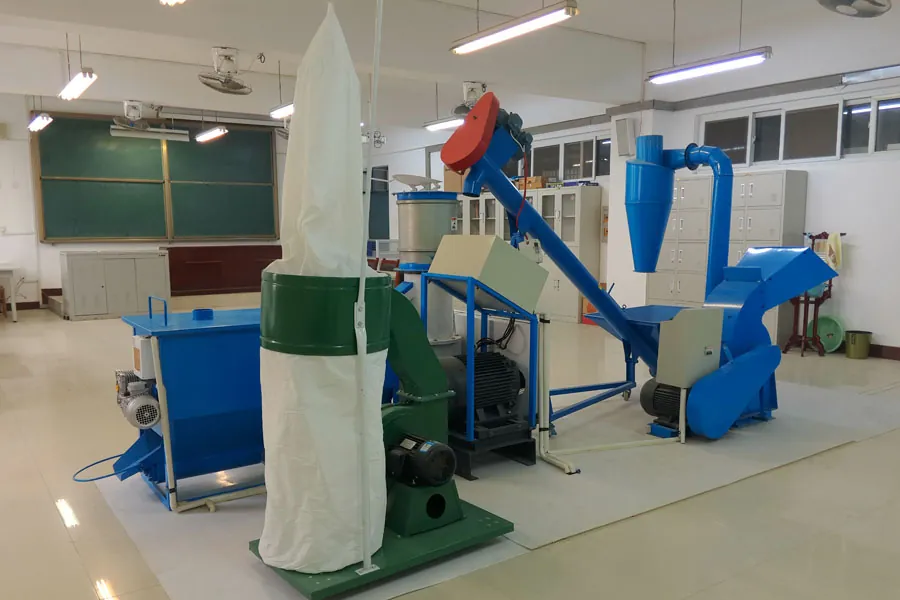
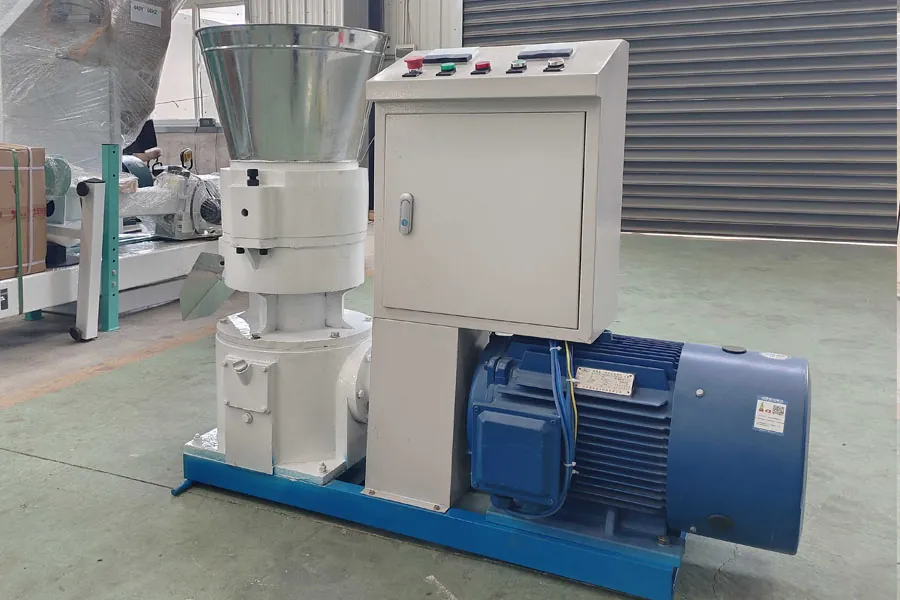
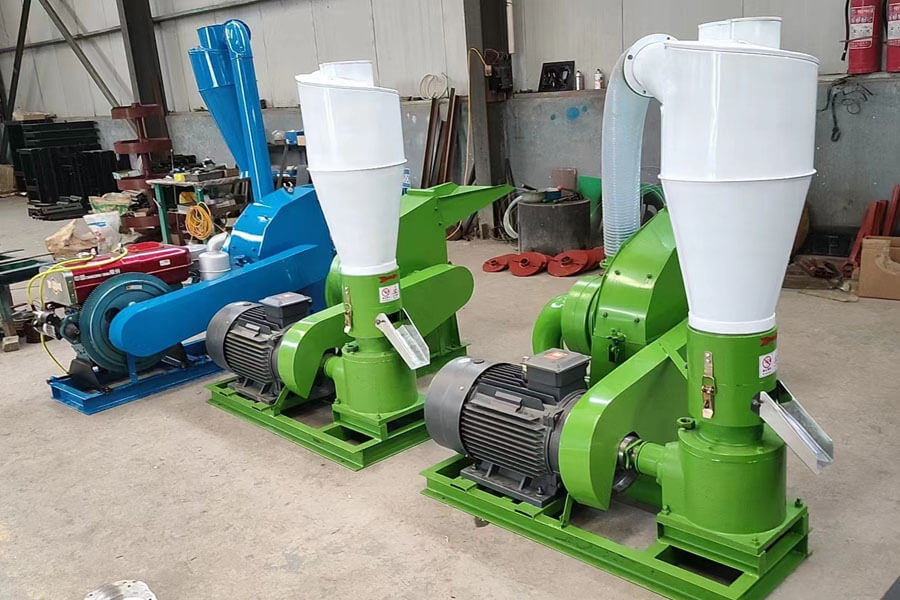
The same flat die frame, and grass lines at work
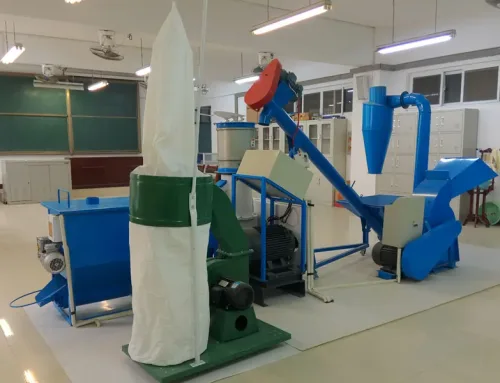
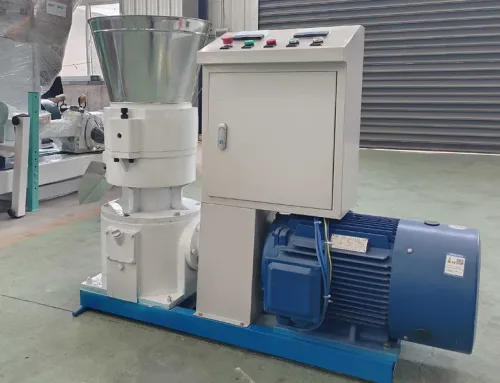
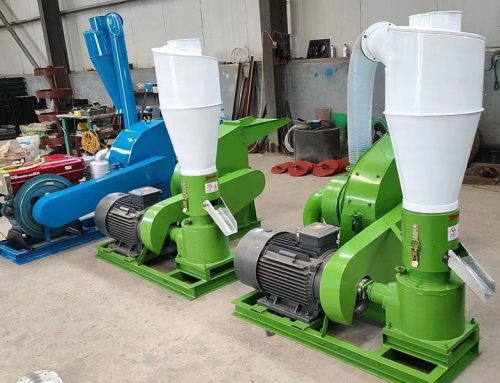
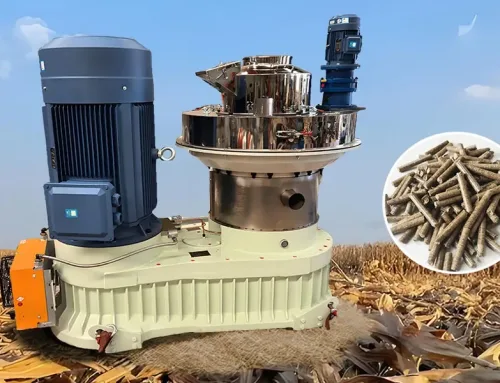
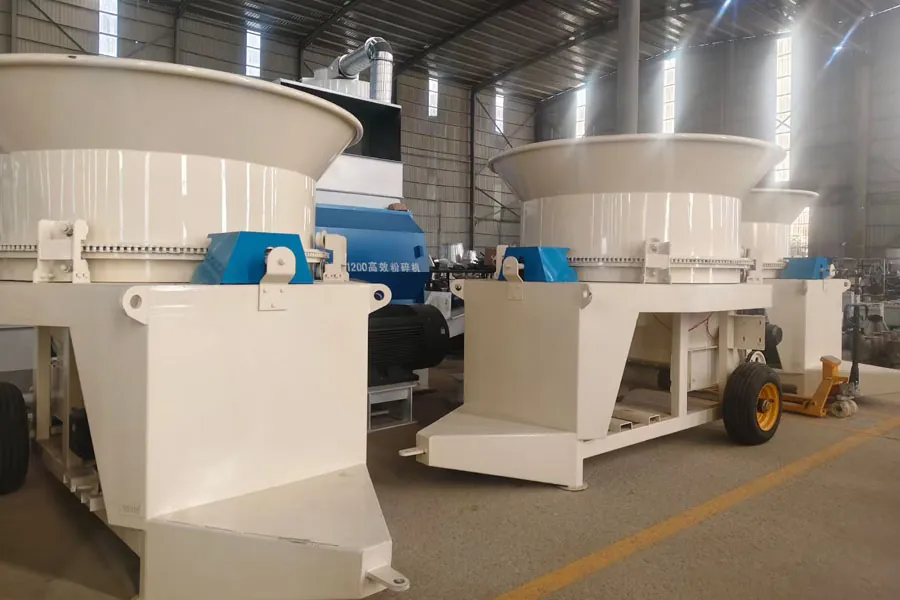
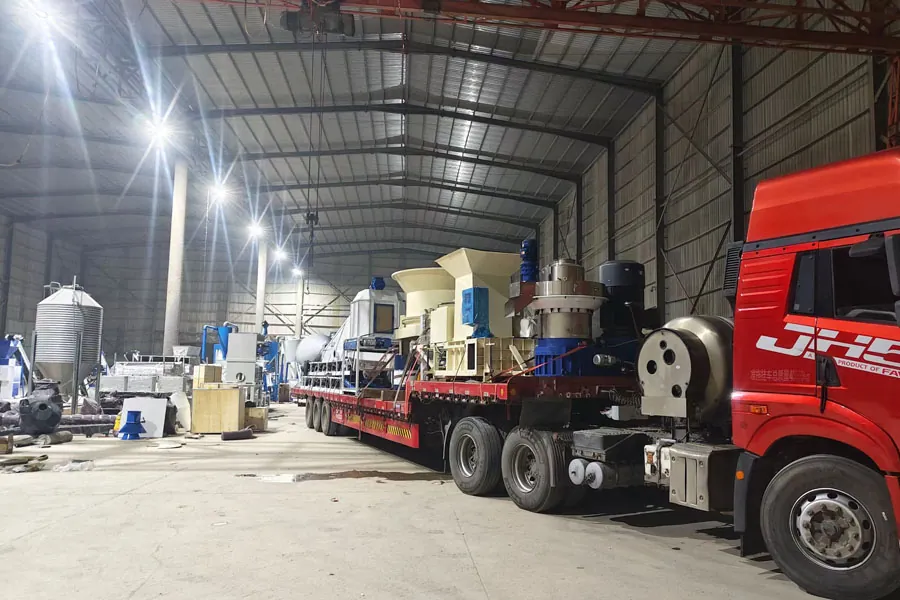
A PM300 flat die press on feed — the frame the 300B is built on — then two grass pellet production lines, one small and one with a ring die, and a batch of flat die presses leaving the workshop.


More test runs, shipping records and installation footage on our YouTube channel.
What buyers ask before ordering a grass pellet mill
What is a grass pellet mill used for?
Pressing chopped grass, alfalfa, hay and straw into pellets for animal feed, bedding or fuel. The 300B does 600–800 kg/h of grass pellets on an 18.5 kW motor, and the same frame runs 250–300 kg/h on sawdust with a wood die.
How much grass can it pellet in an hour?
600–800 kg/h at 12–15 % moisture with a 3–5 mm chop. Wetter material, longer fibre or a smaller die all pull that figure down — a Ø4 mm die at 20 % moisture will not reach half of it. We quote the capacity for your material, not the best case.
What moisture does grass need for pelleting?
12–15 %, measured on a meter as received. Above 15 % the pellets come out soft and the die smears; below 12 % grass will not bind on its own and needs molasses or a binder. This is the single most common reason a grass pellet mill under-performs on site.
Do I have to chop the grass first?
Yes. Material has to be shorter than the die hole — 3–5 mm for a Ø6 mm die. A wood hammer mill or a chaff cutter in front of the press does that; feeding baled or long grass straight in is how dies get blocked and rollers get flat-spotted.
Can the same machine make wood pellets?
Yes, at a lower rate — 250–300 kg/h on sawdust and wood chips, because wood needs more pressure for the same tonne. Order a wood die with the machine if you intend to run both; a grass die in a wood job wears fast and a wood die in grass blocks.
Which die size should I order?
Ø4 mm for rabbits, poultry and fish feed, Ø6 mm for cattle, horses and goats, Ø8 mm for bedding and fuel pellets. Most farms take a Ø6 and add a Ø4 later — the second die costs a fraction of a second machine.
Does it need a binder?
For fuel pellets, no — grass lignin binds under pressure. For feed pellets at the dry end of the moisture range, a little molasses or starch helps durability, and it is what most feed mills add anyway. We will tell you if your material needs it once we know the moisture.
How long is delivery and how do I pay?
7–15 working days after the deposit, depending on the die and the motor voltage. Payment is TT with 40 % in advance and the balance before delivery; packing is a wooden case, and the die, spare rollers and knife travel inside it.
Send the grass, not a model number
What the grass is, its moisture as received, how long the chop is and the pellet diameter you sell. Those four answers decide the die, the capacity we can promise, and whether a flat die frame is the right press at all.
- Emailinfo@pelletmachines.net
- WhatsApp+86 186 0385 1787
- HoursMon–Sat, 08:00–20:00 (GMT+8)
Send a photo of the material and the moisture reading and we will tell you which die to order, what the hourly capacity will be, and what has to stand in front of the press.
What happens after you send this
We answer with the frame, the die, the motor and a price — then send a test-run video on your material before you pay a deposit.
Your details are not shared. One follow-up, no mailing list.