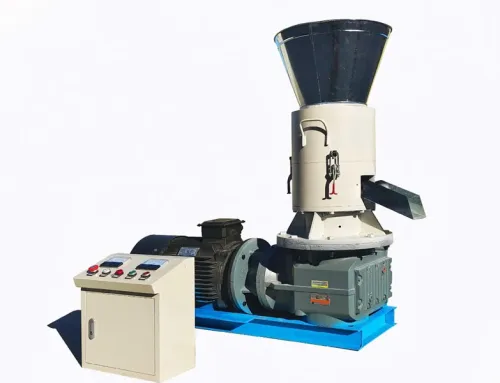
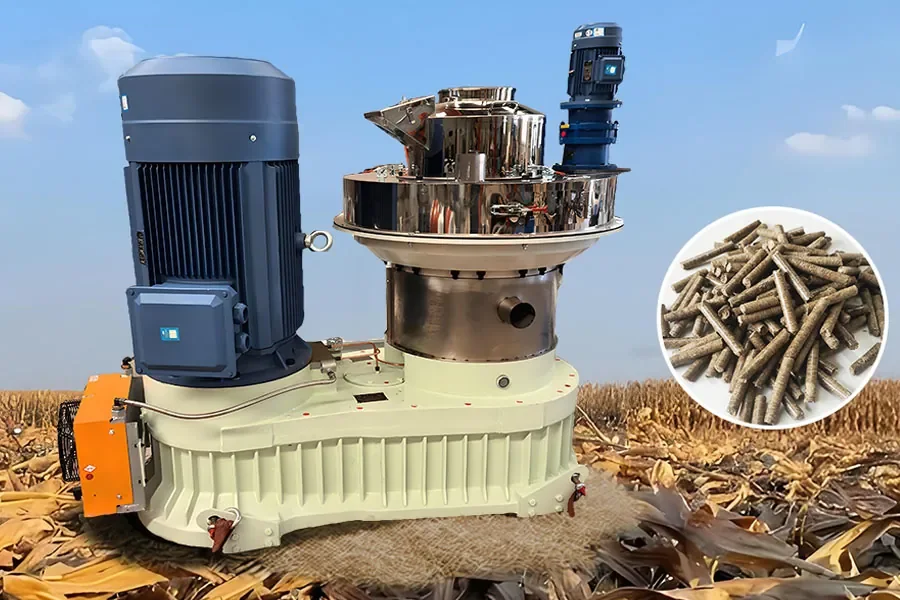
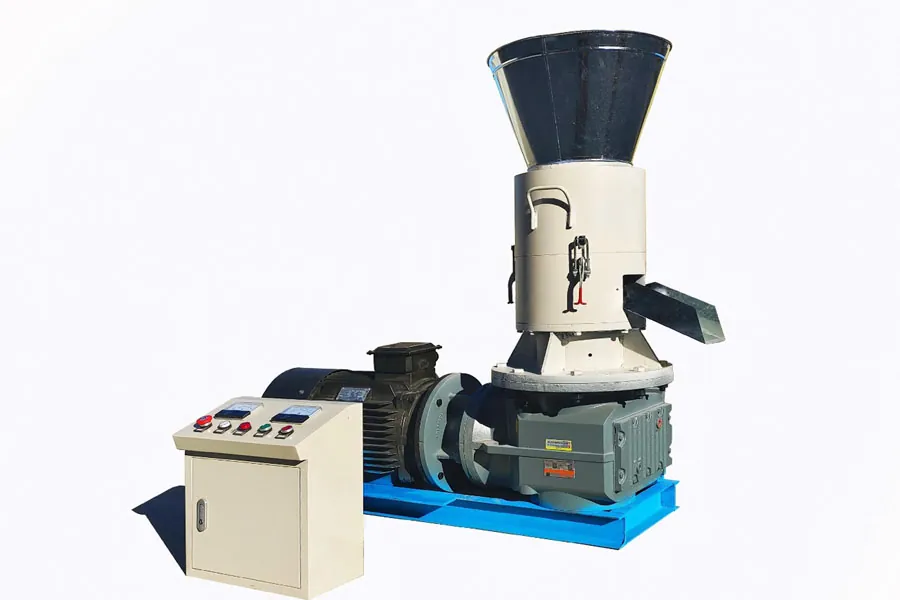
Roller Driven Pellet MillPM-D series — 80 to 800 kg/h, 7.5 to 75 kW
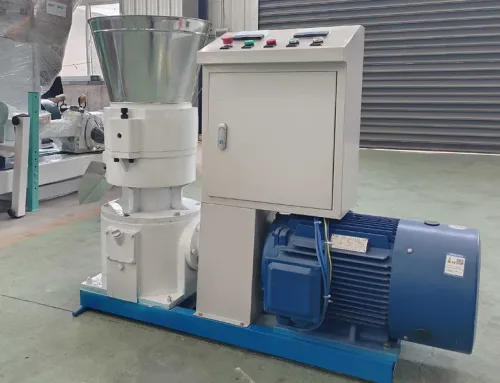
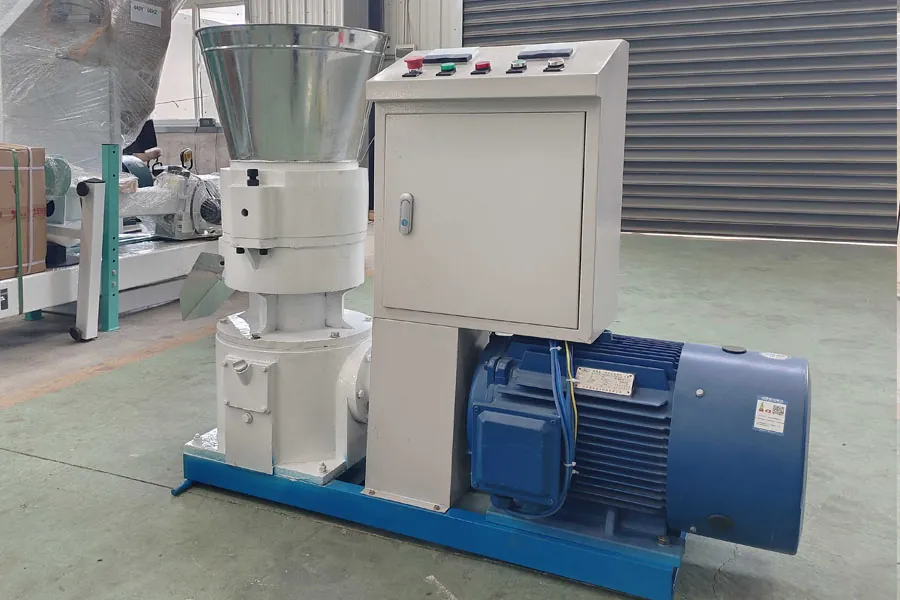
A roller driven pellet mill turns the rollers, not the die. Two rollers run round a fixed flat die and press the material through it, which is how hard wood, bamboo and dense scrap go through a frame that would stall a die-driven press. Six models from 7.5 to 75 kW, 80 to 800 kg/h.
- PM-D225B to PM-D580B — 7.5, 15, 22, 30, 45 and 75 kW
- 80–120 up to 600–800 kg/h of wood pellets, quoted on a Ø6–8 mm die
- Die 225 to 580 mm, one die and one spare roller set with every unit
- 380 V three-phase — the same job with an engine is a diesel flat die pellet mill
Reply in 12 working hours · Die and a spare roller set ship with every unit · Delivered to 40+ countries
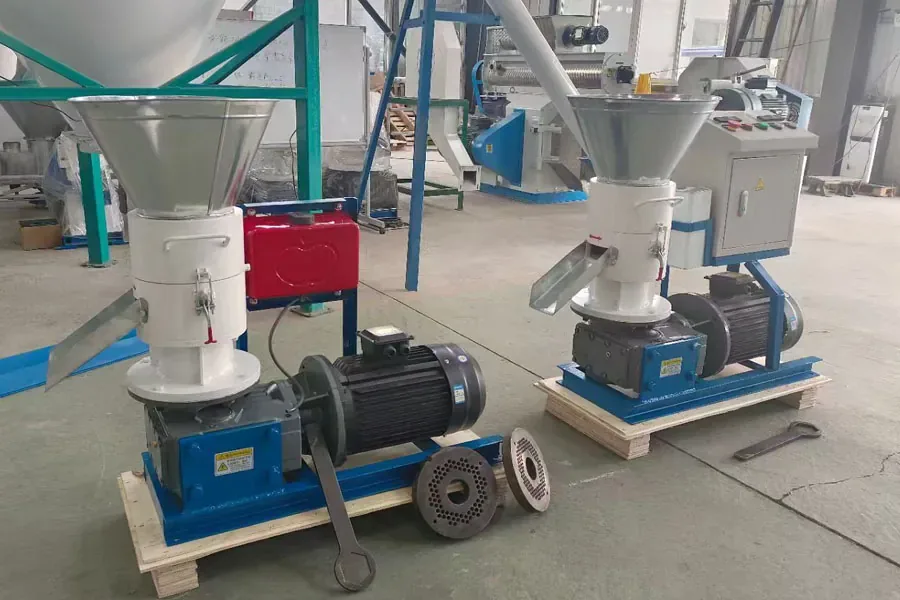
The rollers turn, the die stays still
Every flat die pellet mill presses material through a die with rollers. The difference is which part is driven — and that decides what the machine can press and what it costs to keep running.
On a die-driven flat die pellet mill the die rotates and the rollers idle on the material. The rollers are dragged round by friction, so the pressure they apply is limited by how much grip the material gives them. Wet, coarse or slippery material and the rollers skid.
On a roller driven pellet mill the rollers are powered and run round a fixed die. The pressure is set by the machine rather than by the material, so hardwood, bamboo, coconut shell and dry sawdust are pressed instead of smeared. Output holds steady through the shift instead of drifting as the die heats.
What you pay for it is a heavier gearbox and a drive that carries both rollers, so the frame costs more than a die-driven mill of the same output. Below about 200 kg/h that difference is hard to justify; from 250 kg/h upward it is the reason the machine keeps up. The die-driven range is on the flat die pellet mill page.
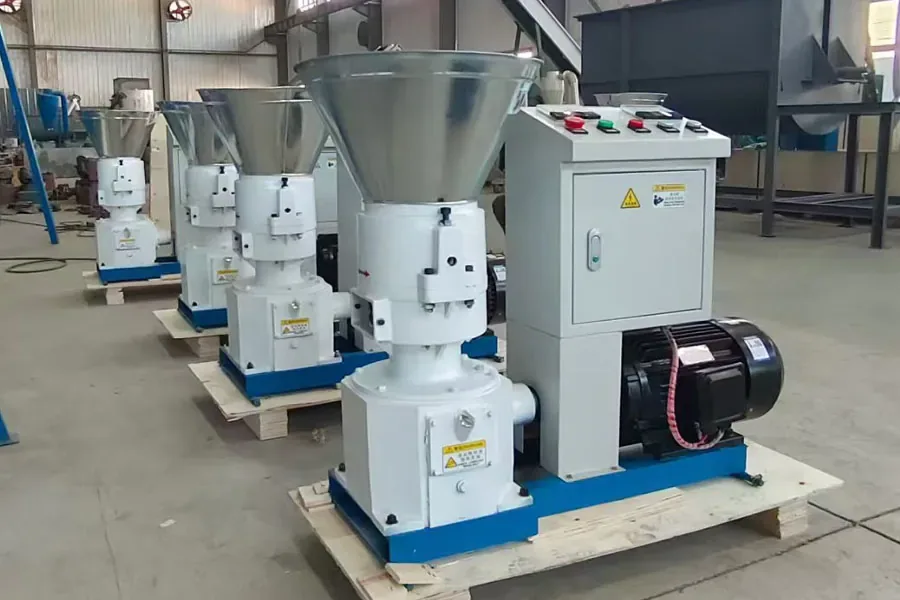
Six frames, 7.5 to 75 kW
Capacity is quoted on wood pellets through a Ø6–8 mm die at 12–15 % moisture. Compound feed runs roughly twice the wood figure on the same frame, because it compacts at lower pressure.
Roller driven pellet mill, PM-D series 380 V three-phase
| Model | Motor | Capacity, wood pellets | Size L×W×H | Weight |
|---|---|---|---|---|
| PM-D225B | 7.5 kW | 80–120 kg/h | 1050 × 450 × 1080 mm | 210 kg |
| PM-D250B | 15 kW | 120–200 kg/h | 1250 × 450 × 1080 mm | 340 kg |
| PM-D300B | 22 kW | 250–350 kg/h | 1360 × 800 × 1250 mm | 530 kg |
| PM-D400B | 30 kW | 350–450 kg/h | 1500 × 760 × 1210 mm | 900 kg |
| PM-D450B | 45 kW | 450–600 kg/h | 2600 × 760 × 1500 mm | 1,200 kg |
| PM-D580B | 75 kW | 600–800 kg/h | 2850 × 800 × 1680 mm | 1,400 kg |
Weights are quoted crated and uncrated; the second figure is the shipping weight. Delivery is 7–15 working days depending on the die; TT with 40 % deposit, balance before delivery; wooden or steel case. The die is cut for the material you name — say whether you are pressing wood, straw or feed, because the compression ratio is not the same.
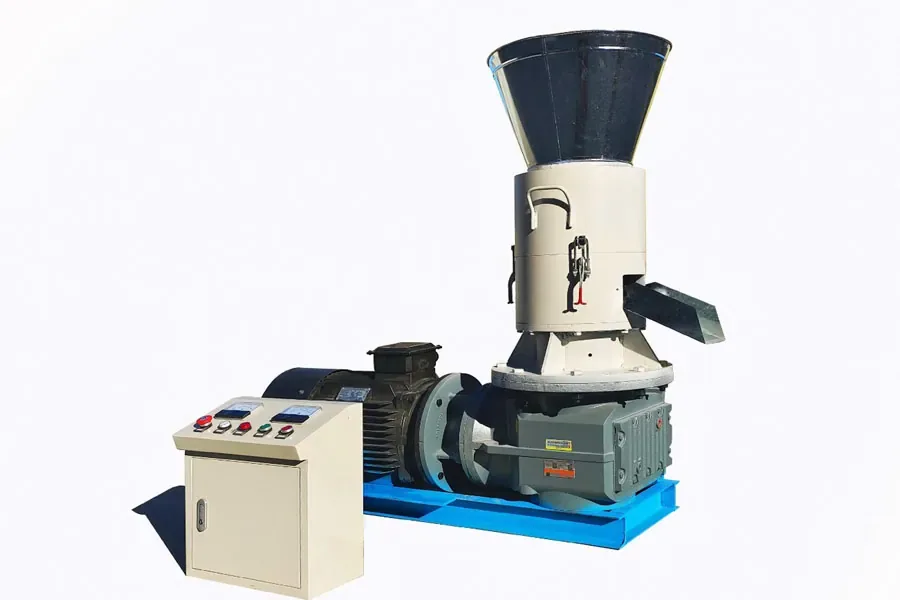
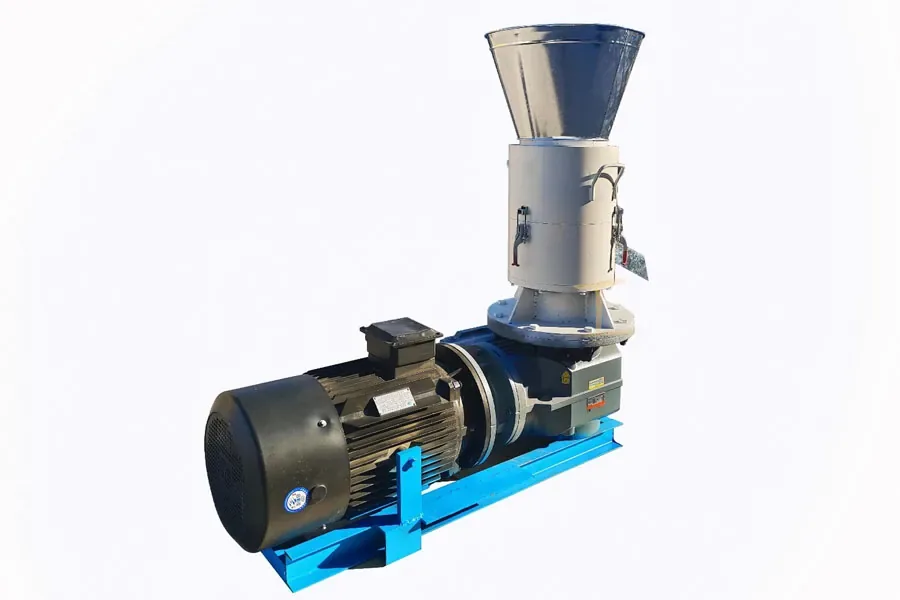
Six frames, 7.5 to 75 kW, on the same base plate
One frame family from 80 to 800 kg/h. The material sets the die, the capacity sets the frame, and the answer is the same whether you press wood or compound feed.
Send the material and the capacity
Tell us the material, its moisture and the kg/h you need. We reply with the model, the die, the rollers and a price — and say plainly if a different frame in the range is the better buy.
Reply within one working day. No obligation.
Five steps from material to a bag of pellets
The order never changes, and every step happens inside one frame — which is why a flat die machine fits in a shed a ring die line would not.
Feed hopper
Material falls into the die chamber under its own weight. A slide gate sets the flow; the rollers do the rest.
Rollers
Two powered rollers run round the fixed die and press material into the holes. Roller-to-die gap is the setting that matters.
Die
Friction in the die holes takes the material to 70–90 °C and the lignin or starch binds it. Die hole and compression ratio are chosen for your material.
Knife and discharge
A knife under the die cuts the pellets to length as they come through. Length is set by the knife height, not by the die.
Cool and bag
Pellets leave at 70–80 °C. Spread them on a floor or run them through a pellet cooler before bagging — hot pellets sweat in the bag.
The same frame makes both, but not at the same rate
A flat die pellet mill is sold as a wood machine and a feed machine. It is the same press — what changes is the die, the moisture and the capacity you can expect.
| What changes | Wood pellets | Compound feed | Why |
|---|---|---|---|
| Die hole | Ø6–8 mm | Ø3–5 mm | Cattle, poultry and fish feed take the smaller holes |
| Moisture in | 12–15 % | 12–14 % | Feed above 14 % blocks the die; wood tolerates a little more |
| Output | The figure in the table above | Roughly double | Feed compacts at lower pressure |
| Binder | Lignin in the wood | Starch, molasses or steam | Feed often wants a conditioner before the die |
| Die life | A few hundred hours on abrasive material | Longer | Rice husk and sand wear a die fastest |
Tell us which job the machine is for when you order, because the die is cut to suit it and a feed die in a wood mill blocks within the first hour. Buyers who need both usually order two dies with the frame — the second one costs far less than a second machine.
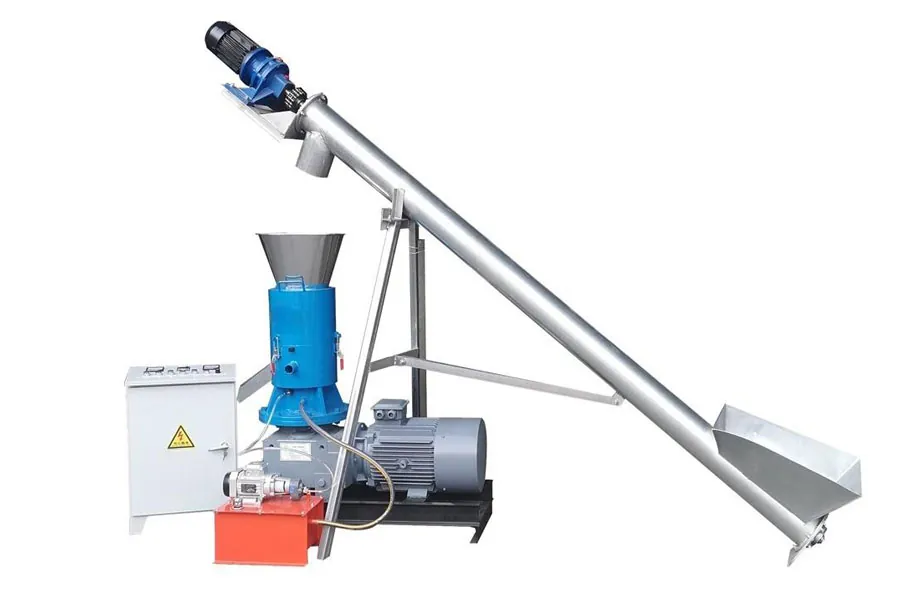
Where a roller driven flat die stops being the answer
A flat die machine is the right press from a farm up to a light industrial line. Past that the arithmetic changes, and it changes on three things: capacity, labour and die life.
Above about 800 kg/h a flat die frame needs a die so large that changing it becomes a two-person job, and the die cost per tonne stops falling. That is where a vertical ring die pellet mill takes over — 90 to 160 kW, 1 to 2.5 t/h, with a die that lasts longer because the pressure is spread round a ring rather than concentrated on one flat face.
Below that, the question is how much of the work you want to do yourself. A PM-D580B at 600–800 kg/h is a one-person machine with a bagging scale. A ring die line at the same capacity is a plant with conveyors, a cooler and two or three operators.
And if the site has no three-phase supply, none of the above applies: the answer is the diesel flat die pellet mill on the same flat die principle, 10 to 55 hp, running where the grid does not reach.
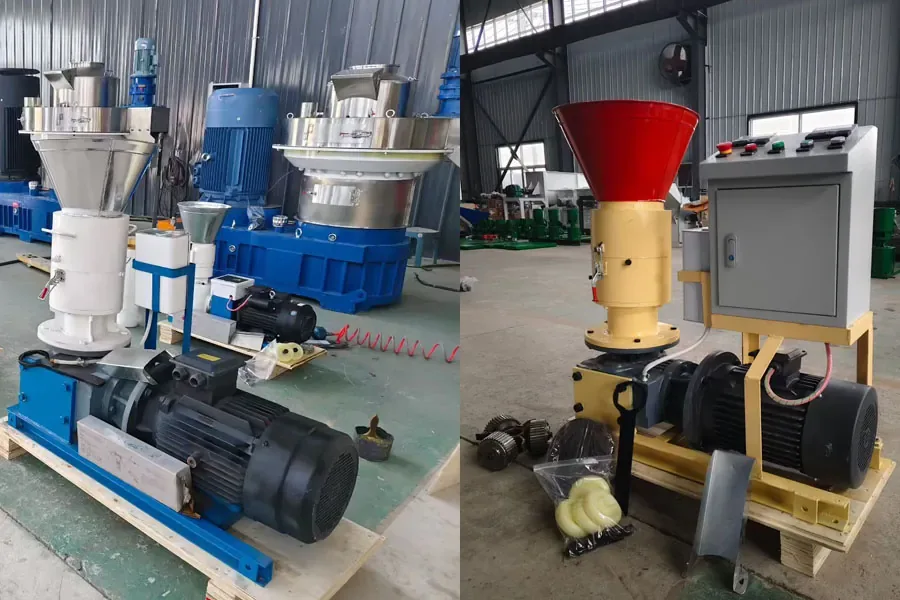
What has to happen before the press
A pellet mill is the middle of the line, not the whole of it. Material that arrives as chips, straw or husks has to be the right size and the right moisture before it reaches the die.
Size first. A wood hammer mill takes chips and stalks down to 3–5 mm; without it the die blocks and the rollers skid. On a farm, an electric hammer mill does the same job where there is power.
Then moisture. Wood above about 15 % has to be dried — a day spread on a concrete floor, or a drum dryer on a larger line. Feed is different: it often wants moisture or steam added, not taken away.
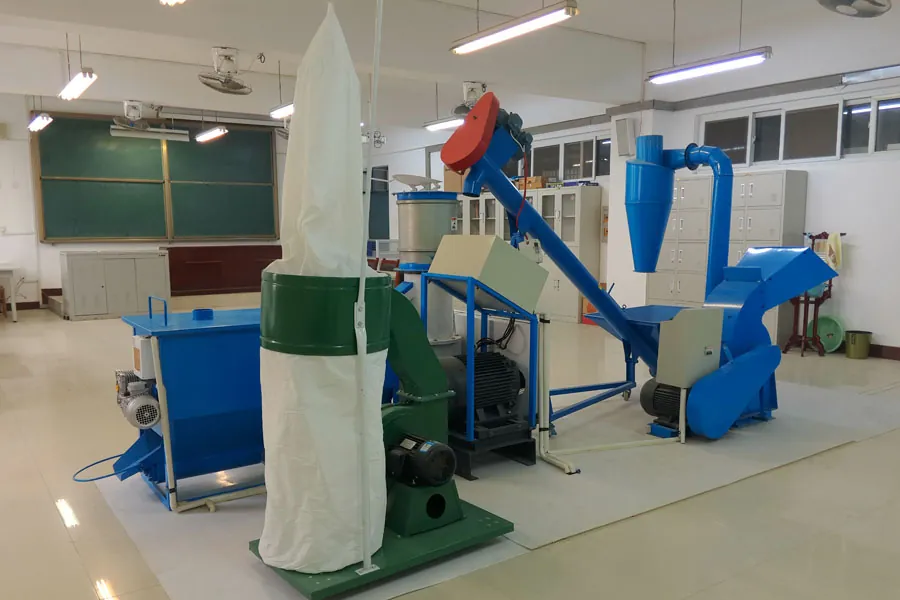
If you want the crusher and the press on one base plate under one drive, that is a combined pellet mill and hammer mill at 100–350 kg/h. If you want the whole sequence sized and quoted together, a 500 kg/h wood pellet plant or the 100–150 kg/h simplest pellet plant is the same machines on one quotation.
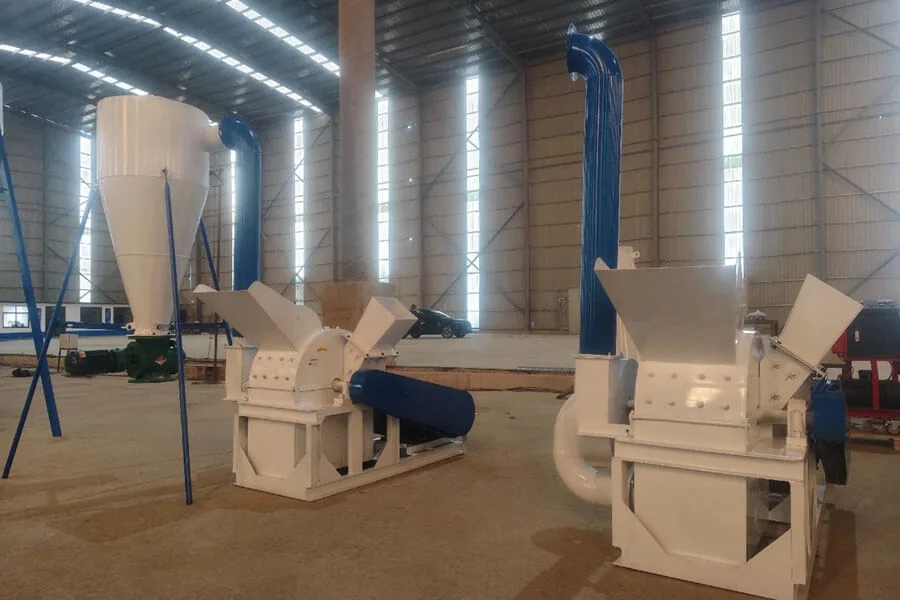
In the crate, on one base plate
The unit leaves the workshop assembled and run on material, with the die fitted for the job you named and a spare roller set in the case.
-
Die
One flat die fitted, cut to your material and pellet diameter — Ø6–8 mm for wood, Ø3–5 mm for feed. A second die can be ordered with the machine.
-
Rollers
Two powered rollers with the gap set at the factory, plus one spare roller set in the crate.
-
Motor and starter
7.5 to 75 kW, 380 V three-phase, with the starter and overload matched to the supply you specify.
-
Knife and extractor
Knife set for the pellet length you want, die extractor and feeler gauge with the spare parts.
-
Tools and manual
Grease gun, spanners and the setting chart for roller-to-die gap and die compression ratio.
Where this press sits in the range
Below 800 kg/h a roller driven flat die frame is the cheapest way to make pellets. Above it, the answer changes shape — and so does the machine in front of it.
Tell us the material and the capacity
Material, its moisture as received, the pellet diameter and the kg/h you need per shift. We reply with the frame, the die and a price.
Reply within one working day. No obligation.
The press at work, and a batch leaving the workshop
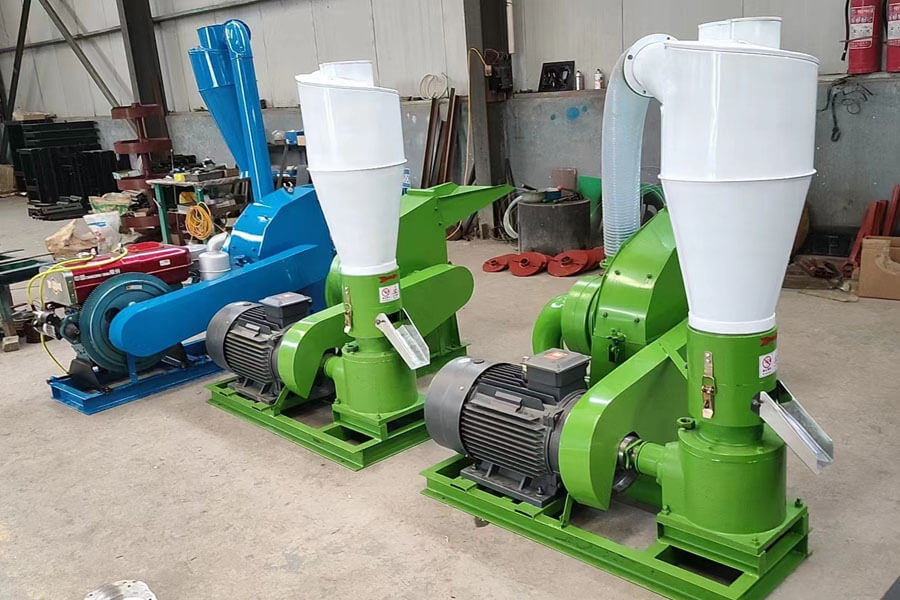
A flat die press running on sawdust, the same frames crated for export, where the press sits in a complete pellet production line, and seven short clips from the test bench — the driven rollers with the chamber open, four frames under load, and a small line running.
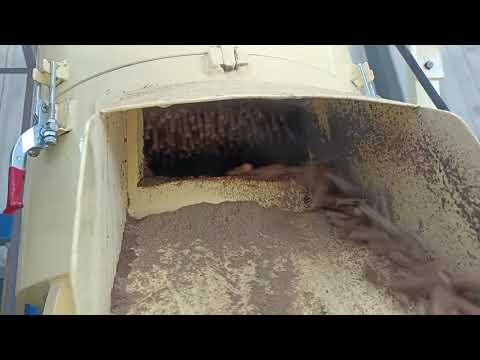


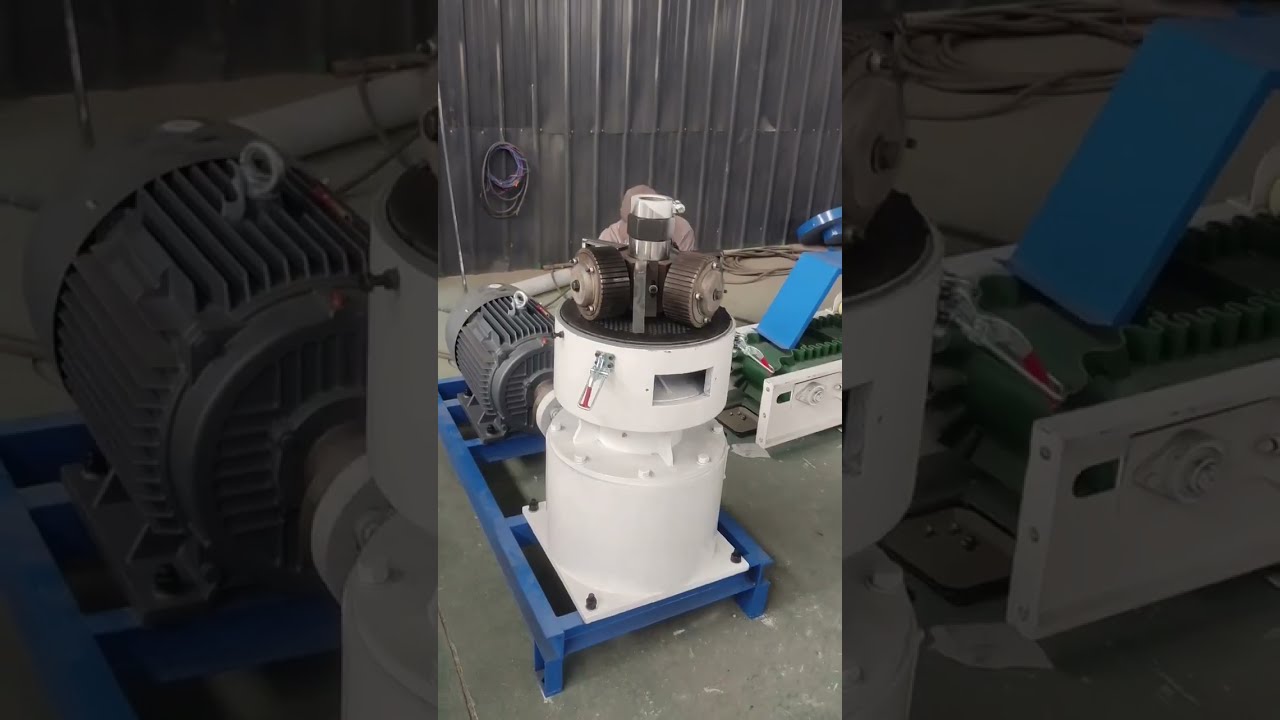


More test runs, shipping records and installation footage on our YouTube channel.
What buyers ask before ordering a roller driven pellet mill
What does roller driven mean on a pellet mill?
It means the rollers are powered and run round a fixed flat die, instead of the die turning and the rollers being dragged round by the material. The pressure is set by the machine rather than by friction, so hard wood and dense material are pressed instead of smeared, and output holds steady through the shift.
How much does a roller driven pellet mill cost?
It depends on the frame and the die — the 7.5 kW PM-D225B and the 75 kW PM-D580B are not in the same bracket, and the die is cut to your material rather than picked off a shelf. Send the material, the pellet diameter and the kg/h you need and we quote the set: frame, motor, starter, die, spare rollers and tools.
What is the difference between this and the die-driven flat die mill?
On a die-driven mill the die rotates and the rollers idle on the material; on this one the rollers are driven and the die is fixed. The roller driven frame costs more and handles harder material at a steadier rate. Below about 200 kg/h the difference rarely pays for itself.
Can it make feed pellets as well as wood pellets?
Yes — same press, different die. Feed takes a Ø3–5 mm die and about twice the output of wood on the same frame; wood takes Ø6–8 mm at 12–15 % moisture. Order both dies with the machine if you need both jobs, and tell us at the time, because the compression ratio is not the same.
What moisture does the material need?
12–15 % for wood, 12–14 % for feed. Above that the die blocks, the rollers skid and output halves. Wood is usually dried on a floor or in a drum dryer before the press; feed often wants moisture or steam added instead.
How long does a die last?
A few hundred hours on abrasive material such as rice husk or material with sand in it, longer on clean sawdust. The die is a wear part and it is replaced, not re-machined — a spare die in the crate is cheaper than a week of downtime.
What power supply does it need?
380 V three-phase, 50 Hz, from 7.5 kW to 75 kW depending on the frame. The larger frames need the cable and breaker sized for the starting current; 415 V / 60 Hz is built to order.
How long is delivery?
7–15 working days after the deposit, depending on the die. Payment is TT with 40 % in advance and the balance before delivery; packing is a wooden or steel case.
Send the material, not a model number
A photo of the material, its moisture as received, the pellet diameter and the kg/h you need per shift. Those four answers decide between the 7.5 kW frame and the 75 kW one, and between a wood die and a feed die.
- Emailinfo@pelletmachines.net
- WhatsApp+86 186 0385 1787
- HoursMon–Sat, 08:00–20:00 (GMT+8)
Send a photo of the material and a photo of the site and we will tell you which frame fits, which die to order, and whether a flat die is the right press at all.
What happens after you send this
We answer with the frame, the motor, the die and a price — then send a test-run video on your material before you pay a deposit.
Your details are not shared. One follow-up, no mailing list.