Feed Hammer Mill120 to 1,600 kg/h on 4 to 37 kW — and 1 to 10 t/h on the water-drop frames
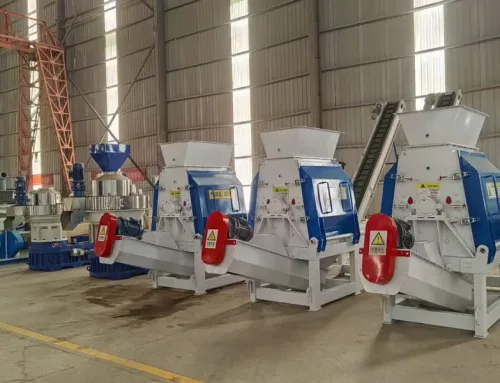
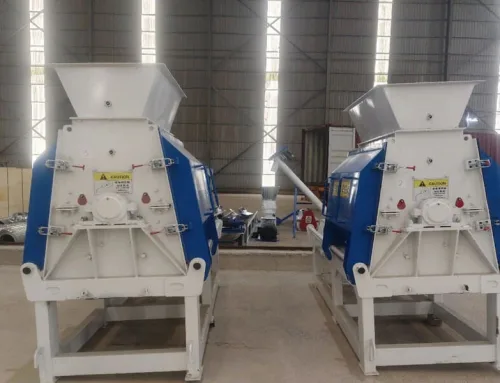
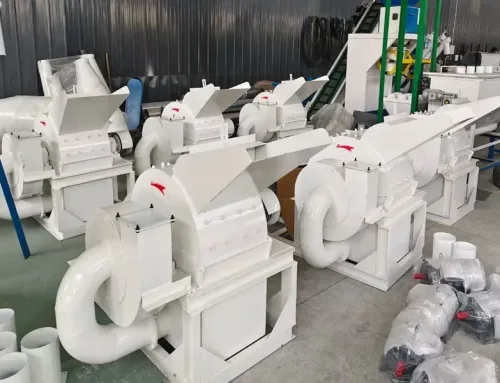
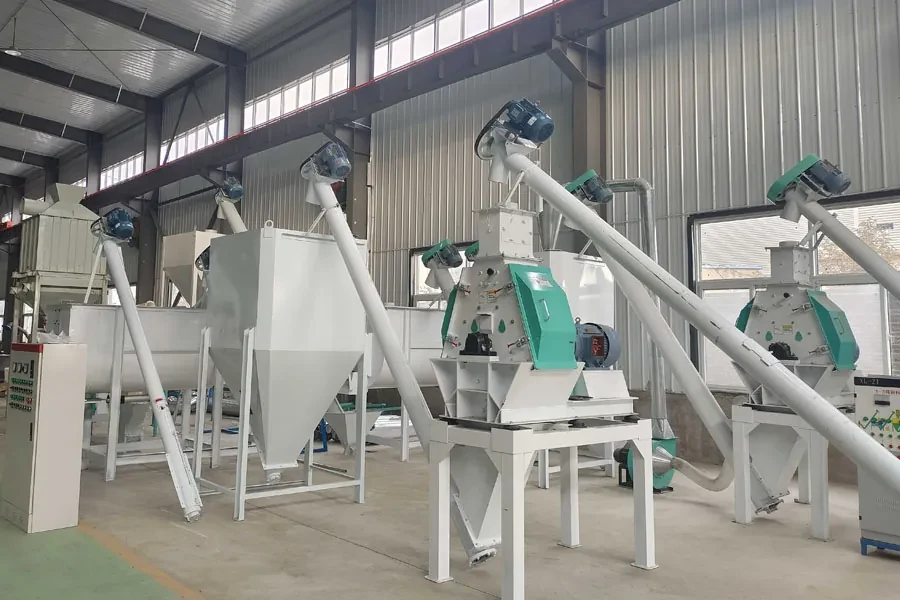
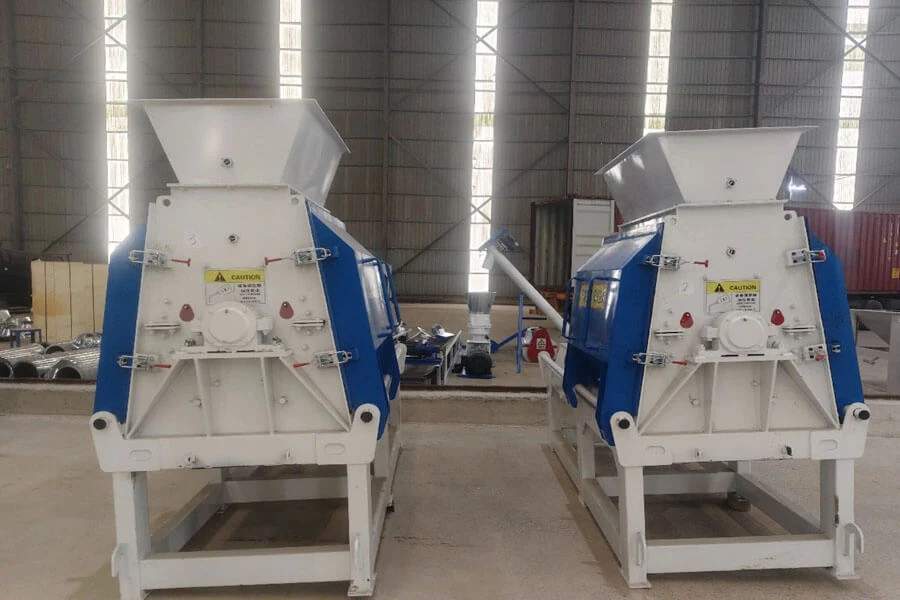
A feed hammer mill grinds maize, wheat, soybean meal, cassava and roughage down to the powder a feed pellet mill or a mixer needs. Two ways to buy one: the FS frames from 4 to 37 kW at 120–1,600 kg/h on a skid, or the water-drop frames from 22 to 90 kW at 1–10 t/h as the grinding section of a feed plant, with silo, screw conveyor, cyclone and control cabinet.
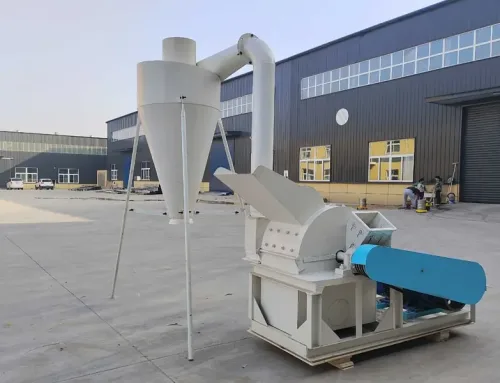
- FS-198B, FS-420B, FS-50-40B and FS-50-60B — 4, 11, 22 and 37 kW
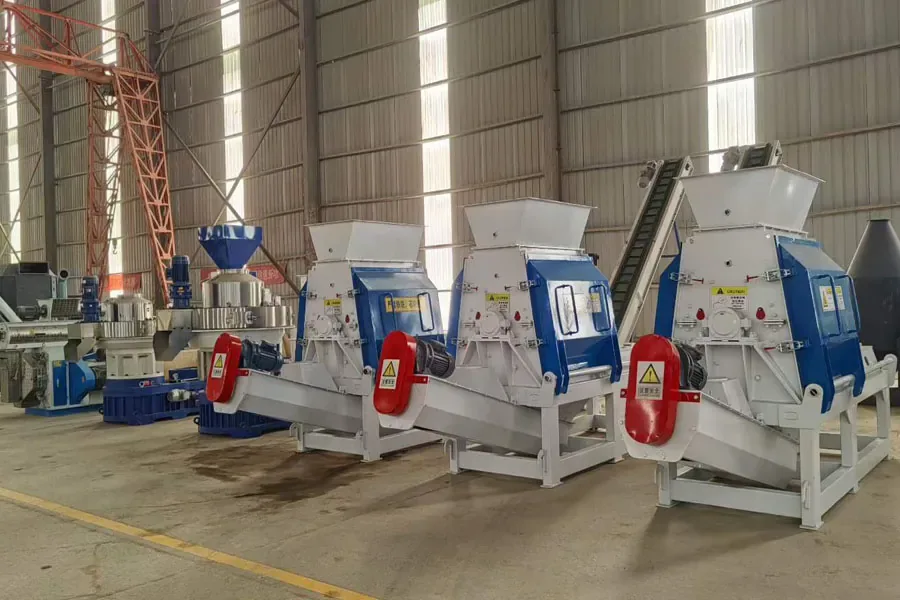
- SD-350 to SD-800 — 22 to 90 kW, 1 to 10 t/h, water-drop chamber
- Screen holes 1.5 to 10 mm — 2–3 mm for pig and poultry feed, 1.5–2 mm for fish feed
- Blower, cyclone, ducting and a spare screen with every unit
Reply in 12 working hours · Test run on your grain · Delivered to 40+ countries
The same chamber as a wood mill, doing an easier job
A feed hammer mill and a wood hammer mill are the same machine with different screens. Grain breaks far more easily than wood, so the same motor grinds several times the throughput — and the numbers on the two pages look different for that reason alone.
Maize, wheat, barley, sorghum, soybean meal and cassava come out of the hopper, pass four rows of swinging hammers and fall through a 1.5–3 mm screen. Nothing is dried first and nothing is cut: feed arrives at 12–14 % moisture and grinds straight through. That is why a 22 kW feed hammer mill outruns a 22 kW wood hammer mill by three or four times on the same frame.
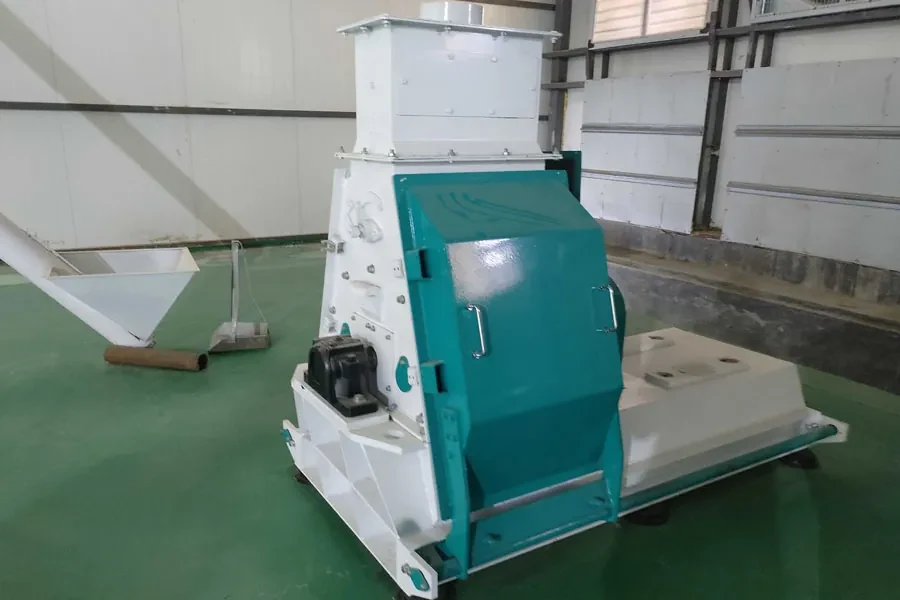
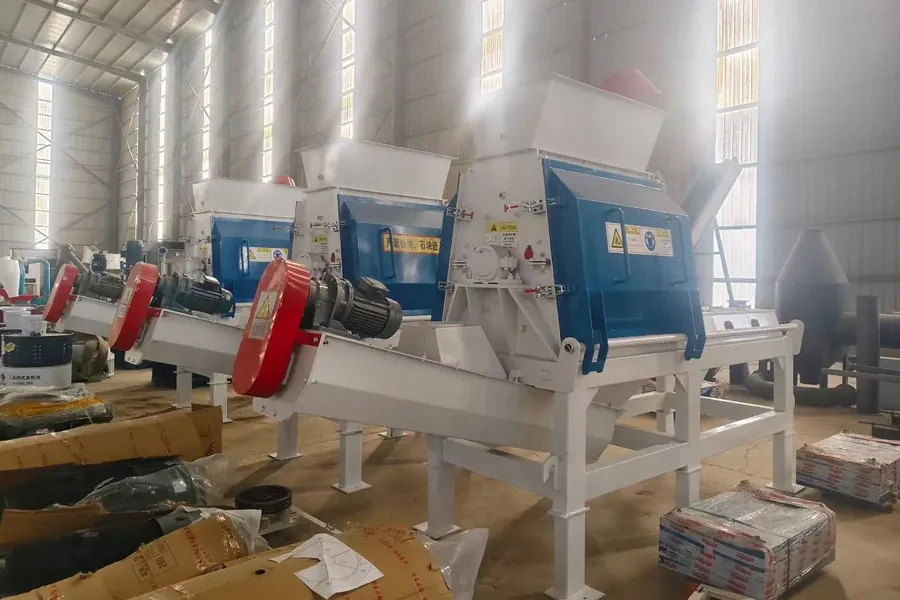
The chamber shape matters less here than it does on wood. Below about 15 kW the round chamber is fine; the water-drop chamber earns its keep on the larger frames, where the extra screen area is what keeps output up as the screen wears. Every frame from SD-350 up uses it, and the FS-50-40B and FS-50-60B do too.
What feed grinding does demand is a clean, metered feed. A screw conveyor with a variable speed drive, or a slide gate under a silo, is not a luxury — running a feed hammer mill wide open is how chambers block and how motors trip. The set-up section below covers what goes around the mill.
Eleven frames, 4 to 90 kW
Capacity is quoted on maize at 13–14 % moisture through a 2.5–3 mm screen. Wheat and sorghum run a little higher; soybean meal and high-oil material run 10–20 % lower because they smear the screen. Roughage runs lower again — ask for the figure on your formulation.
Feed hammer mill, FS series electric
| Model | Motor | Capacity | Size L×W×H | Weight |
|---|---|---|---|---|
| FS-198B | 4 kW | 120–250 kg/h | 950 × 620 × 1100 mm | 135 kg |
| FS-420B | 11 kW | 250–500 kg/h | 1240 × 1000 × 1200 mm | 270 kg |
| FS-50-40B | 22 kW | 600–1,300 kg/h | 1850 × 1060 × 1240 mm | 850 kg |
| FS-50-60B | 37 kW | 1,000–1,600 kg/h | 2150 × 1260 × 1240 mm | 960 kg |
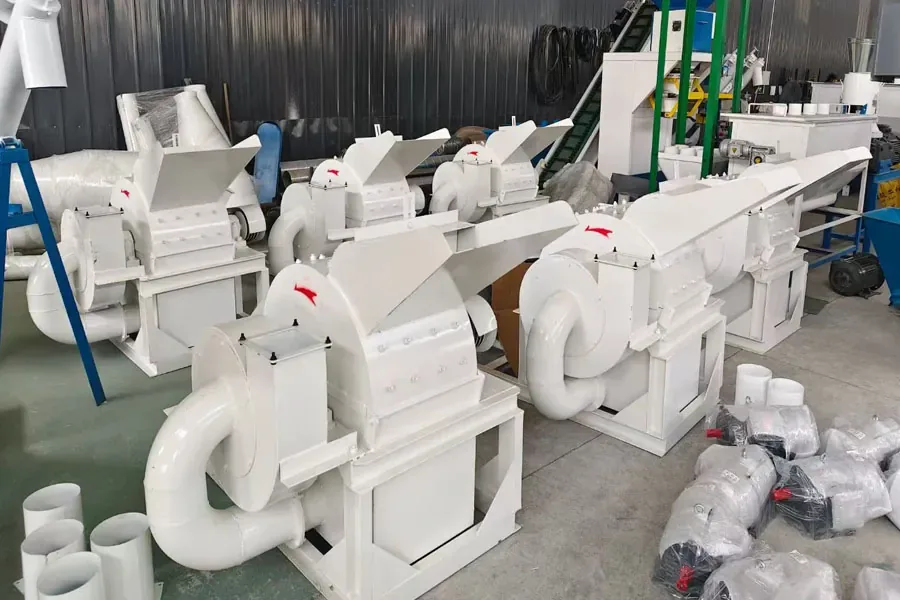
380 V three-phase, 50 Hz; 415 V / 60 Hz and 220 V three-phase built to order. These are the farm and small-plant frames: they sit on a skid, need no foundation, and can be moved with a forklift. The same frames are sold as the electric hammer mill range for wood.
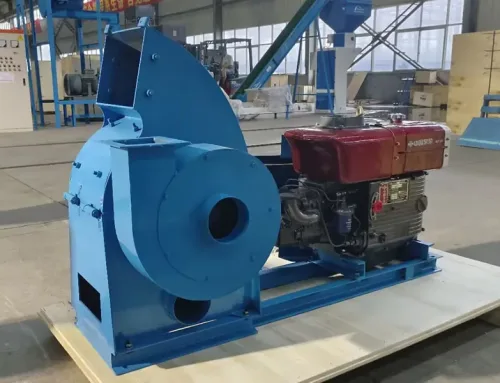
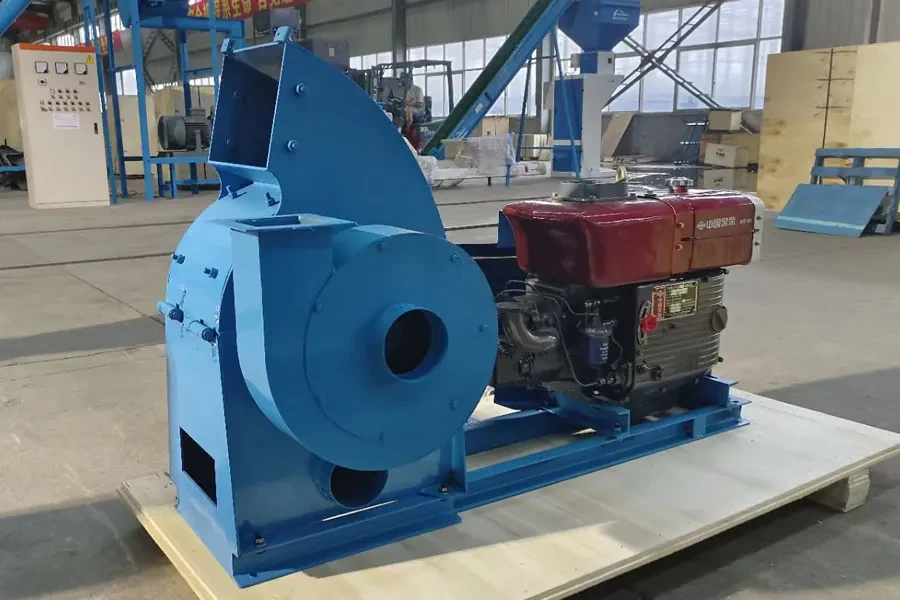
Feed hammer mill, FS series diesel
| Model | Engine | Capacity | Size L×W×H | Weight |
|---|---|---|---|---|
| FS-420A | 15 hp | 250–500 kg/h | 1650 × 800 × 1120 mm | 390 kg |
| FS-50-40A | 41 hp | 600–1,300 kg/h | 2400 × 900 × 1300 mm | 950 kg |
| FS-50-60A | 55 hp | 1,000–1,600 kg/h | 2600 × 1100 × 1300 mm | 1,200 kg |
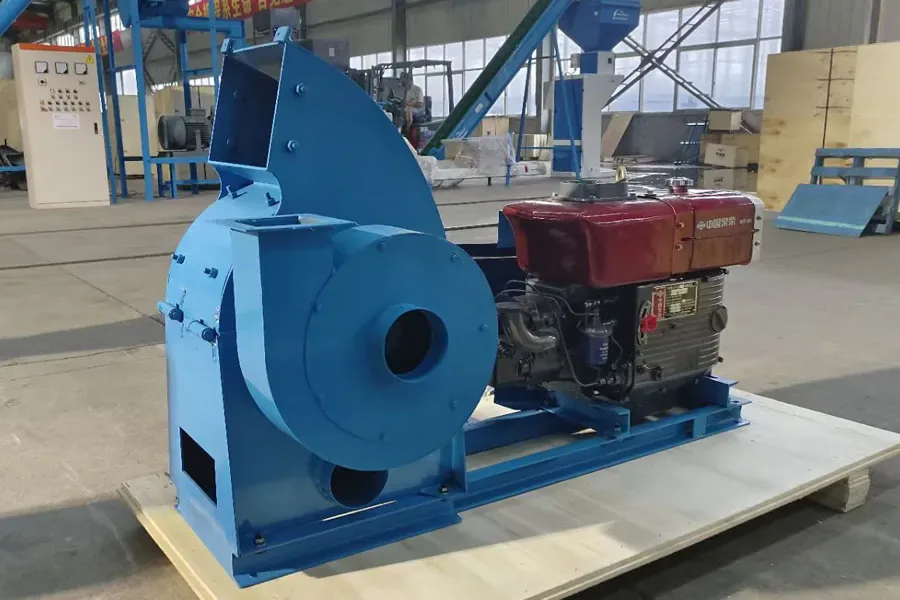
Water-cooled engines with electric start, fuel tank and battery on the base frame. The usual choice for a farm with no three-phase supply or an unreliable one — see the diesel hammer mill page for the drive detail.
Feed hammer mill, SD series water-drop chamber, feed plant scale
| Model | Motor | Capacity | Size L×W×H | Weight |
|---|---|---|---|---|
| SD-350 | 22 kW | 1–3 t/h | 1516 × 905 × 1530 mm | 700 kg |
| SD-450 | 37 kW | 2–4 t/h | 1616 × 905 × 1530 mm | 900 kg |
| SD-600 | 55 kW | 3–6 t/h | 2000 × 1050 × 1130 mm | 1,300 kg |
| SD-800 | 90 kW | 6–10 t/h | 2330 × 1050 × 1130 mm | 1,800 kg |
The grinding section of a feed plant: foundation-mounted, fed by a screw conveyor from a silo, discharging through a cyclone into a mixer or a buffer bin. Above 55 kW the supply and the foundation are part of the order, not an afterthought.
Tell us the grain and the animal
The grain, the powder size the mixer or the press needs, the kg/h you grind in a shift, and whether the mill goes on a skid or into a plant with a silo. Those four answers pick the frame and the screen.
What happens after you send this
We answer with the frame, the screen, the motor and a price — then send a test-run video on grain like yours.
Reply within one working day. No obligation.
Five steps from grain to mash
The order never changes, and every step happens on the same frame — which is why a farm mill is one skid and a plant mill is one foundation block.
Feed hopper or conveyor
Grain goes in from a bag, a hopper or an inclined screw conveyor. A slide gate or a variable speed drive sets the rate — a feed mill run wide open blocks its chamber.
Hammers
Four rows of carbon-alloy hammers on a balanced rotor at about 3,500 rpm. Grain breaks on the first impact, so the hammers last far longer than they do on wood.
Screen
1.5 to 10 mm holes decide the mash. 2–3 mm for pig and poultry, 1.5–2 mm for fish feed, 5–10 mm for roughage. One fitted, one spare.
Blower
Air lifts the mash out of the chamber as it is made, so the screen stays open and output holds through the shift.
Cyclone
The cyclone drops the mash into a mixer, a buffer bin or a bag. On a plant the ducting runs to the mixer above the press.
A feed hammer mill is sold as a mill. It works as a grinding section
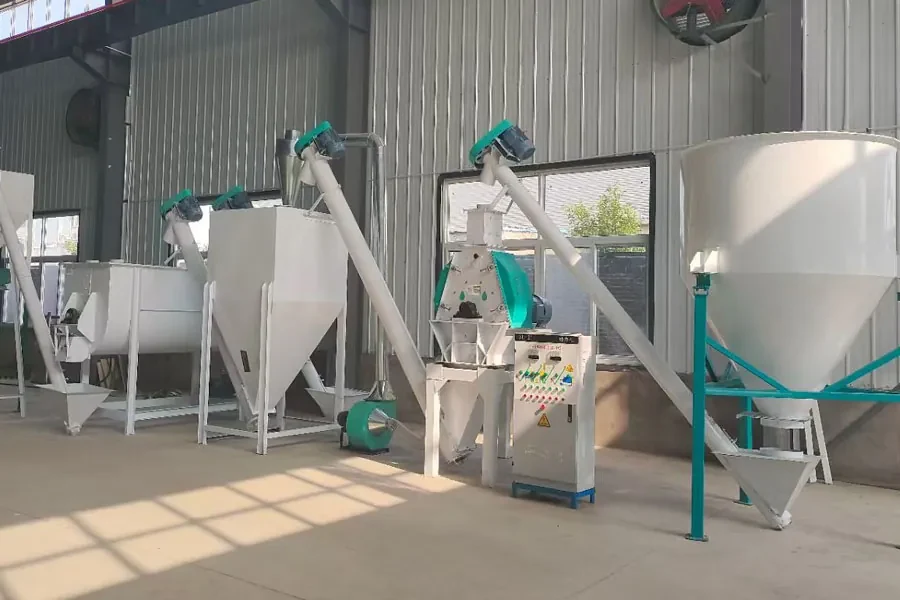
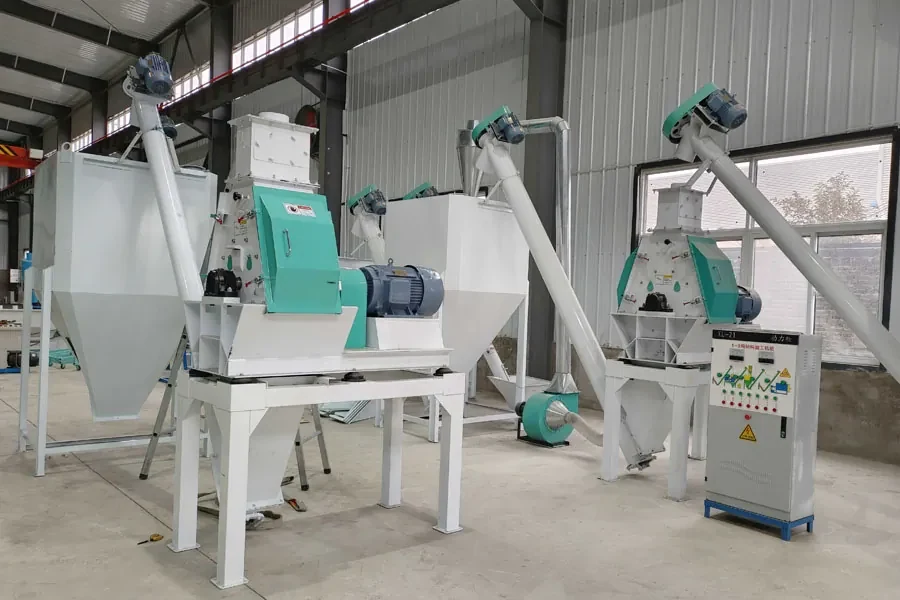
On a farm the mill on its own is enough. In a plant the mill is one item in a set — silo, conveyor, cyclone, dust collector, control cabinet — and the set is what gets quoted.
Silo or bin. Raw material is stored above the mill so it can be metered in by gravity. A 2–10 m³ bin gives a shift’s buffer and lets the mill run at a steady rate instead of in bursts.
Screw conveyor. An inclined screw with a geared motor lifts grain from the bin to the mill inlet. The motor is usually fitted with a variable speed drive, because the feed rate is the one thing an operator adjusts all day.
Cyclone and dust collector. The cyclone takes the bulk of the mash out of the air stream; a small bag or cartridge filter behind it catches what is left. Without the second stage, a feed mill puts flour into the roof of the building.
Control cabinet. Starters, overloads and interlocks for the mill, the conveyor and the blower, with the ammeter on the front. The ammeter is how an operator knows the mill is being fed at the right rate — it should sit at 80–90 % of rated current, not at 100 %.
Mixer. Mash goes from the cyclone into a feed mixer, where premix, oil and molasses are added before pelleting. The flat die feed pellet mill page covers the press that follows; the fish feed machine pages cover the extruder route for floating feed.
The screen is chosen by the animal, not by the motor
Feed buyers ask for a model first and a screen second, which is backwards. The screen decides the mash, the mash decides the pellet, and the model only decides how fast you get there.
| Screen holes | What it is for | What it costs you |
|---|---|---|
| 1.5–2 mm | Fish feed, shrimp feed, starter feed for chicks and piglets | Fines and low output — the mill works hardest for the least mash |
| 2–2.5 mm | Poultry, pig grower and finisher | The most common feed setting |
| 3–4 mm | Cattle, sheep, dairy — and mash going into a pellet press | Good output, mash that pellets well |
| 5–10 mm | Roughage, straw, hay, bedding | High output, coarse chop |
A mash that is too fine is the most common ordering mistake on a feed hammer mill: it costs output at the mill, blinds the screen faster and makes the press work harder for no gain in pellet quality. 2.5–3 mm suits most pig and poultry rations. Two screens ship with the machine.
Same chamber, same rotor, same screen — only the drive changes
The question is not which is better. It is what the farm can supply, and what it costs you per tonne when it does.
On a farm with a steady three-phase supply the electric version is the cheaper machine to buy and much the cheaper one to run: no fuel, no filters, no battery, and a service interval that is grease and belts. Above 22 kW there is no argument for the engine at all.
The diesel hammer mill takes over where the supply is absent or unreliable. Fuel per tonne runs two to three times grid power in most of the markets we ship to, so the engine only wins when the alternative is not grinding at all — a farm on a generator, or a site the grid will never reach.
Both use the same base-plate pattern, so the cyclone, the ducting and the discharge height are identical. If a grid connection arrives later, the chamber, rotor and frame carry over and only the drive end changes.
First machine in a feed mill, ahead of the mixer and the press
A feed hammer mill almost never works alone. Where it sits decides the screen you order, the height the cyclone discharges at, and whether the mash goes to a mixer or straight to a press.
In a feed pellet line the order is hammer mill, mixer, pellet mill, cooler, crumbler, screener, bagging. The mill is first because everything downstream is sized on the mash it produces — a mill that runs short starves the press, and a mill that runs coarse makes soft pellets.
For a farm making its own feed, the mill usually pairs with a flat die feed pellet mill at 100–1,200 kg/h. For floating fish feed the route is different: a dry type fish feed extruder or a full fish feed production line takes the mash from this mill and extrudes it rather than pressing it.
If you want grinding and pelleting on one base plate under one motor, that is a combined pellet mill and hammer mill at 100–350 kg/h. Above that the two machines want separate drives and separate positions in the line.
In the crate, on one frame
The unit leaves the workshop assembled and run on grain. The cyclone is bagged separately so the ducting is not crushed in transit.
-
Chamber and rotor
Four rows of carbon-alloy hammers, reversible, on a rotor balanced before assembly. Hinged chamber door for a screen change.
-
Screen
One fitted to the animal you name, one spare in the crate. Holes from 1.5 to 10 mm, cut to order.
-
Motor or engine
4 to 90 kW, 380 V three-phase, or 15–55 hp diesel, with the starter and overload matched to the supply you specify.
-
Blower and cyclone
Blower on the chamber outlet, cyclone and bolted ducting to the discharge height you specify. A dust collector can be added.
-
Belts, guards and tools
V-belts, guards over every pulley, a set of spanners and the spare parts list for hammers and screens.
Where this feed hammer mill sits in the range
A feed hammer mill is the first machine in a feed mill: something has to press or extrude the mash it makes. Below are both routes, and the other hammer mills in the group.
Tell us the grain and the animal
The grain, the powder size the mixer or the press needs, the kg/h in a shift, and whether the mill goes on a skid or into a plant. We reply with the frame and a price.
Reply within one working day. No obligation.
The mill, the section around it, and the line it feeds
Structure and working principle, a mash feed line, a powdered feed line, and the mixer that takes the mash next.

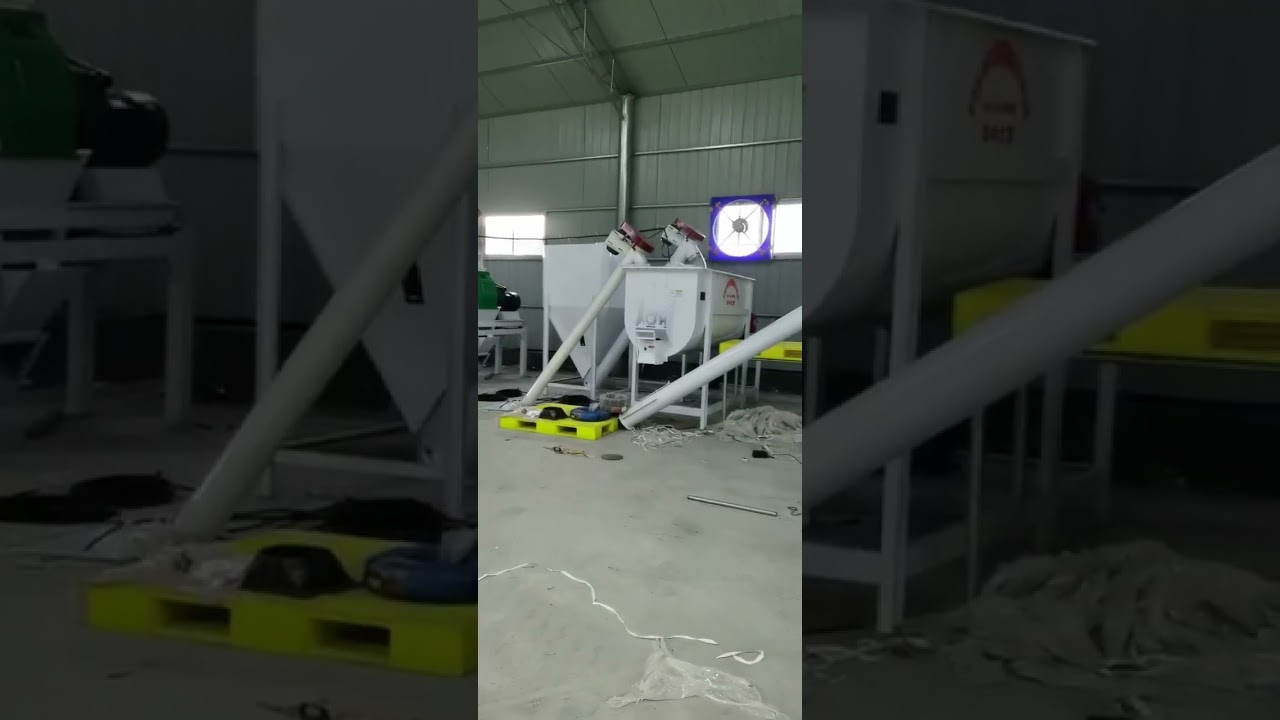


More test runs, shipping records and installation footage on our YouTube channel, and the whole Feed Processing Machines playlist.
What buyers ask before ordering a feed hammer mill
What is a feed hammer mill used for?
Grinding maize, wheat, barley, sorghum, soybean meal, cassava and roughage down to the mash a feed pellet mill, a mixer or an extruder needs. It is the first machine in a feed mill: nothing downstream works on whole grain.
What is the difference between a feed hammer mill and a wood hammer mill?
The screen, and what that does to capacity. Same chamber, same rotor, same hammers — but grain breaks on the first impact and wood does not, so a 22 kW feed hammer mill grinds three to four times what a 22 kW wood hammer mill will. A wood machine also has to survive abrasive bark and grit; a feed machine does not.
What screen size do I need?
2–3 mm for pig and poultry feed, 1.5–2 mm for fish and shrimp feed and for starter rations, 3–4 mm for cattle and for mash going into a pellet press, 5–10 mm for roughage. Two screens ship with the machine and more can be ordered with it.
How much does a feed hammer mill cost?
It depends on the frame, the drive and whether the silo, conveyor and control cabinet are part of the order — the 4 kW FS-198B on a skid and a 90 kW SD-800 grinding section are not in the same bracket. Send the grain, the screen size and the kg/h in a shift, and we quote the set.
Do I need a silo and a screw conveyor?
On a farm, no — a hopper and a slide gate are enough. In a plant, yes: a bin above the mill and an inclined screw conveyor with a variable speed drive are how the mill gets fed at a steady rate instead of in bursts. Feeding a mill by hand is how chambers block.
Can I run it from a generator?
Yes, but size the generator for the starting current, not the running load — six to seven times the motor rating for a second or two. A 37 kW mill on a 50 kVA set will stall; on a 120 kVA set with a soft starter it will run all day. Above 55 kW the diesel frames are usually the simpler answer.
What maintenance does it need?
Grease the bearings, check belt tension, and turn or replace the hammers when output drops. Feed work is gentle on hammers — a set often lasts a year or more — but the screen wears faster on high-oil material because it smears. Check the screen every few hundred hours.
How long is delivery?
7–15 working days after the deposit for the FS frames, 15–25 for the SD frames depending on the motor. Payment is TT with 40 % in advance and the balance before delivery; packing is a wooden or steel case.
Send the grain and the screen
The grain, the powder size the mixer or press needs, the kg/h you grind in a shift, and whether the mill goes on a skid or into a plant with a silo. Those four answers decide between the 4 kW frame and the 90 kW one.
- Emailinfo@pelletmachines.net
- WhatsApp+86 186 0385 1787
- HoursMon–Sat, 08:00–20:00 (GMT+8)
Send a photo of the grain and a photo of the site and we will tell you which frame fits, which screen to order, and what the motor will need from your supply.
What happens after you send this
We answer with the frame, the screen, the motor and a price — then send a test-run video on your grain before you pay a deposit.
Your details are not shared. One follow-up, no mailing list.