What Moisture Content for Wood Pellets12–15 % at the die, and what the other 35 % costs
Wood pellets want 12–15 % moisture at the die, and most material arrives at twice that. This page is the arithmetic in between: what 50 % sawdust really costs per tonne of pellets — 1.84 t in, 840 kg of water out, 84–110 litres of diesel — how a dryer is actually sized, and the three routes to the window in order of what they cost per kg of water.
- 12–15 % at the die, for wood
- 1.84 t of 50 % material for every t of pellets
- 840 kg of water per tonne, and what removes it
- A calculator: your moisture, your fuel price
Moisture measured in an oven, not with a handheld meter · Die ratio and litres per tonne reported with it
The short answer
A four-point window, and a ratio that multiplies every other cost on the site.
Wood pellets want 12–15 % moisture at the die — 12–13 % for sawdust, 14–16 % for straw and grass. Below 10 % the die cannot build a mat and the pellet crumbles; above 17 % the water flashes to steam inside the hole and the pellet swells and cracks. Everything else is the arithmetic of getting from what arrives to that window: 1.84 t of 50 % sawdust makes 1 t of 8 % pellets, the 840 kg of water in between takes 84–110 litres of diesel to evaporate, and on a 1,000 kg/h production line at 4,000 hours that is 340,000–440,000 a year in fuel before anything else is counted.
Moisture figures are by weight, wet basis: (wet weight − dry weight) ÷ wet weight. An oven at 105 °C for three hours is the reference method. A handheld meter is a guide, and on a pile of sawdust it reads the surface rather than the middle.
The moisture window, material by material
One figure per material, and what happens on either side of it. The right-hand column is the one people ignore: a dryer that overshoots is a cost, not a safety margin.
| Material | At the die | Wetter than that | Drier than that |
|---|---|---|---|
| Pine or hardwood sawdust | 12–15 % | Steam flashes inside the hole, the pellet swells and splits along the grain | Below 10 % the die cannot build a mat: dust, a hot die and no output |
| Wood chips, after chipping | 12–15 % | Wet chips smear in the chipper and bridge in the die instead of flowing | Below 10 % the chips grind to dust and the die blinds |
| Wheat straw, grass, alfalfa | 14–16 % | Lignin needs the water to soften; a wet straw pellet comes out spongy and springs back | Below 12 % straw scorches in the die and blocks it |
| Rice husk | 12–16 % | Husk at 18 % blinds a 1:9 die and the output halves | Below 10 % it will not bind without a starch binder |
| Palm fibre (EFB) | 12–15 % | Above 17 % the fibre wraps the rollers and the die slips | Below 10 % the fibre is too springy to compress |
| Bagasse | 12–15 % | Wet bagasse ferments in the pile before it ever reaches the die | Below 10 % it needs a binder and a longer die |
| Poultry manure | 15–18 % | Above 20 % the pellet sweats in the bag and grows mould | Below 14 % the pellet is dusty and the die wears fast |
The window moves with the material, not with the equipment: a pellet mill bought for sawdust will make a poor straw pellet at 12 % however the die is set. The compression ratio chart is the other half of the same decision — a wet material wants a shorter die, a dry one a longer die — and the 24-material guide has the moisture each of these arrives at.
Four columns of sentences do not fit a phone. Swipe the table sideways for the two failure columns, or read the first two, which are the numbers you came for.
The window is narrow because of what water does inside the die. Water is a plasticiser: it softens the lignin and lets the fibre flow into the shape of the hole. Too little and the lignin never softens, so the pellet is held together by friction alone and comes apart in the bag. Too much and the die cannot generate the pressure — the water flashes to steam as it leaves the hole, the pellet expands on the way out, and the cracks are already there when it lands in the pellet cooler.
It is also the cheapest variable to get wrong in one direction and the most expensive in the other. Material at 10 % instead of 12 % costs you nothing but a slightly worse pellet. Material at 50 % instead of 12 % costs 840 kg of water per tonne, and that is a dryer, a fuel bill and a person to run it. Which is why the first question about a new material is not which pellet mill, but what moisture it arrives at.
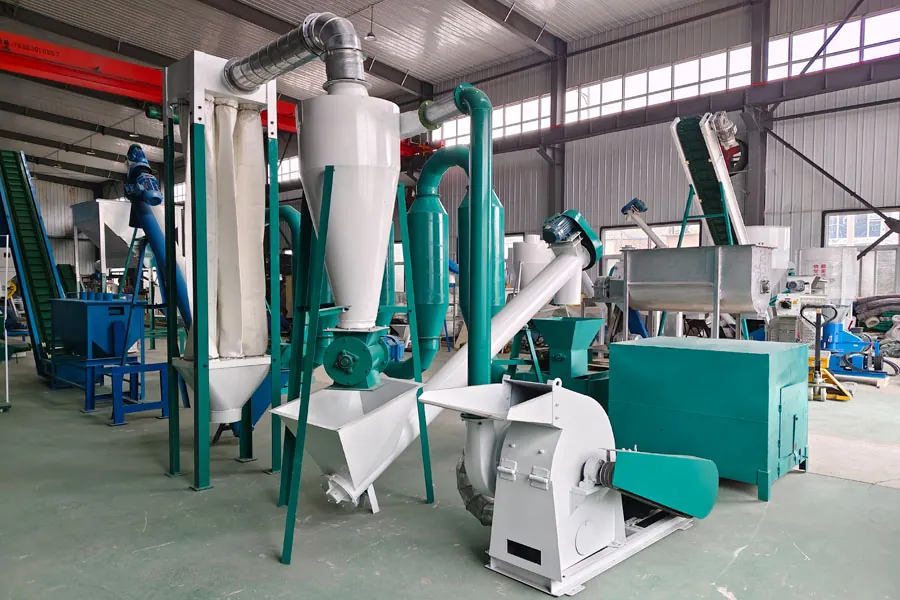
What 50 % sawdust actually costs per tonne of pellets
The wet-to-dry ratio first, then the water, then the fuel. Every other cost on the site is priced per tonne out, so this table multiplies all of them.
| As received | t in per t out | Water to remove | Diesel to dry it |
|---|---|---|---|
| 15 % | 1.08 t | 82 kg | 8–11 L |
| 20 % | 1.15 t | 150 kg | 15–20 L |
| 30 % | 1.31 t | 314 kg | 31–41 L |
| 40 % | 1.53 t | 533 kg | 53–69 L |
| 50 % | 1.84 t | 840 kg | 84–109 L |
| 60 % | 2.30 t | 1,300 kg | 130–169 L |
t in = (100 − 8) ÷ (100 − moisture as received), for a finished pellet at 8 %. The last column is 0.10–0.13 litres of diesel per kg of water, which is a drum dryer at 55–70 % thermal efficiency on a fuel carrying 35.8 MJ a litre. A gas dryer is cheaper per kg in most markets and a biomass burner cheaper again if you can burn your own dust — the litres are the unit, not the fuel.
Read the first two columns together and the rest of the page makes sense. At 15 % you are moving 1.08 t to make a tonne, which is a handling problem; at 60 % you are moving 2.30 t, which is a different factory. The difference between those two rows is not the pellet mill — it is a dryer, a fuel contract and 1,300 kg of water an hour.
The third column is the one to take to a dryer supplier. Ask what the dryer evaporates an hour, not what it produces, because the same drum rated at 1,000 kg of water an hour makes 1.2 t of pellets from 50 % material and 3.2 t from 30 %. Two suppliers quoting “1 t/h” can be quoting dryers that differ by a factor of three.
How much water the dryer has to take, at each output capacity
Kilograms of water an hour, not t of pellets an hour. This is the figure that sizes a dryer and the figure that prices the fuel.
| Build | At 50 % | At 35 % | At 20 % |
|---|---|---|---|
| 500 kg/h | 420 kg/h | 208 kg/h | 75 kg/h |
| 1,000 kg/h | 840 kg/h | 415 kg/h | 150 kg/h |
| 2,000 kg/h | 1,680 kg/h | 831 kg/h | 300 kg/h |
| 5,000 kg/h | 4,200 kg/h | 2,077 kg/h | 750 kg/h |
Water to evaporate an hour, at rated capacity and a finished pellet at 8 %. The 500 kg/h wood pellet production line and the 5000 kg/h wood pellet production line differ by a factor of ten in water, which is why a dryer does not scale by making the drum longer.
Two things follow. First, on a wet-material site the dryer is usually the largest single machine on the site, bigger than the pellet mill it feeds. Second, the build that looks cheapest per tonne of capacity is the one fed with the driest material — so a supplier who can take you from 50 % to 35 % mechanically has already halved your dryer.
Third, and this is the one that decides whether the site works: the water has to leave the building. A 2,000 kg/h production line on 50 % material is evaporating 1.7 t of water an hour, and that is 1.7 t of steam looking for somewhere to go. Roof vents, a cyclone and a stack are part of the dryer rather than an afterthought, and a dryer installed in a closed shed rains on itself.
Put your own moisture in
Six fields and no currency: the moisture, the output capacity, the fuel price. The answer comes back in litres, and in whatever you pay for a litre.
At 50 % as received and a pellet at 8 %, 1.84 t goes in for every tonne out. That is 840 kg of water, about 97 litres of diesel and 96.60 a tonne at 1.00 a litre — and 386,400 a year on a 1,000 kg/h production line at 4,000 hours.
0.115 litres a kg of water is the middle of a range: a drum dryer takes 3.7–4.7 MJ to evaporate a kg of water and diesel carries 35.8 MJ a litre, so 0.10–0.13 L. A gas dryer is cheaper per kg in most markets and a biomass burner cheaper again if you can burn your own dust, but the arithmetic is the same one — price the water, not the dryer.
The figure that surprises people is the fuel a year. A 1,000 kg/h production line on 50 % sawdust, at 4,000 hours, is 4,000 t of pellets and about 386,000 litres of diesel. That is not a rounding error in a business plan, it is the second-largest line in the cost per tonne after the material itself — which is why the cost per tonne page puts drying outside the six lines and says so.
If the figure looks unbearable, the answer is usually upstream rather than in the dryer. Buying kiln-dried sawdust, taking the dry offcuts from a furniture factory, or pressing the water out of EFB before it reaches the drum can all beat a bigger dryer on cost, and all three are cheaper to try than a second dryer. The payback calculation is where to test it: a press is capital, a litre of diesel is a cost per tonne.
From a wet pile to a price
In this order. The first step takes an afternoon and decides the other three.
Measure it in an oven, not with a meter
105 °C for three hours, or 130 °C for one. A handheld meter reads the surface, and the middle of a sawdust pile is wetter than the top. Three samples, from three places.
Turn it into a ratio before anything else
1.84 t in for 1 t out at 50 %. Every cost on the site is per tonne out, so the ratio multiplies all of them — get it wrong and the whole page is wrong.
Take the cheapest route to the window
Blend, press, dry, in that order. A dryer is the third choice and the one most sites buy first, because it is the only one of the three sold as a single item.
Price the water, not the dryer
Litres per kg, times your fuel price, times your t a year. A dryer that costs 20 % less and burns 15 % more fuel is the more expensive dryer, every year, for as long as you run it.
The thing to hold on to is that water is the only input on a pellet site you pay for twice: once when you buy it inside the material, and once when you boil it off. A tonne of sawdust at 50 % is half a tonne of water bought at the sawmill's price, and the dryer's job is to give it back to the sky. Which is why the first question to a material supplier is not the price per tonne but the moisture, and why a price quoted per dry tonne is always the cheaper one.
The second thing is that the window moves with the material, not with the equipment. Straw wants 14–16 % where sawdust wants 12–15 %, and no die setting makes a good straw pellet at 12 %. The 24-material guide has the figure for each of them, and the compression ratio chart has the die that goes with it.
Getting to the window, cheapest first
In order of cost per kg of water removed. Most sites start with the third one.
-
Blending
Mix wet material with dry. The water never evaporates, it just gets diluted, so the cost per kg removed is the price difference between the two materials plus a mixing screw. Needs a source of dry material, and it caps out at whatever that supply is.
-
Mechanical dewatering
A screw press takes palm fibre from 60 % to 35–40 % for a fraction of the thermal energy a drum needs, and the water off a screw press is clean enough to reuse. The right first step for EFB, bagasse, and brewer's grain. It costs a press, a screen and maintenance on both.
-
Thermal drying
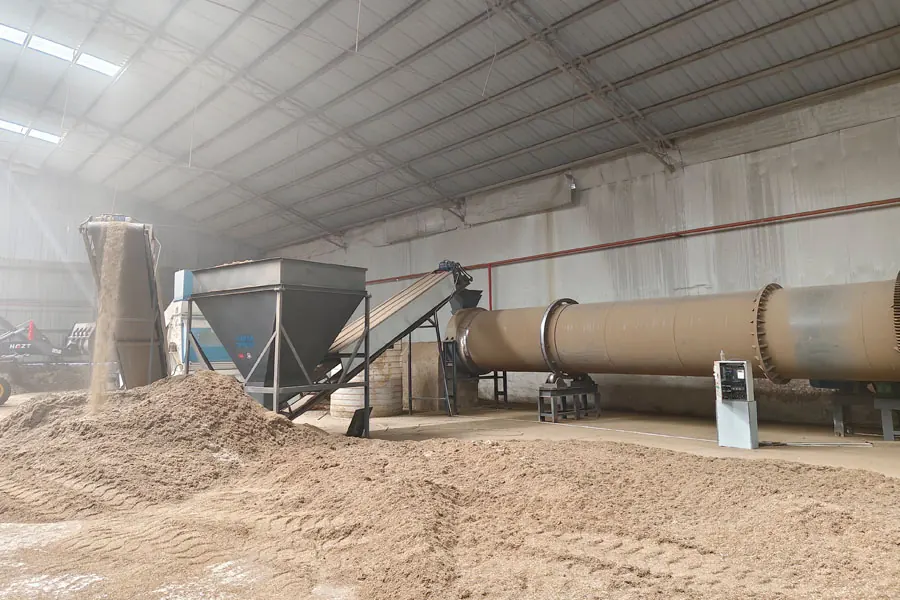
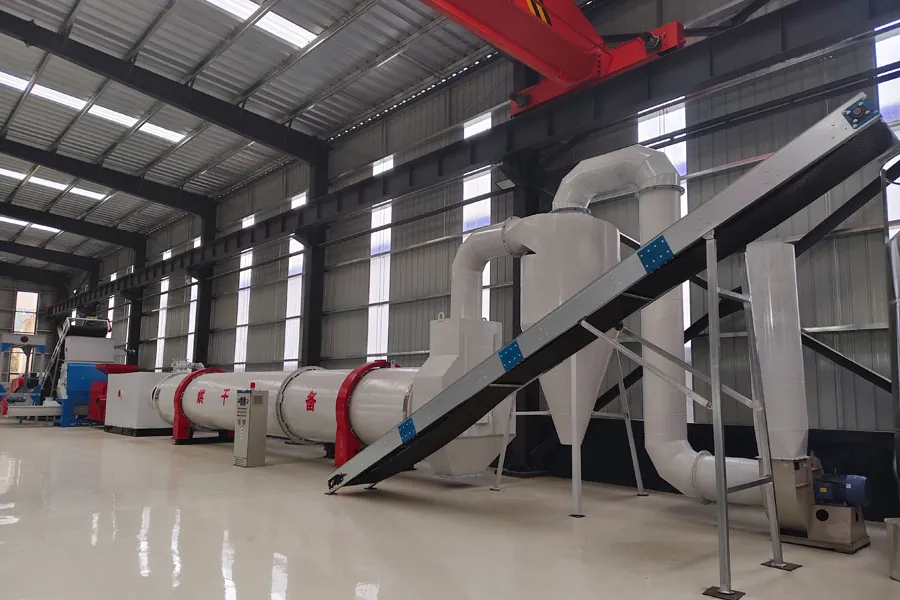
A drum or flash dryer, 3.7–4.7 MJ per kg of water. The only one of the three that reaches 12 % from 50 %, and the only one that costs fuel every hour it runs. The biomass sawdust dryer page has the models and the heat sources.
The order matters because the three are not interchangeable. Blending is limited by the dry material you can find, mechanical dewatering stops at about 35 %, and thermal drying is the only route to 12 % — so most wet-material sites end up using two of the three in series, and the only real question is which two.
What buyers ask about moisture
Eight questions, answered the way we answer them on the phone.
What moisture content should sawdust be for pellets?
12–15 %, and 12–13 % is the sweet spot for pine and hardwood sawdust. Below 10 % the die cannot build a mat and you make dust; above 17 % the water flashes to steam in the hole and the pellet cracks.
Can you pellet wet sawdust?
Not usefully. At 20 % you can, with a short die and a lot of patience, and the output drops. At 30 % and above the pellet mill will run but the pellet will not hold, and you are paying to move water through a pellet mill that cannot remove it.
How much does it cost to dry sawdust for pellets?
0.10–0.13 litres of diesel per kg of water removed, so 84–110 litres per tonne of pellets from 50 % material. At 1.00 a litre that is about 97 a tonne — more than the electricity, on a site that dries.
How do I measure the moisture content of sawdust?
Weigh a sample, dry it at 105 °C for three hours, weigh it again. Moisture is (wet − dry) ÷ wet. A handheld meter is fine for a trend but it reads the surface, and a pile is wetter in the middle than on top.
Is 20 % moisture too wet for wood pellets?
It is workable but expensive: 150 kg of water per tonne to remove, which is a small dryer or a blend with dry material. Most sites at 20 % dry to 12 % rather than run the pellet mill at the edge of the window.
Can I add water if my material is too dry?
Yes, at the mixer or with steam conditioning at the die. Below 10 % the die cannot build a mat and the pellet is held together by friction alone, which is why a dry summer can make a worse pellet than a wet one.
Does a wood hammer mill dry the material?
No. It adds a little heat through friction and loses a point or two of moisture in the air stream, which is not the same as drying. On material above 18 % a wood hammer mill smears rather than grinds and the screen blinds over.
What is the moisture content of a finished wood pellet?
6–8 %. The die heats the material and drives some water off, and the pellet cooler takes the rest out as the pellet comes down to ambient temperature. 8 % is the figure every ratio on this page is built on.
Send 20 kg and we will measure it
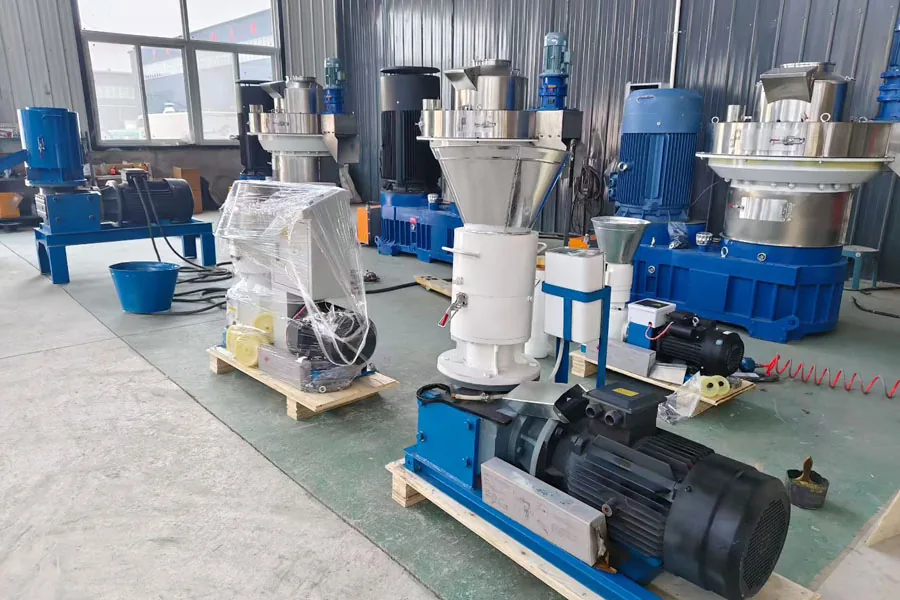
In a sealed bag, with a note of where it came from and when. We measure the moisture in an oven, run it on a 7.5 kW flat die pellet mill with three die ratios, and tell you what it needs before it will pellet — a dryer, a press, a blend, or nothing at all.
What happens after you send it
We reply with the measured moisture, the die ratio that holds at that moisture, the water you have to remove per tonne and the litres it will take. If your material is already inside the window, we say so and quote the pellet mill on its own.
Your details are not shared. One follow-up, no mailing list.