


Pellet Mill Spare PartsThe die plate, the roller shell, and the numbers that have to match
A die plate is not a part you buy once. It is a consumable with a life measured in hours — 500 to 800 on clean wood, 200 to 300 on rice husk — and the order that goes wrong is almost never the wrong part. It is the right part at the wrong size. This page is what wears and in what order, what to measure before you send a purchase order, and how many to keep on the shelf so a Friday afternoon does not stop the operation.
- Die plates for flat die pellet mills, Ø150 to Ø580, 1:4 to 1:10 compression ratio
- Roller shells and complete roller assemblies, two-roller and three-roller
- Die rings and clamp bands for HML-560 to HML-700
- Bearings, shafts, seals, cutter blades, shear pins and screen decks
Reply in 12 working hours · Quoted off your measurements, not off a model name · Stock items out in 3–7 days
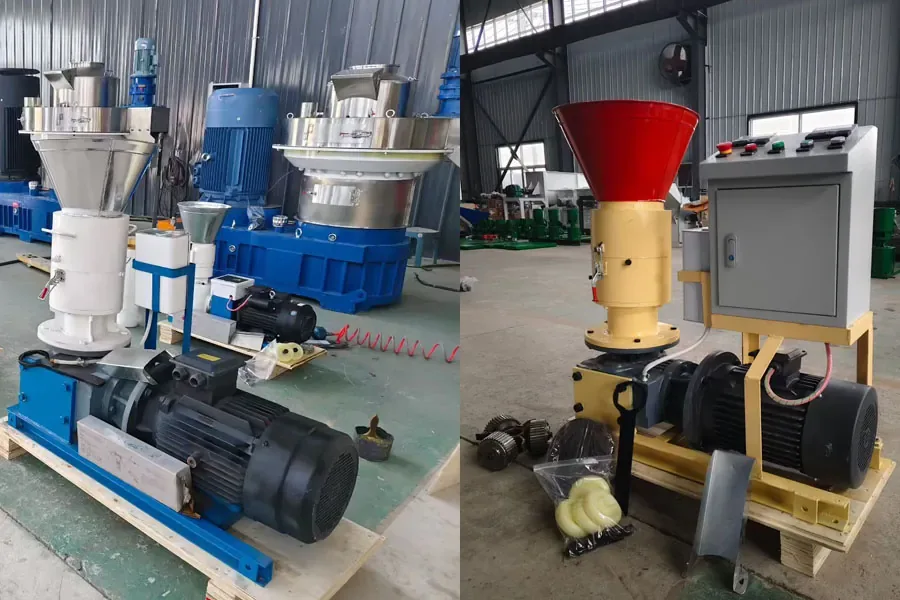
Six parts, and the order they give up in
A pellet mill has more than six hundred parts and six of them decide whether it runs. They fail in a predictable order, and the first two fail together — which is where most of the money on this page is lost.
The die plate on a flat die pellet mill, or the die ring on a vertical ring die pellet mill, is where the work happens. Material is dragged between a roller and a steel plate with holes in it and forced through under pressure. The hole wall is what the part is judged on: its length divided by its diameter is the compression ratio, and that ratio plus the steel is what the pellet is made of. Everything in the hole wall wears from the inside, so a die plate does not fail in a way you can see from the outside — it fails by getting slower, and then by making a pellet with a tail on it.
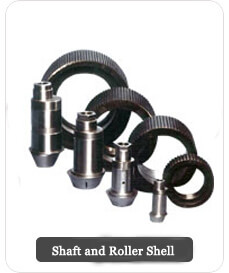
Read the die plate and the roller shell as one pair. A roller shell gives roughly two-thirds of the hours the plate gives, so a die plate that reaches 800 hours has had two or three shell sets under it. Fit a new die plate over worn shells and the flats on those shells stop the material rolling into the holes: the plate that should give 700 hours gives 300, and no one can tell you why from the invoice. This is the most expensive mistake in the list and it costs nothing to avoid.
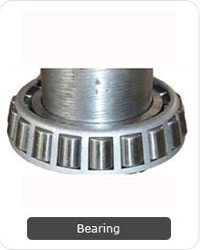
Below the pair the order is bearings, and bearings do not die of hours — they die of grease. A roller bearing is good for 1,500 to 2,500 hours on clean wood, and it will still be good at 1,200 hours if it was greased on schedule with the right grease and the seal held. It will be scrap at 400 hours if water got in, which on a pellet mill standing in a shed in a wet season is the normal case rather than the exception. A main shaft bearing is an 8,000 to 12,000 hour part and should never be the reason a pellet mill stops.
Under that sit the parts that are cheap and get ignored: the cutter blades that set pellet length, the screen that takes the fines out, the shear pin that saves the gearbox when a stone goes through, and the clamp bolts that hold the plate down. Bolts do not wear out, they fatigue — heat cycles and a clamp run loose, not hours. They are replaced with the die plate, not because they are worn, but because the cost of one failing is a cracked die plate and a day of production.


Hours are for a pellet mill running at 12–15 % moisture on clean material. The full table, material by material, is on the pellet die life page — this page is about ordering the parts, not about measuring their life. Abrasive material is the other half of the same question: the feedstock page ranks the 24 materials by what they do to a die.
Seven parts, and the number that decides whether each one fits
Almost every wrong order we have shipped in twenty years was a dimension rather than a part. A die plate is four numbers and a bolt pattern, and the one that comes back is nearly always measured in the wrong place.
| Part | What we need from you | Where the order goes wrong |
|---|---|---|
| Die plate (flat die) | Outside diameter, working-face diameter, thickness, hole diameter, hole count, compression ratio, and the bolt or keyway pattern | The outside diameter is easy to measure and the working face is what the roller runs on. A die plate 2 mm down on the working face is a different part with the same OD |
| Roller shell | Outside diameter, width, bore, and the shaft diameter it presses onto | Shells are sold by OD and bore. One that fits the shaft and not the yoke binds on the die plate instead of rolling on it |
| Roller assembly | Shaft length, thread and nut size, yoke width, and whether the pellet mill carries two rollers or three | A two-roller yoke does not take a three-roller shaft, and the two part numbers look alike on a photo |
| Die ring | Outside diameter, inside diameter, width, hole diameter, and the clamp band type | The clamp band is matched to the die ring. A die ring that fits the chamber but not the band will not seat, and running it unseated cracks the die ring |
| Bearing | The designation stamped on the bearing — 6206-2RS, 32210, and so on — not the dimensions | A worn tapered bearing measures undersize. Order the size you measure and the new bearing spins on the shaft |
| Main shaft | Diameter at each bearing seat, keyway width, overall length, thread | Same trap as the bearing: the seat is worn, so the measurement is smaller than the drawing and the new bearing will not grip |
| Screen | Mesh size, frame diameter and frame thickness | A 2 mm screen and a 2.5 mm screen photograph identically. The fines figure in the bag is decided by the one you did not mean to order |
Send a photo of the old part with a rule laid across it, and a photo of the model plate on the pellet mill. Between the two we can usually confirm a part before a drawing is made.
The compression ratio is the number most often guessed. It is the length of the hole divided by its diameter: a 6 mm hole through a 36 mm plate is 1:6. Measure the plate thickness with a calliper, measure the hole with a drill shank or a pin gauge, and divide. The compression ratio chart carries the ratio we cut for each material, and if your ratio and your material disagree, the ratio is the thing to change rather than the material.
Hole count is the second. Two plates with the same OD, the same thickness and the same hole diameter can carry 180 holes or 240, and the one with fewer holes will run cooler and slower. That is a design decision, not a mistake — but it has to be the same decision we made the first time, or the pellet mill will not make the output the quotation promised.
A flat die pellet mill, assembly by assembly
Eight assemblies cover everything that is ever replaced on a flat die pellet mill, from the die plate to the shear pin. The rest of the pellet mill is frame, motor and paint.
- Die plateOne piece, Ø150 to Ø580 depending on the model, 1:4 to 1:10 compression ratio. The only part on the pellet mill that is consumed by design.
- Roller shellCorrugated or knurled, two or three per mill, pressed onto the roller shaft. Replaced about twice per die plate.
- Complete roller assemblyShell, shaft, bearing, seal and nut, pre-assembled and greased. The version to keep on the shelf if a pellet mill has to be back in service the same day.
- Die clamp and boltsHolds the die plate to the main shaft. Replaced with the die plate because the bolts fatigue rather than wear.
- Main shaft and bearingsA tapered roller pair on the vertical shaft, good for 8,000–12,000 hours. Replaced as a set with the seals.
- Coupling and shear pinThe cheapest part on the page and the one that saves the gearbox. A stone or a piece of tramp metal shears the pin instead of the drive.
- Cutter blades and screenSet the pellet length and take the fines out. Four blades on most models, adjustable, and the first thing to check when pellet length drifts long.
- Gearbox and driveThe part you should never need. If it fails, the cause is upstream — a shear pin that was replaced with a bolt, or a die run out of balance.
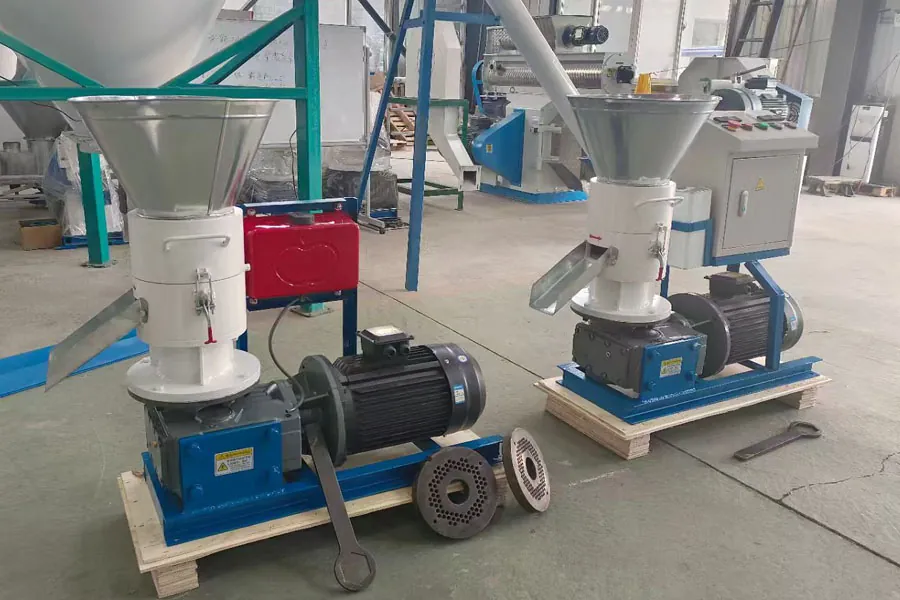
The models this list covers: flat die pellet mill PM-D225B to PM-D580B, flat die feed pellet mill, roller-driven pellet mill, diesel pellet mill and PTO flat die pellet mill. The die plate is common across the electric, diesel and PTO versions of the same frame; the drive is not.
A vertical ring die pellet mill holds its parts differently
Above about 800 kg/h the pellet mill changes shape and so does the parts list. The die ring is held by a clamp band, the rollers sit inside it, and the whole assembly turns.
On a vertical ring die pellet mill the die ring is vertical and the material is thrown outward against it by rollers that sit inside the die ring. The die ring is held by a clamp band that is matched to it, and the band is the part that catches people out: it is not a consumable, it is a pair with the die ring, and a die ring ordered without telling us the band type can arrive 5 mm out and refuse to seat.
The rollers inside are smaller than a roller for a flat die pellet mill and there are two or three of them. They wear the same way — a flat first, then a smooth patch — and they are changed with the die ring rather than between die rings, because the access is the same either way.
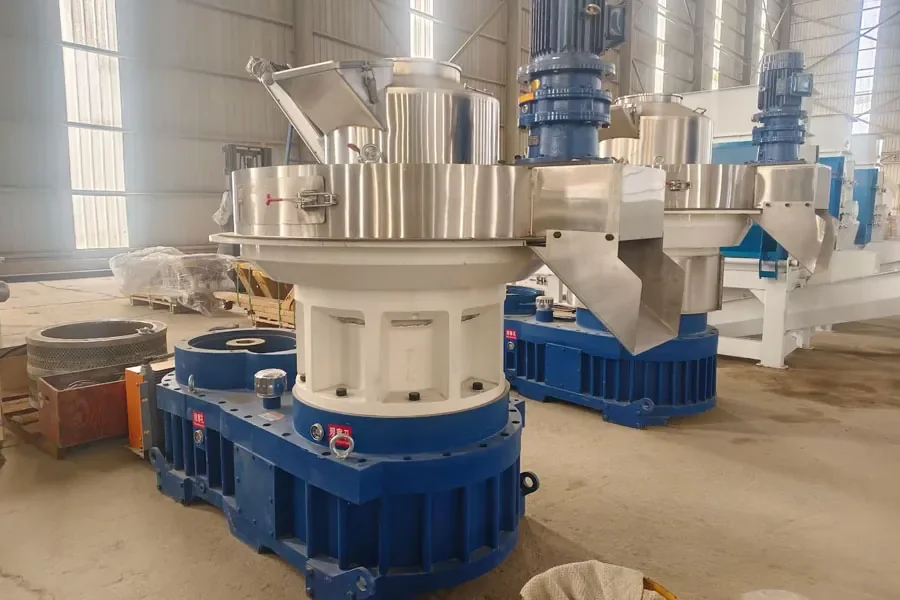
- Die ringØ560 to Ø700 on the HML series, 500–800 hours on clean wood. Comes out with the clamp band, not separately.
- Clamp bandMatched to the die ring. Not a wear part, but it is a pair — order the two together or send us the band number.
- Rollers and roller shaftsTwo or three inside the die ring, changed with the die ring. The shafts are good for several sets if the seals hold.
- Main bearing and shaftThe vertical shaft that carries the die ring. An 8,000+ hour part; when it fails the cause is usually grease or balance.
- Feeder and conditionerOnly on mills that carry one. The wear parts here are the paddles and the bearings, not the shell.
- Shear pinOn the drive coupling, same job as on a flat die pellet mill and the same warning: never replace it with a bolt.
Ring die models: vertical ring die wood pellet mill HML-560 to HML-700. The same die ring is used on the grass pellet mill build and on feed pellet lines, cut to a different compression ratio.
How many to keep, worked out in hours rather than in feeling
A die plate is 650 hours of production and the operation runs 3,000 hours a year. That is five dies, not one, and the number is worth knowing before the pellet mill stops on a Friday.
At 20 t a day over 10 hours the operation makes 2,000 kg/h, which is an HML-600 — a vertical ring die pellet mill, so the part is a die ring. Clean softwood gives about 650 hours a die, so 3,000 machine-hours a year is 5 dies and 10 roller shell sets.
The arithmetic assumes 300 working days a year, which is the figure most plants in this trade actually run and the one that makes a parts budget honest. Output is finished pellets, not raw material in. The life figure is the middle of the range for the material — abrasive material takes the bottom of the range and a plant that runs wet takes it further down still.
The stocking rule that works is one die plate on the pellet mill, one on the shelf, and roller shells to match — two sets per die plate. An operation with one pellet mill and no spare die is one broken part away from a week of downtime, because a die plate is not a stock item at your local bearing shop: it is cut to your hole size, your thickness and your ratio, and the quickest honest lead time from us is 15 to 25 days on a made-to-order plate. The arithmetic above is what that week costs in dies you did not buy.
Roller shells are the opposite: they are cheap, they are the part that fails first on abrasive material, and a plant that keeps two sets on the shelf never loses a shift to one. Bearings and seals are a third category — they fail from water rather than hours, so the stock rule is one set per mill plus the grease that keeps them alive. The maintenance schedule covers the grease intervals; this page is about what sits on the shelf. Fitting what comes off the shelf is a separate job, and it is on the die and roller change procedure.
- One mill, first yearSecond die plate, second set of roller assemblies, two spare shells, one set of main bearings, two boxes of shear pins. Between 8 and 15 % of what the pellet mill cost.
- Two or three millsThe same list per mill, plus one shared set of roller assemblies — the assemblies are interchangeable across a frame size even when the die plates are not.
- A plant that runs abrasive materialDouble the shells and add a second screen deck. Rice husk, straw and anything with sand in it eats shells before it eats dies.
- A plant in a wet seasonAdd seals and grease, not steel. Water in the grease is what turns a 2,000 hour bearing into a 400 hour bearing.
Eight symptoms, and which part each one is telling you about
A pellet mill tells you what is worn before it stops. The skill is reading the pellet rather than the part, because the die plate is the last thing you can see and the first thing you blame.
| What you see | What it is | What to change |
|---|---|---|
| Output down 10–15 % at the same motor load | The hole wall has been peened inward by the roller, so the effective hole is smaller than the one that was drilled | The die plate. Re-drilling a used plate is not a repair — it removes the hardened wall the pellet was made against |
| Pellets with a fin or a tail on one end | The entry chamfer has polished away, so material is smeared into the hole instead of being cut into it | The die plate, and check the roller shells at the same time |
| Fines in the bag up from 2 % to 6 % | Cracks from over-pressure, usually a shell with flats that is riding rather than rolling | Roller shells first. If the fines stay high after a new set, the die plate is next |
| A bright polished ring on the die plate face | The roller is skidding. The shell is out of round, or the roller shaft is bent | The roller assembly, not just the shell |
| The pellet mill knocks under load | A flat on a shell, or a roller bearing with visible play | Shells and roller bearings together — the bearing that caused the flat is the one that will fail next |
| Pellets soft at a moisture that used to work | The working face has worn down, so the hole is effectively shorter and the compression ratio has drifted | The die plate. Measure the thickness before you order the replacement — a worn plate is thinner than the drawing |
| Grease weeping at the roller end | The seal has gone and the grease is being pushed out rather than held | The seal and the bearing. The shell is usually still good |
| A crack running out of a bolt hole | Fatigue from a die clamp that was run loose, not from the die plate wearing | The die plate and the clamp bolts, and a torque wrench on the next set |
Two of these eight are not the die plate, and one of them — the polished ring — is a roller problem that a new die plate will not fix. The troubleshooting page covers the pellet faults that are not wear at all.
A die plate is a steel specification with holes in it
Two die plates can be dimensionally identical, fit the same mill, and be 40 % apart in life. The difference is the steel, the heat treatment and the finish inside the hole — none of which shows on a photograph or a price list.
The hole is not drilled and left. It is drilled, reamed, and the entry is chamfered so the material can find it. A die plate whose holes are drilled and not reamed has a wall finish that grabs the pellet on the way out, and the pressure that builds is what closes the hole early. A die plate whose chamfer is stamped rather than cut has a work-hardened lip that chips. Both look correct in a crate.
Heat treatment is the other half. A die plate that is too soft peens over in 200 hours; one that is too hard chips at the chamfer and cracks from the bolt holes. The window is narrow, it is not visible, and it is the first thing a low-cost supplier gives up — because hardness costs a furnace cycle and nobody can check it in a photograph.
The arithmetic is simple and it is the only argument that matters. Take a die plate that gives 650 hours at index price 100. Take the cheaper plate at 70 and give it 400 hours, which is the honest figure for a die plate that has not been reamed. Cost per hour of production: 0.154 against 0.175. The cheaper plate is 14 % more expensive per hour, and it also costs two extra die changes a year — which is the part nobody puts in the comparison.
What we will do is tell you which material the plate is cut for and what ratio it carries, in writing, on the quotation. If a supplier will not put the ratio and the hole diameter on the paperwork, the price is the only thing being compared and it is not the thing that decides the cost.
What happens between the email and the crate
A die plate is a heavy, made-to-order steel part. The order is quick if the numbers arrive with the first email, and slow if they arrive one at a time.
- Stock itemsRoller shells, complete roller assemblies, bearings, seals, cutter blades, shear pins and screens for the models we build. Out in 3 to 7 days.
- Made to orderDie plates and die rings cut to a hole size and ratio. 15 to 25 days, because the plate is drilled, reamed, heat treated and finished rather than picked off a shelf.
- PackingDie plates travel in a plywood crate with the face protected, not in a carton. A die plate that arrives with a dinged working face is a die plate that has to be replaced before it runs.
- ShippingCourier for shells, seals and bearings. Air or sea for a die plate — a die plate is 15 to 110 kg depending on size, and the crate is most of the volume.
- With the pellet millIf a pellet mill is on order, put the parts on the same bill of lading. The freight is nearly free and the parts arrive before the first die is worn.
- PaperworkEach part ships with the model, the die plate size, the hole diameter and the ratio stamped or written on the crate label, so the next order does not start from a photograph.
Prices for a die plate, a shell set and a first-year kit sit inside the pellet mill quotation guide, which is where the 8–15 % figure for a first-year parts budget comes from. What the parts cost is a smaller question than what a week of downtime costs, and only one of the two is on the quotation.
The same crate carries the wear parts for everything else
A pellet plant is a die plate plus five other stages in the flow, and each stage has its own consumables. Bought together they are one freight, one customs entry and one shelf with a label on it.
What buyers ask before they order a part
Eight questions, answered the way we answer them on the phone.
Do I have to replace the die plate and the roller shells at the same time?
No, but read them together. A roller shell gives about two-thirds of the hours the die plate gives, so a die that reaches 800 hours has had two or three shell sets under it. If you fit a new die plate over worn shells, the flats on those shells stop the material rolling into the holes and the new plate gives 300 hours instead of 700. Fit shells with a die, not instead of one.
How long does a die plate last?
500 to 800 hours on clean wood at 12–15 % moisture, and 200 to 300 hours on rice husk. In output that is roughly 1,000 to 1,600 t of pellets through one die plate on wood, and half that on an abrasive material. The full table, material by material, is on the pellet die life page.
Can you make a die plate to my drawing?
Yes. Send the drawing or the seven numbers — outside diameter, working-face diameter, thickness, hole diameter, hole count, compression ratio, and the bolt or keyway pattern — and we will confirm the ratio we would cut for your material before quoting. A drawing we have not checked is a drawing we will build exactly as it is written, including the mistake.
How do I know which die plate my mill takes?
Two photographs and one measurement. Photograph the model plate on the pellet mill, photograph the old die plate with a rule laid across it, and measure the thickness with a calliper. The model plate gives us the frame; the measurement gives us the plate, because the same frame has been built with more than one die size over the years.
What is the compression ratio and how do I check it?
The length of the hole divided by its diameter. A 6 mm hole through a 36 mm plate is 1:6. Measure the plate thickness with a calliper, measure the hole with the shank of a drill bit or a pin gauge, and divide. If your ratio and your material disagree, change the ratio rather than the material — the ratio chart carries what we cut for each feedstock.
Why is my new die plate giving less output than the old one?
Three usual reasons. It has not run in yet — a new plate needs two to four hours on material before the holes polish and output settles. The ratio is wrong for the material, which makes the plate harder to push through than the one it replaced. Or the roller shells under it are worn, which shows as a bright ring on the die plate face and a pellet with a tail.
Do you supply parts for other makes of pellet mill?
We make to dimension rather than to a brand, so if the seven numbers match, the part fits. What we will not do is guess: send the measurements and a photograph, and if the part is a pattern we have not cut before we will say so before taking the order rather than after.
How fast can you ship a die plate?
A stock item — shells, bearings, seals, blades, screens — is out in 3 to 7 days. A die plate or a die ring cut to your hole size and ratio is 15 to 25 days, because it is drilled, reamed, heat treated and finished. Air freight adds 5 to 8 days and sea freight 25 to 40, so the part that arrives in three weeks was ordered eight weeks ago.
Send the numbers and we will quote the part
The pellet mill model, the die plate size, the hole diameter and the quantity. If you have the old part, a photograph with a rule across it settles most of the rest.
A die plate quoted without the ratio is a die plate quoted for somebody else’s material. We will come back with the ratio we would cut, the hole diameter we would use and the hours we expect from it, and you can compare that against what the last plate gave you.
If the honest answer is that your material needs a different ratio, or that the pellet mill is running the wrong die plate for what it is being asked to do, we say so before you order — the sizing guide is where that conversation usually starts.
Send the die plate dimensions
Model, die size, hole diameter, ratio and quantity. Photos welcome — one of the model plate and one of the old part with a rule beside it.
Reply in 12 working hours. One follow-up, no mailing list.