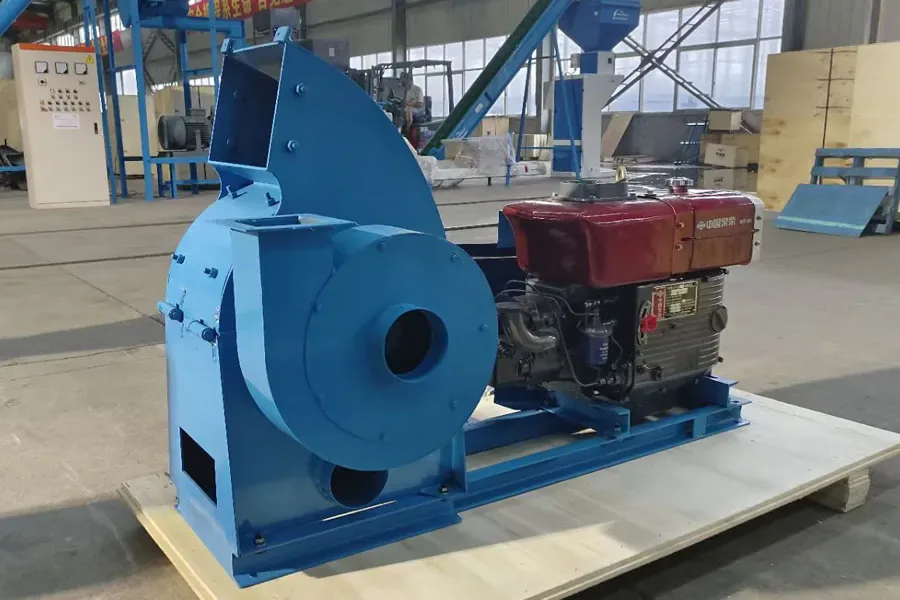
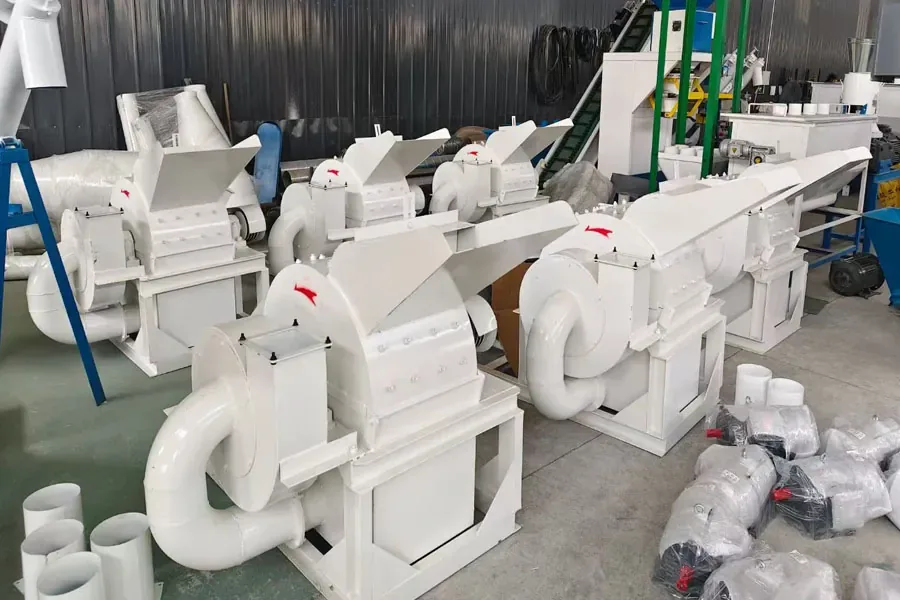
Wood Chipper MachineDP series — 500 to 2,500 kg/h, logs up to 280 mm
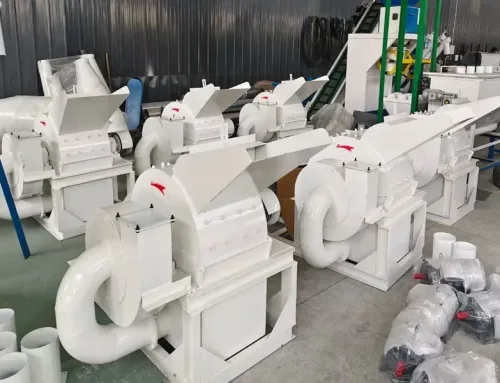
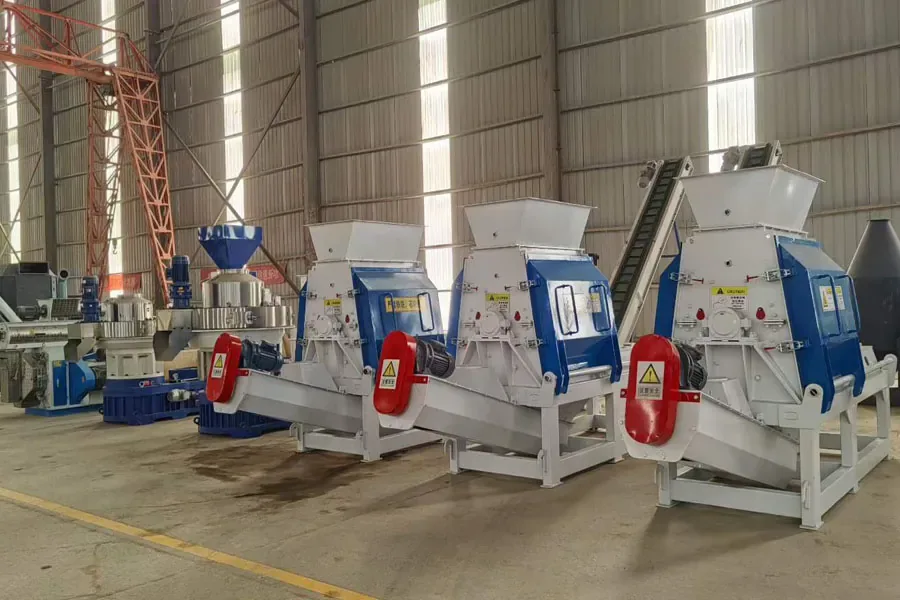
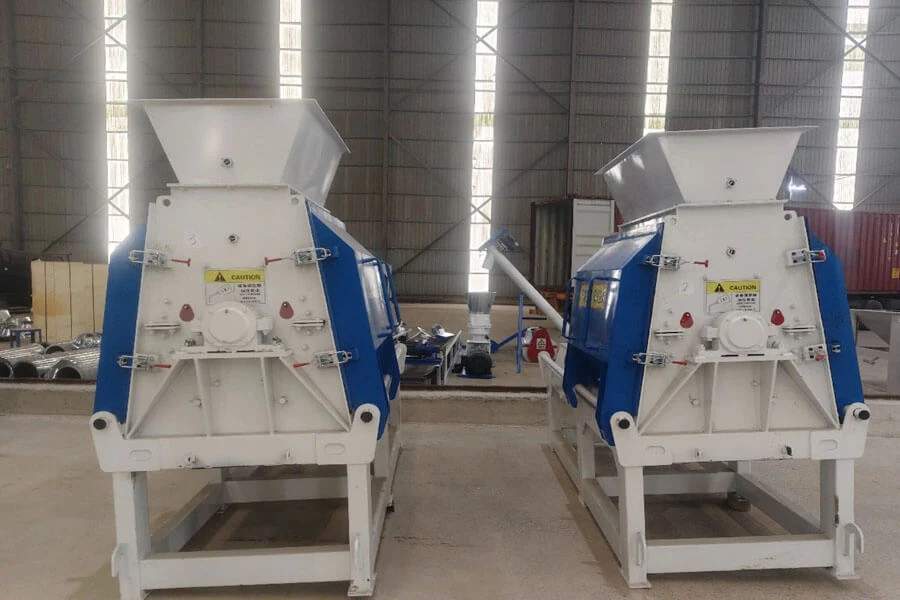
A wood chipper machine cuts logs, branches and slabs into chips with a steel knife disc, then blows the chips out through a cyclone. Seven frames: four on an electric motor from 11 to 37 kW, three on a diesel engine from 22 to 55 hp. The feed opening and the largest log the machine will take are the two numbers that decide the model.
- DP-420B, DP-500B, DP-600B and DP-700B — 11, 22, 30 and 37 kW
- DP-420A, DP-500A and DP-600A — 22, 41 and 55 hp diesel
- 500–800 up to 1,800–2,500 kg/h of chips, on a 200 × 200 or 280 × 280 mm feed opening
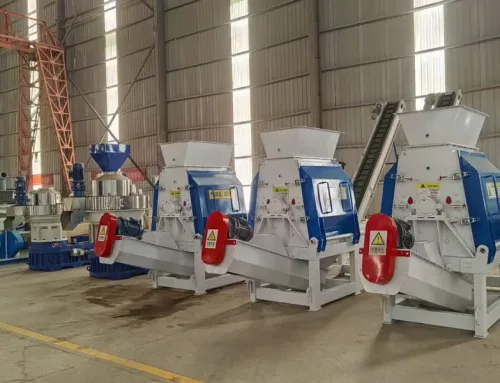
- Knife disc, blower, cyclone and bolted ducting on one base frame
Reply in 12 working hours · Knives and a spare set ship with every unit · Delivered to 40+ countries

A disc with knives, and a screen that decides the chip
A wood chipper machine is the only machine in a pellet line that cuts rather than beats. That one difference sets its shape, its capacity and the size of the material it will accept.
The working part is a steel disc carrying three or four knives on its face, bolted to a shaft that turns at 1,000–1,500 rpm. Material drops down the feed chute at an angle to the disc, the knives slice across the end grain, and the chip falls through a gap between the knife and a bed plate. Nothing is crushed and nothing is hammered, so the chip keeps its fibre and comes out in a narrow band of sizes.
Where a wood hammer mill takes material that is already small and beats it into powder, a wood chipper machine takes material that is too big to feed anything else — whole branches, slabs, offcuts, pallet blocks — and reduces it to something a hammer mill can handle. That is why the two machines usually appear together, chipper first, mill second.
The limit on the machine is the feed opening and the disc diameter. A 200 × 200 mm opening takes material up to 150–200 mm across; a 280 × 280 mm opening takes up to 250–280 mm. Feed it a log larger than the opening and the disc will stall or the belt will slip, which is why the model table quotes a maximum material diameter next to every frame.
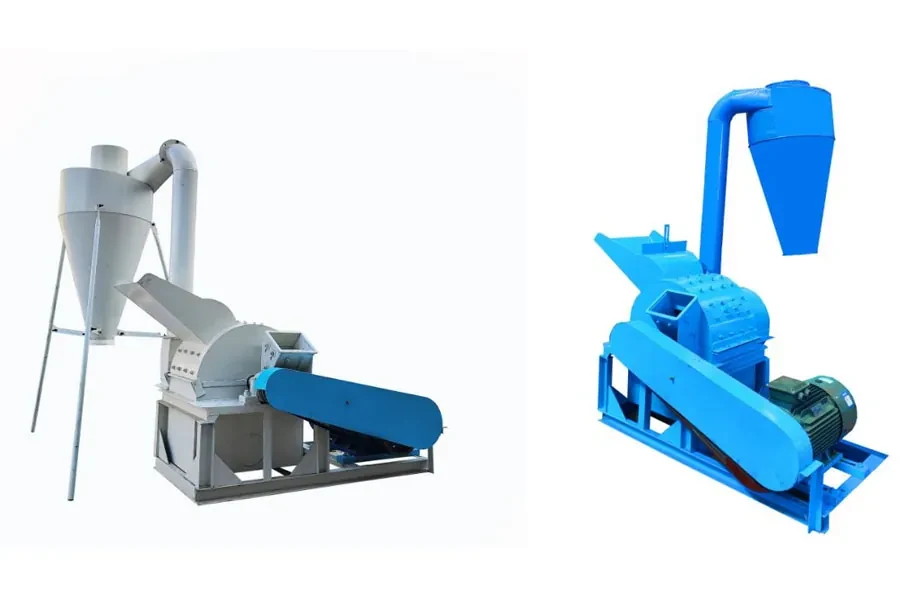
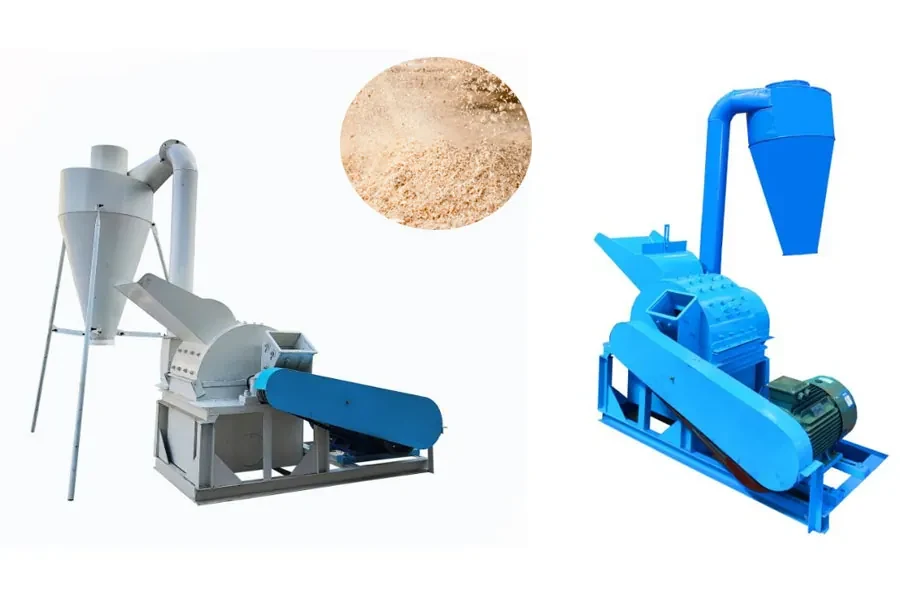
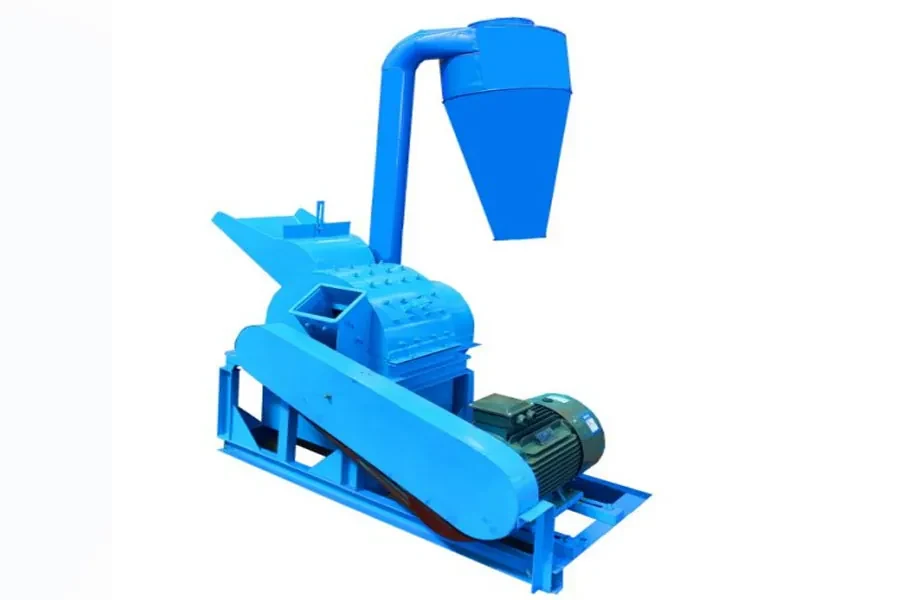
Seven frames, 11 to 55 hp
Capacity is quoted on softwood branches and slabs at 15–20 % moisture, chipping to a 15–30 mm chip. Hardwood runs 20–30 % lower on the same frame; green timber and stringy bark run lower again. The maximum material diameter is the hard limit, not a target.
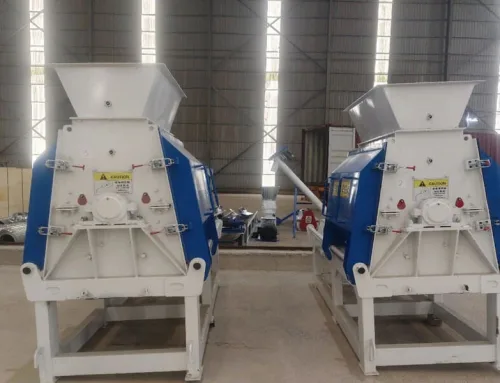
Wood chipper machine, DP-B series electric motor
| Model | Motor | Capacity | Feed opening | Max material Ø | Size L×W×H | Weight |
|---|---|---|---|---|---|---|
| DP-420B | 11 kW (15 kW option) | 500–800 kg/h | 200 × 200 mm | 150 mm | 1600 × 600 × 1200 mm | 360 kg |
| DP-500B | 22 kW | 800–1,200 kg/h | 200 × 200 mm | 200 mm | 2200 × 1300 × 1450 mm | 700 kg |
| DP-600B | 30 kW | 1,200–1,800 kg/h | 280 × 280 mm | 250 mm | 2300 × 1450 × 1450 mm | 800 kg |
| DP-700B | 37 kW | 1,800–2,500 kg/h | 280 × 280 mm | 280 mm | 2450 × 1500 × 1450 mm | 900 kg |
All four are 380 V three-phase, 50 Hz; 415 V / 60 Hz and 220 V three-phase are built to order. The DP-420B can be ordered with a 15 kW motor in place of the 11 kW one — worth it if you chip hardwood all day. Sizes are the machine; the packing case is larger and is quoted with the order.
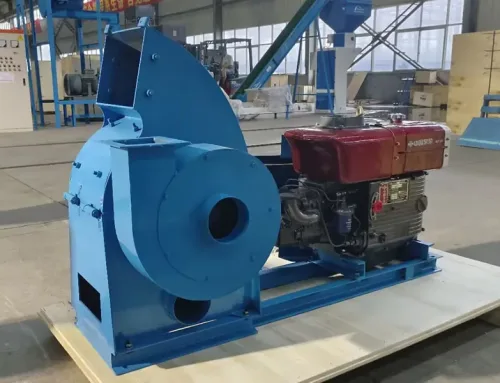
Wood chipper machine, DP-A series diesel engine
| Model | Engine | Capacity | Feed opening | Max material Ø | Size L×W×H | Weight |
|---|---|---|---|---|---|---|
| DP-420A | 22 hp | 500–800 kg/h | 200 × 200 mm | 150 mm | 2200 × 1080 × 1100 mm | 635 kg |
| DP-500A | 41 hp | 800–1,200 kg/h | 200 × 200 mm | 200 mm | 2400 × 1100 × 1450 mm | 850 kg |
| DP-600A | 55 hp | 1,200–1,800 kg/h | 280 × 280 mm | 250 mm | 2600 × 1300 × 1550 mm | 1,100 kg |
Single-cylinder and multi-cylinder water-cooled engines, electric start, with the fuel tank and battery on the same base frame. The diesel frames take a slightly larger footprint than the electric ones at the same output because the engine sits beside the disc rather than under it.
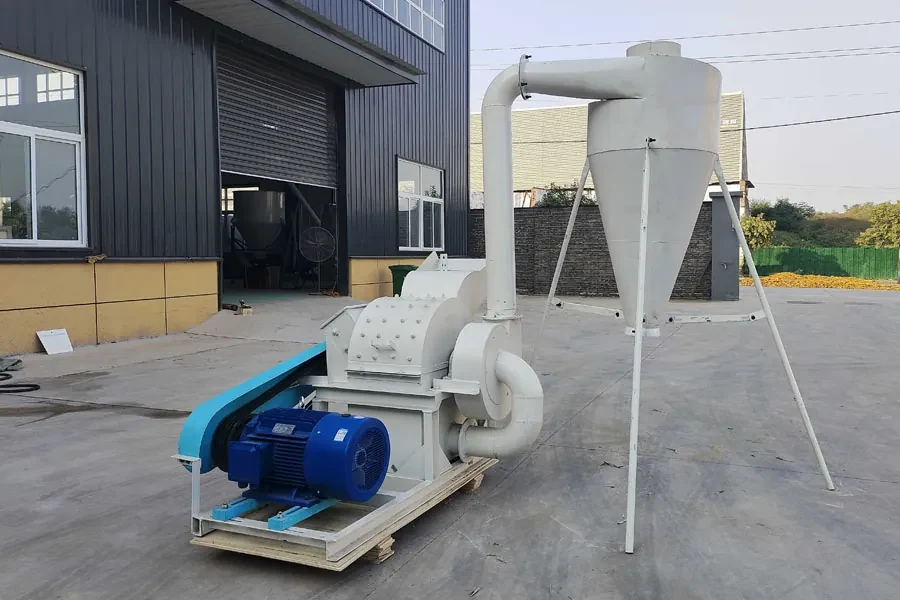
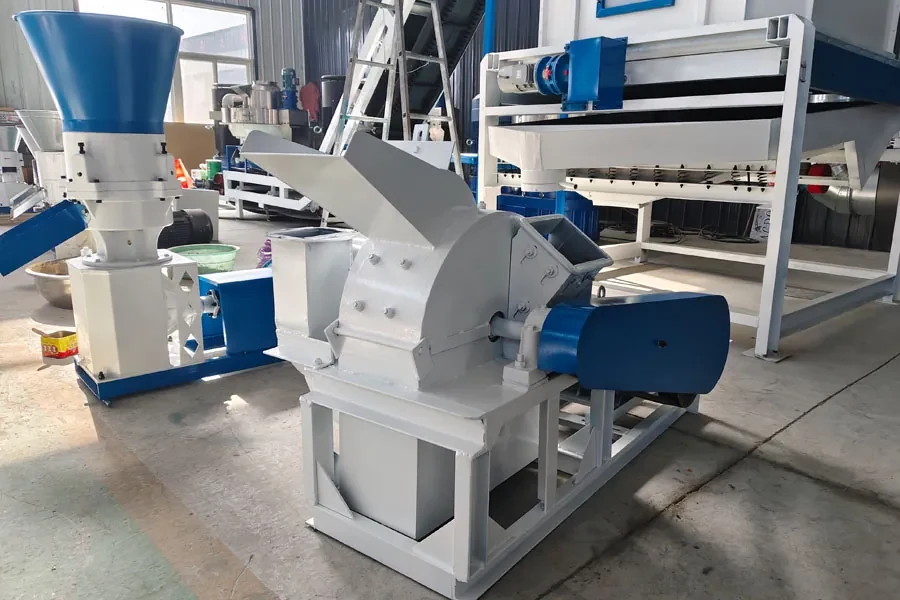
Tell us the log and the chip
Three answers decide the frame: the largest diameter you will feed, the chip size you want out, and how many kg/h the line behind it needs. Send those and we come back with the model, the motor or engine, the knife set and a price.
What happens after you send this
We answer with the frame, the feed opening, the drive and a price — and a test-run video on material like yours before you pay a deposit.
Reply within one working day. No obligation.
Five steps from a branch to a bag of chips
The order never changes, and every step happens on the same base frame — which is why the footprint is one skid rather than a row of machines.
Feed chute
An angled chute drops material onto the face of the disc. The angle matters: it lets the knives pull the piece in rather than bounce it back.
Knife disc
Three or four knives bolted to a steel disc, turning at 1,000–1,500 rpm. Each knife has a bed plate behind it, and the gap between the two sets the chip thickness.
Screen
A grate under the disc holds oversize pieces in the chamber until they are small enough to fall through. Change the grate and the chip size changes with it.
Blower
Fins on the back of the disc act as a fan and lift the chips out of the chamber, so the grate does not blind and the machine does not need a separate conveyor.
Cyclone
The cyclone drops the chips into a heap, a bin or the next machine. The ducting is bolted, not welded, so the discharge point can be moved.
A wood chipper machine cuts. A wood hammer mill grinds
Buyers often ask for one when they need the other. The two machines do different jobs on different material, and most wood pellet lines need both — in this order.
| Wood chipper machine | Wood hammer mill | |
|---|---|---|
| What it does | Cuts with knives on a disc | Beats material against a screen with swinging hammers |
| Material in | Logs, branches, slabs, pallet blocks — up to 280 mm across | Chips, shavings, straw, husk, stalks — already under about 50 mm |
| Material out | Chips and shavings, 10–30 mm | Powder, 1.8–10 mm depending on the screen |
| Where it sits | First in the line, ahead of the hammer mill | Second, ahead of the dryer and the pellet mill |
| Range here | 500–2,500 kg/h, 11–55 hp | 120–1,600 kg/h on the FS frames, 1–10 t/h on the water-drop frames |
| If you skip it | The hammer mill cannot take the log and will stall | The pellet mill gets chips instead of powder and makes weak pellets |
If your material already arrives as sawdust or shavings under 30 mm, you do not need a wood chipper machine at all — go straight to a wood hammer mill. If it arrives as logs or branches, the chipper comes first and the mill follows it. The water-drop frames on the mill side run to 10 t/h, so the chipper is normally the smaller of the two numbers in a line.
Same disc, same knives, same chute — only the drive changes
The question is not which is better. It is where the machine will stand, and what the site can supply when it gets there.
The electric frames are the cheaper machine to buy above about 22 kW and much the cheaper one to run: no fuel, no filters, no battery, and a service interval that is grease and belts. They want a three-phase supply that can carry the starting current — a 37 kW motor pulls six to seven times its rating for the second or two it takes to spin the disc up, so the cable, the breaker and the transformer are sized for the start.
The diesel frames exist for the site that has no supply, or a supply it cannot rely on. Fuel per tonne runs two to three times grid power in most of the markets we ship to, so the engine only wins when the alternative is not chipping at all — a plantation, a land-clearing job, a yard that moves every few months.
Both use the same disc, the same knives and the same base-plate pattern, so the cyclone and the discharge height are identical. If a grid connection arrives later the chamber, disc and frame carry over and only the drive end changes.
First machine in the line, ahead of the dryer
A wood chipper machine almost never works alone. Where it sits decides the chip size you order and the height the cyclone has to discharge at.
In a wood pellet line the order is chipper, then wood hammer mill, then the dryer, then the flat die pellet mill. The chipper is there to make the material small enough for the mill to take; the mill is there to make it fine enough for the die. Run a mill on logs and it stalls; run a press on chips and the pellets come out soft and shiny.
On a farm or a small plant the two machines are often bought as one frame — a combined pellet mill and hammer mill puts crusher, cyclone and press under one drive at 100–350 kg/h. Above that output the chipper wants its own motor and its own position in the line, which is where a 500 kg/h wood pellet plant or a larger line starts.
If the material is already chips and only needs to be finer, skip the chipper. If it is branches and offcuts, the chipper is the machine that makes the rest of the line possible. For the size below chips — sawdust for flour, incense or filler — the machine is a wood powder machine rather than either of these.
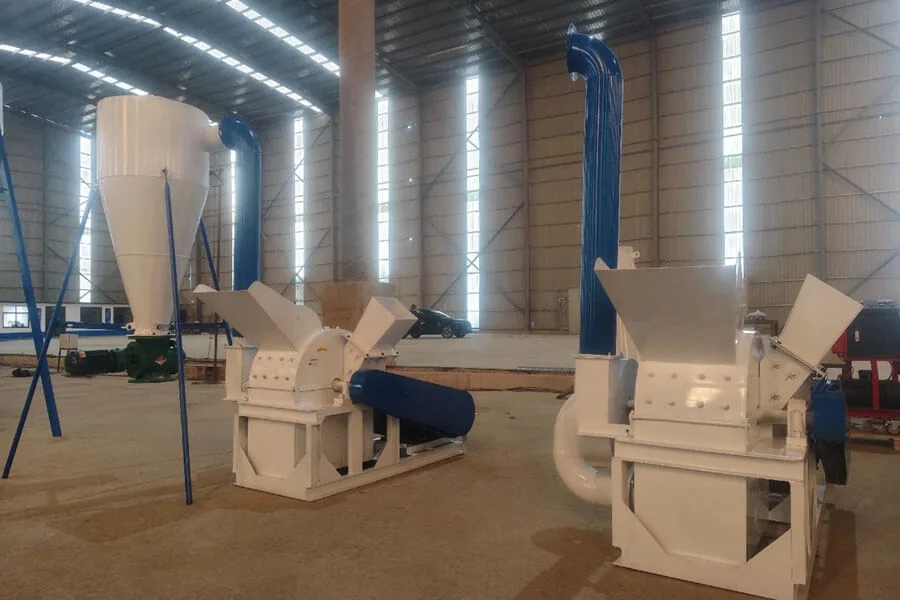
In the crate, on one frame
The unit leaves the workshop assembled and run on material. The cyclone is bagged separately so the ducting is not crushed in transit.
-
Disc and chamber
Steel knife disc with three or four knives, a bed plate behind each one, and a hinged cover for a knife change. Balanced before assembly.
-
Knives
One set fitted, one spare set in the crate. Re-grindable two or three times before replacement, and the spare parts list covers them.
-
Screen or grate
Fitted to the chip size you name. A second grate can be ordered with the machine for a different chip.
-
Motor or engine
11–37 kW electric with starter and overload, or 22–55 hp diesel with tank, battery and electric start.
-
Blower, cyclone and ducting
Blower on the chamber outlet, cyclone and bolted ducting to the discharge height you specify.
-
Belts, guards and tools
V-belts, guards over every pulley, a set of spanners and the manual.
Where this wood chipper machine sits in the range
A wood chipper machine is the front end of a line, not the whole line. Below are the machines it feeds, the version to buy if you have no grid, and the frames above it.
Tell us the log and the chip
The largest diameter you will feed, the chip size you want out, and the kg/h the line behind it needs. We reply with the frame, the drive and a price.
Reply within one working day. No obligation.
Chippers at work, and the mill that follows them
Disc chippers, drum chippers, a mobile unit on a trailer, and the hammer mills the chips go into — all filmed on customer material.

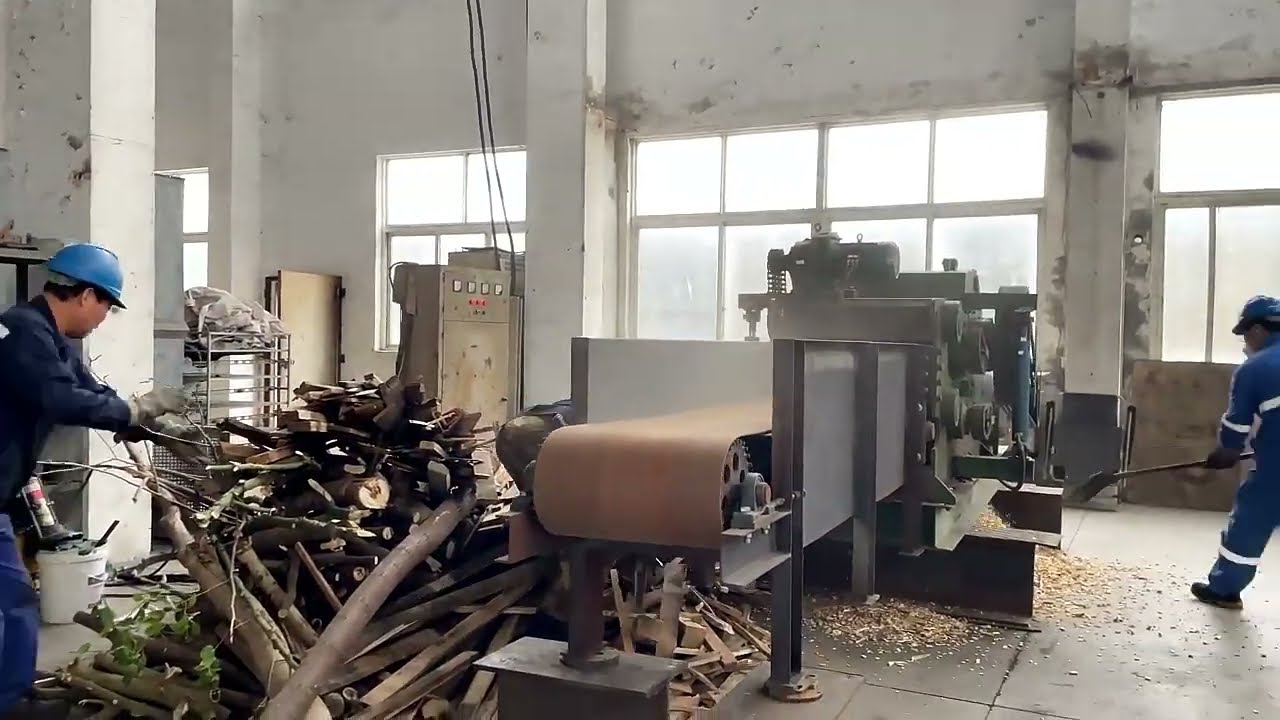
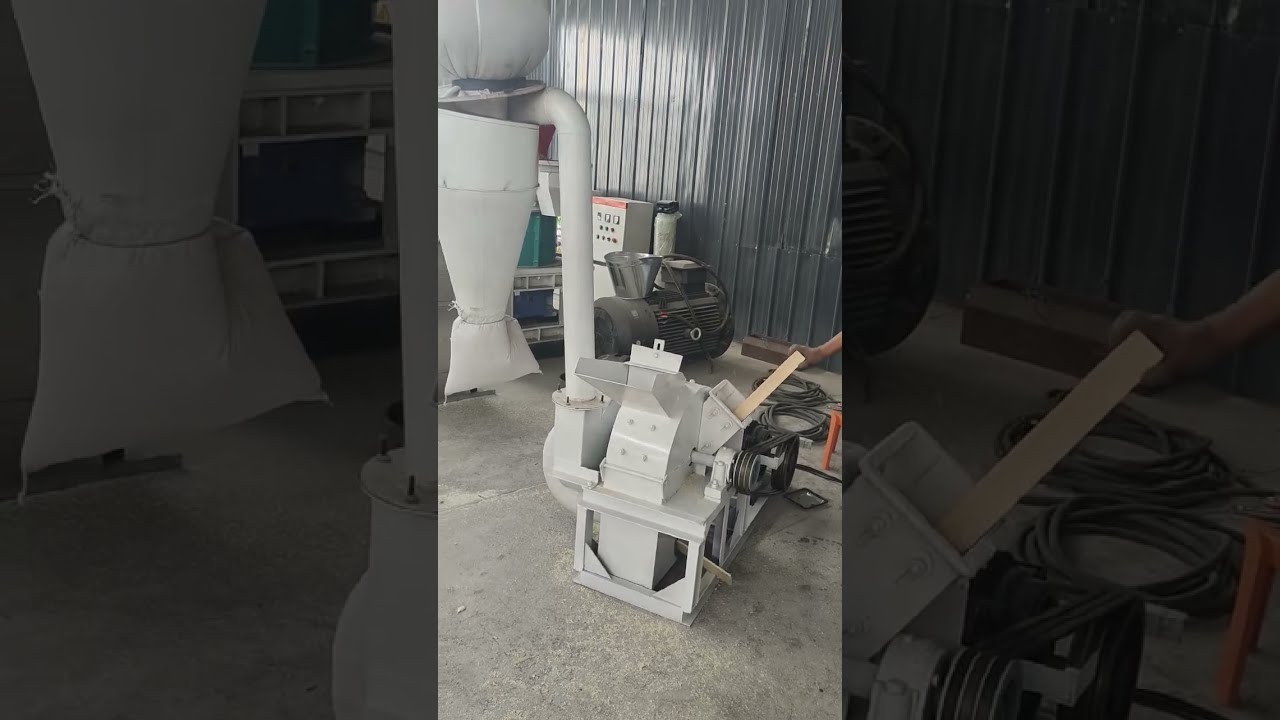
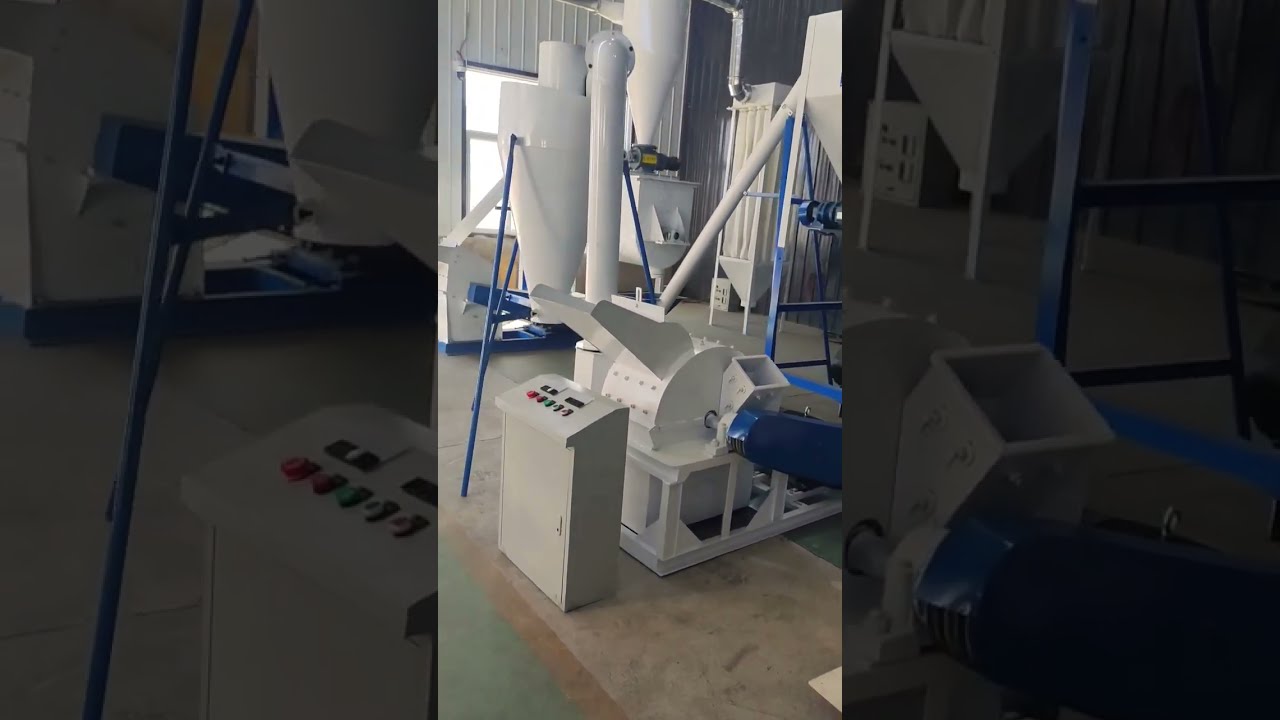

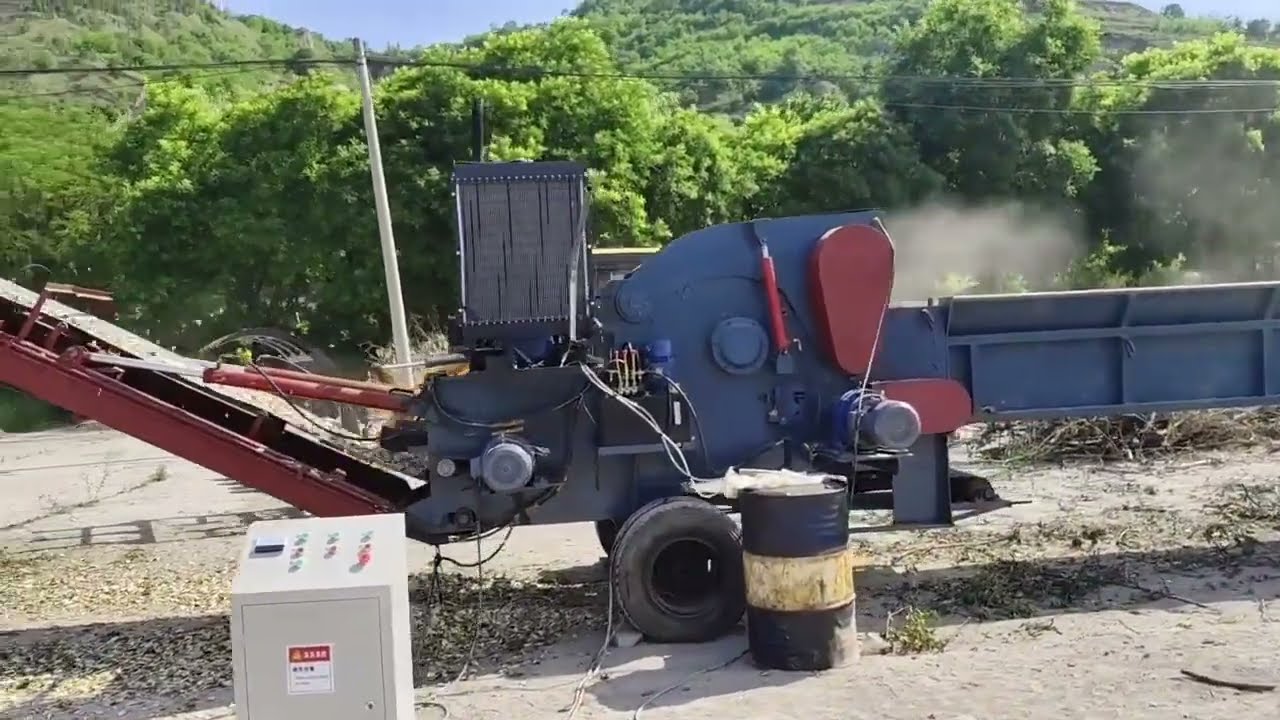

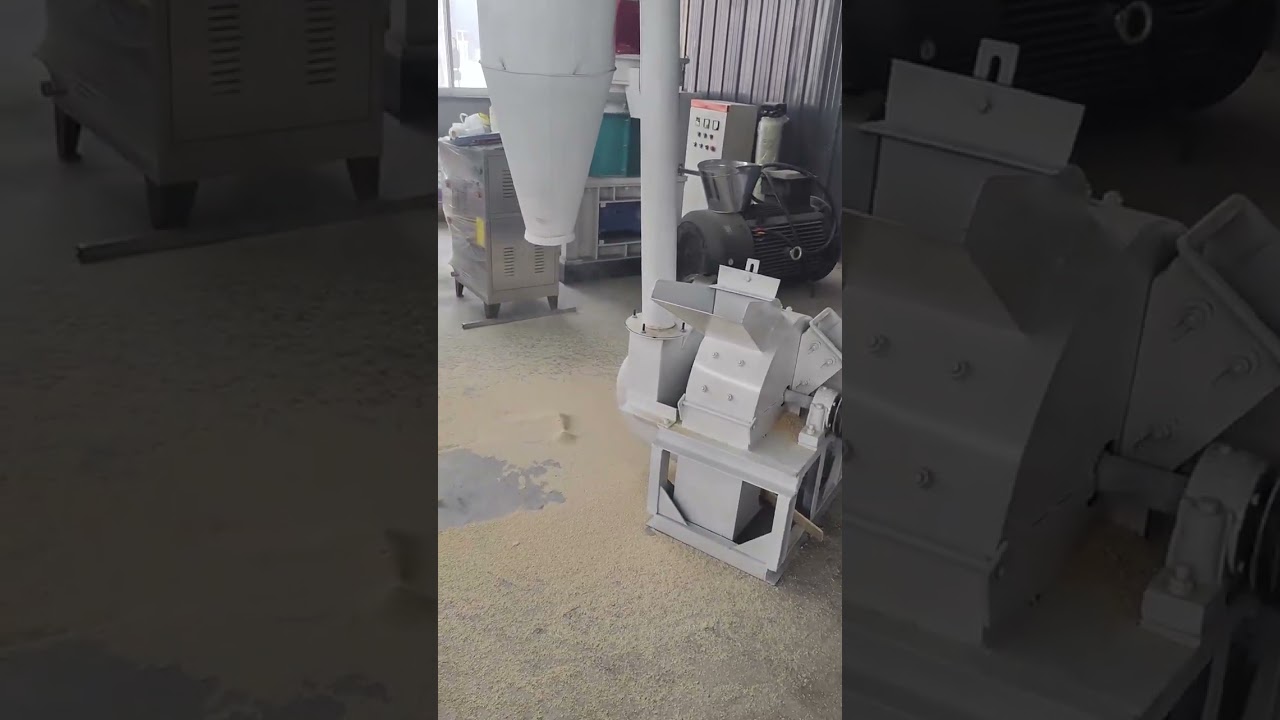
More test runs, shipping records and installation footage on our YouTube channel, and the whole Biomass Pellet Machines playlist.
What buyers ask before ordering a wood chipper machine
What is a wood chipper machine used for?
Cutting logs, branches, slabs and pallet blocks down to chips of 10–30 mm so that a wood hammer mill can grind them into powder for pelleting or briquetting. It is the first machine in a wood pellet line and the only one in the line that cuts rather than grinds.
What size log will it take?
Set by the feed opening, not by the motor. The 200 × 200 mm opening on the DP-420B, DP-500B and DP-420A takes material up to 150–200 mm across; the 280 × 280 mm opening on the DP-600B, DP-700B, DP-500A and DP-600A takes up to 250–280 mm. Oversize material has to be cut down first or it will stall the disc.
How much does a wood chipper machine cost?
It depends on the frame and the drive — the 11 kW DP-420B and the 37 kW DP-700B are not in the same bracket, and the diesel frames sit above the electric ones at the same output. The cyclone and ducting are quoted with the machine rather than separately. Send the largest diameter you will feed and the kg/h you need, and we quote the set.
What is the difference between this and a wood hammer mill?
A wood chipper machine cuts with knives on a disc and takes material up to 280 mm across, producing chips. A wood hammer mill beats material against a screen with swinging hammers, takes material already under about 50 mm, and produces powder. Most lines use both, chipper first.
Do I need both a wood chipper machine and a wood hammer mill?
Only if your material arrives as logs or branches. If it arrives as sawdust or shavings you need the mill and not the chipper. If it arrives as whole logs you need both, because a mill cannot take a log and a chipper will not make powder.
What chip size should I order?
15–30 mm for material going into a wood hammer mill — small enough for the mill to take, large enough not to blind its screen. If the chips go straight to a dryer or a briquetting press, a coarser grate is fine. The grate is changed in minutes and a second one can be ordered with the machine.
Can I run it from a generator?
Yes, but size the generator for the starting current rather than the running load — six to seven times the motor rating for a second or two. A 37 kW chipper on a 50 kVA set will stall on start; on a 120 kVA set with a soft starter it will run all day. The diesel frames avoid the question entirely.
What maintenance does it need?
Check the knife gap and the belt tension, grease the bearings, and re-grind or turn the knives when the chips start coming out stringy rather than clean. On clean softwood a knife set runs several hundred hours between grinds; on dirty material with sand in the bark, a fraction of that.
How long is delivery?
7–15 working days after the deposit, depending on the frame and the drive. Payment is TT with 40 % in advance and the balance before delivery; packing is a wooden case or a steel frame depending on the size.
Send the log and the chip
A photo of the material, the largest diameter that goes in, the chip size you want out, and the kg/h the line behind it needs. Those four answers decide between the 11 kW frame and the 37 kW one, and between the motor and the engine.
- Emailinfo@pelletmachines.net
- WhatsApp+86 186 0385 1787
- HoursMon–Sat, 08:00–20:00 (GMT+8)
Send a photo of the material and a photo of the site and we will tell you which frame fits, which grate to order, and what the drive will need from your supply.
What happens after you send this
We answer with the frame, the feed opening, the drive and a price — then send a test-run video on material like yours before you pay a deposit.
Your details are not shared. One follow-up, no mailing list.