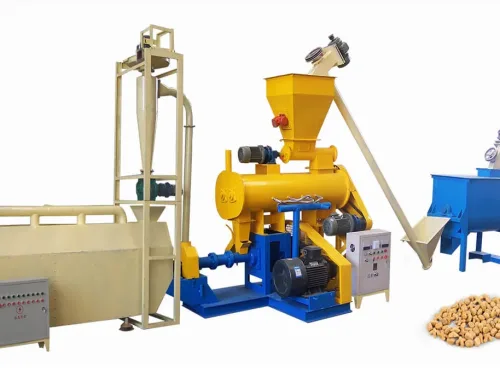
Fish Feed MachineFish Feed Extruders from 60 kg/h, and complete fish feed lines to 5 t/h
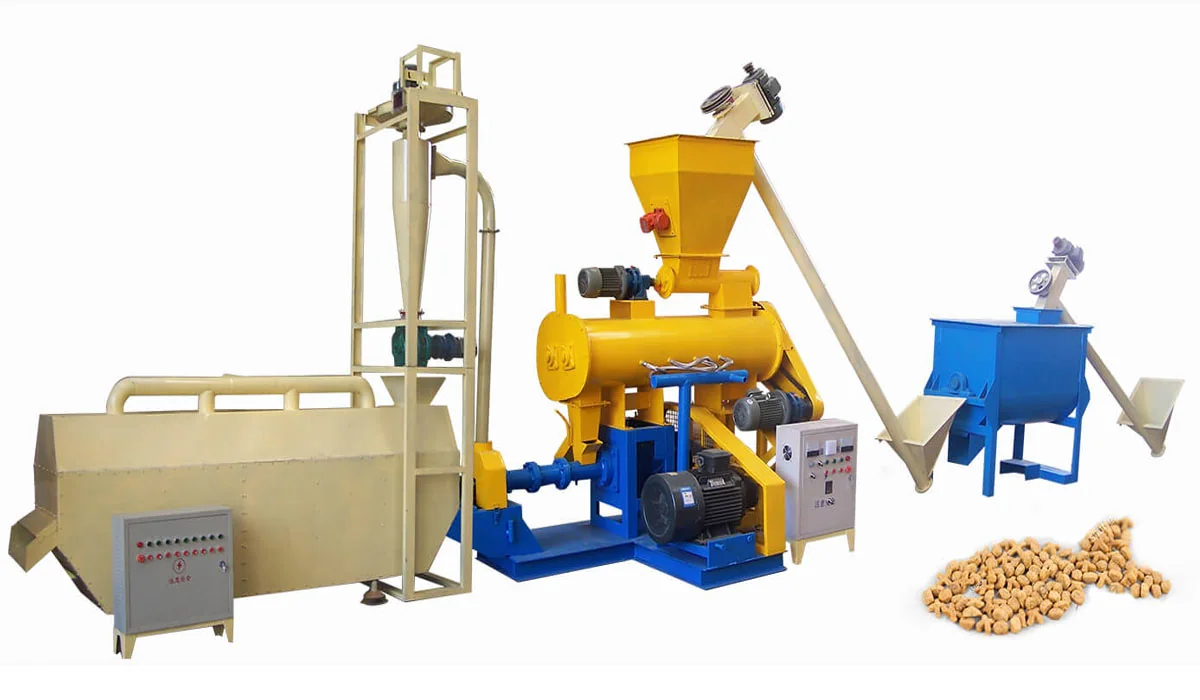
Three ways to buy a fish feed machine: a dry type fish feed extruder with no boiler, a wet type fish feed extruder with steam conditioning, or the whole fish feed production line from grinder to sealed bag. The right one is set by the capacity you need and by whether you have a boiler house.
- Dry type — DGP50 to DGP200, 60 to 2,000 kg/h, no boiler, no steam line
- Wet type — DSP60 to DSP200, 0.18 to 5 t/h with steam conditioning
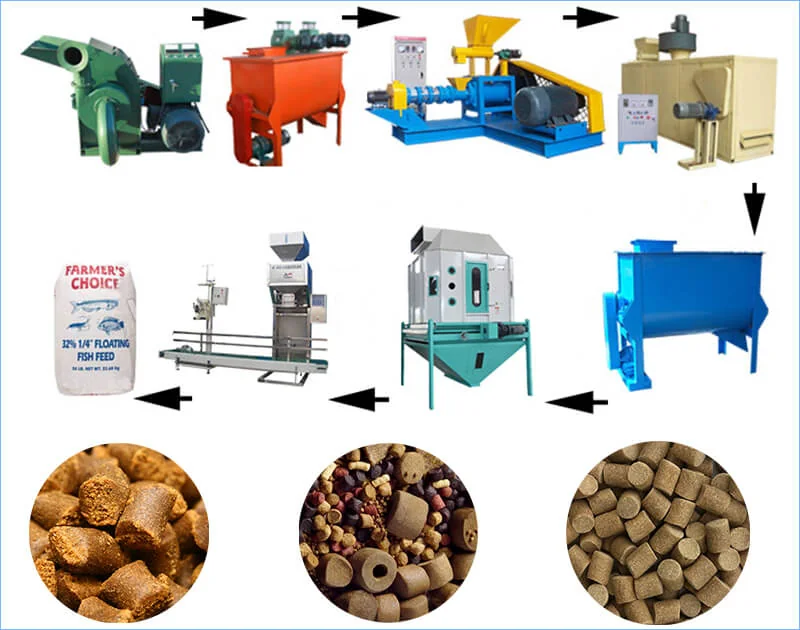
- Complete line — feed hammer mill, feed mixer, extruder, pellet dryer, pellet coater, pellet cooler, packing scale
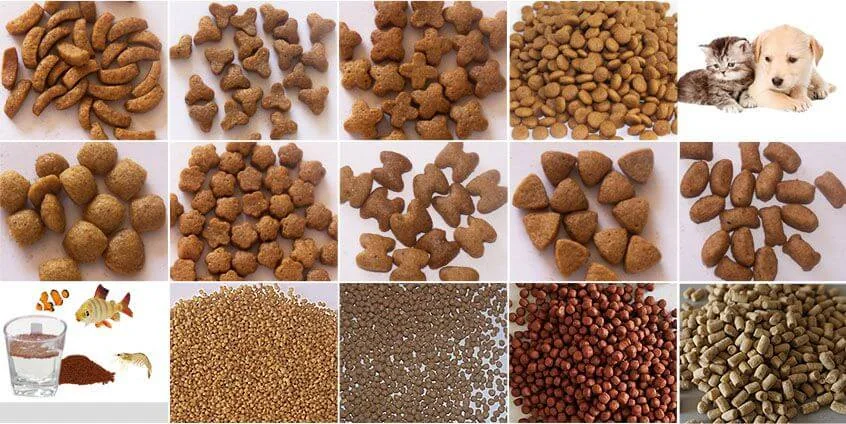
- Pellets from 0.9 to 15 mm, floating or sinking, fish feed and pet food on one machine
Reply in 12 working hours · Test run on your formulation · Delivered to 40+ countries
Three routes, and one number decides between them
The number is the finished capacity in kg per hour. Everything else — the boiler, the pellet dryer, the floor area — follows from it, and from whether the feed has to sink.
 Dry type fish feed extruderDGP50 to DGP200, 60 to 2,000 kg/h on 11 to 132 kW. Heater bands and screw friction instead of a boiler — a three-phase supply and nothing else. Floating and slow-sinking feed, 0.9–15 mm.Best under about 1 t/h →
 Wet type fish feed extruderDSP60 to DSP200, 0.18 to 5 t/h on 15 to 132 kW. Steam conditioning ahead of the screw: 30–60 % more output for the same screw diameter and a denser pellet that sinks when you want it to.Best over about 2 t/h →
 Fish feed production line100 kg/h to 5 t/h, eight stages from the feed hammer mill to the sealed bag, dry type or wet type. Laid out to your building and quoted stage by stage.Best when you are building a plant →
The same pellet, three different amounts of plant around it
All three make a pellet that floats. What changes is how much of the plant you buy at once, and whether the heat comes from a boiler.
Fish feed machine, three routes same die, different plant
| Capacity | Boiler | Heat source | Pellet | Typical buyer | |
|---|---|---|---|---|---|
| Dry type fish feed extruder | 60–2,000 kg/h | None | Electric heater band | Floating and slow-sinking | A farm feeding its own ponds |
| Wet type fish feed extruder | 0.18–5 t/h | 0.05–0.5 t/h boiler | Live steam in a conditioner | Floating, slow-sinking and sinking | A plant selling feed to other farms |
| Fish feed production line | 100 kg/h–5 t/h | On a wet type fish feed line | Whichever extruder you pick | Whatever the extruder makes | A new plant, from grinder to bag |
The comparison is not about quality — all three use the same die and the same cutter. It is about where the heat comes from and how many machines you want to own. A dry type machine can be upgraded to a wet type one later by adding a conditioner and a boiler; the rest of the line does not change.
Four answers and the range is down to one machine
We do not need a drawing or a site plan to quote an extruder. Species, pellet diameter, capacity and whether the feed has to sink — those four narrow the range to a model, a die set and a price.
Tell us the capacity and the species
The four numbers above are enough for a first answer: the model, the die set, the water rate and a price. If you already have a formulation, send it and we run it on the test machine.
Reply within one working day. No obligation.
Tell us the species and the diameter, and the machine picks itself
Fish feed is sold by the millimetre. A 0.9 mm crumble for fry and a 12 mm pellet for broodstock come off the same extruder with a different die, and the die is what you should choose first.
Diameter. Fry and shrimp larvae take 0.9–1.2 mm; fingerlings and tilapia 1.5–2 mm; growing carp and catfish 2.5–3 mm; grow-out fish 4–5 mm; adult carp and broodstock 6–8 mm; eel and large broodstock 10–15 mm. Most farms order three dies and cover a whole grow-out cycle.
Float or sink. Surface feeders — carp, tilapia, catfish — want floating feed, which is what a dry type fish feed machine makes naturally. Shrimp, crab and deep-water species want a denser pellet, and that is where a wet type fish feed extruder earns its boiler. Between the two sits slow-sinking feed, which either machine can make with the right formulation.
Species. Carp, grass carp, tilapia, catfish, bream, goldfish and koi, tropical and aquarium fish, shrimp, crab, bullfrog, loach, mink and eel. The same screw also runs dog and cat kibble, bird food and small poultry feed with a different die and a higher starch share — which is how a fish feed machine becomes two businesses.
What the extruder needs in front of it and behind it
An extruder on its own makes hot, wet pellets. The machines either side of it are what turn extrusion into feed you can bag, store and sell.
- In front · feed hammer millMeal to 60–80 mesh through a fine screen. The electric hammer mill covers 4–37 kW; the diesel hammer mill does the same grind where there is no three-phase supply.
- In front · feed mixerPremix, oil and water blended to 25–30 % moisture before the screw. An uneven mix shows up as pellets that float and pellets that sink in the same bag.
- In front · boiler, wet type only0.05 to 0.5 t/h at 0.4–0.8 MPa, with softened water and insulated piping to the conditioner. Sized with the line, not after it.
- Behind · pellet dryerPellets leave at 25–30 % moisture on a dry type fish feed line and 18–25 % on a wet type one, and have to come down under 10–12 % before bagging. Above 500 kg/h this is a machine, not a concrete apron.
- Behind · pellet coater and pellet coolerOil and premix go on after drying, never through the screw; the cooler brings the pellet to within 5 °C of ambient so it does not sweat in the bag.
- Behind · packing scale5 to 50 kg bags, sewn or heat sealed. The scale is where a farm becomes a feed business.
The full sequence, sized from 100 kg/h to 5 t/h, is on the fish feed production line page. For compound feed rather than fish feed, a flat die feed pellet mill presses pellets with no drying at all — and a flat die pellet mill covers the same range in diesel and PTO drive.
The whole playlist — eight clips, dry type, wet type and the lines
Every fish feed video on our channel in one place: dry type machines on feed, wet type machines under steam, two complete lines, the showroom they are built in, and a DGP85 running pet food.


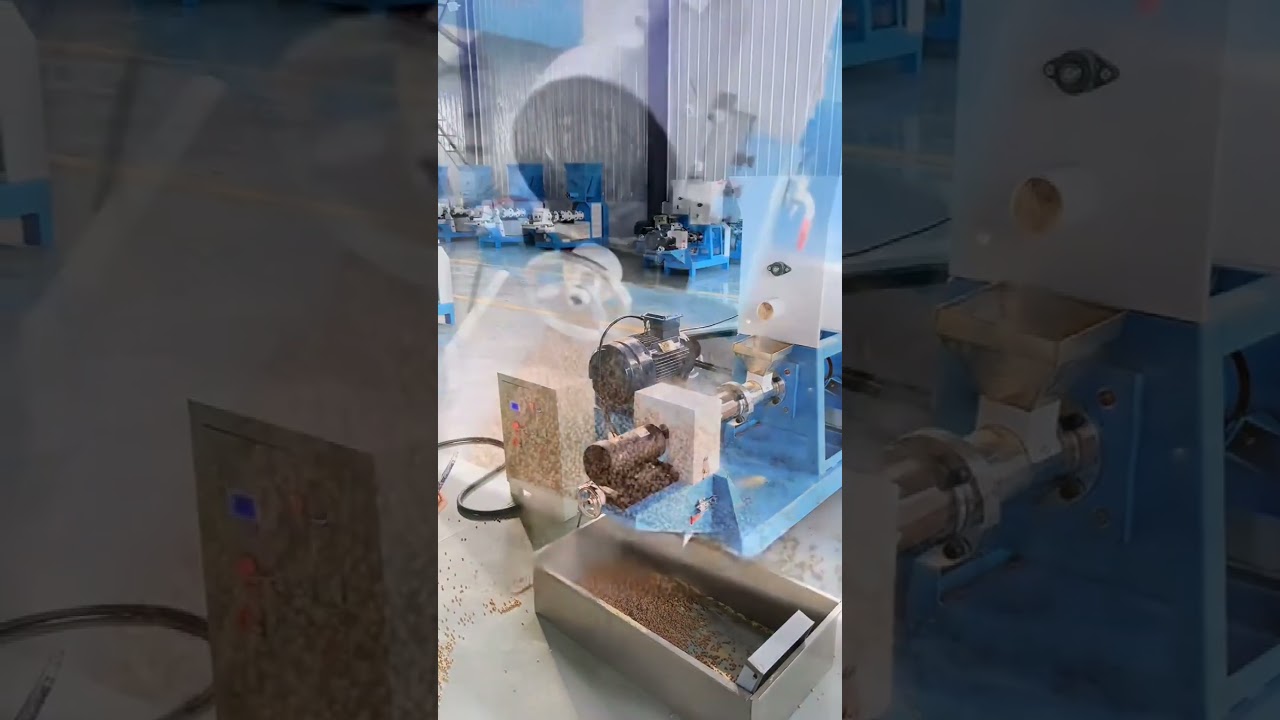

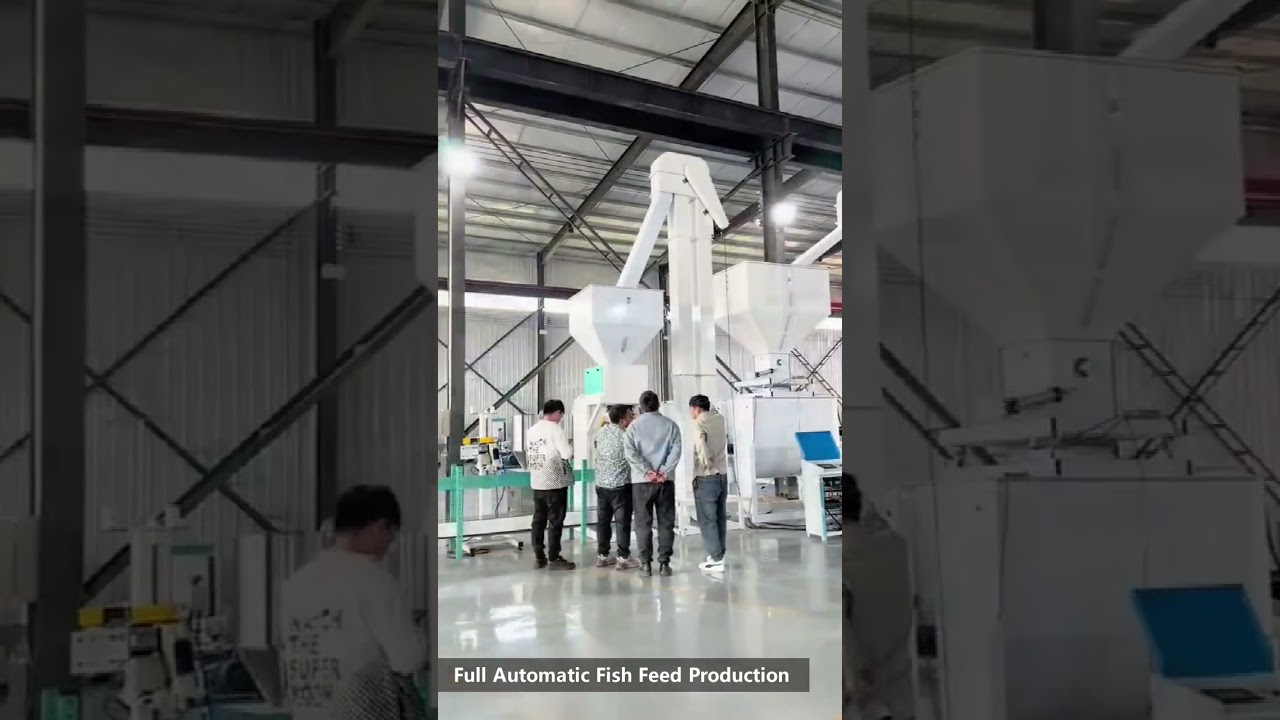
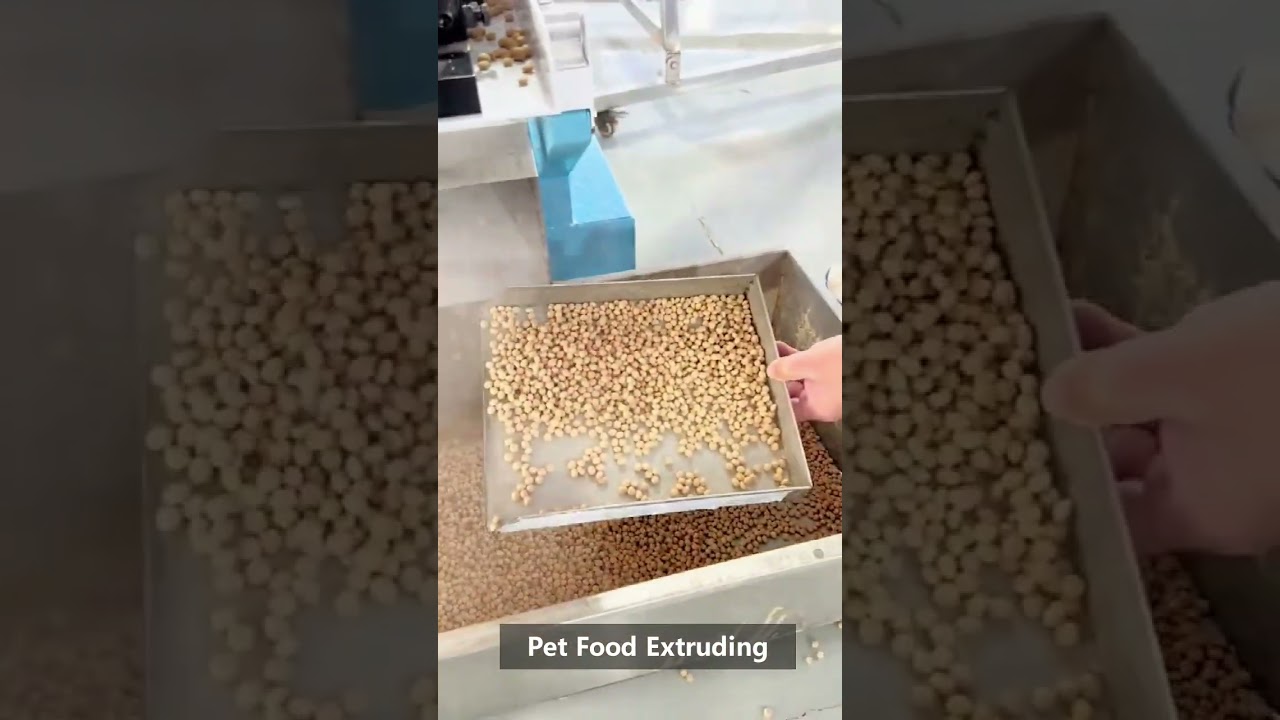


The playlist is on our channel — Fish Feed Machines — alongside biomass and feed processing videos.
Every page in the fish feed cluster
Two extruders and the line they belong to — plus the machines that grind in front and dry behind.
Tell us the fish and the kg/h
The species, the pellet diameter, the kg/h and whether the feed has to float or sink. We reply with the model, the die set and a price.
Reply within one working day. No obligation.
What buyers ask before choosing a fish feed machine
Which fish feed machine do I need?
Start with the capacity. Under about 1 t/h a dry type fish feed extruder is the right buy — no boiler, no water treatment, no operator. Above about 2 t/h a wet type fish feed extruder usually pays for its boiler inside the first year. If you are building a plant rather than adding one machine, you want the whole fish feed production line.
What is the difference between a dry type and a wet type fish feed machine?
Where the heat comes from. A dry type fish feed machine cooks the mash with heater bands around the barrel plus the friction of the screw. A wet type fish feed machine injects live steam into a conditioner ahead of the screw, which pre-cooks the mash and gives 30–60 % more output for the same screw diameter, plus a denser pellet.
How much does a fish feed machine cost?
It scales with capacity and with whether there is a boiler. A DGP50 at 60–80 kg/h is a single machine on one frame; a DSP200 at 3–5 t/h is an extruder, a conditioner, a 0.5 t/h boiler and the plant around them. Send the kg/h, the pellet diameter and whether you need sinking feed and we quote the model and the die set.
Can one machine make both fish feed and pet food?
Yes. Dog and cat kibble, bird food and small poultry feed run on the same extruder with a different die profile and a higher starch share, and through the same pellet dryer, pellet coater and pellet cooler. Most customers start on fish feed and add pet food as a second product.
What pellet sizes are available?
0.9 mm to 15 mm by changing the die. Fry and shrimp larvae take the small end, adult carp and broodstock the large end. Most farms order three dies and cover a whole grow-out cycle, and pellet length is set by cutter speed rather than by the die.
Do I need a dryer?
Above about 500 kg/h, yes. Pellets leave the extruder at 25–30 % moisture on a dry type fish feed line and 18–25 % on a wet type one, and have to come down under 10–12 % before bagging. Below 500 kg/h sun drying works in a dry climate, but the weather then sets your delivery dates.
Can it run on a diesel engine or a tractor?
The extruder itself is electric — a three-phase supply sized for the main motor plus feeder and cutter. Where there is no grid, the usual arrangement is a generator for the extruder and a diesel hammer mill for the grinding. Ask us and we size the generator with the line.
How long does delivery take?
A single extruder is typically 7–10 working days from deposit to crating. A complete line is 4–6 weeks because the dryer and the packing scale are built to the layout. We send a test-run video on your formulation before the balance is due.
Four answers and we can quote the right machine
Species, pellet diameter, kg/h, and whether the feed has to float or sink. Those four decide the model, the die set and whether a boiler is part of the answer.
- Emailinfo@pelletmachines.net
- WhatsApp+86 186 0385 1787
- HoursMon–Sat, 08:00–20:00 (GMT+8)
Send your formulation and the pellet size if you have them — we come back with the model, the die set, the water rate and a landed price.
What happens after you send this
We answer with the model, the die set and a price — then send a test-run video on your formulation before you pay a deposit.
Your details are not shared. One follow-up, no mailing list.