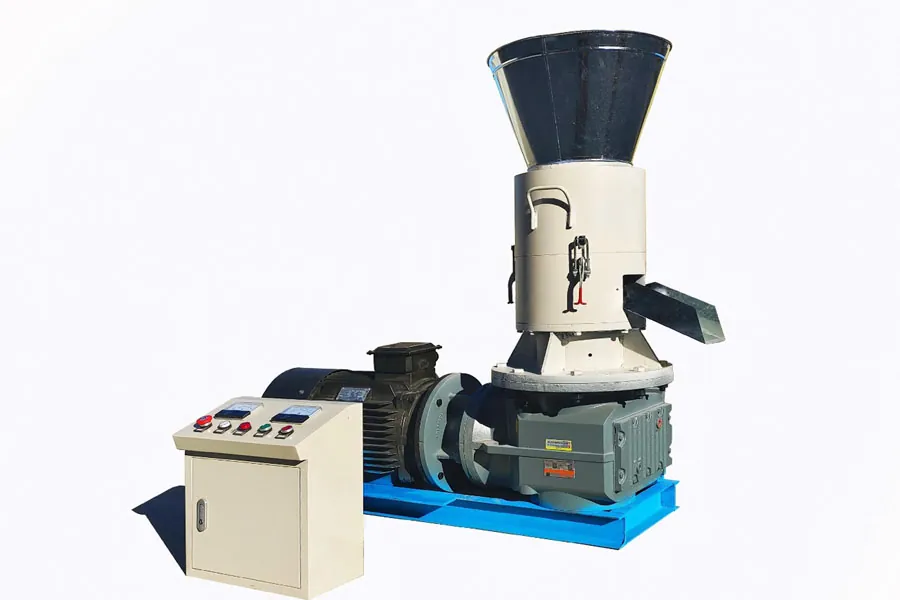
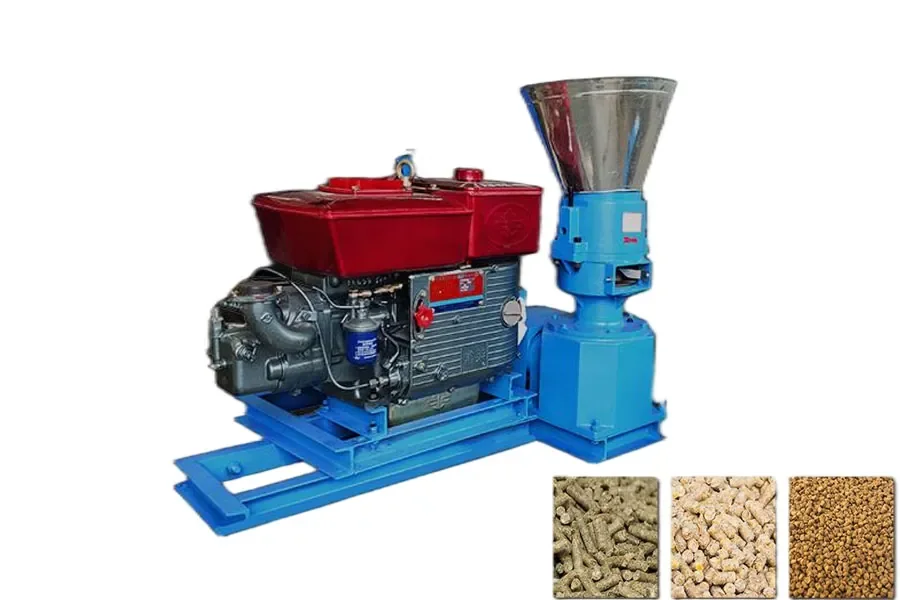
Combined Flat Die Pellet Mill and Hammer MillOne engine, 100–350 kg/h — chips in, pellets out
A combined pellet mill and hammer mill puts a wood hammer mill and a flat die pellet mill on one base plate and drives both from one engine or one motor. Wood chips go in at one end and pellets come out at the other. There is no second machine to fuel, no second operator, and nothing to carry between the crusher and the press.
- PH200 to PH300 — 100 to 350 kg/h of wood pellets, 15–30 kW electric or 22–40 hp diesel
- CF198 hammer mill, 510 × 200 mm screen and 2–10 mm sieve, cyclone discharging straight into the press hopper
- One base plate, one drive, one crate — and the same frame takes the motor or the engine
Reply in 12 working hours · Die and a spare roller set ship with every unit · Delivered to 40+ countries
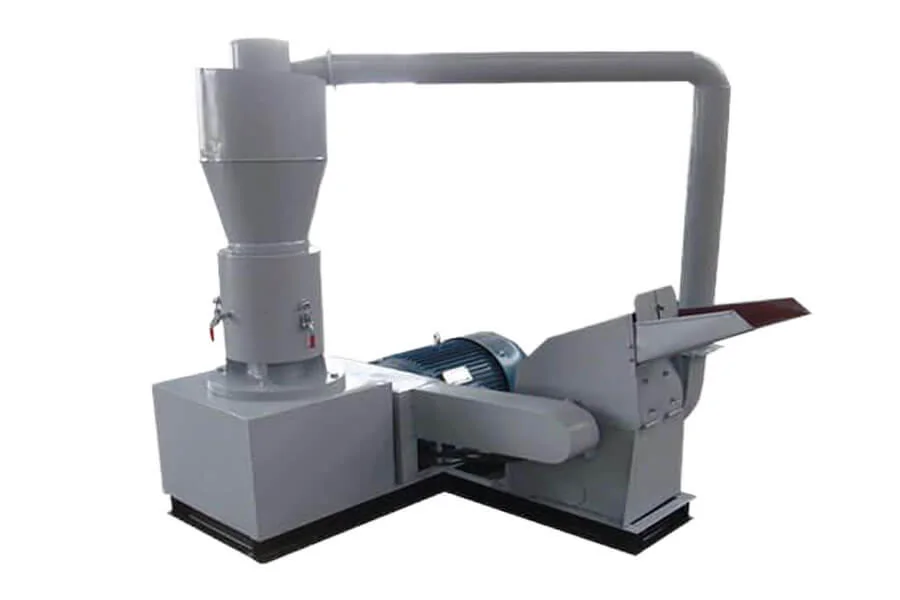
Two machines on one frame, because that is how the material arrives
Buying the crusher and the press separately is how most small plants start. It is also where the second engine, the second operator and the shovelling between them come from.
A flat die pellet mill needs material that is already the right size — roughly under 5 mm, dry, and steady. Wood chips, straw, husks and stalks are none of those, so a wood hammer mill ends up standing next to the press. Two machines means two drives, two fuel cans or two cables, two operators, and a bucket or a conveyor between them. On a 300 kg/h site that second set of costs is usually larger than the difference in purchase price.
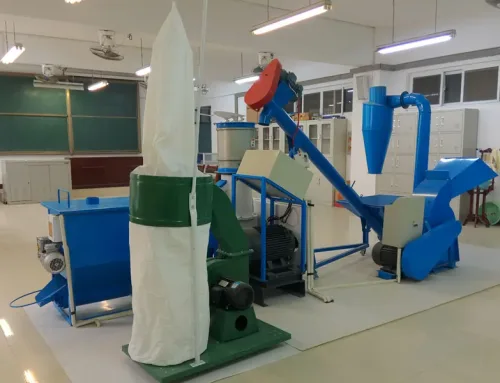
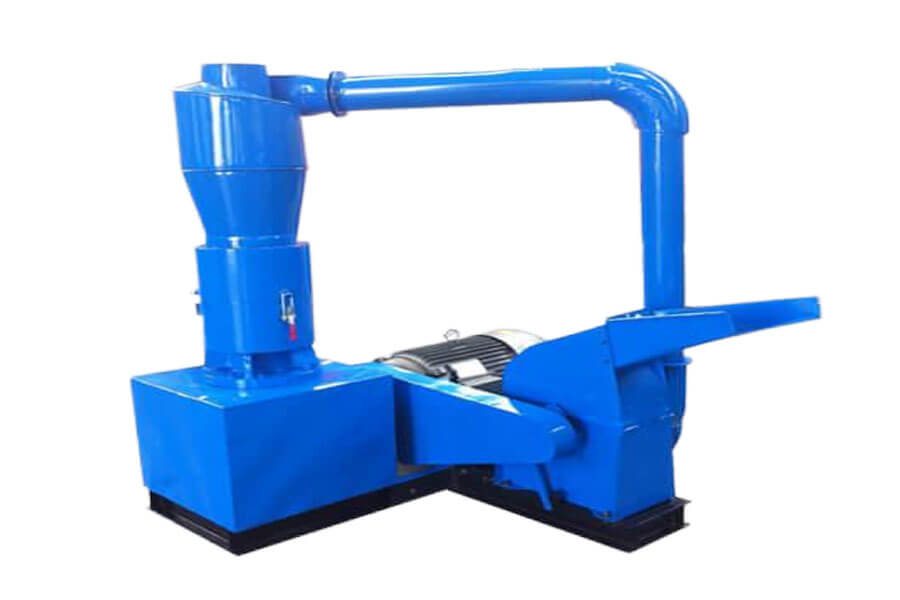
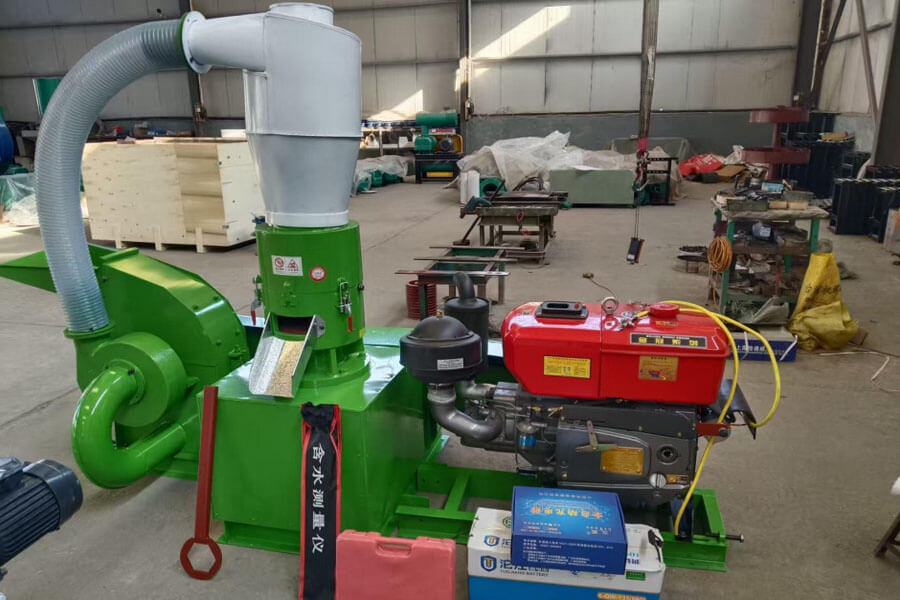
The combined pellet machine bolts the wood crusher, its cyclone and the flat die pellet mill to one base plate. The cyclone discharges straight into the pellet mill hopper, so the material is never bagged, carried and tipped twice. Belts from the engine pulley — or one motor on the electric version — run the wood hammer mill and the flat die pellet mill together, and the whole line is switched on in one place.
The trade-off is worth stating plainly: wood crusher and pellet machine share one drive, so the crusher runs when the press runs. That suits a farm, a workshop or a village mill that works a shift at a time, and it is why this frame is built from 100 to 350 kg/h and no larger. Above that the two machines want separate drives — which is where a biomass pellet production line starts.
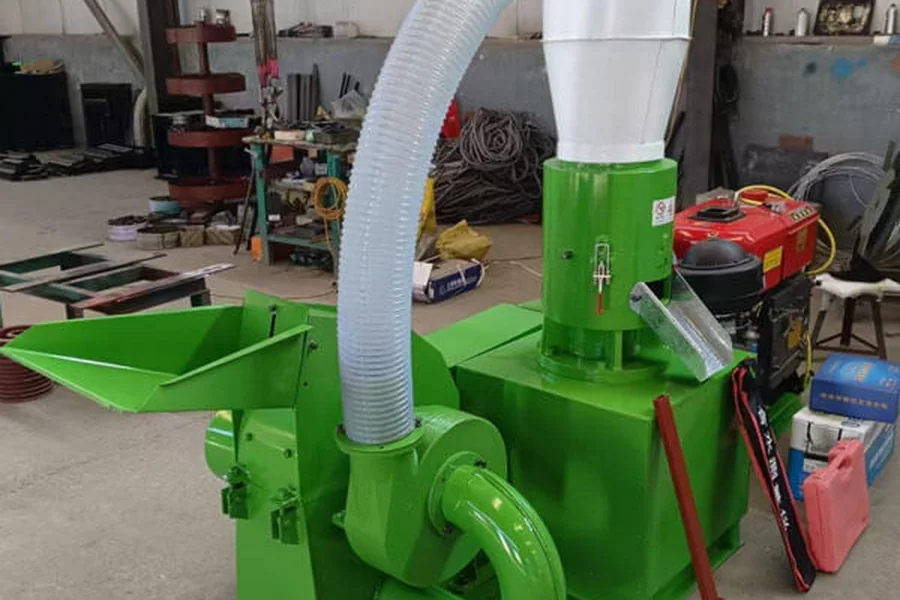
Three frame sizes, two drives, one base plate
Capacity is quoted on wood pellets from dry sawdust through a Ø6–8 mm die. Compound feed and softer biomass run higher on the same frame, because the material compacts more easily.
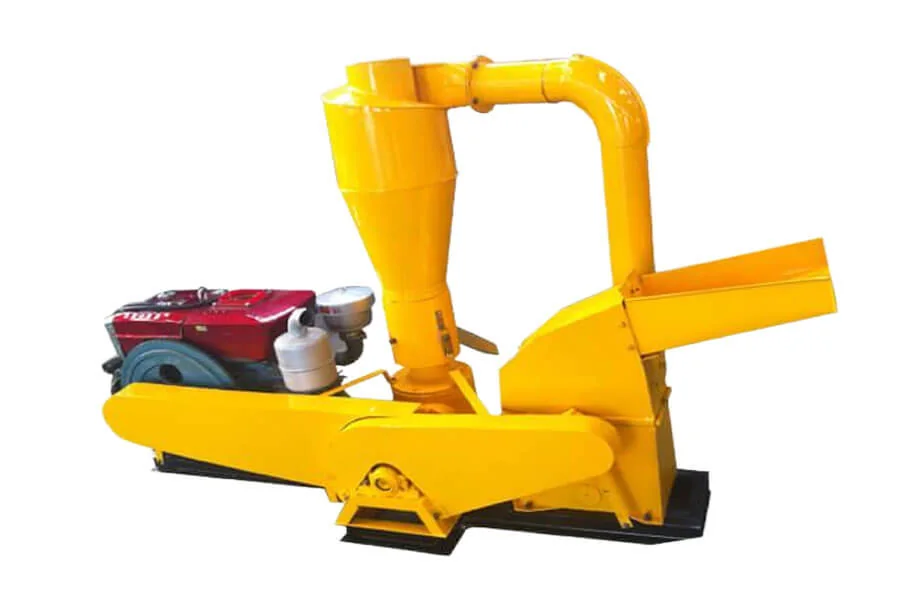
Combined pellet mill and hammer mill electric and diesel
| Model | Drive | Capacity, wood pellets | Size L×W×H | Weight |
|---|---|---|---|---|
| PH200 Electric | 15 kW · 380 V | 100–150 kg/h | 1600 × 1450 × 1800 mm | 380 kg |
| PH200 Diesel | 22 hp | 100–150 kg/h | 2650 × 1850 × 1900 mm | 450 kg |
| PH250 Electric | 22 kW · 380 V | 200–250 kg/h | 1750 × 1600 × 1900 mm | 550 kg |
| PH250 Diesel | 30 hp | 200–250 kg/h | 1450 × 650 × 1900 mm + 750 × 750 × 1100 mm | 750 kg |
| PH300 Electric | 30 kW · 380 V | 250–350 kg/h | 1800 × 1650 × 1900 mm | 700 kg |
| PH300 Diesel | 40 hp | 250–350 kg/h | 1750 × 950 × 2200 mm + 950 × 950 × 1700 mm | 960 kg |
The diesel PH250 and PH300 are crated in two sections — crusher and press travel as separate packages — so the quotation lists a size for each. Delivery is 7–15 working days depending on the drive; TT with 40 % deposit, balance before delivery; wooden or steel case. The die size and the screen decide the price, so both are quoted with the machine.
Three frame sizes, two drives, one base plate
The combined pellet mill and hammer mill comes in three frames, each in an electric and a diesel version. The material and the kg/h pick the frame; the power on site picks the drive.
Send the material and the power on site
The material, its size and the kg/h decide the frame; whether there is three-phase power decides the drive. We reply with the model, the screen, the die and a price.
Reply within one working day. No obligation.
Five steps from a chip to a bag
The order never changes, and every step is on the same frame — which is the whole point of buying the combined machine rather than two.
Wood Crusher
CF198 hammer mill with a 510 × 200 mm screen and a 2–10 mm sieve. Chips, stalks and husks come down to the particle size the die needs. 7.5 hp on the diesel version.
Cyclone
The mill blows the material into a cyclone that drops it straight into the press hopper. No bag, no shovel, no second pair of hands.
Flat Die Pellet Mill
Rollers force the material through a flat die; friction takes it to 70–90 °C and the lignin or the starch binds it. The die is chosen for your material.
Pellet Cooler
Pellets leave the die at 70–80 °C. Spread them on a floor, or run them through a counter-flow pellet cooler before bagging — hot pellets sweat in the bag.
Pellet Bagger
15–50 kg bags by weight. A bagging scale is the one accessory most buyers add after the first month.
What this machine does well, and where it stops
A combined pellet mill and hammer mill is bought for one material and then used on three. The screen and the die are what you change; the frame stays the same.
| Material | Screen | Die | Moisture | Note |
|---|---|---|---|---|
| Pine or spruce sawdust | 3–4 mm | Ø6–8 mm | 12–18 % | Easiest material; often needs no crushing at all |
| Wood chips | 5–6 mm | Ø6–8 mm | 12–18 % | The case the hammer mill is there for |
| Straw, stalks | 4–6 mm | Ø8 mm | 14–18 % | Long fibre — feed it evenly or the die blocks |
| Rice husk | 3–4 mm | Ø8 mm | 12–15 % | Abrasive; check die wear every few hundred hours |
| EFB | 5–6 mm | Ø8–10 mm | 12–15 % | Wants the larger die and a steady feed rate |
| Compound feed | bypass | Ø3–5 mm | 12–14 % | Crusher can be left off; the press runs alone |
Moisture above 18 % is the most common reason a combined pellet machine underperforms: the press steams, the die blocks and output halves. Dry the material first — a wood dryer, or a day spread on a concrete floor in the sun.
Same frame, same crusher, same die — only the drive changes
There is no best answer in the abstract. There is only the answer for your site, and it depends on whether the grid is there and whether it stays on.
The electric version takes a 15, 22 or 30 kW motor on 380 V three-phase and is the better buy wherever the supply is stable: fewer wearing parts, no fuel, no oil changes, and a running cost per tonne an engine cannot match. It also needs a supply most rural sites do not have — 15 kW is not a single-phase load.
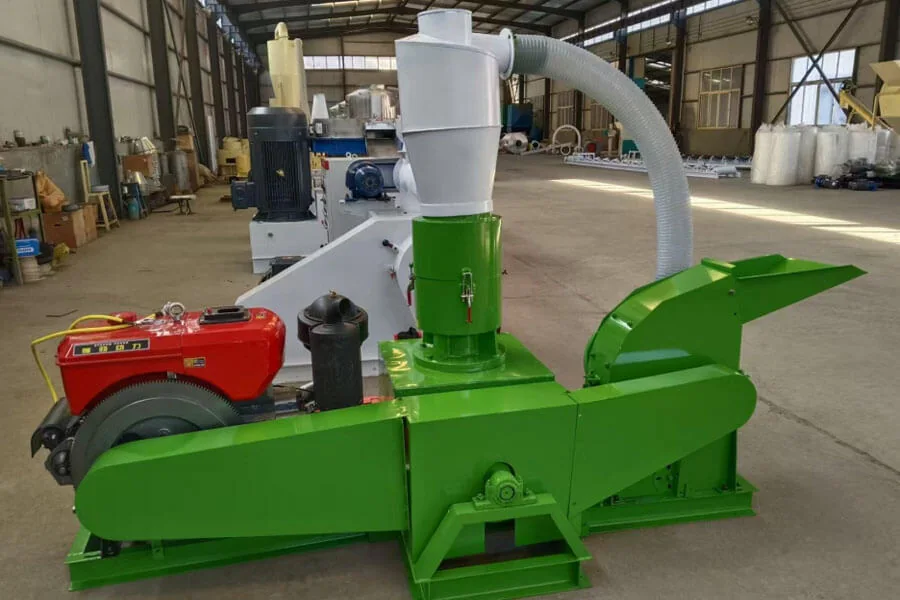
The diesel version — 22, 30 or 40 hp — is for the site with no three-phase supply, a grid that stops, or a machine that has to travel to the material instead of the material travelling to it. It costs more per tonne in fuel and servicing, and it will run where nothing else will. Both are built on the same base plate, with the same crusher and the same die set.
We build both and will tell you which one fits. If the grid is there and steady, take the electric. If it is not, a diesel flat die pellet mill on the same frame does the same job — and if you later add a grid connection, the press itself does not have to be replaced.
In the crate, on one base plate
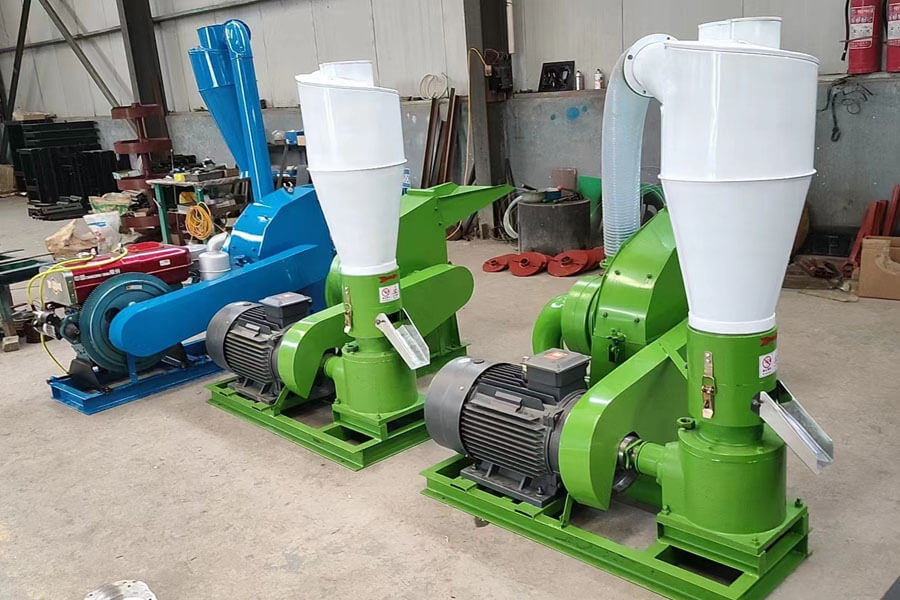
The combined pellet machine leaves the workshop assembled, run on material, and crated as one package — or two, on the larger diesel frames.
-
Hammer mill
CF198 with a 510 × 200 mm screen and a 2–10 mm sieve. 7.5 hp on the diesel version, driven from the same engine as the press.
-
Cyclone and ducting
Discharges into the press hopper. The ducting is bolted, not welded, so it can be re-routed if the layout of your shed changes.
-
Pellet press
Flat die with two rollers, die fitted to the material you ordered for. Die and roller gap set at the factory and checked again before crating.
-
Die and rollers
One die in the press, one spare roller set in the crate, extractor and feeler gauge with them.
-
Belts, guards and tools
V-belts, guards over every pulley, die extractor, grease gun and the engine manual on the diesel version.
What the single frame actually saves
The purchase price of a combined pellet machine is higher than a press on its own and lower than a press plus a mill plus the conveyor between them. The saving that matters is the one after that.
| What changes | Combined pellet mill and hammer mill | Press and hammer mill bought separately |
|---|---|---|
| Floor space | One base plate — 2.7 × 1.9 m on the PH200 diesel | Two footprints plus a gap to work between them |
| Drives | One engine or one motor | Two engines or two motors |
| Operators | One | One, or two if the material has to be moved |
| Between the machines | Cyclone drops into the hopper | Bag, carry, tip — or a conveyor |
| Commissioning | One crate, one alignment | Two crates, two alignments, one link between them |
| Stops making sense | Above about 350 kg/h | Never — separate drives are right at scale |
If your output target is above 350 kg/h, or the crusher has to run when the press is stopped, buy the two machines separately — we sell both, and we will say so. The combined pellet machine is a small-plant answer, not a compromise for a large one.
Where this machine sits in the range
Below 350 kg/h the combined pellet machine is the cheapest way to make pellets from material that arrives as chips. Above it, the answer changes shape.
Tell us the material and the capacity
Material, moisture as received, the capacity per shift and what the site has for power. We reply with the model, the drive and a price.
Reply within one working day. No obligation.
The combined pellet machine and the machines it is built from
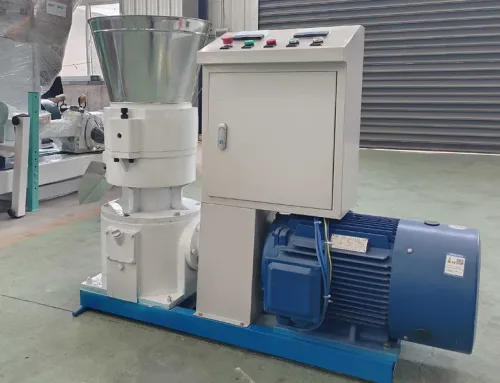
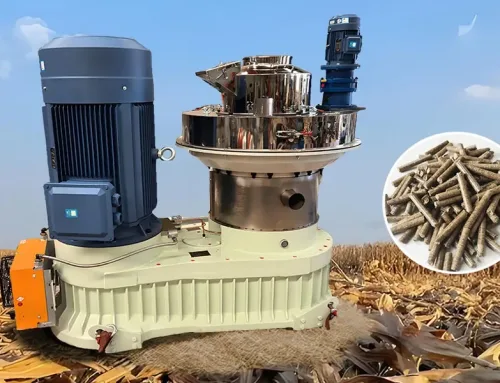
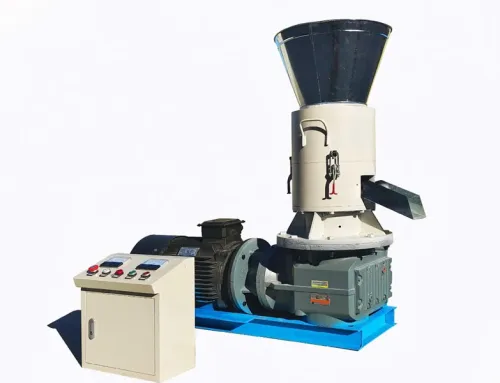
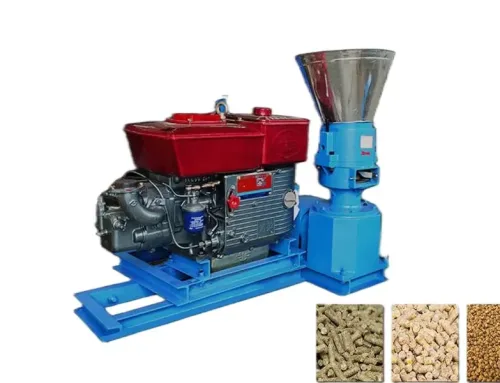
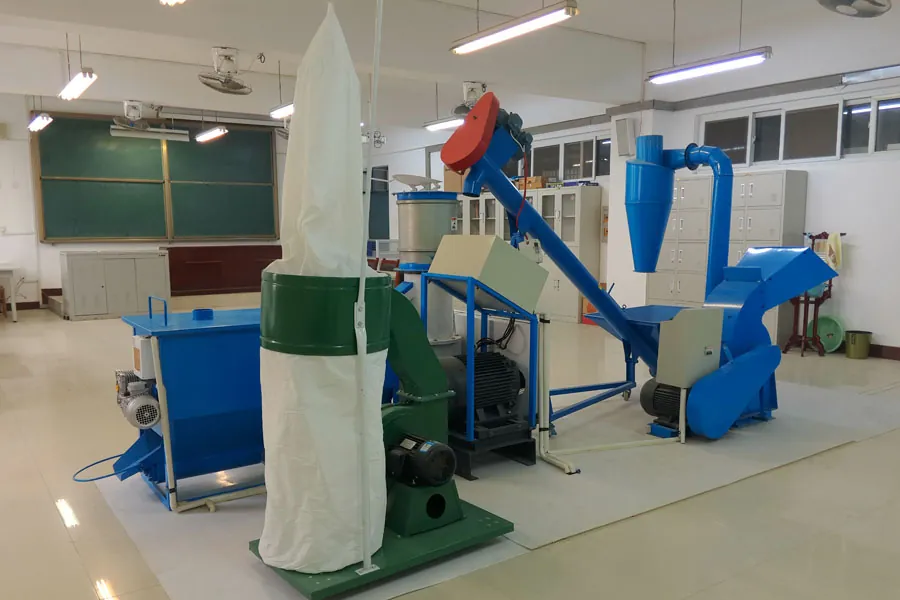
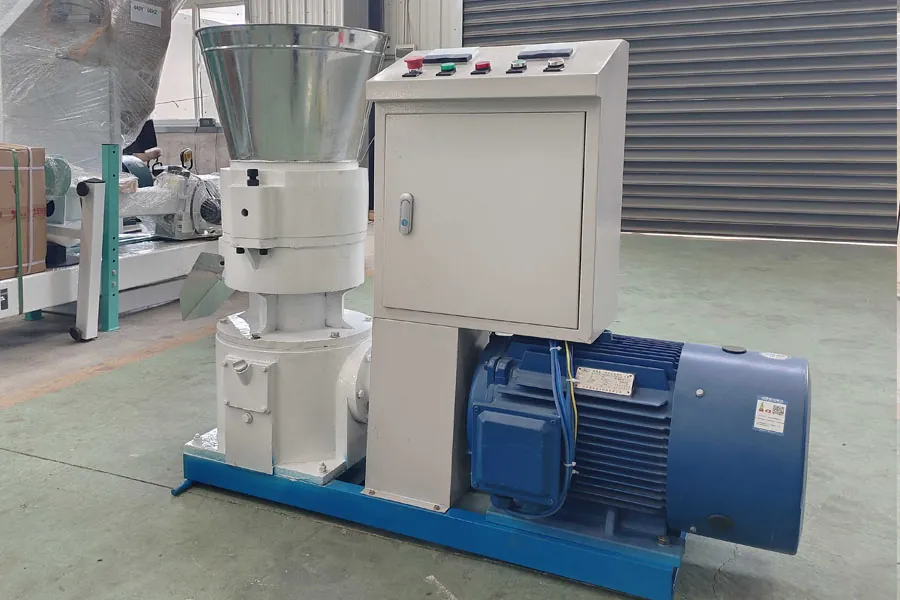
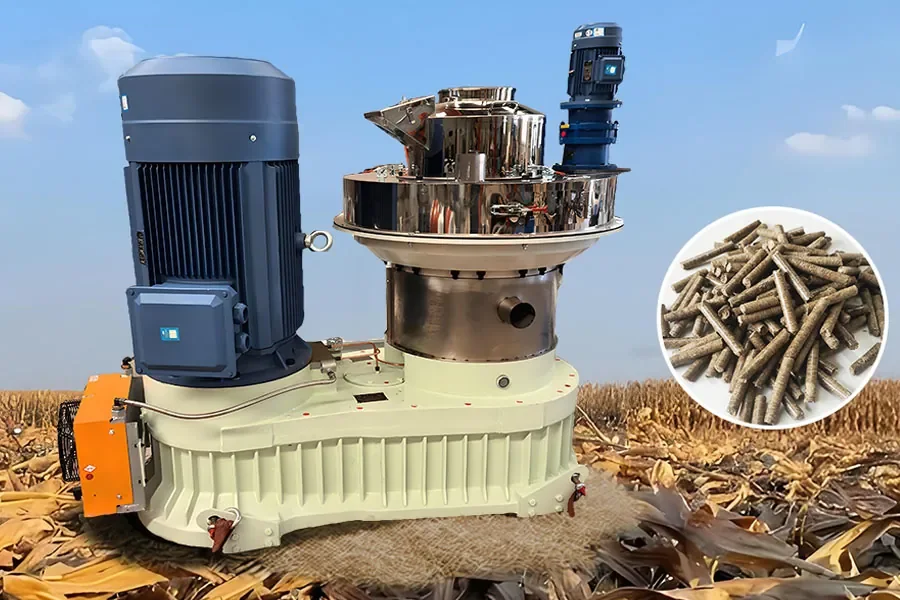
A combined pellet machine on wood, the flat die pellet mill it is built around, the biomass pellet production line it feeds into above 350 kg/h, and a batch leaving the workshop.

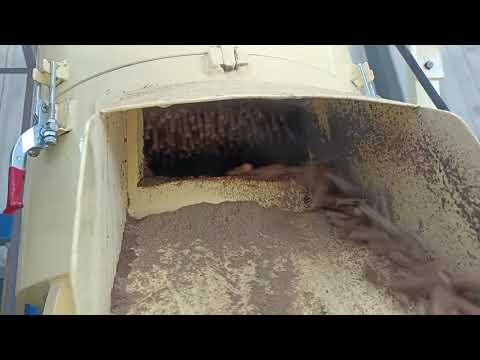


More test runs, shipping records and installation footage on our YouTube channel.
What buyers ask before ordering a combined pellet mill and hammer mill
What is a combined pellet mill and hammer mill?
It is a wood hammer mill and a flat die pellet mill bolted to one base plate and driven from one engine or one motor. Material is crushed, blown into a cyclone and dropped into the press hopper without being handled in between, so the machine turns chips, straw or husks into pellets in a single pass.
How much does a combined pellet machine cost?
It depends on three things: the frame size, the drive and the die. The quotation lists each model with its own price, and the diesel versions cost more than the electric ones on the same frame. Send the material and the kg/h you need and we will quote the set — crusher, press, die and spare rollers — rather than a headline figure for the frame alone.
Can it run on a single-phase supply?
No. The electric version needs 380 V three-phase at 15, 22 or 30 kW. If the site has only single-phase power, the answer is either a phase converter sized for the motor or the diesel version of the same frame — and for most rural sites the diesel version is the cheaper answer.
What output can I expect on wood chips?
100–150 kg/h on the PH200, 200–250 kg/h on the PH250 and 250–350 kg/h on the PH300, quoted on dry sawdust through a Ø6–8 mm die. Hardwood, wet material or a worn die pull the figure down; we test the unit on your material and record the actual kg/h before it is crated.
Does the hammer mill run all the time?
Yes — crusher and press share one drive, so the mill runs when the press runs. That is the trade-off for the single engine, and it is why the combined pellet machine is built to 350 kg/h and no larger. If you need to crush and press independently, buy the two machines separately.
Can I buy the press without the crusher?
Yes. The same press is sold on its own as a flat die pellet mill, and the crusher is sold on its own as a diesel or electric hammer mill. Buyers who start with the press alone often add the crusher later — the base plate is drilled for both.
What maintenance does the combined pellet machine need?
Belts and belt tension, the die-to-roller gap, grease on the roller shafts, and a screen check after abrasive material. On the diesel version add engine oil and the air filter. Plan on twenty minutes a day and a die change every few hundred hours, depending on what you press.
How long is delivery?
7–15 working days after the deposit, depending on the drive and the die. Payment is TT with 40 % in advance and the balance before delivery; packing is a wooden or steel case.
Send the material, not a model number
A photo of the material, the moisture as it arrives, the kg/h you need per shift, and what the site has for power. Those four answers decide between the PH200 and the PH300, and between a motor and an engine — and they are the difference between a unit that runs and one that sits.
- Emailinfo@pelletmachines.net
- WhatsApp+86 186 0385 1787
- HoursMon–Sat, 08:00–20:00 (GMT+8)
Send a photo of the material and a photo of the site and we will tell you which frame fits, and whether the combined pellet machine is the right answer at all.
What happens after you send this
We answer with the frame, the drive, the die ratio and a price — then send a test-run video on your material before you pay a deposit.
Your details are not shared. One follow-up, no mailing list.