Absorbent Pellets: Oil Spills and Pet Beddingbought to be thrown away, not to be burned
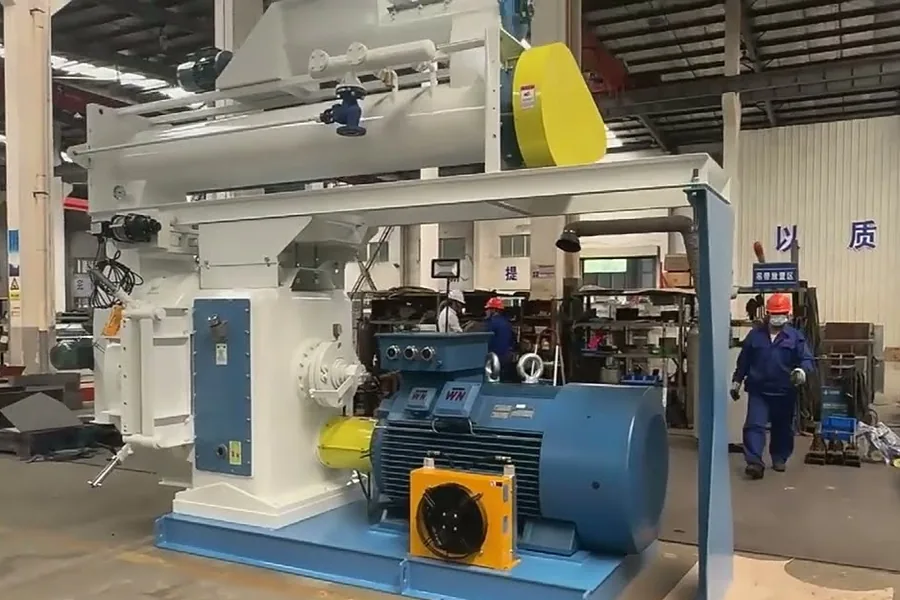
An absorbent pellet is specified for the opposite of a fuel pellet: as much pore volume as the die plate will leave in it, and as little dust as the screen can take out. One market is a workshop floor and a drum of spilled oil, the other is a hamster cage, and the two want the same pellet pressed to slightly different numbers. This page is those numbers: the grind, the die plate, the density, the two screen decks and the bag.
- 1.5–2× its own weight in oil, about 3× in water
- 480–560 kg/m³ for a spill bag, 550–650 for a pet bag
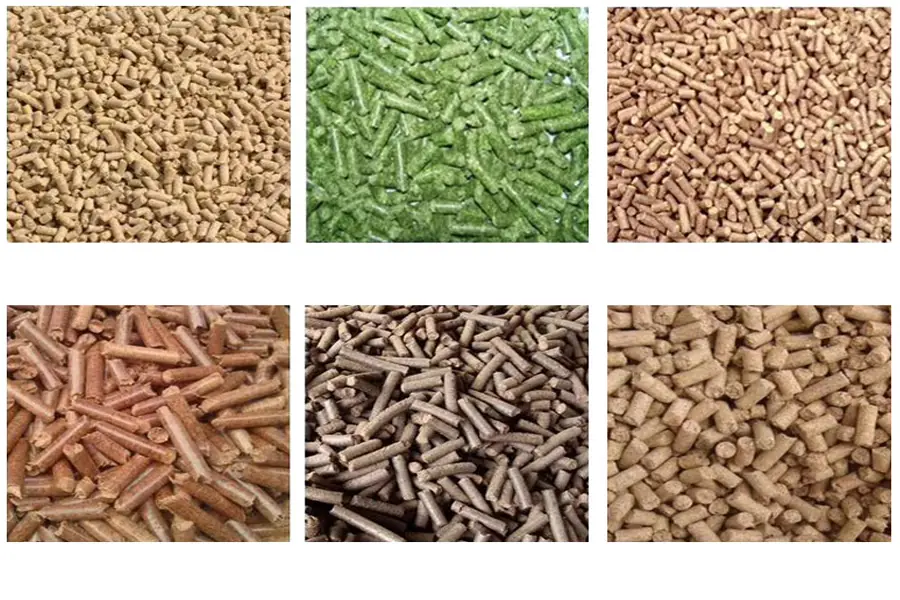
- 4–6 mm for small pets, 6–8 mm for a workshop floor
- Under 1 % dust under 0.5 mm, and the screen is what gets it there
Softwood, hardwood, paper and straw all press · Density, dust and die life reported with the model · Flat die pellet mill to 800 kg/h, vertical ring die wood pellet mill above
The short answer
One product, two markets, and one number that decides both: how much air is left inside the pellet after the die plate has finished with it.
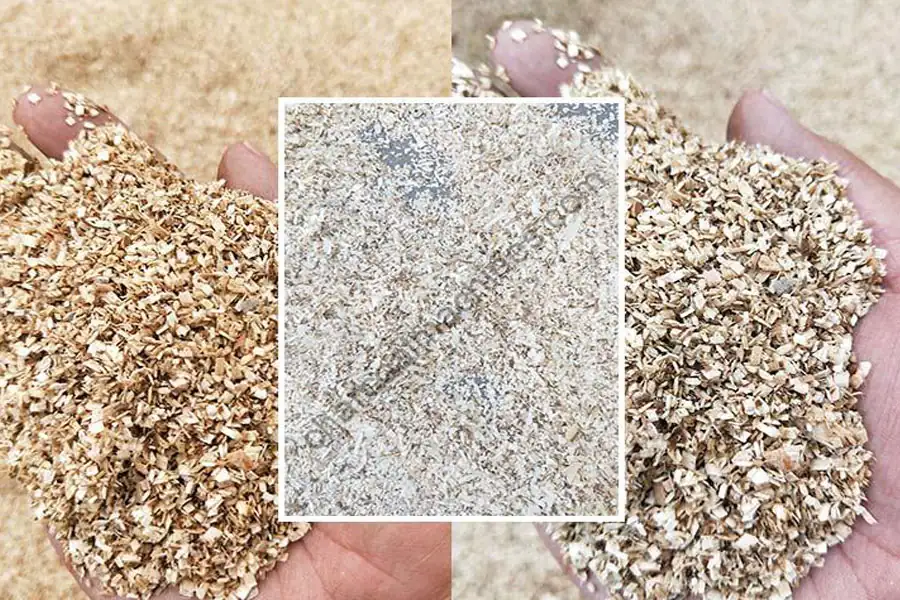
An absorbent pellet is softwood sawdust pressed on a flat die pellet mill at a 1:4 to 1:5 die plate, then cooled and screened. It absorbs one and a half to two times its own weight in oil, which is about two litres a kilo, and about three times its own weight in water. The two markets that buy it want the same thing for different reasons. A workshop wants a pellet that wicks a spill fast, still holds together when it is swept into a pan, and does not turn into a dust cloud while it is being spread. A pet supplier wants a smaller pellet — 4 to 6 mm — that absorbs into a cage and then breaks down, with under one per cent dust because the animal is breathing three inches above it. Both come off the same four stages: a wood hammer mill at a 3 to 5 mm screen, the pellet mill, a pellet cooler and screen, and a bag. The difference between them is the die plate ratio, the density and which screen deck the bag comes off.
The absorbency figures are trade numbers for a softwood pellet, not a laboratory result, and they move with the species, the grind and the die plate. The density band is the one we press to and the die plate life is ours: 350–500 hours at a 1:4 to 1:5 ratio on clean softwood, less once bark or paper is in the mix. A 20 kg sample settles the density, the absorbency and the dust better than any table — and a litre of the oil you actually spill settles it faster still.
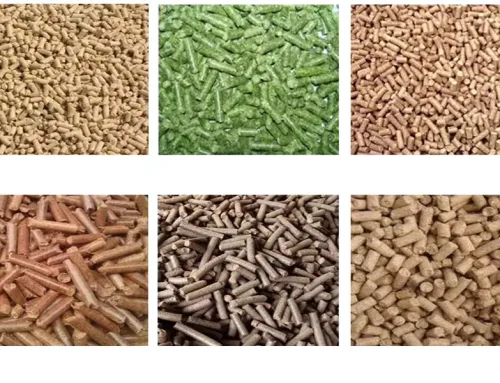
Six materials sold as an absorbent, and what each one does with a spill
Four of these six are pelletised. The other two are what a pellet is competing against, and it is worth knowing why the loose forms lose.
| Material | What it takes up | What makes it | Whether to make it |
|---|---|---|---|
| Softwood sawdust pine and spruce |
1.5–2× its weight in oil and about 3× in water. The resin is slightly oleophilic, which helps it wet out in oil rather than floating on it | A wood hammer mill at a 3–5 mm screen, a flat die pellet mill on a 1:4 to 1:5 die plate, dried to 8–10 % | The default. Cheapest material, longest die plate life, and the only one that is equally good as a spill pellet and a pet bedding pellet |
| Hardwood sawdust oak, beech, eucalyptus |
More than softwood by weight, and slower to start. The pellet is denser and glossier at the same ratio | The same route with a shorter die plate ratio, or the same ratio and a wetter mix | Works, and is what you make when hardwood is what the sawmill gives you. Expect a pellet that wicks slower and a die plate that lasts less long |
| Paper and card | 3–4× its weight and fast, because the fibres are already open. Holds oil well and holds water badly | A flat die pellet mill with a binder, or a granulator, then drying — paper will not hold together on its own | The recycled story, and a real product for bird cages and for dust-sensitive animals. Grey, and it needs an additive |
| Cereal straw | 2–3×, and the pellet is hollow-stemmed so it floats. Good on water, poor on a workshop floor because it breaks into sharp pieces | Chopped to under 10 mm, then a flat die pellet mill at a 1:6 ratio; the straw needs the pressure | A farm product rather than an industrial one. Sells as animal bedding, not as a spill sorbent |
| Rice husk | 1–1.5×, and it is abrasive. The ash content is 15–20 %, which is the highest of anything on this page | A flat die pellet mill at a 1:6 to 1:8 ratio, and a hardened die plate | Cheap and available in Asia, and the ash makes it a poor spill sorbent. Not the material to design a product around |
| Loose sawdust the product it replaces |
4–6× its weight, the highest figure here, because every particle is surface | Nothing. A shovel and a bag | What a workshop used before it bought pellets. It absorbs more and it is free — and it blows away, it will not sweep, and it makes the dust cloud that a pellet exists to avoid |
The last row is the honest one. Loose sawdust absorbs more per kilo than any pellet on this page, and every spill kit in the trade exists because a bucket of sawdust is unusable in a wind, unusable on a grating and unusable when the customer is a marina. A pellet is bought for the handling, and the density band is where that is decided: light enough to hold oil, heavy enough to be swept.
Four columns will not fit a phone. Swipe the table sideways for the third column and the verdict.
Softwood is the material to design around, and the reason is boring: it is the cheapest, it presses at the lowest ratio, and the die plate lasts longest on it. An absorbent line built for pine can be switched to hardwood by changing the die plate and re-setting the moisture, which is a day of work rather than a new plant. The feedstock page covers the materials that will not press at all.
Paper is the one material on the list that needs an additive, and the additive is what decides whether the bag can be sold as compostable. For a bird cage that matters, because the bedding goes into a compost heap or a bin with the droppings. The binder page has the options and what each one does to the absorbency — most of them reduce it, which is the trade nobody mentions.
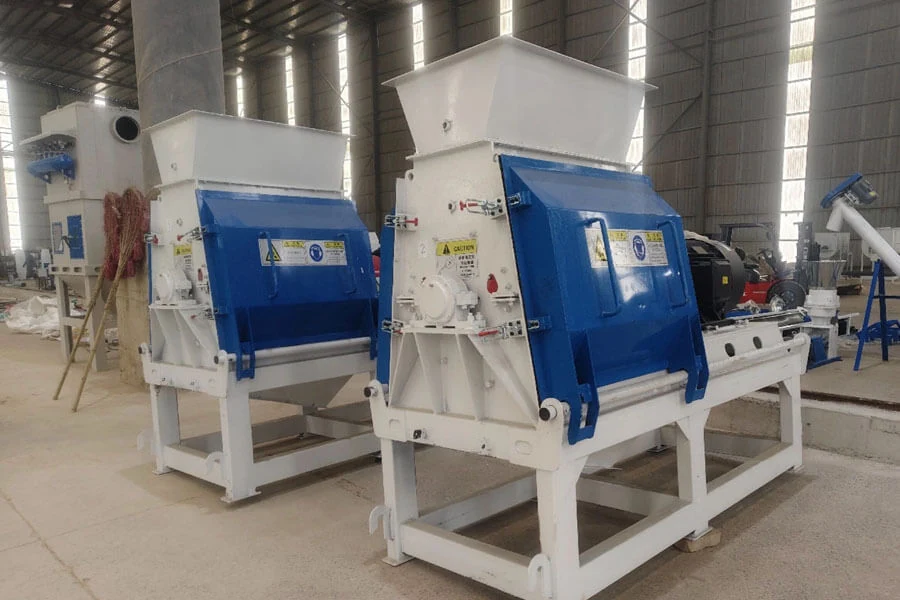
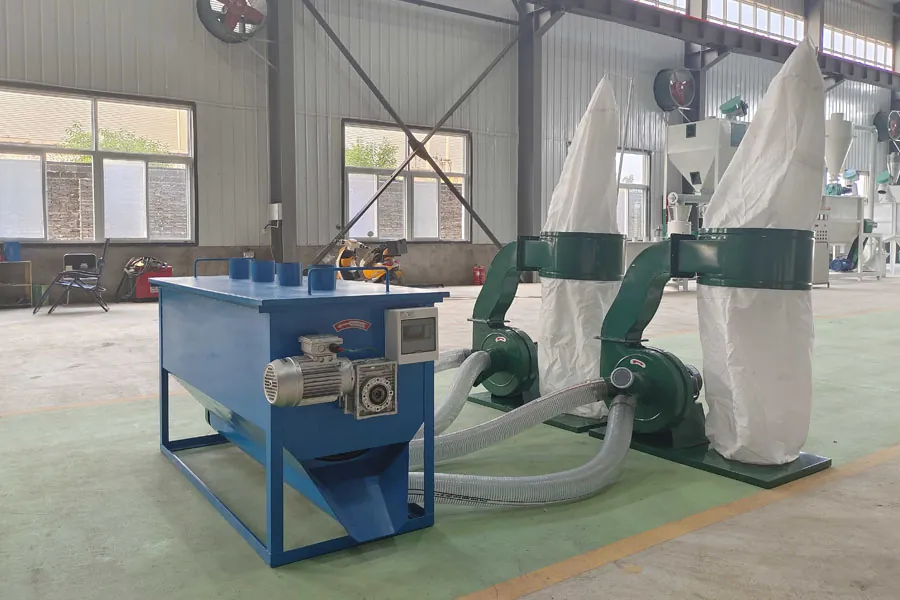
One pellet, two markets, and the ten rows that separate them
The first row is what the customer is buying and the last row is the mistake that loses the account. Everything between them is a number you can set on the same production line.
| Dimension | Oil and workshop spill | Small pet bedding |
|---|---|---|
| What it is bought for | To take a spill off a concrete floor, a workshop drain or a marina pontoon and be shovelled into a drum | To line a cage and take the wet away from the animal, then go on a compost heap |
| Pellet size | 6–8 mm across, 10–20 mm long. Big enough to be swept with a yard broom and picked up in a scoop | 4–6 mm across, 6–15 mm long. A hamster or a guinea pig has to be able to walk on it |
| Bulk density | 480–560 kg/m³ — the lighter end, because pore volume is the whole product | 550–650 kg/m³ — denser, because a denser pellet makes less dust in the bag |
| Absorbency | 1.5–2× its own weight in oil, and it has to be fast: a spill is being contained while it is being spread | About 3× in water, and it does not have to be fast. A cage is wet for hours, not for the four minutes a spill takes |
| What happens when it gets wet | It has to stay whole. A pellet that breaks down under a broom turns a spill into a bigger mess | It has to break down. A pellet that stays hard is uncomfortable underfoot and does not mix into the bedding |
| Dust limit | Under 2 % under 0.5 mm, and the real limit is the dust cloud while spreading — which is a fire and a respiratory question on a workshop floor | Under 1 % under 0.5 mm, and the animal is three inches above it. This is the number the customer tests |
| The bag | 20–25 kg in a woven poly bag, or a 10 kg pail in a spill kit with a scoop and a lid | 5–15 litres printed, which is 3–9 kg, and the shelf is the pet shop rather than the industrial catalogue |
| Disposal | Oil-soaked pellets go for incineration with energy recovery or to landfill where that is permitted. Not compost, not drain | Compost, or a green bin. This is why a pet bag has to be additive-free and why a binder is a problem |
| Die plate and life | 1:4 to 1:5, 350–500 hours on clean softwood. A 1:5 pellet is denser and wicks more slowly, which is the wrong direction on this product | 1:4, same life, and the die plate is run a little cooler so the pellet comes off softer |
| The mistake | Buying a fuel pellet and calling it a sorbent. It is pressed to 650–700 kg/m³ and glazed, so it beads oil on the surface and takes ten minutes to wet out | Shipping a bag at 2 % dust because the screen mesh stretched and nobody weighed the fines. The customer sees it when the bag opens, and it is the only defect that gets photographed |
The wet-behaviour row is the one that catches people out, because it asks for opposite things. A spill pellet has to survive the broom; a pet pellet has to fall apart under a guinea pig. Both come off the same die plate and the same screen — the difference is the density the die plate leaves and the moisture the pellet goes into the bag with. Press one hard enough to survive a broom and it is the wrong bedding; press one soft enough to break down and it is a poor sorbent. That is why a supplier that sells both keeps two die plates rather than one.
Three columns will not fit a phone. Swipe the table sideways for the pet bedding column.
The density row is the engineering on this page. A fuel pellet is pressed to 650–700 kg/m³ because density is energy per cubic metre and a customer pays by the tonne. An absorbent pellet is pressed to 480–650 because the customer is buying the empty space inside it, and pressing it harder is literally removing the product. The lever is the die plate ratio and the moisture: a 1:4 plate at 13 % leaves a pellet with open pores, and a 1:6 plate at the same moisture leaves a pellet that looks better in the bag and absorbs half as much.
The dust row is the one that decides whether the account survives its first pallet. On a spill bag the fines are a fire question as well as a housekeeping one: a dust cloud over a workshop floor at the moment somebody is spreading absorbent around a spill is the worst combination in this trade. A 0.5 mm deck, a hood on the bagging spout and a bag filter on the exhaust are the three things that take a bag from two per cent to under one, and the dust and fire page covers the rest of it.
Six numbers on an absorbent bag, and how to check each one yourself
Every one of these can be measured with a set of sieves, a kitchen scale, a litre jug and a cup of the oil you actually spill. A buyer who checks all six is a buyer who does not come back.
| What is measured | Spill bag target | Pet bag target | How to check it |
|---|---|---|---|
| Pellet size | 6–8 mm | 4–6 mm | A set of sieves and a handful through them, weighed at each size |
| Dust under 0.5 mm | Under 2 % | Under 1 % | 500 g on a 0.5 mm sieve, shaken for a minute, and weigh what passed through |
| Absorbency in oil | 1.5–2× its own weight | Not the figure this bag is sold on, but it should be no worse than 1.2× | 100 g into 200 ml of the oil you use, left ten minutes, then lift the pellet out and weigh it |
| Absorbency in water | Not quoted | About 3× its own weight | 100 g into 300 ml of water, and time how long it takes to stop floating |
| Bulk density | 480–560 kg/m³ | 550–650 kg/m³ | Fill a 1 litre jug from a height, strike it off level and weigh it |
| Moisture | 8–10 % | 8–10 % | A moisture meter on a crushed pellet, not on a whole one |
The oil test is the one to do before anything else, and it is worth doing with the oil the customer actually spills rather than with a light test oil. Viscosity changes the answer: a heavy oil wicks into the same pellet in three times the time a diesel does, so a pellet that looks excellent in a supplier’s demonstration can be slow on a floor where the spill is gear oil. The moisture side is on the moisture page, and the density and ratio arithmetic is on the compression ratio chart.
Four columns will not fit a phone. Swipe the table sideways for the two targets and the test.
Bulk density is the first thing to measure and the last thing anybody quotes, because it is the only number on the list that tells you how much pore volume you bought. Two bags can both say 3× absorbency and differ by a hundred kilos a cubic metre, which is a third of the freight and half the shelf space. A litre jug, a scale and sixty seconds settles it, and it is the test to run on a competitor’s bag as well as your own.
The dust figure is the one a pet customer checks with their hands before they check anything else, and it is the one that drifts quietly as a screen mesh stretches and a die plate wears. A set of sieves costs less than one rejected pallet. On a spill bag the same fines are a fire question, so the sieve result belongs in the batch record rather than in a drawer.
Six things that turn an absorbent pellet into a bag of dust
Four of these are upstream of the pellet mill and two are downstream, and none of them is fixed by pressing harder — on this product, pressing harder is the fault.
| What it is | What goes wrong | What to do about it |
|---|---|---|
| Grinding | Too coarse and the pellet is weak and rough, so it crumbles in the bag. Too fine and the pellet presses dense and glossy, and oil beads on it for a minute before it starts to wick | A wood hammer mill at a 3–5 mm screen, and the same screen for the whole batch rather than whatever is in the wood hammer mill |
| Die plate ratio | A 1:6 or 1:8 plate — the fuel setting — leaves a dense, glazed pellet at 650 kg/m³. It looks better and absorbs half as much | 1:4 to 1:5, and say what the product is when the die plate is ordered, because the ratio is cut into the steel |
| Moisture at the die plate | Under 12 % the pellet comes out friable and makes its own dust on the way to the pellet cooler. Over 16 % it comes out with a glazed skin and steam pockets inside | 12–15 % at the die plate, added in the mixer and left to temper rather than chased at the die plate |
| Drying after pressing | Over-dried to under 6 % the pellet goes brittle and a bag of it is half fines by the time it is stacked. Over 10 % it can mould in a sealed bag on a pallet | 8–10 % into the bag, and a moisture meter at the bag rather than at the sawdust dryer outlet |
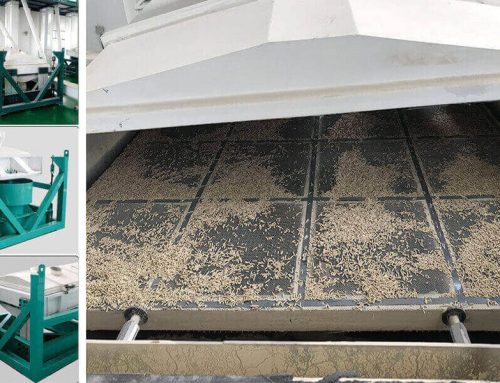
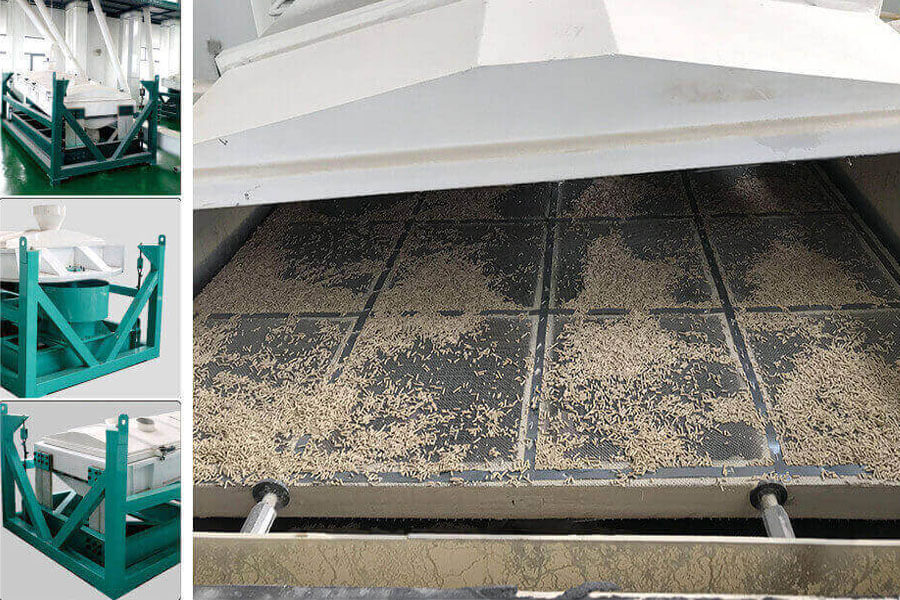
| Screening | Under 0.5 mm is dust and over 8 mm is a lump. One deck cannot do both, and a stretched mesh does neither — the fines go straight into the bag | Two decks, with the oversize back to the crusher and the fines back to the mixer, and the mesh checked on a schedule |
| Bark and additives | Bark is dense, dark and low in pore volume; grit and sand are worse. A binder that helps paper hold together also fills the pores it was supposed to leave open | Bark-free sawdust for a spill bag, and a binder tested for what it does to absorbency before it is tested for what it does to durability |
The first three rows are where an absorbent line is won or lost, and the first row is the one that gets skipped because the wood hammer mill is already there and the screen is already in it. A 5 mm screen and a 3 mm screen make two different products off the same die plate, and the 3 mm one will look better in a photograph and absorb less. The other row worth planning rather than discovering is the die plate ratio: it is cut into the steel, so a production line specified for fuel and switched to absorbent is waiting for a die plate, not adjusting a setting.
Three columns will not fit a phone. Swipe the table sideways for the remedy.
The drying row is where an absorbent pellet differs most from a fuel pellet, and it is the opposite of what a fuel producer is taught. A fuel pellet is dried as far as the buyer will accept, because water is weight that is not being paid for. An absorbent pellet is dried to a band and no further, because a pellet at 5 % is brittle, and a brittle pellet is dust by the time it reaches the pallet. The sawdust dryer is sized on the water an hour rather than on the output, and the band is 8 to 10 %.
The last row is the one that costs a season rather than a day. Bark-free sawdust is a purchasing decision, not a production one, and a supplier who takes whatever the sawmill has will find the absorbency drifting through the year without a single setting having changed. If the bag carries an absorbency figure, the incoming sawdust needs a sieve and a moisture reading, because those two are what the figure is made of.
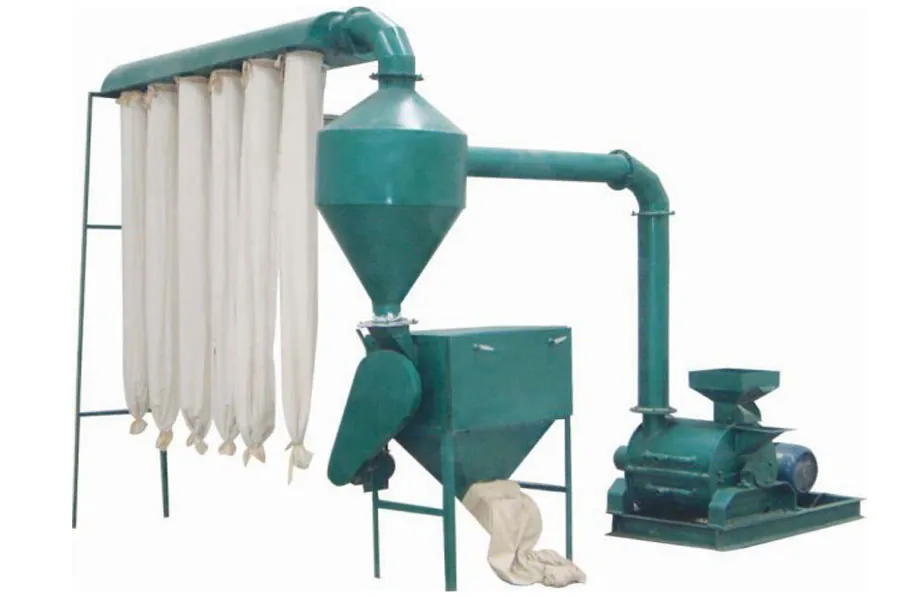
Your output, your bag, and the density the market asks for
Four fields. The output sets the pellet mill, the bag sets the bagging scale, and the market sets the density and the screen deck — which on this product is the figure that decides whether the pellet absorbs or just sits there.
At 20 t a day over 10 hours the pellet mill has to make 2,000 kg/h of absorbent pellets: 100 bags of 20 kg an hour, 50 bags to the tonne. For a spill bag that is HML-600, rated 1.5–2.0 t/h, pressed on a 1:4 to 1:5 die plate and screened at 0.5 mm and 8 mm.
The output is finished bagged pellets, not raw material in. The model is chosen on the fuel rating for that frame, so an absorbent line runs at the top of the range or slightly above it, and the density band in the last box is set by the market rather than by the frame.
The bag count is the number to take to a packaging supplier, because it is bags an hour that sets the bagging scale rather than t an hour. A 20 kg spill bag is 50 to the tonne and a 10 kg pail is 100, so the same output doubles the bagging rate — which is why a bagging room that fills pails puts a second weigher on rather than running the first one faster.
The density figure is the one this page exists for. A spill bag is sold on pore volume and a pet bag is sold on dust, and the two pull the die plate in opposite directions: the spill pellet wants to come off light and open, the pet pellet wants to come off dense enough that it does not make fines in the bag. The tool reports the band for the market you picked rather than one number for both, and the screen deck that goes with it.
Choosing an absorbent product, in the order it has to happen
The first two are decisions about the product and the last two follow from them. Getting the order wrong means buying a screen deck for a pellet size you never settled on.
Decide the market before anything else
A spill bag and a pet bag are the same production line and two different specifications, and the density band is where they part. A site that has not decided this cannot order a die plate, a screen deck or a bag.
Fix the pellet size and the dust limit
6–8 mm and under 2 % for a workshop, 4–6 mm and under 1 % for a pet bag. Those four numbers set the screen decks, the bagging spout and the whole dust side of the build, and they are free to decide now.
Then the die plate ratio and the grind
1:4 to 1:5, and a wood hammer mill at 3–5 mm ahead of it. Say what the product is when the die plate is ordered — the ratio is cut into the steel and it is the setting that decides how much pore volume is left in the pellet.
Then the drying, the two decks and the bag
8–10 % into the bag, a 0.5 mm deck for the fines, an 8 mm deck for the oversize, a hood on the bagging spout and a bag at the weight the market buys. This is the stage that decides whether the product arrives as an absorbent or as a bag of dust.
The first step is the one people try to skip, because both markets buy the same pellet and it looks like one product. It is not: the density band, the pellet size, the dust limit and the bag are all different, and a production line set up for one produces a bag that is wrong for the other in a way the customer notices on the first pallet. A site that wants both keeps two die plates and two screen decks, which is a day of changeover rather than a second plant.
The third step is where the fuel habit does the damage. Every sawmill that already owns a pellet mill has a 1:6 to 1:8 die plate in it, because that is what a fuel pellet needs, and that die plate will make a beautiful dense absorbent pellet that beads oil on the surface for a minute. The symptom looks like bad material rather than the wrong die plate, so the sawdust gets blamed and the die plate is the last thing anybody checks. Order the 1:4 to 1:5 plate for this product and keep the fuel plate for fuel.
Three sizes of absorbent line, and what each one commits to
Almost every absorbent operation is one of these three. They differ in what presses the pellet and in whether there is a sawdust dryer in front of it.
-
300–600 kg/h, a sawmill or a farm with its own waste
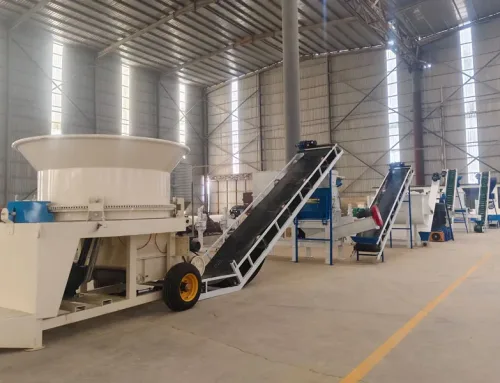
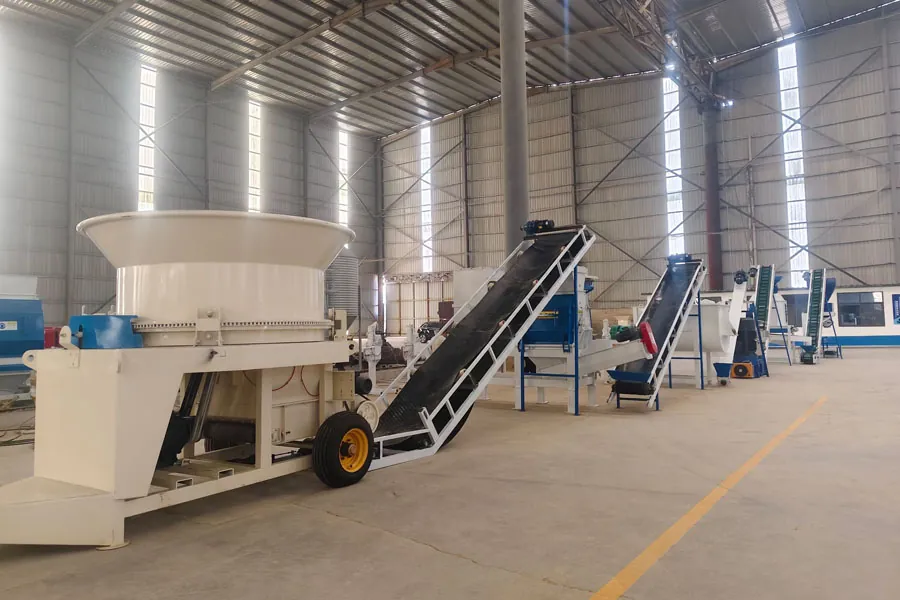
A flat die pellet mill — PM-D450B at 450–600 kg/h or PM-D580B at 600–800 kg/h — with a wood hammer mill ahead of it and a pellet cooler and screen behind. This is the build on the 500 kg/h wood pellet production line, and it is the cheapest way into a spill bag or a pet bag.
-
1 t/h
One PM-D450B pair or one HML-560, a sawdust dryer sized on the water, and a separate 0.5 mm deck. This is where the drying stops being optional and where the bagging moves from a scale and a person to a pellet packing machine.
-
2 t/h and up, or a branded pet bag
A vertical ring die wood pellet mill — HML-600 at 1.5–2.0 t/h or HML-700 at 2.0–2.5 — with the same wood hammer mill, sawdust dryer and two screen decks. From here the product is a printed bag on a shelf, and the dust figure and the density band are the two things that decide whether it stays there.
The three routes are separated by the sawdust dryer and the bagging scale rather than by the pellet mill, which is unusual for this site. An absorbent line is a short one: a wood hammer mill, a flat die pellet mill, a pellet cooler and screen and a bag. The reason is that the product is cheap per tonne and the margin is in the bag, so every stage that can be left out is left out — and the two stages that cannot are the sawdust dryer and the fines deck, because one sets the moisture band and the other sets the dust figure the customer tests.
What buyers ask about absorbent pellets
Eight questions, answered the way we answer them on the phone.
What are absorbent pellets made of?
Softwood sawdust, almost always — pine or spruce, kiln dried, bark free and screened. Hardwood works and wicks more slowly. Paper and card make a good pet bedding pellet but need a binder, and straw makes a farm product rather than an industrial sorbent.
Do wood pellets absorb oil?
Yes — one and a half to two times their own weight, which is about two litres a kilo, provided they were pressed on a 1:4 to 1:5 die plate. A fuel pellet is pressed to 650–700 kg/m³ and glazed, so it beads oil on the surface and takes several minutes to wet out. That is the difference between an absorbent pellet and a bag of fuel.
Can I use fuel pellets as a spill absorbent?
In an emergency, yes, and everybody has. As a product, no: the density is 650–700 kg/m³ against 480–560, the surface is glazed from a longer die plate ratio, and the fines are specified for a furnace rather than for a floor. It works about half as fast and it costs the same, which is why the two are sold as different products.
What size pellets for small pet bedding?
4 to 6 mm across and 6 to 15 mm long for hamsters, guinea pigs, rabbits and rats. A 6 mm pellet is the top of that range and is what a producer already running a 6 mm pellet gets without a change; 4 mm needs its own die plate and its own screen deck.
Is pine bedding safe for small animals?
Kiln-dried pine and spruce are the standard bedding in the trade, and the drying is part of why. Cedar is the one to avoid — the aromatic oils are the reason, and it is the one material a pet supplier will ask you about. For birds and for dust-sensitive animals, a paper pellet is the safer answer.
Do absorbent pellets need a binder?
Softwood does not: its own lignin holds the pellet at a 1:4 ratio. Paper does, and straw at the dry end of the band usually does. Any additive has to be tested for what it does to absorbency first, because most binders fill the pores they were added to protect.
What do I do with oil-soaked pellets?
Incineration with energy recovery, or landfill where the local rules allow it — the same route as any oil-contaminated absorbent. Not compost, and never a drain. A pellet that has taken oil is a fuel with a low calorific value, which is why some sites burn them and why the bag should say what the material is.
Can one production line make spill pellets and pet bedding?
Yes, and most do. The grind, the pellet mill and the pellet cooler are identical; what changes is the die plate ratio, the screen deck that sets the pellet size, and the bag. Two die plates and two decks is a day of changeover, and it is cheaper than a second production line by an order of magnitude.
Send 20 kg of your sawdust and we will cut the die plate for it
What the sawdust is, how wet it arrives, the pellet size you want to sell and the market it goes into. That is enough to name the die plate ratio, the pellet mill and the screen deck.
What happens after you send it
We press it on a flat die pellet mill at 1:4 and 1:5, screen the result at 0.5 mm and 8 mm, and report the density, the dust and the absorbency in oil and in water — then tell you which die plate to order and what to expect from it in hours. If the honest answer is that your sawdust has too much bark in it for an absorbent bag, we say so before you buy a die plate.
Your details are not shared. One follow-up, no mailing list.