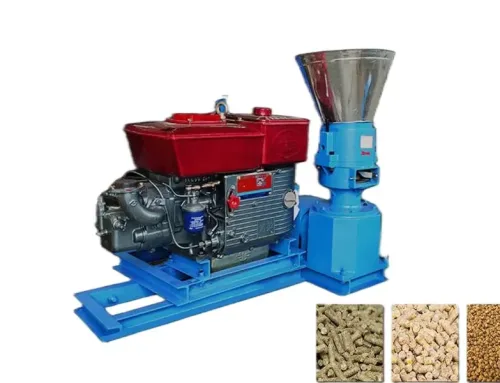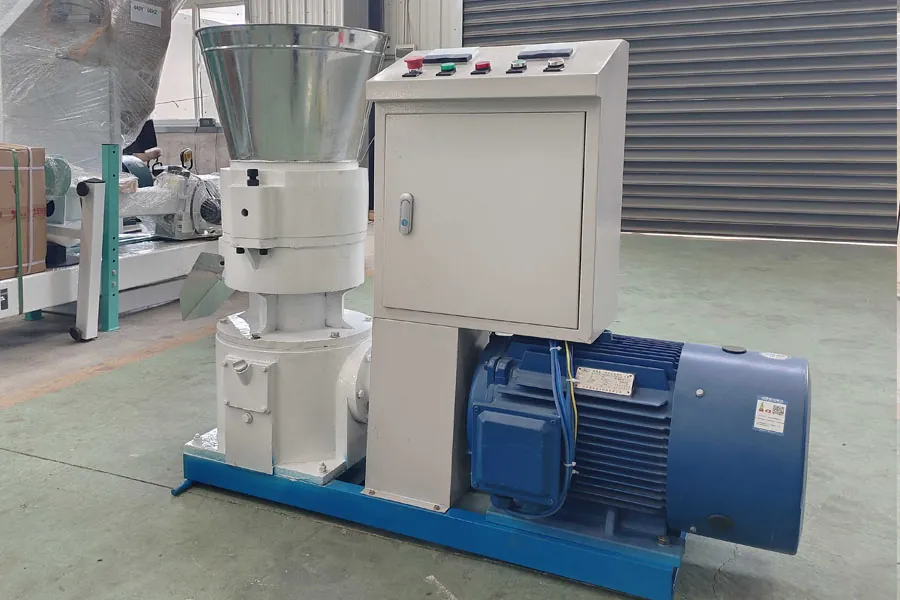
Vertical Ring Die Pellet Mill1 to 2.5 t/h, gravity fed, die changed from the top
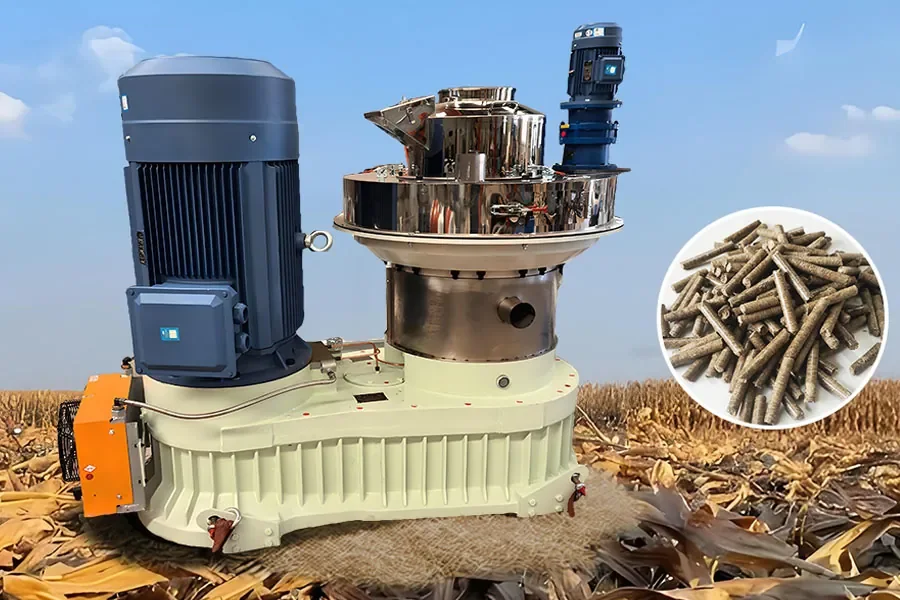
A vertical ring die pellet mill stands the die on its edge and lets the material fall into it. No screw feeder forces material sideways, no arching in the chamber, and the die exits through the top opening instead of a dismantled gearbox. It is the machine that takes over when a flat die pellet mill runs out of scale — from about 1 t/h upward, on wood chips, grass, rice husk and EFB.
- HML-560 to HML-700 — 90 to 160 kW, 1.0 to 2.5 t/h on wood chips and grass
- Die fixed, rollers rotating inside it — even wear across the whole die face
- Top-opening chamber: die and rollers lifted out with a hoist, not a full strip-down
Reply in 12 working hours · Die matched to your material · Line layout and loading plan with every quotation
Why the die stands on its edge
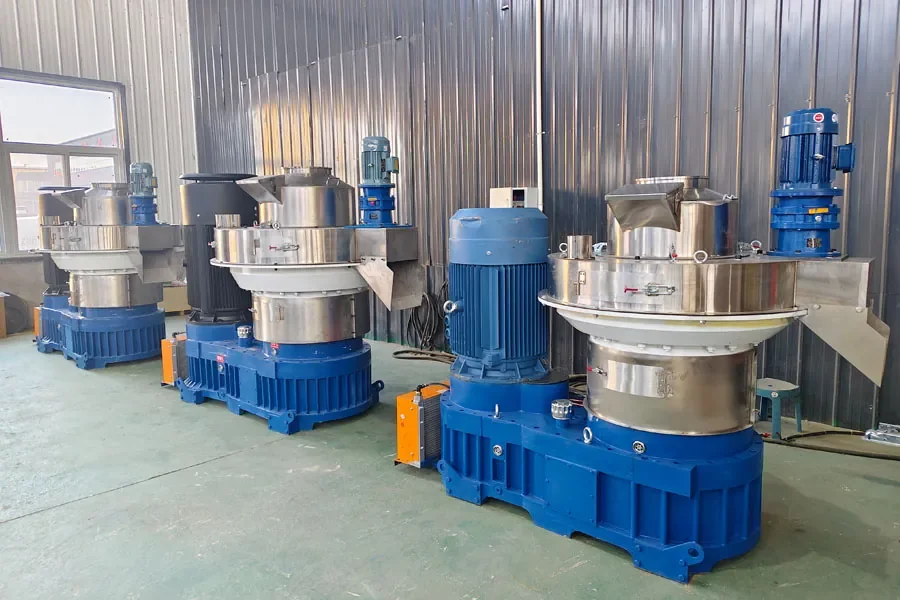
A ring die has far more pressing area than a flat plate, and standing it vertically means the material can fall into it instead of being pushed. Everything else follows from that one decision.
Gravity is the cheapest feeder there is — and the only one that cannot arch, jam or run backwards.
- Die position
- vertical, Ø560 – 700 mm
- Rollers
- 2 or 3, rotating inside the die
- Feed
- gravity, from the top
- Motor
- 90 – 160 kW
- Output
- 1.0 – 2.5 t/h
- Die change
- top opening, hoist
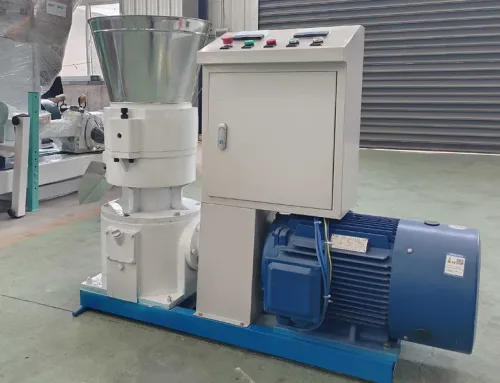
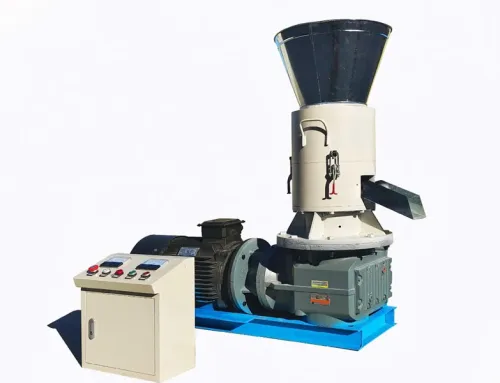
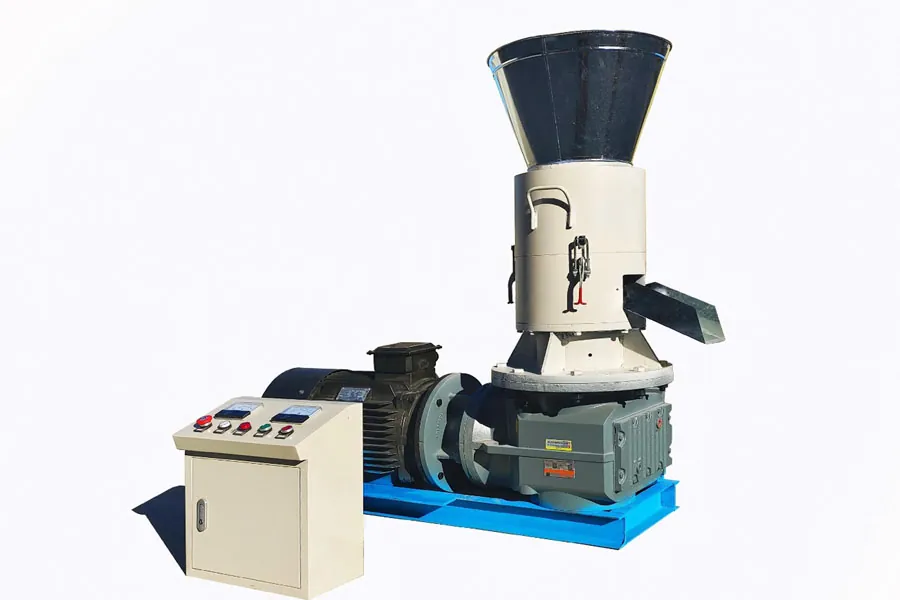
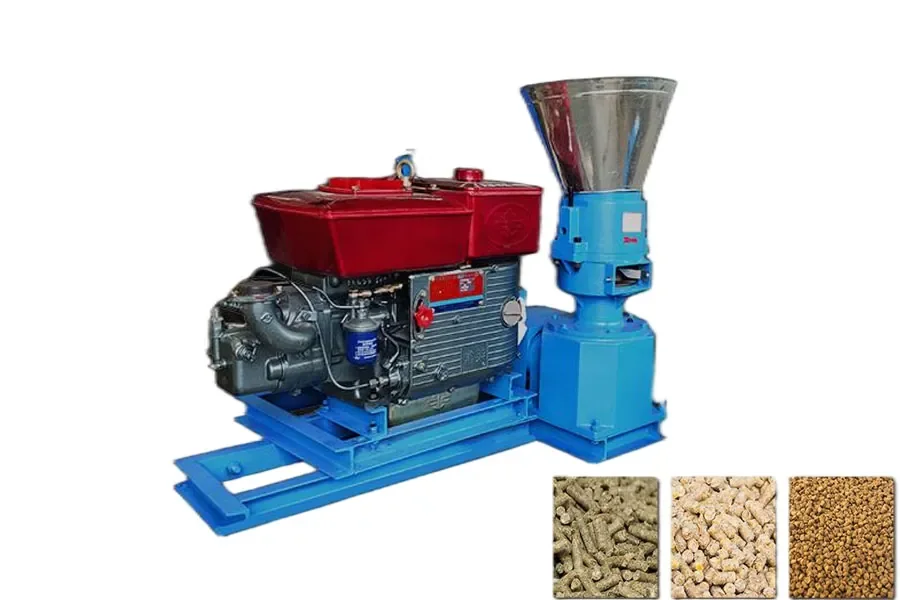
On a flat die pellet machine, the material is dragged sideways under a roller and squeezed through a horizontal plate. It works, but the pressing area is limited by the plate diameter, and above roughly a tonne an hour the load per square millimetre gets high enough that the die wears through before it earns its cost.
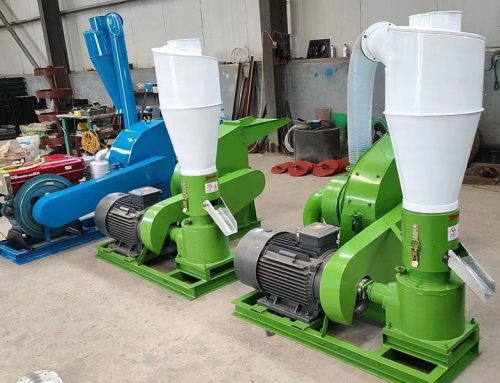
A vertical ring die pellet mill wraps the same idea around a cylinder. The die is a vertical ring, the rollers rotate inside it and press material outward through the holes. The pressing area is the whole inner circumference times the ring width — several times a flat plate of the same footprint — so the pressure per hole stays moderate while the capacity goes up.
Standing the ring vertically does two more things. Material falls in from the top under its own weight, which removes the screw feeder that horizontal ring dies need and the arching that comes with it. And because the rollers orbit the whole ring, wear is spread around the entire die instead of concentrating on one track.
The trade-off is height and weight. An HML-700 is 7.5 tonnes and 2.1 m tall, and it needs a concrete base and a hoist for maintenance. Below about 1 t/h that is not worth it — which is exactly where a flat die pellet mill still wins.
Seven differences that decide the purchase
Both are ring dies. The orientation changes the feeding, the maintenance, the footprint and the price — and for a buyer at 1–3 t/h it usually decides the machine.
| Aspect | Vertical ring die pellet mill | Horizontal ring die pellet mill |
|---|---|---|
| Orientation | Die vertical, material fed from the top | Die horizontal, material fed from the side |
| Feeding | Gravity — no screw feeder, no arching | Forced feed with a screw or paddle feeder |
| Capacity | Small to medium: 1–2.5 t/h per unit | High and continuous: 3–20 t/h per unit |
| Footprint | Compact — tall rather than wide | Larger, plus the feeder and conditioner alongside |
| Maintenance access | Top opening; die and rollers lifted out | More dismantling for die access, longer downtime |
| Wear pattern | Rollers orbit the full ring — even wear | Centrifugal spread; even wear but sensitive to feed rate |
| Die replacement | Smaller, lighter die handled with a hoist | Large die, often needs lifting equipment and more time |
| Cost | Lower entry cost for the same capacity band | Higher investment, justified above roughly 3 t/h |
Summary from our own build sheets: the vertical ring die pellet mill is the compact, gravity-fed answer for 1–2.5 t/h; the horizontal ring die pellet mill is the high-volume answer above that. Between 1 and 3 t/h the vertical ring die pellet mill usually wins on footprint, die cost and how long a die change takes.
Three models, one frame family
Output is quoted on wood chips and sawdust at 12–18 % moisture through a Ø6–8 mm die. Grass, alfalfa and compound feed run higher on the same motor — the material is softer and binds more easily.
| Model | Main motor | Output, wood & grass | Size L×W×H | Weight |
|---|---|---|---|---|
| HML-560 | 90 kW | 1.0–1.5 t/h | 2100 × 1200 × 1890 mm | 5.8 t |
| HML-600 | 132 kW | 1.5–2.0 t/h | 2220 × 1200 × 1800 mm | 6.8 t |
| HML-700 | 160 kW | 2.0–2.5 t/h | 2400 × 1400 × 2100 mm | 7.5 t |
The 132 kW model is also quoted at 2.7–3.0 t/h on compound feed, roughly 1.3 times its wood figure. A 90 kW unit needs a 125 kVA supply to start under load; the 160 kW unit needs 250 kVA. Tell us the supply you have and we will confirm the starting method — star-delta, soft start or a frequency converter.
Sizes exclude the feed hopper and the discharge chute. Die hole size, compression ratio and roller count are set per order from the material you name.
What has to sit around a 2 t/h press
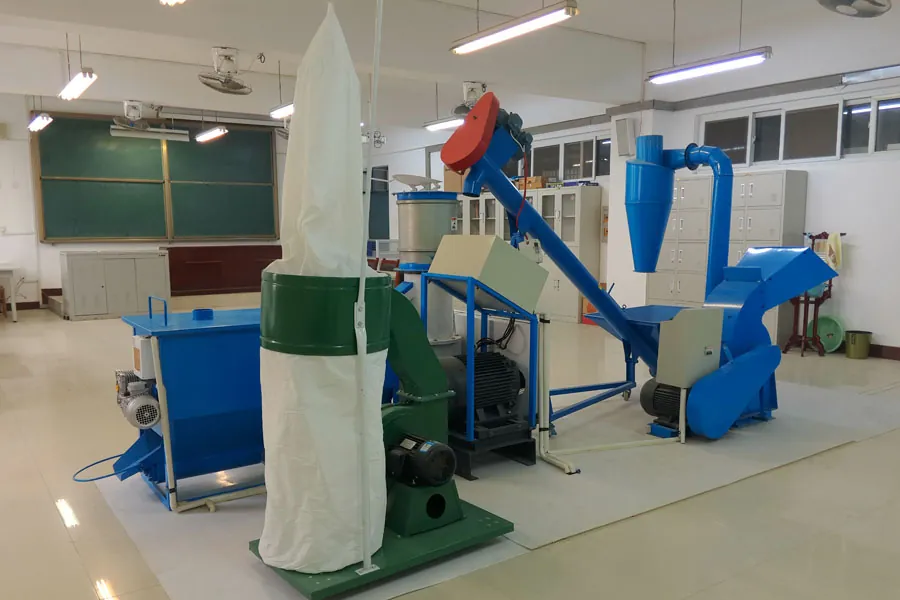
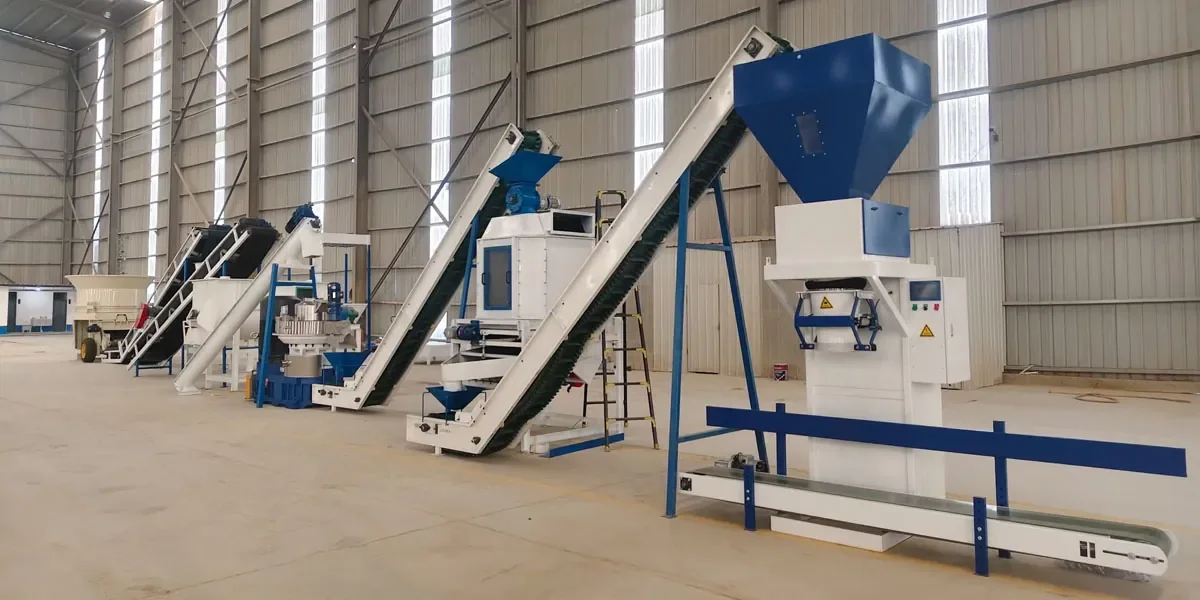
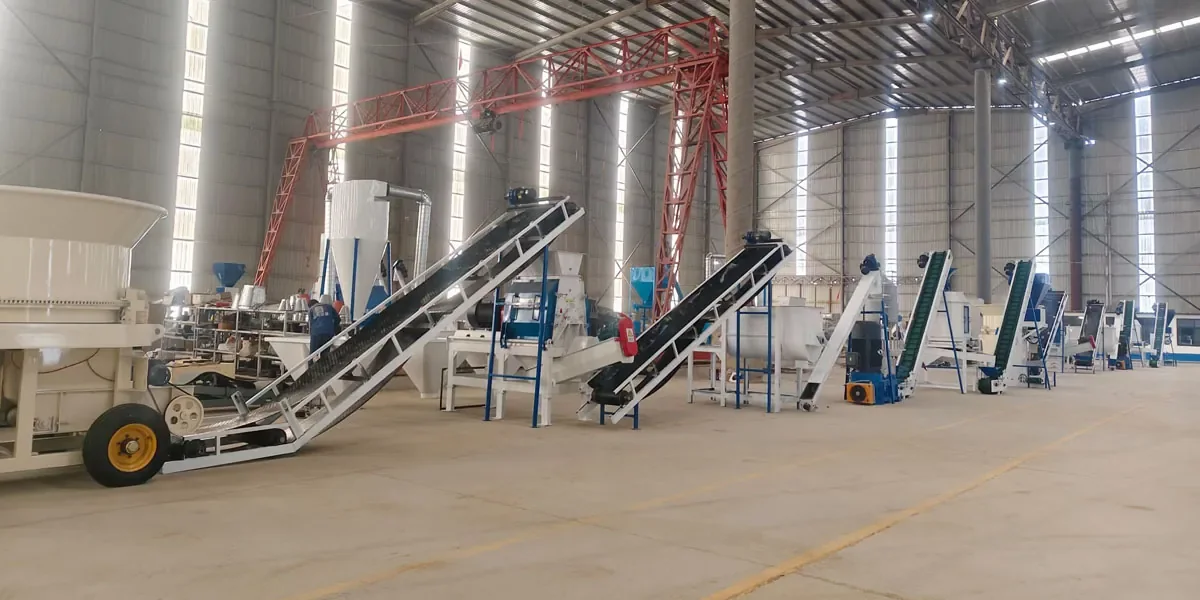
A vertical ring die pellet mill is one machine in six. At this capacity, the machines in front of it cost more than the press does, and skipping them is why new lines underperform.
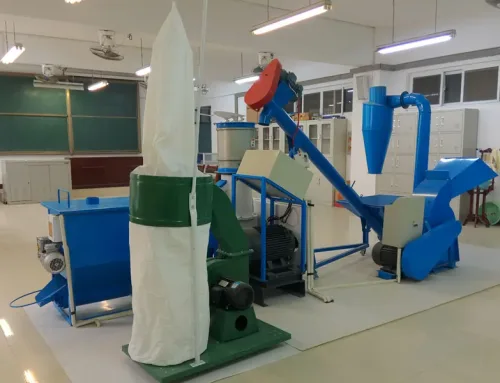
Wood Chipper
Logs, slabs and offcuts to chips. A drum chipper handles 3–8 t/h of raw material for a 2 t/h press — the buffer matters more than the exact figure.
Wood Crusher
Wood hammer mill with a 3–5 mm screen. Particle size decides pellet strength more than pressure does.
Sawdust Dryer
Down to 12–18 %. A rotary drum sawdust dryer is usually the largest single item in the line, and the one buyers try to skip.
Pellet Press
The vertical ring die pellet mill itself. Material falls in from the hopper above, rollers press it outward through the ring.
Pellet Cooler
Counter-flow pellet cooler brings pellets to within 5 °C of ambient so they do not sweat in the bag.
Pellet Bagger
Weighing, filling and stitching at 15–50 kg, or bulk loading for a plant that feeds a boiler.
Built for fibre that fights back
A vertical ring die pellet machine earns its price on material that a flat die pellet mill cannot press economically: long fibre, high silica, low bulk density.
Wood chips & sawdust
Pine, eucalyptus, rubberwood. The easiest material on this machine — 12–18 % moisture, particle size under 5 mm, lignin binds it without additive.
Grass & alfalfa
Chopped to 30–50 mm before crushing. Long fibre bridges in a flat die pellet mill hopper; in a vertical ring it falls straight into the chamber, which is why grass pellet lines are almost always built on a vertical ring die pellet mill.
Rice husk & straw
High silica content. Use a hardened die and expect a shorter die life; the ring layout spreads the wear so the die still reaches a predictable capacity.
EFB & palm fibre
Empty fruit bunches and palm fibre are wet, stringy and abrasive. Dried to 15 % and crushed, they press well — the 1 t/h EFB pellet lines we build all use a vertical ring die pellet mill.
Die life is counted in tonnes, not months
Two pellet mills of the same size can differ by a factor of two on die life, and it is almost never the die’s fault. It is the material, the moisture and the roller gap.
Record the capacity through each die. When output at the same motor current drops 15–20 %, or the pellet surface turns dull and dusty, the die is due for re-pressing — not for replacement. A ring die is normally re-pressed two or three times before the wall thickness is gone.
The roller gap is the adjustment that matters week to week. Too wide and the material is not gripped: output falls, the die polishes and the pellet crumbles. Too tight and the rollers and die grind each other, the motor current climbs and the die overheats. Check it with a feeler gauge, set it to the figure in the manual for your material, and check it again after the first week of running.
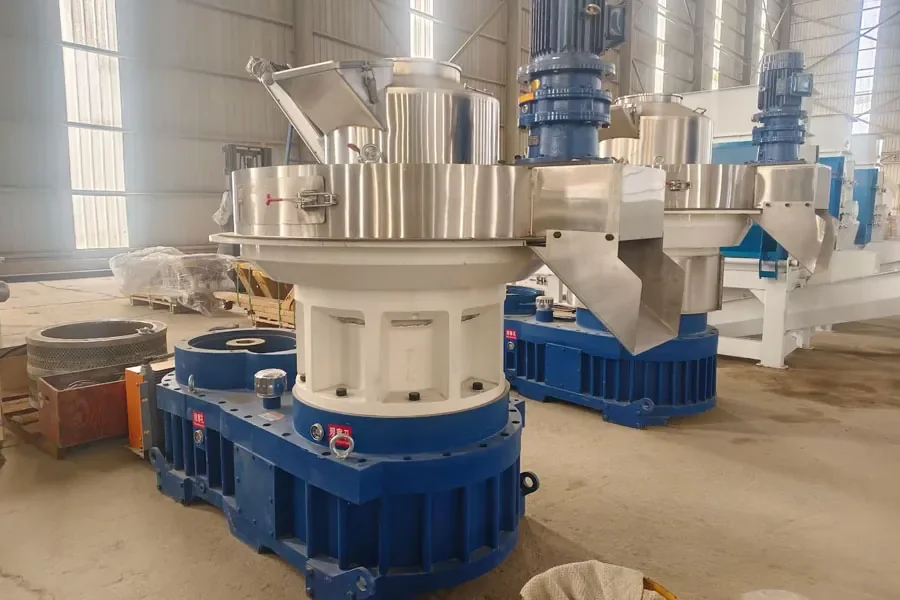
On a vertical ring die pellet machine, the whole job is done from the top. Remove the cover, lift the die with the hoist point provided, and the rollers are in front of you — no gearbox strip-down, which is the single biggest maintenance difference against a horizontal ring die pellet mill of the same size.
-
Pellet Die
Ø560–700 mm, hole size and compression ratio cut for your material. Re-pressed two or three times before replacement.
-
Pellet Rollers
Two or three, adjustable. A worn roller shells out and stops gripping — replace as a set, never one at a time.
-
Pellet Cutter
Sets pellet length. A blunt cutter makes long, ragged pellets that break in the pellet cooler.
-
Lubrication
Independent lubrication with high-pressure filtration, so the main bearing is fed clean grease on its own circuit.
Three pellet production lines we build most often
The pellet machine is chosen based on capacity; the rest of the machines in the pellet production line are chosen based on the material and how wet it arrives.
| Line | Press | In front of the press | Behind the press |
|---|---|---|---|
| 1 t/h EFB Pellet Line | HML-560 | EFB shredder, rotary dryer | Counter-flow pellet cooler, bagging scale |
| 2 t/h Wood Pellet Line | HML-600 | Drum chipper, wood hammer mill, drum dryer | Pellet cooler, bagging scale, dust collector |
| 3–4 t/h Rice Husk Pellet Line | HML-700 | Hammer mill (husk needs no chipping), dryer | Pellet cooler, bulk loading or bagging line |
Pellet Production Line layouts are indicative. Send the material, its moisture as received and the capacity you need to hit per shift, and we return a layout drawing with motor list and footprint.
Below this size, a flat die pellet mill is cheaper
The vertical ring die pellet machine starts where a flat die pellet mill stops paying. If your capacity is under a tonne an hour, the smaller machine is the better buy — and we will say so.
Tell us the material and the capacity
Material, moisture as received, the capacity per shift and the supply you have. We reply with the model, the line layout and a price.
Reply within one working day. No obligation.
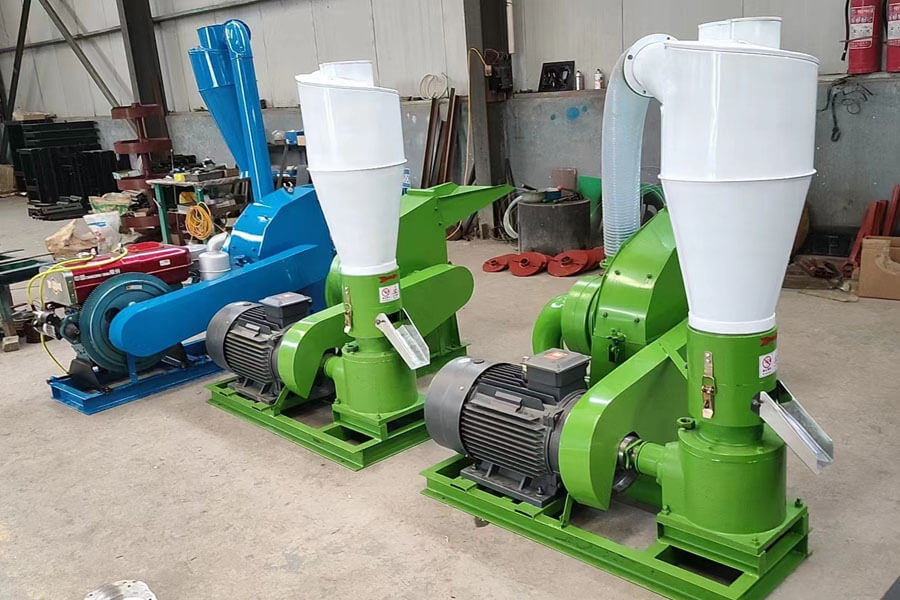
Vertical ring die pellet mills at work
Test runs and installed biomass pellet production lines — from a single HML-560 on pine sawdust to a 3–4 t/h rice husk pellet line.


More test runs, shipping records and installation footage on our YouTube channel.
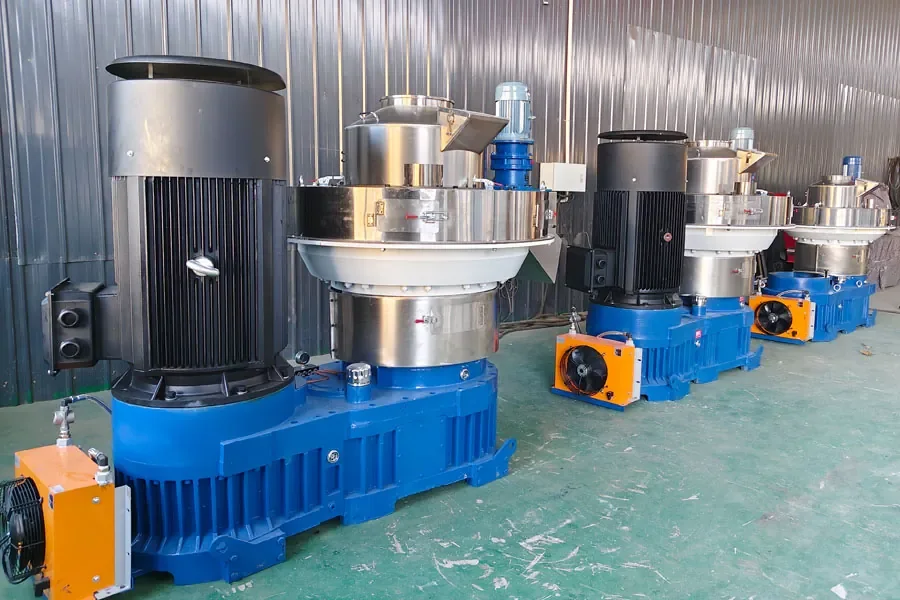
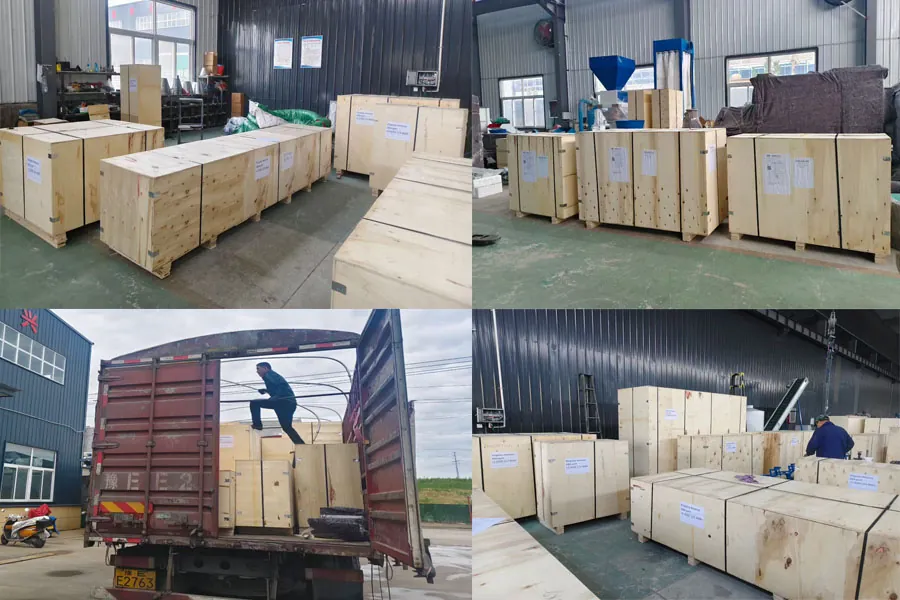
Assembled, run, then blocked in the container
A 7.5 tonne machine does not ship like a 200 kg mill. It is assembled and run in the workshop, then loaded on a cradle with the motor and die braced separately.
What buyers ask before ordering a ring die
What is the difference between a vertical ring die pellet mill and a horizontal ring die pellet mill?
The orientation of the die. A vertical ring die pellet mill stands on edge and is fed by gravity from the top, so it needs no screw feeder and cannot arch; a horizontal ring die pellet mill is fed from the side and suits high, continuous capacity. Vertical units are compact and easier to maintain; horizontal units go larger — 3 to 20 t/h per machine.
At what capacity should I stop using a flat die pellet mill?
Around 1 t/h on wood. Below that a flat die pellet mill is cheaper to buy, cheaper to run and far easier to maintain. Above 1–1.5 t/h the die wear rate and the labour of feeding a flat die pellet mill start to cost more than the difference in machine price.
How much power does the 132 kW model need?
Roughly 160 kVA of supply to start under load, or a soft starter on a smaller supply. Tell us the transformer size you have and we will confirm the starting method before the order.
How long does a die last?
It is counted in tonnes, not months. Clean wood chips give the longest life; rice husk and EFB are abrasive and shorten it. A ring die is re-pressed two or three times before replacement, and the capacity counter on the order is what tells you when.
Can it make feed pellets as well as biomass?
Yes, and at a higher capacity — the 132 kW model runs about 2.7–3.0 t/h on compound feed against 1.5–2.0 t/h on wood. Feed needs a different die and a conditioner in front of the press, and the two materials should not share a die.
What foundation does it need?
A level concrete base sized to the drawing we supply, with anchor bolts set before the machine arrives, and clearance above the chamber for the hoist that lifts the die. On a 7.5 tonne machine the base is not optional.
Can you supply the whole pellet production line, not just the press?
Yes — wood chipper, wood hammer mill, sawdust dryer, pellet cooler, conveyors and bagging. Most buyers at this capacity take a line, because the machines in front of the press decide whether the press ever reaches its rated output.
Send the material and the capacity
Material, moisture as received, capacity per shift and the supply you have. Those four answers decide the model, the die and whether the line needs a sawdust dryer — which is usually the difference between a plant that hits its rating and one that runs at half of it.
- Emailinfo@pelletmachines.net
- WhatsApp+86 186 0385 1787
- HoursMon–Sat, 08:00–20:00 (GMT+8)
Send a photo of the material and we will tell you the die and the sawdust dryer size it needs before you commit to anything.
What happens after you send this
We answer with the model, the line layout, the motor list and a price — then send a test-run video on your material before you pay a deposit.
Your details are not shared. One follow-up, no mailing list.