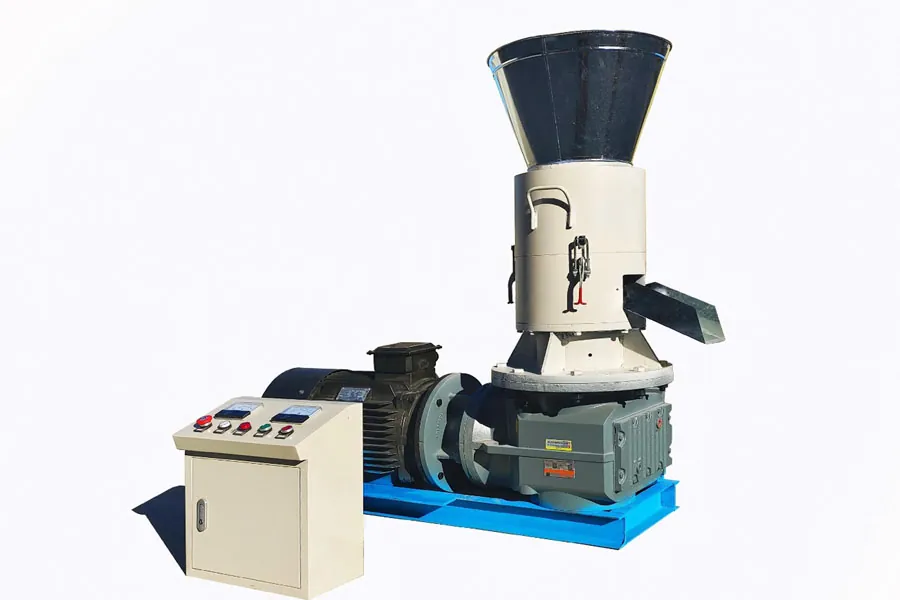
Flat Die Wood Pellet MillSawdust, shavings and sander dust — 80 to 800 kg/h
Wood is the hardest thing a flat die has to press. There is no starch to bind it, so the pellet has to be held together by lignin alone — which means pressure, heat and a die matched to the species. Get those three right and a 30 kW flat die will out-pellet a ring die twice its price on a small sawmill’s waste.
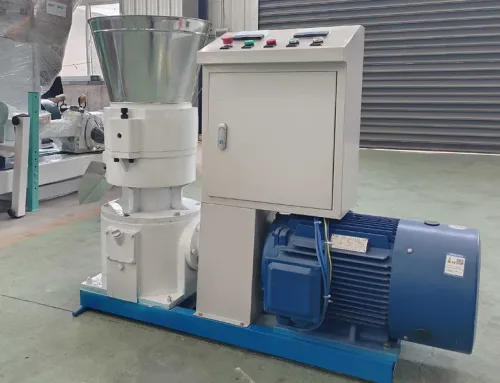
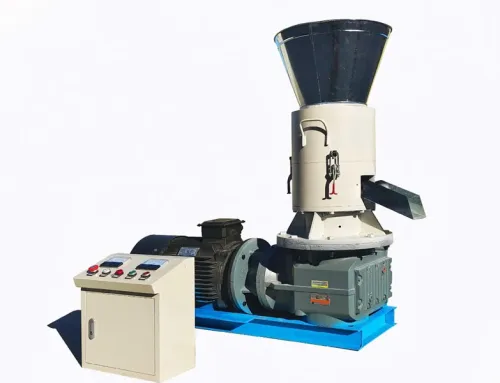
- Roller-driven PM-D series: 7.5–75 kW, 80–800 kg/h, dies Ø225–580 mm
- Die compression ratio chosen for softwood, hardwood, shavings or rice husk
- Runs on sawdust, planer chips, sander dust and mixed wood waste at 12–18 % moisture
Reply in 12 working hours · Die and spare roller set ship with every mill · Test run on your own sawdust before dispatch
Why a flat die suits a sawmill better than a ring die
No binder, no steam, no conditioner. Wood binds itself — if the sawdust is dry enough and the die is right.
- Die diameter
- Ø225 – 580 mm
- Rollers
- 2 or 3, adjustable gap
- Motor
- 7.5 – 75 kW
- Output on sawdust
- 80 – 800 kg/h
- Moisture
- 12 – 18 %
- Die life
- 300 – 500 hours
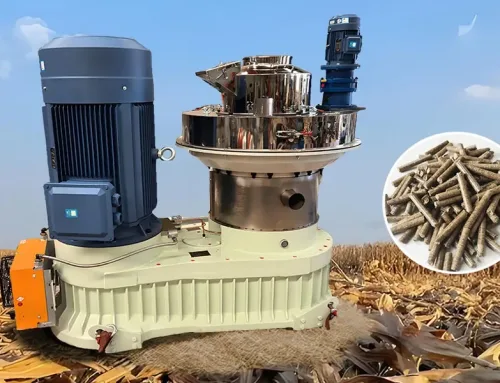
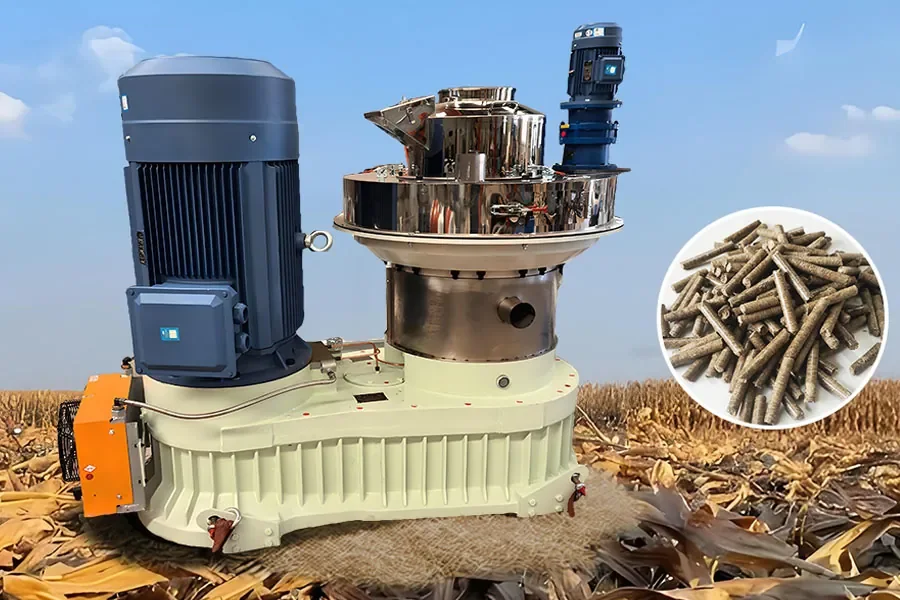
Sawdust has almost no starch and no protein to act as a binder. What holds a wood pellet together is lignin: at 70–90 °C and under enough pressure it softens and glues the particles to each other. A flat die reaches that temperature through friction alone, because the rollers push the material through a tapered hole in one short, high-pressure pass.
That is also why the flat die is a good fit for a sawmill. The chamber is open at the top, so you can watch the die while it runs and clear a blockage without dismantling anything. The die itself is a flat disc that costs a fraction of a ring — and when a customer switches from pine to oak, you change the die, not the machine.
The limit is scale. A flat die concentrates the load on a narrow track, so above roughly 800 kg/h the die wears too fast and a ring die becomes the cheaper machine to run. Below that — which covers most joinery shops, furniture factories and small pellet businesses — the flat die wins on price, footprint and the ability to run on whatever waste the shop produces that week.
For wood, take the roller-driven version
The same die plate is sold in two layouts. On wood the difference is not cosmetic — it decides how dense the pellet is and how long the die lasts.
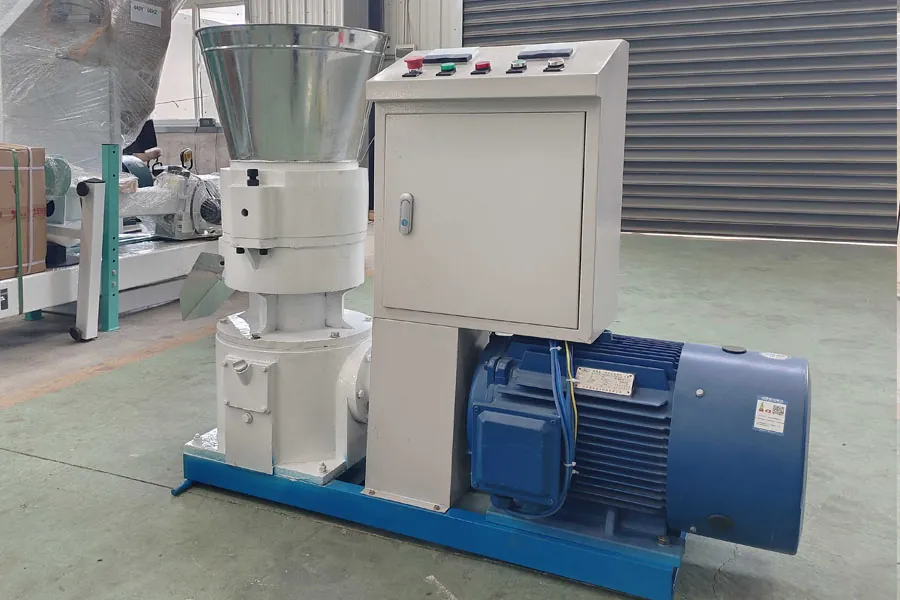
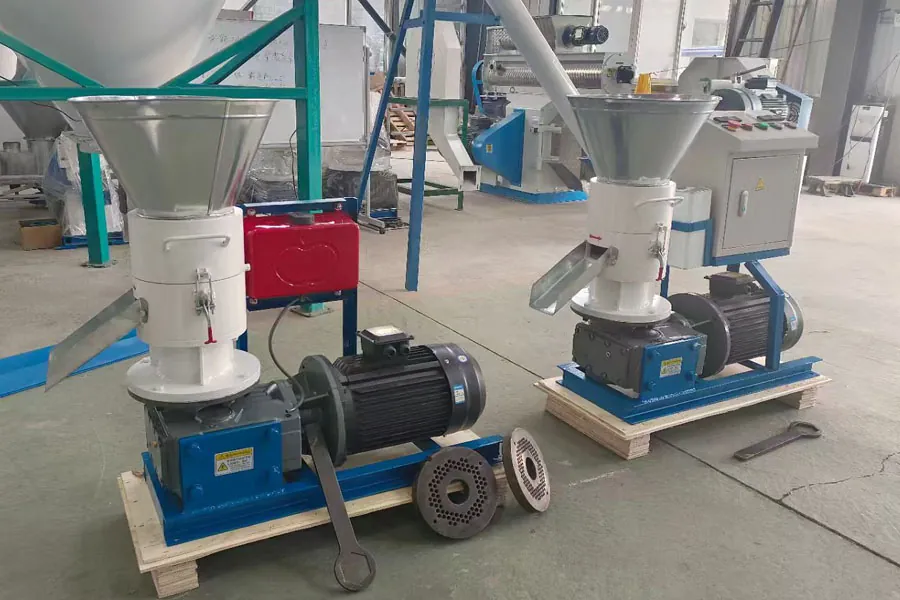
Roller-driven (PM-D series). The die is fixed and two or three rollers orbit on top of it. Because the die cannot flex, the rollers can be loaded harder, and the same die diameter produces a denser, glossier pellet. This is the layout to take for sawdust, shavings and any light wood waste.
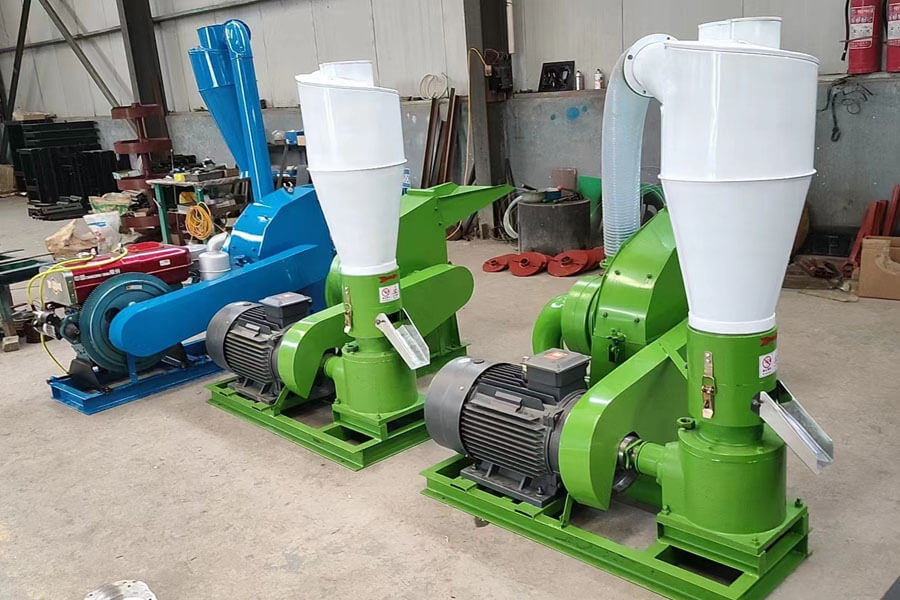
Die-driven (PM-B series). The die plate rotates and the rollers sit still. Cheaper per kg/h and simpler to maintain, but the die plate deflects slightly under load, so the achievable pressure is lower. It is the right choice for compound feed and for buyers who alternate between feed and wood.
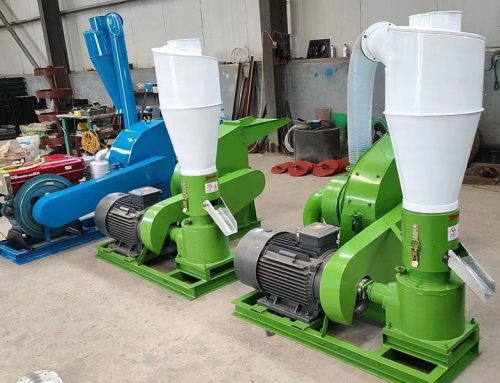
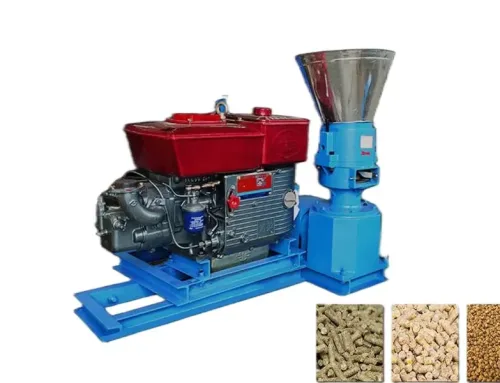
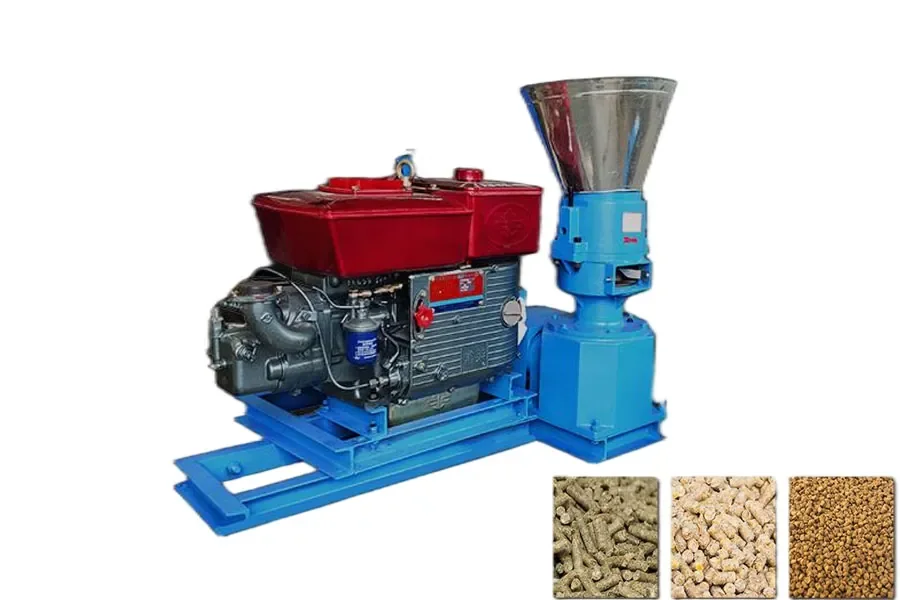
Diesel and PTO. The roller-driven layout is also built on a skid with a diesel engine (PM-DA series, 15–110 hp) and on a three-point frame for a tractor. Diesel is the usual answer at a sawmill with no three-phase supply; PTO suits a mobile operation that moves between timber yards.
-
Roller-driven, electric
PM-D225B to PM-D580B · 7.5–75 kW · 80–800 kg/h. The standard wood machine. Fixed die, highest pellet density.
-
Roller-driven, diesel
PM-D225A to PM-D580A · 15–110 hp. Skid frame, fuel tank and electric start. For timber yards with no three-phase power.
-
Die-driven, electric
PM-150B to PM-400B · 4–30 kW · 80–1,200 kg/h. Take this if the same machine has to make feed as well as wood.
-
Tractor PTO
PM-225P to PM-450P · 15–75 hp at 540 rpm. Three-point frame, no engine to service, one mill shared across several sites.
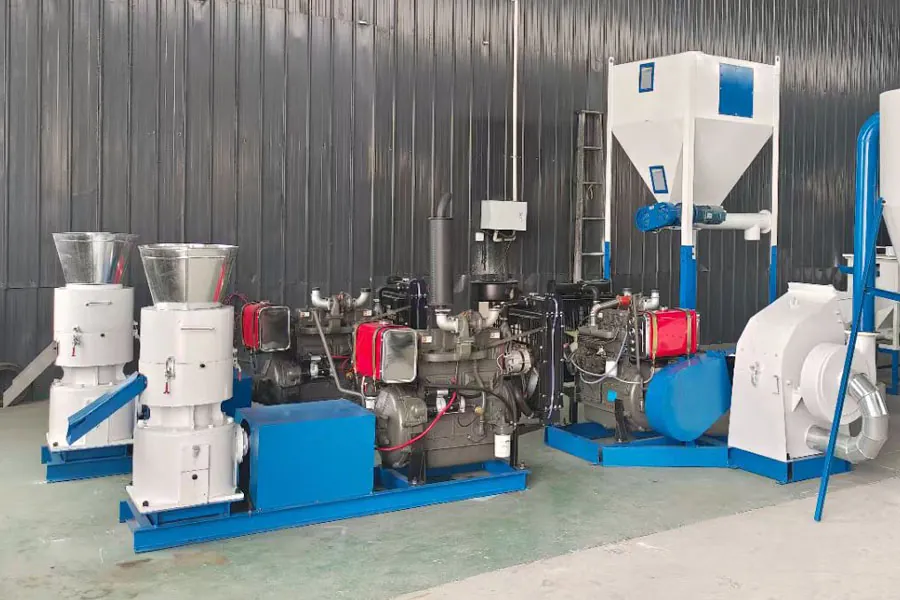
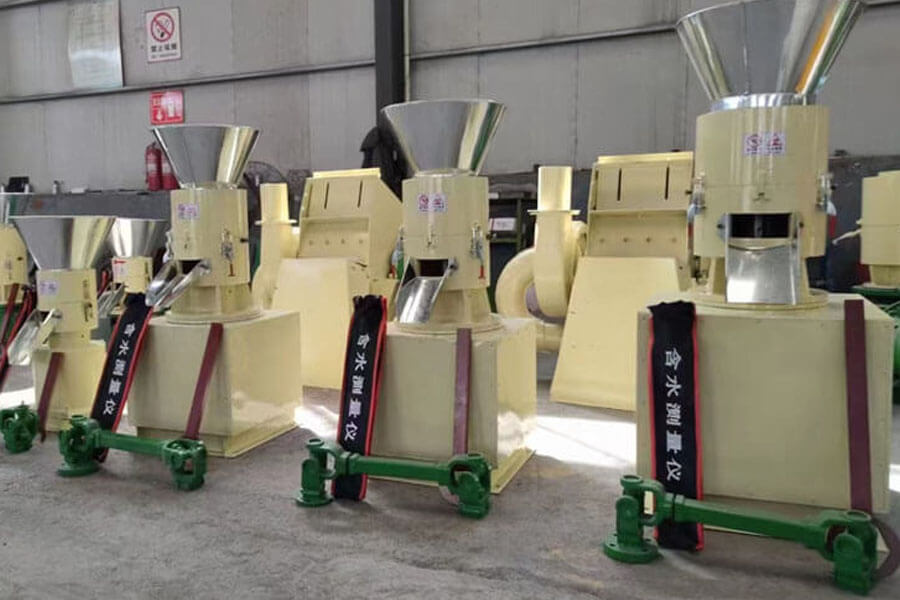
Six roller-driven models, three ways to power them
Output is quoted on dry softwood sawdust at 12–18 % moisture through a Ø6 mm die. Hardwood runs 15–25 % slower for the same motor; shavings and chips run slower still until they are crushed to under 5 mm.
Electric drive, roller-driven PM-DB series
| Model | Motor | Output on sawdust | Size L×W×H | Weight |
|---|---|---|---|---|
| PM-D225B | 7.5 kW | 80–120 kg/h | 1050 × 420 × 1180 mm | 210 / 240 kg |
| PM-D250B | 15 kW | 120–200 kg/h | 1200 × 500 × 1250 mm | 340 / 370 kg |
| PM-D300B | 22 kW | 250–350 kg/h | 1360 × 800 × 1250 mm | 530 / 570 kg |
| PM-D400B | 30 kW | 350–450 kg/h | 1500 × 760 × 1210 mm | 900 / 940 kg |
| PM-D450B | 45 kW | 450–600 kg/h | 2600 × 800 × 1300 mm | 1,200 / 1,270 kg |
| PM-D580B | 75 kW | 600–800 kg/h | 2800 × 800 × 1600 mm | 1,400 / 1,480 kg |
Diesel engine, roller-driven PM-DA series
| Model | Engine | Output on sawdust | Weight |
|---|---|---|---|
| PM-D225A | 15 hp diesel | 80–120 kg/h | 265 kg |
| PM-D250A | 30 hp diesel | 120–200 kg/h | 320 kg |
| PM-D300A | 41 hp diesel | 250–350 kg/h | 570 kg |
| PM-D400A | 55 hp diesel | 350–450 kg/h | 940 kg |
| PM-D450A | 62 hp diesel | 450–600 kg/h | 1,300 kg |
| PM-D580A | 110 hp diesel | 600–800 kg/h | 1,500 kg |
Tractor PTO PM-P series
| Model | PTO power | Output on sawdust | Weight |
|---|---|---|---|
| PM-225P | 15 hp at 540 rpm | 80–120 kg/h | 260 kg |
| PM-250P | 30 hp at 540 rpm | 120–200 kg/h | 320 kg |
| PM-300P | 41 hp at 540 rpm | 250–350 kg/h | 450 kg |
| PM-400P | 55 hp at 540 rpm | 350–450 kg/h | 600 kg |
| PM-450P | 75 hp at 540 rpm | 450–600 kg/h | 700 kg |
Sizes in mm, excluding the feed hopper and discharge chute. Weight is given as net / gross. On compound feed the same machines run 30–40 % faster — the figure above is deliberately conservative because wood is the harder material. 60 Hz motors, other voltages and hardened dies for rice husk are available on request.
Six roller-driven models, three ways to power them
The same six frames run on a motor, on a diesel engine or on a tractor PTO. The sawdust decides the model and the die; the yard decides the drive.
Send the sawdust and the kg/h
Send a photo of the material, its moisture and the kg/h you need. We reply with the model, the die hole and compression ratio, the drive that fits your site and a price.
Reply within one working day. No obligation.
From a pile of sawdust to a bag of pellets
The press is one machine in five. What happens before it decides whether the pellet holds together at all.
Collect
Sawdust, planer chips or offcuts. Anything over 5 mm — chips, edge trimmings, pallet fragments — goes through a hammer mill first.
Crush
A hammer mill with a 3–5 mm screen. Particle size decides pellet strength more than pressure does: coarse material makes a crumbly pellet.
Dry
Down to 12–18 %. Below 12 % the pellet stays soft; above 18 % the press slips and the die smears. A rotary dryer is the usual answer.
Press
Rollers force the material through a tapered die. Friction takes it to 70–90 °C, the lignin softens and the pellet forms without any additive.
Cool & bag
Pellets leave the die at 70–80 °C. Cool to within 5 °C of ambient before bagging, or condensation softens them in the bag.
Four kinds of wood waste, four different behaviours
The die and the roller gap change with the material. The frame, gearbox and motor do not.
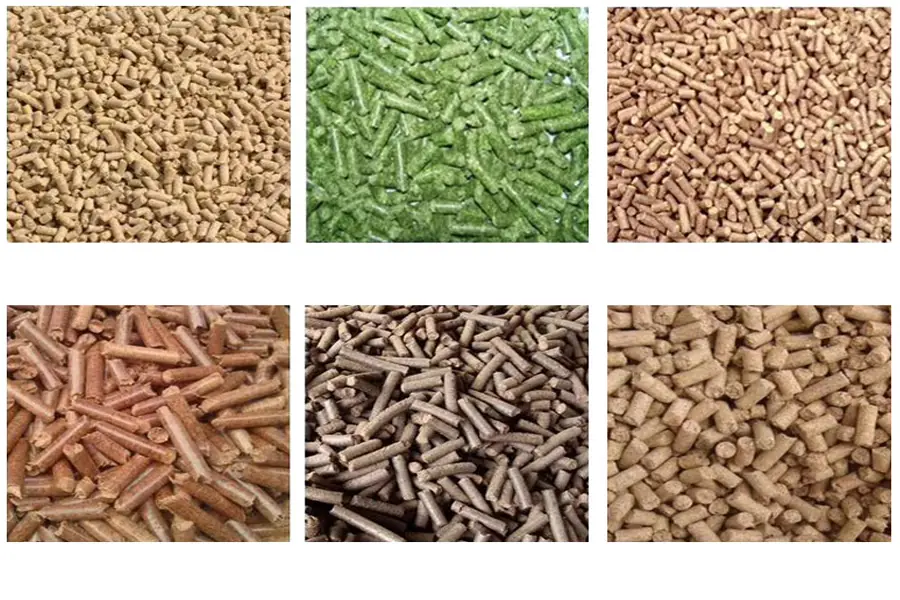
Softwood sawdust
Pine, spruce and fir. The easiest material to pellet and the highest output per kW — a 22 kW unit does 250–350 kg/h. Use a 1:5.5–1:6.5 compression die.
Hardwood sawdust
Oak, beech, eucalyptus and rubberwood. Denser and more abrasive; expect 15–25 % less output and a shorter die life. A 1:6.5–1:8 die gives a harder pellet.
Shavings & planer chips
Bulky and uneven. Must be hammer-milled to under 5 mm, otherwise the press surges and the pellet cracks. Output drops until the particle size is consistent.
Sander dust & MDF
Very fine, very dry, and often contains glue. It presses well but needs moisture added back to 12–14 %, and the resin shortens die life.
The die decides whether the pellet holds
Two mills of the same power will produce completely different pellets on the same sawdust if the die is wrong. Compression ratio — hole length divided by hole diameter — is the number that matters.
A die with a short hole lets the material through easily: high output, soft pellet. A longer hole squeezes harder: lower output, denser and glossier pellet that survives handling and shipping.
The right ratio depends on the material, not on the machine. Softwood sawdust compacts easily and needs a short hole; hardwood needs more; rice husk and straw need a long one because they contain silica and resist binding.
We match the die to the material when the order is placed, and we keep the ratio on file so a replacement die is identical. If you send a 2 kg sample of your sawdust we will run it and tell you which ratio and which moisture it needs.
Compression ratio by material hole length ÷ hole diameter
| Material | Die hole (mm) | Ratio L/D | What to expect |
|---|---|---|---|
| Softwood sawdust (pine, spruce, fir) | 6 mm | 5.5 – 6.5 | Highest output, softest pellet, longest die life |
| Hardwood sawdust (oak, beech, eucalyptus) | 6–8 mm | 6.5 – 8 | 15–25 % slower, denser pellet, more die wear |
| Planer shavings & chips | 6–8 mm | 5 – 6 | Must be crushed to under 5 mm first |
| Rice husk | 8 mm | 9 – 11 | High silica; hardened die recommended, 150–250 h life |
| Straw & grass | 8 mm | 8 – 10 | Needs 15–18 % moisture and a slower feed rate |
Ratios are starting points, not rules. The same species from a different mill can behave differently depending on particle size and resin content — which is why we test the sample before we cut the die.
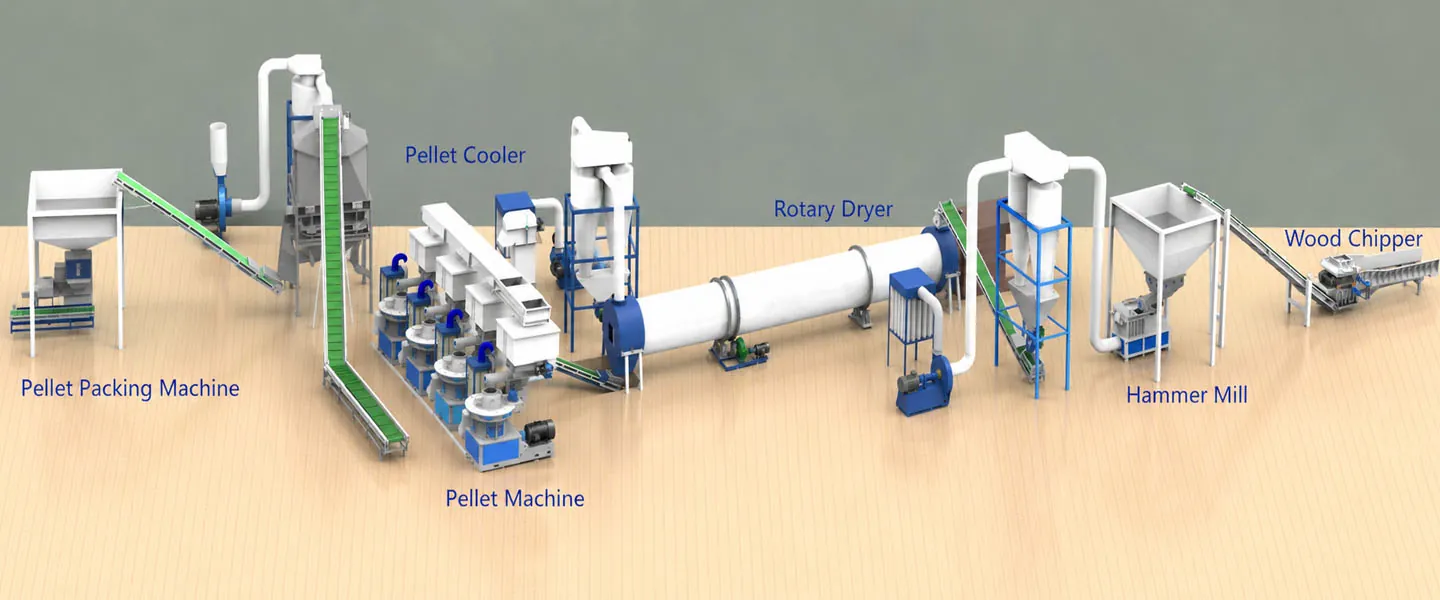
What sits around the press
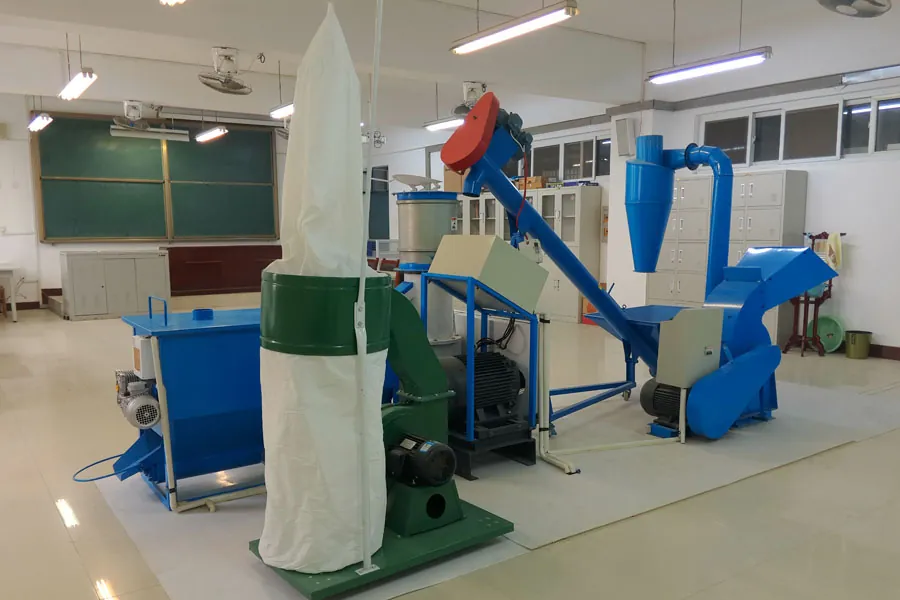
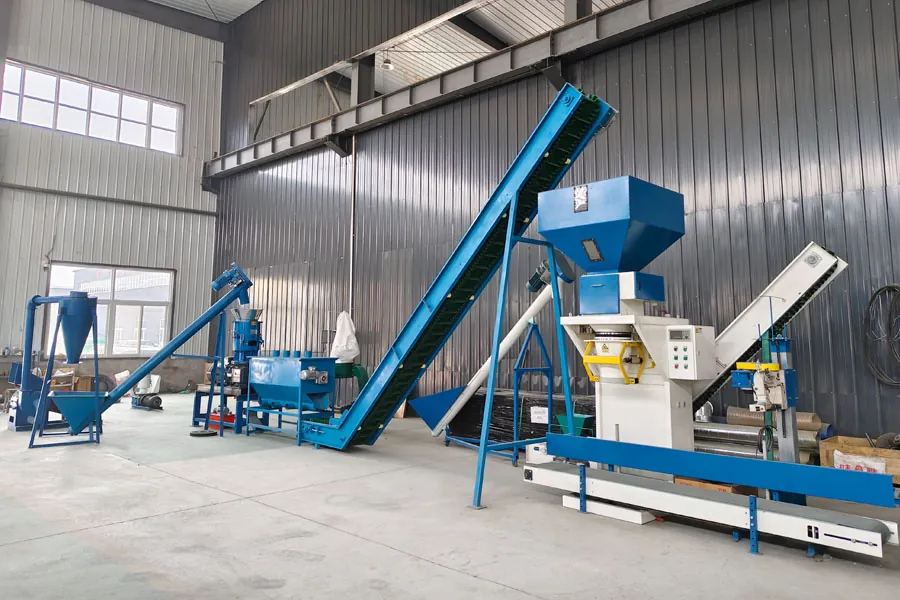
A flat die on its own makes pellets in batches. Add four machines and it becomes a line that runs all day without anyone carrying a bucket.
-
Hammer mill
Crushes chips, shavings and offcuts to under 5 mm. Sizing starts at 200 kg/h and goes up with the press.
-
Rotary dryer
Takes sawdust from 40 % down to 12–18 %. Usually the largest and most expensive item in the line — and the one buyers most often try to skip.
-
Screw or belt conveyor
Moves material from the dryer into the press hopper at a steady rate. Uneven feed is the most common cause of soft pellets.
-
Pellet cooler
Counter-flow cooler drops the pellets to within 5 °C of ambient so they do not sweat in the bag.
-
Bagging scale
Weighs and fills 15–50 kg bags. Manual, semi-automatic or automatic with a stitching head.
-
Control cabinet
One panel for the whole line, with motor protection and interlocks so the press cannot start before the conveyor.
The rest of the flat die range
Wood is one branch. The same platform covers feed, biomass and the machines that sit in front of and behind the press.
Tell us the wood and the output
Send the species, whether it is sawdust or shavings, the moisture and the kg/h you need. We reply with the model, the die ratio and a price.
Reply within one working day. No obligation.
Wood lines running
Press tests on sawdust, then the lines a flat die usually ends up inside — from a 300 kg/h shop line to a 1 t/h plant with dryer and cooler.


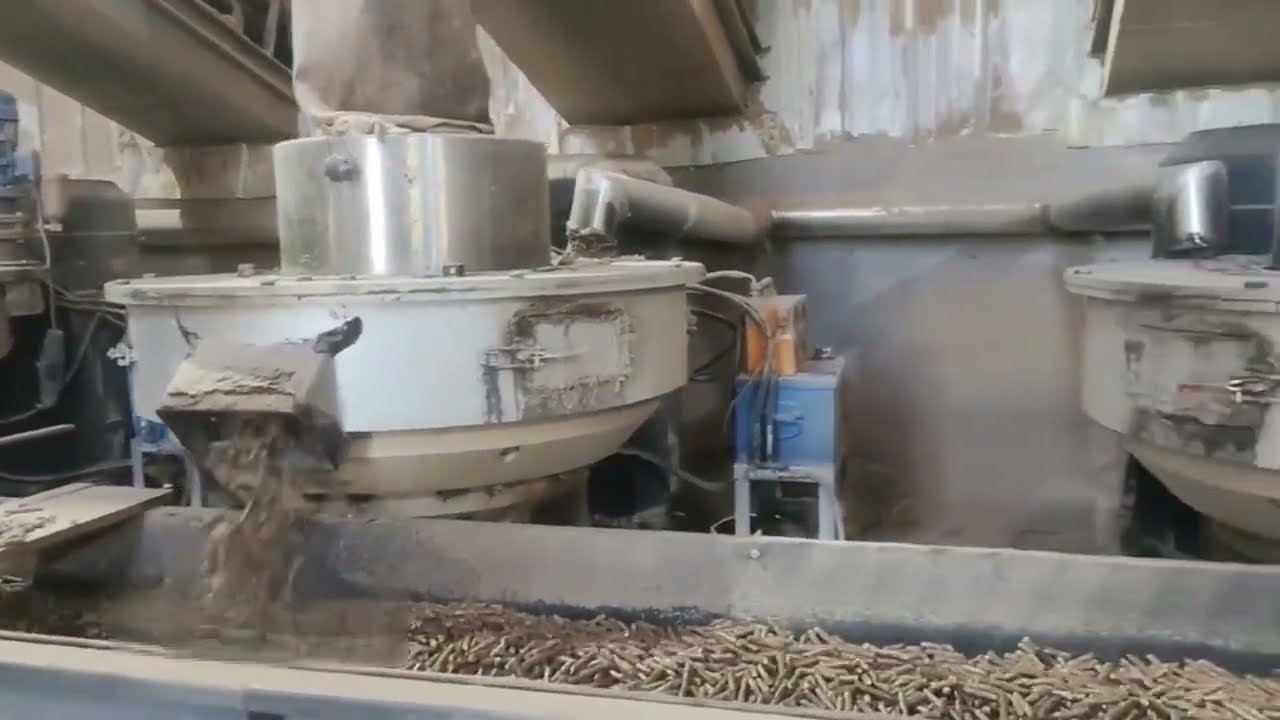


More test runs, shipping records and installation footage on our YouTube channel.
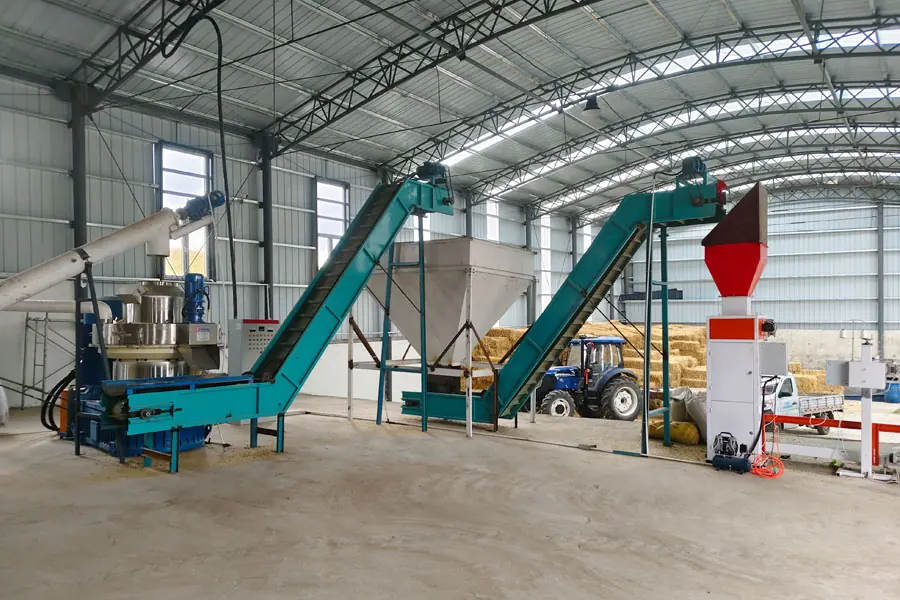
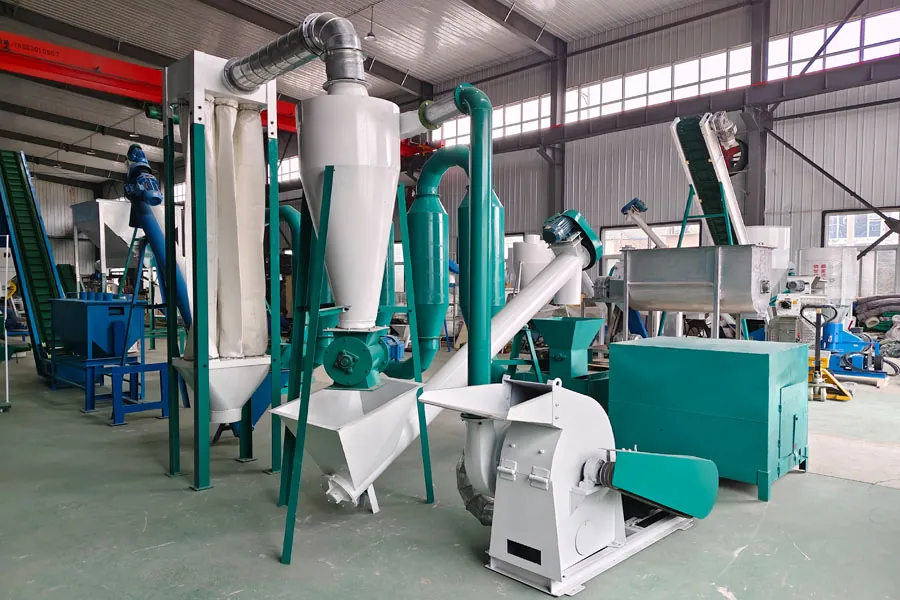
Run on your sawdust, then crated
Every wood mill is run for at least 30 minutes on the material it was ordered for. If the die ratio or the roller gap is wrong, we find out here and not at your site.
What buyers ask before ordering a wood pellet mill
Do I need a binder to make wood pellets?
No. Lignin in the wood acts as the binder once the material reaches 70–90 °C under pressure. Adding binder is a sign that the die ratio, the moisture or the particle size is wrong — fix that instead of adding something to the recipe.
What moisture does sawdust need to be?
12–18 %, with 15 % the sweet spot for most species. Below 12 % the pellet stays soft and dusty; above 18 % the press slips, the die smears and output collapses. If your sawdust comes off a green mill at 40 %, you need a dryer before you need a bigger press.
How much sawdust do I need for 300 kg/h?
About 300 kg of dry material per hour, so roughly 350–380 kg/h at 15 % moisture. In volume that is around 1.5–2 m³ of loose sawdust per hour — most joinery shops produce less than that, which is why 80–200 kg/h models sell best.
Why are my pellets cracking or crumbling?
Three usual causes, in order: particle size too coarse (crush to under 5 mm), moisture too low or too high, or a die compression ratio that is too short for the species. Hardwood needs a longer hole than softwood.
How long does a die last on wood?
300–500 hours on clean softwood sawdust before it is re-pressed, and a die can usually be refurbished two or three times. Hardwood with sand or grit in it, or MDF dust with resin, will halve that. A hardened die roughly doubles it.
Can the same mill make animal feed as well?
Mechanically yes, but wood and feed need different die ratios and the residue carries over between batches. If you genuinely need both, take a die-driven PM-B model and keep two dies — or, better, run two machines.
How much power do I need?
A 22 kW model needs a 30 kVA supply to start under load; the 7.5 kW and 15 kW models can run on single-phase in some configurations. If you have no three-phase supply at all, the diesel PM-DA series starts at 15 hp.
Send us your sawdust
Species, form (sawdust, shavings or chips), moisture and the kg/h you need — four answers and we can specify the model and the die. A 2 kg sample gets you a test run.
- Emailinfo@pelletmachines.net
- WhatsApp+86 186 0385 1787
- HoursMon–Sat, 08:00–20:00 (GMT+8)
Send a photo of the material and we will tell you the die ratio it needs before you order anything.
What happens after you send this
We answer with the model, the die compression ratio and a price, then send a test-run video on your material before you pay a deposit.
Your details are not shared. One follow-up, no mailing list.