


Pellet Mill Manufacturer in ChinaComplete pellet production lines for small and medium producers
We build the pellet mill and everything around it — crusher, dryer, mixer, cooler, screener, packer — sized so the pellet mill is not the bottleneck. Flat die and vertical ring die presses from 50 kg/h to 2.5 t/h, and complete production lines for wood, biomass, animal feed, fish feed and forage.
- Two pellet mill families — flat die pellet mill and ring die pellet mill
- Six production line families — wood, biomass, animal feed, fish feed, forage, manure
- 50 kg/h to 2.5 t/h from a single press; larger presses built to order
- Every pellet mill run on your material before it is crated
Complete production lines · sized for the output you actually sell
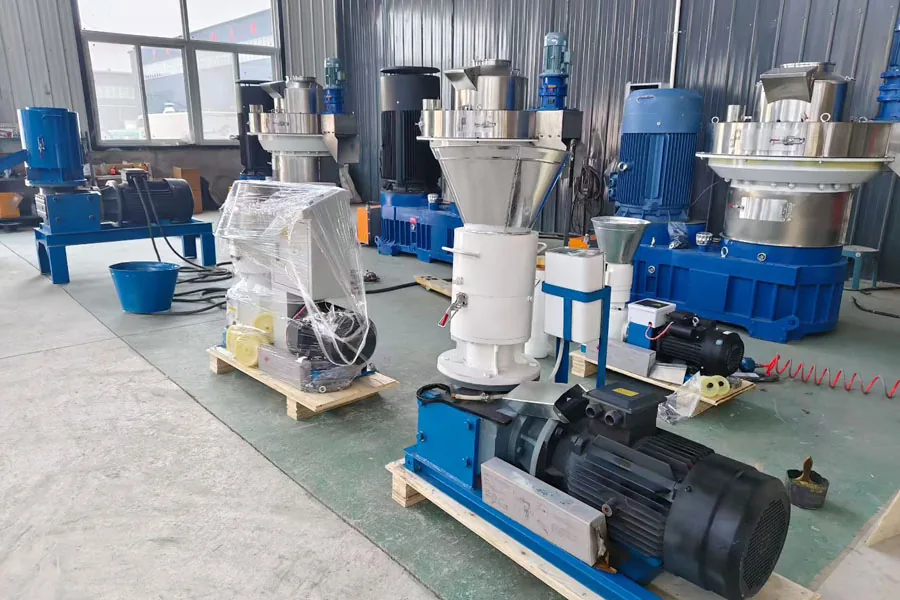
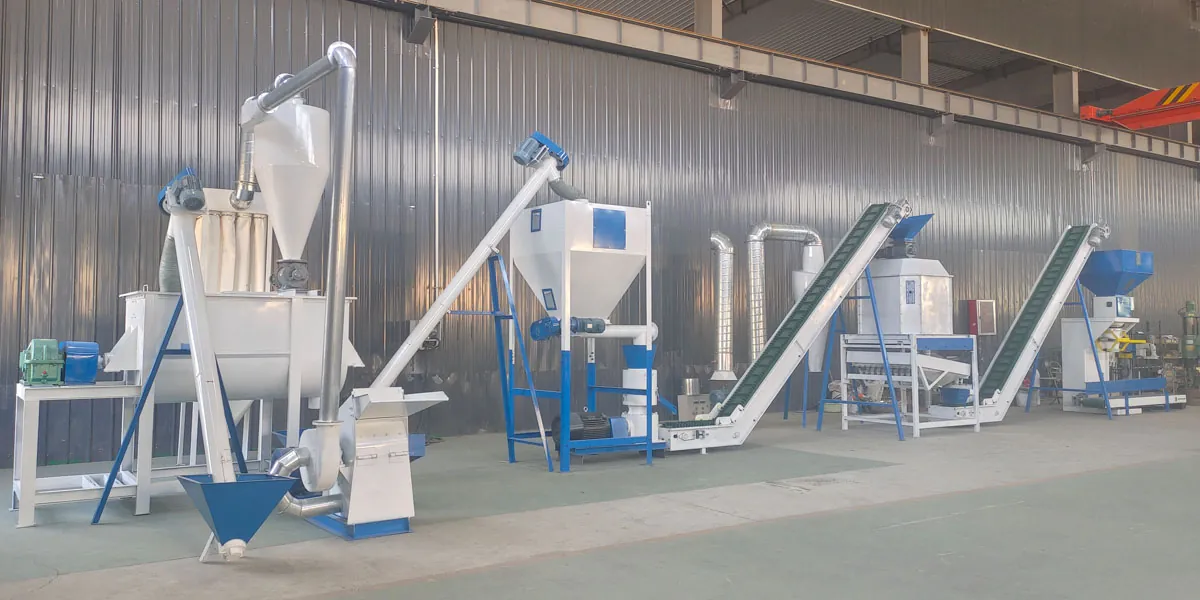
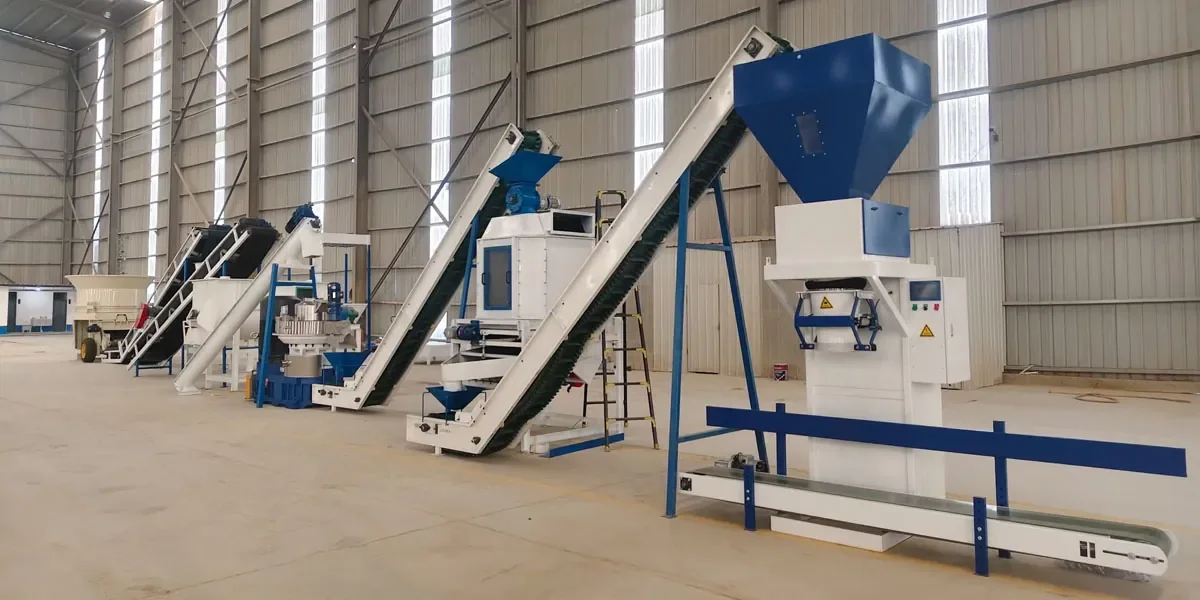
A pile of sawdust is not an order for a pellet mill
Buyers rarely arrive asking for a press. They arrive with a problem: a sawmill that cannot move its sawdust, a fish farm buying imported feed, a straw harvest with nowhere to go. The answer is almost never one pellet mill — it is a crusher, a dryer, a pellet mill, a cooler, a screener and a packer, in the right order, sized so the pellet mill is not the bottleneck.
- Wood pellet production lines
Sawdust, shavings and wood chips, from a 500 kg/h single-press production line to a 5,000 kg/h plant on three presses. Crusher, dryer, pellet mill, cooler with screening, and packer.
- Biomass pellet production lines
Rice husk, wheat and rice straw, palm fibre and EFB. Abrasive, low-density material, so the die plate specification and the crusher change with it.
- Animal feed production lines
Poultry, cattle and pig feed at 500, 800, 1,000 and 2,000 kg/h on PM-series flat die pellet mills. Six stages, no dryer.
- Fish feed production lines
Floating and sinking extruded feed for tilapia, catfish and carp — extruder, dryer, oil coater, cooler and packer.
- Forage and grass production lines
Alfalfa, hay and forage pellets at 6–8 mm, with the die plate, the moisture target and the conditioning set for high-fibre material.
- Manure and fertiliser production lines
Poultry litter, cattle manure and compost into bagged organic fertiliser — a disposal cost turned into a product you can sell.
Every production line is sized from the material and the output you actually sell, not from a catalogue page. If the arithmetic says a 500 kg/h production line will run flat out and a 2,000 kg/h one will sit idle, we quote the 500 kg/h production line and tell you why. That is the difference between a production line that pays for itself in two seasons and one that becomes a shed.


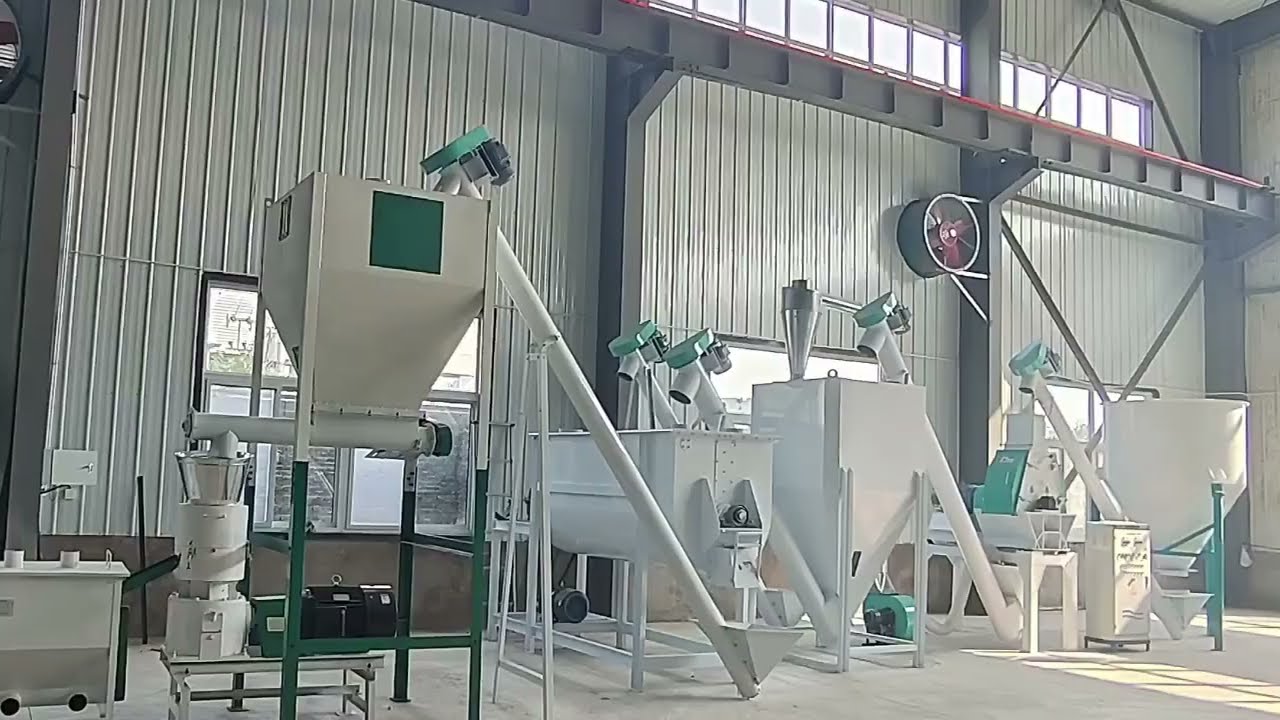
Five types of pellet machines
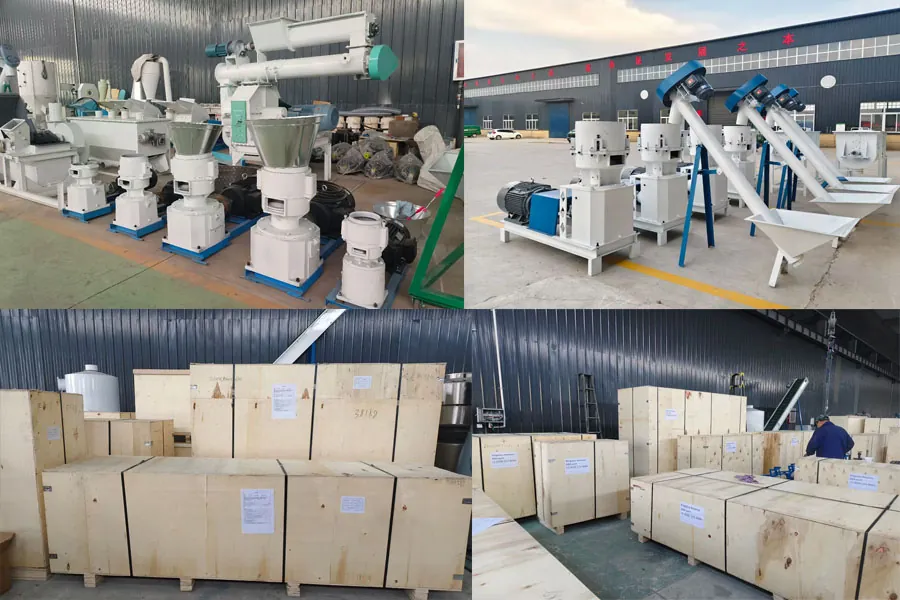
We offer a complete range of pellet machines. Flat die pellet mills and vertical ring die pellet mills are what most small and medium wood pellet plants and feed pellet production lines need.
| Range | Models | Rated capacity |
|---|---|---|
| Flat die pellet mill, electric 7.5 – 75 kW |
D225B to D580B | 80 – 800 kg/h |
| Flat die pellet mill, diesel 10 – 110 hp |
D150 to D400 PM-D225A to PM-D580A |
50 – 800 kg/h on wood to 1,200 kg/h on feed |
| Flat die pellet mill, tractor PTO 15 – 75 hp at 540 rpm |
PM-225P to PM-450P | 80 – 600 kg/h |
| Vertical ring die pellet mill, electric 90 – 160 kW |
HML-560, HML-600, HML-700 | 1.0 – 2.5 t/h |
| Horizontal ring die pellet mill, electric built to order |
Quoted to your output | 1 – 20 t/h |
Rated capacity is measured at the top of the range on softwood sawdust at 12–15 % moisture. Rice husk, straw and hardwood run below it — the sizing guide works the number out for your material, and the full list is on the pellet machine index.
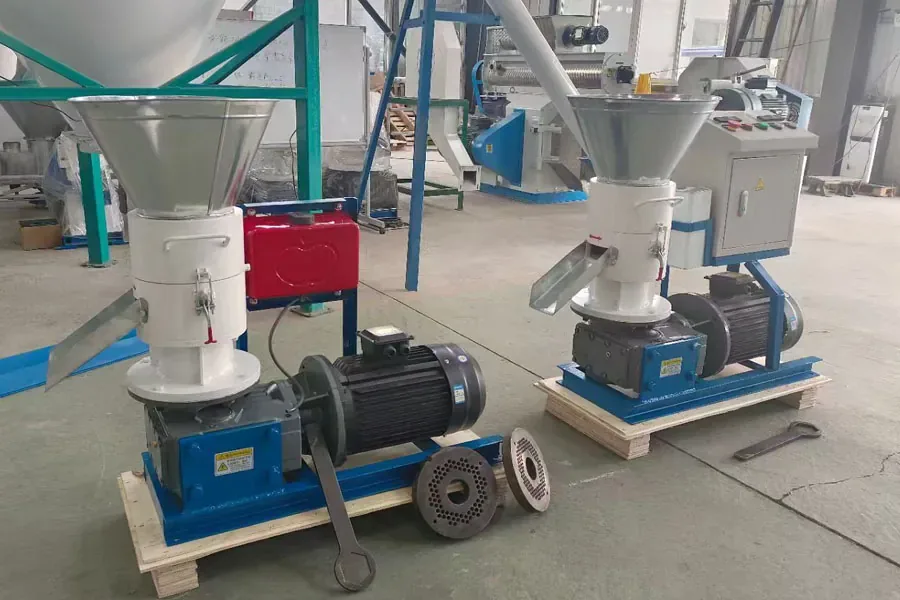
The flat die pellet mills come in three drives off the same die: electric from 7.5 kW to 75 kW, diesel from 10 hp to 110 hp, and tractor PTO at 540 rpm. They suit small farms, single-product workshops and anywhere the power supply is the limit — 7.5 kW will start on a domestic supply that a 90 kW motor will not. Below 1,000 kg/h they are the only option we build. Flat die pellet mill · diesel · tractor PTO.
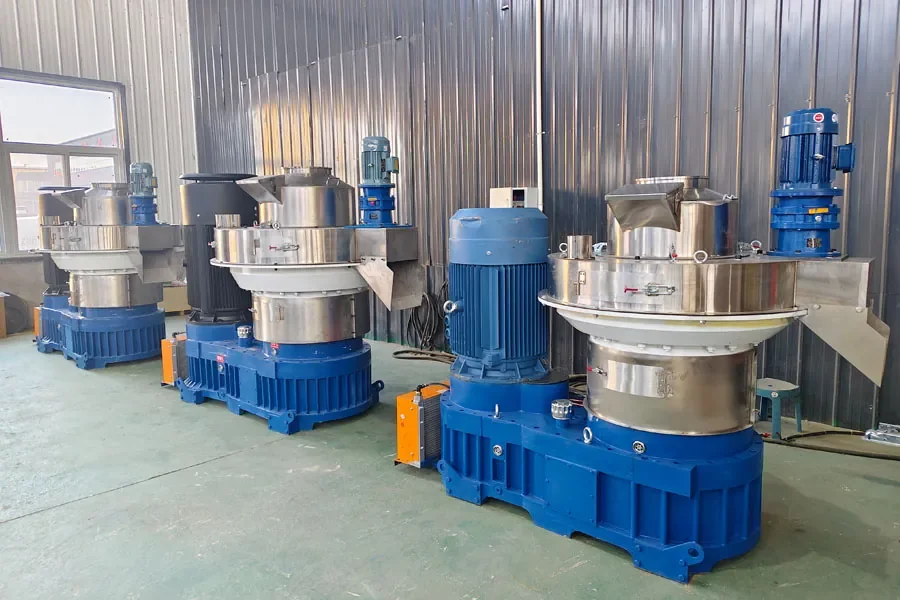
The vertical ring die pellet mills run from HML-560 at 1.0 t/h to HML-700 at 2.5 t/h. A vertical ring die pellet mill presses from the outside in, so the same material pellets at a lower die temperature and the die plate lasts longer; the trade is that nothing below 1.0 t/h exists in this range. The flat die vs vertical ring die pellet mill comparison sets the two against each other on power, die plate life and price.
Above 2.5 t/h the answer is a horizontal ring die press, which we build to order, or several of our presses side by side. A 5,000 kg/h wood pellet line is three HML-600 pellet mills, not one pellet mill nobody can service — and if you would rather have one large press, say so in the first email and we will quote it instead.
How the drives compare is its own question: diesel costs about three times as much per kWh as the grid and tops out around 350 kg/h, PTO stops at about 600 kg/h, and above that it is a grid connection or a generator set. The diesel, electric and PTO comparison works it out for your tariff.
Power per 1,000 kg of pellet is 60–66 kW on a vertical ring die pellet mill and 62–94 kW on a flat die pellet mill, which is where the 25 % difference in running cost comes from. The vertical ring die pellet mill wins on electricity above 1.5 t/h; below that the saving does not repay the price difference, and the power supply guide shows where the crossover actually falls for your tariff.


How a pellet mill is tested before it ships
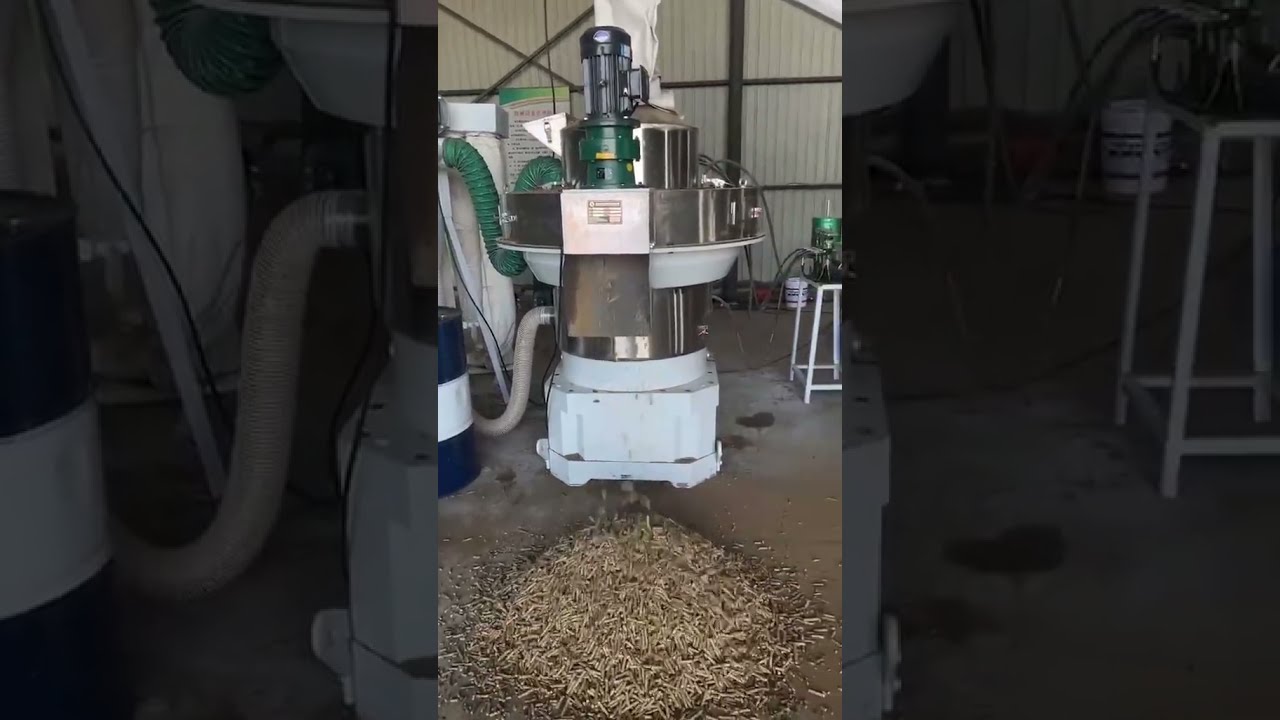
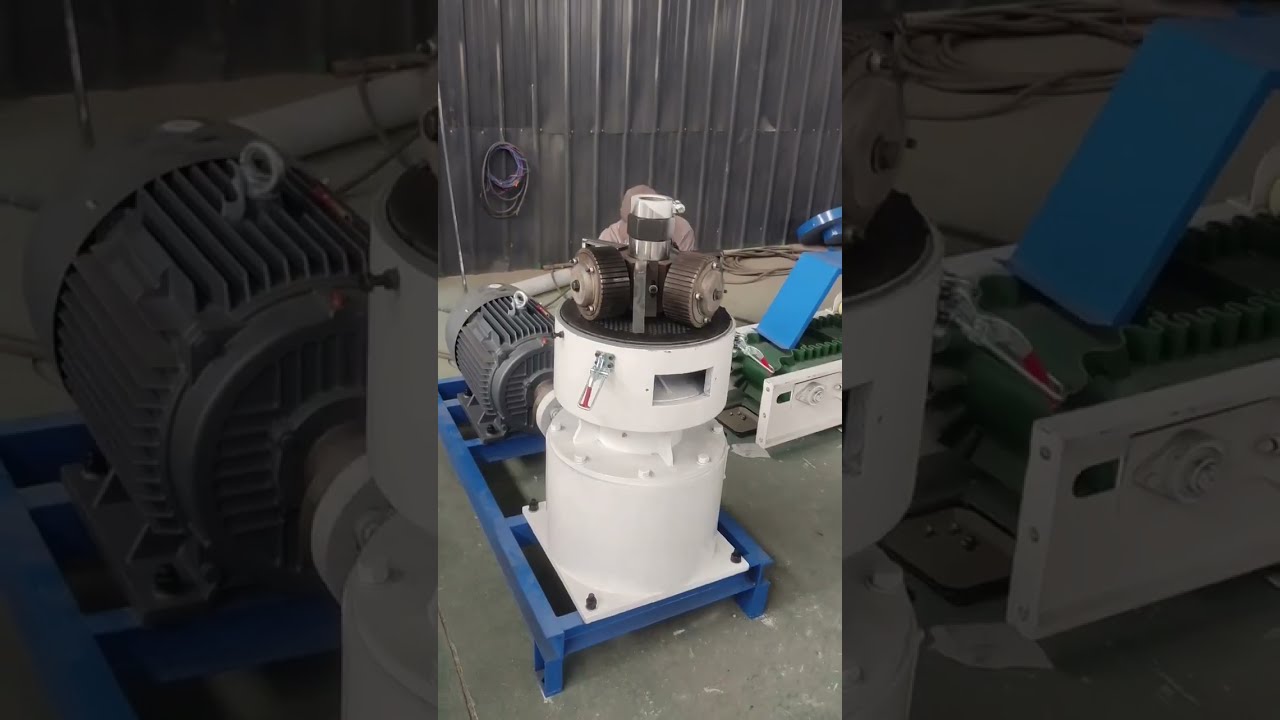
Every pellet mill is run on material with your order number in the frame, and you get the video before it is crated — not after it lands. A pellet mill that has never been run is a crate of steel, and the first person to find out is the buyer.
Frame and chamber
The frame is welded and squared, and the chamber is machined to take the die plate that has been drilled for your material.
Assembly
Rollers, shaft, gearbox and motor go on. Roller gap is set cold at 0.1–0.3 mm with a three-point feeler gauge, not by eye.
Wiring
The control cabinet is wired to your voltage and frequency — 380 V at 50 Hz and 440 V at 60 Hz are different windings, not a switch.
Load test
The pellet mill runs on your material, or on a material with the same density, with your order number in the frame. Pellets come out and are measured, not just looked at.
Crate
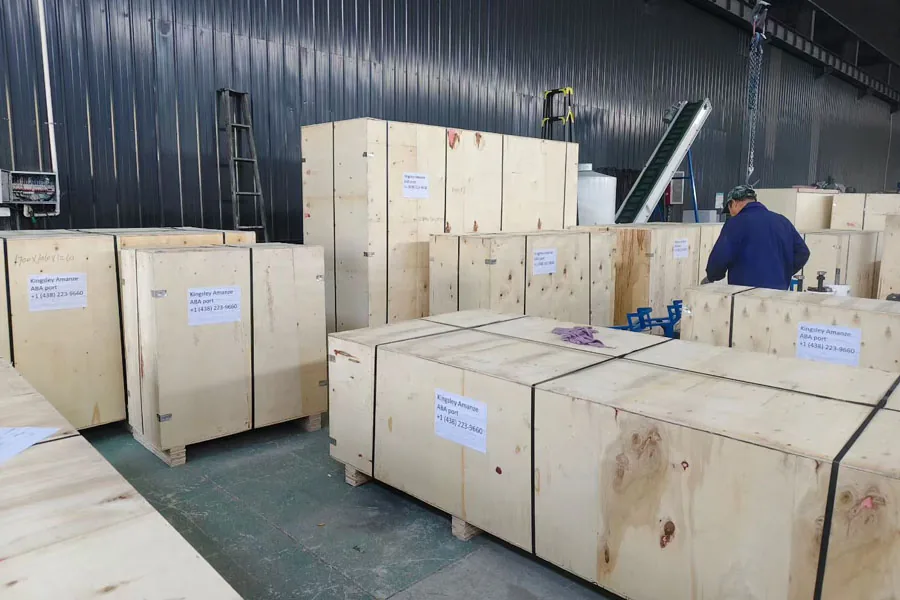
The pellet mill is broken down, the die plate is greased and boxed separately, and the crate is lashed for the port.
What the test sheet records: pellets leave the die plate at 70–90 °C and 15–18 % moisture, are cooled to within 3–5 °C of room temperature, and go into the bag at 12.5 % or below. The roller gap is checked again after two hours of running, because a new roller settles. Die plate and roller shell hours are logged from the first 1,000 kg, so that when you change a die plate in year two you are comparing against your own pellet mill rather than a brochure.
If you would rather see it than read it, send 20 kg of your material and we will run it through the model we are quoting and send the video and the pellet measurements. No deposit is needed for the test.




Spare parts, warranty, and who answers when it stops
A pellet mill wears out. What decides whether it is still running in year three is not the paint — it is whether the second die plate arrives in four days or four months.
| Wear part | Service life | What shortens it |
|---|---|---|
| Die plate | 500–800 h on clean wood | 200–300 h on rice husk |
| Roller shell | 300–500 h | About two-thirds of die life |
| Roller bearing | 1,500–2,500 h | Water ingress cuts it to about 400 h |
| Main shaft bearing | 8,000–12,000 h | Grease, not hours, is what kills it |
| Cutter blades | 300–600 h | Only on production lines with a crumbler |
Hours are running hours on a well-run pellet mill. One die plate takes two to three roller shells over its life; a new die plate run against a worn shell will turn 700 hours of die life into 300, which is the single most expensive mistake we see buyers make. The pellet mill spare parts page lists the seven measurements to take before ordering.
What to have on the shelf. A second die plate, a second set of rollers, two roller shells, two sets of bearings and a box of shear pins comes to roughly 8–15 % of the price of the pellet mill. On a single-shift operation that is a year of cover; on three shifts it is four months.
What we need from you. Die plate: outside diameter, working face, thickness, aperture, hole count, compression ratio, and the bolt or keyway pattern. Roller shell: outside diameter, width, bore and shaft diameter. Bearings: the model number only — a measured cone off a worn bearing reads small and the replacement will not fit.
Who answers. The same people who built the pellet mill. Warranty is 12 months on the structure and the drive, and it does not cover a die plate run on material it was not drilled for. Consumables ship from stock; a die plate drilled to a new specification takes 7–10 days.
Export. We ship to more than 40 countries and configure the motor and the control cabinet to the destination voltage and frequency before crating, rather than shipping a 380 V pellet mill and a transformer.
How a first enquiry is handled
The questions come in a fixed order, because each answer removes half the options. Answer the first two and you have a model; answer all four and you have a price.
1 · Material. What it is and how wet it is. Sawdust at 12 % and rice husk at 10 % are not the same pellet mill, and neither is hardwood at 8 %.
2 · Output. The kg/h or t/h you need, as a number. “About 1 t per hour” and 1,000 kg/h are the same answer; “a big one” is not.
3 · Drive. Grid voltage, phase and frequency, or diesel, or a tractor PTO. This decides the motor windings and which drive we quote.
4 · Destination. The port, and whether you are buying FOB or CIF. FOB is the only figure that compares between suppliers — EXW leaves the inland haul and the export clearance with you, and CIF quotes include different ports and different duties.
What comes back: the model, the motor in kW, the rated capacity in kg/h, the drive, and an FOB price — within 12 working hours, Monday to Saturday. If a complete line suits you better than a single pellet mill, the same reply says so and prices the stages around it.
Tell us the material and the output
Send the raw material, its moisture, the pellet diameter and the kg/h you need. We come back with a model, a die specification and a price — or a complete production line, if the numbers point that way.
Reply within 12 working hours. No obligation, and no mailing list.
The factory in Anyang, and how to get there
One site, not an office with the workshop somewhere else. Most overseas buyers land at Zhengzhou and we drive down to meet them; if you come by rail, get off at Anyang.
- Factory
- No. 1, Anchutou Road, Yonghe Town, Anyang City, Henan Province, China
- Rail
- Anyang East on the Beijing–Guangzhou high-speed line — about two hours from Beijing and 45 minutes north of Zhengzhou. Ordinary trains stop at Anyang station. Get off at Anyang and we collect you
- Airport
- Zhengzhou Xinzheng (CGO) — about two and a half hours by car. Land there and we drive down to meet you at the airport
- Hours
- Monday to Saturday, 08:00–20:00 (GMT+8)
- Visit
- By appointment — tell us the model and the material so it is running when you arrive
Visits are by appointment because the floor changes week to week: a pellet mill on the test bay today may be crated on Friday. Give us the model and the raw material and we will have that model running on your material when you walk in, with the layout drawing for your site on the table.
Two numbers, and the hours they are answered
Both of these reach the people who build the pellet mills, and one of them reaches a phone on the floor.
- Emailinfo@pelletmachines.net
- WhatsApp+86 186 0385 1787
- HoursMon–Sat, 08:00–20:00 (GMT+8)
- ReplyWithin 12 working hours, with a model and a price