


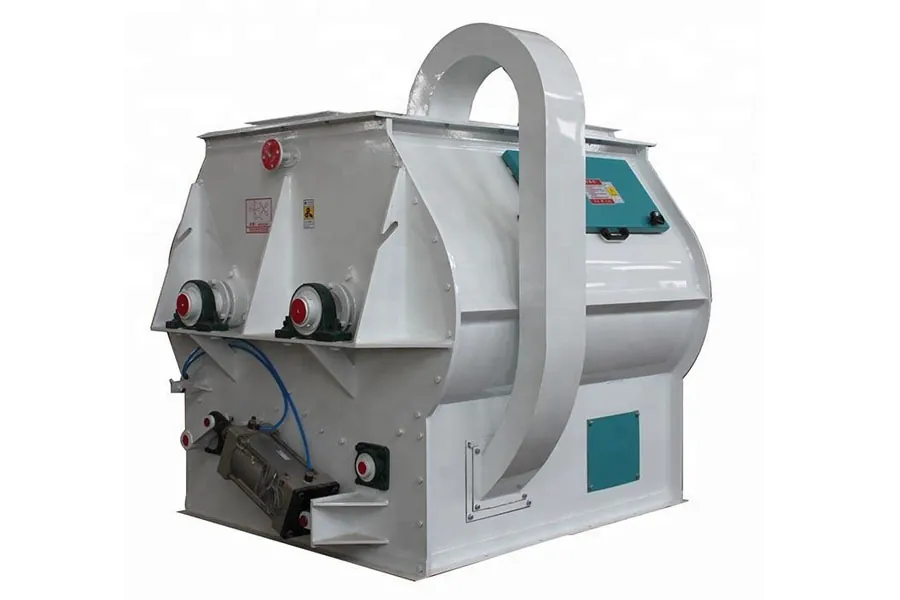
Feed MixerVertical 1.3 to 2.5 t/h · horizontal 0.5 to 4 t/h · paddle 500 to 5,000 kg a batch
A feed mixer is the machine that makes a formula true. Maize, soybean meal, bran, fish meal, limestone and the premix are weighed in kilos and then mixed until every scoop of the batch carries the same share of each ingredient. We build three kinds — the vertical feed mixer, the horizontal feed mixer and the paddle feed mixer — and which one you need is settled by the formula, the batch size and the floor you have.
- Vertical feed mixer LJ-500 and LJ-1000 — 3 kW, 1.3–2.5 t/h, cone-bottom hopper
- Horizontal feed mixer WJ-250 to WJ-2000 — 4 to 18.5 kW, 0.5–4 t/h
- Paddle feed mixer JY-500 to JY-5000 — 11 to 45 kW, 500–5,000 kg per batch, CV ≤ 5 %
- For a feed pellet production line, a mash feed production line, or a standalone unit
Reply in 12 working hours · Sized on your formula and batch · Delivered to 40+ countries
A pellet press cannot fix a badly mixed batch
Mixing is the cheapest quality control a feed plant has. An animal eats what it can reach, not the average of the batch — so a formula that is right on paper and wrong in the scoop shows up as uneven growth three weeks later, not as a complaint about the mixer.
The number that decides whether a feed mixer is doing its job is the coefficient of variation, CV. Take ten samples across a finished batch, measure one marker ingredient in each, and divide the standard deviation by the mean. A CV of 5 % means the ingredient is within about a tenth of its target everywhere in the batch. Most feed standards ask for 5 % or better on a 0.5 % inclusion; below that the mixer is not mixing, it is stirring.
In a mash feed production line the feed mixer is the last machine before the bag, and the mix it makes is the product. In a feed pellet production line it sits between the hammer mill and the conditioner, and the press then locks the mix into a pellet that you cannot correct afterwards. Either way the mixer is the only place where a mistake is still cheap to fix.
The smaller the inclusion, the more the mixer matters. Maize and soybean meal at 40 % each will find their way to an even spread in any of the three machines. A vitamin premix at 0.2 %, a coccidiostat or a pigment is where a slow mixer and a fast mixer stop being the same machine — and where the difference between a 3 % CV and a 5 % CV turns into real money.
What we do not sell is a catalogue mixer with your name on the invoice. The hopper is sized on your batch, the discharge height is set by the conveyor or the bagging scale that comes next, liquid addition is added where the formula needs it, and the motor is wound for your voltage. The three sections below say what each type does and what it does not.
Three families, and one question that picks between them
All three make an even batch. The difference is how long it takes, how much floor it needs, and whether the formula has anything wet in it.
| Vertical feed mixer | Horizontal feed mixer | Paddle feed mixer | |
|---|---|---|---|
| Mixing action | A vertical screw lifts the feed to the top of the cone and lets it fall back down the sides | A paddle or ribbon shaft turns in a horizontal trough and folds the feed end to end | Two rows of paddles on one shaft, with an air return duct over the top |
| Batch or continuous | Batch, emptied through a slide gate in the bottom cone | Batch, or continuous on the ribbon build | Batch, with a door that opens the whole chamber |
| Capacity | 1.3–2.5 t/h — LJ-500, LJ-1000 | 0.5–4 t/h — WJ-250 to WJ-2000 | 500–5,000 kg per batch — JY-500 to JY-5000 |
| Motor | 3 kW on both models | 4 to 18.5 kW | 11 to 45 kW |
| Mixing uniformity | 3–5 % CV on dry mash | 3–5 % CV on dry mash | ≤ 5 % CV, and it holds that with liquid in the mix |
| Cycle time | 8–12 minutes a batch, loading and discharge included | 3–6 minutes a batch | 45–120 seconds a batch |
| Footprint | Tall and narrow — 2.3–2.5 m of headroom | Long and low — 2.1 to 3.8 m of length | Compact but heavy — 1 to 10 m³ of chamber |
| Liquid addition | Not usual; a vertical feed mixer is a dry-mash machine | Possible with a spray bar over the trough | Built for it — molasses, oil and water at 1–5 % |
| Best for | Farms and 0.5–2 t/h mash lines with two or three formulas | 1–4 t/h feed pellet production lines and mash feed production lines | Aquafeed, concentrate and any formula with liquids or a small premix |
| Price | The lowest of the three | In the middle | The highest, and the fastest |
The rule we use: dry mash under 2 t/h goes to a vertical feed mixer, dry mash from 1 to 4 t/h to a horizontal feed mixer, and anything with molasses, oil or a premix under 1 % to a paddle feed mixer. The overlap between 1 and 2 t/h is real — both work, and the cheaper one is usually the right answer.
Tell us the formula and the batch
Four answers size a feed mixer: what goes into the batch, how many kilos a batch is, what liquids go in, and what feeds it and what it feeds. Everything else — vertical, horizontal or paddle, hopper size, discharge height — follows from those.
What happens after you send this
We answer with the type, the model, the batch time and a price — and with the CV we will hold on your formula, which is the number that decides whether the mixer is good enough.
Reply within one working day. No obligation.
The vertical feed mixer: cheap, tall, and honest about what it does
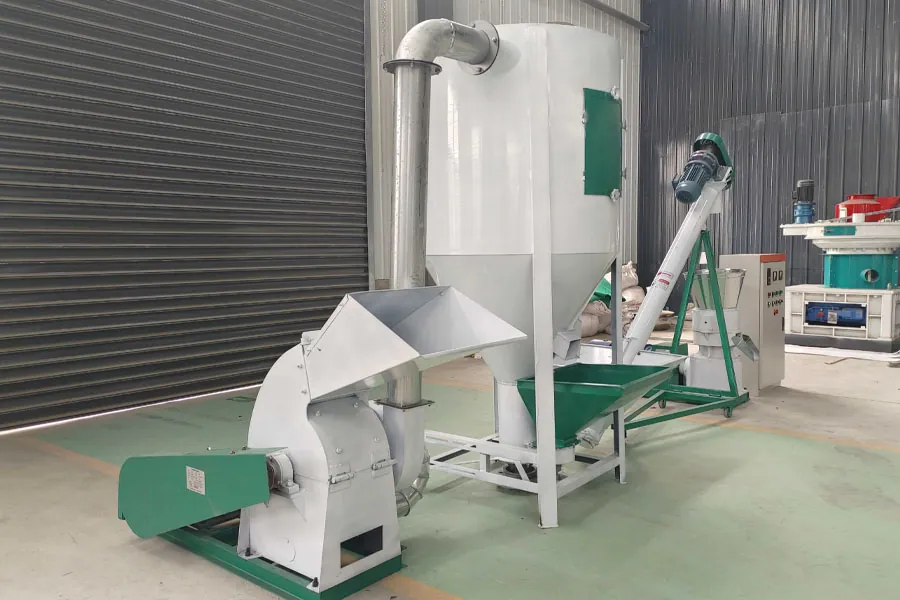
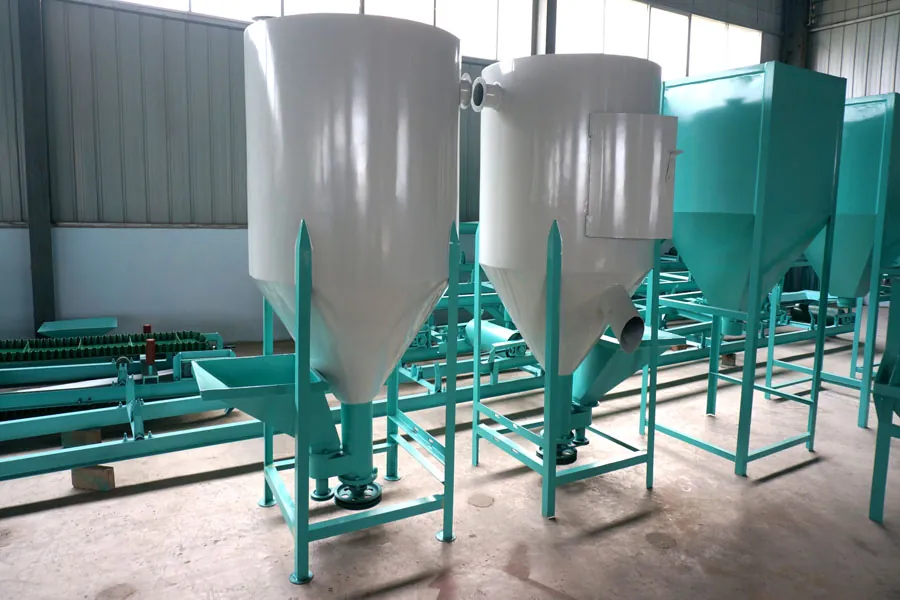
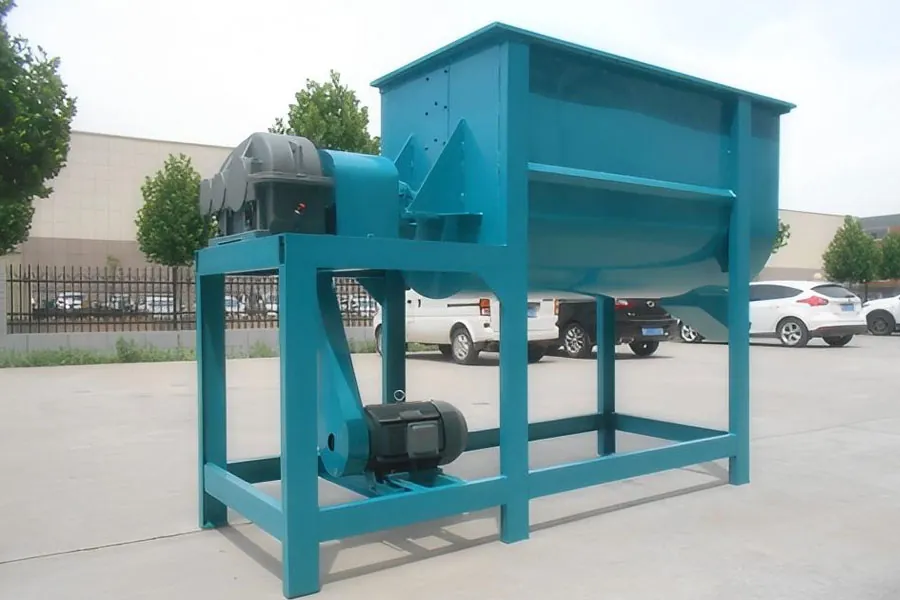
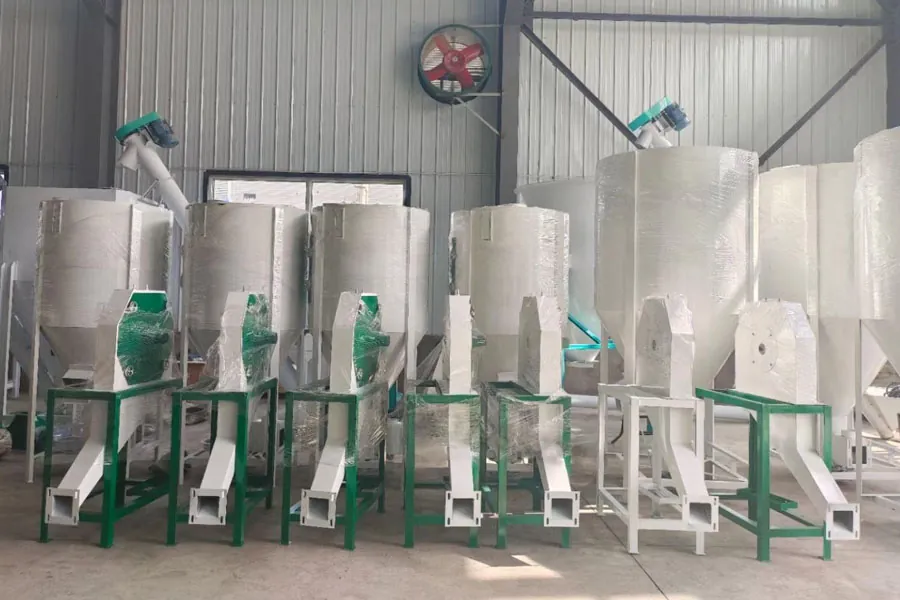
A vertical feed mixer is a cone-bottom hopper with a screw running up the middle. It costs the least of the three, stands on any level floor, and for a farm mixing 2 or 3 t a day it is enough machine.
Weighing and loading
Ingredients go in by bag, or from a screw conveyor off a batching scale. The batch is weighed before it goes in — a vertical feed mixer does not weigh anything itself.
The vertical screw
An auger in the centre lifts material out of the bottom cone to the top of the hopper. One 3 kW motor does the whole job, which is why the machine is cheap to buy and cheap to run.
Falling back down
Material spills off the top of the screw and runs down the inside of the cone, and the cycle repeats. Eight to twelve minutes gets a dry mash to 3–5 % CV.
Discharge
A slide gate in the bottom cone drops the batch into a conveyor, a bagging scale or a hopper. The discharge height is built to whatever comes next.
Dust
The standard hopper is open at the top. Indoors, a lid and a dust collar on the fill point are worth having — a vertical feed mixer moves a lot of air through a light mash.
| Model | Motor | Capacity | Size L×W×H | Weight |
|---|---|---|---|---|
| LJ-500 | 3 kW | 1.3–1.8 t/h | 1200 × 1260 × 2300 mm | 220 kg |
| LJ-1000 | 3 kW | 1.5–2.5 t/h | 1400 × 1480 × 2500 mm | 260 kg |
Capacity is mash feed at 600–700 kg/m³ bulk density. A vertical feed mixer works in batches, so the t/h figure is what it gets through in an hour including loading and discharge, not what it holds.
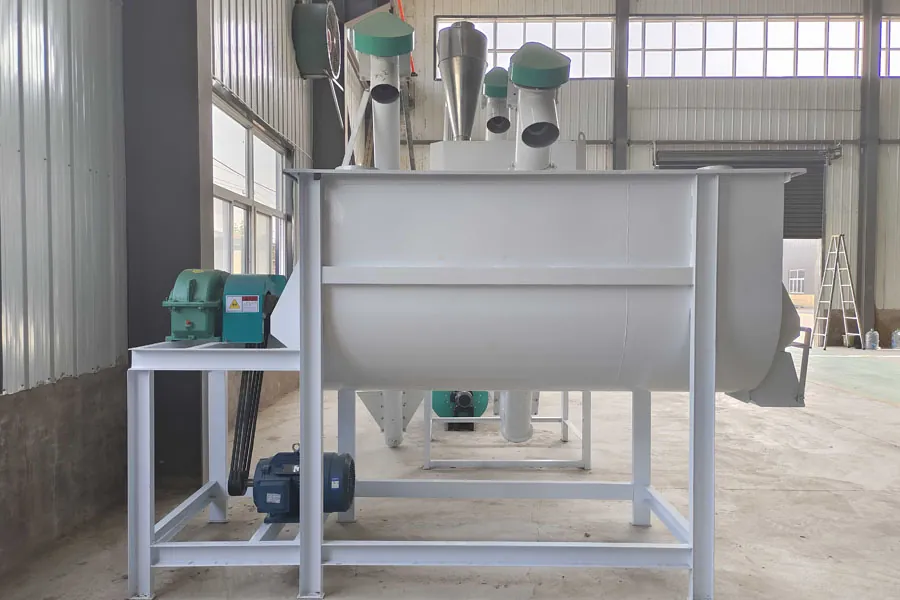
The horizontal feed mixer: the one most feed lines buy
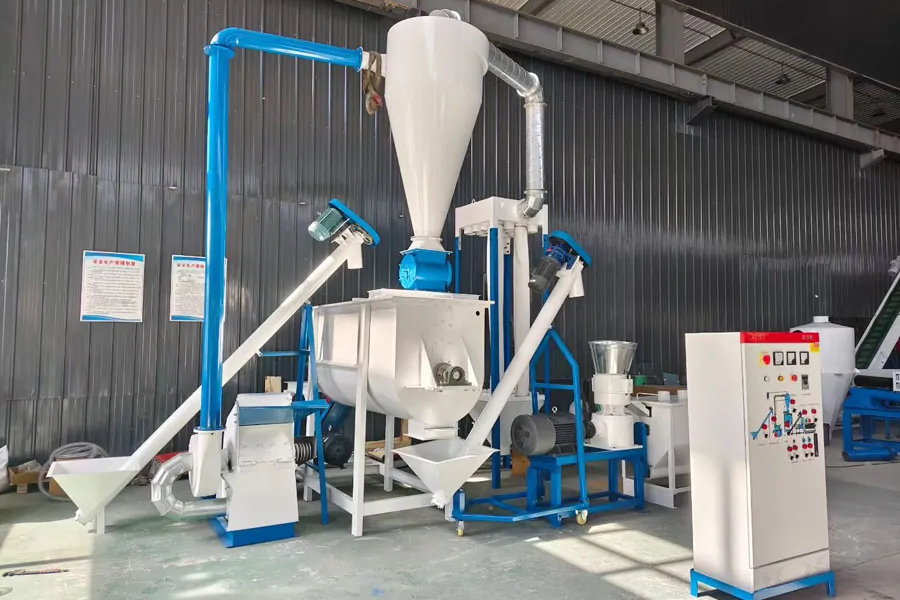
A horizontal feed mixer is a trough with a shaft through it. It mixes faster than a vertical feed mixer, takes liquid through a spray bar, and scales to 4 t/h — which is why it is the mixer in most 1 to 4 t/h feed pellet production lines.
Charging
From a screw conveyor or a batching scale at one end. The WJ-250 is usually fed by bag; the WJ-1000 and WJ-2000 expect a conveyor and a scale above them.
The shaft
Paddles or a ribbon on a single shaft. The ribbon build moves material from both ends to the middle and back again, which is what makes it usable as a continuous mixer.
The mix
Three to six minutes. Over-mixing a mash with molasses in it makes the feed sticky and costs you throughput, so the timer matters as much as the motor.
Discharge
A full-width door along the bottom of the trough empties the batch in 30 to 60 seconds with almost nothing left in the corners.
Liquid addition
A spray bar over the length of the trough takes molasses or oil at 1–3 %. Above that, a paddle feed mixer does the job better.
| Model | Motor | Capacity | Size L×W×H | Weight |
|---|---|---|---|---|
| WJ-250 | 4 kW | 0.5–1.2 t/h | 2100 × 800 × 1550 mm | 210 kg |
| WJ-500 | 7.5 kW | 1.3–1.8 t/h | 2800 × 1200 × 2000 mm | 900 kg |
| WJ-1000 | 11 kW | 1.5–2.5 t/h | 3200 × 1200 × 2300 mm | 1,200 kg |
| WJ-2000 | 18.5 kW | 2.5–4 t/h | 3800 × 1400 × 2350 mm | 1,500 kg |
The WJ-250 is a bag-in machine for a small farm. The WJ-2000 is 3.8 m long and 1,500 kg — it needs the floor space and a base that can carry it before it arrives.
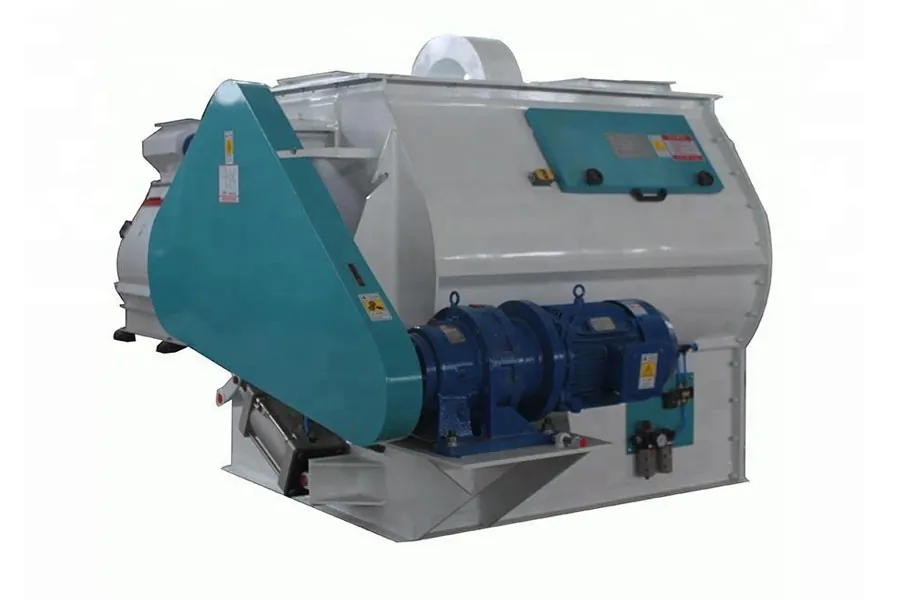
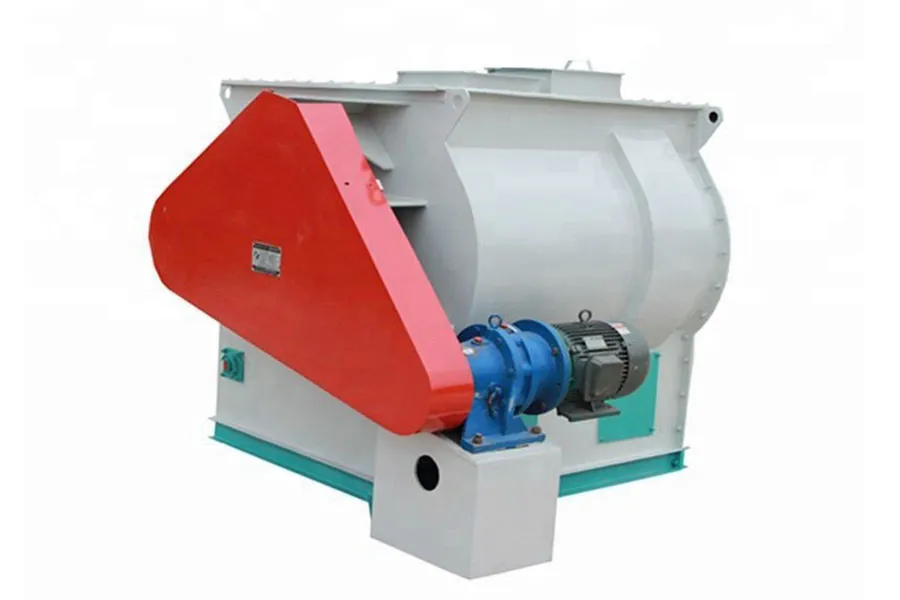
The paddle feed mixer: a minute a batch, and it holds CV with liquid in the mix
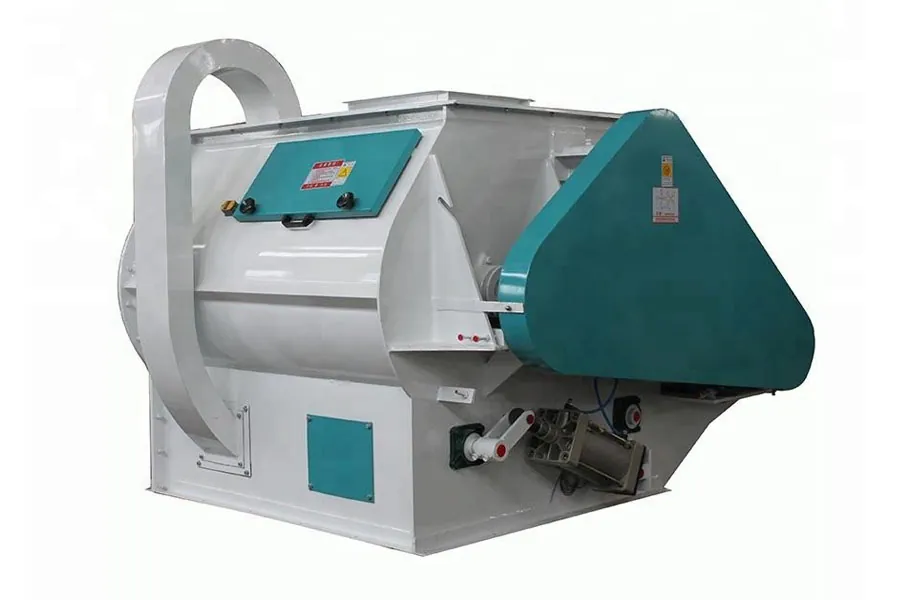
A paddle feed mixer is the machine aquafeed plants and concentrate plants buy. Two rows of paddles on one shaft, an air return duct over the top and a door that opens the whole chamber: 500 to 5,000 kg in 45 to 120 seconds, at a coefficient of variation of 5 % or better.
The shaft turns at 25–40 rpm and the paddles throw the feed along the chamber and back over the top of themselves. Nothing is lifted and dropped, so nothing is crushed and nothing is thrown out of the chamber — the duct over the top returns the air and the fines with it. That is why a paddle feed mixer can run a 0.2 % premix to 5 % CV in under two minutes, where a vertical feed mixer needs ten.
The full-open discharge door is the other half of the argument. A batch of aquafeed with 5 % molasses in it does not flow, it slides — a slide gate chokes on it, a door that opens the whole bottom of the chamber does not. The chamber is also built to be cleaned: no shaft through the discharge, no corners to dig out between formulas.
These four models are the standard builds. Stainless contact parts, a liquid addition spray bar, a jacket for temperature-sensitive ingredients and a bigger motor for a dense aquafeed are all options rather than a different machine — which is the point of building to order.
| Model | Motor | Capacity | Effective volume | Mixing uniformity |
|---|---|---|---|---|
| JY-500 | 11 kW | 500 kg per batch | 1 m³ | ≤ 5 |
| JY-1000 | 22 kW | 1,000 kg per batch | 2 m³ | ≤ 5 |
| JY-2000 | 30 kW | 2,000 kg per batch | 4 m³ | ≤ 5 |
| JY-5000 | 45 kW | 5,000 kg per batch | 10 m³ | ≤ 5 |
Capacity on a paddle feed mixer is quoted per batch, not per hour: a JY-1000 holds 1,000 kg of finished feed in the chamber, and the t/h depends on how fast you can weigh and discharge around it. Uniformity is the coefficient of variation on a 0.5 % inclusion.
Match the mixer to the formula, not to the price list
The three types overlap in the middle of the range, so the formula decides more often than the capacity does. These are the seven cases we meet most.
| If this is your plant | Take this |
|---|---|
| A farm mixing under 2 t/h, two or three dry formulas | Vertical feed mixer — LJ-500 or LJ-1000 |
| A 1–2 t/h feed pellet production line on a dry mash | Horizontal feed mixer — WJ-500, or a vertical feed mixer if the budget is tight |
| A 2–4 t/h feed pellet production line, or a mash feed production line that runs long batches | Horizontal feed mixer — WJ-1000 or WJ-2000 |
| Aquafeed or shrimp feed, or any formula with molasses above 2 % | Paddle feed mixer — JY-1000 or JY-2000 |
| A premix, vitamin or medication at under 1 % inclusion | Paddle feed mixer — the short cycle and the air return duct are what keep a small inclusion even |
| A concentrate plant running 5 t batches | Paddle feed mixer — JY-5000 |
| A line that bags straight out of the mixer, under 2 t/h | Vertical feed mixer — it discharges into a bagging scale without a conveyor |
Two rules sit behind that table. Anything with molasses, oil or water in it goes to a paddle feed mixer, because a vertical feed mixer cannot discharge a sticky batch and a horizontal feed mixer leaves it in the corners. And anything with a premix under 1 % goes to a paddle feed mixer as well, because that is the inclusion where cycle time starts to show in the CV.
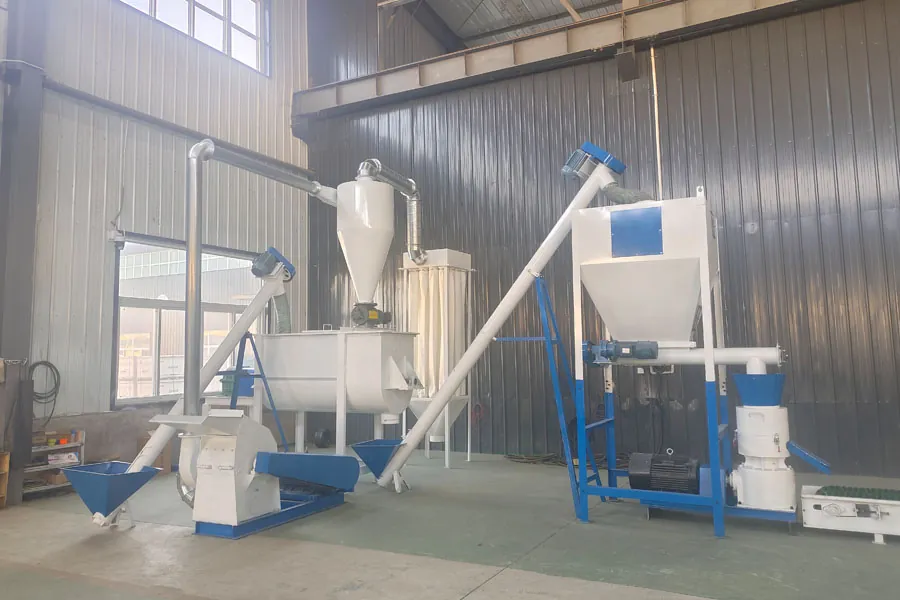
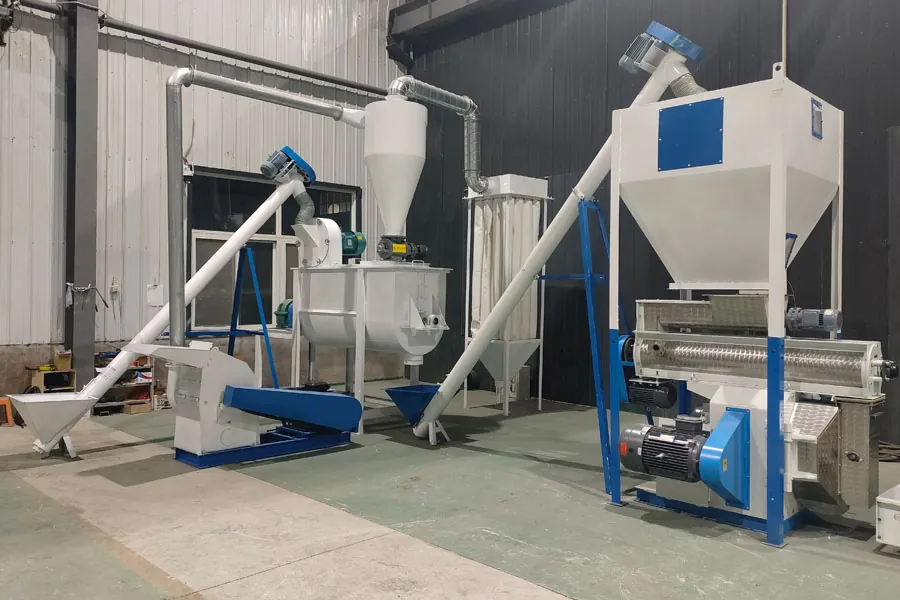
Where the feed mixer sits, in a mash line and in a pellet line
In a mash feed production line the feed mixer is the last machine before the bag. In a feed pellet production line it is the machine before the conditioner and the press, and everything after it locks the mix in place.
A mash feed production line runs: hammer mill → batching scale → feed mixer → bagging. The mixer is the last thing that happens to the feed, so the batch it turns out is the product. That is why a mash plant will spend on the mixer before it spends on anything else in the line, and why the discharge height matters: it has to reach the bagging scale without a second conveyor.
A feed pellet production line runs: crusher or hammer mill → batching scale → feed mixer → conditioner → flat die feed pellet mill → cooler → crumbler → screener → bagging. Here the mixer is upstream of everything that cannot be undone. Steam and pressure fuse the mash into a pellet; if the premix was uneven going in, it is uneven in every pellet that comes out, and no amount of screening will fix it.
Two practical points. First, the mixer’s discharge height is agreed before the order, because it is set by the conveyor or the scale that comes next and cannot be changed by shimming the frame. Second, a line that runs several formulas needs the mixer to empty cleanly — a horizontal feed mixer leaves more in the corners than a paddle feed mixer, and that residue is the start of the next batch.
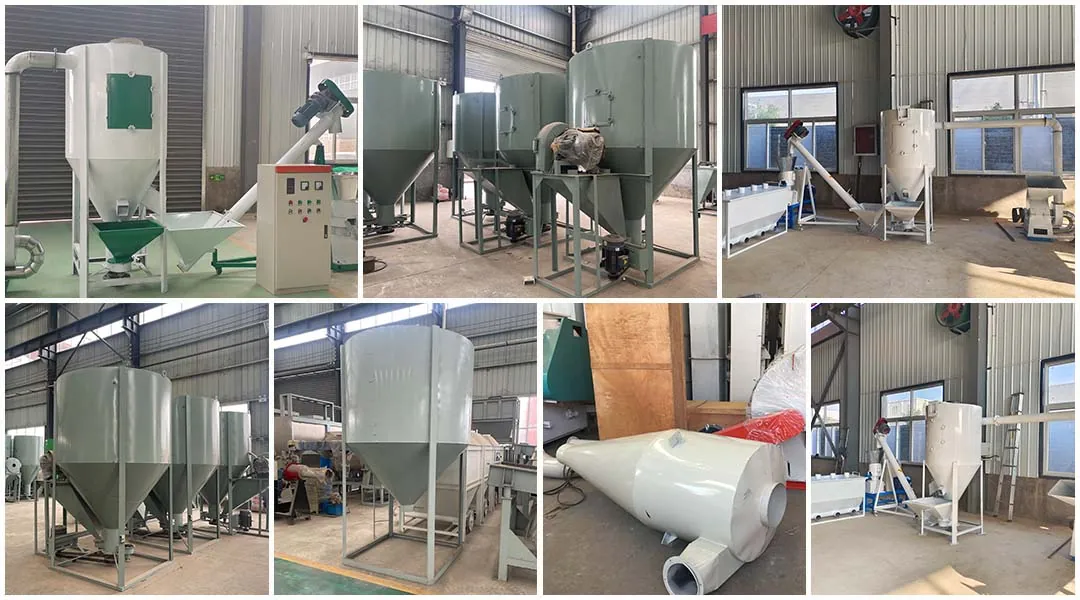
What we change on a standard feed mixer
Every mixer leaves here built for one plant. The chamber and the shaft are standard; the things around them are not.
-
Hopper and feed point
Bag chute, screw conveyor inlet or a flanged connection under a batching scale. The hopper volume is set so a batch fits with room to spare.
-
Discharge height
Set by the bagging scale, the conveyor or the next machine in the line. Agreed on the drawing before the frame is welded.
-
Liquid addition
A spray bar with a flow meter for molasses, oil or water, at 1–5 % of the batch. Standard on the paddle feed mixer, optional on the horizontal feed mixer.
-
Contact parts
Painted carbon steel as standard. Stainless steel on the chamber, the shaft and the paddles where the feed is corrosive or the plant washes down.
-
Motor and electrics
380 V / 50 Hz three-phase as standard; 415 V, 440 V and 60 Hz to order. Local control box, or wired into your panel.
-
Finish
Paint colour to your specification, and the machine name plate in your language if you ask for it.
Delivery is 10–20 working days after the deposit for a vertical feed mixer or a horizontal feed mixer, 20–30 for a paddle feed mixer above JY-2000. Payment is TT with 40 % in advance and the balance before delivery. The chamber, the shaft and the drive ship as one assembly; the hopper and the frame are crated separately.
Where the feed mixer sits in the range
A feed mixer is one machine in a line: something has to grind the grain and something has to press or bag the mix. Below are both ends, and the machines that come with a feed mixer in the same order.
Tell us the formula and the batch
The main ingredients, the smallest inclusion, the kilos per batch and what feeds the mixer. We reply with the type, the model, the batch time and a price.
Reply within one working day. No obligation.
The mixers, and the lines they go into
The mixer working, the mixers leaving the workshop, and the mash and pellet lines a feed mixer is specified into.


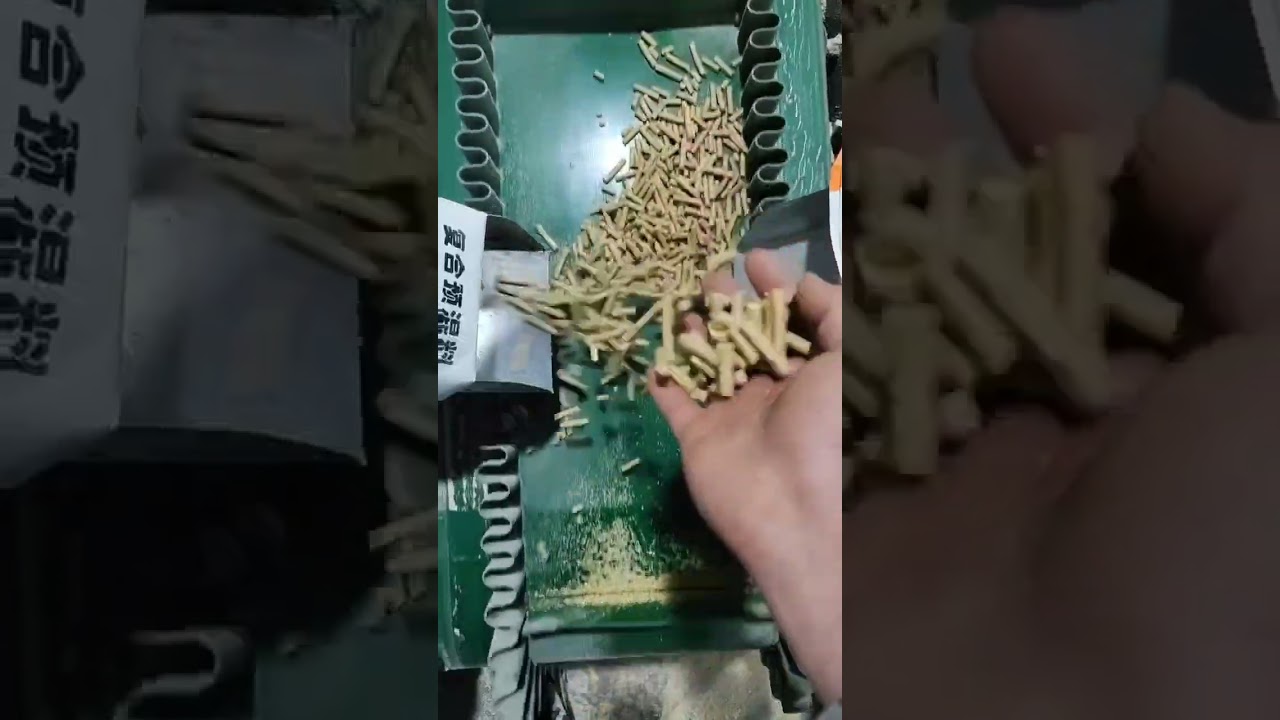

More test runs, shipping records and installation footage on our YouTube channel, and the whole Feed Processing Machines playlist.
What buyers ask before ordering a feed mixer
What does a feed mixer do?
It takes the ingredients of a formula — maize, soybean meal, bran, fish meal, limestone, premix — and turns them into a batch in which every scoop carries the same share of each. The measure is the coefficient of variation: ten samples across the batch, and 5 % or better on a 0.5 % inclusion is what most feed standards ask for. It is the last machine before the bag in a mash feed production line, and the machine before the conditioner in a feed pellet production line.
Vertical, horizontal or paddle feed mixer — which one should I buy?
Dry mash under 2 t/h: a vertical feed mixer, because it is the cheapest and needs no foundation. Dry mash from 1 to 4 t/h: a horizontal feed mixer, because it is faster and scales. Anything with molasses, oil or water in it, or a premix under 1 %: a paddle feed mixer. The 1–2 t/h band is a genuine overlap and both work there.
What is CV and what figure should I ask for?
CV is the coefficient of variation — the standard deviation of a marker ingredient across ten samples, divided by its mean. Ask for 5 % or better on a 0.5 % inclusion, which is the figure feed standards use. A vertical feed mixer and a horizontal feed mixer both hold 3–5 % on a dry mash; a paddle feed mixer holds 5 % or better with liquid in the mix, and does it in a minute.
Can a feed mixer add molasses or oil?
Yes, but not all of them equally. A paddle feed mixer is built for it — a spray bar and a full-open discharge door, because a batch with 5 % molasses slides rather than flows and a slide gate chokes on it. A horizontal feed mixer takes a spray bar and 1–3 % comfortably. A vertical feed mixer is a dry-mash machine and we do not recommend liquid in it.
How long does a batch take?
A paddle feed mixer: 45 to 120 seconds. A horizontal feed mixer: 3 to 6 minutes. A vertical feed mixer: 8 to 12 minutes. Add loading and discharge to all three. Over-mixing is a real fault, not a safety margin — a mash with molasses in it gets sticky and costs you throughput.
Does a feed mixer need a foundation?
A vertical feed mixer does not: it stands on a level concrete floor and the frame is bolted down. A horizontal feed mixer and a paddle feed mixer sit on their own frames but need a floor that carries the weight — the WJ-2000 is 1,500 kg empty and the JY-5000 is heavier with a batch in it. Tell us the floor and we will tell you whether it needs a plinth.
What size feed mixer for a 1 t/h pellet line?
A WJ-500 horizontal feed mixer, or a WJ-1000 if you run several formulas and want the batch time short. A 1 t/h line moves about 1,000 kg an hour, so a 500 kg chamber at two batches an hour is enough; most buyers go one size up so the mixer is never the bottleneck.
How is a feed mixer shipped, and how long does delivery take?
10–20 working days after the deposit for a vertical feed mixer or a horizontal feed mixer, 20–30 for a paddle feed mixer above JY-2000. The chamber, shaft and drive ship as one assembly; the hopper and the frame are crated separately. Payment is TT with 40 % in advance and the balance before delivery, and we send the general arrangement drawing for approval before anything is cut.
Send the formula and the batch size
What goes into the batch, the smallest inclusion, the kilos per batch and what feeds the mixer. Those four answers choose between a vertical feed mixer, a horizontal feed mixer and a paddle feed mixer, and size the chamber behind it.
- Emailinfo@pelletmachines.net
- WhatsApp+86 186 0385 1787
- HoursMon–Sat, 08:00–20:00 (GMT+8)
Send the formula as a list of ingredients with percentages, and a photo of the space the mixer has to fit into. We will tell you which type fits, which model, and what the discharge has to reach.
What happens after you send this
We answer with the type, the model, the batch time and a price — and with the CV we will hold on your formula, which is the number that decides whether the mixer is good enough.
Your details are not shared. One follow-up, no mailing list.