Hammer Mill120 kg/h to 10 t/h — wood, feed, diesel, electric
Five machines under one name, and the material decides which one you need. A wood hammer mill grinds chips and shavings; a feed hammer mill grinds grain; the FS frames come on a motor or an engine; and a wood chipper machine goes in front of either when the material arrives as logs. Everything on this page routes to the right one.
- Wood hammer mill — SD and FS frames, 120 kg/h to 10 t/h
- Feed hammer mill — 120 to 1,600 kg/h on a skid, 1–10 t/h as a plant section
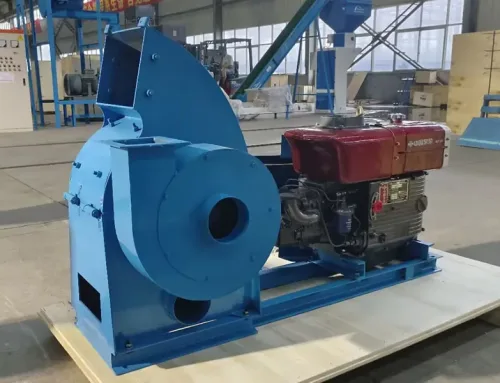
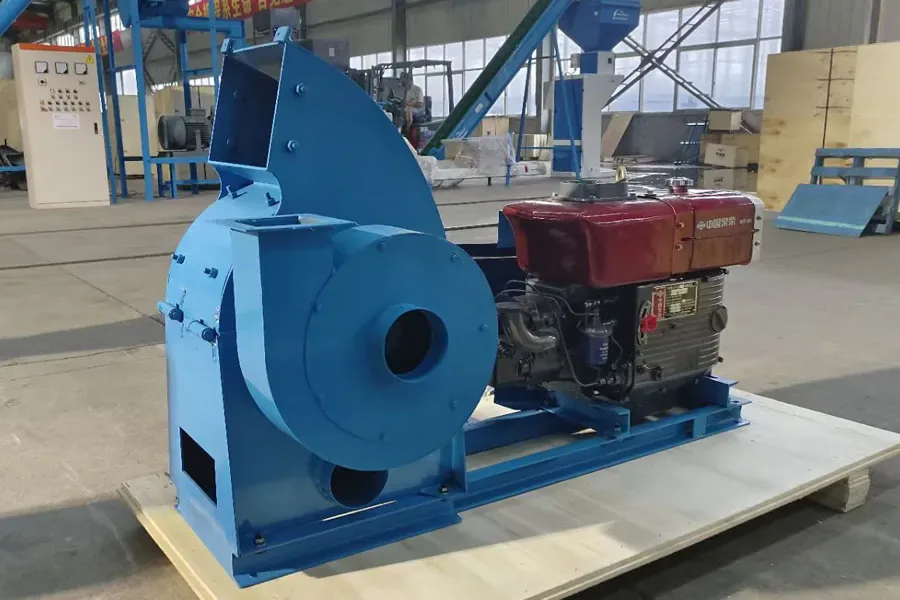
- Diesel hammer mill — FS-420A to FS-50-60A, 15 to 55 hp
- Wood chipper machine — DP-420B to DP-700B, 500 to 2,500 kg/h
Reply in 12 working hours · Test run on your material · Delivered to 40+ countries
Three materials, three machines
The material decides the machine before capacity, before drive and before budget. Wood chips and grain do not behave the same way inside a chamber, and logs do not go into a chamber at all.
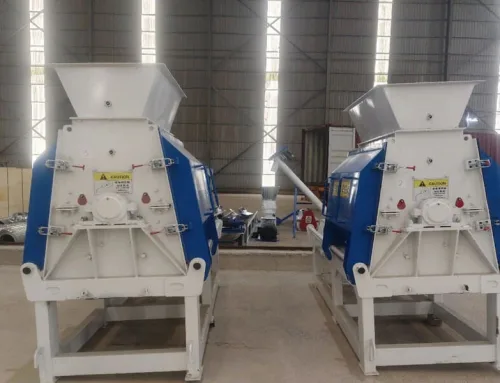
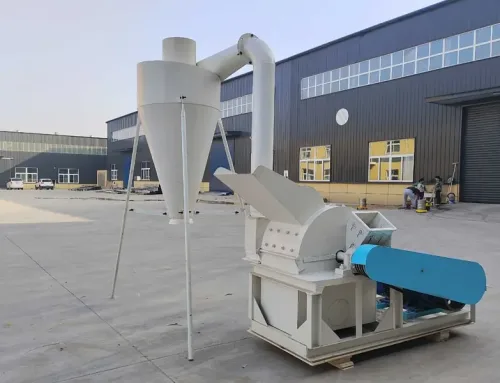
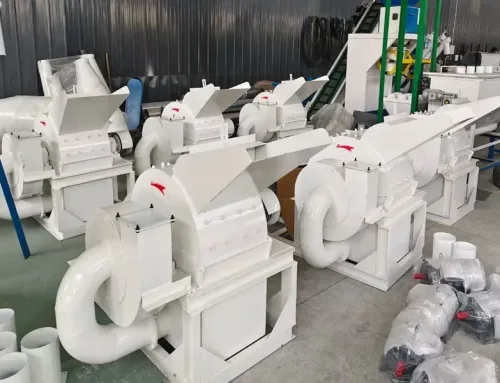
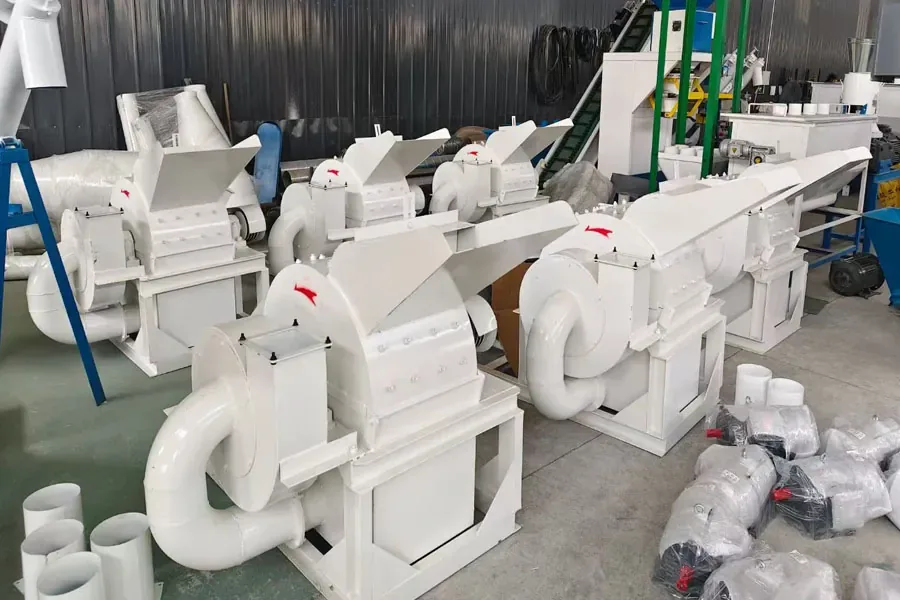
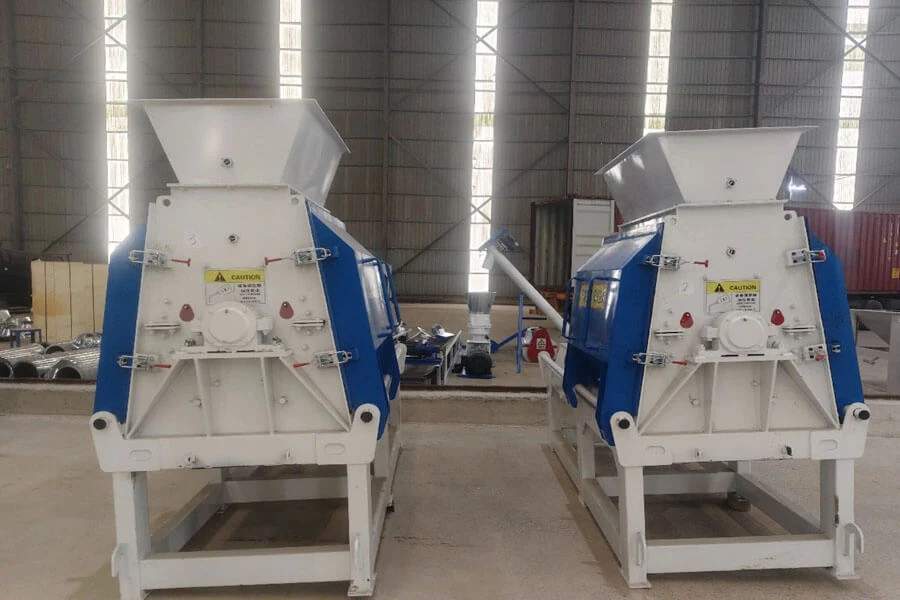 Wood hammer millChips, shavings, branches and slab offcuts down to 3–5 mm powder for pellets. SD frames 22–90 kW at 1–10 t/h, FS frames 4–37 kW at 120–1,600 kg/h. Screen 1.8–10 mm.For wood and biomass →
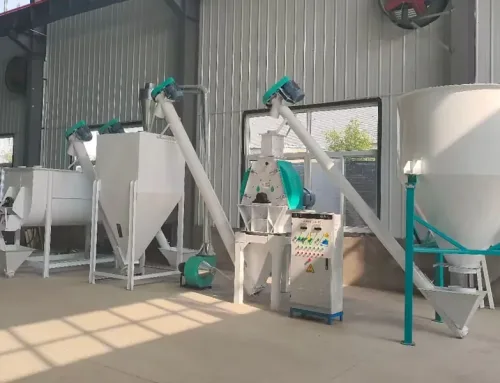
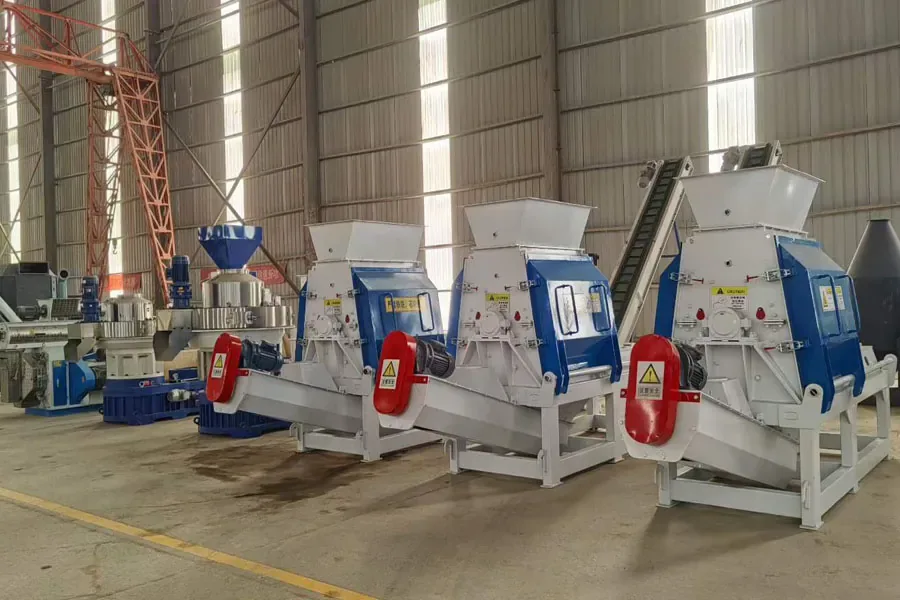
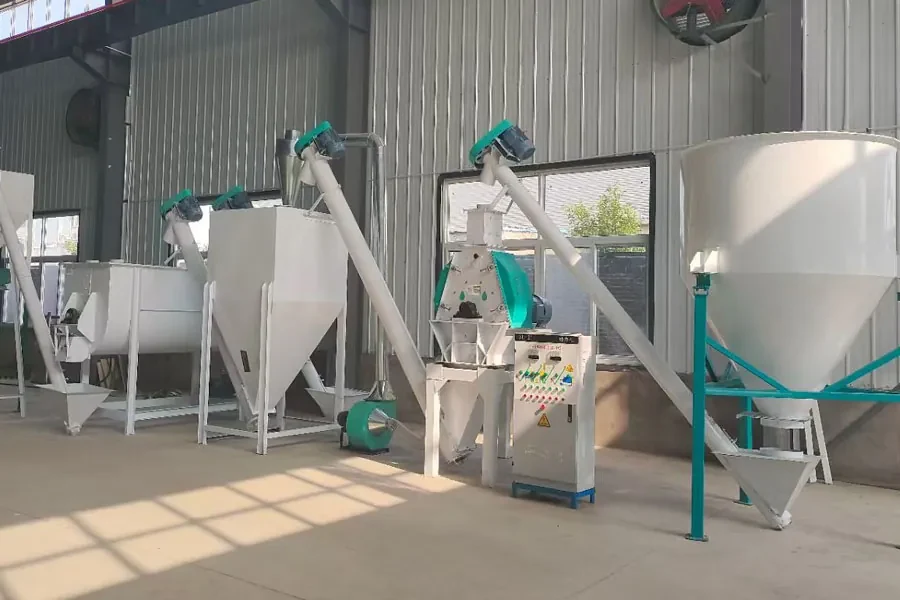 Feed hammer millMaize, wheat, soybean meal and roughage down to the mash a press or a mixer needs. 120–1,600 kg/h on a skid, 1–10 t/h as a plant grinding section. Screen 1.5–10 mm.For grain and feed →
 Wood chipper machineLogs, branches and pallet blocks cut down to 10–30 mm chips, because a hammer mill cannot take a log. DP-420B to DP-700B, 500–2,500 kg/h, 11–55 hp.For logs and branches →
Five pages, one table
The two hammer mill pages on the left are the same machine on different material. The two on the right are the drive-specific range and the machine that has to come first.
Hammer mill group what each page covers
| Wood hammer mill | Feed hammer mill | Diesel hammer mill | Wood chipper machine | |
|---|---|---|---|---|
| Material in | Wood chips, shavings, branches | Maize, wheat, soybean meal, roughage | Wood chips, shavings, straw | Logs, branches, pallet blocks |
| Material out | 3–5 mm powder | 1.5–3 mm mash | 3–5 mm powder | 10–30 mm chips |
| Capacity | 120 kg/h – 10 t/h | 120 kg/h – 10 t/h | 120–1,600 kg/h | 500–2,500 kg/h |
| Drive | Electric or diesel | Electric or diesel | Diesel, 15–55 hp | Electric or diesel |
| Screen | 1.8–10 mm | 1.5–10 mm | 1.8–10 mm | Grate, 10–30 mm chip |
| Where in a line | After the chipper, before the dryer | First machine in a feed mill | After the chipper, before the dryer | First machine in a wood line |
Capacity figures are not comparable across the columns: grain breaks on the first impact and wood does not, so a 22 kW feed hammer mill outruns a 22 kW wood hammer mill three or four times. Compare within a column, not across it.
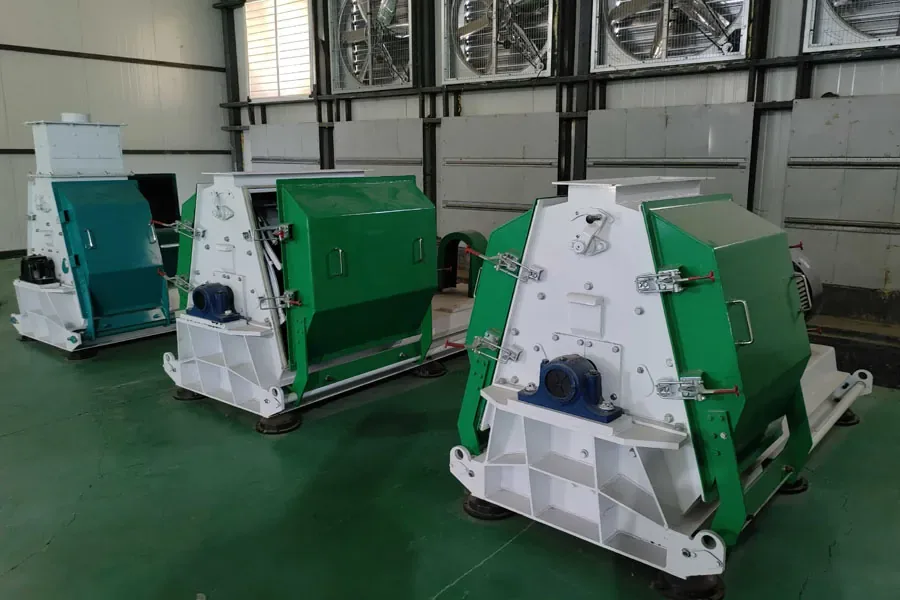
Tell us the material and the output
Four answers narrow eighteen frames down to one: what the material is, the largest piece that goes in, the powder size you need, and the kg/h at the end of the line. Everything else is detail.
What happens after you send this
We answer with the frame, the screen, the drive and a price — then send a test-run video on material like yours.
Reply within one working day. No obligation.
Motor or engine — the same frame either way
Every hammer mill in the group is built on the same base-plate pattern, so the cyclone, the ducting and the discharge height do not change when the drive does. Below are the pages that treat the drive as the main question, and the machines that sit either side of a hammer mill in a line.
Eighteen frames, 4 to 90 kW
One table for the whole group. The FS frames are sold as either a feed hammer mill or a wood hammer mill depending on the screen; the SD frames are the water-drop chamber at plant scale; the DP frames are chippers, not mills, and are listed here because they come first in a wood line.
Hammer mill group every frame, every drive
| Model | Drive | Capacity | Built for | Detail |
|---|---|---|---|---|
| FS-198B | 4 kW | 120–250 kg/h | Feed or wood | Electric Hammer Mill Detail |
| FS-420B | 11 kW | 250–500 kg/h | Feed or wood | Electric Hammer Mill Detail |
| FS-50-40B | 22 kW | 600–1,300 kg/h | Feed or wood | Electric Hammer Mill Detail |
| FS-50-60B | 37 kW | 1,000–1,600 kg/h | Feed or wood | Electric Hammer Mill Detail |
| FS-420A | 15 hp diesel | 250–500 kg/h | Feed or wood | Diesel Hammer Mill Detail |
| FS-50-40A | 41 hp diesel | 600–1,300 kg/h | Feed or wood | Diesel Hammer Mill Detail |
| FS-50-60A | 55 hp diesel | 1,000–1,600 kg/h | Feed or wood | Diesel Hammer Mill Detail |
| SD-350 | 22 kW | 1–3 t/h | Feed or wood | Feed Hammer Mill Detail |
| SD-450 | 37 kW | 2–4 t/h | Feed or wood | Feed Hammer Mill Detail |
| SD-600 | 55 kW | 3–6 t/h | Feed or wood | Feed Hammer Mill Detail |
| SD-800 | 90 kW | 6–10 t/h | Feed or wood | Feed Hammer Mill Detail |
| DP-420B | 11 kW | 500–800 kg/h | Logs in, chips out | Wood Chipper Machine Detail |
| DP-500B | 22 kW | 800–1,200 kg/h | Logs in, chips out | Wood Chipper Machine Detail |
| DP-600B | 30 kW | 1,200–1,800 kg/h | Logs in, chips out | Wood Chipper Machine Detail |
| DP-700B | 37 kW | 1,800–2,500 kg/h | Logs in, chips out | Wood Chipper Machine Detail |
| DP-420A | 22 hp diesel | 500–800 kg/h | Logs in, chips out | Wood Chipper Machine Detail |
| DP-500A | 41 hp diesel | 800–1,200 kg/h | Logs in, chips out | Wood Chipper Machine Detail |
| DP-600A | 55 hp diesel | 1,200–1,800 kg/h | Logs in, chips out | Wood Chipper Machine Detail |
Capacities are quoted on the material each frame is rated for — maize through a 3 mm screen for the feed figures, air-dry wood chips through a 3–5 mm screen for the wood figures, softwood branches for the chipper. Ask for the number on your material before you size a line on a table.
Where a hammer mill sits, and what has to be either side of it
A hammer mill is never the whole line. Something makes the material small enough for it, and something presses the powder it makes — and the order of those three is fixed.
On wood pellet line, the order is wood chipper machine, then wood hammer mill, then the dryer, then the flat die pellet mill or a vertical ring die pellet mill above 1 t/h. A wood hammer mill cannot take a log and a wood chipper will not make powder, so a wood pellet line that starts from whole timber needs both.
On feed pellet line, the order is feed hammer mill, mixer, flat die feed pellet mill, cooler, crumbler, screener, bagging. The mill is first because everything downstream is sized on the mash it produces. For floating fish feed the press is replaced by an extruder — see the fish feed machine group.
Below about 350 kg/h the grinding and the pressing are often bought on one frame as a combined pellet mill and hammer mill. Above that the two machines want separate drives, separate foundations and separate positions in the line — which is where a 500 kg/h wood pellet plant starts.
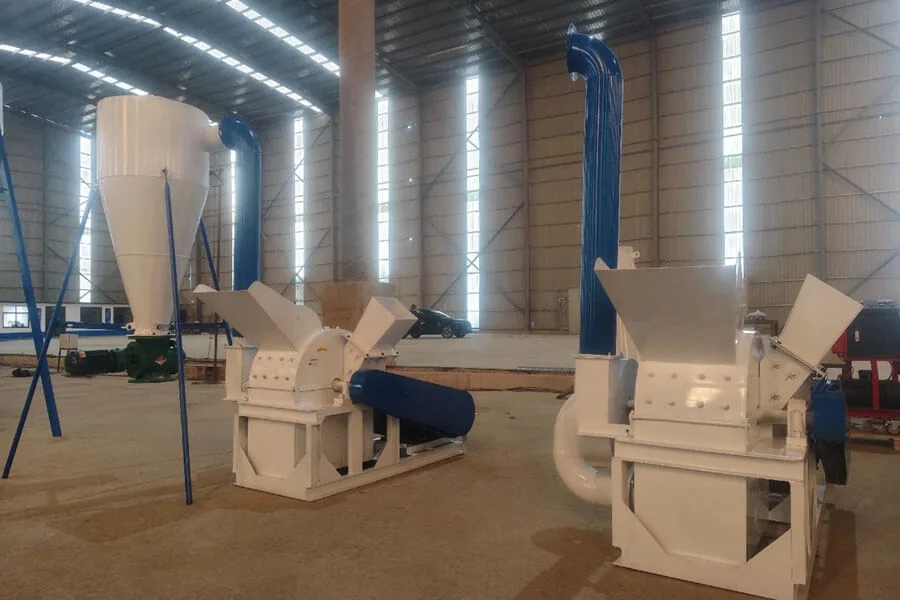
One from each corner of the group
A wood mill on a test run, a feed mill opened up, a chipper on branches, and the combined frame that does grinding and pressing at once.
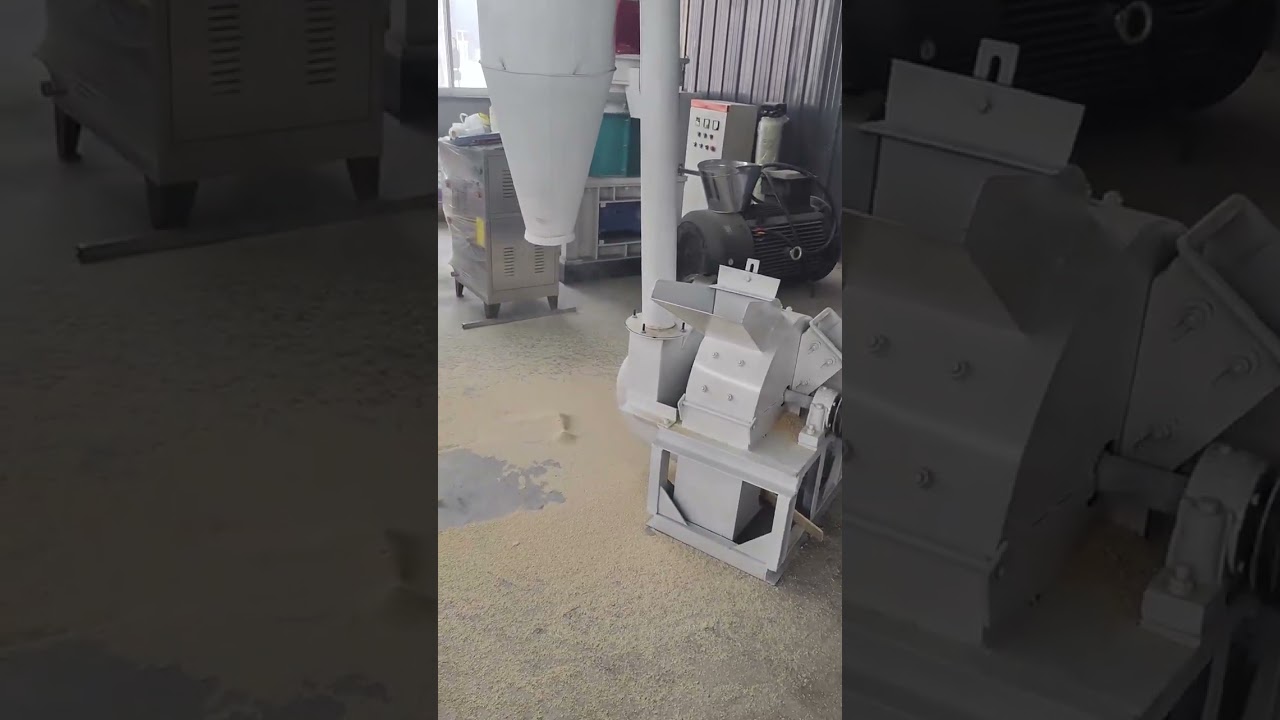


More test runs, shipping records and installation footage on our YouTube channel — the Biomass Pellet Machines playlist and the Feed Processing Machines playlist.
What buyers ask before choosing a hammer mill
Which hammer mill do I need?
The material decides. Wood chips, shavings and branches need a wood hammer mill; grain, meal and roughage need a feed hammer mill; logs and pallet blocks need a wood chipper machine before either. Capacity and drive come after that.
What is the difference between a hammer mill and a wood chipper machine?
A hammer mill beats material against a screen with swinging hammers and makes powder from material already under about 50 mm. A wood chipper machine cuts with knives on a disc and takes material up to 280 mm across, making 10–30 mm chips. A wood line usually needs both, chipper first.
What capacity range does the group cover?
120 kg/h at the smallest FS frame to 10 t/h at the SD-800. The chipper frames add 500–2,500 kg/h of chips. Above 10 t/h the machine is a different design and is quoted as part of a complete line rather than as a stand-alone unit.
Electric or diesel?
Electric wherever there is a three-phase supply that can carry the starting current — it is cheaper to buy above 22 kW and much cheaper to run. Diesel where there is no supply, a weak one, or a site that moves. The chamber, rotor, screen and base-plate pattern are identical, so the choice can be revisited later.
What screen should I order?
3–4 mm for wood pellets through a Ø6–8 mm die, 2–3 mm for pig and poultry feed, 1.5–2 mm for fish feed, 8–10 mm for a first pass on wet or stringy material. Two screens ship with every machine and more can be ordered with it.
Can one machine do both wood and feed?
Yes — the FS frames can, with a different screen. In practice most buyers keep one machine on one job, because a screen change mid-shift is time lost and because feed and wood lines are usually in different buildings.
How long is delivery?
7–15 working days after the deposit for the FS and DP frames, 15–25 for the SD frames depending on the motor. Payment is TT with 40 % in advance and the balance before delivery.
Send the material and the output
What the material is, the largest piece that goes in, the powder size you need and the kg/h at the end of the line. Those four answers pick the machine, the frame, the screen and the drive — and they are what we run the test video on.
- Emailinfo@pelletmachines.net
- WhatsApp+86 186 0385 1787
- HoursMon–Sat, 08:00–20:00 (GMT+8)
Send a photo of the material and a photo of the site and we will tell you which machine, which frame and which screen — and whether a chipper has to come first.
What happens after you send this
We answer with the machine, the frame, the screen, the drive and a price — then send a test-run video on material like yours before you pay a deposit.
Your details are not shared. One follow-up, no mailing list.