


Pellet Packing MachineFour weighing heads, 200 to 800 bags an hour
The pellet packing machine is the last thing on a feed pellet line and the first thing a customer opens. It weighs 10 to 50 kg into a woven bag, holds the bag mouth open while the weigh hopper empties, and closes the top before the bag reaches the end of the conveyor. Get the weighing head right and the feed mill ships what it makes. Get it wrong and every bag is an argument at the weighbridge.
- DCS-Z-W-50 belt-feed pellet packing machine — 15–50 kg, 200–300 bags an hour
- DCS-Z-S-50 single hopper — 10–50 kg, 300–400 bags an hour
- DCS-Z-D-50 double hopper — 15–50 kg, 600–800 bags an hour
- 0.2 accuracy class, 304 stainless contact parts, bag conveyor and bag closing machine included
Reply in 12 working hours · Sized on your bag weight and bags per hour · Delivered to 40+ countries
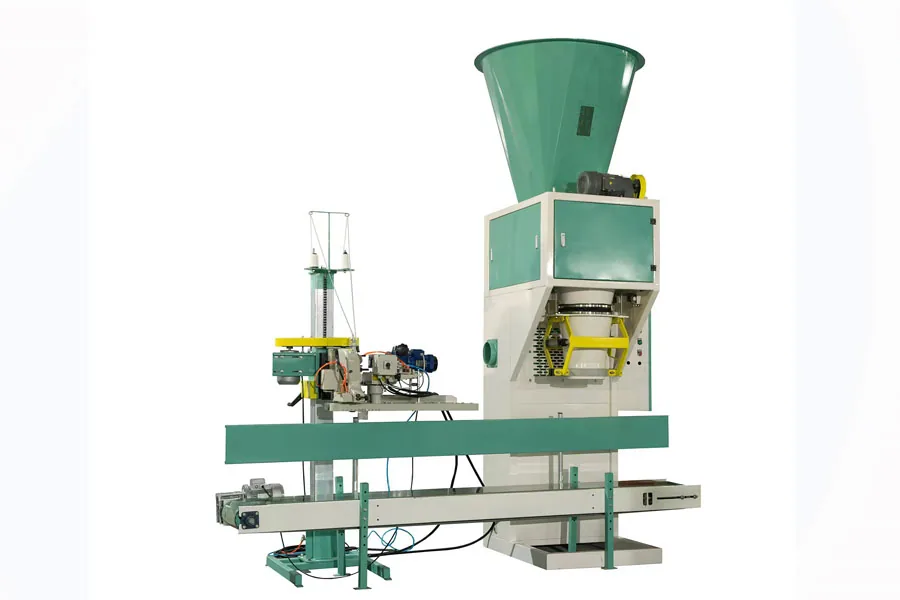
Weigh the bag, hold the bag, close the bag
A pellet packing machine is three things on one frame: a weighing head, a bag clamp and a bag closing machine. It is bought as one item and it is one purchase — but the three parts fail for different reasons, and only the weighing head decides what your bag actually weighs.
The weighing head works on weight, not on time. A fast feed drops most of the bag in, the gate closes to a dribble for the last kilo, and the controller stops the feed when the weigh hopper reads the setpoint. That is why the accuracy is quoted as a class and not as an average: a 0.2 class head holds ±0.2 % of the bag weight, which is ±100 g on a 50 kg bag and ±50 g on a 25 kg one, bag after bag, with nobody trimming anything by hand.
Everything else on the pellet packing machine is there to keep that cycle short. The bag clamp holds the mouth open while the weigh hopper empties. The bag conveyor takes the filled bag away at the moment the clamp releases it. The bag closing machine sews the top before the bag reaches the end of the belt. Whichever of those three is slowest is the real speed of the pellet packing machine, and the bags per hour on the model table assume all three keep up.
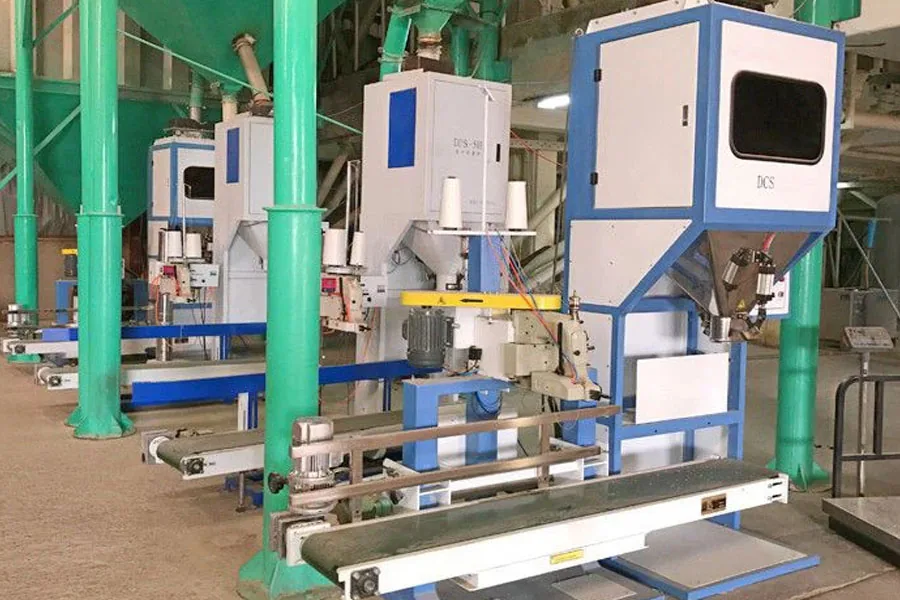
This is why the pellet packing machine, not the pellet mill, is often the bottleneck on a feed pellet line. A 1 t/h mill filling 50 kg bags needs 20 bags an hour, and any head in the range will do that. The same mill filling 10 kg bags needs 100 bags an hour, and a plant selling into retail sachets needs more again. The capacity has not changed. The bag count has, and the bag count is what a pellet packing machine is measured in.
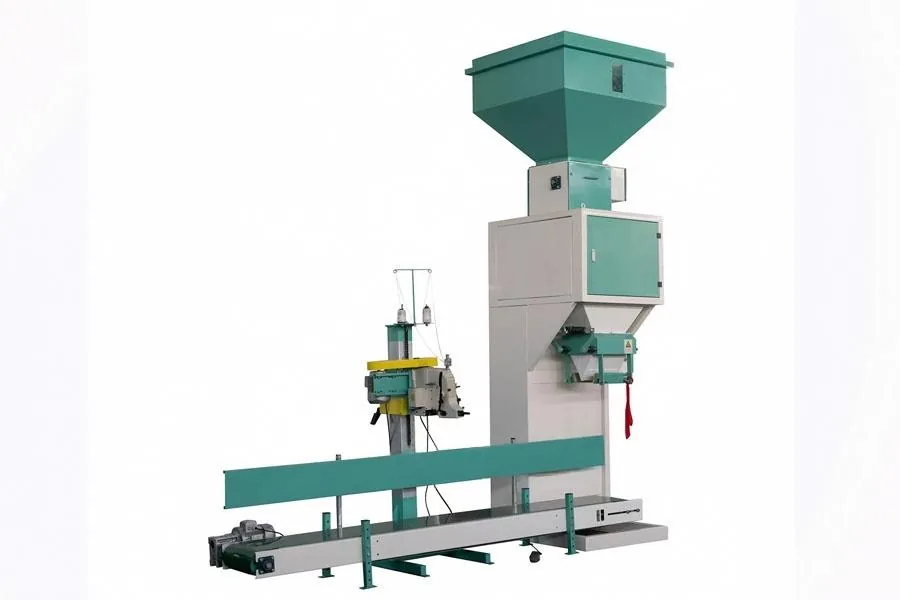
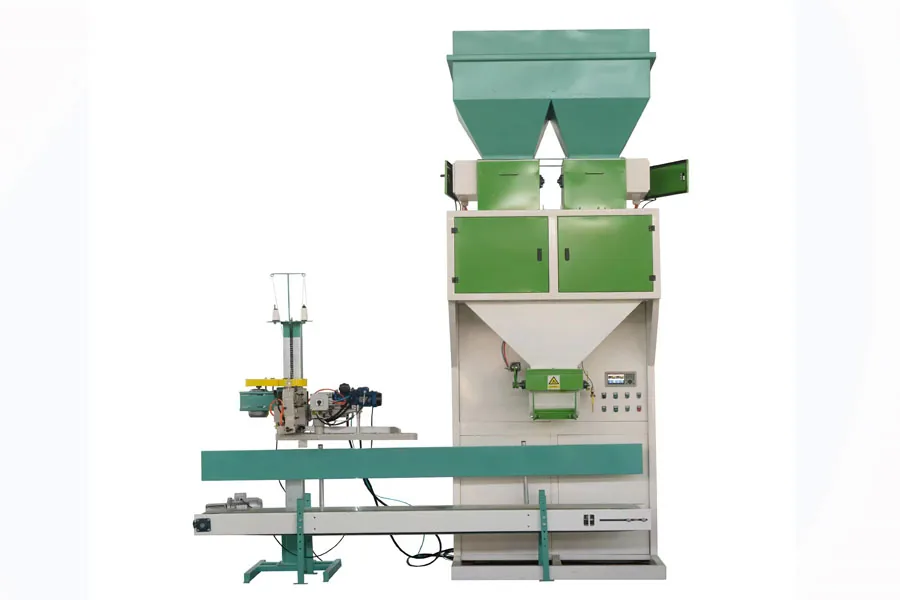
The range is four weighing heads on the same frame: a belt-feed head with no hopper, a single hopper, a double hopper that weighs the next bag while the current one fills, and a compact double hopper for a low ceiling. They share the load cell, the controller, the 304 stainless contact parts, the 3 m bag conveyor and the bag closing machine. What changes is the hopper arrangement, and with it the bags per hour.
None of this is specific to feed. The same pellet packing machine closes the bag on a wood pellet line and on a biomass pellet line, and on the large ones — 2 to 10 t/h — the bag count, not the capacity, is what decides the model. There is a section on that further down.
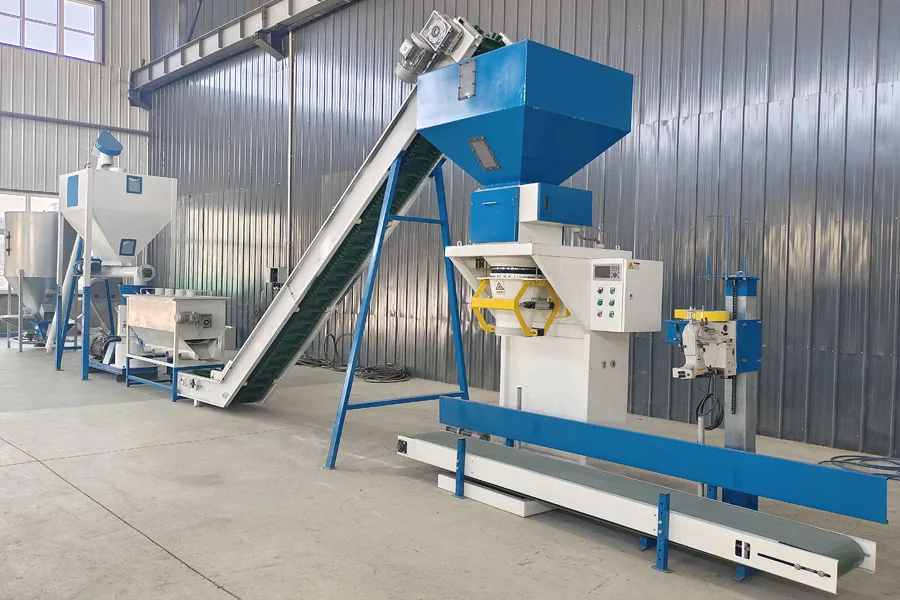
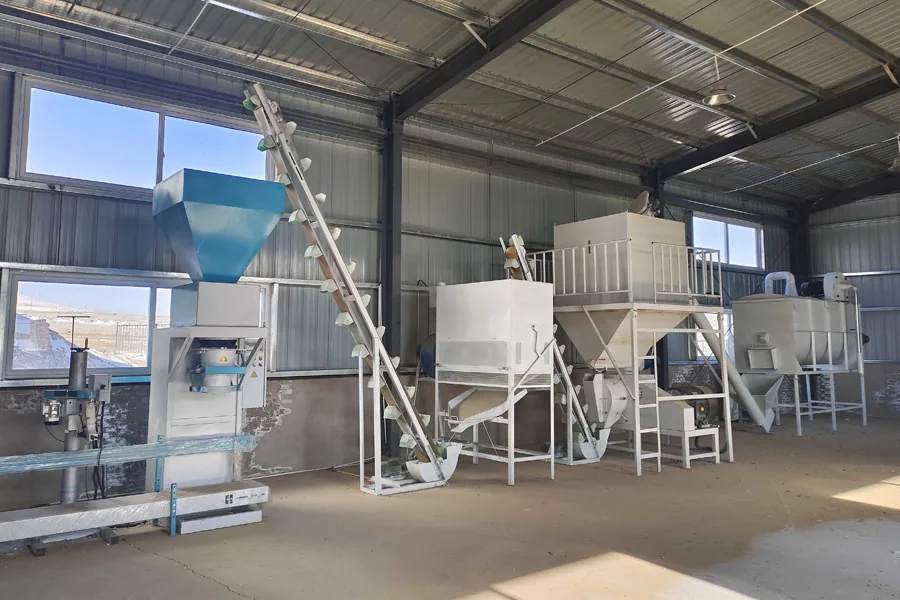
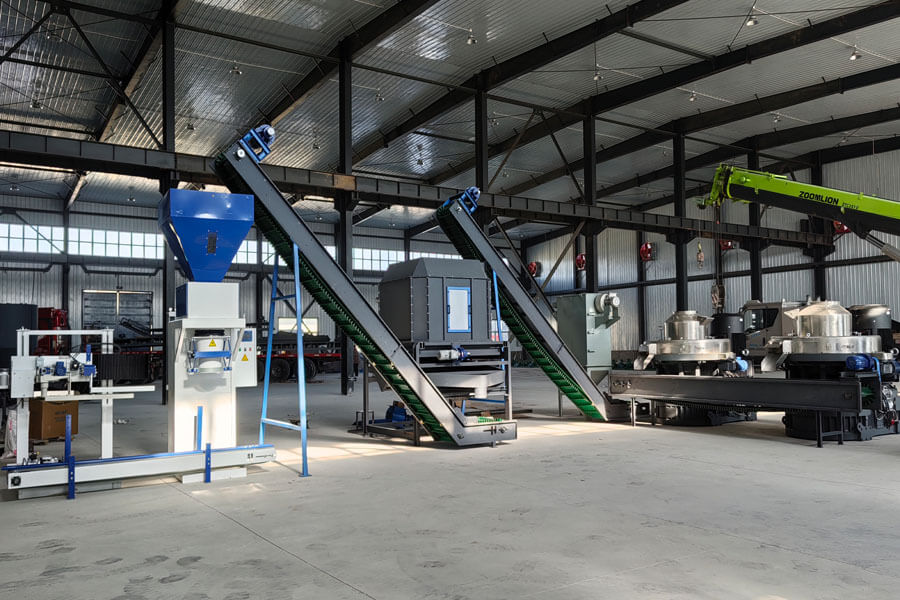
Four weighing heads, 200 to 800 bags an hour
All four do the same job at four different speeds. Choosing between them is a question of bags per hour and floor space, not of build quality — the frame, the load cell and the controller are the same on all four.
| Model | Weighing head | Bag weight | Speed | Accuracy |
|---|---|---|---|---|
| DCS-Z-W-50 | Belt feed, no hopper | 15–50 kg | 200–300 bags/h | 0.2 class |
| DCS-Z-S-50 | Single hopper | 10–50 kg | 300–400 bags/h | ±0.2 % |
| DCS-Z-D-50 | Double hopper | 15–50 kg | 600–800 bags/h | 0.2 class |
| DCS-Z-D-50 compact | Compact double hopper | 15–50 kg | 600–800 bags/h | 0.2 class |
Speeds are for free-flowing pellets in the middle of the bag range, with the bag conveyor and the bag closing machine keeping up. The double hopper reaches 600–800 bags an hour because it weighs the next bag while the current one is filling; a single hopper cannot, because it only starts weighing once the bag has left the clamp. The compact double hopper carries the same model code as the standard one — the difference is the frame height, so measure the ceiling before you order it.
Tell us the bag and the bags per hour
Four answers size a pellet packing machine: the bag weight, the bags an hour you need, what the product is, and what you have above the pellet packing machine. Everything else — hopper arrangement, conveyor length, sewing head or sealer — follows from those.
What happens after you send this
We answer with the weighing head, the conveyor length, the closing method and a price. If a single hopper will do the job we will say so rather than sell you the double.
Reply within one working day. No obligation.
The pellet packing machine, part by part
Everything on the frame does one of five things: hold the material, weigh it, hold the bag, move the bag, close the bag. Knowing which part does which is most of the maintenance.
-
Buffer hopper
Sits above the weighing head and holds enough pellets to keep the head fed between two bags. Too small and the head starves every few minutes; too large and the pellets sit in it long enough to pick up moisture. On most feed pellet lines it is filled from the pellet cooler or from a small bin above.
-
Weigh hopper and load cell
The weigh hopper hangs on a stainless steel load cell, and that load cell is the accuracy of the whole pellet packing machine. It is stainless because feed arrives damp and salty, and a corroded cell drifts rather than failing — which shows up as bags that are consistently 200 g heavy and nobody can explain why.
-
Two-speed feed gate
A large gate opens for the bulk of the bag and a small one dribbles the last kilo in. The dribble is what lets the head be fast and accurate at the same time: the bulk feed is cut by weight, not by a timer, and the gate closes when the cell reads the setpoint.
-
Bag clamp
Twin pneumatic cylinders pull two belts together on the bag mouth, which suits woven polypropylene. A jaw clamp is the alternative for paper or for a bag with a stitched lip. The clamp is also the dust seal — a bag that is not held square leaks product at the mouth for the whole fill.
-
Bag conveyor
3 m as standard, 4 m on request. The belt runs at a fixed speed and starts when the clamp releases, so the bag is already moving before the next one is clamped. Length is really a question of how much time the operator has to straighten the bag before the sewing head.
-
Bag closing machine
A sewing head on a column, with the thread stand above it. It sews a double row through the bag mouth as the bag passes. A heat sealer replaces it when the bag has a coated inner liner and the customer wants a sealed top rather than a stitched one.
-
Control cabinet
Sealed, because a bagging area is a dusty area. It carries the weight setpoint, the bag count, the running total and the fault display, and it has a printer port for the shift total — which is the number the feed mill manager actually wants.
-
Dust take-off
A connection on the buffer hopper and at the bag clamp to a small filter. Pellets drop cleanly; crumb and mash do not, and an unvented bagging point puts a visible haze in the shed within a week.
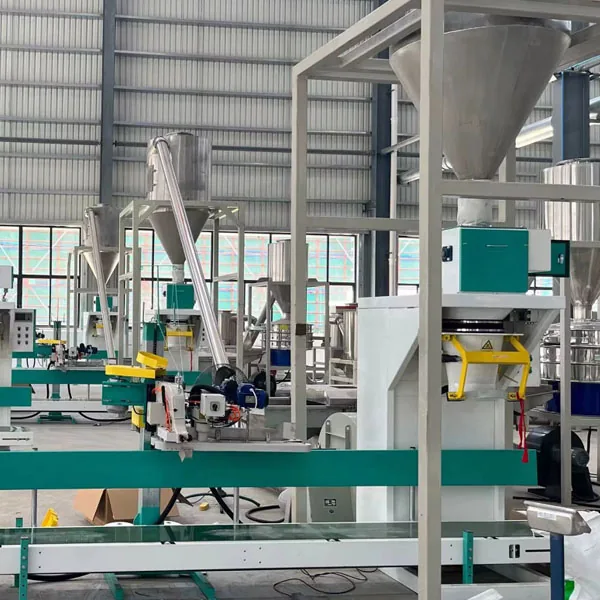
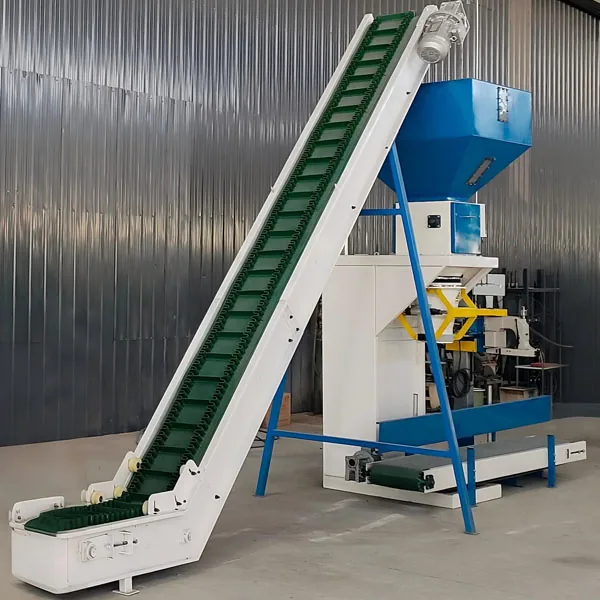
One bag, one cycle, about nine seconds
The cycle does not change. What the operator changes is the bag weight, and the bag weight is what sets the throughput.
Clamp
The operator slips the bag mouth over the spout and the twin-cylinder clamp closes on it. From here the pellet packing machine runs on its own until the bag is released.
Bulk feed
The large gate opens and the weigh hopper fills fast. The controller is counting weight, not seconds, so a slow-moving product simply takes longer and the bag still comes out right.
Dribble
At roughly 90 % of the setpoint the large gate shuts and the small one takes over. This is the part that decides the accuracy, and it is the part that suffers first when the air supply is wet.
Release
The weigh hopper dumps into the bag, the clamp opens and the bag conveyor starts in the same movement. The bag is out of the station before the next weigh begins.
Close
The sewing head sews the mouth as the bag passes it. The operator only guides the bag; the head does the rest.
Nine seconds a bag is 400 bags an hour, which is the single-hopper head at its rating. That arithmetic is worth doing before you choose a head, because it is the only way to know whether you are buying the right one. At 50 kg a bag, 400 bags an hour is 20 t/h — far more than most feed pellet lines need, which is why the single hopper is the right answer for a 1 to 5 t/h feed pellet line. At 10 kg a bag the same head is 4 t/h, and a feed pellet line making 5 t/h of chick starter in 10 kg bags is already short.
Two things break the nine seconds. The first is a bag that will not sit square on the clamp, which is usually a bag that has been stored flat and has to be opened by hand. The second is air: a dribble gate that is sluggish because the filter-regulator is full of water adds a second to every bag, and a second a bag is 40 bags an hour at this speed.
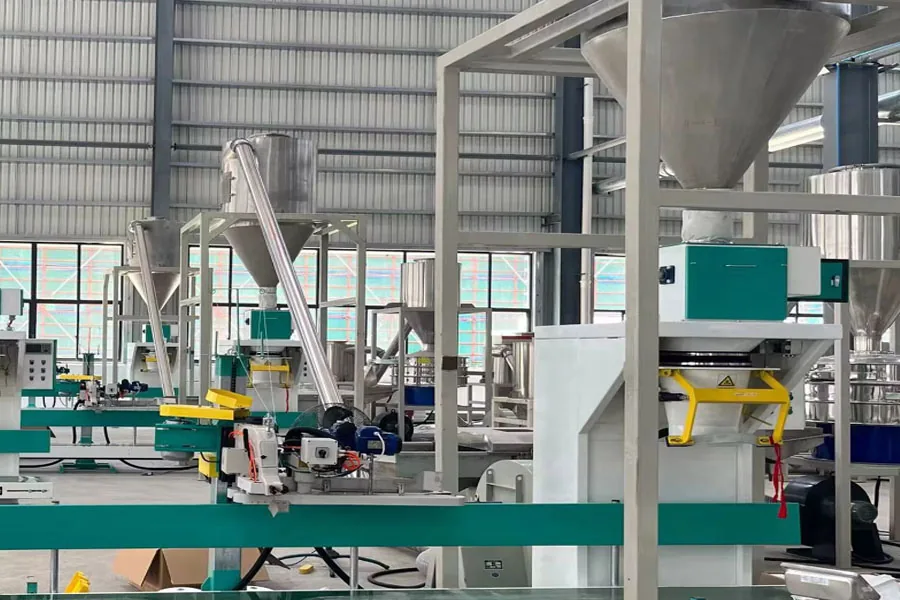
What every pellet packing machine in the range shares
The four heads differ in hopper arrangement. Everything below is common to all of them, and it is the part worth checking line by line against another quotation.
| Item | Standard | Why it is set that way |
|---|---|---|
| Weighing range | 10–50 kg on the single hopper; 15–50 kg on the belt-feed and double-hopper heads | 25 kg and 50 kg are the two sizes most feed plants run; 10 kg is the retail bag |
| Accuracy | 0.2 class — ±0.2 % of the bag weight | ±100 g on a 50 kg bag. Ask any supplier what class, not what percentage |
| Weighing element | Stainless steel load cell under the weigh hopper | Feed arrives damp and salty, and a corroded cell drifts without failing |
| Contact parts | 304 stainless steel — buffer hopper, chutes, weigh hopper, clamp faces | The parts that see product are the parts that rust |
| Feed control | Two-speed gravity feed, bulk then dribble | The dribble is what keeps the accuracy at speed; one gate is either slow or inaccurate |
| Bag clamp | Twin-cylinder belt clamp; jaw clamp on request | Belt for woven polypropylene, jaw for paper or a stitched lip |
| Bag conveyor | 3 m standard, 4 m on request | Length sets how long the operator has to straighten the bag before the sewing head |
| Bag closing | Sewing head on a column with a thread stand; heat sealer on request | Stitched for woven bags, sealed for coated liners |
| Power | 1.0 kW on the single-hopper head | The double-hopper head runs a second feed motor for the second hopper |
| Air | 0.4–0.6 MPa, about 1 m³/h | Dry air. A wet supply is the usual cause of a sluggish dribble gate |
| Height | 2,600 mm under the weighing head | Measure the ceiling and the clearance over the bag conveyor before the frame is welded |
| Control | PLC with weight setpoint, bag count, total and printer port | The total is the number that reconciles with the weighbridge |
The 1.0 kW and the 2,600 mm are the single-hopper figures. The double-hopper head is taller because of the second hopper — ask for the general arrangement drawing before the floor is poured.
Which head is the right one is a question of what your week looks like, not what the brochure says.
| Weighing head | Right when | Wrong when |
|---|---|---|
| DCS-Z-W-50 belt feed | One free-flowing grade, coarse bags, and the lowest cost per bag | You change bag weight through the week — with no hopper there is nothing to pre-weigh |
| DCS-Z-S-50 single hopper | Up to 400 bags an hour, one operator, several bag weights | You are above 400 bags an hour; the head waits for each bag to leave |
| DCS-Z-D-50 double hopper | 600 bags an hour or more, and long runs of a single grade | Floor space is tight, or the product bridges in a second hopper |
| DCS-Z-D-50 compact | The same speed under a low ceiling or beside an existing conveyor | You need 50 kg at the top of the range — check the cycle time before ordering |
The honest summary: the single hopper is the right pellet packing machine for most plants under 5 t/h, and the double hopper only pays for itself when the bag count is genuinely above 400 an hour for most of the shift.
The bag decides more than the pellet packing machine does
Two plants with the same head and the same capacity can differ by 200 bags an hour, and the difference is the bag.
A 50 kg woven polypropylene bag with a PE liner is the default in feed. It is cheap, it stands up on a pallet, and the sewing head closes it in about a second. A 25 kg bag of the same construction runs at the same cycle time — the weighing head does not care — so halving the bag doubles the bag count and halves the capacity per hour. That is the single biggest reason a pellet packing machine that looks oversized on paper turns out to be too small in practice.
What does cost time is a bag that will not open. Bags delivered in a compressed bale have to be loosened before the operator can get a hand inside, and a bag opened by hand takes two or three seconds longer than one that falls open. A feed mill running 800 bags an hour buys bags on a pallet for that reason alone, and it is worth more than the difference in the bag price.
| Bag | Closing method | Where it fits |
|---|---|---|
| 50 kg woven PP, PE liner | Sewn, double row | Bulk feed, fertiliser, sawdust briquettes — the standard export bag |
| 25 kg woven PP, PE liner | Sewn, double row | Retail and distributor bags; doubles the bag count for the same capacity |
| 10 kg woven PP or paper | Sewn or heat sealed | Chick starter, fish feed, smallholder bags |
| 50 kg paper, stitched lip | Sewn with a jaw clamp | Where the customer will not accept plastic |
| Coated liner, sealed top | Heat sealer instead of a sewing head | Moisture-sensitive product, and any bag that has to be airtight |
Tell us the bag when you ask for a price. The clamp, the sewing head and the conveyor height are all set for it, and changing bag type later is a change of hardware rather than a setting.
Last in the feed pellet line, first in the complaint
By the time product reaches the pellet packing machine it has been ground, mixed, pressed, cooled and screened. Nothing downstream can fix it, and everything upstream is judged by the bag that leaves.
The pellet packing machine sits after the pellet cooler and the screener, usually under a small buffer bin. The bin matters more than it looks. A pellet packing machine runs in bursts and a pellet cooler runs continuously, so the bin absorbs the difference. Too small and the head starves every few minutes; too large and the pellets sit long enough to take up moisture from the air, and the bag weight starts to drift as the product cakes in the hopper.
The second thing to get right is the drop. Pellets falling a metre and a half into a weigh hopper break; pellets falling 300 mm do not. Where the bin has to sit high because of the ceiling, the chute is worth designing with a baffle or a small cascade rather than a straight pipe — the fines you make at the bagging point are the ones the customer sees first when the bag is opened.
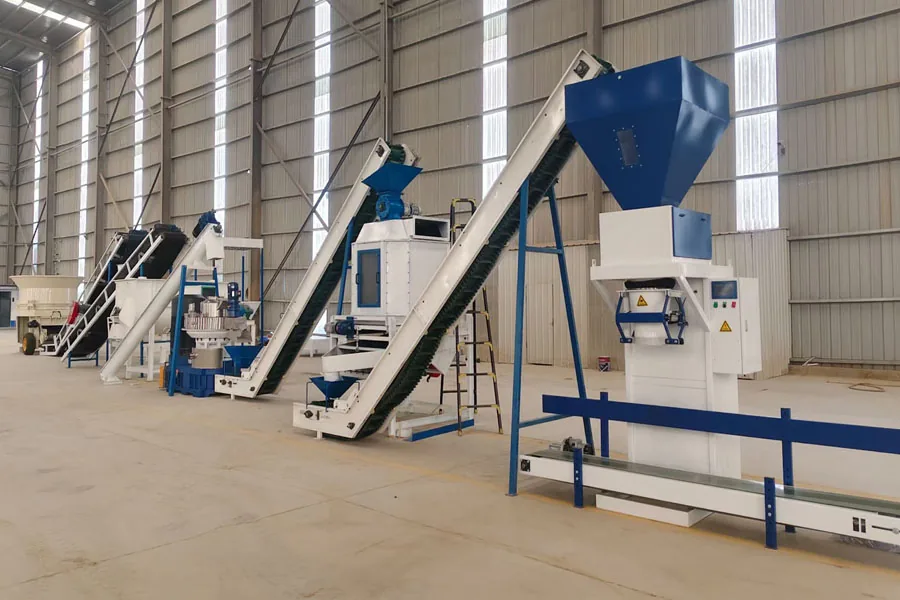
There is an order-of-operations point that catches people adding a pellet packing machine to an existing feed pellet line. The bagging point is where the whole feed pellet line’s dust ends up, and a bagging area without extraction will have product on every surface within a shift. The dust take-off on the buffer hopper is not optional in a shed without general ventilation.
Where the pellet packing machine is bought with the feed pellet line, we size it from the mill capacity, divide by the bag weight, and add 20 % for the peak. A feed pellet line averaging 3 t/h in 25 kg bags needs 120 bags an hour on average and about 145 at peak — the single hopper comfortably, the double hopper with room to spare.
The same pellet packing machine, on a much bigger biomass pellet line
A feed pellet line is usually 1 to 5 t/h. A biomass pellet line is often 2 to 10, and the pellet packing machine at the end of it is the same machine — but it is specified differently, and the differences are worth knowing before you price one.
On a wood pellet line the pellet packing machine still comes after a pellet cooler and a screener, but it is usually fed from a silo rather than straight off the pellet cooler. A large biomass pellet line runs continuously and the bagging station works in bursts, and a silo is cheaper than a buffer big enough to swallow the difference. The pellet packing machine then draws from the silo at its own pace, and the biomass pellet line never waits for a bag change.
Bag sizes are different too. Wood pellets are sold in 15 kg retail bags and 25 kg export bags far more often than in 50 kg, because they go to stoves and small boilers rather than to a feed mill’s own customers. The single-hopper head covers 10–50 kg, so one pellet packing machine does the whole range without a change of hardware — but at 15 kg the bag count triples for the same capacity, and that is where the head gets chosen.
-
Bag count, not capacity
A 5 t/h biomass pellet line filling 25 kg bags is 200 bags an hour. The same biomass pellet line filling 15 kg bags is 333. The capacity has not moved; the pellet packing machine has to. Size it on bags an hour at the smallest bag you sell, not on the average.
-
Abrasion
Wood pellets are harder and more abrasive than feed pellets. The clamp faces and the chute liners wear faster, so a pellet packing machine going onto a biomass pellet line gets a thicker liner and a hardened clamp face. It is the same frame with different consumables.
-
Dust
Biomass pellets are drier than feed pellets, so the bagging point makes more dust. The dust take-off on the buffer hopper is not optional on a wood pellet line, and it is usually ducted into the biomass pellet line’s own filter rather than a separate one.
-
Pellet temperature
Wood pellets leave the pellet cooler hotter than feed pellets and hold the heat longer. Give the pellet packing machine a longer conveyor run or a small bin between the pellet cooler and the bag, so the pellets are cool before they go into a sealed bag. A warm pellet fogs the inside of a coated liner and the customer sees it as condensation.
-
Room to grow
On a large biomass pellet line the bagging station is often the last thing built and the first place capacity runs out. If the biomass pellet line is going to grow, buy the double hopper now — retrofitting one later means a new frame, not a new hopper.
If the pellets are going into 500 kg or 1,000 kg jumbo bags rather than 10–50 kg sacks, this is the wrong machine and we will say so. A pellet packing machine of this type stops at 50 kg; a jumbo bagging station is a different piece of equipment.
What we change on a standard pellet packing machine
The frame, the load cell and the controller are standard. Everything around them is set by your shed, your bag and your product.
-
Bag weight range
The weigh hopper and the gate are set for the range you actually sell. A head set up for 50 kg will do 25 kg, but the dribble is coarse for it; a head set up for 10 kg will not do 50 kg at all.
-
Conveyor length and direction
3 m or 4 m, straight out or turning. A station that has to turn is a station with a second conveyor, and it is worth saying so before the frame is welded.
-
Closing method
Sewing head or heat sealer, and on a sewing head, single or double row. The bag decides, so send us the bag.
-
Hopper volume
Sized on how often the mill delivers, not on the bag. A feed pellet line that runs the pellet mill in batches needs a bigger buffer than one that runs continuously.
-
Contact material
304 stainless as standard, 316 where the product is heavily salted or the wash-down is aggressive.
-
Air and electrics
Voltage and frequency to your supply, and a filter-regulator on the air if the compressor is a long way from the pellet packing machine.
-
Dust extraction
A take-off point at the buffer hopper and at the clamp, sized to whatever filter you already have on the feed pellet line.
-
Controls language
The controller display and the manual in English, Spanish, French, Russian or Arabic.
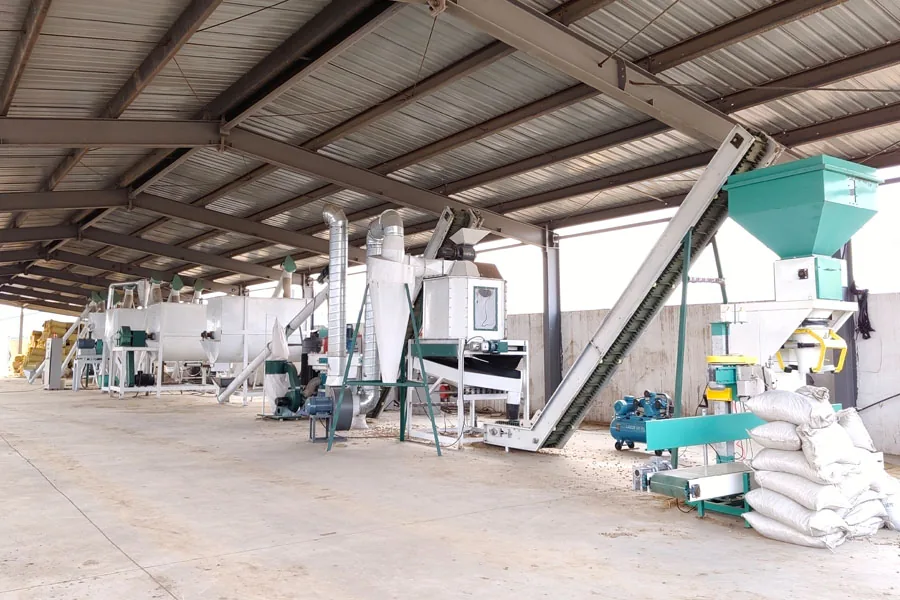
What feeds the pellet packing machine
A pellet packing machine is the last machine in a feed pellet line and it depends on every one before it. These are the three that decide what arrives at the bag.
Load cells, belts, sewing needles and clamp faces are on the spare parts page. Tell us the model and we will send the right set — a drifting bag weight is usually a load cell, and a bag that will not close is usually a needle or a worn clamp face.
Tell us what the pellet packing machine has to do
Bag weight, bags an hour at peak, the product, and the height you have above the station. We answer with the weighing head, the conveyor length and a price.
Your details are not shared. One follow-up, no mailing list.
The pellet packing machine running, and the feed pellet lines it sits at the end of
The first two clips are the pellet packager itself — one full cycle, then a short phone clip from the floor. The rest are complete feed pellet lines where the bagging point is the last thing you see.


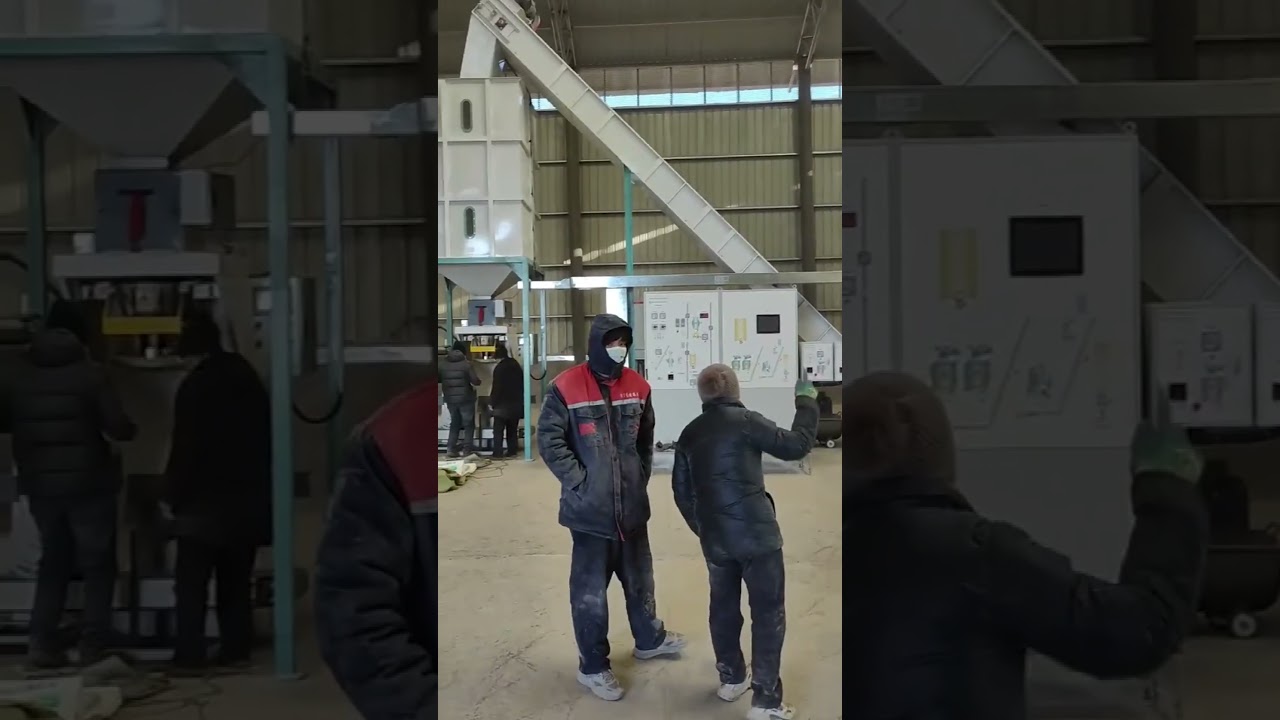
More test runs, shipping records and installation footage on our YouTube channel, and the whole Feed Processing Machines playlist.
What buyers ask before ordering a pellet packing machine
What does a pellet packing machine do?
It weighs a set weight of pellets into a bag, holds the bag open while the weigh hopper empties, and closes the top. Three jobs on one frame: a weighing head, a bag clamp and a bag closing machine, with a bag conveyor between the clamp and the closing machine.
How accurate is the bag weight?
0.2 class, which is ±0.2 % of the bag weight — ±100 g on a 50 kg bag and ±50 g on a 25 kg one. The head reaches that because it weighs rather than times: a bulk feed, then a dribble for the last kilo, then a cut-off when the load cell reads the setpoint. A single-gate head that fills on a timer cannot hold a class like that at speed.
Single hopper or double hopper?
Single up to about 400 bags an hour. Double above that, because the double hopper weighs the next bag while the current one is filling and never waits for a bag to leave the clamp. Below 400 bags an hour the second hopper is money spent on speed you will not use.
How many bags an hour do I need?
Take the mill capacity in t/h, divide by the bag weight, and add 20 % for the peak. A 3 t/h feed pellet line in 25 kg bags needs 120 bags an hour on average and about 145 at peak. A 1 t/h feed pellet line in 50 kg bags needs 20 bags an hour, and almost any head will do it.
Can one pellet packing machine do 10 kg and 50 kg bags?
Yes on the single-hopper head, which covers 10–50 kg. The gate and the controller are set for the range, and the dribble is finer at the bottom of it. The belt-feed and double-hopper heads start at 15 kg, so if 10 kg bags matter to you, say so at the quotation stage.
Sewing head or heat sealer?
Sewn for woven polypropylene bags, which is most feed. Heat sealed for a bag with a coated inner liner where the top has to be airtight. The sewing head sews a double row as the bag passes and needs a needle and thread change about once a shift on continuous running.
What products will it handle?
Any free-flowing granule: feed pellets, crumb, mash, sawdust pellets, fertiliser, seed, plastic granule. The two that need care are mash, which bridges and dusts, and anything with a high molasses content, which is sticky enough to build up on the clamp faces.
What air supply does it need?
0.4–0.6 MPa at about 1 m³/h, clean and dry. The bag clamp and the feed gates are pneumatic, and wet air is the most common reason a dribble gate goes sluggish and the bag weight starts to wander. Fit a filter-regulator at the pellet packing machine even if the compressor has a dryer.
How much height and floor space?
2,600 mm under the weighing head on the single hopper, and roughly 3 m by 1.5 m of floor for the pellet packing machine plus the bag conveyor. The double hopper is taller because of the second hopper, so ask for the general arrangement drawing before the floor is poured.
What maintenance does it need?
Daily: check the bag clamp faces and blow down the load cell area. Weekly: drain the filter-regulator and check the sewing head tension. Monthly: check the conveyor belt tracking and the gate seals. The load cell itself needs nothing — if the weight drifts, look at the air and the seals before you look at the cell.
How long is delivery, and how do I pay?
20–30 working days after the deposit for a single-hopper pellet packing machine, 30–40 for a double hopper. Payment is TT with 40 % in advance and the balance before delivery. The bag conveyor and the sewing head ship in the same crate as the pellet packing machine.
Send the bag weight and the bags per hour
Bag weight, bags an hour at peak, the product and the height you have above the station. Those four answers choose between the four weighing heads and fix the conveyor, the clamp and the closing method.
- Emailinfo@pelletmachines.net
- WhatsApp+86 186 0385 1787
- HoursMon–Sat, 08:00–20:00 (GMT+8)
A photo of the bag you use, and one of the space where the pellet packing machine has to go, saves a round of questions. If you are replacing one, send the model plate of the old pellet packing machine.
What happens after you send this
We answer with the weighing head, the conveyor length, the closing method and a price, and with the bag weight range we would set the gate for. If a single hopper will do the job we will say so rather than sell you the double hopper.
Your details are not shared. One follow-up, no mailing list.