Organic Fertilizer Pellets: Composted, Cool, 3–5 mmthe one pellet where the die plate’s heat is the enemy of the claim
A fuel pellet is pressed as hard as the die plate will allow, because density is money. A fertilizer pellet is pressed just hard enough to hold its shape, because everything that makes it worth buying — the organic matter, the declared nutrients and, on some bags, the living bacteria — is damaged by the same heat that makes a fuel pellet good. This page is the specification, the six materials that press, and the die plate that keeps the temperature down.
- Composted first, and proved — immature compost re-heats in the bag
- 15–18 % into the die plate, under 12 % into the bag
- Under 60 °C at the die plate if the bag claims live bacteria
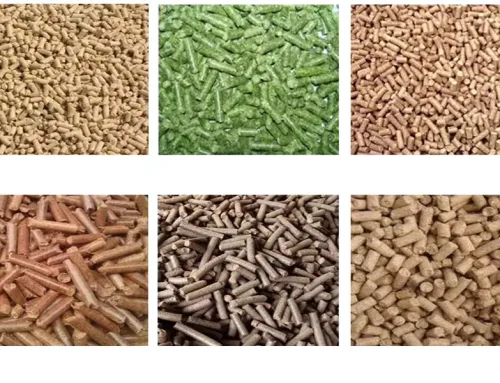
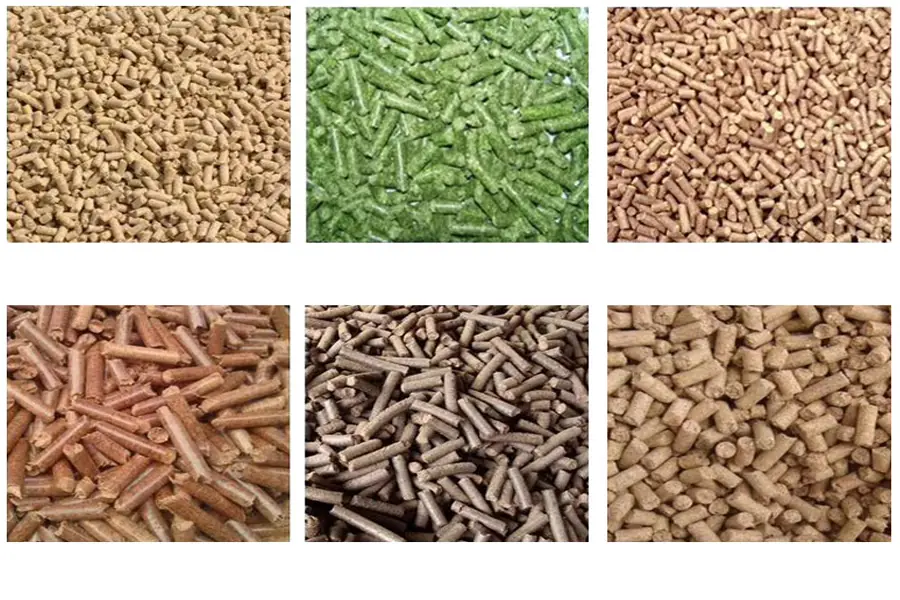
- 3–5 mm, 8–15 mm long, 650–750 kg/m³, fines under 2 %
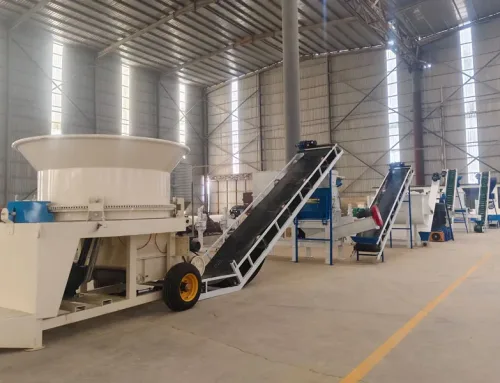
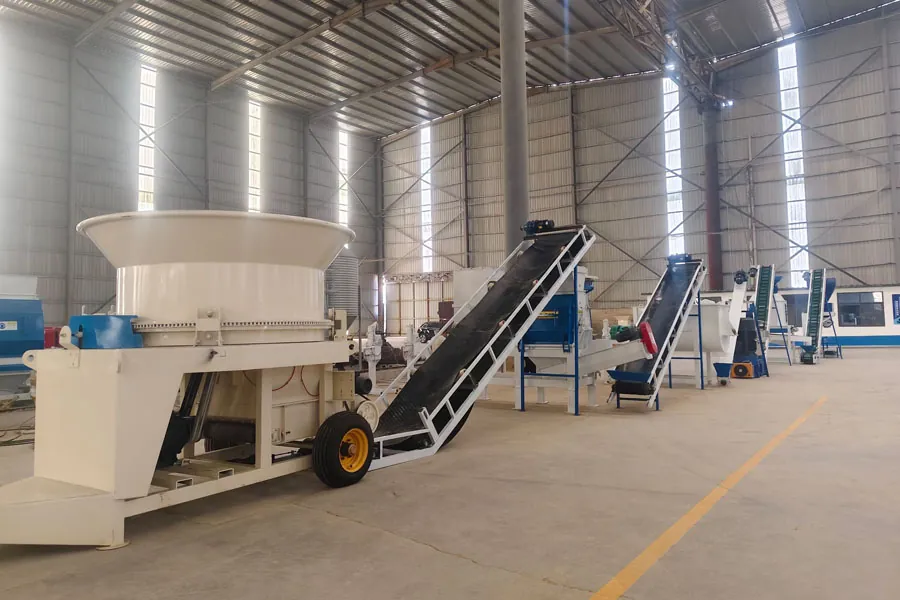
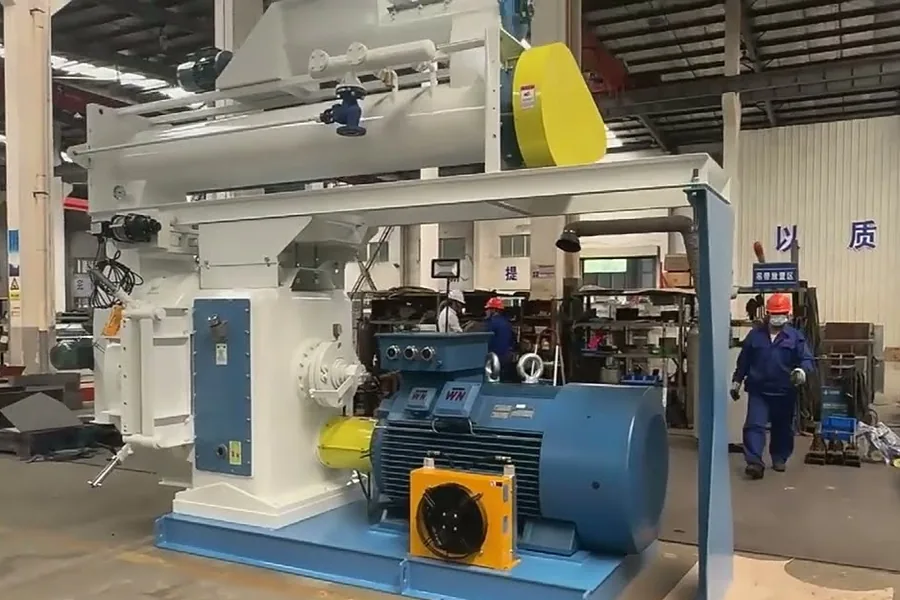
Composted manure, green waste, mushroom substrate and digestate all press · Moisture, die plate and temperature reported with the model · Flat die pellet mill to 800 kg/h, vertical ring die wood pellet mill above
The short answer
A fertilizer pellet and a fuel pellet come off the same frame and are specified against each other. One number explains why: what happens to the material inside the die plate.
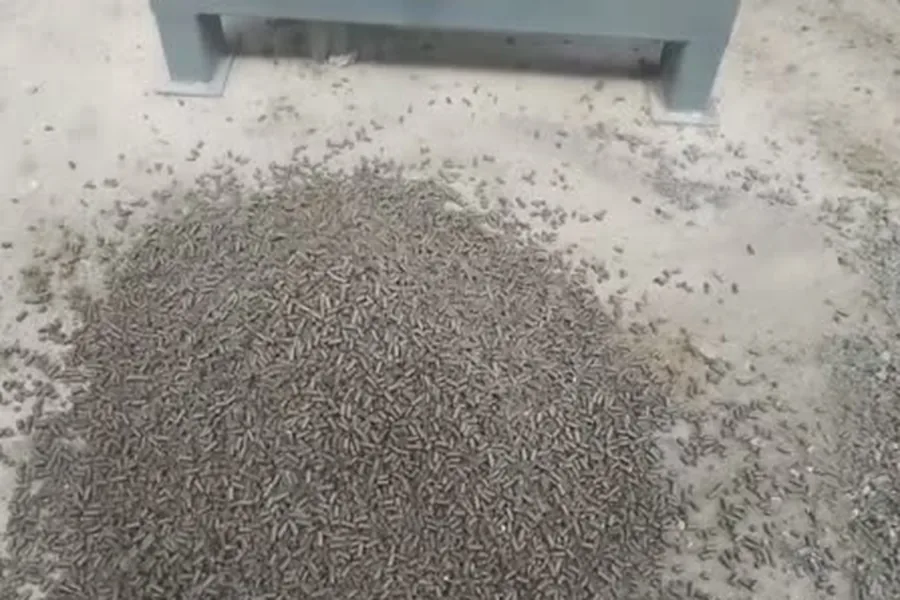
An organic fertilizer pellet is composted manure or plant waste, ground to 3 mm and pressed on a flat die pellet mill at 15 to 18 % moisture, on a 1:5 to 1:6 die plate, then cooled and bagged under 12 %. Three to five millimetres across, 8 to 15 mm long, 650 to 750 kg/m³, fines under 2 %. Every one of those numbers is a reaction to what the buyer does with the bag, and the first one is the one that catches everybody: the material has to be composted before it is pressed, not after. A pellet made from raw manure keeps composting inside the bag, and a bag that keeps composting swells, sweats and grows mould on the top layer in a warehouse at 30 °C. That is a return, and it is the most common one on this product. The second reaction is heat. A fuel producer wants the die plate as hot as it will run, because heat is density and density is megajoules. On this product the same heat cooks the organic matter and, on a bag that claims live bacteria, kills the thing the customer paid for. So the die plate is cut shorter, the moisture is kept higher and the temperature at the die plate becomes the number the whole build is arranged around. That is the inversion on this page, and unlike the other applications it is not about the material — it is about how hard you are allowed to press it.
The moisture bands and the die plate ratios are what we press to and they move with the material: composted cattle manure is not the same feedstock as dewatered digestate, and the table below gives both. The temperature ceiling is the one figure on this page that is not ours — it comes from the biology, and it is the reason a fertilizer line is built differently from a fuel line. The die plate life of 250–400 hours is ours, and it is shorter than a fuel plate’s because manure arrives with sand in it. A 20 kg sample of your compost settles the moisture, the grind and the binder question better than any table, and it is the only way to find out whether the compost is actually finished.
Six feedstocks that press into fertilizer pellets, and what each one needs
All six run on the same frame. What separates them is how much water they arrive with, how much grinding they need and whether they will hold a pellet without help — and those three decide the die plate, the rotary drum dryer and the binder.
| Material | Moisture into the die plate, and into the bag | What it needs | Whether to make it |
|---|---|---|---|
| Composted cattle manure the default |
15–18 % into the die plate, under 12 % into the bag. It arrives at 25–35 % off the compost pad, so it is dried once and pressed once | A 3 mm grind and a 1:5 to 1:6 die plate. Binds on its own — the fibre in the compost is the binder | The material to build a production line around. Cheap, available on any livestock farm, and the only one on this table that needs nothing bought in |
| Composted poultry litter the strongest |
16–20 % into the die plate. Poultry litter is drier off the belt than cattle manure and wetter after composting, so the rotary drum dryer is sized on the water rather than on the output | A 1:5 to 1:6 die plate, and a full compost cycle before it goes anywhere near the die plate. Grit in litter is what wears a die plate out | The highest nutrient analysis on this table and the best price per tonne. Make it only if the compost is genuinely finished — raw litter burns roots and the complaint arrives a season later |
| Green waste compost the volume product |
16–20 % into the die plate. Woody compost holds water and gives it up slowly, so it needs longer in the rotary drum dryer than manure at the same moisture | A finer grind — 2–3 mm — and 3–5 % bentonite. On its own the woody fraction will not hold a pellet | The cheapest feedstock in most markets and the lowest analysis. It is what a municipal or contract composting operation presses, and the bentonite is a cost line in the sheet |
| Spent mushroom substrate the light one |
18–22 % into the die plate, and it arrives at 60–65 % water, so it is dried hard before it will press at all | A 1:4 to 1:5 die plate — shorter than manure, because this material is the wettest on the table — and a rotary drum dryer sized on a lot of water for a little product. Bulk density is low, so the bags are big for their weight | Worth it where a mushroom farm is next door and the substrate is free. The rotary drum dryer, not the pellet mill, is the capital cost |
| Dewatered biogas digestate the difficult one |
20–25 % after mechanical dewatering, and it is sticky rather than wet. The bag target does not move: under 12 % | A 1:4 to 1:5 die plate, a rotary drum dryer ahead of it and a die plate budget that assumes abrasion. Salt content is high, so the analysis has to be declared rather than assumed | Make it if the digestate is already on site and currently costing money to dispose of. It is the one material here where the honest answer is sometimes no |
| Food waste compost the one to check |
16–20 % into the die plate. Oil and salt both climb in food waste compost and neither dries out of it | A 3 mm grind, a 1:5 die plate, and a laboratory analysis before the bag copy is written. Salt and oil both count against an organic certification | Possible, and the certification is the constraint rather than the process. Check what the certifier allows in the input before buying anything |
The row that is missing from this table is the one that decides whether the product is worth making at all: whether the compost is finished. A compost is finished when the pile has come back to ambient temperature, the carbon to nitrogen ratio is down to 12–15:1 and a sealed jar of it does not dome its lid after a week at 30 °C. Every material on this table can be pressed into a pellet that looks right and re-heats in the bag, and no amount of die plate tuning fixes it. Testing the compost costs a jar and a week; skipping the test costs a pallet.
Four columns will not fit a phone. Swipe the table sideways for the moisture band and the verdict.
The moisture column is the one that sets the capital cost, and it is the column most often read as a single number when it is two. Water into the die plate is a process setting; water into the bag is a product specification. Cattle manure arrives at 25 to 35 % off the pad and has to come down to 15 to 18 % before the die plate will take it, and then down again to under 12 % after cooling — which means a rotary drum dryer sized on the water an hour, not on the t an hour. A producer who buys the pellet mill first and the rotary drum dryer second usually finds the drying side is the larger invoice.
The binder column is the one that changes with the market rather than with the material. Composted manure binds on its own because the fibre in it acts as its own binder, and a bag that says organic fertilizer can carry that pellet with nothing added. Green waste compost will not, and bentonite at 3 to 5 % fixes it — but bentonite has to be on the certifier’s list of permitted inputs, and that is a question for the certification body rather than for the supplier. The binder page covers what each binder does to the pellet and to the analysis.
One frame, two products, and the ten rows that point in opposite directions
Read the first row and the rest follows. A fuel pellet is judged on the energy it releases and a fertilizer pellet on what the soil gets, and the die plate is asked to do two different jobs.
| Dimension | Organic fertilizer pellet | Fuel pellet |
|---|---|---|
| What the buyer judges it on | The declared analysis and the organic matter, then whether it survives a spreader. On a bag with a biology claim, the plate count on the finished pellet | Megajoules per kilo and ash. Nobody opens the bag to look at the pellet |
| What the die plate is for | Shape, not density. The pellet has to hold together through a bag, a pallet and a spreader, and nothing more | Density. Every extra kilogram per cubic metre is energy in the same volume of hopper |
| Heat at the die plate | The enemy. Under 60 °C if the bag claims live bacteria, and cooler is better even when it does not | The tool. A die plate running at 80–90 °C is doing its job |
| Moisture into the die plate | 15–18 %, and it is the coolant as much as the binder | 12–15 %, and lower is better because water is weight nobody pays for |
| Moisture in the bag | Under 12 %. Above that it cakes into a block and the block is a return | 8–10 %, and the buyer accepts the top of that band if the price is right |
| Die plate ratio | 1:5 to 1:6 on composted manure, shorter still on wetter material, and cut to hold the temperature down | 1:6 to 1:8 on wood, and the longest channel the motor will pull |
| Binder | Normal, and often necessary — bentonite, molasses or lignin, subject to the certifier’s list | None in the certified grades, though a pressing lubricant is common in an industrial pellet |
| The headline number | Organic matter, then N-P-K. Both are declared and both are checked by a laboratory | Net calorific value and ash, checked against a certificate |
| The bag | 25 kg or 40 kg in a woven or paper sack, or a one-tonne bulk bag. 25 kg is 40 bags to the tonne | 15 kg printed retail, or a bulk blower load into a silo |
| The mistake | Pressing to fuel density because a dense pellet looks like a better product. It is a hotter die plate, a dead biology claim and a shorter die plate life for nothing | Pressing wet material and blaming the die plate for the fines |
The heat row is the one that separates the two builds, and it is invisible in a bag until a customer sends a plate count back. A fertilizer pellet pressed at fuel settings comes off the die plate at 80 to 90 °C, which is exactly right for wood and exactly wrong here: the organic matter is scorched, the moisture flashes off and the pellet comes out dense and glassy. It looks like a better pellet and it is a worse product. The fix is not a slower motor — it is a shorter die plate and a wetter material, and those two together are what hold the temperature under 60 °C.
Three columns will not fit a phone. Swipe the table sideways for the fuel pellet column.
The density row is where a producer with a fuel background loses money twice. A dense fertilizer pellet weighs more per litre, so it ships cheaper, which is a real saving; and it costs a die plate that wears faster, a motor pulling more amps and a biology claim that no longer holds. On this product 650 to 750 kg/m³ is the band and the top of it is for a bag that has to travel a long way. The compression ratio chart is where the ratio turns into millimetres of channel.
The binder row is a legal row before it is a technical one. Composted manure binds on its own, so a bag that says organic fertilizer can carry nothing but the compost. Green waste compost will not hold, and the bentonite that fixes it has to be permitted by whoever certifies the product — which is a different question from whether it works. Ask the certifier before the supplier, and put the answer in the cost sheet.
Six numbers on a fertilizer bag, and how to check each one yourself
Four of these can be measured with a kitchen oven, a sieve and a set of scales. The other two need a laboratory — which is why the laboratory report is the sales document on this product, not the brochure.
| What is measured | Target | Common failure | How to check it |
|---|---|---|---|
| Moisture | Under 12 % | 14–16 % out of a pellet cooler that is running too fast | 100 g in an oven at 105 °C for two hours, weighed before and after. A moisture meter on crushed pellets agrees closely enough for the shop floor |
| Organic matter | 30–45 %, by market | A bag that claims 45 % and tests at 28 % because the compost was cut with soil or sand | Burn 5 g at 550 °C in a muffle furnace: what disappears is the organic matter. A laboratory test, and the one that catches a diluted product |
| N-P-K | Declared, and total | A declaration written from the input recipe rather than from an analysis of the output | Laboratory only. This is the number a buyer cannot verify, so the certificate is the whole sale |
| Pellet size | 3–5 mm × 8–15 mm | A die plate worn oval, which gives a long pellet that bridges in a spreader | A set of sieves and a handful through them, weighed at each size |
| Fines | Under 2 % under 1 mm | No screen deck, or a deck with a stretched mesh, and the fines go straight into the bag | 500 g on a 1 mm sieve, shaken for a minute, and weigh what passed through |
| Live bacteria, if claimed | Declared in CFU/g, on the finished pellet | A count taken on the inoculant and printed as if it were the count in the bag | A plate count at a laboratory, on pellets taken from the bag rather than from the mixer |
The organic matter test is the one that separates a real product from a bag of soil, and it is worth understanding why. Organic matter is measured by burning it off: 5 g of dried pellet in a muffle furnace at 550 °C loses everything that was once alive, and what is left is the mineral fraction. A compost that was cut with sand to make it weigh more shows up here and nowhere else — the pellet looks right, the moisture is right and the analysis is short. The moisture side is on the moisture page.
Four columns will not fit a phone. Swipe the table sideways for the failure and the test.
The biology row is the one that gets written dishonestly by accident more often than on purpose. An inoculant is bought with a count on the label — 1 × 10⁹ CFU/g is a normal figure — and it is easy to assume that count survives the die plate. It does not: a pellet leaving a die plate at 80 °C has lost most of it, and a pellet leaving at 55 °C has lost much less. Either keep the die plate under 60 °C or spray the inoculant onto the pellets after the pellet cooler, and whichever route is chosen, the number on the bag has to come from a plate count on the finished pellet.
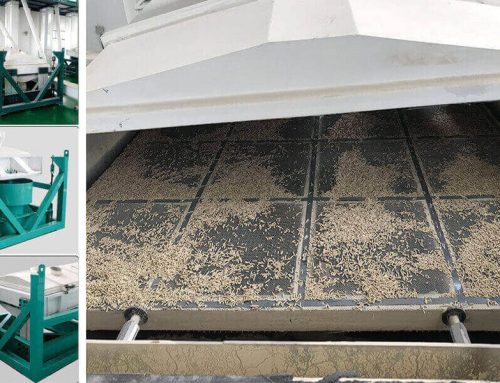
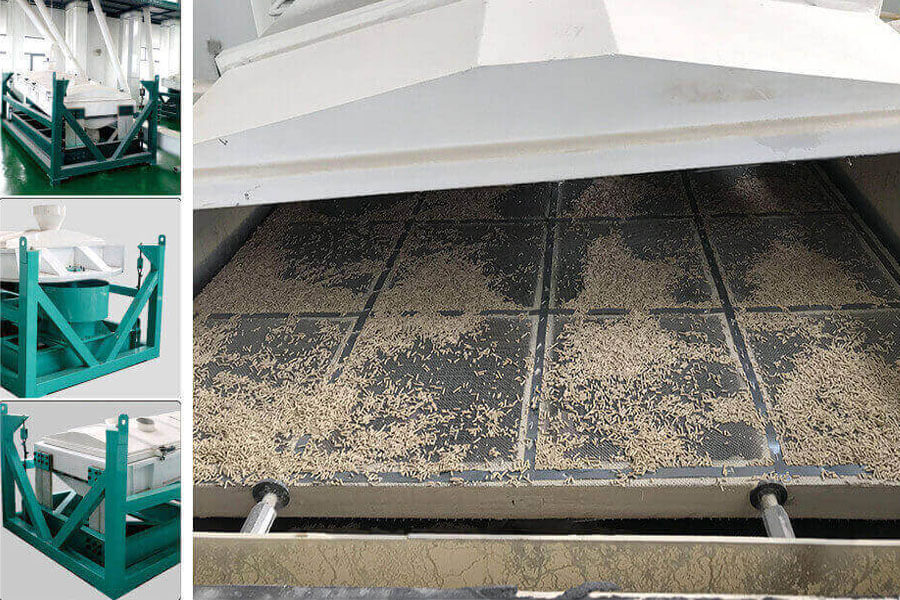
The fines row is the cheapest to fix and the most visible to a customer. A fertilizer spreader throws what it is given, so fines land in a stripe and lumps land in a heap, and a lawn or a field with stripes in it is a complaint with a photograph attached. A 1 mm deck after the pellet cooler, with the oversize back to the die plate, is the whole fix, and the cooling and screening page is where that is worked out.
Six things that turn a fertilizer pellet into a bag of mould or dust
Two of these are in the compost pad, two are in the die plate and two are at the bag. None of them can be fixed by pressing harder, and the first one cannot be fixed at all once the bag is sewn.
| What it is | What goes wrong | What to do about it |
|---|---|---|
| Immature compost | The pellet keeps composting in the bag. The bag domes, the top layer moulds and the whole pallet smells of ammonia in a warm warehouse | Compost to finished — 12–15:1 carbon to nitrogen, back to ambient temperature — and prove it with a sealed jar before the material goes to the wood hammer mill |
| Too wet into the die plate | Above 20 % the pellet deforms as it leaves the die plate, the holes blind over and the output falls away while the motor pulls more amps | 15–18 % into the die plate, measured at the die plate rather than at the compost pad, and a rotary drum dryer sized on the water an hour |
| Too hot at the die plate | A die plate running at 80–90 °C scorches the organic matter and, on a bag with a biology claim, kills the bacteria the customer is paying for | A shorter die plate and a wetter material, which is the opposite of a fuel build. Target under 60 °C at the die plate and check it with a probe rather than by hand |
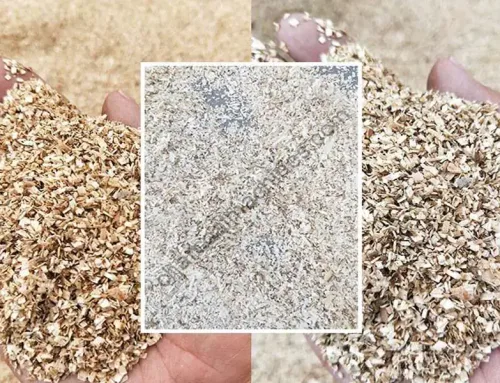
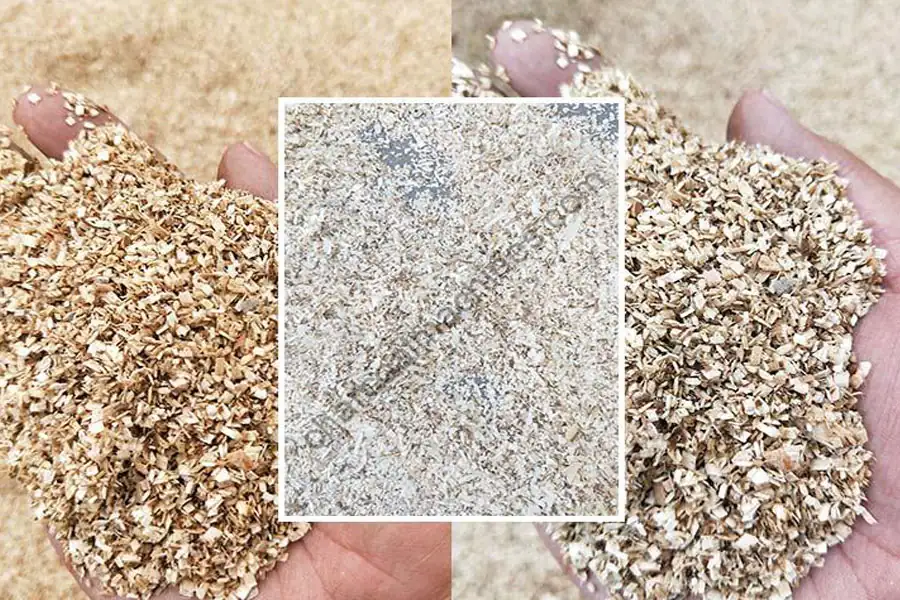
| Too coarse a grind | Particles over 3 mm leave cracks in the pellet. The cracks become fines in the bag and the fines become a stripe on the field | A 2–3 mm screen in the wood hammer mill, and a screen checked for holes on a schedule rather than on a complaint |
| Sand and grit | Manure arrives with soil on it, and sand is the fastest die plate killer there is. The plate that should run 400 hours runs 250 and the pellet gets rougher as it goes | A 250–400 hour die plate budget rather than a 500 hour one, a screen ahead of the die plate where the material is dirty, and the maintenance schedule followed rather than remembered |
| Bagging warm | A bag sewn at 40 °C sweats against its liner as it cools. The moisture that condenses lands on the top layer and moulds there, and the customer opens the bag to a crust | Cool to under 35 °C before the pellet packing machine, and bag under 12 % moisture rather than under 12 % on average |
The first two rows are decided on the compost pad and neither can be corrected at the die plate. A compost that is not finished will produce a pellet that looks perfect and re-heats in the bag three weeks later, and by then the pallet is in another country. The middle two rows are the die plate and the grind, and both are fixed with money before the first bag rather than with labour after it. The last row is the one that is nobody’s job on a busy day, which is exactly why it is the one that happens.
Three columns will not fit a phone. Swipe the table sideways for the remedy.
Bagging warm is the failure that looks like a drying problem and is not. A pellet at 40 °C going into a 25 kg sack carries its water in the air inside the sack as well as in the pellet, and as the sack cools that water condenses on the inside of the liner. The top layer of the bag then sits in a humid microclimate for a month of transport and arrives with a crust on it. The answer is a pellet cooler sized on the output rather than on the budget, and a temperature probe at the bagging spout.
The sand row is the one that changes the economics rather than the quality. Composted manure carries soil, poultry litter carries grit, and both grind a die plate from the inside. A plate that runs 400 hours on green waste runs 250 on litter, and the difference is a consumable line that has to be in the cost sheet before the first tonne rather than discovered in month three. The die plate and roller schedule has the hour figures for each material.
Your output, your bag, and the die plate your compost allows
Four fields. The output sets the pellet mill, the bag sets the bagging scale, and the material sets the moisture band and the die plate — which on this product is the number that decides the temperature rather than the density.
At 20 t a day over 10 hours the pellet mill has to make 2,000 kg/h of fertilizer pellets: 80 bags of 25 kg an hour, 40 bags to the tonne. On composted manure that is HML-600, rated 1.5–2.0 t/h, on a 1:5 to 1:6 die plate at 15–18 % into the die plate.
The output is finished bagged pellets, not compost in. The model is chosen on the rating for that frame, and on this product the frame is rarely the limit: the rotary drum dryer ahead of it and the pellet cooler behind it usually are. The die plate in the last box is set by the material, because a wetter feedstock needs a shorter channel to keep the temperature down.
The bag count is the number to take to a packaging supplier, because it is bags an hour that sets the bagging scale rather than t an hour. A 25 kg bag is 40 to the tonne and a 40 kg bag is 25, so moving from retail sacks to a bulk bag cuts the bagging rate by more than half — which is why a production line that fills both runs two scales rather than one fast one.
The die plate figure is the one this page exists for. It is set by the material and not by the motor, because a wetter feedstock needs a shorter channel to keep the temperature down, and a shorter channel is a different plate in the same frame. The tool reports the ratio and the moisture band for the material you picked, rather than one number for all six.
Setting up a fertilizer pellet line, in the order it has to happen
The first two are decisions about the material and the last two follow from them. Getting the order wrong means buying a rotary drum dryer for a compost that turns out not to be finished.
Compost to finished, and prove it
Carbon to nitrogen down to 12–15:1, the pile back to ambient temperature, and a sealed jar of compost that does not dome its lid after a week at 30 °C. This is the step that cannot be fixed later, and it takes three months before the first pellet.
Fix the grind and the die plate
A 2–3 mm screen in the wood hammer mill and a die plate cut for the material — 1:5 to 1:6 on composted manure, shorter on wetter feedstock. Say what the material is when the plate is ordered, because the ratio is cut into the steel and it decides the temperature.
Then the drying, to a band rather than to a minimum
15–18 % into the die plate and under 12 % into the bag. A rotary drum dryer sized on the water an hour, a moisture meter at the die plate and a second one at the bag, because the two numbers are different jobs.
Then the pellet cooler, the deck and the bag
Cool to under 35 °C, screen at 1 mm with the oversize back to the die plate, crumble if the product is for turf, and bag under 12 % moisture. This is the stage that decides whether the pallet arrives as fertilizer or as a mouldy block.
The first step is the one nobody wants to hear, because it costs a season and no machine is sold during it. Composting is not a formality before pelleting — it is the process that makes the product stable, and a pellet is simply a way of shipping it. A producer who buys a pellet mill to solve a raw manure problem has bought the wrong solution: the pellet will re-heat in the bag and the complaint will arrive from a customer who is not going to be persuaded that the compost was at fault.
The second step is where a fuel background costs money, because most operations that already own a pellet mill has a long die plate in it and that plate will make a dense, glossy fertilizer pellet at 85 °C. The symptom reads as a biology problem or a moisture problem, so the compost gets blamed and the die plate is the last thing anybody checks. Order the plate for this product and keep the fuel plate for fuel — the compression ratio chart turns the ratio into millimetres so the order is unambiguous.
Three sizes of fertilizer line, and what each one commits to
Almost every organic fertilizer operation is one of these three. They differ in whether there is a rotary drum dryer, and in whether the bag is a 25 kg sack for a shelf or a one-tonne bag for a spreader.
-
300–600 kg/h, a farm with its own manure
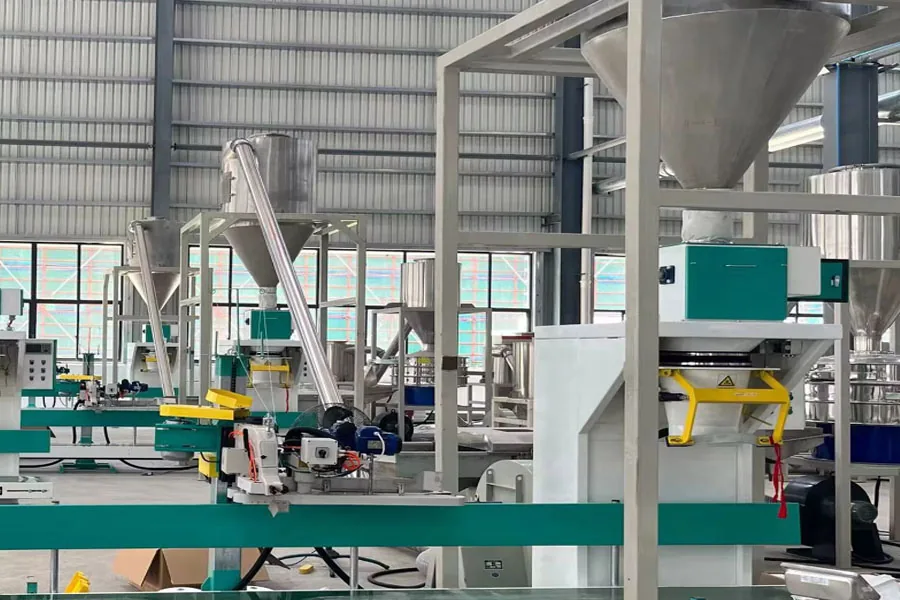
A flat die pellet mill — PM-D450B at 450–600 kg/h or PM-D580B at 600–800 kg/h — with a wood hammer mill ahead of it and a pellet cooler and screen behind. The compost pad is the capital cost here rather than the pellet mill, and the product goes out in 25 kg sacks or a bulk bag.
-
1 t/h, bagged for a shelf
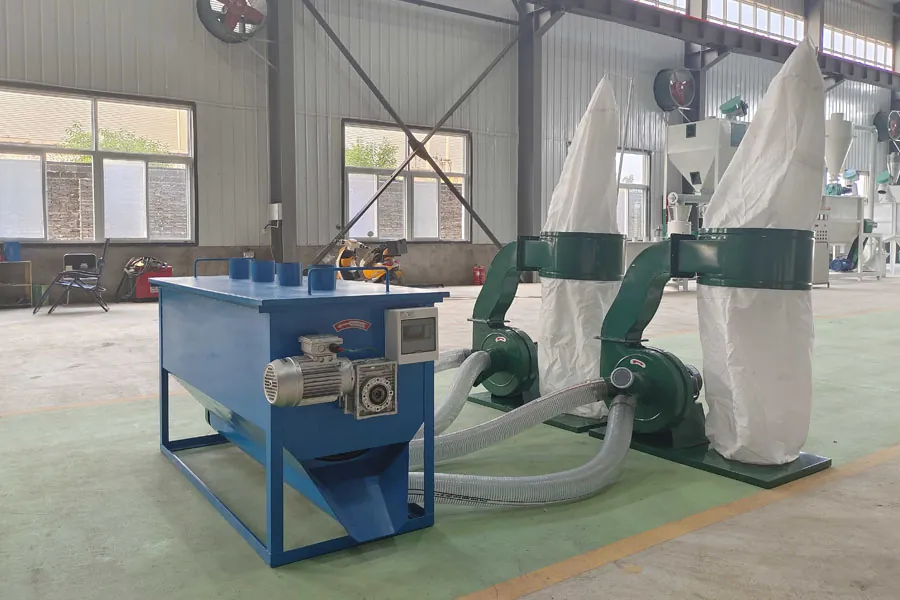
One PM-D450B pair or one HML-560, a rotary drum dryer sized on the water, a separate 1 mm deck and a pellet packing machine with a weighing head. This is where the drying stops being optional and the bag stops being filled by hand.
-
2 t/h and up, or a crumbled turf product
A vertical ring die wood pellet mill — HML-600 at 1.5–2.0 t/h or HML-700 at 2.0–2.5 — with a rotary drum dryer ahead of it, two screen decks and a pellet crumbler if the product is a 1–3 mm crumble for turf. From here the product is a brand with an analysis on the front, and the analysis is the promise the whole production line has to keep.
The three routes are separated by the rotary drum dryer and by what the bag is made of, which is the same shape as every other application on this site and a different reason. A fertilizer line without a rotary drum dryer only works where the compost arrives at the right moisture by luck, and compost does not arrive at the right moisture by luck twice in a year. The poultry manure pellet line is the worked example of the middle route, and the buying guide covers the choice of pellet mill; this page is about the material and the bag.
What buyers ask about organic fertilizer pellets
Eight questions, answered the way we answer them on the phone.
What are organic fertilizer pellets made of?
Composted organic matter, ground to 2–3 mm and pressed. In practice that means cattle or poultry manure, green waste compost, spent mushroom substrate, dewatered digestate or food waste compost — alone or blended. The material has to be composted before it is pressed, because a pellet is a way of shipping finished compost rather than a way of finishing it.
Can a flat die pellet mill make fertilizer pellets?
Yes, and it is the usual choice below about 1 t/h. Composted manure is softer than wood, so the frame is rarely the limit: a 1:5 to 1:6 die plate, 15–18 % moisture and a 2–3 mm grind. What limits the output is the rotary drum dryer ahead of the pellet mill and the pellet cooler behind it, not the motor.
Do fertilizer pellets need a binder?
Composted manure does not — the fibre in the compost is the binder. Green waste compost does, and bentonite at 3–5 % is the usual answer; molasses and lignin are the others. If the bag carries an organic certification, the binder has to be on the certifier's permitted list, which is a question for the certification body rather than for the supplier.
Why do my fertilizer pellets go mouldy in the bag?
Almost always one of two reasons, and they are worth separating. If the whole bag moulds, it was bagged above 12 % moisture. If only the top layer moulds and the bag is domed, the compost was not finished and the pellet is still composting. The first is a drying setting; the second is a compost pad problem that no amount of drying will fix.
Does pelleting kill the bacteria in the fertilizer?
It can, and at fuel settings it does. A die plate running at 80–90 °C takes most of a bacterial count with it; a plate running under 60 °C takes much less. If the bag claims live bacteria, either hold the die plate under 60 °C with a shorter plate and a wetter material, or spray the inoculant onto the pellets after the pellet cooler — and take the number on the bag from a plate count on the finished pellet.
What moisture should fertilizer pellets be?
15–18 % into the die plate and under 12 % into the bag. The first number is a process setting and the second is a product specification. Above 12 % in the bag the pellets cake into a block in a 25 kg sack, and a block is a return whatever the analysis says.
What size should fertilizer pellets be?
3 mm for turf and horticulture, 4–5 mm for arable and row crops, and 8–15 mm long either way. Turf products are often crumbled to 1–3 mm after cooling, which is the same pellet through a crumbler rather than a different die plate.
Is a pellet better than a granule from a disc granulator?
They are different products for different jobs. A disc granulator makes a round granule from a wet mix and needs a rotary drum dryer sized on a lot of water; it is cheap per tonne and it looks better on a shelf. A flat die pellet mill makes a cylindrical pellet from material at 15–18 %, which is denser, travels better in a bulk bag and releases more slowly in the soil. Below about 1 t/h the pellet route is usually the smaller investment; above it, the two are competitive and it comes down to what the market wants to see in the bag.
Send 20 kg of your compost and we will press it and jar it
What the feedstock is, how wet it arrives, whether it is finished and the bag it goes into. That is enough to name the die plate ratio, the rotary drum dryer and the screen deck.
What happens after you send it
We grind it at 2–3 mm, press it on a flat die pellet mill at 1:5 and 1:6, cool it, screen it at 1 mm and put a sample in a sealed jar for a week at 30 °C — then tell you the moisture band, the die plate and whether the compost was finished. If the honest answer is that it was not, we say so before you buy a die plate.
Your details are not shared. One follow-up, no mailing list.