Electric Hammer MillFS series — 120 to 1,600 kg/h on a 380 V motor
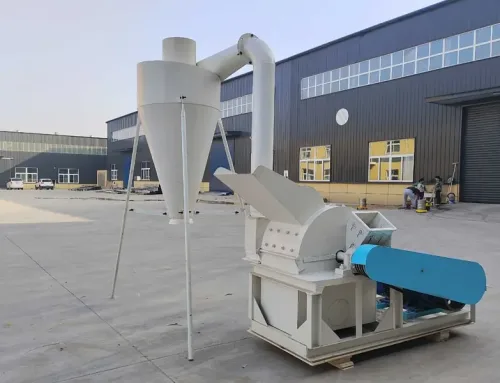
An electric hammer mill grinds wood chips, straw, stalks and husks down to 3–5 mm powder for pelleting or briquetting. Four frames from 4 to 37 kW, 120 to 1,600 kg/h, screen holes from 1.8 to 10 mm. Blower, cyclone and ducting ship in the crate.
- FS-198B, FS-420B, FS-50-40B and FS-50-60B — 4, 11, 22 and 37 kW
- 120–250, 250–500, 600–1,300 and 1,000–1,600 kg/h through a 3–5 mm screen
- 380 V three-phase, 50 Hz — 415 V / 60 Hz built to order
- Blower, cyclone, bolted ducting and a spare screen with every unit
Reply in 12 working hours · Screen and hammers ship with every unit · Delivered to 40+ countries
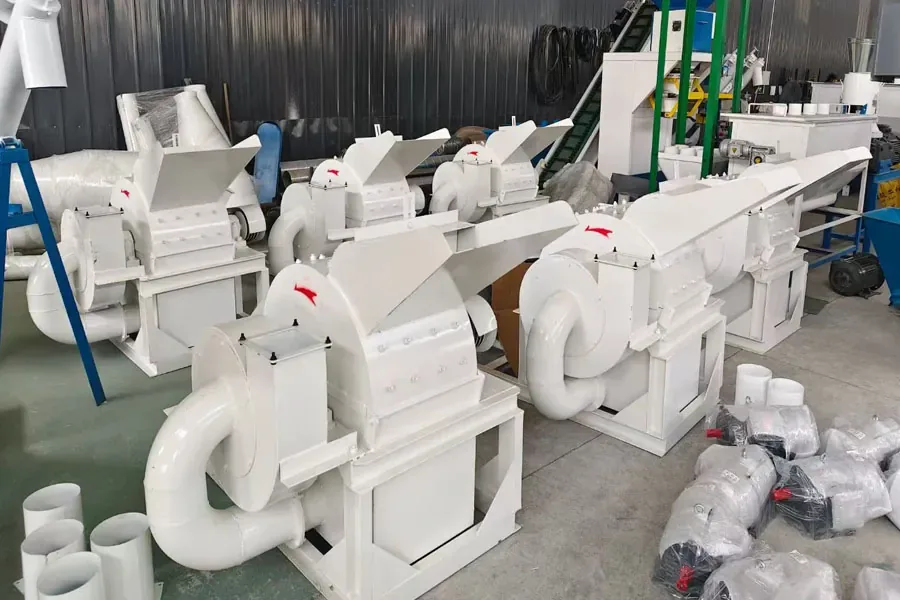
A motor, a screen, and nothing to fuel
The electric version is the simpler machine. No fuel tank, no battery, no oil changes — a motor, two belts and a chamber whose shape has not needed changing in twenty years.
Material under 50 mm goes into the hopper, the hammers break it down against the screen, and a blower lifts the powder out through a cyclone. The screen is the only setting that changes: 1.8 mm for compound feed, 3–4 mm for wood pellets through a Ø6–8 mm die, 8–10 mm for a first pass.
What the electric version asks in return is a supply that can carry it. A 37 kW motor pulls six to seven times its rated current for the second or two it takes to come up to speed, which is why the cable, the breaker and the transformer are all sized for the start and not for the run. On a farm with a 15 kVA transformer, that is the whole conversation.
Where the supply exists, this is the cheaper machine to own: no fuel, no filters, no battery, and a running cost per tonne an engine cannot match. Where it does not, the diesel hammer mill on the same frame does the same job with a fuel tank instead of a cable.
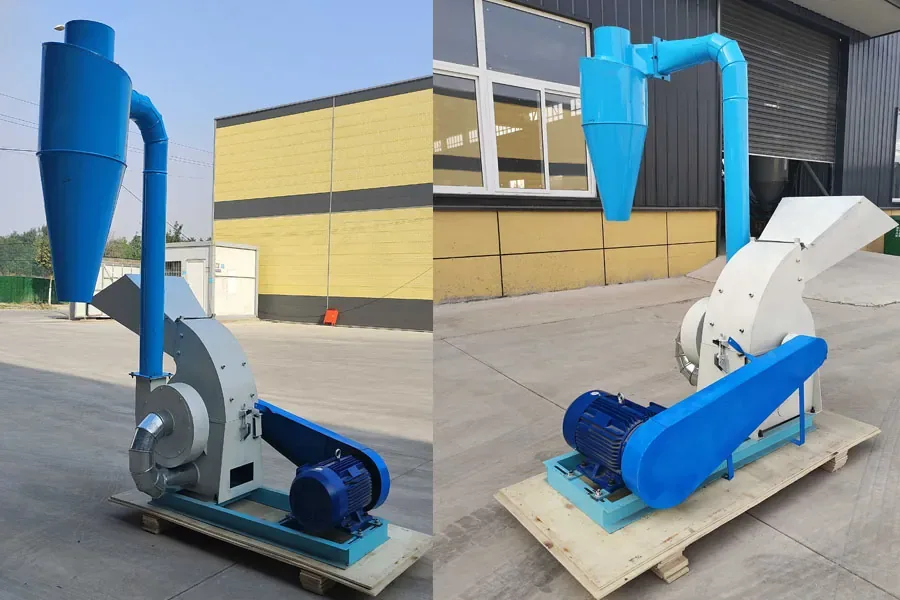
Four frames, 4 to 37 kW
Capacity is quoted on air-dry wood chips through a 3–5 mm screen. Straw, husk and stalk run higher on the same screen because they break down faster; wet or stringy material runs lower.
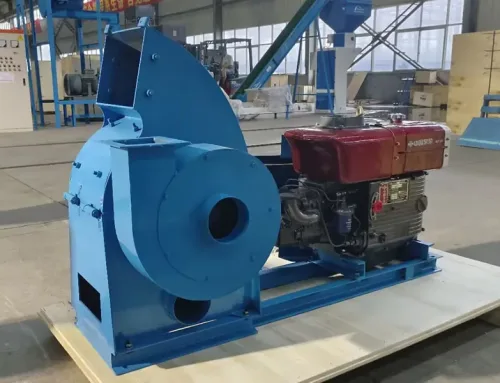
Electric hammer mill, FS series motor-driven
| Model | Motor | Capacity, wood chips | Size L×W×H | Weight |
|---|---|---|---|---|
| FS-198B | 4 kW | 120–250 kg/h | 950 × 620 × 1100 mm | 135 kg |
| FS-420B | 11 kW | 250–500 kg/h | 1240 × 1000 × 1200 mm | 270 kg |
| FS-50-40B | 22 kW | 600–1,300 kg/h | 1850 × 1060 × 1240 mm | 850 kg |
| FS-50-60B | 37 kW | 1,000–1,600 kg/h | 2150 × 1260 × 1240 mm | 960 kg |
All four are 380 V three-phase, 50 Hz. 415 V / 60 Hz and 220 V three-phase are built to order — tell us the supply before the order, not after, because the motor, the starter and the overload are matched to it. Delivery is 7–15 working days; TT with 40 % deposit, balance before delivery; wooden or steel case.
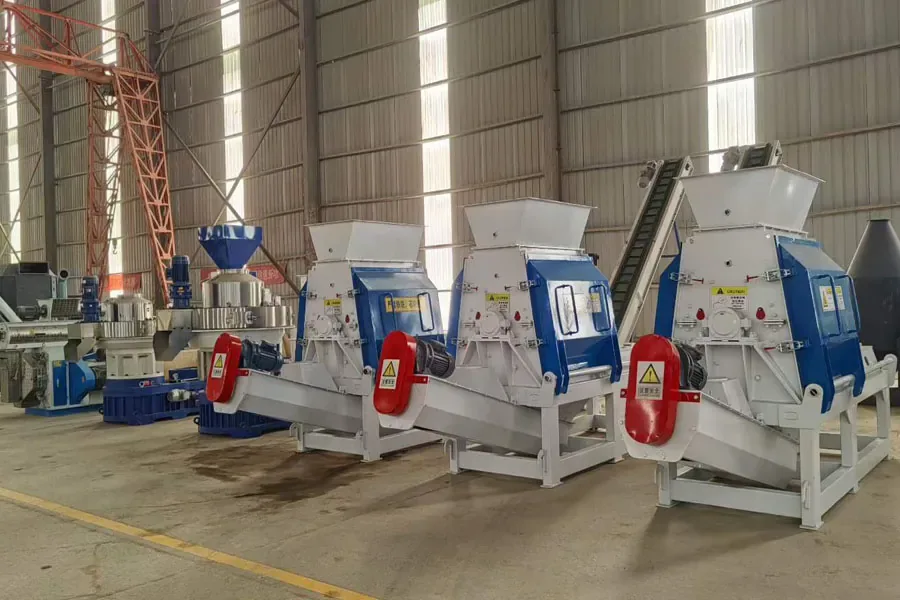
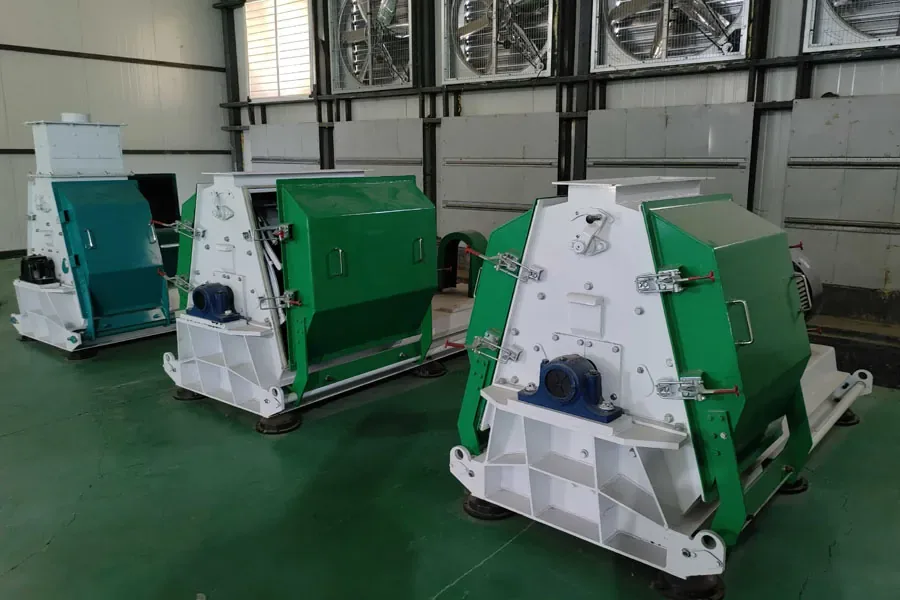
Four frames, 4 to 37 kW, and the screen sets the powder
The motor only turns the rotor. What comes out is set by the screen in the bottom of the chamber, so the screen is the number to choose first.
Send the material and the screen size
Tell us the material, the size it arrives at and the powder you need. We reply with the model, the screen and a price — and a test-run video on your material before you pay a deposit.
Reply within one working day. No obligation.
Five steps from a chip to a bag
The order never changes, and every step below happens on the same frame — which is why the footprint is one pallet rather than a row of machines.
Feed hopper
Material under 50 mm goes in. A slide gate under the hopper sets the feed rate — running it wide open is how most chambers get blocked.
Hammers
Four rows of carbon-alloy hammers on a rotor balanced before assembly, turning at about 3,500 rpm. Each hammer has two working faces.
Screen
180° of the chamber is screen. 1.8 to 10 mm holes decide the powder; one fitted, one spare in the crate.
Blower
Air carries the powder out of the chamber as it is made, so the screen does not blind and output holds through the shift.
Cyclone
The cyclone drops the powder into a bag, a bin or the next machine. The ducting is bolted, not welded, so it can be re-routed.
The motor is easy. The start is what the line has to survive
A hammer mill starts against a heavy rotor, and the current it draws in the first second is the number that decides whether the line holds. Four ways to start one, and when each is the answer.
| Starting method | What it does | When it is the answer |
|---|---|---|
| Direct on line | Full voltage, six to seven times rated current for a second or two | A transformer and cable that were sized for the motor |
| Star-delta | Starts on reduced voltage, about a third of the direct current | Motors wired for six terminals — most of ours are |
| Soft starter | Ramps the voltage up over 5–20 seconds | A weak line that trips on a direct start |
| Variable speed drive | Ramps the current and gives speed control | You want to trim output without changing screens |
We match the starter and the overload to the supply you name, and we will ask for the transformer rating and the cable run before quoting a 22 kW or 37 kW frame. If the line cannot take a direct start and you do not want a soft starter, the diesel hammer mill on the same frame sidesteps the question entirely.
Same chamber, same rotor, same screen — only the drive changes
The question is not which is better. It is what your site can supply, and what it costs you per tonne when it does.
Above about 22 kW the electric version is the cheaper machine to buy as well as to run: no engine, no fuel system, no battery, and a service interval that is grease and belts rather than oil and filters. On a site with a steady three-phase supply there is no argument for the engine at all.
The diesel hammer mill takes over where the supply is absent, weak or intermittent. Fuel per tonne runs two to three times grid power in most of the markets we ship to, so the engine only wins when the alternative is not crushing at all — or when the material is somewhere the grid will never reach.
Both use the same base-plate pattern, so the cyclone, the ducting and the discharge height are identical. If a grid connection arrives later, the chamber, rotor and frame carry over and only the drive end changes.
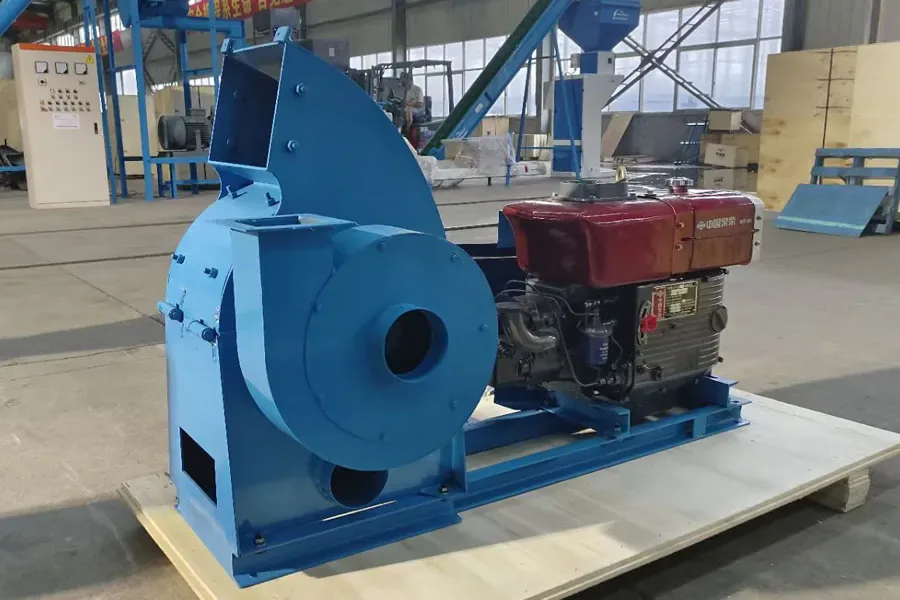
Before the dryer, or straight into the pellet machine
A hammer mill almost never works alone. Where it sits in the line decides the screen you order and the height the cyclone has to discharge at.
In a wood pellet line the mill comes first: chips in, powder out, then a wood dryer takes the moisture down before the flat die pellet mill presses it. Putting the mill ahead of the dryer is deliberate — the air the mill moves carries some moisture off, and a smaller particle dries faster in the drum.
On a farm making feed rather than fuel, the same machine runs ahead of a flat die pellet mill on a 3–5 mm screen and the cyclone discharges into a mixing bin instead of a bag. Change the screen and the machine moves between the two jobs.
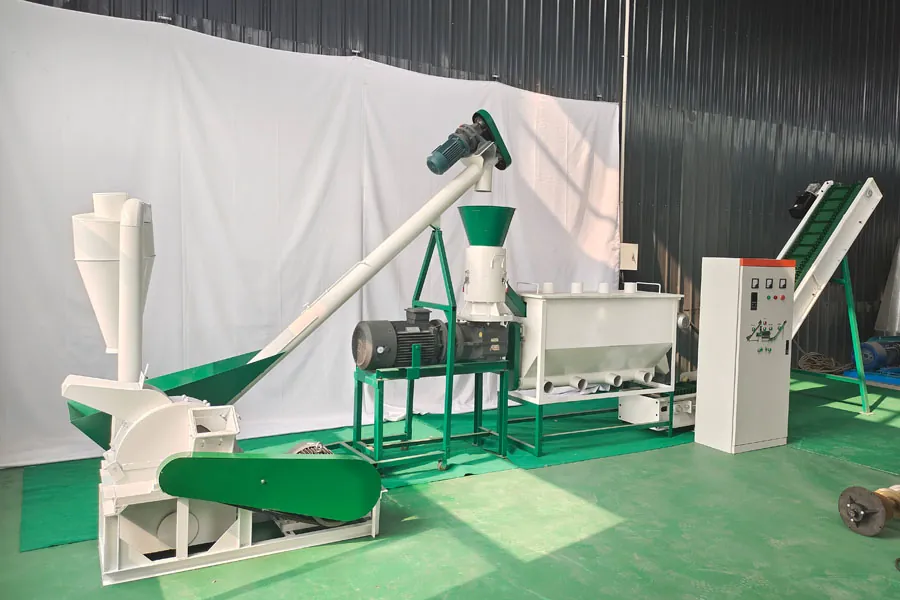
If you want the crusher and the press on one base plate under one motor, that is a combined pellet mill and hammer mill — 100 to 350 kg/h. Above that output the two machines want separate drives, which is where a 500 kg/h wood pellet plant or a larger line starts. Powder finer than 1 mm is a different machine again: a wood powder machine.
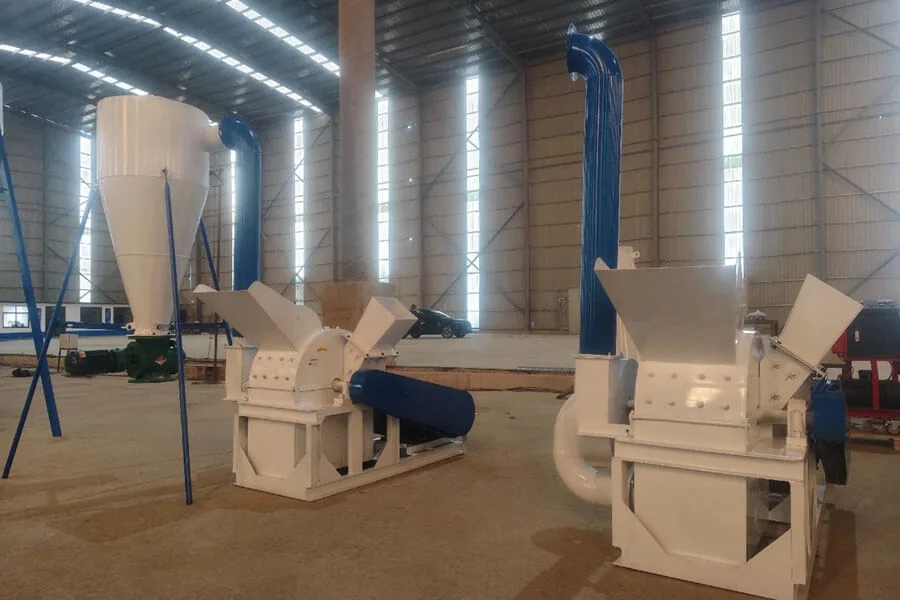
In the crate, on one frame
The unit leaves the workshop assembled and run on material. The cyclone is bagged separately so the ducting is not crushed in transit.
-
Chamber and rotor
Four rows of carbon-alloy hammers, reversible, on a rotor balanced before assembly. Hinged chamber door for a screen change.
-
Screen
One fitted to the material you name, one spare in the crate. Holes from 1.8 to 10 mm, cut to order.
-
Motor and starter
4 to 37 kW, 380 V three-phase, with the starter and overload matched to the supply you specify.
-
Blower and cyclone
Blower on the chamber outlet, cyclone and bolted ducting to the discharge height you specify.
-
Belts, guards and tools
V-belts, guards over every pulley, a set of spanners and the spare parts list for hammers and screens.
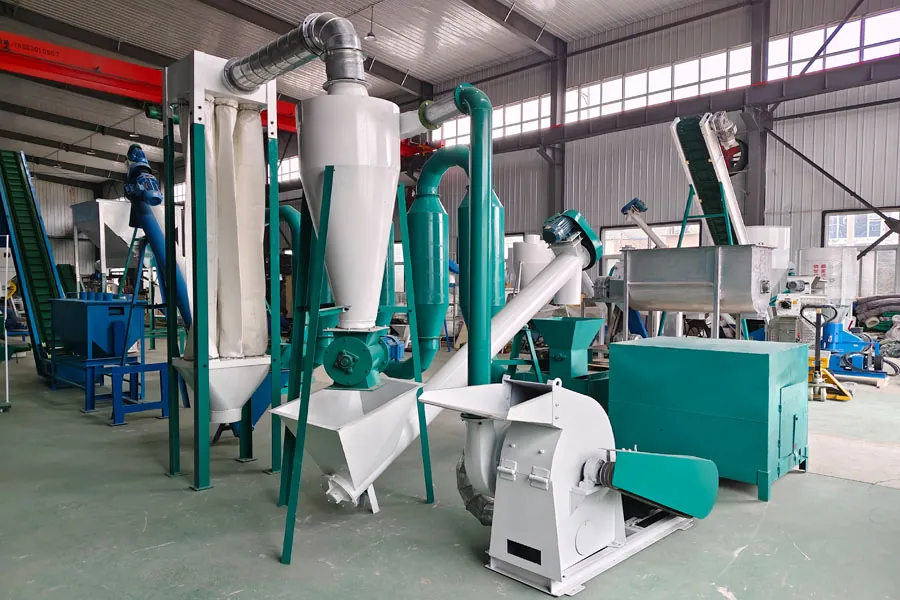
Where this crusher sits in the range
An electric hammer mill is the front end of a line, not the whole line. Below are the machines it feeds, the version to buy if you have no grid, and the frames above it.
Tell us the material and the supply
Material, the largest piece that goes in, the powder size you need and the supply on site — kW, voltage and transformer rating. We reply with the frame and a price.
Reply within one working day. No obligation.
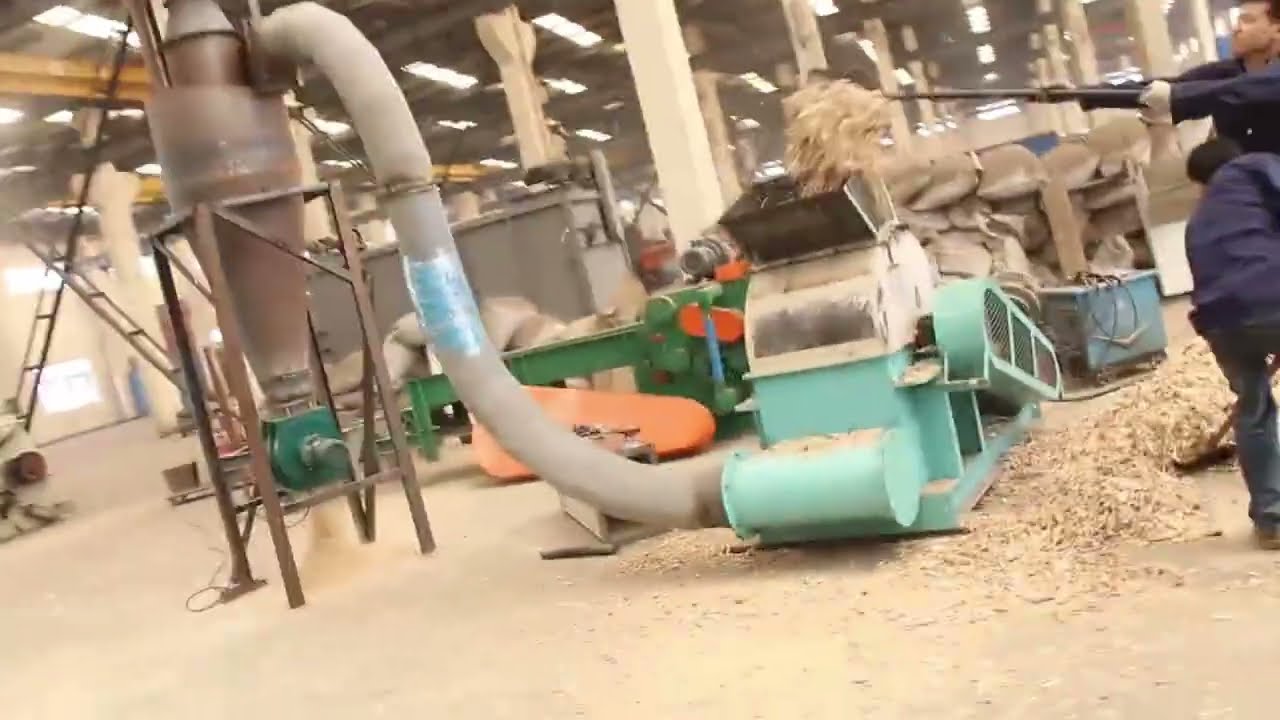
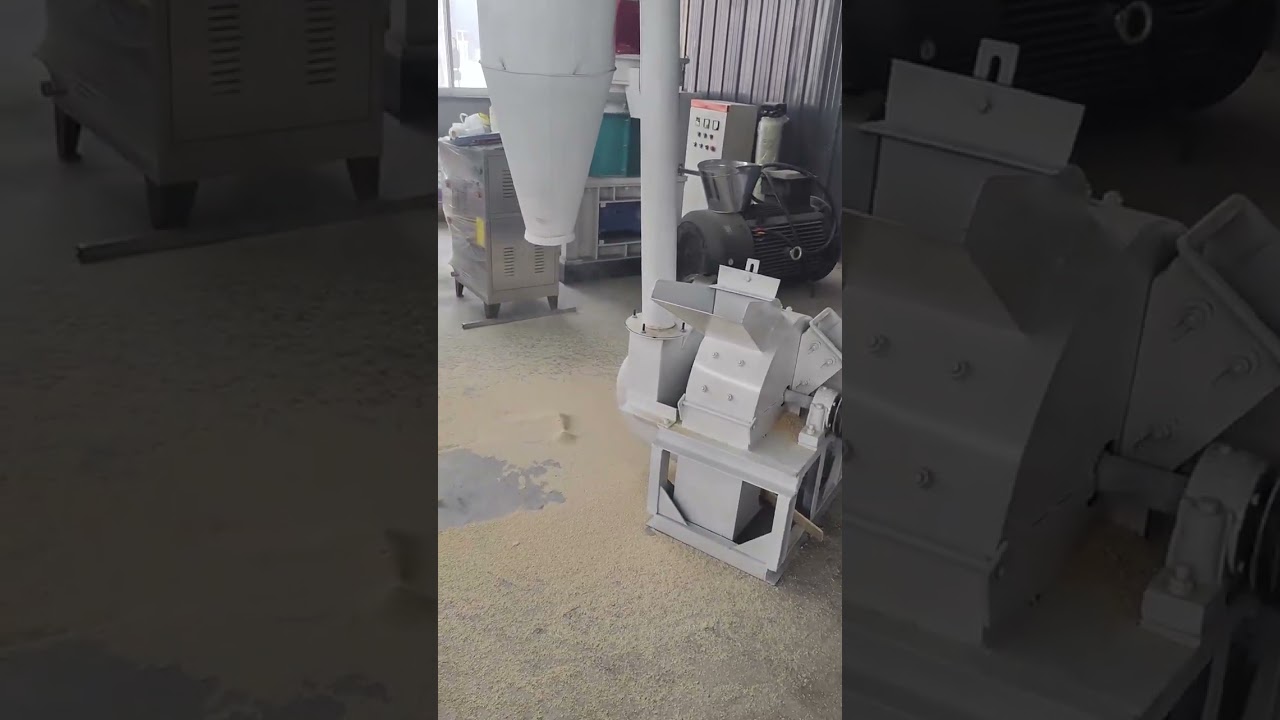
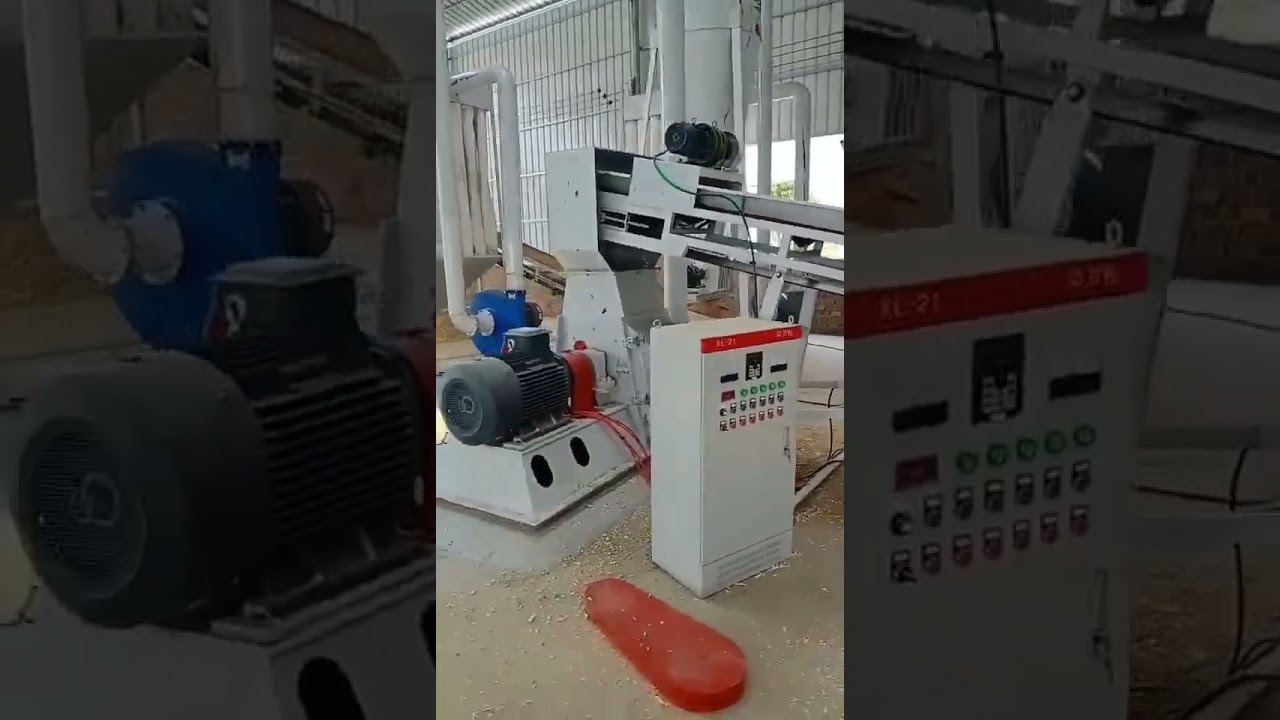
The crusher at work, and the line it feeds
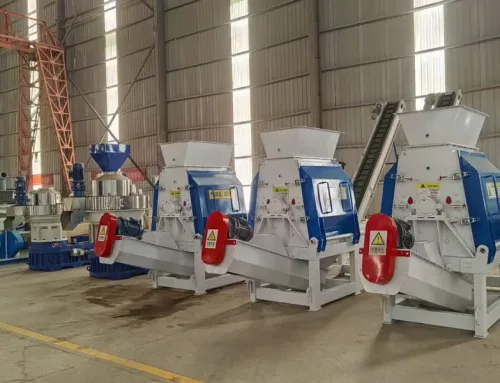
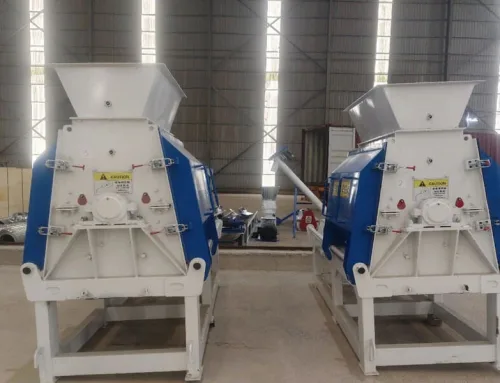
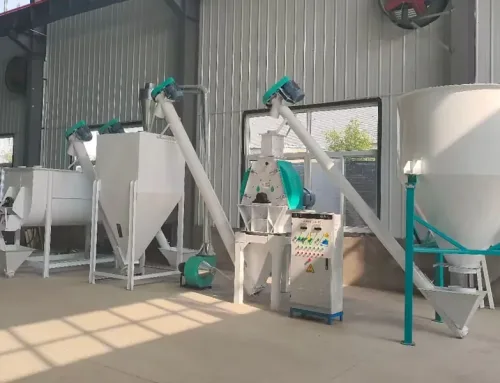
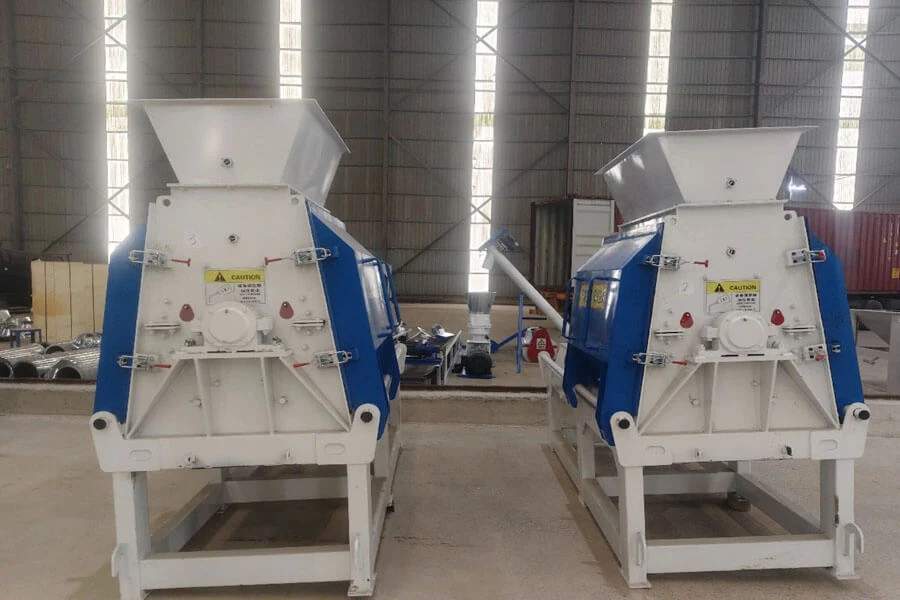
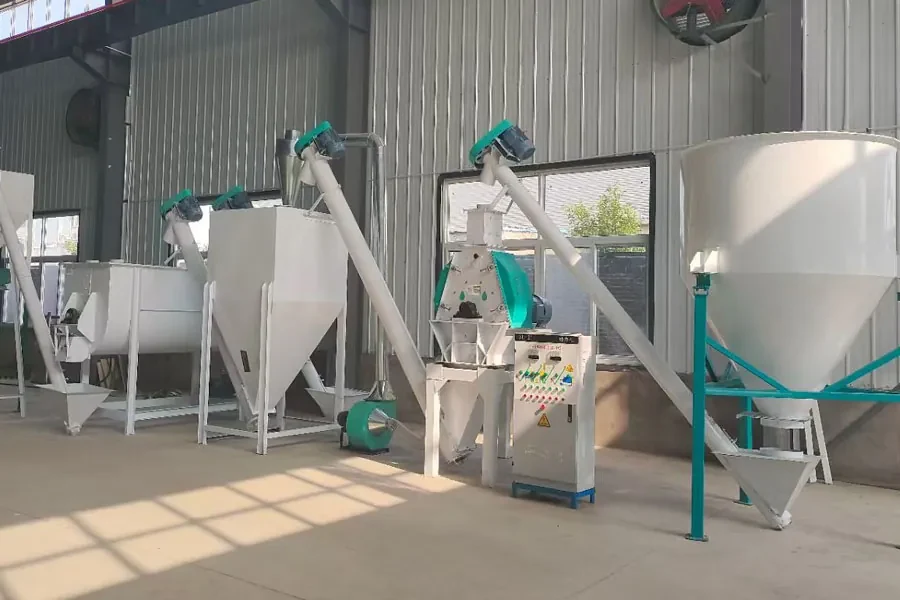
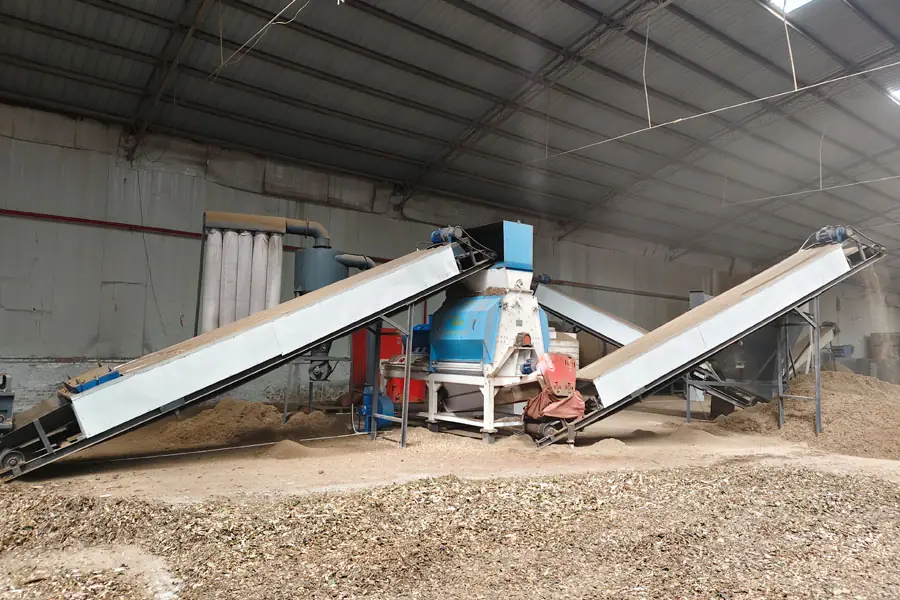
The FS chamber on its own, the same frame on a customer site, two test runs from the workshop, and the two places the powder goes next — a combined frame and a full pellet production line.



More test runs, shipping records and installation footage on our YouTube channel.
What buyers ask before ordering an electric hammer mill
What is an electric hammer mill used for?
Crushing material that is too coarse to pellet: wood chips, branches, straw, stalks, rice husk and corn cob, down to 3–5 mm powder. That powder then goes into a flat die pellet mill, a briquette press or a mixing bin. It is the first machine in most small pellet lines.
What power supply does it need?
380 V three-phase, 50 Hz, on a supply that can carry the starting current. The 4 kW and 11 kW frames run on modest lines; the 22 kW and 37 kW frames need the transformer and cable sized for a direct start, or a soft starter. 415 V / 60 Hz and 220 V three-phase are built to order.
How much does an electric hammer mill cost?
It depends on the frame and the starter — the 4 kW FS-198B and the 37 kW FS-50-60B are not in the same bracket, and the cyclone and ducting are quoted with the machine rather than separately. Send the material, the largest piece that goes in and the kg/h you need, and we quote the set: chamber, motor, starter, screen, blower, cyclone and ducting.
What is the difference between this and the diesel version?
Only the drive. Same chamber, same rotor, same screen, same base-plate pattern, so the cyclone and the discharge height are identical. The electric version has a motor, starter and belt guard where the diesel one has an engine, fuel tank and battery.
What powder size can I get?
Anything from 1.8 mm to 10 mm, set by the screen. 3–4 mm is the standard for wood pellets through a Ø6–8 mm die; 1.8–2 mm for compound feed and small briquettes. Two screens ship with the machine and more can be ordered with it.
Can I run it from a generator?
Yes, but size the generator for the starting current, not the running load — six to seven times the motor rating for a second or two on a direct start. A 37 kW mill on a 50 kVA generator will stall; on a 120 kVA set with a soft starter it will run all day.
What maintenance does it need?
Grease the bearings, check belt tension, and turn or replace the hammers when the powder stops getting fine. The screen is a wear part on abrasive material like rice husk — check it every few hundred hours. Plan on twenty minutes a day and a hammer change every few hundred hours.
How long is delivery?
7–15 working days after the deposit, depending on the motor and the screen. Payment is TT with 40 % in advance and the balance before delivery; packing is a wooden or steel case.
Send the material and the supply
A photo of the material, the largest piece that goes in, the powder size you need, and the supply on site — kW, voltage and transformer rating. Those four answers decide between the 4 kW frame and the 37 kW one, and whether a soft starter is needed.
- Emailinfo@pelletmachines.net
- WhatsApp+86 186 0385 1787
- HoursMon–Sat, 08:00–20:00 (GMT+8)
Send a photo of the material and a photo of the site and we will tell you which frame fits, which screen to order, and what the motor will need from your line.
What happens after you send this
We answer with the frame, the motor, the starter, the screen and a price — then send a test-run video on your material before you pay a deposit.
Your details are not shared. One follow-up, no mailing list.