Cat Litter Pellets: Bentonite or Woodone clumps in ten seconds, one composts in a week
Two products share a shelf and share nothing else. Sodium bentonite swells to twelve times its dry volume and sets into a clump a scoop lifts whole; a pine pellet absorbs about three times its weight and then falls apart into sawdust, so the wet patch comes out with a scoop and goes on the compost. One of them is abrasive enough to eat a die plate in a third of the hours. This page is the choice: what each litter is made of, what the bag has to measure, and which machine makes which.
- 0.5–4 mm for clay, 6 mm for a pine pellet
- Sodium bentonite swells to 12–15 times its dry volume
- About 3× its own weight for a pine pellet, then it breaks down
- Under 1–2 % dust under 0.5 mm, screened out of both
Clay and pine both press · Dust, granule size and die life reported with the model · Flat die pellet mill to 800 kg/h, vertical ring die wood pellet mill above
The short answer
One decision — clumping clay or compostable pine — and then a second one that follows from it, which is what the die plate is made of.
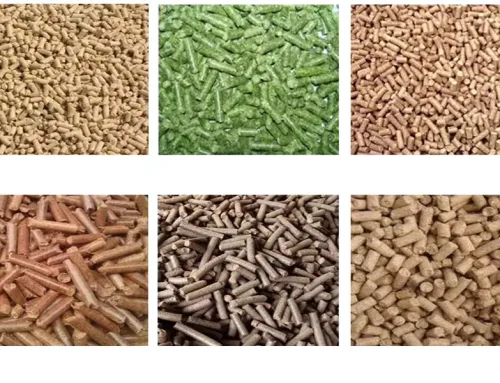
Cat litter is two products with one shelf in common. Sodium bentonite is a swelling clay: it takes water into its own structure, swells to 12 to 15 times its dry volume and sets into a clump that a scoop lifts in one piece, which is what most of the market buys. A pine pellet is sawdust pressed on a flat die pellet mill at a 1:4 to 1:5 die plate; it absorbs about three times its own weight and then breaks back down into sawdust, so there is no clump and the wet patch is lifted out and composted. The clay is screened to 0.5 to 4 mm and the pellet is 6 mm, both are dried and both are screened again at the bag, because under 0.5 mm is dust and dust is the complaint. The number that separates the two on a production line is die wear: the silica in bentonite is harder than the die plate, so a clay die plate lasts 40 to 60 % of the hours a wood die plate does.
The swelling figure is the standard one for sodium bentonite and the absorbency figure is the trade number for a softwood pellet, not a laboratory result — both move with the source of the material. The die plate life comparison is ours: a hardened die plate on bentonite reaches 150–300 hours against 350–500 on pine at a 1:4 ratio, and it is the single number that decides whether a clay line pays. A 20 kg sample settles the ratio, the granule size and the dust better than any table.
Six materials sold as cat litter, and what each one does in the tray
Four of these six are on a shelf near you. Only one of them is a pelleting job, and only two of them clump.
| Material | What it does in the tray | What makes it | Whether to make it |
|---|---|---|---|
| Sodium bentonite swelling clay |
Takes water into the clay and swells to 12–15 times its dry volume, then sets into a clump a scoop lifts cleanly. The surface of the tray stays dry | An extrusion granulator, or a ring die pellet mill with a hardened die plate, screened to 0.5–4 mm | The clumping product, and most of the market. Abrasive: the die plate is the consumable that sets the cost |
| Calcium bentonite non-swelling clay |
Absorbs without swelling much. Cheaper, dustier, and the clump breaks apart when it is lifted | The same route, but the granule has to be pressed denser to hold together at all | The cost-down grade, sold as natural clay. It works until the customer tries a clumping bag |
| Pine sawdust kiln dried |
About 3× its own weight, then it breaks down into soft sawdust. No clump — the wet patch is lifted out whole and composted | A flat die pellet mill on a 1:4 die plate, 6 mm, bagged at 8–10 % moisture | The pellet litter. Flushable in small amounts, compostable, and the only one of the six that a flat die pellet mill makes well |
| Paper and card | 4× and fast, but it is grey, it tracks, and it holds the smell less well than pine | A flat die pellet mill with a binder, or a granulator, then drying | Recycled litter. Cheap to make and hard to sell at a premium |
| Tofu and pea fibre | 3–4×, and it clumps — the only plant-based material on this page that does | Extrusion and drying. A pellet mill will not make it, and the extruder is not ours | The premium flushable bag. Worth understanding because it is taking shelf space from clay |
| Silica gel | Absorbs and holds, and never clumps. Light, and it lasts a long time in the tray | Not pressed at all — the beads are made, dried and screened | Not a pelleting product. It is in the table so the comparison is complete |
Read the third column as the answer to the question people actually search for. Clay and pine are two different plants: one is a crusher, a mixer, a granulator and a sawdust dryer, and the other is a wood hammer mill, a flat die pellet mill, a pellet cooler and a screen. A site that tries to run both on one set of equipment ends up with a clay granule that crumbles and a pine pellet full of grit. Which of the 24 biomass materials press at all is on the feedstock page — and a mineral sits outside that table, which is the point of the next section.
Four columns will not fit a phone. Swipe the table sideways for the third column and the verdict.
Clumping is the property the market pays for, and it comes from one mineral. Sodium bentonite is a layered clay that slips water between its sheets, and the sheets push apart until the granule has swollen to more than ten times what it was; the water is trapped inside the structure rather than soaked into a pore, which is why the clump holds together when a scoop goes under it. Calcium bentonite does not do this. It is the same family, it is cheaper, and the bag that says natural clay is usually calcium — it absorbs, it does not clump, and the customer finds out on the second bag.
A pine pellet works the other way round and is honest about it. The sawdust takes water into the gaps between the fibres, about three times its own weight, and as it takes it the pellet loses the shape the die plate gave it and comes apart. That is not a fault: the wet patch lifts out in one piece, the rest of the tray stays dry, and what comes out goes on the compost because it is sawdust and nothing else. The reason pine is the species rather than any softwood is the terpenes — the same compounds that make the bag smell of a timber yard are what hold the ammonia down.
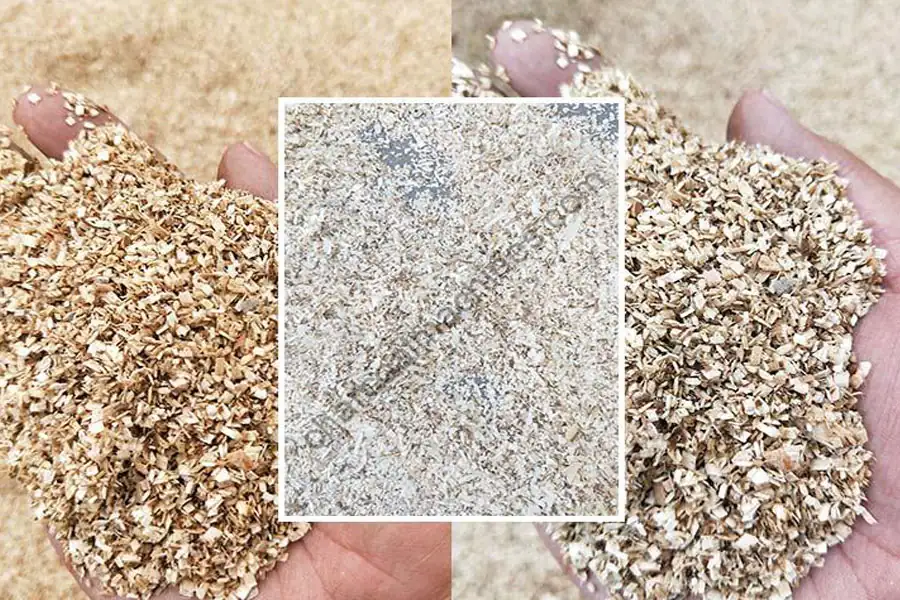
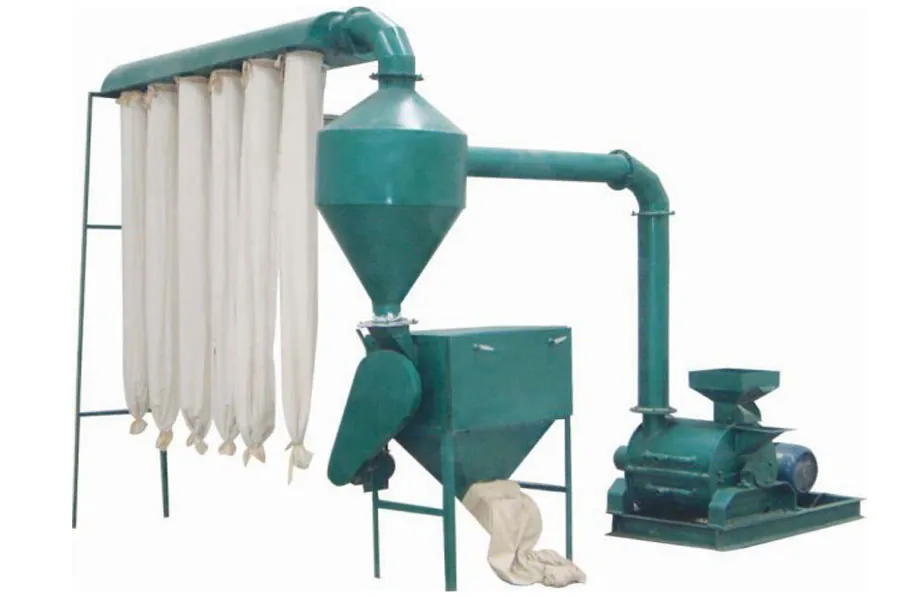
Two litters, and the ten rows that separate them
The first row is the product and the sixth row is the money. Everything between them is what you have to build to get from one to the other.
| Dimension | Sodium bentonite litter | Pine pellet litter |
|---|---|---|
| How it works | Swells and clumps. The wet litter comes out in one piece and the tray stays dry around it | Absorbs and breaks down. There is no clump; the wet sawdust is lifted out and composted |
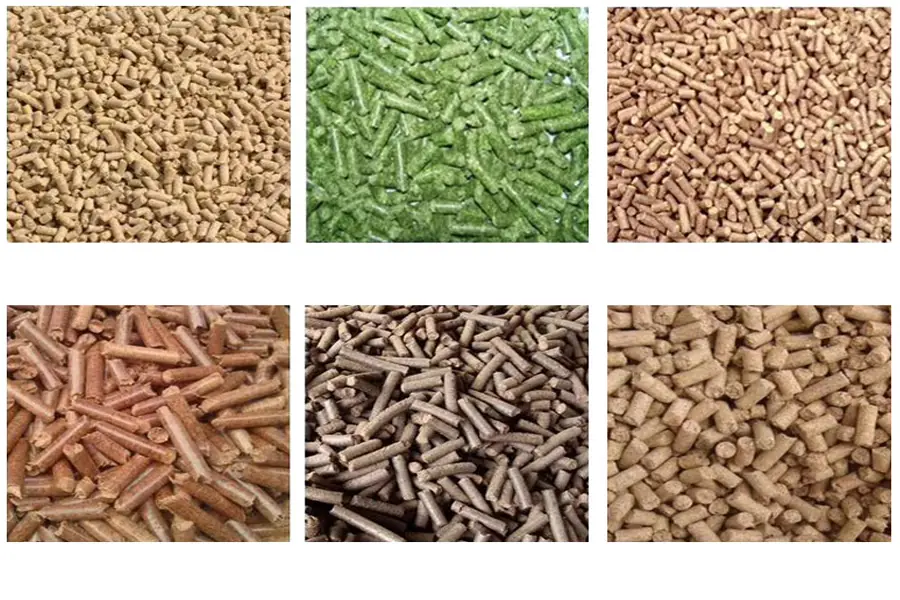
| Granule size | 0.5–4 mm, screened into fine, medium and coarse grades | 6 mm across and 8–20 mm long, and the fines under 0.5 mm are screened out |
| Absorbency | Holds the water inside the clay structure — the figure that matters is the swelling, not the absorption | About 3× its own weight, and then the pellet comes apart into sawdust |
| Weight in the bag | 0.9–1.0 kg a litre, so a 10 litre bag weighs 9–10 kg | 0.55–0.65 kg a litre, so the same 10 litre bag weighs about 6 kg |
| What makes it | An extrusion granulator, or a ring die pellet mill with a hardened die plate | A flat die pellet mill on a 1:4 to 1:5 die plate |
| Die wear | Severe. The silica fraction is harder than the die plate, and life drops to 40–60 % of a wood figure: 150–300 hours | Normal: 350–500 hours on a 1:4 die plate, which is shorter than a fuel die plate to begin with |
| Moisture | Pressed at 20–30 % and dried to under 8 %, or the bag sets solid on the pallet | Pressed at 12–15 % and bagged at 8–10 % |
| Dust | High, and it is silica dust. Collection is a legal requirement rather than a housekeeping choice | Low, but the fines under 0.5 mm still have to come out at the screen |
| Disposal | Not flushable and not compostable, and the clay is strip mined | Flushable in small amounts and compostable, which is the whole reason the bag sells |
| The bag | 5–10 kg printed bag. Heavy to ship, and the freight is a real part of the price | 5–15 kg printed bag, and it ships light because half the volume is air |
The die plate wear row is the one that decides whether a clay line makes money, and it is the row nobody asks about. A bentonite die plate is not wearing out because the pellet mill is badly set — it is wearing out because the material contains silica, and silica is harder than any die steel you would put in a flat die pellet mill. The answer is a hardened die plate, a lower ratio and a shorter inspection interval, and even then the die plate is a monthly line in the cost. The schedule is on the die plate life page.
Three columns will not fit a phone. Swipe the table sideways for the pine column.
The weight row is the one that surprises people who have only made fuel pellets. A litre of clay litter weighs about a kilo and a litre of pine pellet weighs about six hundred grams, so the same printed bag holds half again as much clay and the pallet is half again as heavy. That difference runs through the whole business: the freight per bag, the shelf space per kilo, and what the customer thinks when they pick the bag up. Pine litter sells partly because it is light.
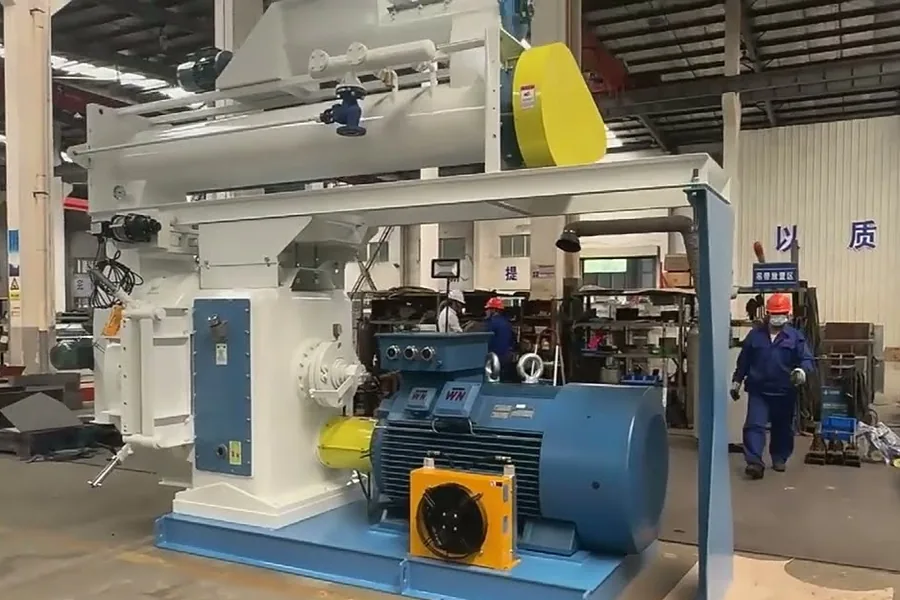
That row is the fork in the road, and it is worth being blunt about it. Clay needs a granulator or a ring die pellet mill with a hardened die plate; a pine pellet wants a flat die pellet mill and a 1:4 die plate, and it is the easiest thing that mill will ever press. A site that already owns a flat die pellet mill can be making pine litter this month. A site that wants to make clay litter is buying a different plant, and the pellet mill is not the centre of it.
Six numbers on a litter bag, and how to check each one yourself
Every one of these can be measured with a set of sieves, a kitchen scale and a jug. A buyer who checks all six is a buyer who does not come back with a complaint.
| What is measured | Cat litter target | Why it matters | How to check it |
|---|---|---|---|
| Granule size | 0.5–4 mm clay, 6 mm pellet | Under 0.5 mm it is dust; over 4 mm a cat will not dig in it, and the tray gets scratched instead of used | A set of sieves and a handful through them, weighed at each size |
| Dust under 0.5 mm | Under 1–2 % | The first thing a buyer sees when the bag opens, the thing a cat tracks through a house, and on a clay line a silica exposure | 500 g on a 0.5 mm sieve, shaken for a minute, and weigh what passed through |
| Absorbency | 3× for pine, and the clay has to swell | The entire product. A granule that has been pressed too hard absorbs slowly and the tray stays wet on top | 100 g into 300 ml of water, and time how long it takes to stop floating |
| Clump strength | Lifts on a scoop without breaking — clay only | A clump that crumbles means the tray has to be emptied instead of scooped, and the customer buys another brand | Wet 50 g, wait a minute, and lift it with a spoon |
| Moisture | Under 8 % for clay, 8–10 % for a pellet | Clay that goes into a bag damp sets into a lump on the pallet; a pellet under 6 % is brittle and makes its own dust in the bag | A moisture meter on a crushed granule, not on a whole one |
| Bulk density | 0.9–1.0 kg/L clay, 0.55–0.65 kg/L pellets | It sets the bag weight, the pallet, the freight and what the customer feels when they lift the bag | Fill a 1 litre jug from a height, strike it off and weigh it |
The dust and the granule size are the two a customer checks, and they are the two that drift quietly as a screen mesh stretches and a die plate wears. A set of sieves costs less than one rejected pallet, and on a clay line the same sieves are the record you need for the dust exposure. The moisture figures behind the drying side are on the moisture page, and the drying equipment itself is on the sawdust dryer page — the same sawdust dryer family dries clay.
Four columns will not fit a phone. Swipe the table sideways for the target and the test.
Granule size is the first line on the bag and the first thing a buyer can test, which is why a litter plant screens into grades rather than shipping one product. Fine clay is what a kitten and a long-haired cat want; coarse is what a large cat and a deep tray want; and a pine pellet is one size because the pellet is the size. A producer that sells two grades keeps two screen decks, which is cheaper than keeping two plants.
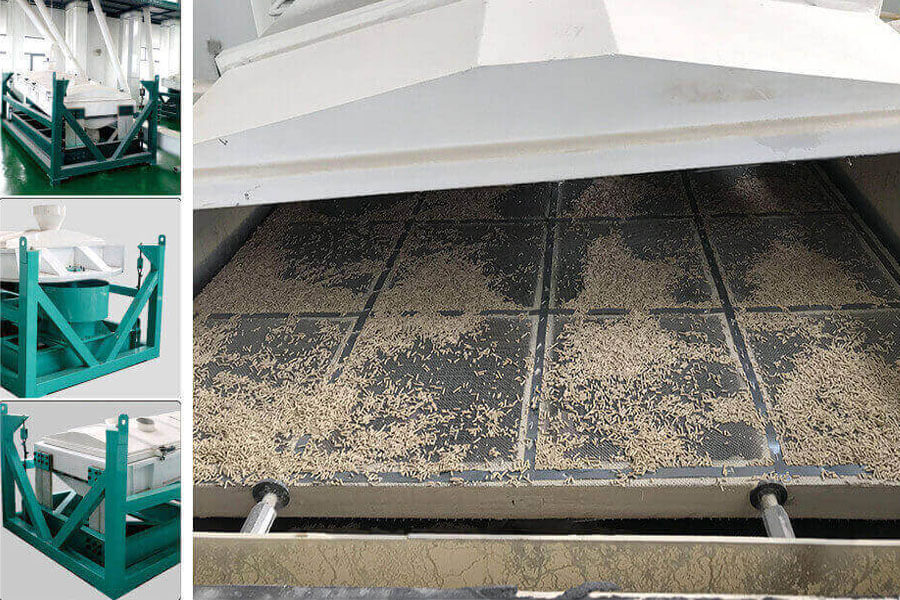
Dust is the number that ends contracts, and it is the one that is cheapest to fix before the bag rather than after. A 0.5 mm screen after the pellet cooler, a hood over the bagging spout and a bag filter on the exhaust take a clay granule from two and a half per cent dust to under one, and the difference is a customer who reorders. The screening side of that is on the cooling and screening page.
Six things that turn a litter granule into a complaint
Four of these are upstream of the pellet mill and two are downstream, and none of them is fixed by pressing harder.
| What it is | What goes wrong | What to do about it |
|---|---|---|
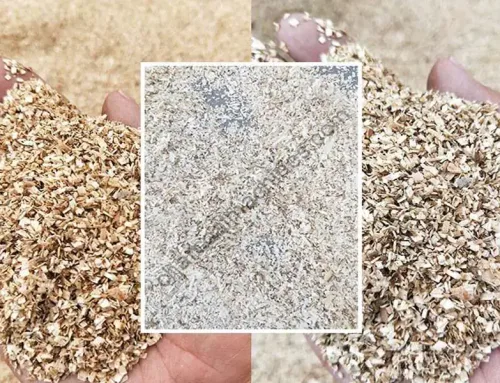
| Crushing | Clay has to go under 2 mm before it will granulate; coarser and the granule comes out lumpy and dusty at the same time | A wood hammer mill and a 2 mm screen ahead of the granulator, and the same for pine sawdust at 5 mm |
| Moisture at the die plate | Clay under 18 % will not bind and the granule crumbles; over 30 % it comes out as paste and blinds the die plate | Add the water in the mixer and let it temper, rather than chasing it at the die plate |
| Die wear | Silica is harder than the die plate. A worn die plate makes a soft granule and a bag full of dust, and it does it gradually | A hardened die plate, a 1:4 ratio, and an inspection every 150 hours instead of every 500 |
| Drying | Clay over 8 % sets into a lump in the bag; a pine pellet under 6 % goes brittle and makes its own fines in the bag | A sawdust dryer sized on the water an hour rather than on the output, and a moisture meter at the bag |
| Screening | Under 0.5 mm is dust and over 4 mm is a stone. One deck cannot do both, and a stretched mesh does neither | Two decks, with the oversize back to the crusher and the fines back to the mixer |
| Dust collection | Clay dust is a silica exposure and a bag of dust is a complaint. Both arrive at the same time | A hood and a filter on the crusher, the screen and the bagging spout — not one filter for the whole building |
The first three rows are where a clay line is won or lost, and all three are about the die plate. Particle size decides whether the granule is dense enough to hold; moisture decides whether it binds at all; and wear decides how long either of those stays true. A pine line has the same three rows and a much easier time with all of them, which is why the honest advice to a site with one flat die pellet mill and no granulator is to make pine litter and leave the clay to somebody with the right plant.
Three columns will not fit a phone. Swipe the table sideways for the remedy.
The die plate wear row is the one that has to be planned rather than discovered. A bentonite die plate at 150 to 300 hours against 350 to 500 for pine is not a rounding difference: on a two-shift plant it is a die plate every three to six weeks, and the die plate is the largest single consumable in the cost of a tonne of clay litter. Budget it as a monthly line, keep a spare on the shelf, and check the ratio at every shutdown rather than at every failure.
The last row is the one that is a legal matter rather than a commercial one. Bentonite is a crystalline silica bearing material, and the dust from crushing, screening and bagging is the exposure that matters. A cyclone and a bag filter on each dust point, a hood at the bagging spout and a mask rule on the floor are the minimum, and they happen to be the same equipment that takes the dust out of the bag. The fire and dust side of a build is on the dust safety page.
Your output, your bag, and the die plate the material asks for
Four fields. The output sets the pellet mill, the bag sets the packing machine, and the material sets the die plate — which on clay is the figure that decides the cost of a tonne.
At 20 t a day over 10 hours the pellet mill has to make 2,000 kg/h of cat litter: 200 bags of 10 kg an hour, 100 bags to the tonne. On pine that is HML-600, rated 1.5–2.0 t/h, on a 1:4 to 1:5 die plate good for 350–500 hours on pine.
The output is finished bagged litter, not raw material in. The model is chosen on the fuel rating for that frame, so a litter line runs at the top of the range or slightly above it, and the die plate hours in the last box are set by the material rather than by the frame.
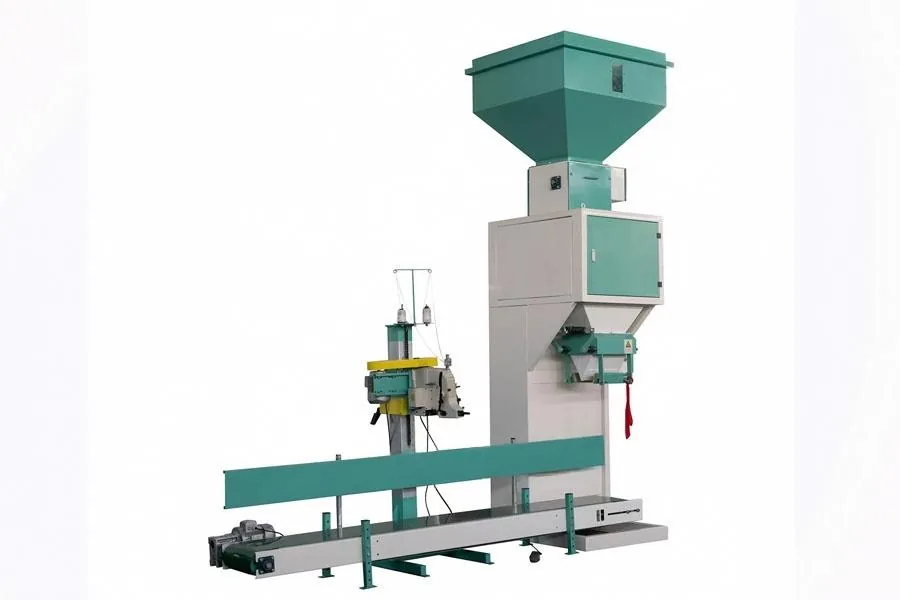
The bag count is the number to take to a packaging supplier, because it is bags an hour that sets the bagging scale rather than t an hour. A 10 kg bag is 100 to the tonne and a 5 kg bag is 200, so the same output doubles the bagging rate — which is the reason a litter plant that sells small bags puts a second weigher on rather than running the first one faster.
The die plate figure is the one this page exists for. Clay, pine and paper do not wear a die plate at the same rate, and the tool reports the ratio and the hours for the material you picked rather than one number for all three. If the answer is clay and the hours look short, that is the honest answer and not a pessimistic one — the alternative is to find out over three months of production.
Choosing a litter product, in the order it has to happen
The first two are decisions about the product and the last two follow from them. Getting the order wrong means buying the wrong production line.
Decide clay or pine before anything else
Clumping clay and compostable pine are two different plants, two different customers and two different prices. A site that has not decided this cannot order a die plate, a screen deck or a bag.
Fix the granule size and the dust limit
0.5–4 mm in grades for clay, 6 mm for a pine pellet, and under 1–2 % under 0.5 mm for both. These three numbers set the crusher, the screen decks and the bagging spout, and they are free to decide now.
Then the die plate, and what it is made of
1:4 to 1:5 for pine, and a hardened die plate at the same ratio for clay. Say what the material is when the die plate is ordered, because the steel and the heat treatment are chosen for it.
Then the drying, the screen and the bag
Clay under 8 %, pine at 8–10 %, a 0.5 mm screen after the pellet cooler, a hood on the bagging spout and a printed bag at the weight the market buys. This is the stage that decides whether the product arrives as litter or as dust.
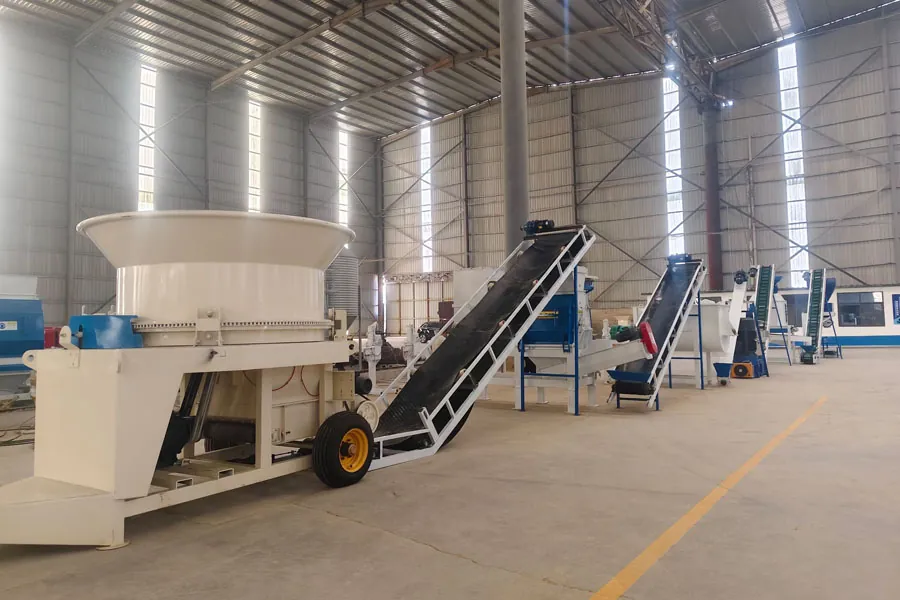
The first step is the one people try to skip, and it cannot be skipped, because the shopping list is different from the first item. Clay needs a crusher, a mixer, a granulator or a hardened ring die plate, a sawdust dryer, two screen decks and a dust filter. Pine needs a wood hammer mill, a flat die pellet mill, a pellet cooler and a screen. The only two items the lists share are the sawdust dryer and the bagger.
The third step is where a clay line quietly gets expensive. A standard die plate ordered for wood will run on bentonite for a few weeks and then start making a soft granule, and the symptom looks like a moisture problem rather than a wear problem — so the moisture gets chased, the granule stays soft, and the die plate is the last thing anybody checks. Order the hardened plate for the material, and check it on a schedule rather than on a complaint.
Three sizes of litter plant, and what each one commits to
Almost every litter operation is one of these three. They differ in what presses the granule, and in whether there is a granulator in front of it.
-
300–600 kg/h, a sawmill or a farm with pine waste
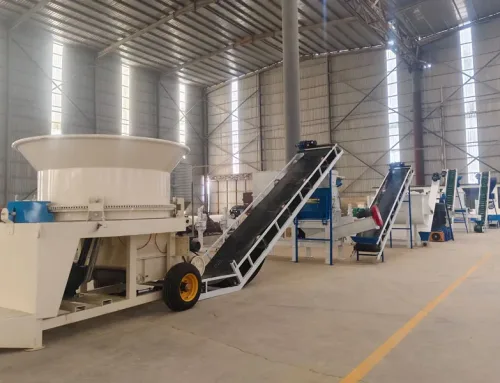
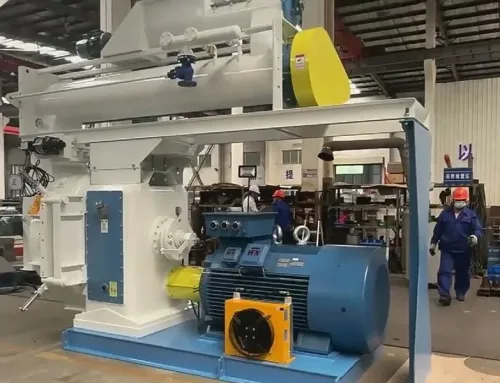
A flat die pellet mill — PM-D450B at 450–600 kg/h or PM-D580B at 600–800 kg/h — with a wood hammer mill ahead of it and a pellet cooler and screen behind. This is the build on the 500 kg/h wood pellet production line, and it is the cheapest way into a pine litter bag.
-
1 t/h
One PM-D450B pair or one HML-560, a sawdust dryer sized on the water, and a separate 0.5 mm screen. This is where the drying stops being optional and where the bagging moves from a scale and a person to a pellet packing machine.
-
2 t/h and up, or a clay line
A vertical ring die wood pellet mill — HML-600 at 1.5–2.0 t/h or HML-700 at 2.0–2.5 — for pine, and a granulator with a hardened die plate for clay. From here the product is a branded bag, and the die plate and the screen mesh are the two things that decide whether it stays branded.
The three routes are separated by whether there is a granulator, which is the one machine that does not appear anywhere else on this site. A pine litter plant is a wood pellet plant with a different die plate and a smaller bag, and every page behind this one applies to it unchanged. A clay plant shares the sawdust dryer, the screen and the bagger and nothing else, and the compression ratio chart is the only page here that carries over. Being clear about that at the quotation stage is worth more than a discount.
What buyers ask about cat litter pellets
Eight questions, answered the way we answer them on the phone.
What is the difference between bentonite and wood cat litter?
Bentonite is a swelling clay that clumps: it takes water into its structure, swells to 12–15 times its dry volume and sets into a clump a scoop lifts whole. A wood pellet absorbs about three times its own weight and then breaks down into sawdust, so there is no clump — the wet patch is lifted out and composted. One is a mineral and one is a by-product of a sawmill.
Can I make cat litter on a flat die pellet mill?
Yes for pine, and it is the easiest thing that mill will ever press: a 1:4 die plate, 6 mm, pressed at 12–15 % and bagged at 8–10 %. Bentonite also presses, but it is abrasive — the silica in it is harder than the die plate, so a clay die plate reaches 150–300 hours against 350–500 on pine.
What size should cat litter pellets be?
6 mm across and 8–20 mm long for a pine pellet, and 0.5–4 mm for clay granules, screened into fine, medium and coarse grades. In both products anything under 0.5 mm is dust, and the bag should carry under 1–2 % of it.
Why is my clay litter dusty?
Three reasons, in order of likelihood: the screen mesh has stretched, the die plate has worn and is making a soft granule, or the granule was dried too hard and is friable. A 0.5 mm sieve tells you which within a minute — and on a clay line the same dust is a silica exposure, so it matters twice.
How much does a bag of cat litter weigh?
A 10 litre bag of clay litter weighs 9–10 kg because clay is dense, and the same bag of pine pellets weighs about 6 kg. That is the bulk density difference — 0.9–1.0 kg a litre against 0.55–0.65 — and it is why pine litter ships cheaper and feels lighter on the shelf.
Do I need a granulator to make clay litter?
Usually yes. A ring die pellet mill with a hardened die plate will press bentonite, and some plants do exactly that, but an extrusion granulator gives a rounder, denser granule and takes the wear off the die plate. A pellet mill is not the centre of a clay plant the way it is the centre of a pine plant.
Why pine and not another wood?
The terpenes. Pine and spruce carry the compounds that hold ammonia down, which is most of what odour control is, and they are soft enough to press at a 1:4 ratio. Hardwood makes a denser pellet that absorbs more slowly, and treated or painted timber has no place in a bag a cat lives in.
Is pellet litter flushable?
In small amounts, yes — it is sawdust and nothing else, which is the point. Clay is not: it swells, and a bentonite clump in a drain is a plumber. If the bag is going to say flushable, the product has to be pine or paper and it has to carry no binder that would not go down a drain.
Send 20 kg of clay or sawdust and we will cut the die plate for it
What the material is, how wet it arrives, the granule size you want to sell and the bag it goes in. That is enough to name the die plate, the ratio and the pellet mill.
What happens after you send it
We press it on a flat die pellet mill at 1:4 and 1:5, screen the result at 0.5 mm and 4 mm, and report the dust, the density and the absorbency — then tell you which die plate to order and what to expect from it in hours. If the honest answer is that bentonite will eat a standard die plate and you should be talking to a granulator supplier, we say that before you buy anything.
Your details are not shared. One follow-up, no mailing list.