


Pellet Cooler & ScreenerCombined cooler and screener to 1 t/h · counterflow pellet cooler from 1 to 5 t/h
A pellet leaves the press at 70–90 °C, soft, and still carrying the moisture it went in with. Bag it like that and it sweats in the bag, cakes in the silo and grows mould in the container. A pellet cooler brings it down to within 3–5 °C of room temperature and 12.5 % moisture; the screener takes out the fines the die left behind. We build both, and we build them to the line they sit in.
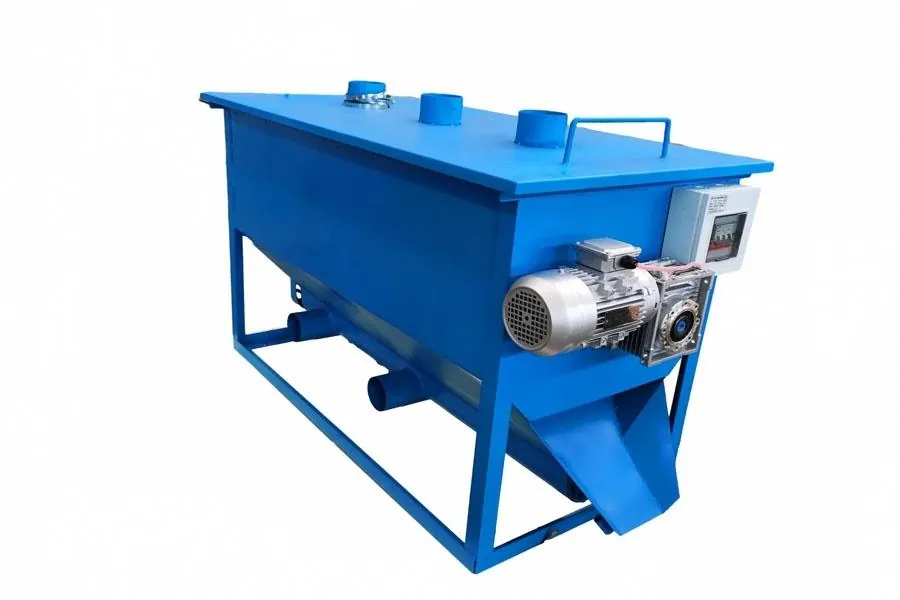
- Pellet cooler and screener LQ-50 and LQ-70 — 0.75 + 2.2 kW, 0–1,000 kg/h, cooling and screening in one frame
- Counterflow pellet cooler NL-11 and NL-14 — 1.55 + 5.5 kW, 1–5 t/h, 6–10 minutes of retention time
- For feed pellet lines and wood pellet lines, flat die or ring die
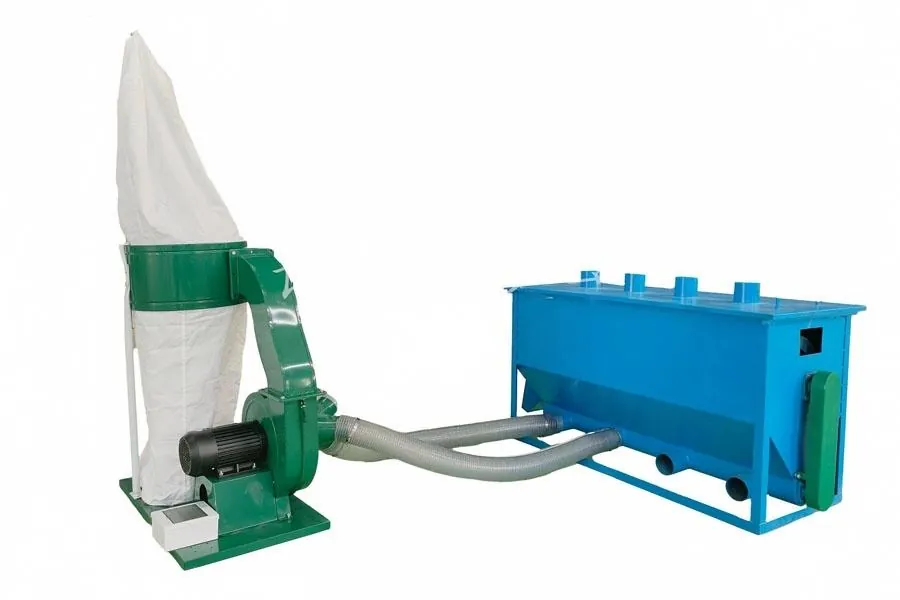
- Blower, cyclone, ducting and filter bags in the same scope
Reply in 12 working hours · Sized on your pellet size and capacity · Delivered to 40+ countries
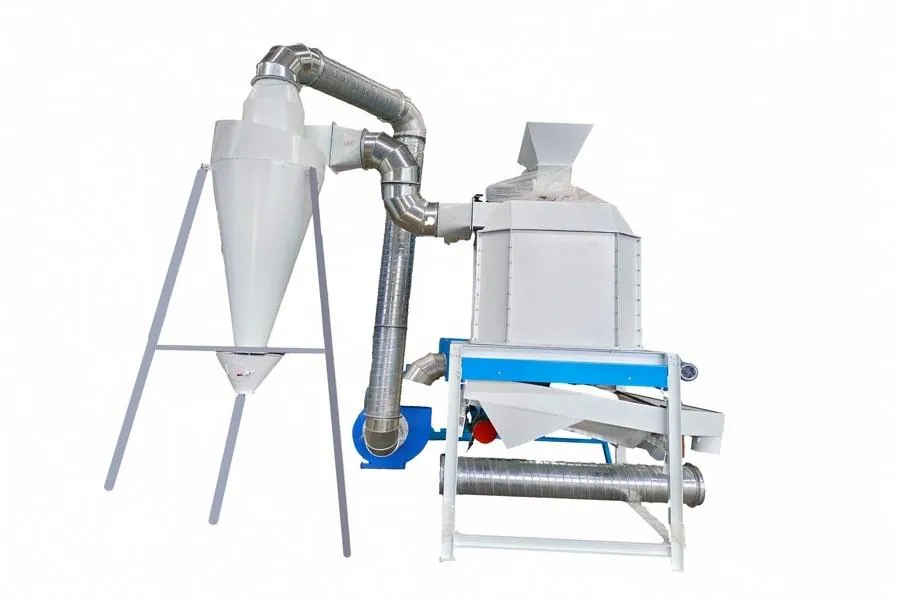
A hot pellet in a bag is a mouldy pellet in a month
Cooling looks like the simplest machine in a pellet line, and it is the one that decides whether the bag you ship is still good when it lands. The press is where the pellet is made; the pellet cooler is where it is made to last.
A pellet comes off the die at 70–90 °C. It is soft, it is still giving off water, and it has not yet found its final hardness — that happens as it cools. Send it straight to the bag and three things follow. The water condenses on the inside of the bag, and where there is water and starch there is mould. The warm pellet deforms under the weight of the bag above it, so the corners break off in transit. And the moisture that was meant to leave in the cooler leaves in the container instead, which is the version your customer opens.
The target is not cold, it is settled: within 3–5 °C of room temperature and at or under 12.5 % moisture, which is the line most feed standards draw for safe storage. A counterflow pellet cooler reaches that in 6–10 minutes of retention time without shocking the pellet, and that last part is the whole design.
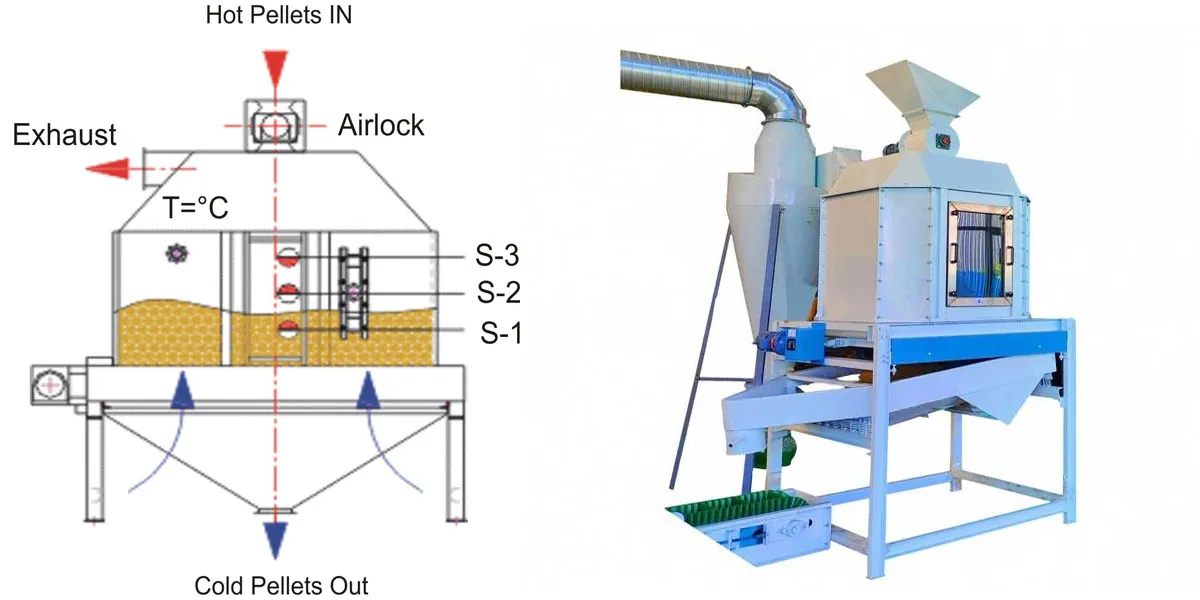
Cooling too fast is its own fault. Blast ambient air at a pellet that is still at 90 °C and the skin contracts before the core does; the pellet comes out with hairline cracks that only show up as fines in the bag a week later. Counterflow avoids it by running the air and the pellets in opposite directions — by the time the air is hot it is meeting pellets that are already cool, and the temperature step across any single pellet is small. That is why the counterflow pellet cooler replaced the vertical and horizontal coolers that came before it, and why it cools to a lower final temperature on less air.
The screen is the other half of the job. A die throws fines, a conveyor breaks corners and the cooler itself makes a few more, so the material arriving at the bag is never all whole pellets. Screen it and two things happen: the bag holds pellets instead of dust, and the fines go back to the press where they belong. On a small line both jobs sit in one frame — that is the pellet cooler and screener — and on a larger line they are two machines with a conveyor between them.
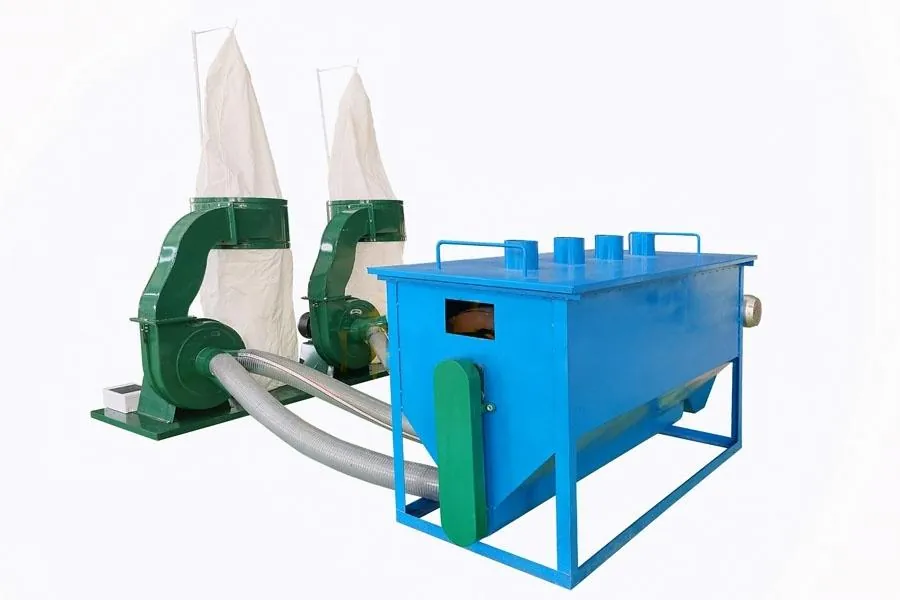
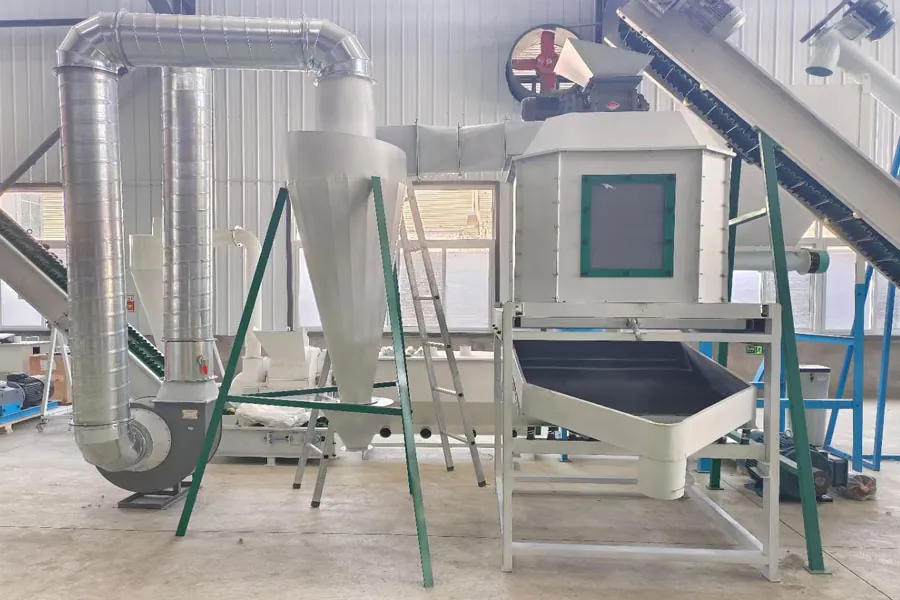
One frame with a screen in it, or a tower with an airlock on top
Both machines do the same job and they are not interchangeable. The combined pellet cooler and screener is a compact box that sits on the floor beside the press; the counterflow pellet cooler is a tall vessel that is loaded from above and discharges in batches. Capacity decides between them, and so does the room you have.
| Pellet cooler and screener (LQ) | Counterflow pellet cooler (NL) | |
|---|---|---|
| Capacity | 0–500 kg/h on the LQ-50, 0–1,000 kg/h on the LQ-70 | 1–2 t/h on the NL-11, 2–5 t/h on the NL-14 |
| What it is | A cooling box and a screen deck on one steel frame, with two or three blowers pulling air across the box and filter bags on the outlet | A vertical cooling box: airlock feeder on top, pyramid spreader, level sensors, slide-valve discharge at the bottom, cyclone and blower in the air circuit |
| Cooling principle | Air is pulled across the batch in the box; the pellets sit in a shallow bed and cool in one pass of a few minutes | Air and pellets travel in opposite directions, so the temperature step across each pellet is small and the retention time is 6–10 minutes |
| Screening | Built in — the pellets cross a screen on the way to the discharge chute, fines drop through | Not built in. A separate screener sits after the cooler, usually fed by the same conveyor that takes the pellets away |
| Footprint | 1,800 × 750 × 1,100 mm, no headroom needed above the box | 2,050 × 1,320 × 3,200 mm on the NL-11, 2,480 × 1,700 × 3,400 mm on the NL-14 — it is a tall machine and needs the roof clearance for the airlock and the cyclone |
| Discharge | Chute at the bottom of the frame, straight into a bag, a barrow or a short conveyor | Slide valve, intermittent, driven by the level sensors — it discharges a batch, closes, and waits for the box to fill again |
| Bought with | A 500 kg/h or 1 t/h flat die line, a small wood line, or a farm plant that bags its own feed | A ring die line, a larger flat die line, or any plant where the cooler has to sit under a conveyor and be loaded from above |
The dividing line is about 1 t/h. Below it the combined unit wins on price and on floor space, because one frame does two jobs and there is no conveyor between them. Above it the counterflow pellet cooler wins on retention time and on final temperature, and the screener becomes its own machine downstream.
Tell us the line and the pellet
Four answers size a pellet cooler: how many kilos an hour the press makes, what diameter the pellet is, what it is made of, and what sits after the cooler. Everything else — combined unit or counterflow, air volume, screen mesh, discharge height — follows from those.
What happens after you send this
We answer with the type, the model, the air volume the blower has to move and a price — and with the retention time you will get at your capacity, which is the number that decides whether the pellets are actually cool when they reach the bag.
Reply within one working day. No obligation.
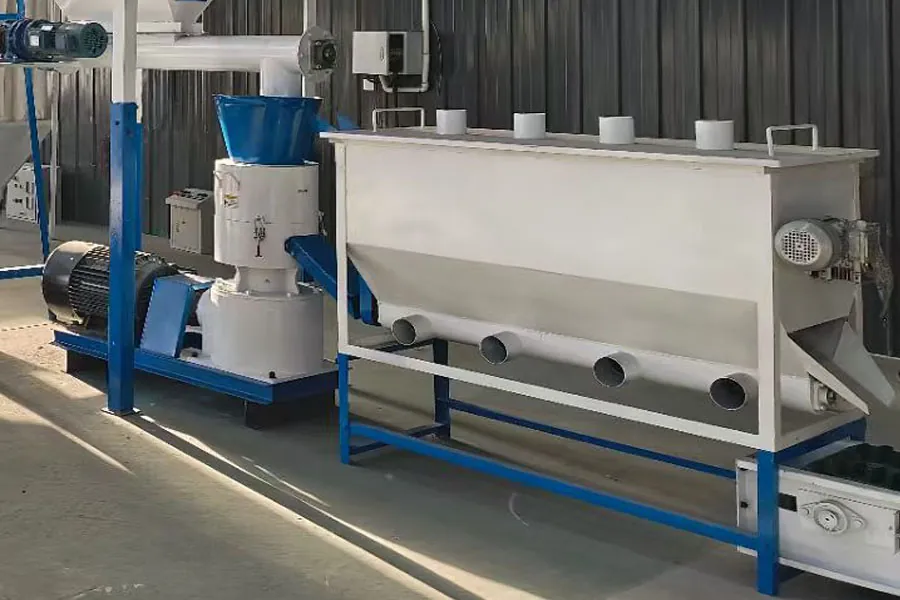
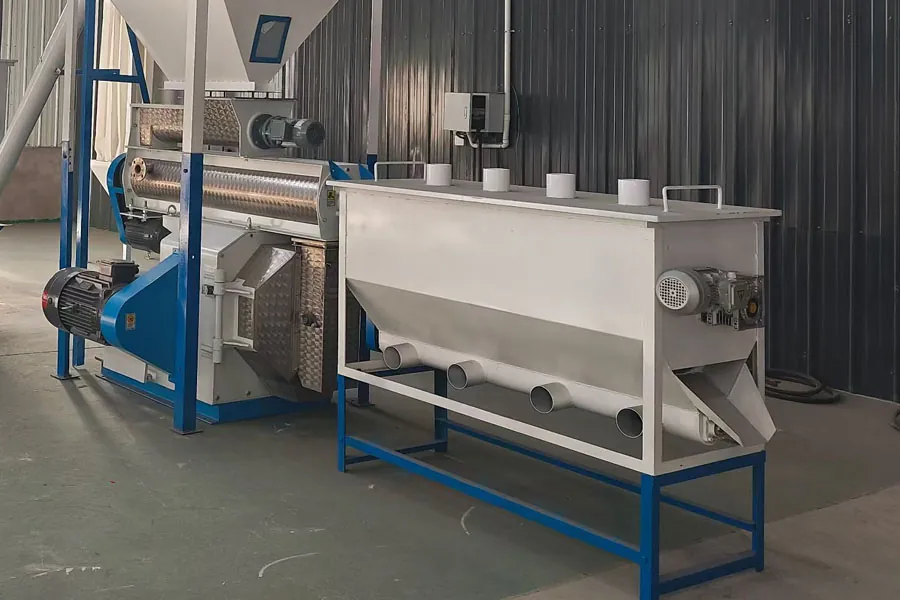
Cooling and screening in one frame, 0 to 1,000 kg/h
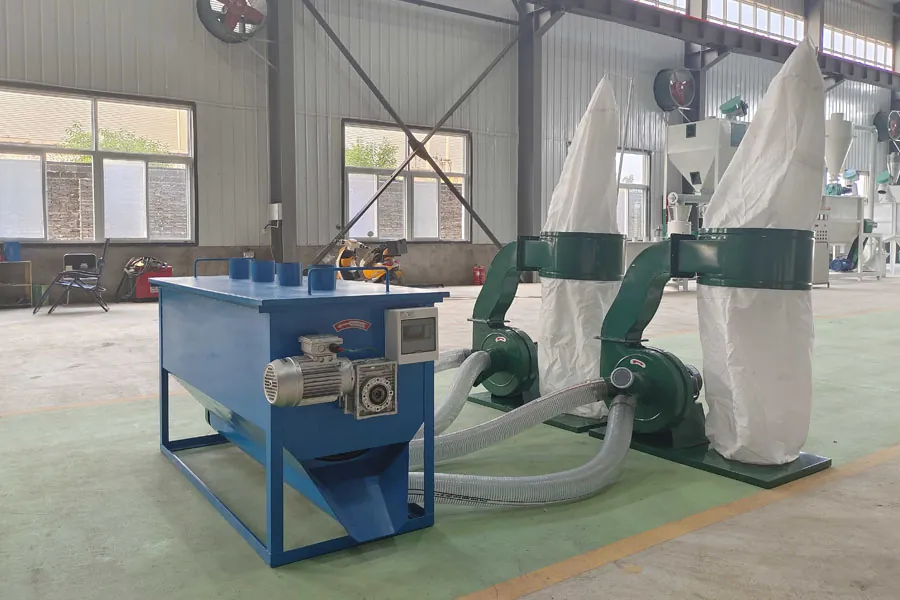
The LQ is the machine for a line that makes under a tonne an hour. It is a box: pellets go in at the top, air is pulled across them by two or three blowers, and on the way out they cross a screen that takes the fines out before the bag.
-
Cooling box
A shallow rectangular chamber with inlet ports on the lid and the blower hoses on the top face. The bed is deliberately shallow — 100 to 150 mm — so the air reaches every pellet instead of just the top layer.
-
Air system
Two blowers on the LQ-50, three on the LQ-70, each with a fabric filter bag on the outlet. The bags keep the dust out of the workshop; without them the fines that come off the pellets settle on everything within ten metres.
-
Screen deck
Sits under the cooling chamber, inclined, driven by its own motor. Whole pellets ride over it to the discharge chute; fines and crumbs drop through to a separate outlet and go back to the press.
-
Discharge
A chute at the bottom of the frame, with a 0.75 kW drive on the discharge roller. Height is set on the drawing so it lands in a bag, a barrow or the boot of a short conveyor without a second machine.
-
Control
A small box on the end plate with the starters for the discharge and the screen motors. Nothing to program and nothing to tune — the unit is set up on test before it is crated.
-
Frame
Bolted steel frame, no foundation. It stands on a level concrete floor and is held down with expansion bolts, which matters on a farm where the plant may move.
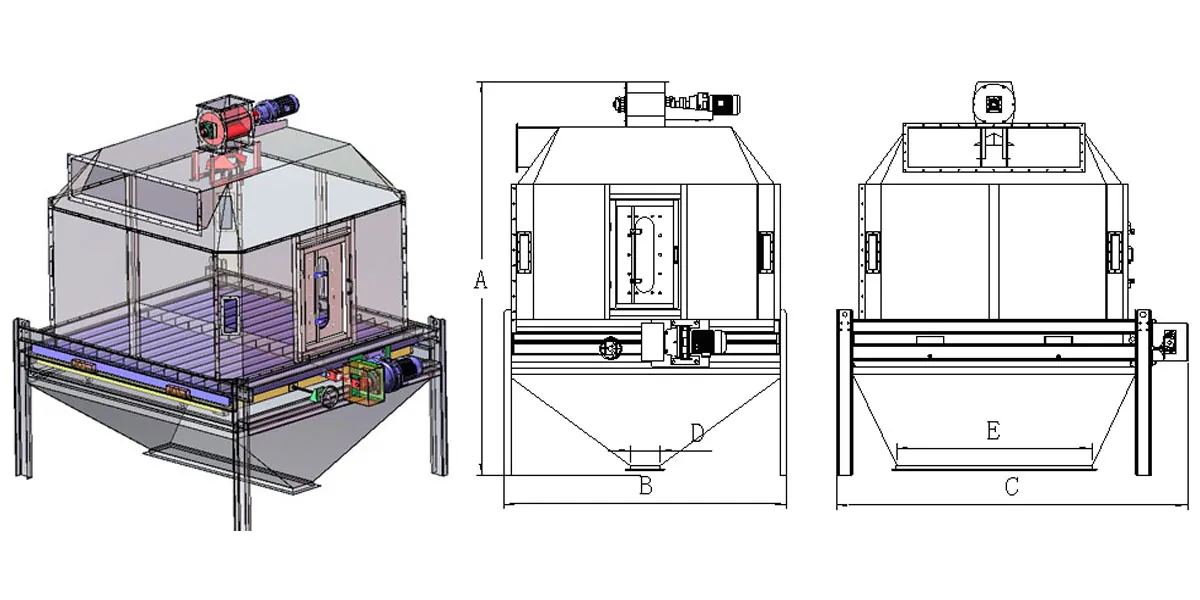
The tower: airlock on top, level sensors in the middle, slide valve at the bottom
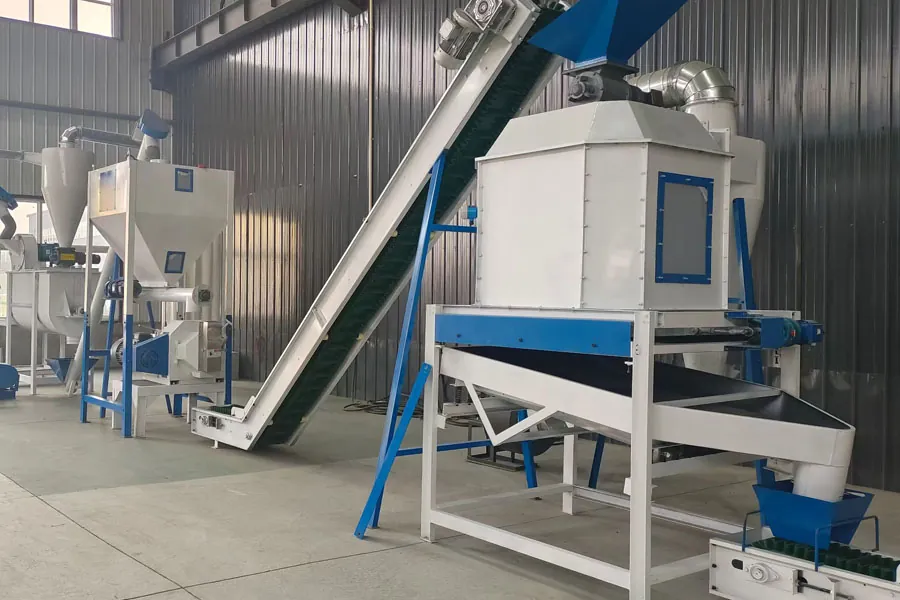
Above about a tonne an hour the cooler becomes a vessel rather than a box. Pellets arrive at the top through a rotary airlock, fall through a pyramid spreader that stacks them evenly, and sit in the cooling chamber while air is drawn up through the bed from underneath.
Rotary airlock
Pellets come in from the conveyor or the press chute through a rotary airlock. The airlock does two jobs: it meters the flow, and it keeps the air circuit sealed so the blower pulls air through the bed instead of through the inlet.
Pyramid spreader
Two adjustable half-pyramids under the inlet throw the pellets out to the walls of the box. The gap is set on site: too tight and the material heaps in the middle, too wide and it runs down the walls, and either way the air finds the thin side.
Cooling chamber
Air is pulled in at the bottom and up through the falling bed, so the coldest air meets the coldest pellets. The bed depth is what sets the retention time — 6 to 10 minutes at rated capacity — and the level sensors hold that depth automatically.
Slide valve discharge
An eccentric-driven slide valve opens and closes on the level sensors: it discharges a batch, closes, and waits for the box to fill again. Intermittent discharge is what keeps the bed depth — and therefore the cooling time — constant.
Air circuit
A centrifugal blower pulls the air out through a cyclone or dust collector. Duct runs should be short, with as few bends as possible, and lagged where the air is still warm — condensation in a horizontal run is what blocks ducts.
Air volume is the number that sizes everything else. A counterflow pellet cooler needs 22 to 34 cubic metres of air per tonne of pellets per minute, and the figure moves with the diameter of the pellet: a 4 mm feed pellet is dense and short of path, a 22 mm pellet is a much bigger load on the same blower. Size the blower on the largest pellet you will ever run, then damper it down for the small ones — the other way round does not work.
The other figure worth knowing is that the cooler has to be loaded from above. That is not a detail: on a ring die line the press discharges at die height and the cooler sits on a mezzanine, fed by a belt or a bucket elevator. If the layout has no height for that, the combined pellet cooler and screener at floor level is the honest answer, at a lower capacity.
| Pellet diameter | Air volume, m³ per t per minute | What it means |
|---|---|---|
| 4–5 mm | 22 | Feed pellets, small diameter, the easiest load on the blower |
| 6 mm | 25 | Feed pellets and small wood pellets |
| 8–10 mm | 28 | Wood pellets, grass pellets, larger feed pellets |
| 12–20 mm | 31 | Large feed pellets, coarse biomass |
| 22 mm and up | 34 | The heaviest load — size the blower on this figure, not on the average |
Figures from the cooler manual. Work the air volume out on the largest diameter in your product range and set the damper down for the rest; a blower sized on the average will starve the big pellet and the middle of the bag will still be warm.
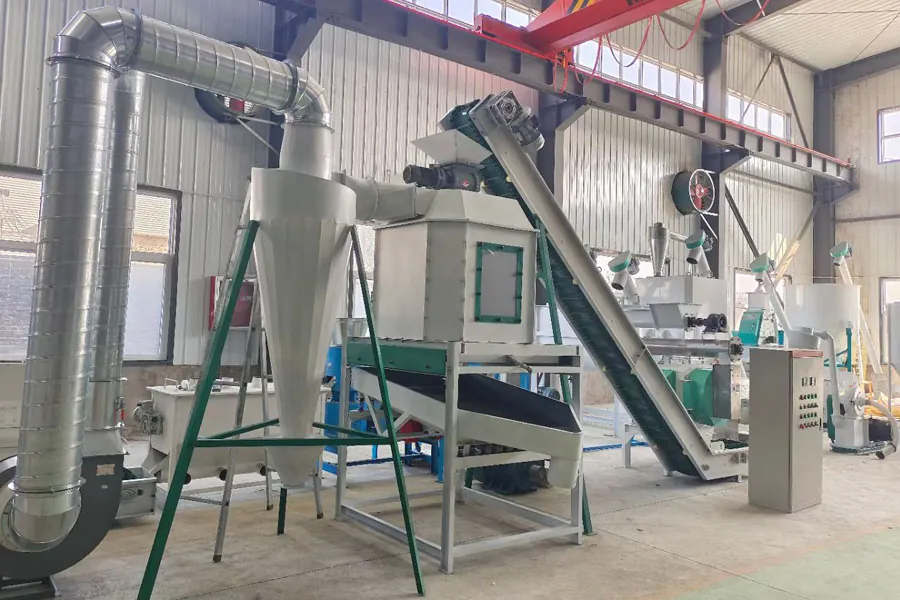
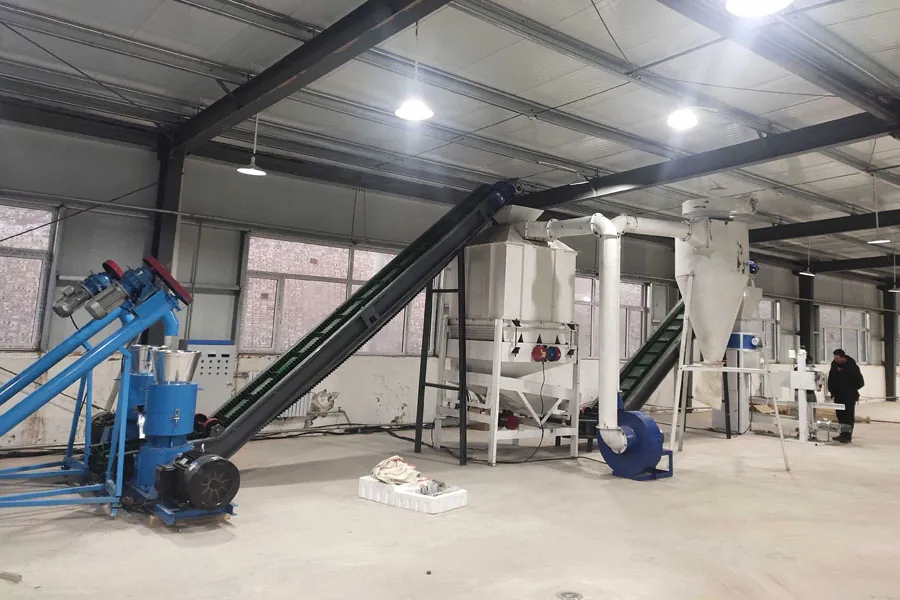
Four sizes, 500 kg/h to 5 t/h
Capacity is quoted on feed pellets at the rated diameter. A wood pellet runs close to the figure because it arrives drier; a soft, high-moisture pellet runs below it, because the cooler is taking water out as well as heat.
Pellet cooler and screener, LQ series two models
| Model | Power | Capacity | Size L×W×H | Weight |
|---|---|---|---|---|
| LQ-50 | 0.75 + 2.2 kW | 0–500 kg/h | 1,800 × 750 × 1,100 mm | 220 + 65 kg |
| LQ-70 | 0.75 + 2.2 + 2.2 kW | 0–1,000 kg/h | 1,800 × 750 × 1,100 mm | 220 + 120 kg |
Power is quoted as a sum because there is more than one motor: 0.75 kW on the discharge and one or two 2.2 kW screen drives. The two weight figures are the cooling box and the screen assembly, which ship in separate crates. The LQ-70 is the same frame as the LQ-50 — it is the second screen deck and the second blower that double the throughput.
Counterflow pellet cooler, NL series two models
| Model | Power | Capacity | Size L×W×H | Weight |
|---|---|---|---|---|
| NL-11 | 1.55 + 5.5 kW | 1–2 t/h | 2,050 × 1,320 × 3,200 mm | 500 kg |
| NL-14 | 1.55 + 7.5 kW | 2–5 t/h | 2,480 × 1,700 × 3,400 mm | 1,100 kg |
1.55 kW is the braked gear motor on the slide-valve discharge; 5.5 or 7.5 kW is the blower, and the blower is the number that decides how much air you get. Both models are quoted without the cyclone and ducting, which are priced to the run length on your site.
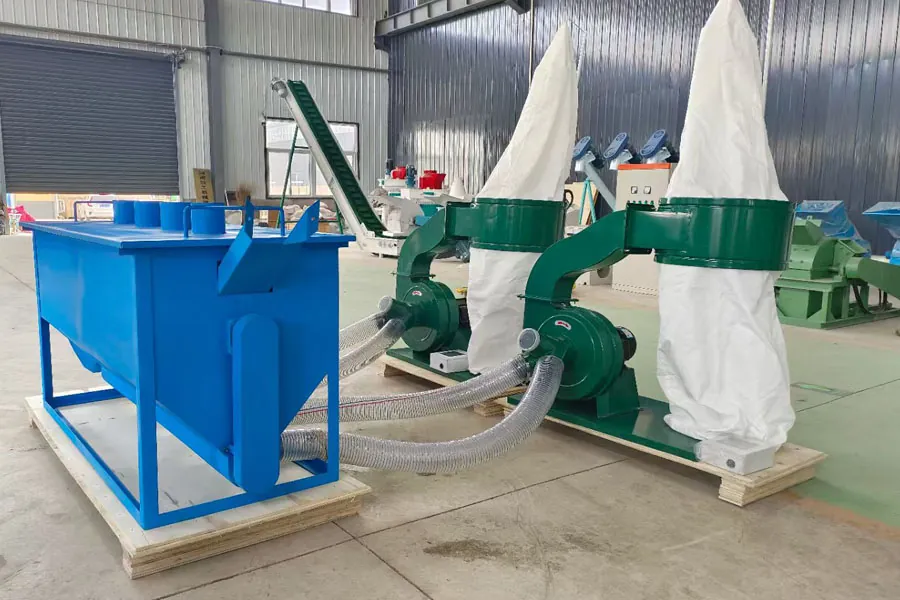
What the screen is actually taking out
A screen is not a quality upgrade, it is a correction. Everything it removes was made upstream and would otherwise be shipped, and the value of the machine is that the material it catches goes back into the press instead of into a bag.
| What comes out | Where it comes from | What happens to it |
|---|---|---|
| Fines and dust | Thrown off the die, rubbed off in the conveyor, made by the cooler itself | Through the screen to a separate outlet, then back into the press — or bagged as a lower-grade product if you have a market for it |
| Crumbs and broken pellets | The knife, the drop into the cooler, the discharge | Over the screen with the good pellets, back to the press. A pellet that has lost a corner will not survive a second handling |
| Oversize and doubles | A worn die, a blunt knife, a choked feed | Caught on top of the screen. Either crumbled and re-pressed, or set aside — they will not pass a customer’s sieve |
| Foreign bodies | String, wood chips, a bolt off the conveyor | Stopped at the screen. This is the last place in the line where a foreign body can be caught before it is in a bag |
Mesh is set to your pellet diameter — roughly a third of it, so a 6 mm pellet runs a 2 mm screen and a 4 mm feed pellet runs 1.5 mm. Too coarse and the fines go through with the pellets; too fine and you are screening good product back to the press, which costs you capacity for nothing.
On the combined pellet cooler and screener the screen is inside the same frame, so the pellets cross it on the way to the discharge and there is no conveyor, no second motor and no extra metre of floor. That is the whole reason the LQ exists: at 500 kg/h a separate screener costs as much as the cooler and takes up more room than the press.
On a counterflow line the screener is its own machine, usually a rotary or a vibrating screener between the cooler discharge and the bagging scale, and the fines it takes out are returned by a small screw conveyor to the press inlet. If you are building a line from scratch, that return conveyor is worth drawing in from the start — retro-fitting one under an existing screener is always more work than it looks.
Where the cooler sits, in a feed line and in a wood line
In both lines the cooler is the machine immediately after the press, and in both lines it is the machine that has to be planned for early — because of where the pellets come from and where they have to go.
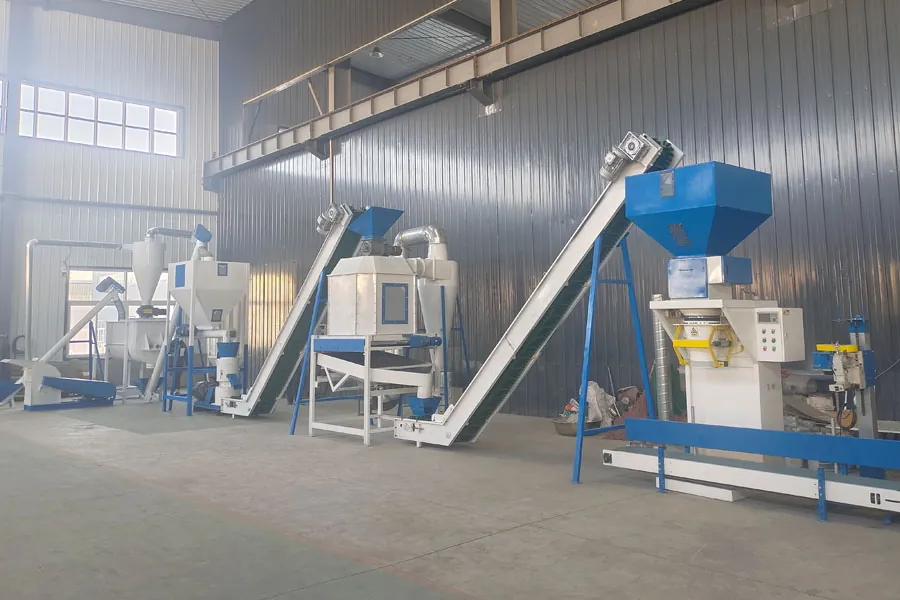
A feed pellet production line runs: hammer mill → batching scale → feed mixer → conditioner → flat die feed pellet mill or a ring die press → pellet cooler → screener → bagging scale. The cooler takes the pellets at 70–90 °C and hands them on at room temperature and under 12.5 % moisture. Everything downstream — the screener, the bagging scale, the pallet — assumes the pellet is already hard, and it only gets hard as it cools.
A wood pellet production line runs: wood crusher → wood hammer mill → biomass sawdust dryer → vertical ring die pellet mill → pellet cooler → screener → bagging. Wood pellets arrive at the cooler drier than feed, so the cooler is doing temperature rather than moisture — but a wood pellet is also hotter off the die, and a hot wood pellet that goes into a 15 kg bag sets into a block.
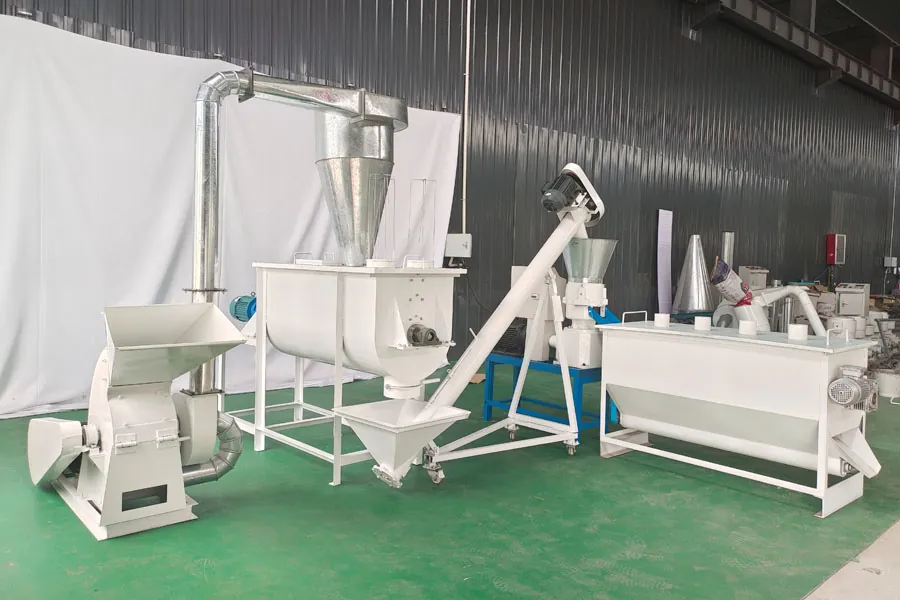
What we change on a standard pellet cooler
The cooling box and the airlock are standard. Everything around them is set by the line you are putting them in, and it is all settled on the drawing before the steel is cut.
-
Air volume and blower
Sized on the largest pellet you will run, 22 to 34 m³ per tonne per minute. The damper is then set down for smaller pellets rather than buying a second blower.
-
Ducting and dust collection
Cyclone or dust collector, duct run and lagging. Short and straight beats large and elaborate — a long horizontal run is where condensation blocks the pipe.
-
Discharge height
Set by the bag, the conveyor or the screener that comes next. On an LQ it is a chute height; on an NL it is the frame height, and it cannot be changed after the frame is welded.
-
Screen mesh
Chosen to your pellet diameter, roughly a third of it. We fit one mesh and send a second in the crate if you run two pellet sizes.
-
Motor and electrics
380 V / 50 Hz three-phase as standard; 415 V, 440 V and 60 Hz to order. Local control box, or wired into your panel.
-
Finish
Paint colour to your specification, stainless contact parts where the feed is corrosive or the plant washes down.
Delivery is 10–20 working days after the deposit for a pellet cooler and screener, 20–30 for a counterflow pellet cooler with cyclone and ducting. Payment is TT with 40 % in advance and the balance before delivery. The cooling box, the screen assembly and the air system are crated separately and numbered for assembly.
What comes before and after the pellet cooler
A pellet cooler is one machine in a line and it is useless on its own: something has to press the pellet and something has to weigh it. Below are both ends, and the machines that usually ship in the same order.
Spare screens, blower hoses and filter bags are on the spare parts page. Tell us the model and the mesh and we will send the right one.
Tell us what the cooler has to do
Capacity, pellet diameter, what the material is, and what sits after the cooler. We answer with the type, the model and the air volume the blower has to move.
Your details are not shared. One follow-up, no mailing list.
The cooler running, and the lines it sits in
A counterflow pellet cooler on test, the same machine working in a wood pellet line, and the structure and working principle explained — then the grass and straw lines where these coolers do the last job before the bag.


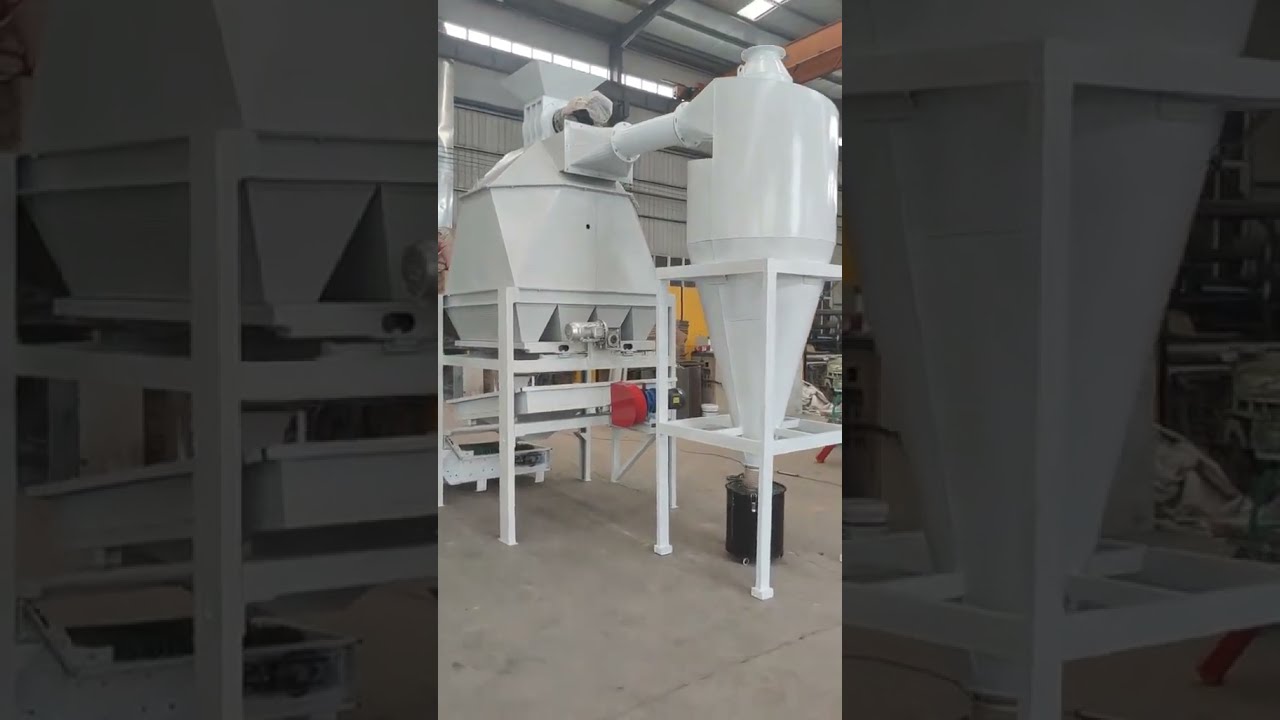


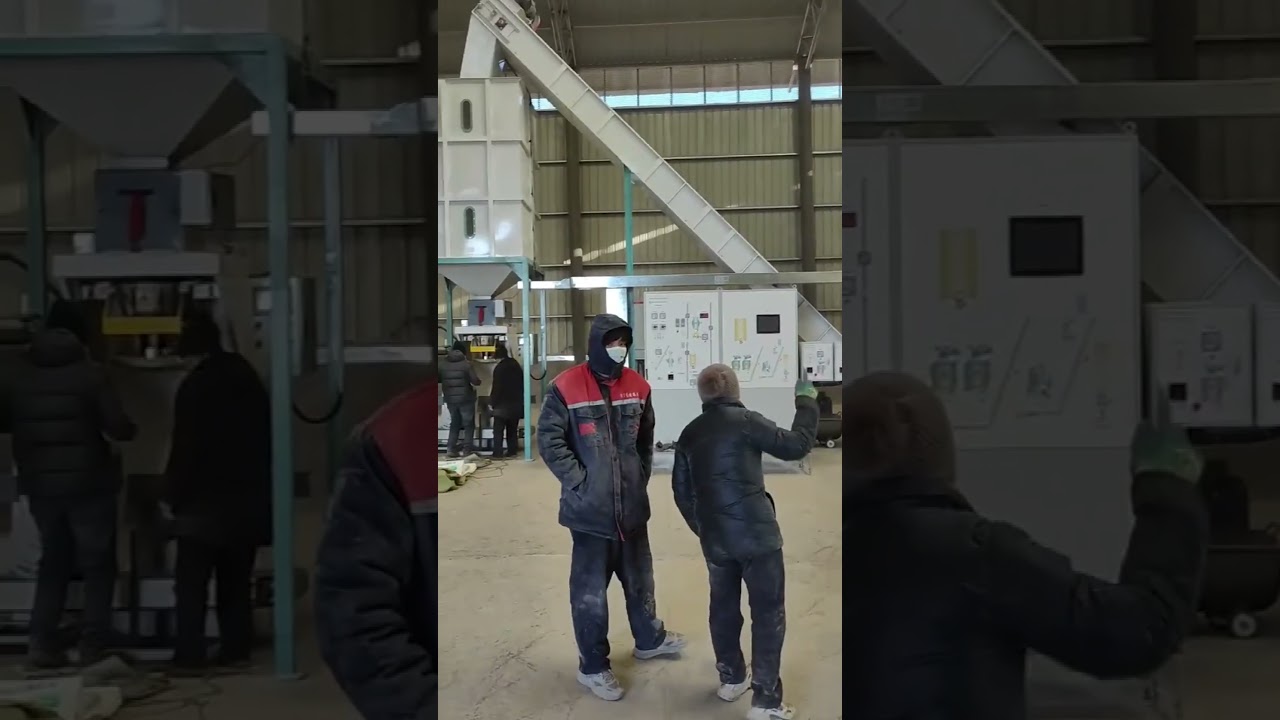

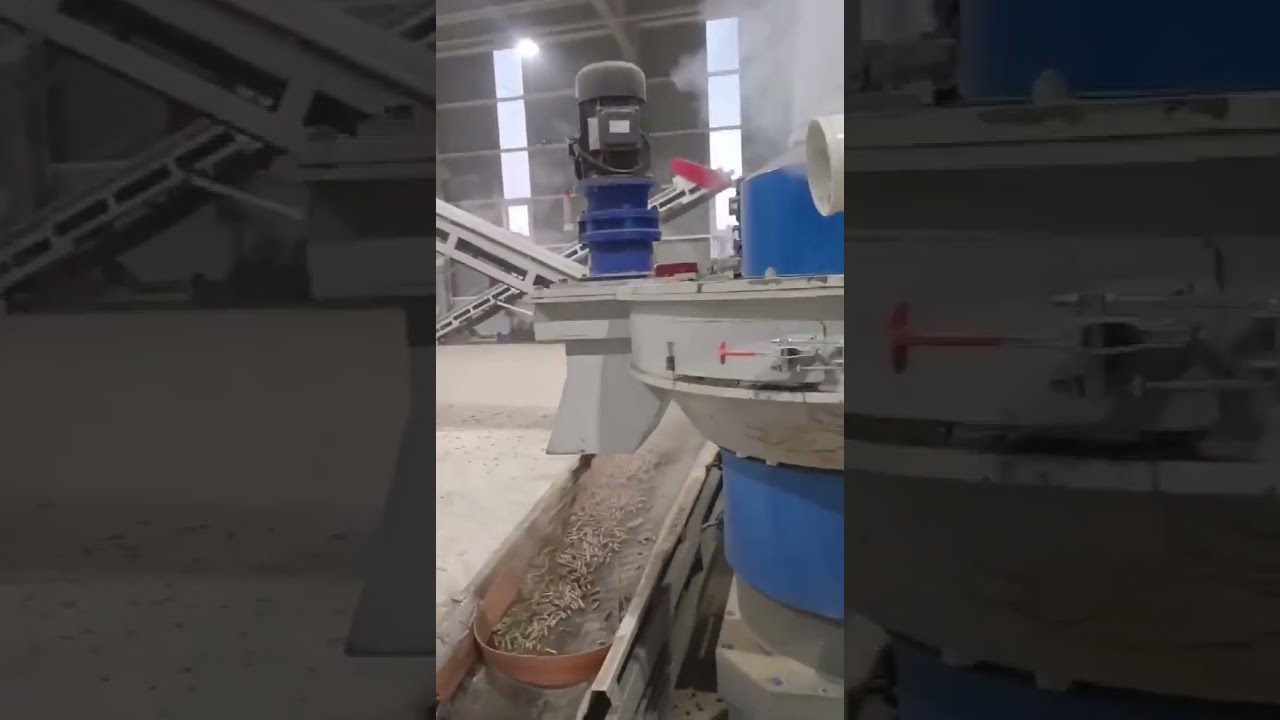
More test runs, shipping records and installation footage on our YouTube channel, and the whole Biomass Pellet Machines playlist.
What buyers ask before ordering a pellet cooler
What does a pellet cooler do?
It takes the pellets coming off the press at 70–90 °C down to within 3–5 °C of room temperature and holds them until the moisture has dropped to 12.5 % or below. That is the line for safe storage. Cool them and the pellet hardens, the surface stops being tacky, and the bag can be closed. Skip the cooler and the water condenses inside the bag, which is where mould and caking come from.
Do I need a pellet cooler and screener, or a counterflow pellet cooler?
Under about 1 t/h, the combined pellet cooler and screener: one frame, cooling and screening in the same machine, no conveyor between them and no foundation. Above that, the counterflow pellet cooler, which holds the pellets for 6–10 minutes and reaches a lower final temperature on less air — with a separate screener after it.
Why is counterflow better than blowing cold air through the batch?
Because cooling too fast cracks the pellet. If cold air hits a pellet that is still at 90 °C the skin contracts before the core, and the hairline cracks that result turn into fines in the bag. In a counterflow cooler the air and the pellets travel in opposite directions, so the temperature step across any single pellet is small and the cooling is gradual.
How long does the pellet stay in the cooler?
Six to ten minutes on a counterflow pellet cooler at rated capacity, and that is set by the bed depth rather than by the blower. The level sensors hold the depth automatically: the slide valve opens when the bed reaches the top sensor and closes at the bottom one. Run the cooler below its rated capacity and the retention time goes up, not down.
How much air does the blower have to move?
22 to 34 cubic metres per tonne of pellets per minute, depending on pellet diameter — 22 at 4–5 mm, 34 at 22 mm and above. Size the blower on the largest pellet in your range and damper it down for the rest. A blower sized on the average pellet will leave the middle of the bag warm.
Does the cooler need a foundation?
A pellet cooler and screener does not — it stands on a level concrete floor and is held with expansion bolts, so it can be moved if the plant is rearranged. A counterflow pellet cooler does: it is 3.2 to 3.4 m tall, weighs up to 1.1 t, and it is loaded from above, so the frame and the mezzanine it stands on are designed together.
Can one cooler handle both feed and wood pellets?
Yes, and most of ours do. The difference is in what the cooler is doing: a feed pellet arrives wet and hot, so the cooler is removing water and heat; a wood pellet arrives drier, so it is removing heat. What changes is the retention time and the air volume, which is why we ask for the material before quoting.
What screen mesh do I need?
Roughly a third of the pellet diameter — 2 mm for a 6 mm pellet, 1.5 mm for a 4 mm feed pellet, 3 mm for an 8 mm wood pellet. Too coarse and the fines travel to the bag with the pellets; too fine and you are screening good product back to the press. We fit one mesh and send a second if you run two pellet sizes.
How long is delivery?
10–20 working days after the deposit for a pellet cooler and screener, 20–30 for a counterflow pellet cooler with its cyclone and ducting. Payment is TT with 40 % in advance and the balance before delivery.
Send the capacity and the pellet size
How many kilos an hour the press makes, what diameter the pellet is, what the material is, and what sits after the cooler. Those four answers choose between a pellet cooler and screener and a counterflow pellet cooler, and size the blower behind it.
- Emailinfo@pelletmachines.net
- WhatsApp+86 186 0385 1787
- HoursMon–Sat, 08:00–20:00 (GMT+8)
A photo of the line and a note of the headroom above the press saves a round of questions. If you are replacing a cooler, send the model plate of the old one.
What happens after you send this
We answer with the type, the model, the blower size and a price — and with the retention time you will actually get at your capacity, which is the number that decides whether the pellets are cool when they reach the bag.
Your details are not shared. One follow-up, no mailing list.