Power Supply for a Pellet Mill: kVA and Starting Currentthe running load and the starting current are two different sums
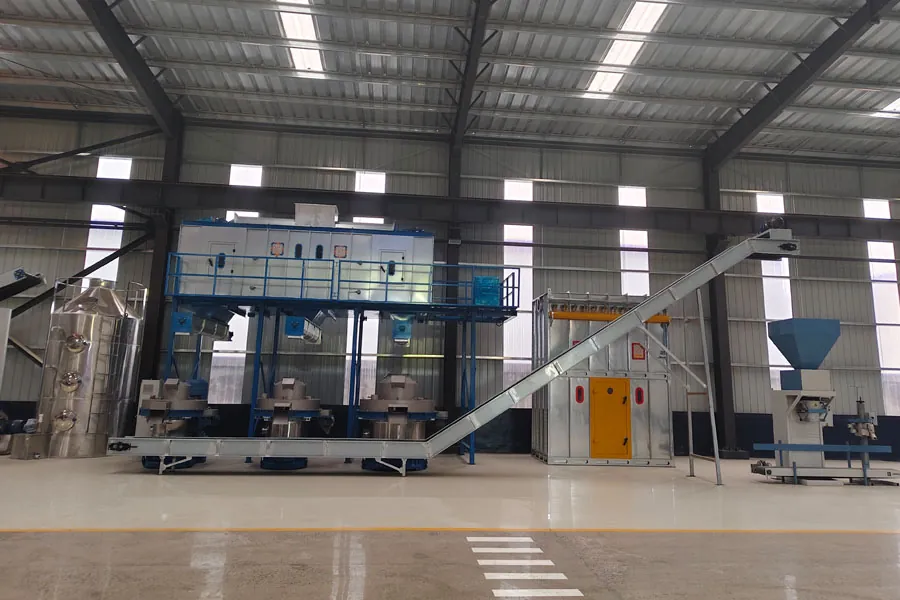
A 500 kg/h wood pellet production line draws 99 kW and needs a 160 A supply at 380 V. At 5,000 kg/h it is 775 kW and 1,250 A. But the number to take to an electrician is not the installed power: it is kVA for the running load, and the starting current of the largest single motor for the connection. Those two figures differ by five times, and getting the second one wrong is why a pellet mill trips a supply that looked big enough on paper.
- 775 kW is 861 kVA at 0.9 power factor
- The supply is sized on the largest motor, not the total
- One 90 kW motor needs 25 % more supply than two 45 kW
- A calculator: current, kVA and genset size
We quote the panel with the pellet mill · Star-delta, soft start or drive, chosen on your largest motor
The short answer
A pellet mill asks two questions of a supply, and the answer to the second is five times the answer to the first.
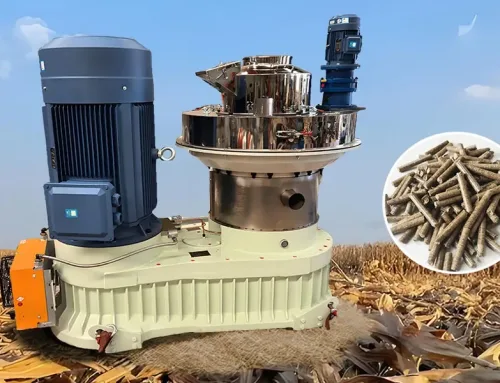
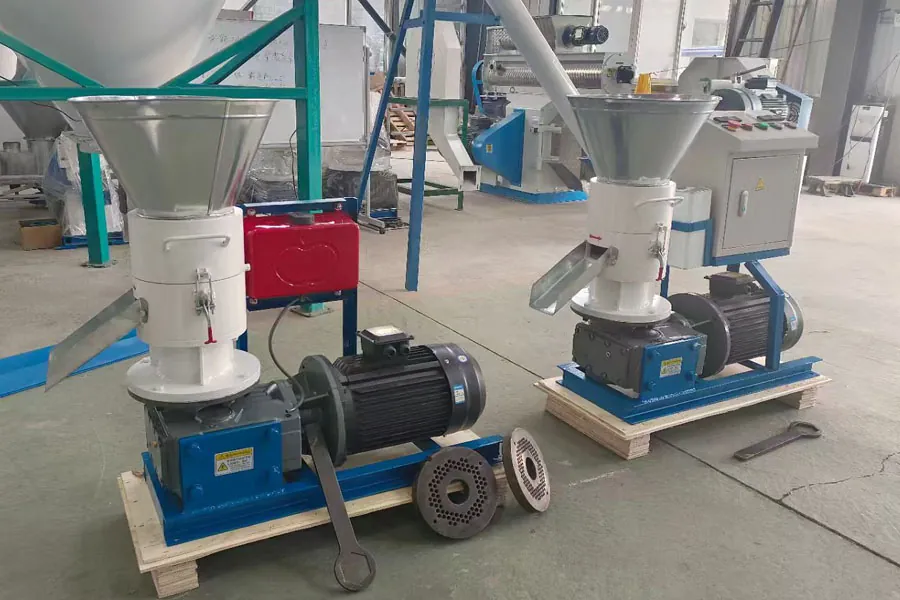
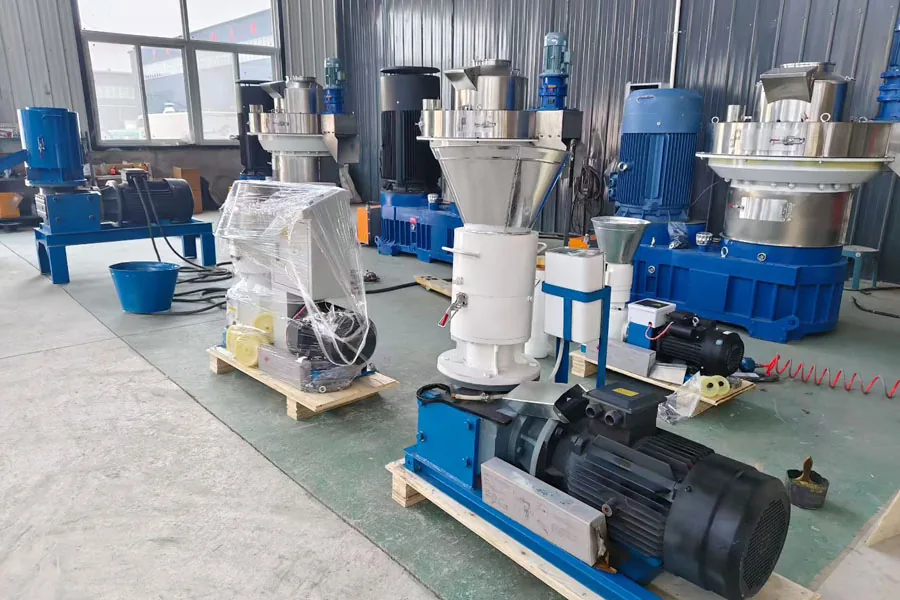
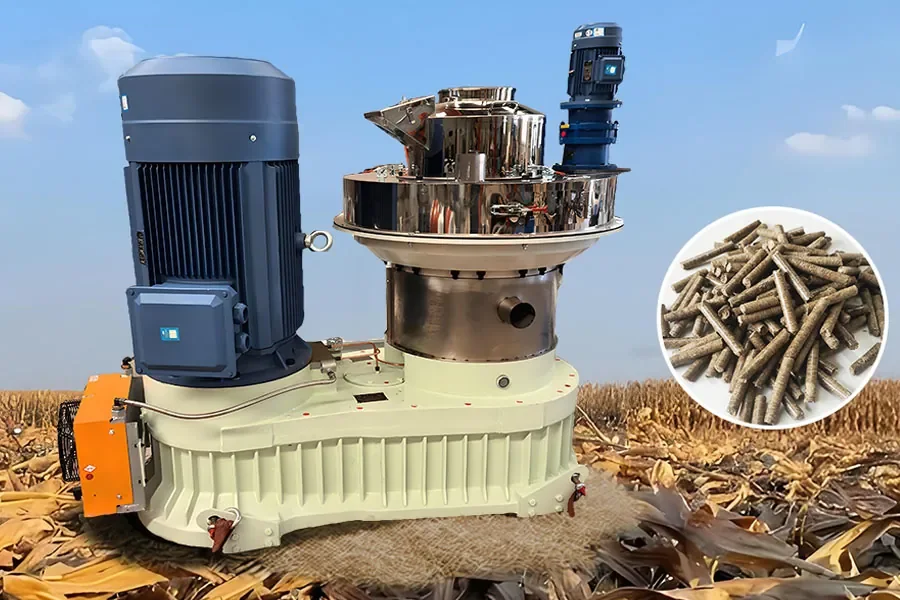
A wood pellet production line is sized on two numbers that are not the same one. The running load is the installed power over the power factor — 99 kW is 110 kVA at 0.9, and 775 kW is 861 kVA, which is the figure a transformer is sold in. The connection is sized on something else: the starting current of the largest single motor, because a pellet mill motor starts against material already in the die and draws five to six times its running current for a few seconds. A 90 kW motor draws 169 A running and about 1,014 A starting. That is why a 1,000 kg/h build with one vertical ring die pellet mill needs a 400 A supply, and the same output from two 45 kW flat die pellet mills needs 320 A.
The currents here are calculated at 380 V, 50 Hz, with a power factor of 0.87 and an efficiency of 0.93 — the nameplate figures on the motors we fit. A 415 V or 440 V supply lowers every current in proportion, so tell us the voltage before the panel is built rather than after it arrives. The supply figures are what the site has to be able to deliver, not what the pellet mill draws on an average afternoon.
What each output capacity asks the supply for
Read the fourth and fifth columns together. The running load is what the meter sees; the supply figure is what the connection has to survive.
| Output capacity | Installed power | Largest motor | Running kVA | Supply at 380 V |
|---|---|---|---|---|
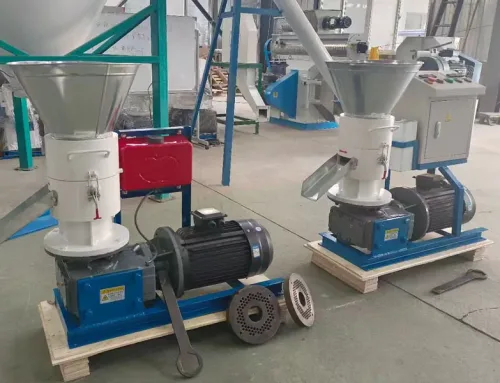
| 500 kg/h — one PM-D450B | 99 kW | 45 kW | 110 kVA | 160 A — 105 kVA |
| 1,000 kg/h — two PM-D450B | 190 kW | 45 kW | 211 kVA | 320 A — 211 kVA |
| 1,000 kg/h — one HML-560 | 194 kW | 90 kW | 216 kVA | 400 A — 263 kVA |
| 2,000 kg/h — two HML-560 | 354 kW | 90 kW | 393 kVA | 630 A — 415 kVA |
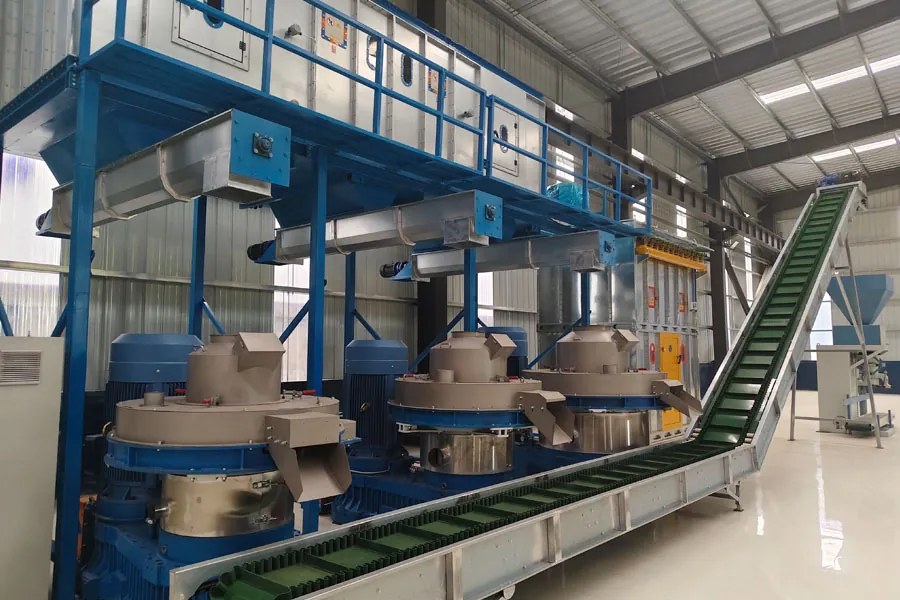
| 5,000 kg/h — three HML-600 | 775 kW | 132 kW | 861 kVA | 1,250 A — 823 kVA |
The two 1,000 kg/h rows are the whole argument of this page. The running load is within 2 % of each other — 211 kVA against 216 kVA — and the supply is 320 A against 400 A. A quarter more connection, the same output, because one 90 kW motor starts instead of two 45 kW motors. The multi-machine page works the same pair through on downtime; this is the electrical side of the same decision.
Five columns will not fit a phone. Swipe the table sideways for the supply figure, which is the one to give an electrician.
The fifth column is a pair of figures because they answer two different questions. The amperes are what the cable, the breaker and the meter have to carry, and they are what an electrician works from. The kVA beside them is √3 × 380 V × those amperes, which is the capacity a utility or a transformer is specified in. They are not interchangeable: the 1,000 kg/h vertical ring die build needs 263 kVA of connection capacity to carry a 216 kVA running load, and the gap between the two is the starting current.
The fourth column is the one that decides the electricity bill, and it is the only one that matters once the site is running. A pellet mill runs at close to its nameplate for the whole shift — there is no idling mode on a die — so the running load is not a peak to be averaged, it is the figure for eight hours a day. The cost per tonne page takes it from there, at 155 to 198 kWh per tonne measured on our own builds.
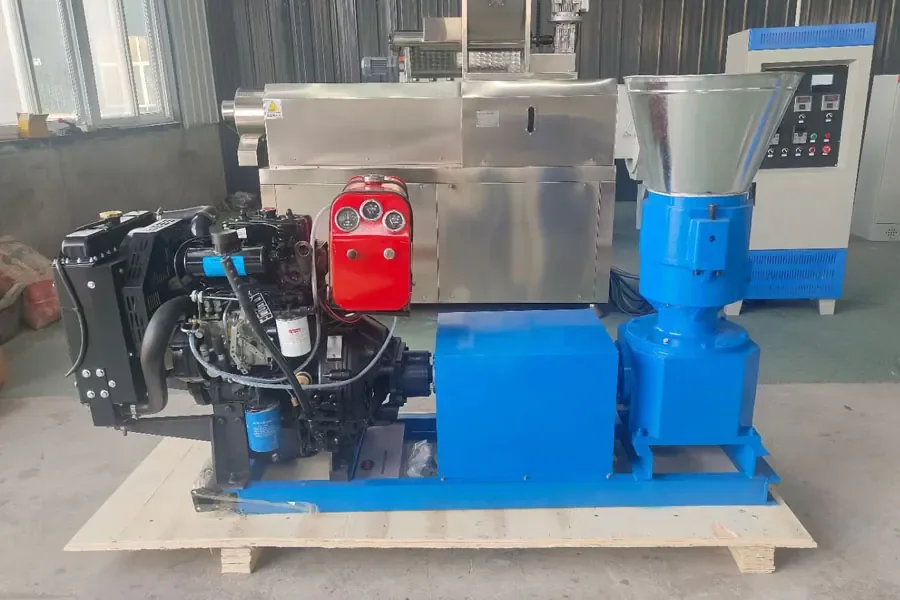
What each motor draws when it starts, and what to do about it
Full-load current is what the motor draws once it is running. Starting current is what it draws for the three to eight seconds that decide whether the supply holds.
| Motor | Full-load current | Direct on line | Star-delta | Soft starter |
|---|---|---|---|---|
| PM-D450B — 45 kW | 85 A | 507 A | 169 A | 254 A |
| PM-D580B — 75 kW | 141 A | 845 A | 282 A | 423 A |
| HML-560 — 90 kW | 169 A | 1,014 A | 338 A | 507 A |
| HML-600 — 132 kW | 248 A | 1,487 A | 496 A | 744 A |
| HML-700 — 160 kW | 300 A | 1,803 A | 600 A | 900 A |
Direct on line is six times the full-load current. Star-delta is a third of that, because the motor starts in star and only sees 58 % of its winding voltage — 2 × running, and 2 × is the figure to design to. A soft starter is set to 3 × and can usually be turned down to 2.5 × at the cost of a longer ramp. A drive holds the current at about 1 × but costs more than the motor it controls at these sizes.
Five columns will not fit a phone. Swipe sideways for the starting columns, which are the whole point of the table.
The choice is made on the largest motor and nothing else. A 160 kW HML-700 starting direct on line pulls 1,803 A, which needs a 2,000 A service before anything else on the site is counted; the same motor on star-delta pulls 600 A and the service drops to a quarter of that. The starter costs a few hundred and the service costs the difference between two transformers, which is why no build above 90 kW goes out of here without one.
Star-delta has one condition that is easy to miss: the motor has to be wound for six terminals, and it has to be starting against a load it can accelerate in star. A pellet mill die is heavy and the material is already in it, so a star-delta start on a cold die in winter is slower than on a warm one, and the changeover has to be set late enough not to stall. If the mill is expected to start loaded, a soft starter is the honest answer and a drive is the comfortable one.
Running a production line with no grid to connect to
A diesel set is not sized on the running load. It is sized on the step it has to absorb, and the step is the largest motor starting.
| Output capacity | Running kVA | Genset, soft start | Genset, direct on line |
|---|---|---|---|
| 500 kg/h | 110 kVA | 140 kVA | 165 kVA |
| 1,000 kg/h — two PM-D450B | 211 kVA | 265 kVA | 320 kVA |
| 1,000 kg/h — one HML-560 | 216 kVA | 270 kVA | 325 kVA |
| 2,000 kg/h | 393 kVA | 490 kVA | 590 kVA |
| 5,000 kg/h | 861 kVA | 1,080 kVA | 1,300 kVA |
A diesel engine accepts a step load of about half its rating without a governor dip that the motor notices, which is where the 1.25 and 1.5 multipliers come from. Above roughly 1,000 kVA the arithmetic stops being sensible: a 1,300 kVA set burns fuel whether or not the production line is running, and the maintenance on it is a second job. At that size the grid is the answer and the genset is for the panel, the lights and the one motor that has to come up during an outage.
Four columns will not fit a phone. Swipe sideways for the direct-on-line figure, which is the one that decides the alternator.
The figure that catches buyers is the gap between the second and third columns. A 500 kg/h production line runs on 110 kVA and needs a 165 kVA set if the 45 kW motor starts direct on line — half as much again, and that is before the alternator’s own derating for altitude and ambient temperature, which on a 40 °C site is another 10 %. A set bought on the running figure works perfectly until the pellet mill starts, and then it stalls or the voltage dips enough to drop the contactors out.
Two details decide whether a genset installation is usable. The first is the earthing arrangement: a set running as an island has to establish its own neutral point, and a panel built for a earthed grid supply will not do it without a change. The second is the changeover — a manual interlocked switch is fine and cheap, an automatic transfer switch is what a site with a night shift actually needs, and neither is on a pellet mill quotation unless it is asked for.
What your supply has to deliver
Four fields. The answer is the current the connection has to survive, not the power the production line draws.
99 kW at 380 V is 110 kVA running. The largest motor, 45 kW, draws 85 A and 507 A when it starts direct on line — and that 507 A for a few seconds is what the supply is actually sized on, not the 110 kVA.
Current is worked out at a power factor of 0.87 and an efficiency of 0.93, which are the nameplate figures on the motors we fit. The running load takes the power factor alone, 0.9. The genset figure is 1.5 × the running load for a direct-on-line start and 1.25 × for a soft starter or a drive, because a diesel engine has to absorb the step as well as carry the load.
The order to work in is this: add up the motors, find the largest one, decide how it starts, and then size everything else. Doing it the other way round — picking a transformer and then discovering what the largest motor does — is how a site ends up with a supply that is correct on average and useless for six seconds a shift.
Two of the four fields are worth arguing about. The installed power is a fact about the build and the largest motor is a fact about the model, but the starting method is a choice, and it is the cheapest one on the page: a star-delta starter takes 1,014 A down to 338 A on a 90 kW motor for the price of a second contactor and a timer. The sizing page is where the installed power comes from if the build is not chosen yet.
Working out a supply before the panel is built
Four figures, in this order. The third one is the only one that is a choice.
Add up the motors, not the pellet mills
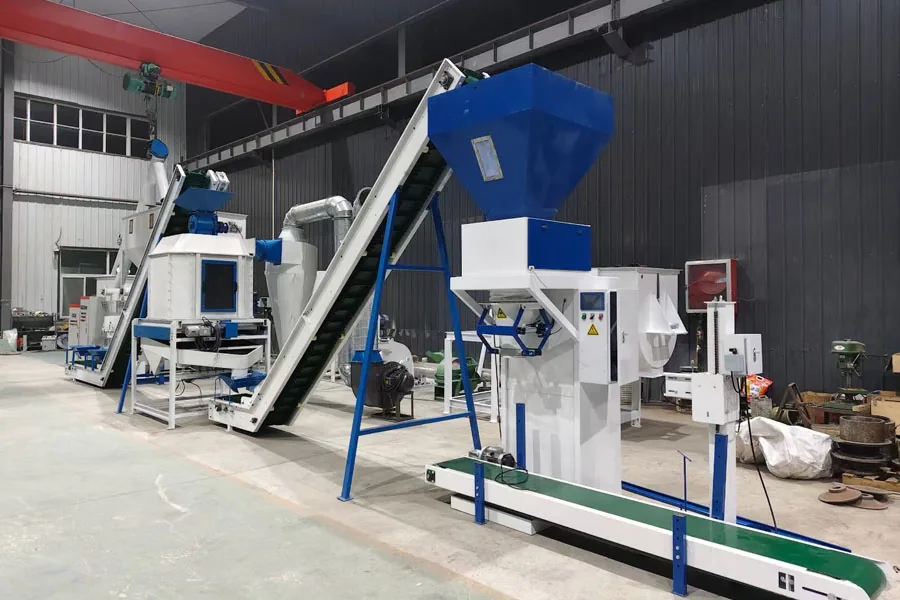
Every motor on the build counts: chipper, hammer mill, dryer fan and furnace, pellet mills, pellet cooler, packer and the conveyors between them. A 500 kg/h production line is 99 kW and the pellet mill inside it is 45 kW.
Find the largest single motor
This is the figure the supply is sized on, and it is not the same as the biggest pellet mill if the dryer has a bigger fan. On a 5,000 kg/h build it is a 132 kW HML-600; on a wet-material 2,000 kg/h build it can be the dryer.
Choose how it starts
Direct on line, star-delta, soft starter or drive. The current goes from 6 × to 1 × running, and the price goes the other way. This is the only free decision on the page and it is worth a conversation.
Size the transformer and the genset separately
The transformer on running kVA plus margin. The genset on running kVA times 1.25 or 1.5, whichever matches the starter. They are two purchases and they are not sized on the same number.
The mistake that costs the most is quoting the installed power to the utility and stopping there. 99 kW is what the meters add up to; 160 A is what the cable has to carry; 105 kVA is what the connection is sold as; and 507 A is what happens for six seconds when the 45 kW motor comes up. Four numbers, one build, and a supply application usually asks for the wrong one of them.
The second thing to settle early is the voltage. A 380 V build and a 440 V build are the same motors and different panels, cables and breakers, and every current in the tables above drops by 14 % at 440 V. Tell us at the quotation stage and the panel is built for the site; tell us after the crate arrives and it is a rewind, a new set of overloads and a week of an electrician’s time.
Three ways to power a production line
Not three prices — three answers to the question of what happens when the power stops. Most sites start with the first and end up with the third.
-
Grid only
The cheapest to install and the one that assumes the supply is there. It works when the utility can deliver the starting current and the voltage holds within about 5 % under load — which is a question for the utility, not for a catalogue. What it does not survive is a three-hour outage in the middle of a shift, and on a pellet line an outage is not a pause: the die cools with material in it, and restarting a cold loaded die is the hardest start the motor will ever do.
-
Grid, with a genset for the panel and the lights
The common compromise, and the one that keeps a shift from being a total loss. The set carries the control panel, the lighting, the compressed air and one pellet mill — enough to keep the die warm and the material moving, not enough to make output. It is sized at 20–30 % of the production line rather than 125 % of it, and the changeover is what costs, not the set.
-
Genset only
For a site with no utility within reach, which is more common than a European buyer expects. It is sized on the starting step — 165 kVA for a 500 kg/h build, 1,300 kVA for a 5,000 kg/h one — and it becomes the single most maintenance-heavy item on the site: fuel, filters, oil, and a set that has to be exercised whether or not the production line is running. Below 500 kg/h it is the normal answer; above 2,000 kg/h it is a decision to be talked out of.
The three are not a progression so much as a set of answers to different questions. Grid only is the right answer where the utility is reliable and the starting current is acceptable. The middle route is the right answer where the utility is mostly reliable and the die must not cool. Genset only is the right answer where there is no utility, and the wrong answer everywhere else — the set costs more per kWh than any grid, and it costs it whether the production line is running or not.
What buyers ask about powering a pellet line
Eight questions, answered the way we answer them on the phone.
How much power does a pellet mill need?
A single flat die pellet mill is 7.5 kW at 80 kg/h and 75 kW at 800 kg/h; a vertical ring die pellet mill is 90 kW at 1 t/h and 160 kW at 2.5 t/h. A complete wood pellet production line adds the chipper, the hammer mill, the dryer, the pellet cooler, the packer and the conveyors: 99 kW at 500 kg/h and 775 kW at 5,000 kg/h.
Should I quote kW or kVA to the electrician?
Both, and say which is which. kW is the work the motors do; kVA is the capacity the supply has to have, and it is about 11 % higher at a power factor of 0.9. A 775 kW production line is 861 kVA running, and the connection has to carry 1,250 A on top of that because of the starting current.
Why does the breaker trip when the pellet mill starts?
Because a pellet mill motor starts against material already in the die and draws five to six times its running current for three to eight seconds. A supply sized on the running total sees a 1,014 A surge from a 90 kW motor and does what it is designed to do. The fix is a star-delta starter, a soft starter or a drive, not a bigger breaker.
Can I run a pellet mill on a generator?
Yes, and below 500 kg/h it is often the only option. Size the set on the starting step rather than the running load: 1.5 × the running kVA with a direct-on-line start, 1.25 × with a soft starter. A 500 kg/h build needs 165 kVA that way, not the 110 kVA it draws.
Star-delta or a soft starter?
Star-delta if the motor has six terminals and starts unloaded, because it is cheap and it takes the current to a third. A soft starter if the die may already have material in it, because star-delta gives up torque exactly when the load is heaviest and the changeover can stall. Above 132 kW we quote a soft starter by default.
Do I need a transformer?
If the utility delivers at medium voltage, yes, and it is sized on the running kVA plus about 20 % — 823 kVA of connection for a 5,000 kg/h build, which is why that page quotes a 1,000 kVA transformer. The transformer is not in a pellet mill quotation and it is not something we supply.
Can I run a pellet mill on 220 V single phase?
Not above 7.5 kW, and not as a production line. Every model from PM-D225B up is three-phase, and the range is built for 380 V / 50 Hz with 415 V, 440 V and 60 Hz to order. A single-phase supply is for the lighting and the office, not for a die.
Can I put a variable frequency drive on a pellet mill?
Yes, and it is the gentlest start there is — about 1 × running current and full torque from zero speed. What stops most buyers is the price: at 90 kW and above a drive costs more than the motor it controls, and a soft starter does 90 % of the job for a fifth of the money. A drive earns its place when the production line has to run at reduced output for part of the week.
Send your voltage and your largest motor and we will size the panel
The voltage you have, the phase, and the biggest single motor on the build. We come back with the starting method, the full-load and starting current, the cable and breaker sizes and the kVA the supply has to deliver — before the panel is built rather than after.
What happens after you send it
We reply with the starting method for your largest motor, the full-load and starting current, the cable and breaker sizes for the run, the kVA the connection has to deliver and the genset size if there is no grid. If your supply will not carry the capacity you want, we say so and quote the capacity it will carry.
Your details are not shared. One follow-up, no mailing list.