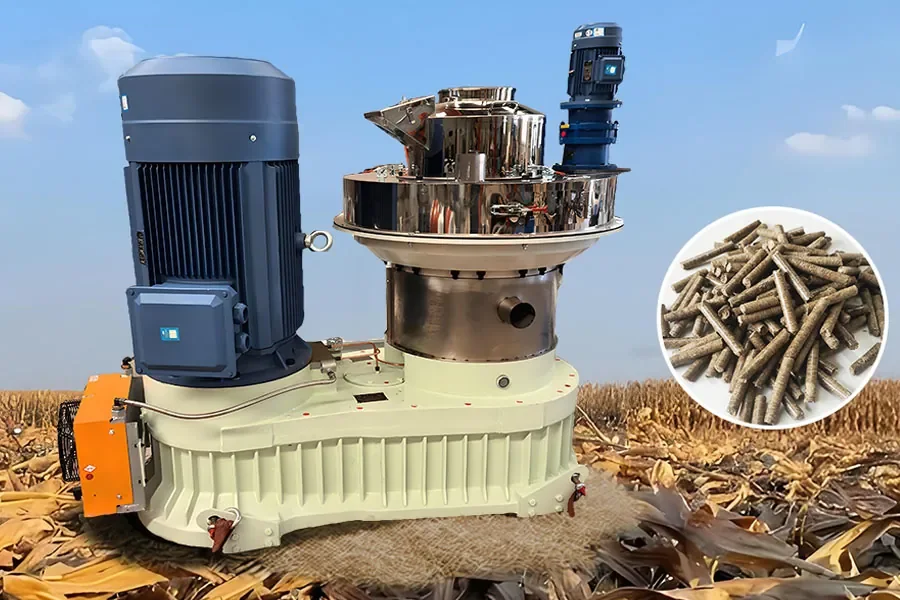
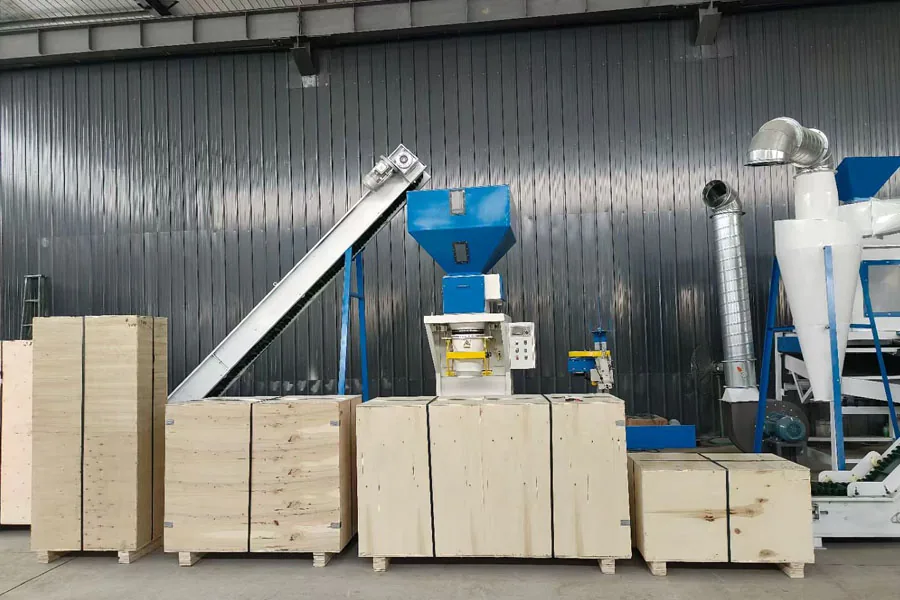
Diesel, Electric or PTO: Choosing the Driveone die, three ways to turn it
A pellet mill needs about 24 kW at the die. Getting it there from the grid takes 89 kWh a tonne, from a diesel engine bolted to the frame 20 litres, from a tractor’s power take-off 20 litres, and through a genset feeding an electric motor 27 litres. At 0.12 a kWh and 1.20 a litre that is 10.67, 24.00, 24.00 and 32.40 a tonne — so the drive is a question about your site, not about the pellet mill.
- 89 kWh a tonne on the grid, 20 litres through an engine
- A genset and a motor burn 35 % more diesel than a belt
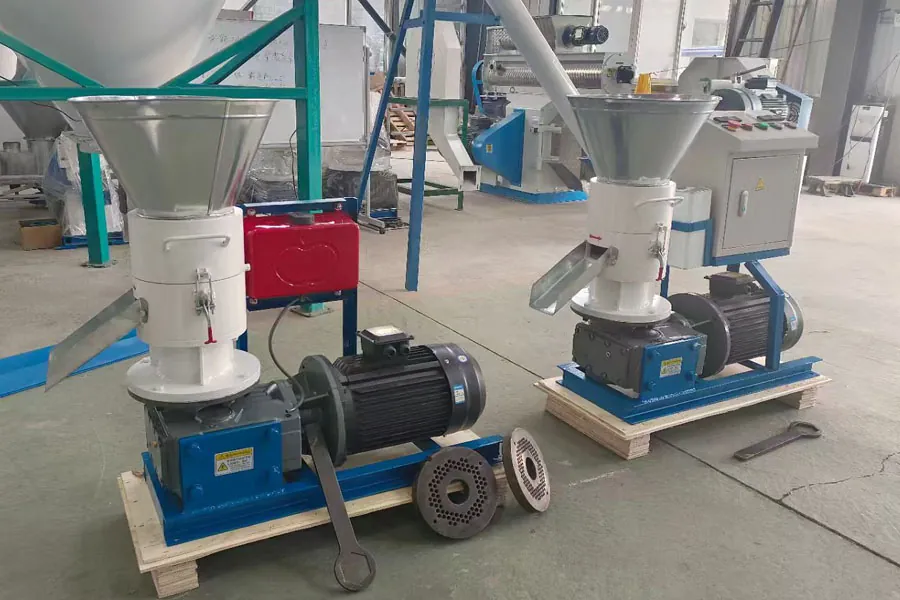
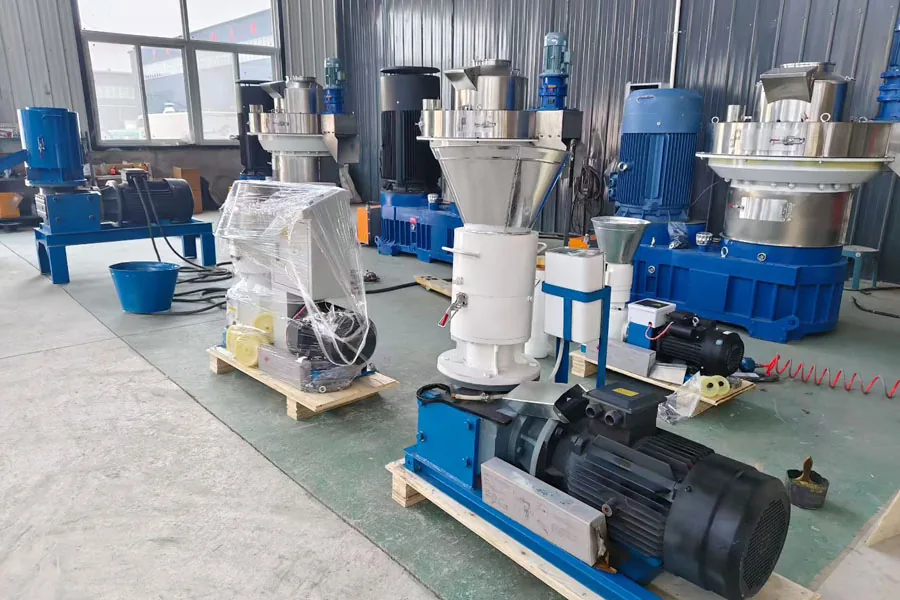
- The same pelleting head is sold in all three drives
- PTO runs 80–600 kg/h, and the tractor is the limit
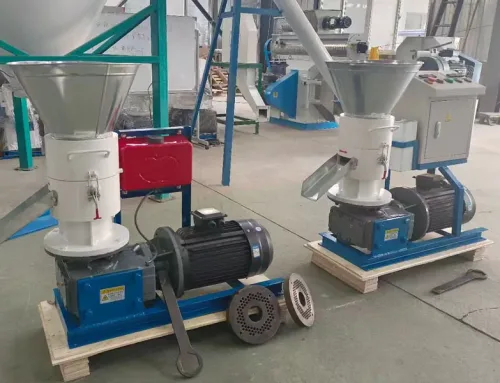
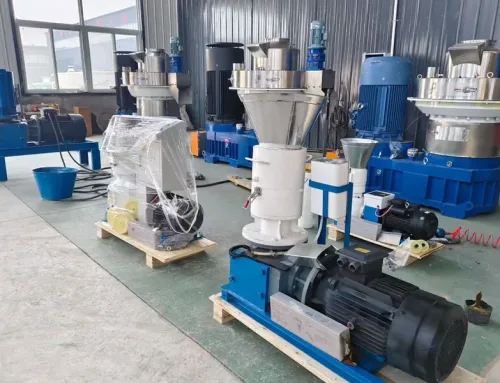
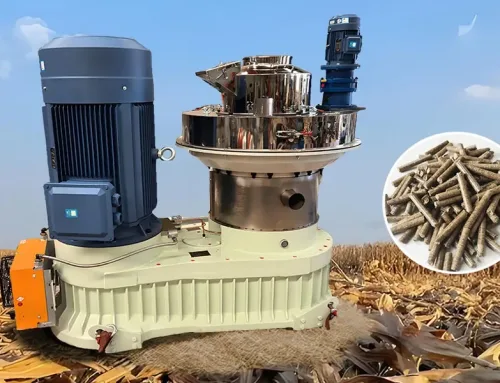
The same pellet mill in three drives · Electric, diesel or 540 rpm PTO, 80 kg/h to 2.5 t/h
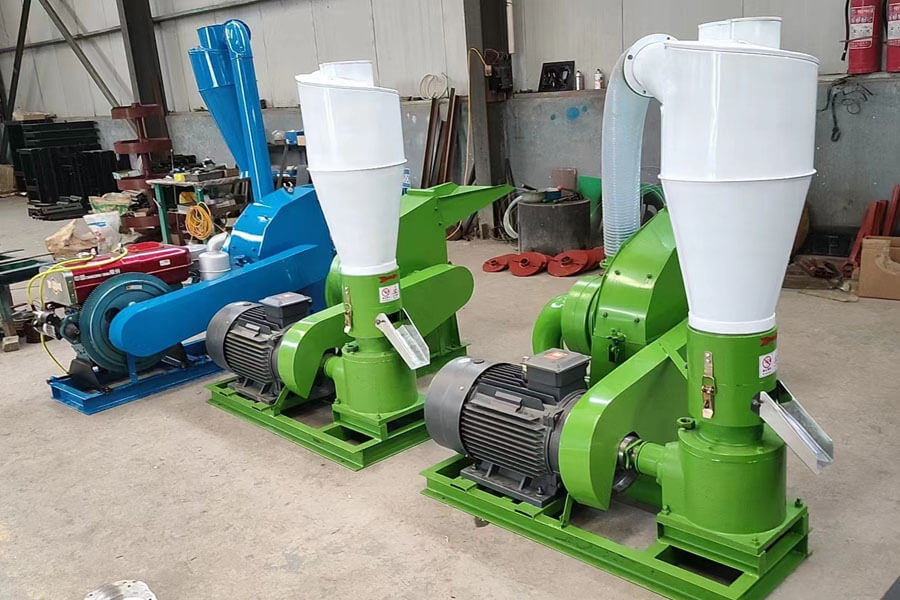
The short answer
All three drives turn the same die. What separates them is where the energy comes from and what it costs to get it to the shaft.
A tonne of pellets at 300 kg/h takes about 89 kWh at the meter on an electric motor, 20 litres of diesel through an engine bolted to the frame, and 27 litres through a genset feeding that same motor. At 0.12 a kWh and 1.20 a litre that is 10.67, 24.00 and 32.40 a tonne. A tractor on the power take-off lands with the engine at about 20 litres, because it is the same diesel burnt in a slightly larger cylinder. So the grid wins on running cost by a factor of two wherever three-phase power reaches the spot, and it is not close. Where it does not reach, the choice is between an engine on the frame and a tractor on the hitch, and it comes down to whether you own the tractor and whether the pellet mill has to move.
Two of the numbers here move and two do not. The kWh a tonne and the litres a tonne are physics and hold anywhere; the tariff and the delivered diesel price are local and change every year, which is why the calculator below takes both as inputs. Every cost on this page is quoted at 0.12 a kWh and 1.20 a litre so that the comparisons are honest — substitute your own two figures before you make the decision, because a tariff of 0.06 and diesel at 1.60 turns a factor of two into a factor of six.
The same pellet mill, three drives, eight differences
Read the fourth and fifth rows together. Everything above them is a specification; those two are the decision, and the rest is what you live with afterwards.
| Electric motor | Diesel engine | Tractor PTO | |
|---|---|---|---|
| What it suits | 80 kg/h to 2.5 t/h | 100 to 350 kg/h | 80 to 600 kg/h |
| Power at the die | 15–160 kW | 22–55 hp — 16 to 41 kW | 15–75 hp at 540 rpm |
| Price against the motor | The baseline | 20–35 % more | The lowest — no engine |
| Energy a tonne at 300 kg/h | 89 kWh | 20 litres | 20 litres |
| Cost a tonne, at 0.12 and 1.20 | 10.67 | 24.00 | 24.00 |
| Service between shifts | Grease, and the die | Oil and filters at 250 h, battery, fuel | The tractor’s own service, and the shaft |
| What stops it | The supply, not the pellet mill | A fuel run and a flat battery | A shear pin, and the tractor leaving |
| Where it wins | Three-phase at the building | No grid, one pellet mill, one site | No grid, several sites, tractor owned |
The price row is the one buyers weight too heavily. A diesel engine adds 20–35 % to the price of the pellet mill and saves nothing on running cost — it costs more than twice as much a tonne as the motor. What it buys is the absence of a supply: no transformer, no cable run, no utility application, and a pellet mill that works on a site where the connection is two years away. That is worth 20–35 % on a small build and it is not worth it on a large one.
Four columns will not fit a phone. Swipe the table sideways for the diesel and PTO columns, which are the two the grid does not reach.
The PTO column looks like the cheapest of the three and is the one that catches people out. There is no engine to buy, which is real money saved, but the tractor has to be there — and a 55 hp tractor sitting on a three-point hitch for a shift is a tractor not doing anything else. On a farm that already moves feed and bedding every day, that is free. On a site that bought a tractor for the pellet mill, it is the most expensive drive on the page.
The electric column hides a cost the other two do not have: the connection. A 30 kW pellet mill on a 380 V supply draws about 60 A running and several times that at start, and the cable, the breaker and possibly the transformer are yours to pay for. The power supply page sizes all of it, and on a site 400 m from the nearest three-phase supply that connection can cost more than the difference between the three drives.
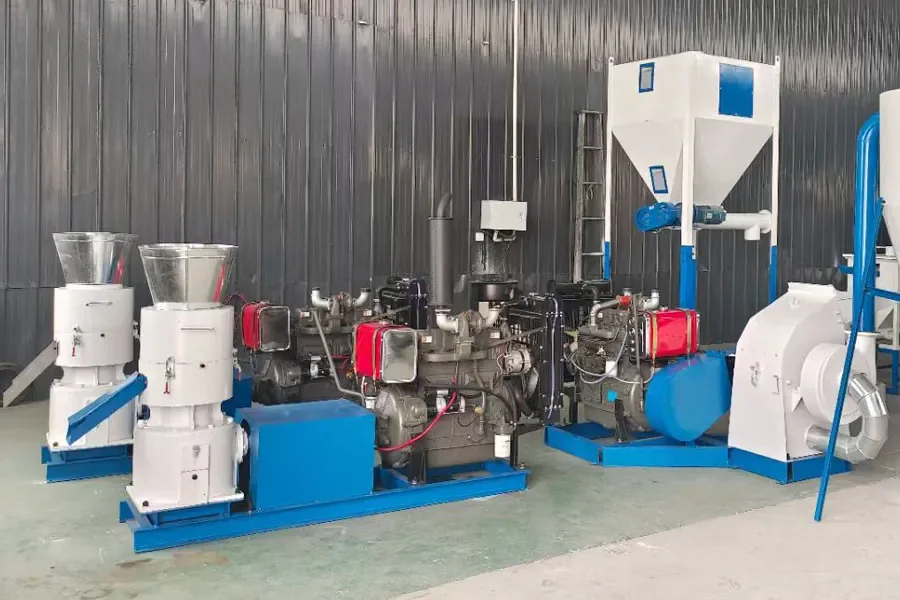
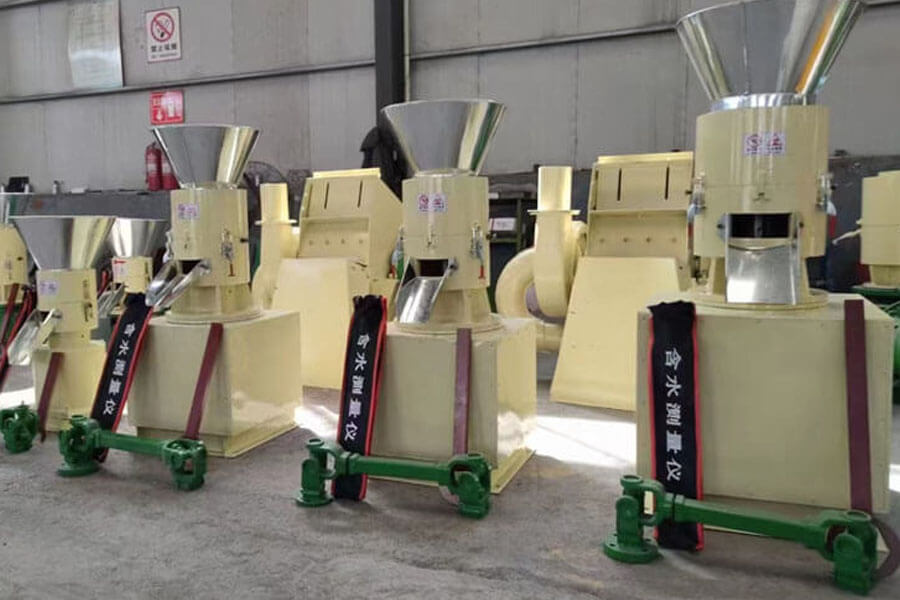
Four routes to the same 24 kW at the die
The same shaft power, four ways of getting it there. The grid is not on this list because it does not burn anything — it is the baseline every other route is measured against.
| Route to the shaft | Energy a tonne | Cost a tonne | Where the loss is |
|---|---|---|---|
| Grid, then a 30 kW motor | 89 kWh | 10.67 | Motor 90 %, belt 2 % — the rest is at the power station |
| Diesel engine, belt to the die | 20 L | 24.00 | 0.25 L/kWh at the shaft, and 2 % in the belt |
| Tractor PTO, shaft and gearbox | 20 L | 24.00 | The same engine in a larger cylinder, and one more joint |
| Genset, then the same motor | 27 L | 32.40 | Alternator, cable, motor — three losses where the belt had one |
The fourth row is the one that surprises people, and it is arithmetic rather than opinion. A genset making 3.3 kWh of electricity per litre is 0.30 L/kWh at the socket; the motor turns that into shaft power at 90 %, so 0.30 ÷ 0.90 is 0.33 L/kWh at the die, against 0.25 for an engine driving the belt directly. Add the part-load penalty a set carries at 60 % load and it lands near 0.34. That is why a site with no grid and one pellet mill should put the engine on the frame, and only a site with six motors should buy a set.
Four columns will not fit a phone. Swipe sideways for the cost column, which is the one the decision turns on.
The second and third rows come out the same, and that is the honest answer rather than a coincidence. A tractor engine and a stationary engine burn diesel at much the same specific consumption, and the PTO driveline adds one universal joint and a gearbox where the belt drive adds a belt. Within a litre a tonne of each other, which means the choice between them is never about fuel — it is about capital and about whether the pellet mill has to travel.
The grid row is the only one where the energy figure is not a fuel. 89 kWh at the meter is 24 kW at the shaft after the motor and the belt, and what it costs depends entirely on the tariff: at 0.06 it is 5.33 a tonne, at 0.20 it is 17.78, and the gap to diesel closes from four and a half times to a third more. Run the calculator below with your own tariff before you conclude anything about which drive is cheaper where you are.
Seven sites, and the drive each one wants
This is the table to read with your own site in mind. The condition on the left is the one that decides it; everything else about the pellet mill is the same.
| Your site | The drive | Why |
|---|---|---|
| Three-phase power at the building | Electric motor | Cheaper by a factor of two on running cost, and the simplest thing to keep running |
| No grid, one pellet mill, one site | Diesel engine on the frame | One fuel, one pellet mill, no cable, no alternator and no transformer to buy |
| No grid, a whole production line | Genset, and a motor on each stage | One engine serving six motors beats six engines — the kVA sizing is on the power supply page |
| No grid, several farms, one tractor | Tractor PTO | The pellet mill travels to the material, and there is no engine to service between jobs |
| Grid, but it fails most weeks | Electric motor and a genset | Run on the grid and keep the set for the outage — sized on starting current, not running load |
| Above 600 kg/h with no grid | Diesel, or a genset and motors | A 540 rpm shaft will not carry 1 t/h; the tractor runs out before the pellet mill does |
| A rented site on a two-year project | Diesel or PTO | No transformer to pay for, and nothing left behind when the project ends |
The fifth row is the one most sites get wrong. A site with an unreliable grid buys a genset and then runs everything from it because the changeover is easier than the utility — and pays 35 % more a tonne for the convenience. A manual or automatic changeover that puts the pellet mill back on the grid the moment the grid returns is worth more than a larger set.
Three columns will not fit a phone. Swipe sideways for the drive and the reason.
The second and third rows are the same decision made at different scales, and the dividing point is how many motors there are. One pellet mill: an engine on the frame, because a genset and a motor costs 35 % more fuel to do the same work. Six motors on one production line: a set, because six engines is six services, six fuel tanks and six batteries, and the fuel penalty is smaller than the maintenance bill.
The last row is about what you leave behind. A transformer and a cable run are fixed assets on land you do not own, and a diesel flat die pellet mill on a skid is a thing you can put on a truck. On a two-year contract, or a site where the feedstock supply is not yet certain, that mobility is worth more than the running cost difference — and it is the one argument for diesel that survives a cheap tariff.
Your tariff against your fuel price
Four fields. The two energy figures are fixed by physics; the two prices are yours, and they are what the decision actually turns on.
At 300 kg/h on 30 kW a tonne takes 89 kWh or 20.0 litres. At 0.12 a kWh and 1.20 a litre that is 10.67 against 24.00 — the grid is 2.3 × cheaper. The same tonne through a genset and this motor is 27.0 litres, 32.40.
The kWh figure is at the meter and includes the motor at 90 % and the belt at 98 %, so it is what you are billed for rather than what reaches the die. The litre figure is for an engine on the frame at 0.25 L per kWh at the shaft, which is the middle of the 0.22–0.28 range for a small single-cylinder industrial diesel. Neither figure includes the dryer, the wood hammer mill or the pellet cooler — those are electric on every build and they are in the cost per tonne page.
The output capacity and the motor are the two figures that set the energy a tonne. Halve the output and the kWh a tonne doubles, which is why a small pellet mill is always more expensive a tonne than a large one whatever drives it — the sizing guide has the kg/h per kW for each model.
The diesel figure the calculator returns is for an engine on the frame. A genset feeding the same motor is 35 % more, and the sentence below the boxes says so with your own numbers in it. That 35 % is the single most useful figure on this page: it is the price of putting an alternator and a cable between the fuel and the die.
Deciding the drive, in the order it has to happen
Two of these are measurements, one is a phone call, and the last one is the decision itself.
Measure what actually reaches the site
Not what the utility says is available — what is at the wall. Volts, phases, the breaker size, and how many hours a week it is on. On a site with no supply, measure the fuel run instead: how far, how often, and whether a tanker will come to you.
Compare at the shaft, not at the meter
89 kWh, 20 litres, 20 litres, 27 litres. Every one of those is the same 24 kW at the die, which is the only basis on which the four routes can be compared. A genset quoted in kVA and a motor quoted in kW are not comparable until both are turned into what reaches the die.
Price the fuel you can actually buy
Delivered diesel at a remote site is not the pump price — it is the pump price plus the run, and on a small plant that can be 30 % more. The same applies to the tariff: a demand charge, a power factor penalty and a standing charge all belong in the figure you put in the calculator.
Decide the drive before the model
The pelleting head is the same part in all three, so the drive is a frame, a belt and a shaft rather than a different pellet mill. Decide it first, because a diesel build and an electric build of the same output are two different orders and the lead time is not the same.
The step that gets skipped is the first one, and it is the only one that cannot be fixed later. A buyer who orders an electric pellet mill on the strength of a neighbour’s supply, and then finds the transformer is 400 m away and the utility wants a year, has bought a pellet mill that stands idle for a year. Measure at the wall, in the season you will run, with the loads you will have.
The third step is where the honest answer usually changes. Diesel at 1.20 makes the grid look overwhelming; diesel at 0.60 — subsidised, or bought in bulk in a market where it is cheap — closes the gap to under 2×, and on a site where the grid connection costs 15,000 the payback on that difference runs to years. The two prices are the whole argument, which is why they are inputs and not assumptions.
Where the diesel is actually burnt
Three physical arrangements, and they differ in what you own, what you service and what you can move.
-
An engine on the frame
One pellet mill, one engine, one fuel tank, one battery. Nothing between the flywheel and the die but a belt, which is why it is the most efficient way to burn diesel for pellets — 0.25 L/kWh at the shaft. The cost is that the engine is yours to service: oil and filters at 250 hours, a battery that goes flat in winter, and a fuel run you have to make whether you are pressing or not.
-
A genset, and a motor on each stage
One engine serving a whole production line, which is the right answer once there are more than about three motors. The fuel penalty is real — 35 % at the die — but it buys one service schedule instead of six, one fuel tank, and the ability to run the lights and the panel from the same set. The sizing is on the power supply page, and it is done on starting current rather than running load.
-
A tractor on the three-point hitch
No engine of your own, no cable, and a pellet mill that goes where the material is. The frame is two lower link pins, a top link and a 540 rpm shaft, and the whole driveline is a universal joint and a shear pin. It is the cheapest way into pelleting on a farm that already runs a tractor, and the most expensive way on a site that has to buy one for the purpose.
The three are not a progression from cheap to expensive, they are three different answers to “what do I already own”. A farm with a 55 hp tractor and no three-phase power has the cheapest possible route into pelleting and should not be sold a genset. A site with six motors and no grid has no business buying six engines. And a site with three-phase at the wall should not be reading this section at all — the motor is cheaper to run by a factor of two and there is nothing the other two can offer that makes up for it.
What buyers ask about drives
Eight questions, answered the way we answer them on the phone.
Is a diesel pellet mill cheaper to run than an electric one?
No, and it is not close. At 300 kg/h a tonne takes about 89 kWh on the grid and 20 litres through an engine. At 0.12 a kWh and 1.20 a litre that is 10.67 against 24.00 — the diesel route costs 2.2 times as much. Diesel wins where there is no supply to connect to, not on running cost.
How much diesel does a pellet mill use per tonne?
About 20 litres a tonne at 300 kg/h on a 40 hp engine. The arithmetic: 40 hp is 29.8 kW at the shaft, 80 % load is 24 kW, at 0.25 L/kWh that is 6 litres an hour, and 6 ÷ 0.3 t/h is 20 L a tonne. A smaller pellet mill uses more per tonne because the kW per t/h is higher.
Can I run a pellet mill from a generator?
Yes, and it costs about 35 % more fuel a tonne than an engine driving the die directly. The set has to be sized on starting current rather than running load — 1.25 × the running kVA with a soft starter, 1.5 × with a direct-on-line start — and the sizing table is on the power supply page.
What size tractor do I need for a PTO pellet mill?
15 hp for 80–120 kg/h, 30 hp for 120–200, 41 hp for 250–350 and 55 hp for 350–450 kg/h, all at 540 rpm on the power take-off. The tractor also has to be able to hold that load for a shift, which means a tractor rated above the pellet mill rather than at it.
Can an electric pellet mill be converted to diesel?
The pelleting head is the same part in all three drives, so it is a frame, a belt guard and a shaft rather than a different pellet mill. Ask before you order which of the three a given model is built in — converting after the fact is a new base and a new drive, and usually costs more than ordering it right the first time.
Which is better on a farm, diesel or PTO?
PTO, if the farm already owns a tractor of the right size and the pellet mill has to move between sites. There is no engine to buy, no battery to go flat and no separate service — the tractor’s own maintenance covers it. If the tractor is being bought for the pellet mill, diesel on the frame is cheaper and does not tie up the tractor for a shift.
Do I need three-phase power for a pellet mill?
For anything from 15 kW up, yes — 380–415 V three-phase. The connection is sized on the starting current of the largest motor rather than the running load, which is why a 30 kW pellet mill can need a supply rated well above 30 kW. The amperes for each size are on the power supply page.
What if the grid is unreliable rather than absent?
Keep the motor and buy a genset for the outage, with a changeover that puts the pellet mill back on the grid as soon as the grid returns. Sites that run everything from the set because the changeover is awkward pay 35 % more a tonne for the convenience, which over a year is more than the changeover costs.
Tell us what power you have and we will quote the right drive
The supply at the site, the output capacity you need, and whether a tractor is available. We come back with the pellet mill in the drive that fits, the kW or hp it needs, and the cost a tonne at your own tariff and fuel price.
What happens after you send it
We reply with the model and the drive it is built in, the kW or hp behind it, the fuel or electricity a tonne at your own two prices, and what the drive adds to the price of the pellet mill. If the supply you have will not carry the output you want, we say so and quote the size that will — or the diesel version of it.
Your details are not shared. One follow-up, no mailing list.