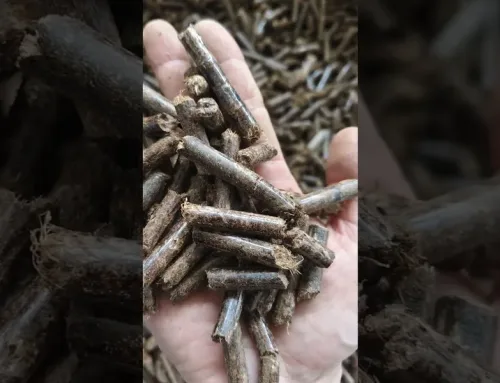
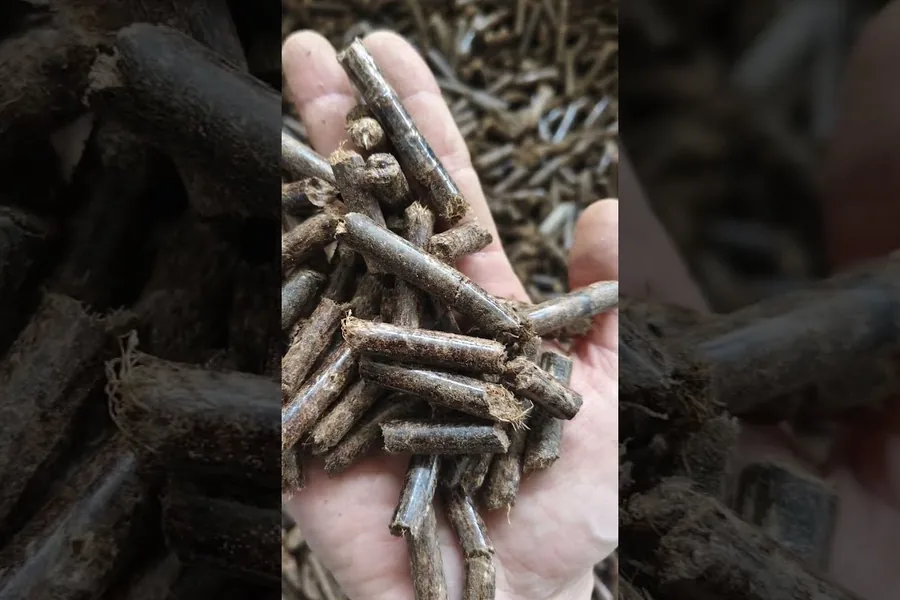
Sawdust and Wood Shavings Pellet Production Line500 kg/h to 5 t/h, and two ways to make 1.5 t/h
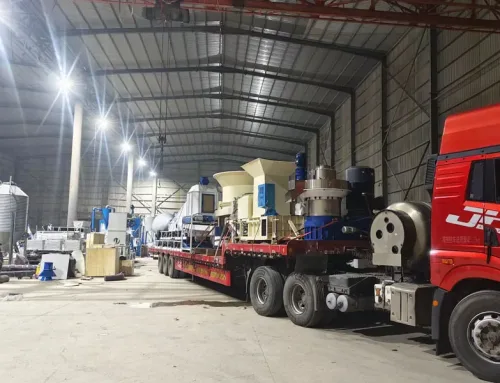
Sawdust and wood shavings are the material we build more pellet production lines around than any other, from 500 kg/h to 5 t/h, sized on your material and the output you can sell. The 1.5 t/h build on this page is the example we quote most often, and we build it two ways: two 75 kW flat die pellet mills or one 132 kW vertical ring die pellet mill, either of them feeding the same wood hammer mill, rotary drum biomass sawdust dryer, counterflow pellet cooler and 25–50 kg pellet packing machine.
- 500 kg/h to 5 t/h — the pellet production line is sized on your sawdust, your shavings and the output you can sell
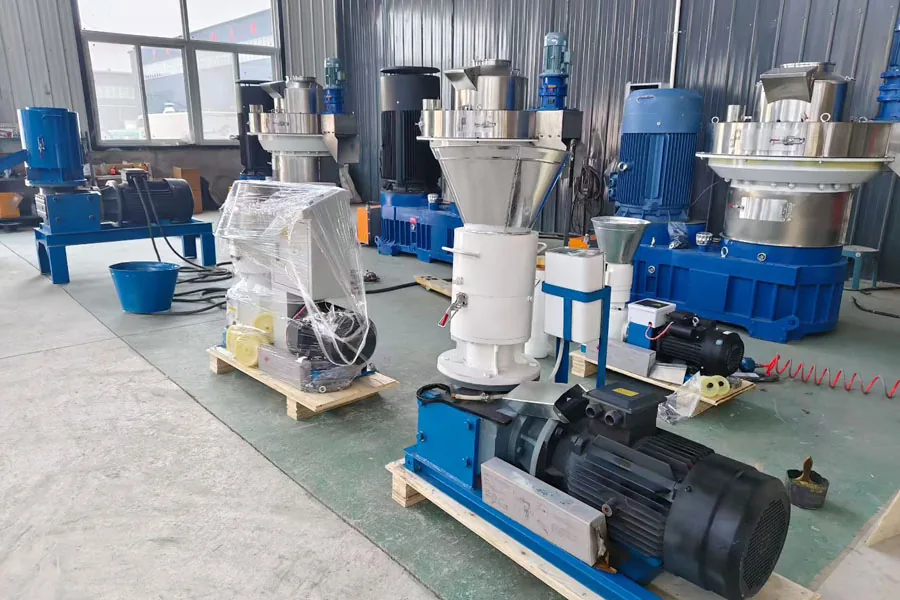
- 1.5 t/h built two ways: two 75 kW PM-D580B flat die pellet mills, or one 132 kW HML-600 vertical ring die pellet mill
- Wood hammer mill for shavings, offcuts and chips; a biomass sawdust dryer only when the sawdust is green
- Counterflow pellet cooler, vibrating screen and a 25–50 kg pellet packing machine with a sewing head
Reply in 12 working hours · Sized on your material and its moisture · Layout drawing and die specification included
The wood pellet production line we build most often, at any output you can sell
Sawdust is the material every pellet mill is designed around, and it is the only one on our list where the dryer is optional — which is what makes a sawdust pellet production line the cheapest per tonne we build. Everything below is written around a 1.5 t/h example because that is the size we quote most, but 1.5 t/h is only an example: tell us the output and the material and we size the same six stages around it.
We build these pellet production lines anywhere from 500 kg/h to 5 t/h, and the quotation is written around the material rather than a catalogue number. Kiln-dried sawdust from a furniture shop or a joinery arrives at 10–12 % moisture — already pelletable. Green sawdust from a sawmill arrives at 45–60 % and has to be dried. The same six stages cover both cases; the only difference is whether the rotary drum and its hot air stove are on the quotation.
Wood shavings are the other half of the name. Shavings are longer and lighter than sawdust, and a die will not take them as they come — they bridge in the die chamber and come out as half-formed pellets. They go through the wood hammer mill first, and after that they pellet exactly like sawdust, at a slightly higher bulk density.
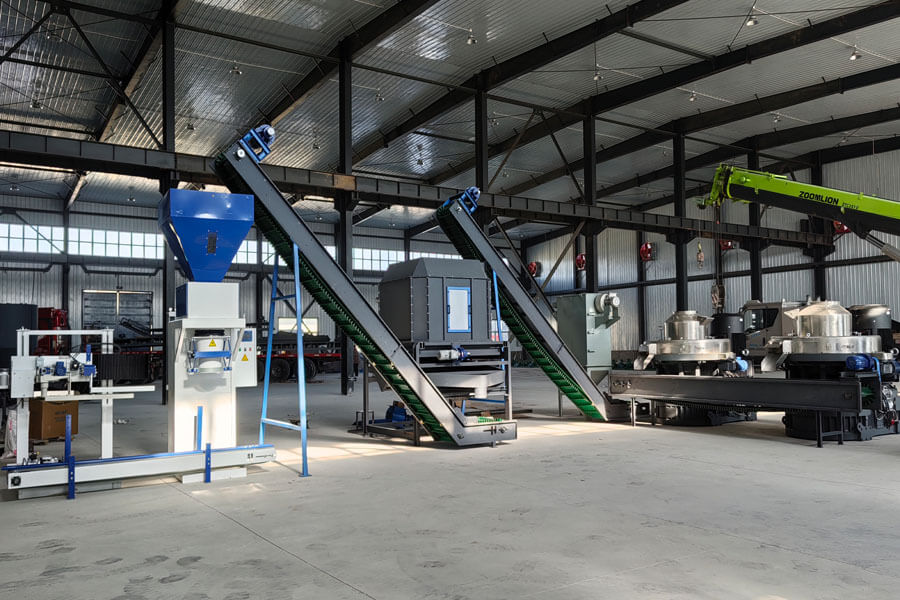
The six stages of a sawdust and wood shavings pellet production line, from 500 kg/h to 5 t/h — 201–219 kW at 1.5 t/h
| Stage | Machine | Model | What it does |
|---|---|---|---|
| 01 | Wood chipper machine | Optional | Only if logs, slabs or pallet blocks come in — not needed for sawdust |
| 02 | Wood hammer mill | FS-500, 22–30 kW | Shavings, offcuts and chips down to 3–5 mm sawdust |
| 03 | Biomass sawdust dryer | TS 1.2 × 12 or flash pipe | Green sawdust at 45–60 % down to 12–15 % — omitted for kiln-dried material |
| 04 | Pellet mill | PM-D580B ×2 or HML-600 ×1 | Sawdust into 6–8 mm pellets — two flat dies or one ring die, both 1.5 t/h |
| 05 | Pellet cooler | NL-11 counterflow + screen | 80 °C pellets down to room temperature, fines back to the die |
| 06 | Pellet packing machine | BZ-50 | 25–50 kg bags with a sewing head, or 1,000 kg bulk bags |
Installed power is 201–219 kW across all 6 stages, on 30 × 16 m of floor at 8 m clear. Every machine in the table is also sold on its own, and the dies, rollers and screens for them are shipped as spares.
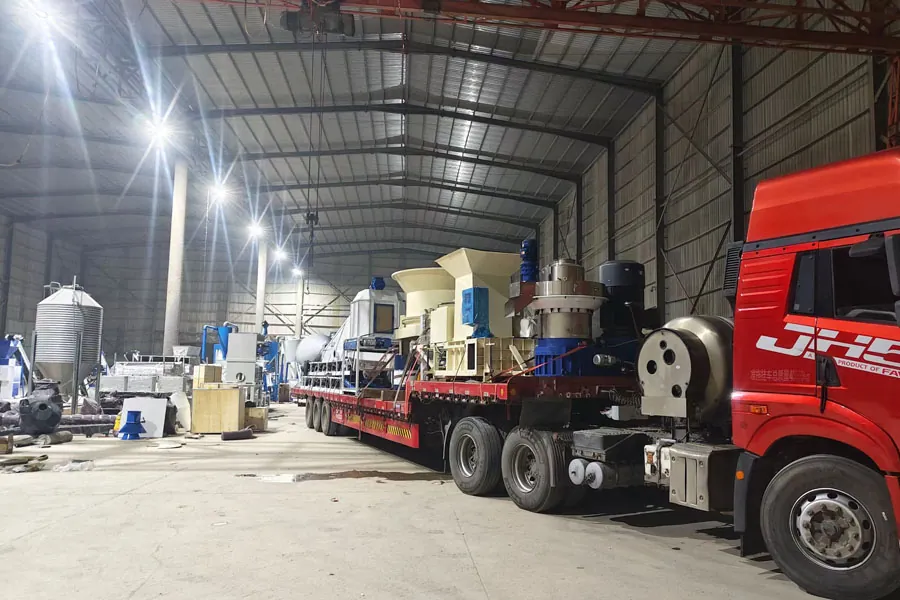
The 1.5 t/h build fits in 30 × 16 m at 8 m clear height and ships in a single 40HQ container. That is the same footprint as a 1 t/h palm fibre pellet production line with a third more output, and the difference is bulk density: sawdust at 150–250 kg/m³ moves through a narrower belt than palm fibre at 150–220 kg/m³ loose. Every size in between 500 kg/h and 5 t/h is laid out on the same principle.
It is also the cheapest pellet production line per tonne of any we build, at every output. A sawdust pellet production line quotes at about half the price per tonne of a palm fibre pellet production line of the same capacity, because there is no chipper, the hammer mill is a quarter of the power and the dryer may not be there at all.

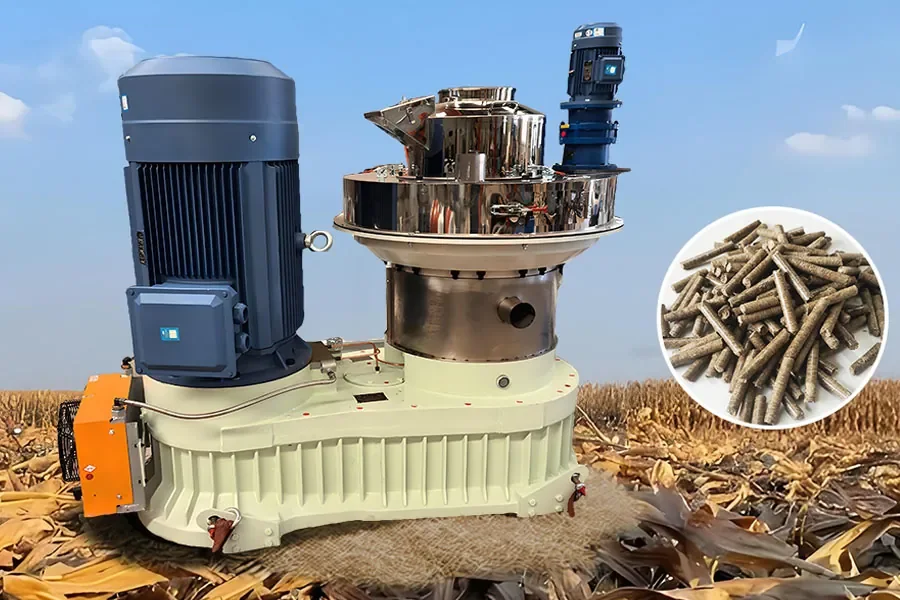
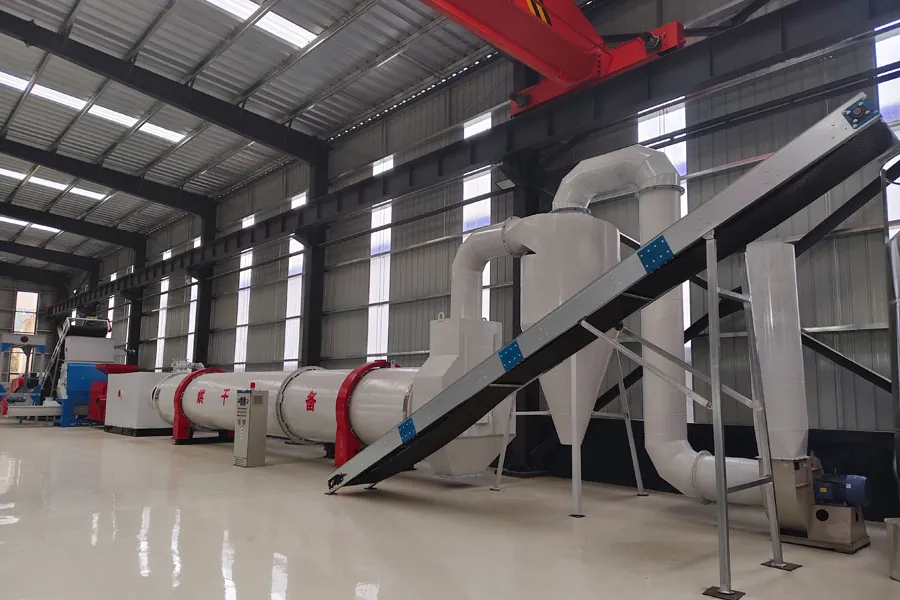
What each stage does on a sawdust and wood shavings pellet production line
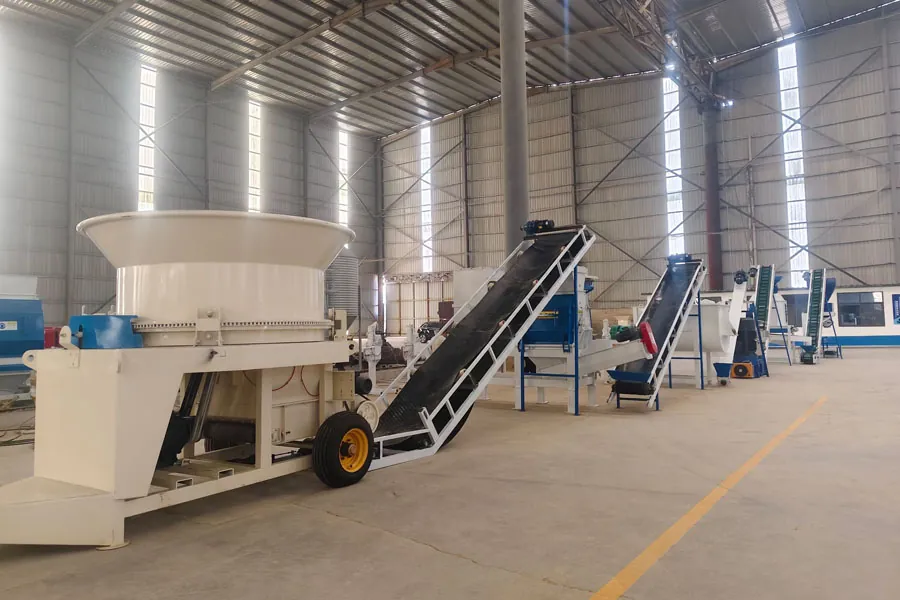
Read them in order — the material only moves one way. Every stage links to its own product page, where the model range and the power figures are.
Wood chipper machine
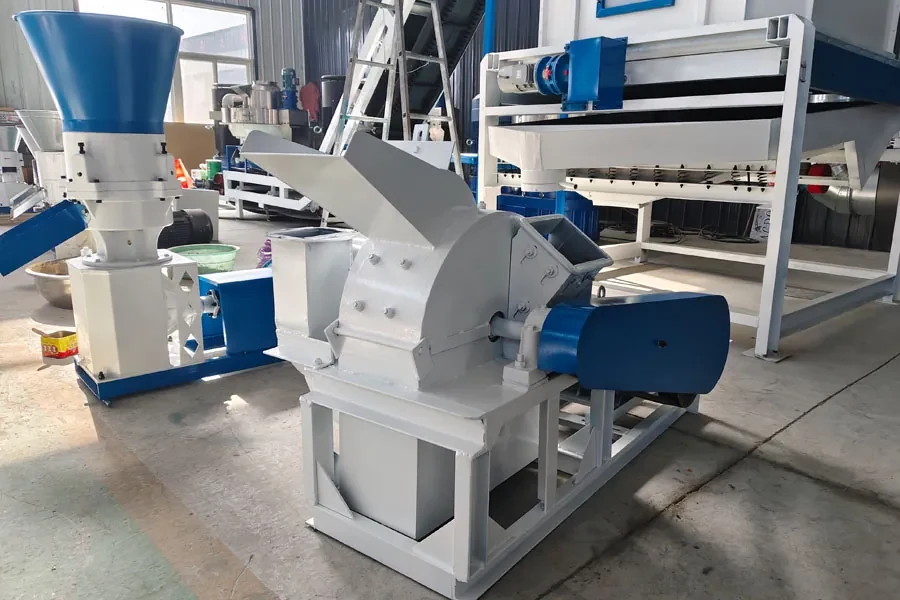
Most sawdust pellet production lines do not have a chipper. If your material arrives as sawdust, shavings, offcuts or chips, this stage is not on the quotation — and deleting it is the single biggest saving available on a sawdust pellet production line, in money, in power and in floor space.
It comes back if you buy logs or pallet blocks because they are cheap. A 37 kW drum chipper takes them to 20–40 mm chips, which the hammer mill can then handle. We quote it as an option so the layout has a bay for it either way.
Wood chipper machine — disc and drum models, 500 to 2,500 kg/h, electric or diesel.
Wood hammer mill
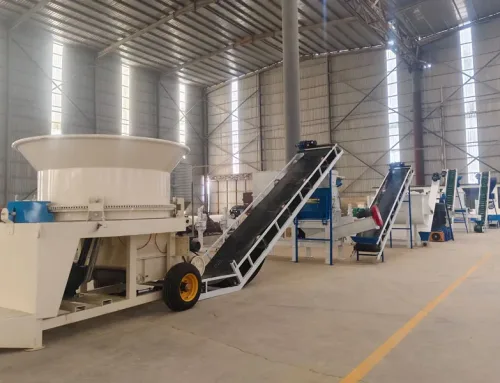
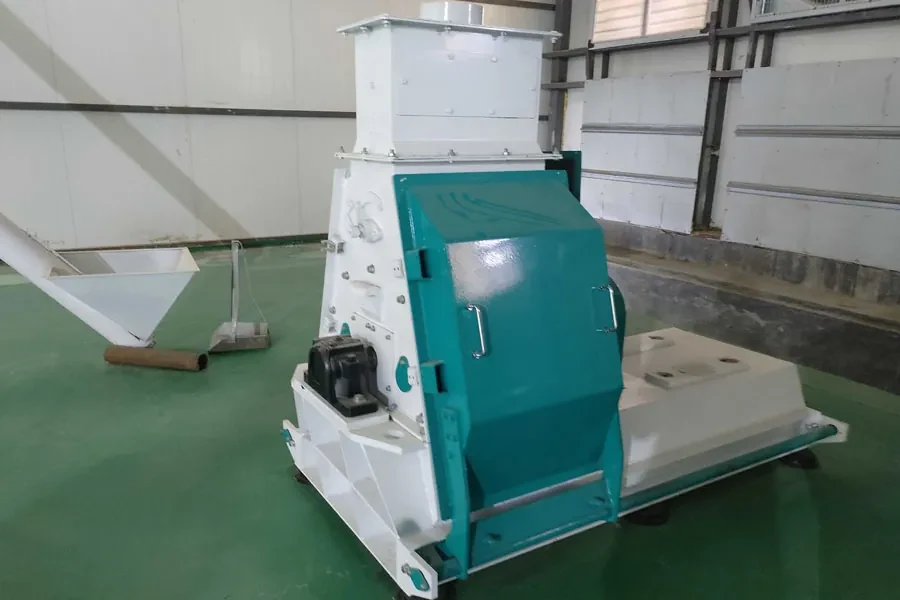
This is the stage that is never optional, because nothing pellets straight out of a shaving or an offcut. A water-drop chamber mill with a 4–5 mm screen takes shavings down to sawdust in one pass at 22–30 kW for 1.5 t/h — a fraction of what the same stage costs on straw.
The screen size is the one setting worth experimenting with. A 4 mm screen gives a harder pellet and 5–8 % less output; a 6 mm screen gives more output and a pellet that is slightly rougher on the surface. Most of our customers settle on 5 mm.
Wood hammer mill — FS series, 120 to 1,600 kg/h, 3 to 37 kW.
Biomass sawdust dryer
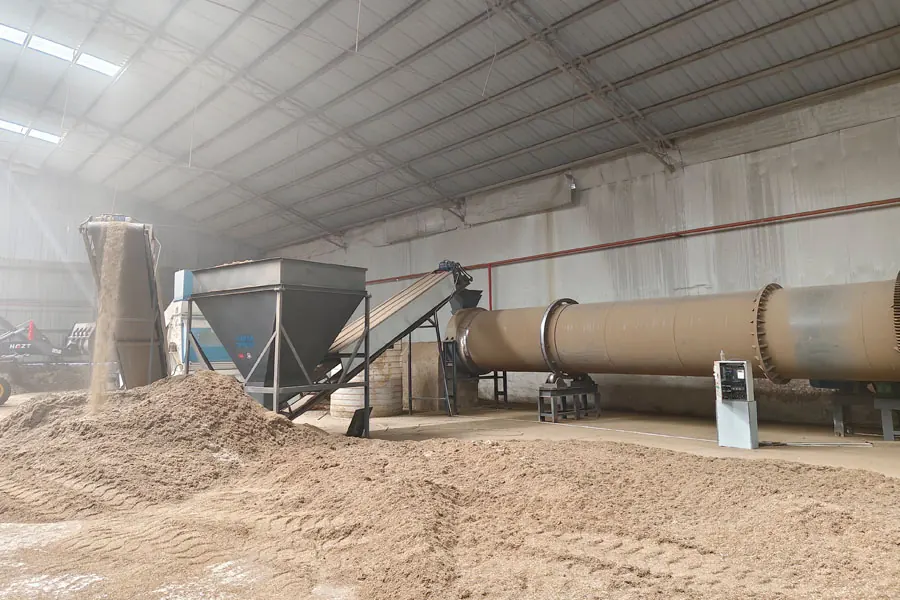
Green sawdust from a sawmill sits at 45–60 % moisture and no die will pellet it. Kiln-dried sawdust sits at 10–12 % and needs nothing. Between those two figures sits the whole question of whether this stage is on your quotation, and it is worth measuring your material before you decide.
We quote a rotary drum 12 m long and 1.2 m in diameter at 5.5 kW for 1.5 t/h, with a hot air stove and an 11 kW fan on a 1.5 m cyclone. Below about 800 kg/h a flash pipe dryer is cheaper and reacts in seconds, which matters when the feed rate wanders.
Biomass sawdust dryer — flash pipe from 200 kg/h, rotary drum from 500 to 2,500 kg/h.
Pellet mill
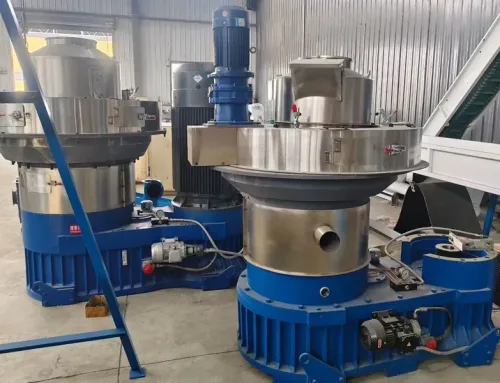
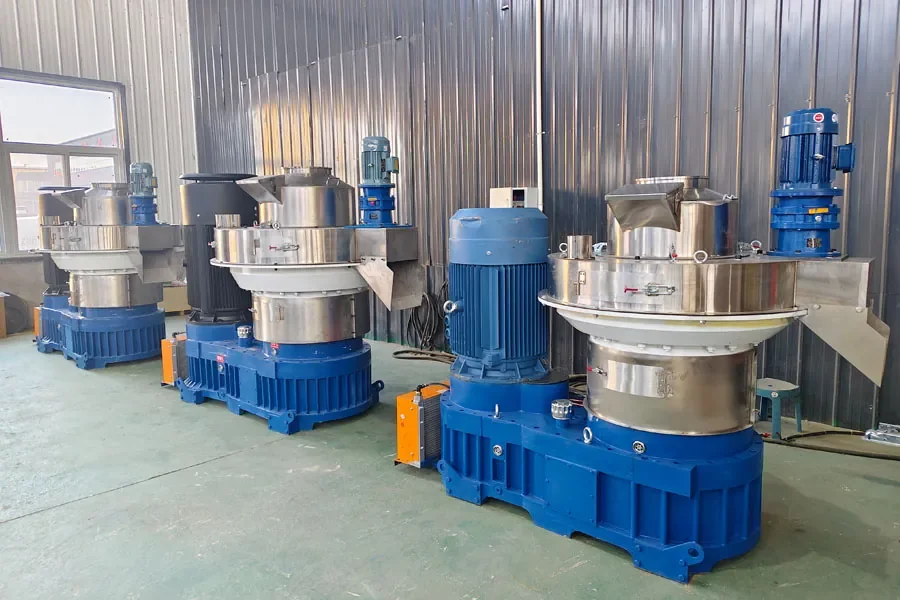
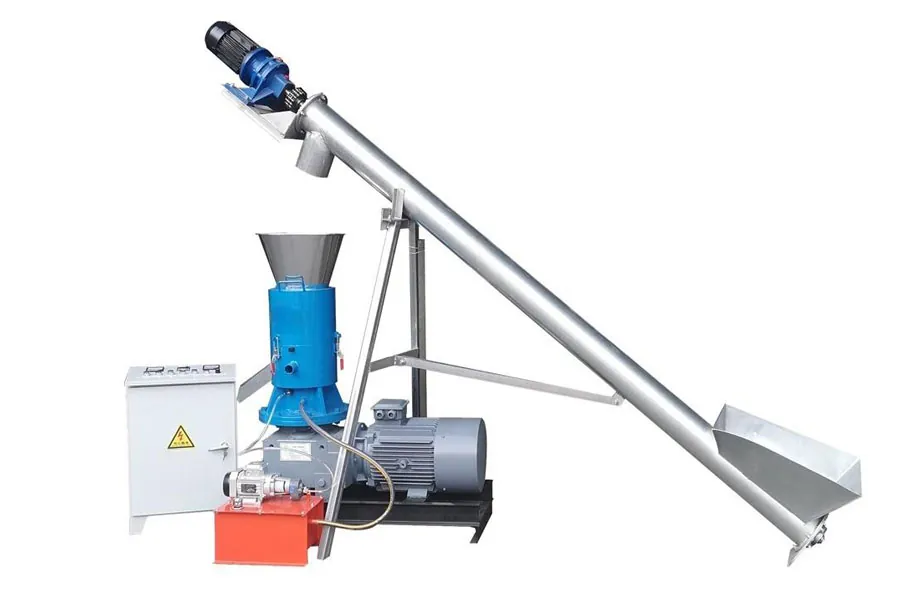
Two builds are quoted at this stage, and the rest of the pellet production line is identical either way. Option A is two 75 kW PM-D580B flat die pellet mills, 600–800 kg/h each. Option B is one 132 kW HML-600 vertical ring die pellet mill, rated 1.5–2.0 t/h on wood. Both run a 1:5 to 1:7 die on sawdust at 12–15 % moisture.
Sawdust is the easiest material to pellet and the one where the die lasts longest — 500–800 hours on a ring die against 250–400 on palm fibre and 200–300 on rice straw. Low ash, high lignin, and a particle that has already been cut rather than torn. Which of the two builds suits you is a question of die cost and floor space rather than output, and it is set out in the pellet mill section below.
Flat die pellet mill — PM-D580B at 75 kW each (option A), or a single HML-600 vertical ring die pellet mill at 132 kW (option B) — both quoted at 1.5 t/h on sawdust.
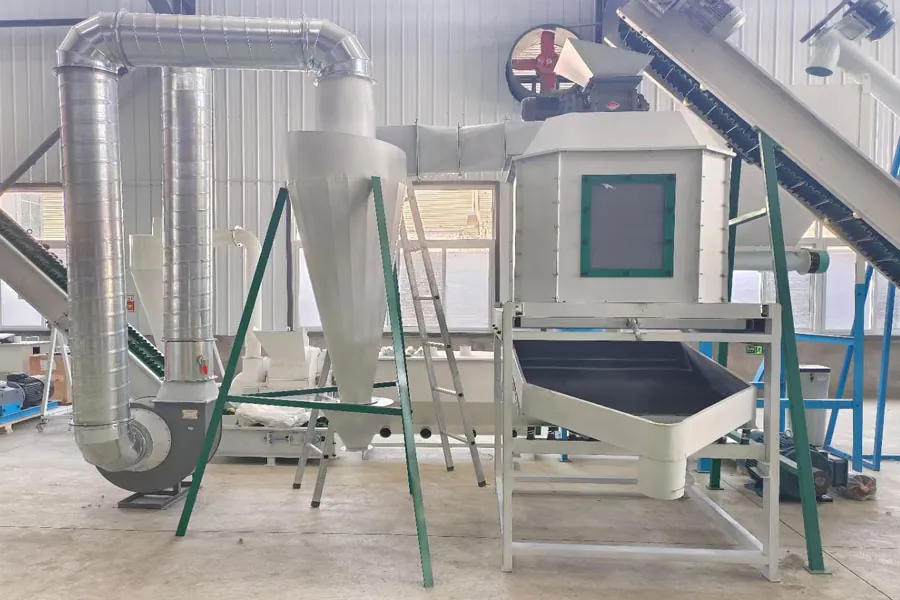
Pellet cooler
Wood pellets leave the die at 80–90 °C. The counterflow pellet cooler brings them to within a few degrees of ambient in seven minutes and the screen deck underneath takes out the 1–2 % fines, which go back to the pellet mills.
The counterflow design matters more on wood than on anything else, because wood pellets are hard and brittle. A crossflow cooler cracks them; a counterflow cooler passes air up through a slow falling bed and the pellets never hit anything harder than each other.
Pellet cooler — LQ-50 0–500 kg/h, LQ-70 0–1,000 kg/h, NL-11 1–2 t/h counterflow.
Pellet packing machine
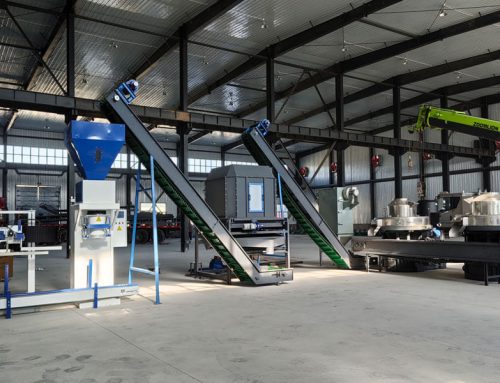
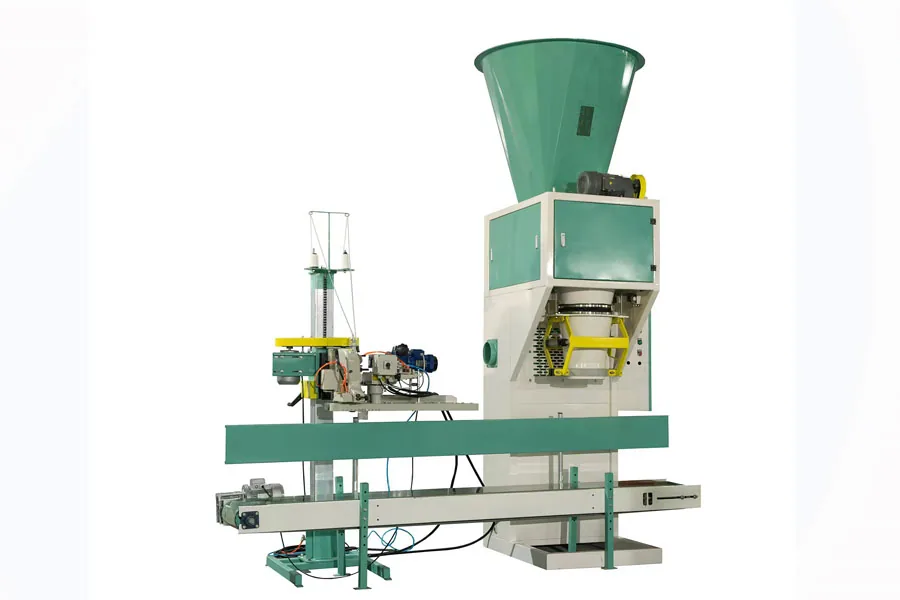
A 1.5 kW quantitative pellet packing machine weighing 25–50 kg bags, a 0.37 kW sewing head, a 0.55 kW flat belt to carry the sewn bag away and a 1.5 kW air compressor to drive the weigh gate. Three to five bags a minute, which is more than two pellet mills can keep up with.
Wood pellets are the one product on our list where the 15 kg bag is a real market — the domestic stove trade in Europe buys by the pallet of 15 kg bags. If that is your market, ask for the 15 kg setting; the pellet packing machine is the same.
Pellet packing machine — 10–50 kg bags or 1,000 kg bulk bags, with weighing and sewing.
Price a sawdust and wood shavings pellet production line
Send the material, its moisture as received and the shed you have. We answer with a model list, a layout drawing at 1:50 and a price.
Tell us the material and the output
The material, its moisture, the pellet diameter and the kg/h you need. We come back with a model list, a die specification and a price.
Reply within one working day. No obligation.
From a shaving on the floor to a pallet of 15 kg bags
Six steps, one of which you may be able to delete. Sawdust is the material where the quotation changes most between two customers with the same output.
Chipping (optional)
Only for logs, slabs and pallet blocks. Sawdust and shavings skip this.
Grinding
A 22–30 kW hammer mill takes shavings and offcuts to 3–5 mm sawdust through a screen.
Drying (optional)
Green sawdust at 45–60 % down to 12–15 %. Kiln-dried sawdust skips this.
Pressing
Two PM-D580B flat die pellet mills or one HML-600 vertical ring die pellet mill, on a 1:5–1:7 die at 80–90 °C.
Cooling and screening
Counterflow air to ambient; the screen deck returns 1–2 % fines to the die.
Bagging
15–50 kg bags with a sewing head, or 1,000 kg bulk bags on load cells.
The moisture question is the one that decides the quotation, and it is worth measuring rather than guessing. A handful of sawdust squeezed in the fist that holds its shape is above 25 %; one that falls apart is below 20 %. Kiln-dried material from an indoor joinery is almost always below 12 % and needs no dryer at all.
The second question is shavings. Shavings from a planer or a moulder are long and curly, and a die will not take them — they bridge across the die chamber and come out as half-formed pellets that crumble in the cooler. They have to go through the hammer mill first, which is why the hammer mill is never the stage you delete.
Die life is the running cost that decides whether the business works. On clean sawdust a die lasts 500–800 hours, against 250–400 on palm fibre and 200–300 on rice straw. The difference is ash: wood carries 0.5–2 %, and it is ash — specifically silica — that polishes a die out.
Two ways to make 1.5 t/h: two PM-D580B flat dies, or one HML-600 ring die
Both builds are quoted at 1.5 t/h on sawdust and both ship in one container. The choice is not output — it is die cost, die life, and how much floor you have. We quote both and let the buyer decide.
Option A is two PM-D580B flat die pellet mills at 75 kW each, 600–800 kg/h per press. A flat die is a horizontal disc with two or three rollers running on top of it, and the die is a plate that is lifted out and replaced as a unit. Two of them means a die change on one leaves the other making pellets, and it means you can run a 6 mm die on one and an 8 mm die on the other — which is how a plant selling 15 kg bags to the stove trade and bulk bags to a boiler house handles two products without stopping.
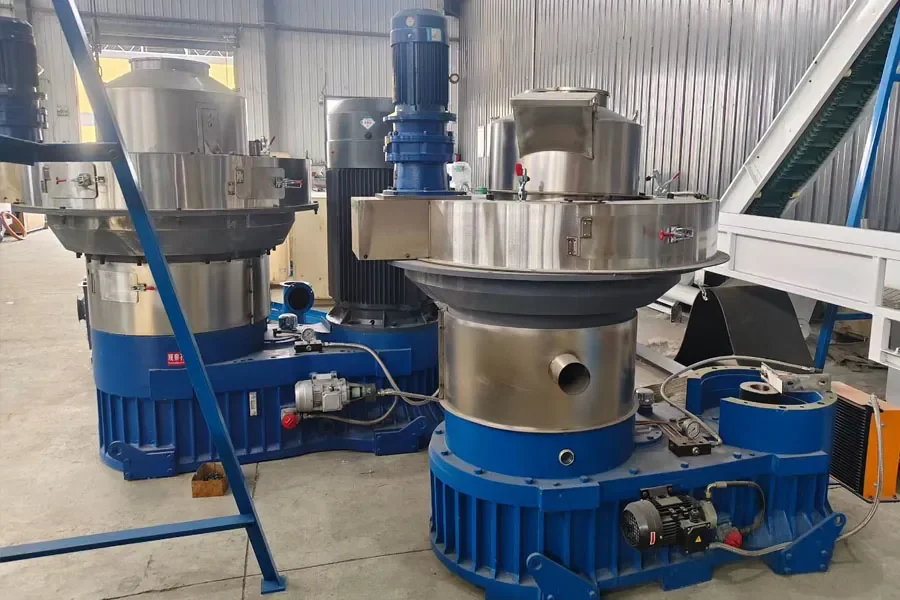
Option B is one HML-600 vertical ring die pellet mill at 132 kW, rated 1.5–2.0 t/h on wood. The die is a vertical ring, the rollers press outwards from inside it, and centrifugal force throws the sawdust against the ring so light material cannot bridge. One press, one feeder, one die change — but the ring is re-cut rather than thrown away, and 132 kW makes the tonne that two 75 kW flat die pellet mills make.
Pellet mills for a sawdust and wood shavings pellet production line
| Model | Power | Capacity | Where it fits |
|---|---|---|---|
| PM-D580B ×2 (flat die) | 150 kW | 1.2–1.6 t/h on wood | Option A — two plate dies and two feeders; one keeps running through a die change |
| HML-600 ×1 (vertical ring die) | 132 kW | 1.5–2.0 t/h on wood | Option B — one ring die, one feeder, the least floor and the lowest power per tonne |
Capacity is quoted on sawdust at 12–15 % moisture with a die matched to the material. A softer material or a coarser grind runs below the figure; a higher compression ratio runs above it and draws more power doing so.
Which one we recommend depends on what you sell. If you sell one pellet diameter and run the pellet production line flat out, option B is the better pellet mill: 18 kW less on the meter, one die to keep in stock, and a shorter footprint. If you sell two diameters, or if a stopped pellet production line costs you a customer, option A is worth the extra power — a plate die is changed in twenty minutes with one man and a spanner, while the other flat die pellet mill carries the load.
The running cost difference is the die. A PM-D580B plate die is a disc that is replaced; an HML-600 ring die is re-cut two or three times before it is scrapped. Per tonne of pellets the ring die is cheaper, and the gap widens the more hours you run. What option A buys back is the twenty-minute die change — no lifting tackle, and the pellet production line keeps running while you do it.
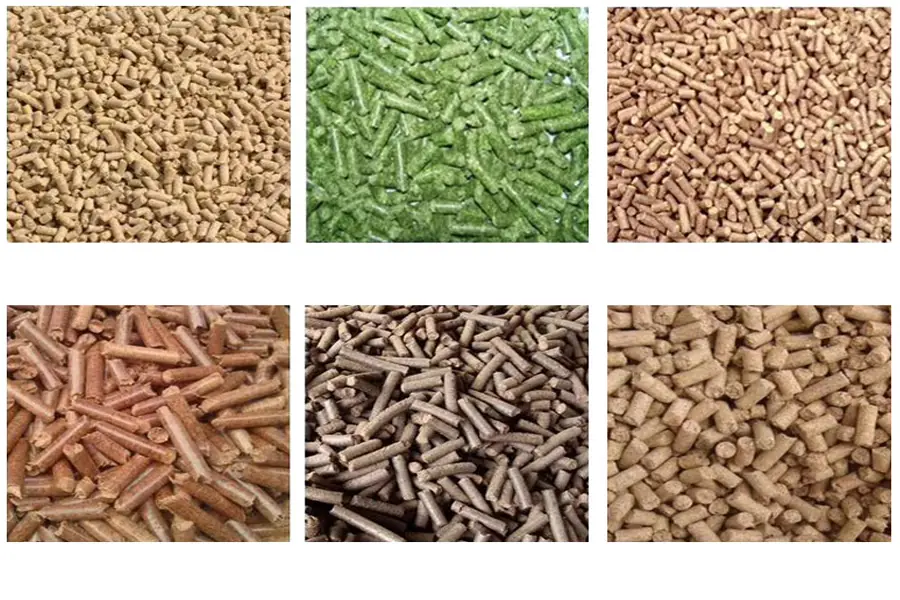
From 500 kg/h to 5 t/h: the wood pellet production lines we build
The 1.5 t/h pair above is one point on this table, not the product. Every pellet production line below is the same six stages with the pellet mills sized to the output — and if your figure is not on the table, that is a sizing question rather than a different model.
| Output | Pellet mill | Where it is used |
|---|---|---|
| 500 kg/h | PM-D450B flat die pellet mill, 45 kW | One press and one plate die. The 500 kg/h wood pellet production line — 99 kW, 120 m² |
| 1 t/h | Two PM-D450B flat die pellet mills, 90 kW | Two plate dies at 450–600 kg/h each. The 1000 kg/h wood pellet production line — 190 kW, 200 m² |
| 1 t/h | One HML-560 vertical ring die pellet mill, 90 kW | The same tonne on one press and one die change. The 1000 kg/h biomass pellet production line — 194 kW, 220 m² |
| 1.5 t/h | Two PM-D580B flat die pellet mills, 150 kW | Option A on this page — two plate dies, two feeders, 1.2–1.6 t/h |
| 1.5 t/h | One HML-600 vertical ring die pellet mill, 132 kW | Option B on this page — one ring die, the least floor |
| 2 t/h | Two HML-560 vertical ring die pellet mills, 180 kW | The same vertical ring die pellet mills with a bigger biomass sawdust dryer and pellet cooler. The 2000 kg/h wood pellet production line — 354 kW, 380 m² |
| 5 t/h | Three HML-600 vertical ring die pellet mills, 396 kW | Pellet mills in parallel, not one bigger one. The 5000 kg/h wood pellet production line — 775 kW, 900 m² |
Installed power is the whole pellet production line, not the pellet mills. Capacity is quoted on sawdust at 12–15 % moisture with a die cut for wood: a flat die pellet mill holds 450–600 kg/h on the 450 frame and 600–800 kg/h on the 580 frame; a vertical ring die pellet mill holds 1.0–1.5 t/h on the HML-560 frame and 1.5–2.0 t/h on the HML-600.
Under a tonne an hour the flat die pellet mill is the cheaper of the two to buy and to run, and two of them is how the tonne gets made. The plate die is a disc that is lifted out and replaced, and on clean sawdust it runs 300–500 hours. Nothing else about the pellet production line changes at that size — the wood hammer mill is smaller and the biomass sawdust dryer may not be there at all.
At a tonne an hour the two families meet: two PM-D450B flat die pellet mills or one HML-560 vertical ring die pellet mill make the same tonne, and the difference is what you pay up front against what you pay in dies and power over five years. They meet again at 1.5 t/h, which is why that build is quoted both ways — two PM-D580B plate dies or one HML-600 ring die. Above 1.5 t/h the flat die drops out: two more 580 frames to reach 2 t/h is twice the floor and twice the die changes, so from 2 t/h up we quote the vertical ring die pellet mill.
Past 2 t/h the answer is more pellet mills rather than a bigger one. Three HML-600 vertical ring die pellet mills make 5 t/h; there is no single 400 kW pellet mill in our range, and if there were, its die would need a crane to change and the site would need a supply big enough to start it under a full die. Tell us the output you can sell and we will tell you how many pellet mills that is.
What sawdust decides, before any pellet mill is chosen
Sawdust is the forgiving material. The figures below are why: low ash, high lignin, and a moisture range that is often already right.
| Item | Figure | Why it matters |
|---|---|---|
| Moisture as received | 10–12 % kiln-dried, 45–60 % green | The figure that decides whether the dryer is quoted |
| Moisture into the die | 12–15 % | Below 12 % the pellet cracks; above 16 % it will not form |
| Bulk density, loose | 150–250 kg/m³ sawdust, 80–120 kg/m³ shavings | Shavings are the lighter of the two and need a wider belt |
| Particle size after the hammer mill | 3–5 mm | 5 mm is where most of our customers settle |
| Die compression ratio | 1 : 5 to 1 : 7 | The shortest of any material on our list — wood binds easily |
| Binder | None | 25–30 % lignin, the highest of the six materials here |
| Ash in the finished pellet | 0.5–2 % | Low enough for ENplus A1 and for any boiler warranty |
| Pellet diameter | 6 or 8 mm | 6 mm for stoves and export, 8 mm for boilers and for bulk blending |
The ash figure is why sawdust is the material the whole industry is designed around. At 0.5–2 % ash a die lasts 500–800 hours and a boiler warranty is easy to satisfy. Blend 20 % rice husk into the same pellet production line and the ash triples and the die life halves — which is why husk is usually run on its own pellet production line with its own die.
The bulk density figures explain the layout. Shavings at 80–120 kg/m³ take up twice the volume of sawdust for the same weight, so a pellet production line running shavings needs a wider belt between the hammer mill and the dryer, and a bigger buffer bin. If you will run both, size the conveyors for shavings.

What the site has to provide
The 1.5 t/h build is 201–219 kW of motors on 480 m² of floor, under a roof 8 m high. Every output from 500 kg/h to 5 t/h is laid out on the same plan.
| Item | Figure | Note |
|---|---|---|
| Installed power, option A | 219 kW | Two PM-D580B flat die pellet mills at 75 kW, plus 69 kW of hammer mill, dryer, cooler and packer motors |
| Installed power, option B | 201 kW | One HML-600 vertical ring die pellet mill at 132 kW, plus the same 69 kW of auxiliary motors |
| Largest single motor | 75 kW / 132 kW | Per press on option A, the ring die press on option B — this is the figure that sizes the transformer |
| Electrical supply | 250 kVA, 380 V / 50 Hz, four-wire | Sized on the 132 kW ring die motor starting, so one supply covers either option |
| Footprint | 30 × 16 m, 480 m² | Arranged in a straight line, sawdust store excluded |
| Building height | 8 m clear | Under the hook, at the dryer cyclone and the buffer bin |
| Operators | 2 per shift | One on the pellet mills, one on the bagging end |
| Water | Not required | The pellet cooler is air cooled |
| Compressed air | 0.6 m³/min at 7 bar | Bag clamp and weigh gate |
| Containers | 1 × 40HQ | The whole pellet production line ships in one container |
Either total is low for the output, and it is low for a simple reason: no chipper, a 22–30 kW hammer mill instead of 75, and no dryer at all if the sawdust is kiln-dried. Take the dryer off the quotation and option A drops to about 189 kW and option B to about 171 kW.
The supply is sized on the largest single motor, and the two options point different ways: option A starts one 75 kW flat die pellet mill at a time, option B starts a 132 kW vertical ring die pellet mill. A 250 kVA supply covers either, and the control panel staggers the two PM-D580B flat die pellet mills by fifteen seconds so option A never starts both together. Tell your electrician that, because a supply sized on the total instead is twice the price.
Sawdust storage is the site item that gets forgotten. A 1.5 t/h pellet production line burns 12–15 t of sawdust a shift, and green sawdust in a pile heats up and can self-ignite. Under cover, in a bunker, turned regularly — that is the specification, and it is worth more than a second pellet mill.
What ships, and what the site has to build
A sawdust pellet production line is quoted as a set. This is what is inside the price.
-
All six stages
Wood hammer mill, biomass sawdust dryer if quoted, the pellet mills — two PM-D580B flat die pellet mills on option A or one HML-600 vertical ring die pellet mill on option B — pellet cooler with screen, pellet packing machine, with motors, starters and guards.
-
Conveyors and ducting
Screw conveyors with magnetic separators, belts between the stages, and the ducting from the dryer and hammer mill cyclones, cut to the layout drawing.
-
Control cabinets
One panel for the pellet production line with staggered starting for the two pellet mills and the interlock that stops the feed when either one stops.
-
Dies and rollers
One die per press at your pellet diameter, plus a spare. Option A ships two plate dies and two roller sets; option B ships one ring die and one roller assembly.
-
Layout drawing
1:50 plan and elevation, with the foundation blocks and the cable runs marked.
-
Commissioning
One engineer on site for the first run, at our cost, for a pellet production line of this size.
Not included, and quoted separately if you want them: the hot air stove for the dryer, which most sites build locally in firebrick; the sawdust store; the civil works; and the transformer. Delivery is 25–30 working days from deposit, FOB Qingdao. Spare parts are on the shelf at spare parts.
Watch a sawdust and wood shavings pellet production line run
Five clips: a 1 t/h wood pellet plant end to end, then the pellet mill on sawdust, the flat die alternative and the shaving machine that feeds it.


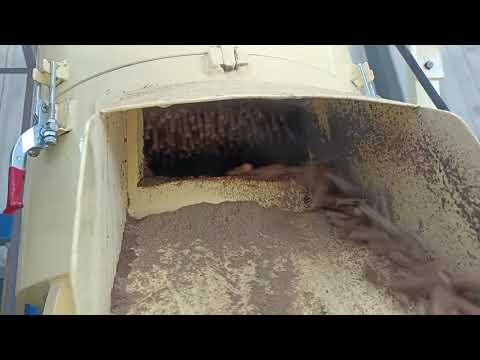
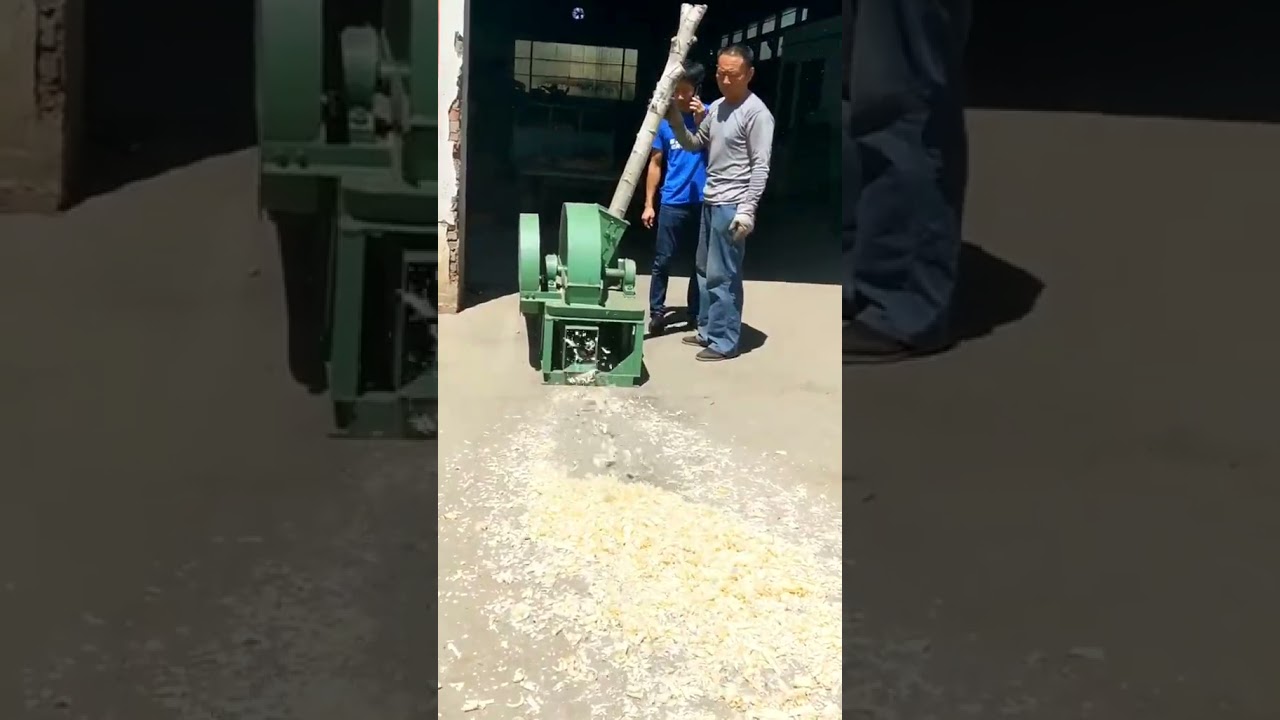

More on the PelletHills channel — the biomass playlist is where the pellet production line and pellet machine clips go up first.
What buyers ask before ordering a sawdust and wood shavings pellet production line
12 questions we answer on the phone most weeks.
Do you only build the 1.5 t/h sawdust pellet production line?
No. We build them from 500 kg/h to 5 t/h, and 1.5 t/h is the size we quote most often — which is why this page is written around it. The stages do not change with output: a hammer mill, a dryer if the material is green, one or more pellet mills, a counterflow pellet cooler with a screen, and a pellet packing machine. Tell us the output you can sell and the material you have, and we size the pellet mills and the biomass sawdust dryer to it.
What does the 1.5 t/h sawdust pellet production line include?
Six stages: a wood hammer mill (22–30 kW), a biomass sawdust dryer if the sawdust is green, either two PM-D580B flat die pellet mills at 75 kW each or one HML-600 vertical ring die pellet mill at 132 kW, a counterflow pellet cooler with a vibrating screen, and a 25–50 kg pellet packing machine. Installed power is 219 kW with the flat die pair and 201 kW with the ring die, on 30 × 16 m. A wood chipper machine is optional and usually absent.
Two flat die pellet mills or one vertical ring die pellet mill — which should I take?
Option A, two PM-D580B flat die pellet mills, is the cheaper of the two to buy and lets you run two dies at once — a 6 mm and an 8 mm — and change a plate die in twenty minutes without stopping the pellet production line. Option B, one HML-600 vertical ring die pellet mill, is 18 kW lighter, takes less floor, and its ring die is re-cut rather than replaced, so it costs less per tonne the more hours you run. If you sell one pellet diameter and run flat out, take option B. If you sell two, take option A.
Do I need a dryer?
Only if your sawdust is green. Kiln-dried sawdust at 10–12 % goes straight from the hammer mill to the die and the dryer comes off the quotation, which saves about 30 kW and 8 m of shed. Sawdust at 45–60 % from a green saw cannot be pelletised without one.
Can the pellet production line take wood shavings?
Yes, after the hammer mill. Shavings are long and curly and a die will not take them as they come — they bridge across the die chamber and come out as half-formed pellets. Ground to 3–5 mm they pellet exactly like sawdust, at a slightly higher bulk density.
What compression ratio do you cut for sawdust?
1:5 to 1:7, the shortest of any material on our list, because wood carries 25–30 % lignin and binds easily. Straw needs 1:8–1:10 and palm fibre 1:6–1:8 for the same reason in reverse — they have less lignin and more spring.
How long does a die last on sawdust?
500–800 hours on a vertical ring die and 300–500 on a flat die plate, the longest of any material we handle, because wood ash is only 0.5–2 % and it is ash that wears a die out. Blend 20 % rice husk in and the die life halves. Dies and rollers are on the shelf at spare parts and are changed in an hour.
What is the smallest sawdust pellet production line you build?
The 500 kg/h wood pellet production line: one 45 kW flat die pellet mill, a 22 kW hammer mill, a dryer if needed, a cooler and a bagging scale, at 99 kW and 120 m². Below that, a combined pellet mill and hammer mill makes 100–350 kg/h on one frame with no cooler and no bagging scale.
Can I make 15 kg bags for the European stove trade?
Yes. The pellet packing machine we quote covers 10–50 kg, so a 15 kg setting is a change of weigh target rather than a different machine. Most plants selling into that market also want a bag flattener and a pallet wrapper, which we quote separately.
How much sawdust does it consume?
About 1.02 t of sawdust for every 1 t of pellets — the lowest conversion loss of any material here, because there is almost no ash to lose. At 1.5 t/h on two shifts that is 24 t a day, which has to be under cover: green sawdust in a pile heats up and can self-ignite.
How long does installation take, and what is the delivery time?
Eight to ten days on site with our engineer present, plus the civils. Delivery is 25–30 working days from deposit, FOB Qingdao, in a single 40HQ container. Payment is 40 % deposit with the balance before delivery.
Can the pellet production line run on something other than sawdust?
Yes — rice husk, straw, palm fibre, bamboo waste and bagasse all run on the same stages with a different die and a different hammer mill screen. Wood is the easiest of them; husk is the hardest on the die. Tell us the material and we cut the die for it.
Request a quotation for a sawdust and wood shavings pellet production line
Tell us the material, its moisture, the pellet diameter and the shed you have. We reply with a model list, a layout drawing and a price.
What happens after you send this
We answer with the model list, the die compression ratio and a price, then send a test-run video on your material before you pay a deposit.
Your details are not shared. One follow-up, no mailing list.