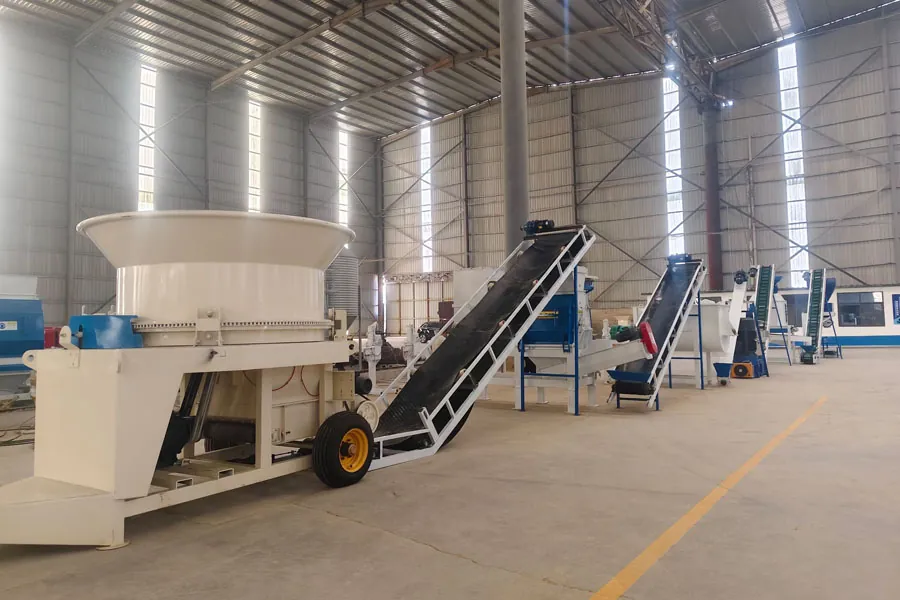
Palm Fibre (EFB) Pellet Production LineEmpty fruit bunch to 6 mm pellets, one tonne an hour
A 1 t/h palm fibre pellet production line built around a 55 kW vertical ring die pellet mill: a 75 kW EFB shredder machine for whole bunches, a 45 kW wood hammer mill, a rotary drum biomass sawdust dryer, a counterflow pellet cooler and a ton-bag pellet packing machine. 236 kW of motors on 70 × 24 m of floor.
- 75 kW EFB shredder machine and 45 kW hammer mill — whole EFB bunches, trunk sections and fronds go in at one end
- Rotary drum biomass sawdust dryer with its own hot air stove: 50 % moisture down to 13 %
- 55 kW vertical ring die pellet mill, four rollers working independently, 1,000–1,200 kg/h on palm fibre
- Counterflow pellet cooler, vibrating screen and ton-bag pellet packing machine — 236 kW in total
Reply in 12 working hours · Sized on your material and its moisture · Layout drawing and die specification included
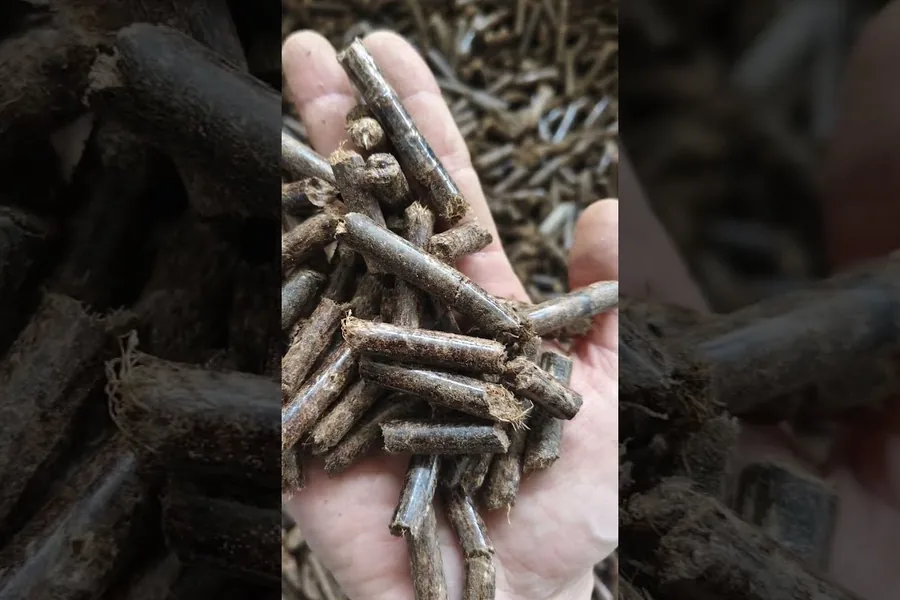
From a pile of empty fruit bunches to a bulk bag of pellets
A palm fibre pellet production line is six machines in a fixed order, and the first three of them are there for one reason: fresh EFB arrives at 50–65 % moisture and nothing will pellet that.
Empty fruit bunch is what is left after the fruit has been stripped at the mill. It comes off the ramp wet, in bunches the size of a football, with stalk, spikelet and loose fibre all mixed together. It is also one of the lightest materials we pellet — 150–220 kg/m³ loose — so a tonne of it takes up five times the floor space that a tonne of sawdust does, which is why the layout for a palm fibre pellet production line is long and low rather than tall and compact.
The vertical ring die pellet mill is the only one of the six stages that makes a pellet. Everything in front of it exists to deliver palm fibre of the right length at the right moisture at a steady rate, and everything behind it exists to stop the pellet going soft in the bag.
A 1 t/h palm fibre (EFB) pellet production line 236 kW installed
| Stage | Machine | Model | What it does |
|---|---|---|---|
| 01 | EFB shredder machine | 316D, 75 kW | Whole bunches, trunk sections and fronds torn down to 20–60 mm |
| 02 | Wood hammer mill | 45 kW, 600 mm chamber | Pieces down to 5–8 mm fibre, the length the die is cut for |
| 03 | Biomass sawdust dryer | TS 1.2 × 12 | 50 % moisture down to 13 %, with its own hot air stove |
| 04 | Vertical ring die pellet mill | HML-560, 55 kW | The only stage on the palm fibre pellet production line that makes a pellet |
| 05 | Pellet cooler | LQ-50 + vibrating screen | 80 °C pellets down to room temperature, fines screened out |
| 06 | Pellet packing machine | BZ-1000 ton-bag | 1,000 kg bulk bags, weighed and filled |
Installed power is 236 kW across all 6 stages, on 70 × 24 m of floor at 8 m clear. Every machine in the table is also sold on its own, and the dies, rollers and screens for them are shipped as spares.
The footprint is the number that surprises people. A 1 t/h palm fibre pellet production line needs 70 × 24 m of floor and 8 m of clear height, against 30 × 16 m for a sawdust pellet production line of the same output. The reason is bulk density: at 150–220 kg/m³ the fibre needs conveyors three times as long to move the same weight of material, and the dryer has to be longer to give it the residence time.
Every quotation comes with a layout drawing at 1:50 showing the position of every machine, the belt lengths between them and the ducting for the dryer. Send us the shed you have and we will fit the palm fibre pellet production line into it before you commit to anything.
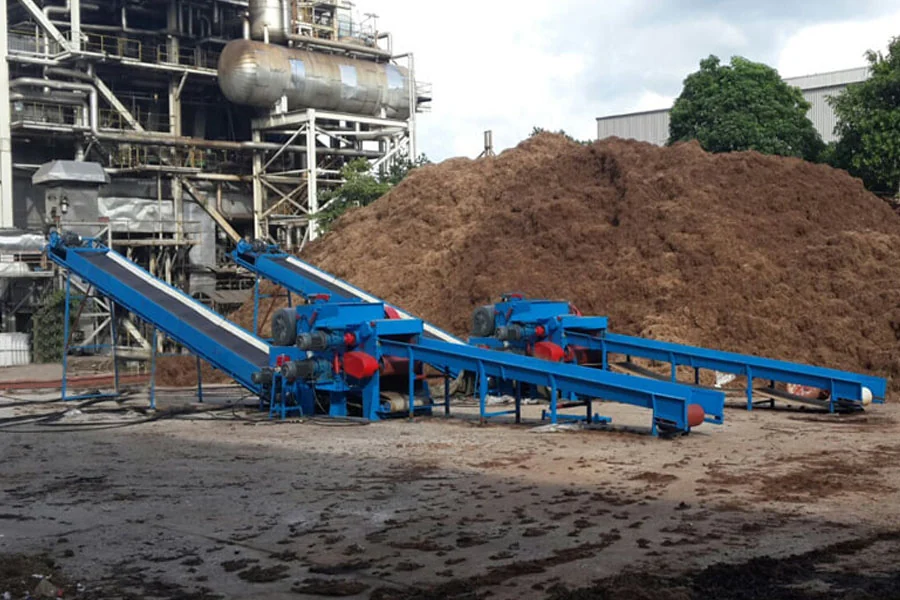
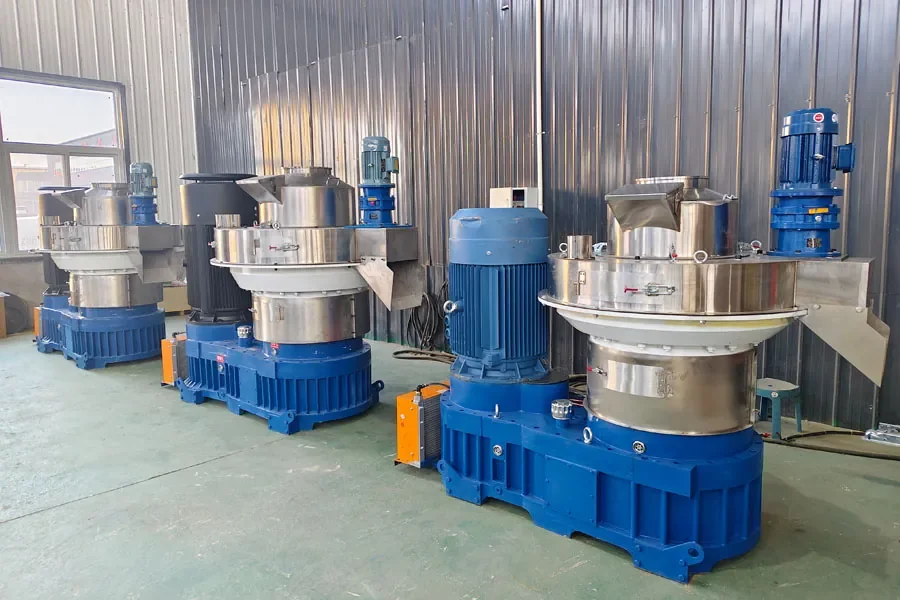
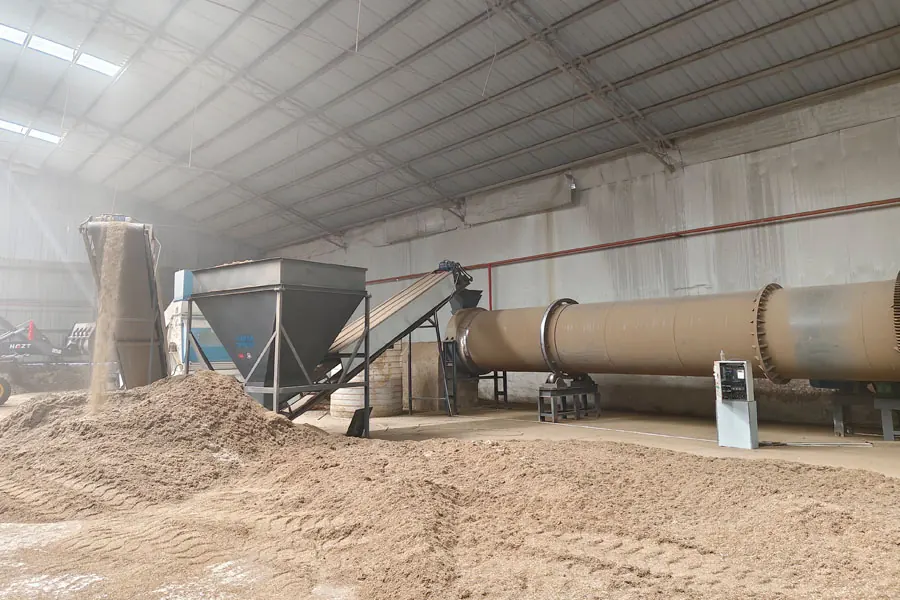
What each stage does on a 1 t/h palm fibre (EFB) pellet production line
Read them in order — the material only moves one way. Each stage links to its product page where we list that machine on its own, with the model range and the power figures.
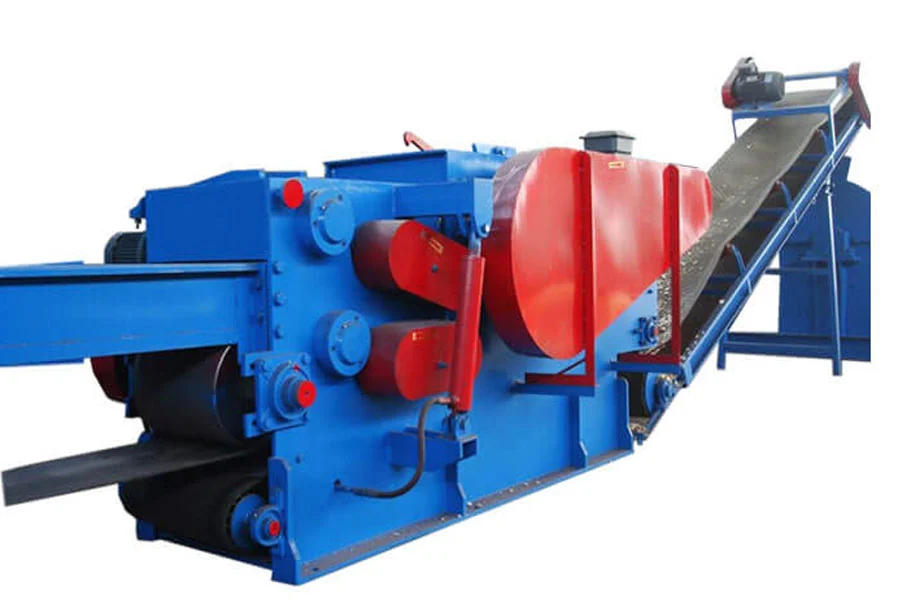
EFB shredder machine
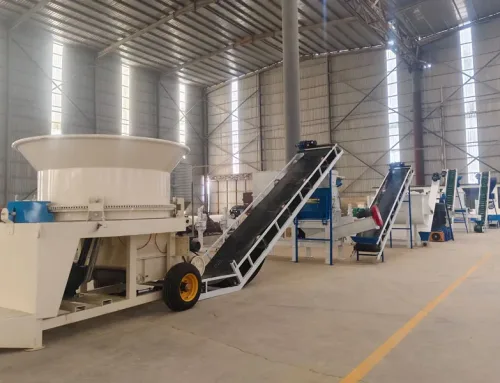
Palm fibre does not arrive as fibre. It arrives as a bunch the size of a football, stalk and spikelet still attached, and a bunch will wrap itself around the shaft of a hammer mill in about four seconds. A chipper does not solve it either: knives skate over wet, stringy palm fibre and the bunch comes through half whole. EFB needs a shredder — a rotor carrying knives that work against a fixed comb, tearing the bunch apart rather than slicing it.
We quote a 316D EFB shredder machine at 75 kW, with a 6 m infeed belt and a 4 + 10 m discharge belt feeding a 1.8 m³ buffer bin. The inlet takes 540 × 230 mm, so a whole bunch goes in without being cut down first, and it comes out at 20–60 mm. The shredder is not sized to the pellet mill’s hourly rate: it runs 8–10 t/h, so one hour of shredding feeds the mill for most of a shift. That is deliberate — the mill wants a steady feed, the shredder wants to be run hard and then stopped.
EFB shredder machine — 316D / 318D / 3113, 75 to 200 kW, 8 to 30 t/h, quoted as part of the pellet production line.
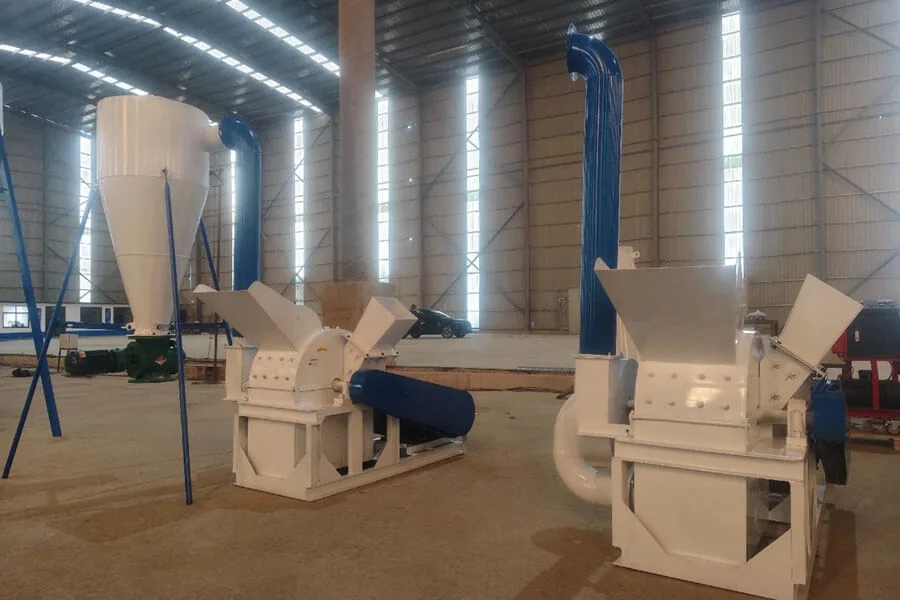
Wood hammer mill
The hammer mill is where palm fibre becomes pelletable. A 600 mm working chamber with a 600 mm wide inlet and a bottom discharge, driven at 45 kW, takes the shredder’s output down to 5–8 mm. That is coarser than the 3–4 mm a sawdust pellet production line runs, and deliberately so: palm fibre is already stringy, and grinding it to powder makes a pellet that crumbles in the bag.
A 1.2 kW cyclone with a sixteen-bag dust collector sits on top. Palm fibre dust is fine, light and unpleasant to breathe, and the bag house is not optional on a palm fibre pellet production line — it is what keeps the shed habitable.
Wood hammer mill — FS series, 120 to 1,600 kg/h, 3 to 37 kW.
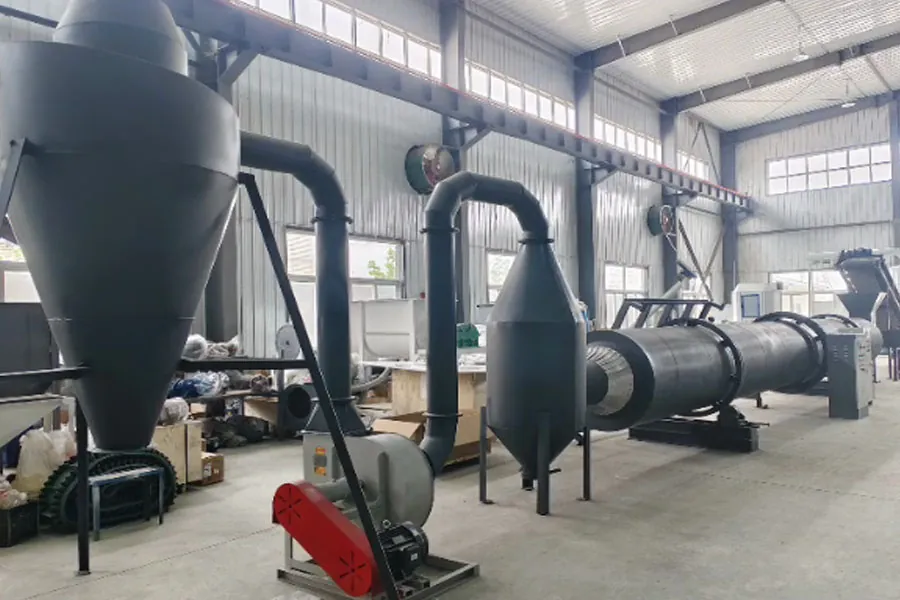
Biomass sawdust dryer
This is the stage that decides whether the palm fibre pellet production line runs at all. Fresh EFB sits at 50–65 % moisture; even after shredding and grinding it is at 45–55 %. A die will not build pressure on that — the water flashes to steam inside the hole and the pellet comes apart as it leaves.
We quote a 5.5 kW rotary drum 12 m long and 1.2 m in diameter, with a refractory-brick hot air stove, an 11 kW fan on a 1.5 m cyclone and airlocks at both ends. It takes the fibre to 13 %. The drum is the right choice here rather than a flash pipe dryer because palm fibre is bulky and does not suspend well in a fast air stream.
Biomass sawdust dryer — flash pipe from 200 kg/h, rotary drum from 500 to 2,500 kg/h.
Vertical ring die pellet mill
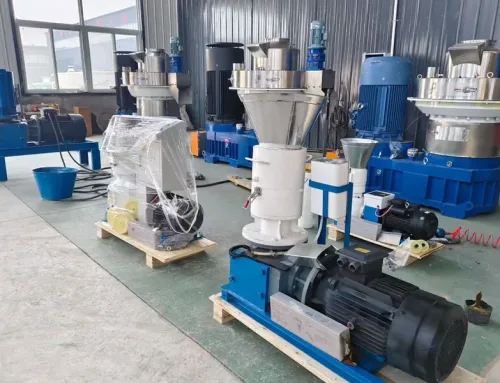
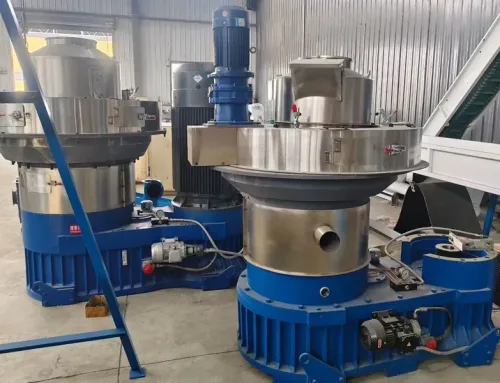
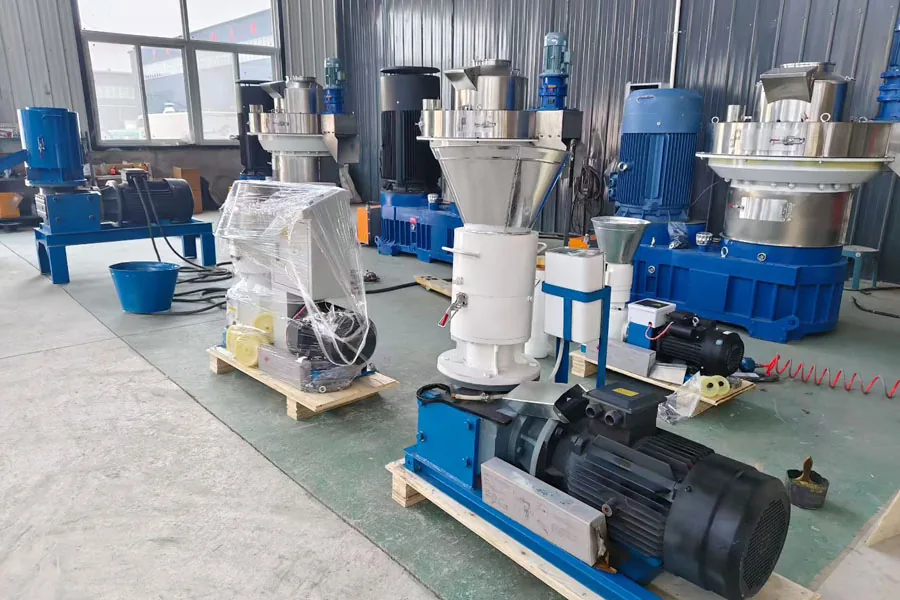
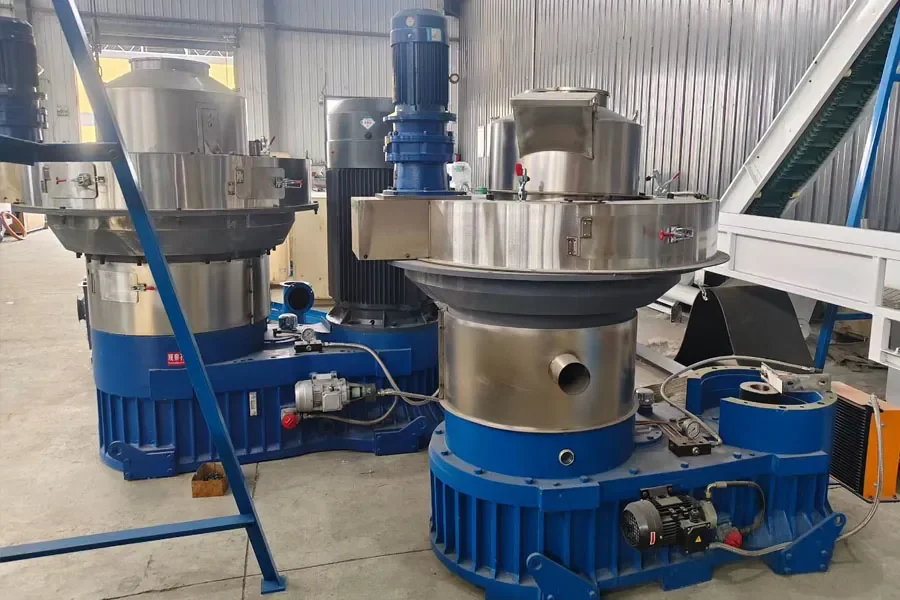
A 55 kW vertical ring die pellet mill with a double-layer die and four rollers working independently at 58–60 rpm. On palm fibre it is rated 1,000–1,200 kg/h with a 1:6 to 1:8 compression ratio. The die stands on its side and the rollers turn inside it, so the pellet drops away downwards instead of being flung across the chamber — which is what keeps a light, stringy material from balling up around the roller shafts.
Palm fibre carries 20–24 % lignin, so no binder is needed and no steam conditioner is needed either. What it does need is a die that is cut for fibre rather than for sawdust: a shorter compression length and a slightly larger hole entry, or the mill stalls on its own product.
Vertical ring die pellet mill — HML-560 / 600 / 700, 90 to 160 kW, 1.0 to 2.5 t/h.
Pellet cooler
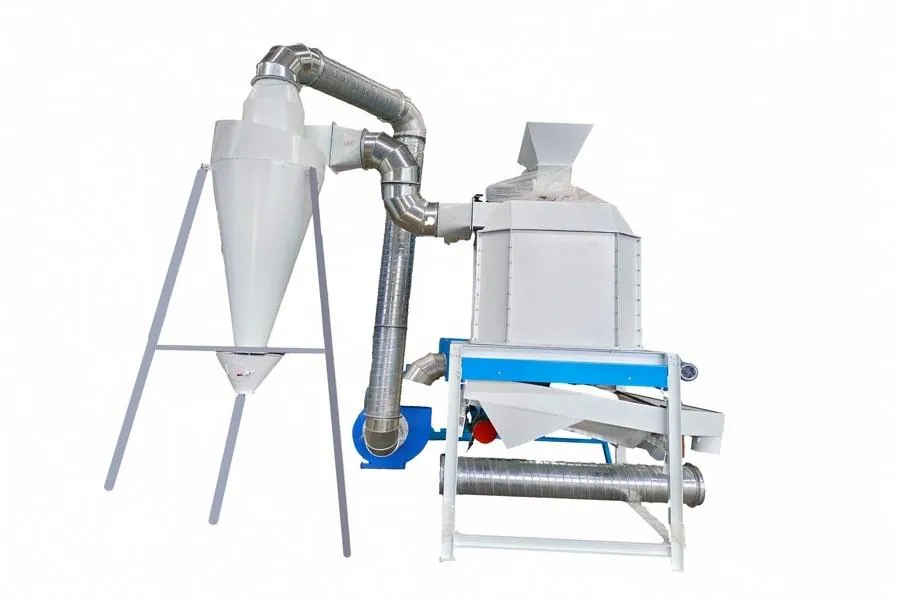
Pellets leave the die at 75–90 °C and soft enough to squash between two fingers. The counterflow pellet cooler pulls room air up through a falling bed of pellets and brings them to within a few degrees of ambient in about seven minutes, and the vibrating screen underneath takes out the fines and returns them to the pellet mill.
Skip the pellet cooler on palm fibre and the bag arrives warm, the pellets sweat against the polypropylene, and the top third of the bag sets into a lump that the customer will find before you do.
Pellet cooler — LQ-50 0–500 kg/h, LQ-70 0–1,000 kg/h, NL-11 1–2 t/h counterflow.
Pellet packing machine
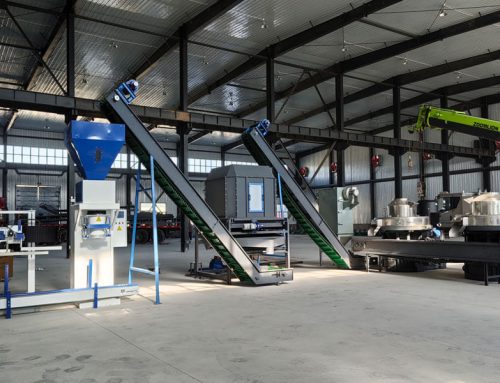
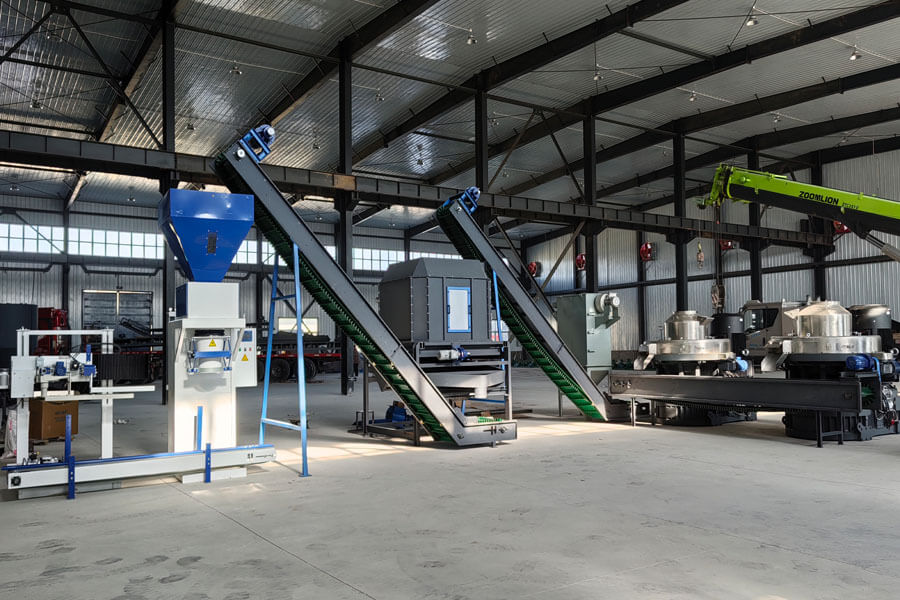
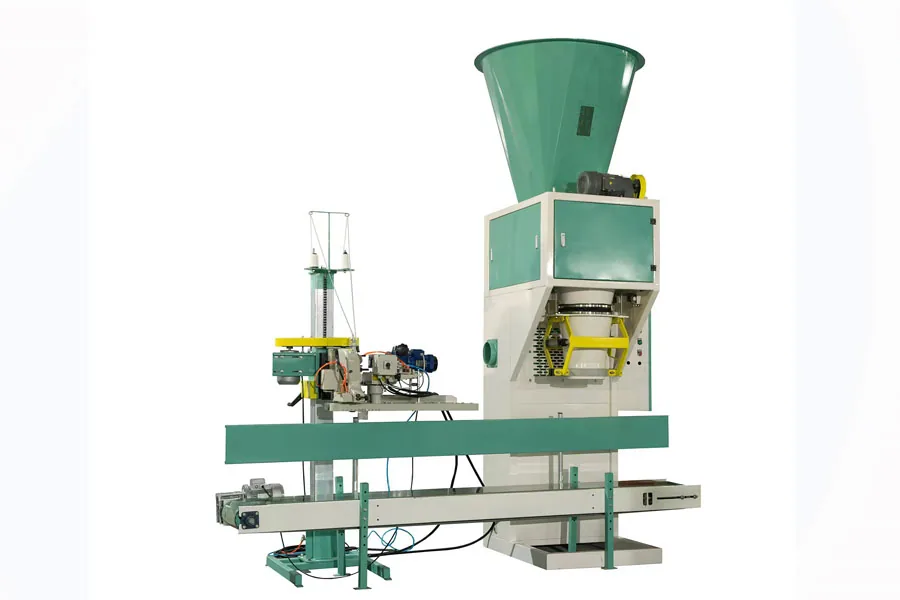
Palm fibre pellets leave this pellet production line in 1,000 kg bulk bags, not in 25 kg sacks. They go to a power station, a boiler house or a trader who repacks them, and none of those want a pallet of small bags. A 3.5 kW ton-bag pellet packing machine with a 4 × 1.2 m platform weighs the bag on load cells as it fills and drops it onto a pallet.
If your market is the domestic stove trade rather than industrial fuel, swap it for a 25–50 kg pellet packing machine with a sewing head — same pellet production line, different last stage, and about the same money.
Pellet packing machine — 10–50 kg bags or 1,000 kg bulk bags, with weighing and sewing.
Price a 1 t/h palm fibre (EFB) pellet production line
Send the material, its moisture as received and the shed you have. We answer with a model list, a layout drawing at 1:50 and a price.
Tell us the material and the output
The material, its moisture, the pellet diameter and the kg/h you need. We come back with a model list, a die specification and a price.
Reply within one working day. No obligation.
From a bunch on the ramp to a sealed bulk bag
Seven steps, and only the fourth one makes a pellet. The sequence does not change between 500 kg/h and 3 t/h — only the size of the machines does.
Receiving
Whole EFB bunches tipped onto the infeed belt. 50–65 % moisture, and bulky.
Shredding
A 75 kW EFB shredder machine tears bunches, trunk and fronds down to 20–60 mm.
Grinding
A 45 kW hammer mill takes the pieces to 5–8 mm fibre through a 6 mm screen.
Drying
A 5.5 kW rotary drum takes 50 % moisture down to 13 %. The largest fuel cost on the site.
Pressing
A 55 kW vertical ring die pellet mill forces the fibre through a 1:6–1:8 die; lignin binds it.
Cooling and screening
Counterflow air brings the pellet from 80 °C to ambient. The screen deck takes the fines out and sends them back to the pellet mill.
Bagging
1,000 kg bulk bags on load cells, or 25–50 kg sacks with a sewing head.
The order is fixed and the reason is moisture. Fibre that is too wet will not build pressure in the die; fibre that is too dry compresses so easily that the pellet mill can be overloaded by it. Everything upstream of stage five exists to deliver one tonne of fibre at 13 % moisture, every hour, at an even rate.
The number buyers underestimate is how much water has to leave. A 1 t/h palm fibre pellet production line running EFB at 50 % moisture has to evaporate about 850 kg of water an hour before the die sees any fibre. That is why the dryer and its hot air stove are the largest running cost, and why a roof over the raw material pile pays for itself in a single season in a wet climate.
The second number is die temperature. Palm fibre softens at a lower temperature than wood because of its lignin structure, so the die runs cooler — and a die that runs too hot glazes over and stops taking material. On this pellet mill that balance is set by the compression ratio and by how fast the screw feeder runs, not by a thermostat.
The pellet mill a palm fibre pellet production line is built around
Palm fibre is a vertical ring die material. Above about 600 kg/h there is no flat die build we would quote for it, and the reason is the fibre, not the output.
A flat die pellet mill relies on the material falling into the centre of a horizontal die plate and being dragged under the rollers. Palm fibre does not fall — it bridges. It mats across the die chamber, the rollers skate on top of the mat and the mill makes dust instead of pellets. A vertical ring die pellet mill throws the material outwards against the die with centrifugal force, so bridging cannot form, and the pellet drops away downwards instead of being flung across the chamber.
The second reason is die wear. Palm fibre carries 2–4 % silica, and silica is what wears a die out. A ring die is a single ring that can be re-cut and re-used; a flat die is a plate that is replaced. On a material this abrasive the ring die wins on cost per tonne of pellets, not just on output.
Pellet mills for a palm fibre (EFB) pellet production line
| Model | Power | Capacity | Where it fits |
|---|---|---|---|
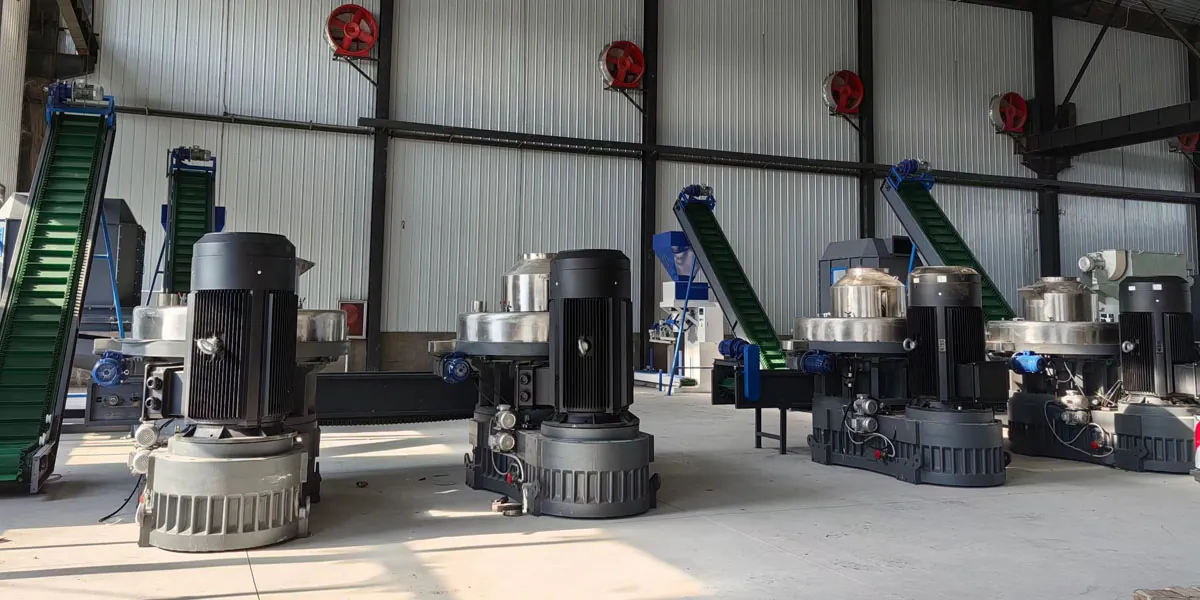
| HML-560 | 90 kW | 1.0–1.5 t/h | The standard build for a 1 t/h palm fibre pellet production line |
| HML-560 (55 kW) | 55 kW | 1.0–1.2 t/h | The lighter build we quote where the supply is limited |
| HML-600 | 132 kW | 1.5–2.0 t/h | Two of them for a 3 t/h palm fibre plant |
| HML-700 | 160 kW | 2.0–2.5 t/h | The largest single pellet mill we build |
Capacity is quoted on palm fibre at 13 % moisture with a die cut for fibre. A wetter material or a longer fibre runs below the figure; a 1:8 die runs above it and draws more power doing so.
Four rollers working independently is not a marketing claim on this material. Palm fibre feeds unevenly across the die face — one side of the ring gets more than the other — and independent rollers let each one ride over its own patch instead of being lifted by the loaded side. The result is a steadier load on the motor and a die that wears flat rather than tapered.
Automatic lubrication is quoted with every palm fibre build. The roller bearings run at 120 °C in a dust cloud, and a bearing that seizes takes the die with it. The pump injects on a timer and the interval is set from the load, not from a calendar.
What palm fibre decides, before any machine is chosen
Six figures on the material set the die, the screen, the dryer and the layout. Get one of them wrong and the pellet mill runs, makes pellets, and loses money doing it.
| Item | Figure | Why it matters |
|---|---|---|
| Moisture as received | 50–65 % from the mill, 45–55 % after shredding | The single figure that decides whether the dryer is on the quotation |
| Moisture into the die | 12–15 % | Below 12 % the pellet cracks; above 16 % it will not form |
| Bulk density, loose | 150–220 kg/m³ | Why the conveyors and the shed are three times the size of a sawdust pellet production line |
| Particle size after the hammer mill | 5–8 mm | Coarser than sawdust on purpose — powder makes a crumbly pellet |
| Die compression ratio | 1 : 6 to 1 : 8 | Shorter than wood. A wood die on palm fibre stalls the mill |
| Binder | None | Palm fibre carries 20–24 % lignin; it binds itself at 80 °C |
| Ash in the finished pellet | 3–6 % | Higher than wood, lower than rice husk. Matters for boiler ratings |
| Pellet diameter | 6 or 8 mm | 6 mm for the domestic and export trade, 8 mm for industrial boilers |
The bulk density figure is the one that catches out buyers who have only run a sawdust pellet production line. A tonne of loose palm fibre occupies about five cubic metres. The buffer bin between the shredder and the hammer mill, the belt from the hammer mill to the dryer and the dryer itself all have to be sized for volume rather than for weight, and that is where the extra 40 m of shed comes from.
The ash figure matters if the pellets are going to a boiler rather than to a trader. Palm fibre pellets at 3–6 % ash sit between wood (0.5–2 %) and rice husk (15–20 %), and most European boiler warranties are written around ENplus A1, which allows 0.7 %. If your market is a subsidised biomass plant rather than a domestic stove, that is not a problem — but it is worth knowing before you print a spec sheet.

What the site has to provide
A 1 t/h palm fibre (EFB) pellet production line is 236 kW of motors on 70 × 24 m of floor, under a roof 8 m high.
| Item | Figure | Note |
|---|---|---|
| Installed power | 236 kW | All six stages, motors only |
| Largest single motor | 75 kW on the EFB shredder machine | The figure that sizes the transformer |
| Electrical supply | 300 kVA, 380 V / 50 Hz, four-wire | Size on the largest motor, not the total |
| Footprint | 70 × 24 m, 1,680 m² | Arranged in a straight line, dryer and store excluded |
| Building height | 8 m clear | Under the hook, at the dryer cyclone and the buffer bin |
| Operators | 3 per shift | One on the shredder, one on the pellet mill, one on the bagging end |
| Water | Not required | The pellet cooler is air cooled |
| Compressed air | 0.6 m³/min at 7 bar | Bag clamp, cylinder valves, airlocks |
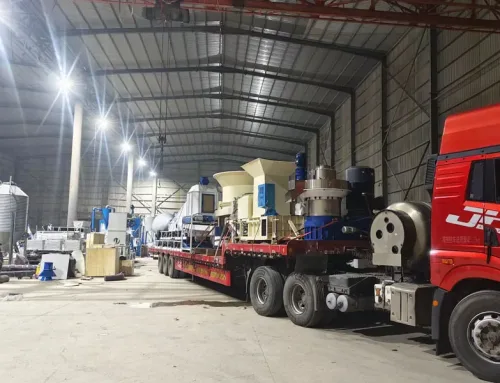
| Containers | 3 × 40HQ | Shipped as a set with the layout drawing |
The supply figure is the one to take to an electrician first. The 75 kW shredder motor starts under load, so its starting current is five to six times the running current for a few seconds. A supply sized on the 236 kW total will trip every time the shredder comes up; size on the 75 kW motor and add the rest as running load.
Height is the second figure people underestimate. The dryer cyclone stands 5 m tall on its own, the buffer bin above the pellet mill another 3 m, and the ducting between them has to clear both. If your shed is lower than 8 m, tell us at the quotation stage — the layout can be rearranged on paper, but not after the steel is up.
Foundations are ordinary reinforced concrete at 200 mm, except under the pellet mill, which wants a separate block isolated from the slab so the vibration does not travel into the bagging end. We send the block dimensions with the layout drawing.
What ships, and what the site has to build
A palm fibre pellet production line is quoted as a set, not as six machines. This is what is inside the price.
-
All six stages
Every machine in the table above, with its motor, starter and guards, run as a set before it is crated.
-
Conveyors and ducting
Belt conveyors, the belt elevator to the buffer bin and the ducting between the dryer and its cyclone, cut to the layout drawing.
-
Control cabinets
Three panels — chipping and grinding, drying, pelletizing and bagging — with the interlock that stops the feed when the pellet mill stops.
-
Dies and rollers
One die cut for palm fibre at your pellet diameter, plus a spare die and a spare roller set.
-
Layout drawing
1:50 plan and elevation, with the foundation blocks and the cable runs marked.
-
Commissioning
One engineer on site for the first run, at our cost, for a pellet production line of this size.
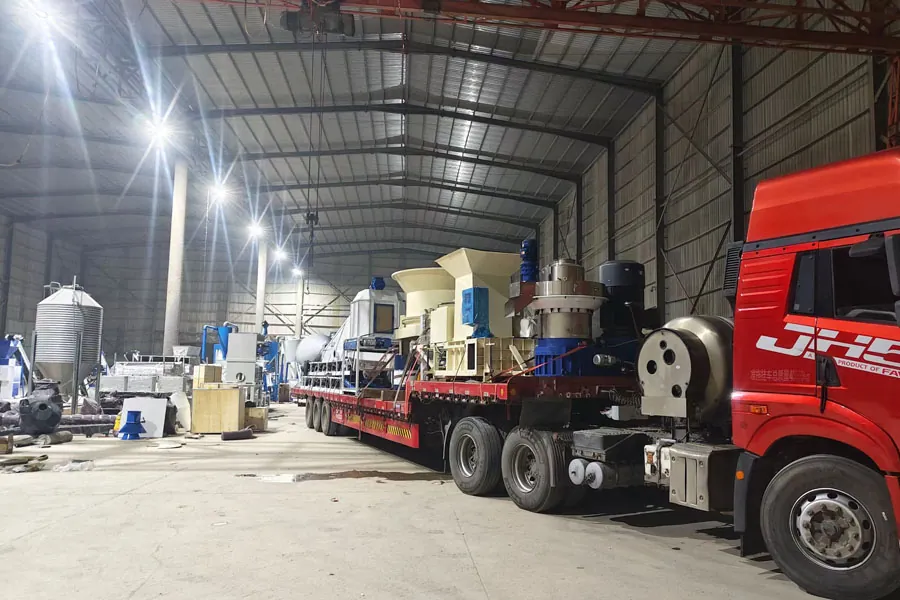
Not included, and quoted separately if you want them: the hot air stove for the dryer, which most sites build locally in firebrick; the raw material store; the civil works; and the transformer. Delivery is 25–30 working days from deposit, FOB Qingdao. Spare parts are on the shelf at spare parts.
Watch a palm fibre (EFB) pellet production line run
Five clips: the palm fibre pellet production line end to end, then the shredder, the pellet mill and the die on their own.




More on the PelletHills channel — the biomass playlist is where the pellet production line and pellet machine clips go up first.
What buyers ask before ordering a 1 t/h palm fibre (EFB) pellet production line
12 questions we answer on the phone most weeks.
What does a 1 t/h palm fibre pellet production line include?
Six stages: an EFB shredder machine (316D, 75 kW), a wood hammer mill (45 kW, 600 mm chamber), a rotary drum biomass sawdust dryer (5.5 kW, 12 × 1.2 m), a vertical ring die pellet mill (HML-560, 55 kW), a counterflow pellet cooler with a vibrating screen, and a ton-bag pellet packing machine (3.5 kW). Installed power is 236 kW and the footprint is 70 × 24 m.
Can I pellet EFB without drying it?
No. Fresh empty fruit bunch is at 50–65 % moisture and even after shredding and grinding it is at 45–55 %. A die will not build pressure on that — the water flashes to steam inside the hole and the pellet comes apart as it leaves. The dryer is not a quality improvement on palm fibre, it is what makes the material pelletable at all.
Do I need an EFB shredder machine, or can the hammer mill take whole bunches?
The hammer mill cannot take whole bunches — the fibre wraps around the rotor shaft and stalls the motor in seconds, and a chipper leaves the bunch half whole because the knives skate on wet fibre. A shredder tears it. If your supplier already delivers shredded EFB at 20–60 mm, the shredder comes off the quotation and saves about 75 kW and 15 m of shed. Ask for a sample and we will tell you which build you need.
Why a vertical ring die pellet mill and not a flat die?
Because palm fibre bridges. A flat die relies on material falling into the centre of a horizontal plate; palm fibre mats across the chamber instead, the rollers skate and the mill makes dust. A vertical ring die throws the material outwards against the die with centrifugal force, so bridging cannot form. The ring die also survives the 2–4 % silica in the fibre far better.
What die compression ratio do you cut for palm fibre?
1:6 to 1:8, against 1:5 to 1:7 for sawdust and 1:8 to 1:10 for straw. Palm fibre is soft and binds easily, so a long compression length only adds heat and power draw. We cut the first die to your sample and send a test-run video before you pay a deposit.
Do I need a binder?
No. Palm fibre carries 20–24 % lignin, which softens at about 80 °C and binds the pellet without any additive. That is also why no steam conditioner is quoted on this pellet production line — the moisture in the fibre, held at 13 %, does the same job.
What pellet diameter should I make?
6 mm for the domestic stove and export trade, 8 mm for industrial boilers and for anyone selling by weight rather than by volume. The die is the only part that changes and an 8 mm die gives 15–20 % more output per hour on the same motor.
How much water has to be evaporated?
About 850 kg an hour at 1 t/h, going from 50 % to 13 % moisture. That is why the hot air stove is the largest running cost on a palm fibre pellet production line, and why a roof over the raw material pile is the cheapest upgrade most sites make.
Can the pellet production line run on something other than palm fibre?
Yes — rice husk, straw, bamboo waste, bagasse and sawdust all run on the same six stages with a different die, a different hammer mill screen and, for husk, a different cooler setting. The pellet mill itself does not change. Tell us the material and we quote the die for it.
How long does installation take, and what is the delivery time?
Ten to fourteen days on site with our engineer present, plus the civils before that. Delivery is 25–30 working days from deposit, FOB Qingdao, loaded into three 40HQ containers. Payment is 40 % deposit with the balance before delivery.
What wears out first on palm fibre?
The die, then the rollers, then the hammer mill screens. Palm fibre carries 2–4 % silica, which is what wears a die out; expect 250–400 hours from a die on clean EFB and less if the bunches come in with sand on them. Dies, rollers and screens are on the shelf at spare parts and are changed in an hour.
Can the pellet production line be expanded later?
Yes, up to the capacity of the dryer and the conveyors. Adding a second vertical ring die pellet mill to a 1 t/h build is a two-day job if the layout left the bay for it, which is why we draw the layout with the spare bay already marked.
Request a quotation for a 1 t/h palm fibre (EFB) pellet production line
Tell us the material, its moisture, the pellet diameter and the shed you have. We reply with a model list, a layout drawing and a price.
What happens after you send this
We answer with the model list, the die compression ratio and a price, then send a test-run video on your material before you pay a deposit.
Your details are not shared. One follow-up, no mailing list.