Flat Die Pellet MillDie-driven, roller-driven, diesel or PTO — 80 to 1,200 kg/h
A flat die press is the simplest way to make pellets: a horizontal die plate with rollers running on top of it. Compact, cheap to run, and far more forgiving of wet or coarse material than a ring die — which is why it is the default choice for farms, wood workshops and first-time pellet producers.
- Five drive options: electric die, electric roller, diesel, PTO and trailer-mounted
- Dies from Ø150 to Ø580 mm, pellets from 2 to 8 mm
- Sawdust, straw, rice husk, grass, EFB and compound animal feed on one platform
Reply in 12 working hours · English, Spanish and Russian spoken · Spare dies and rollers kept in stock
A horizontal die plate, two or three rollers, and a lot of pressure
No steam, no binder, no conditioner. Pressure and friction alone raise the material to 70–90 °C, and that is enough to bind it.
- Die diameter
- Ø150 – 580 mm
- Rollers
- 2 or 3, adjustable gap
- Pellet diameter
- 2 – 8 mm
- Material moisture
- 12 – 18 %
- Output
- 80 – 1,200 kg/h
- Drive
- Electric / diesel / PTO
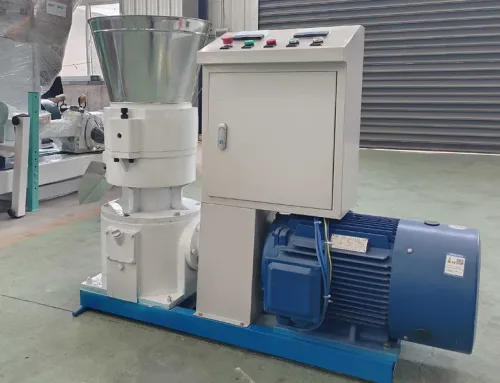
Material drops into an open chamber and is spread across a horizontal die plate drilled with tapered holes. Two or three rollers run on top of that plate. The gap between roller and die sets how hard the material is squeezed, and the friction of forcing it through the holes is what generates the heat that binds the pellet.
Because the die lies flat and the chamber is open at the top, the whole machine is short, light and easy to clean. You can see the die while it runs, change it in minutes, and reach every wear part without lifting a heavy ring. That is the reason flat die mills dominate on farms and in small wood workshops, where a ring die would be over-specified and awkward to service.
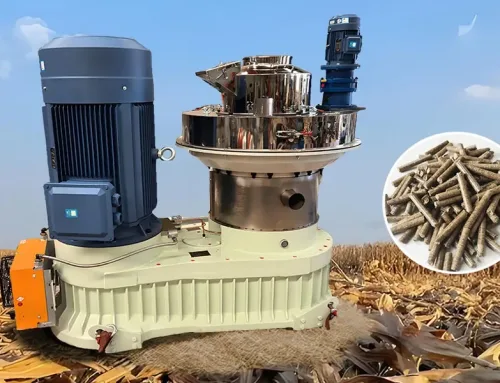
The trade-off is scale. A flat die concentrates the load on a small area, so output per kW is lower than a ring die and the die wears faster on abrasive material. Above roughly 1.5 t/h a ring die — vertical or horizontal — becomes the cheaper machine to run. Below that, the flat die wins on price, footprint and tolerance for variable material.
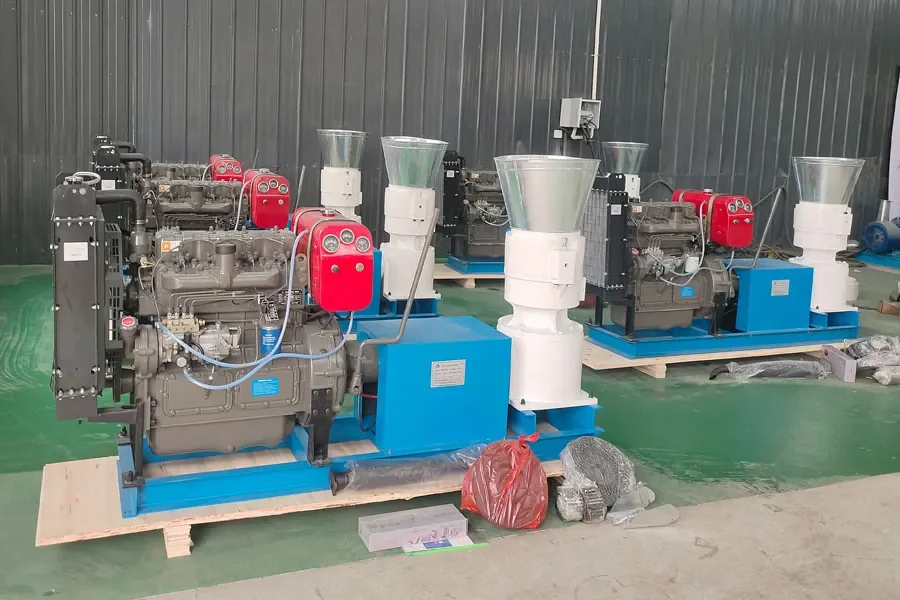
Choose the drive before you choose the model
The same die and roller set is sold with four different power sources. Which one you pick decides where the machine can work — not how well it presses.
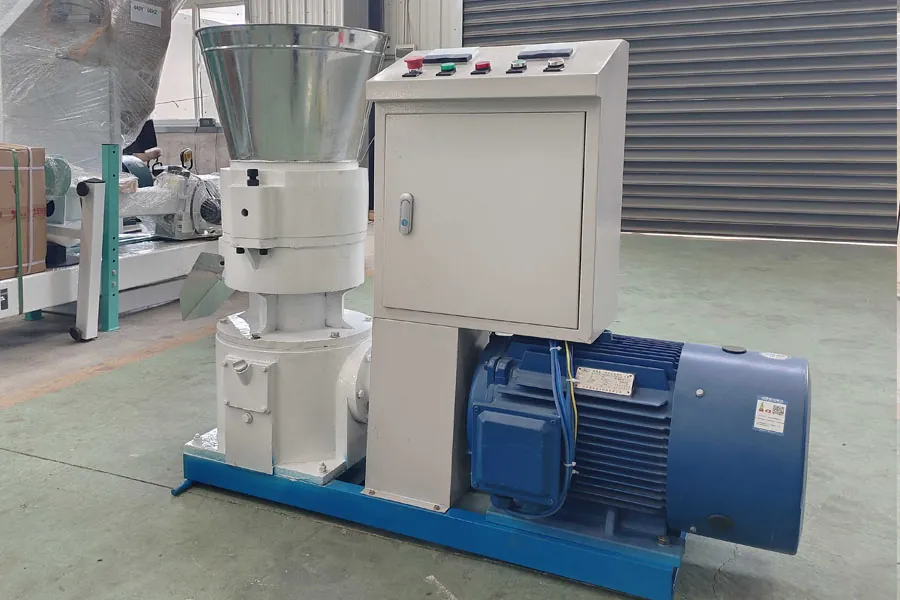
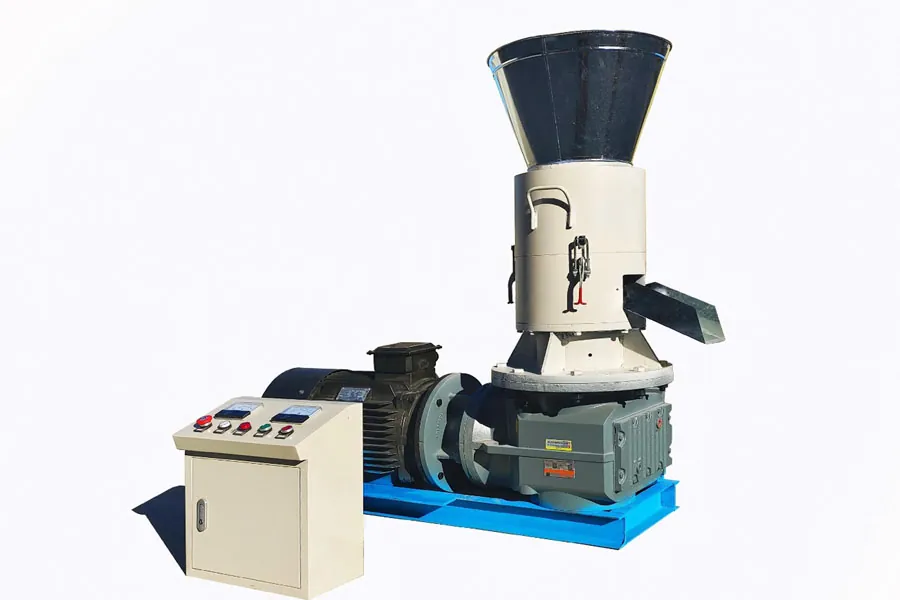
Die-driven. The die plate rotates and the rollers sit still on their shaft. Fewer moving seals, a simpler main shaft, and a lower price for the same output. Almost every farm-scale feed mill sold today is built this way.
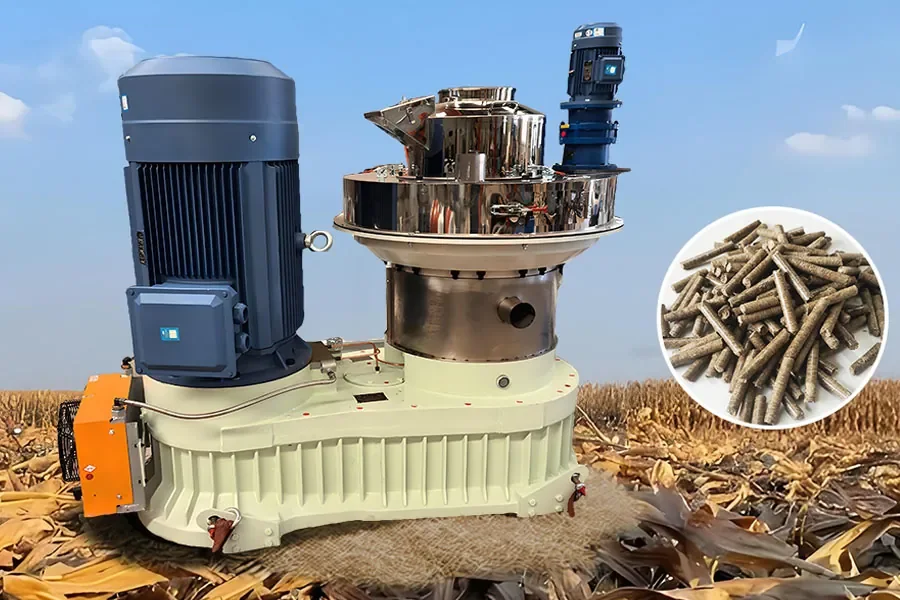
Roller-driven. The die is fixed and the rollers orbit around a vertical shaft. The rollers can be pressed harder against the die without the plate flexing, so the same die diameter produces a denser pellet. This is the layout most wood pellet makers choose, because sawdust is light and needs more pressure to compact.
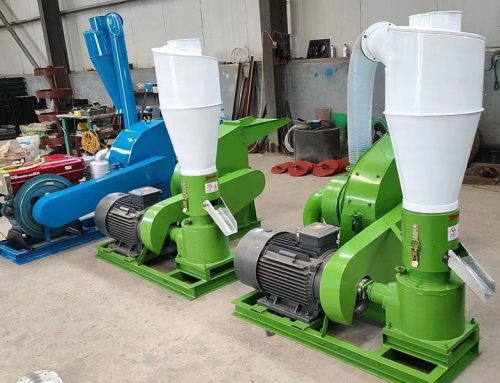
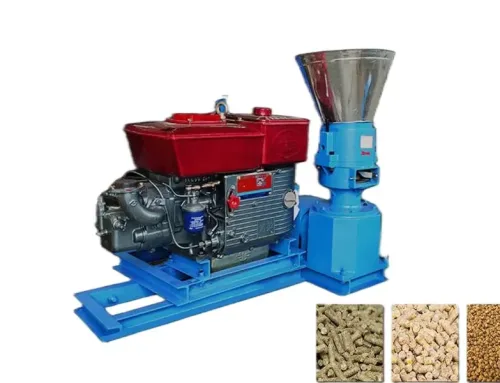
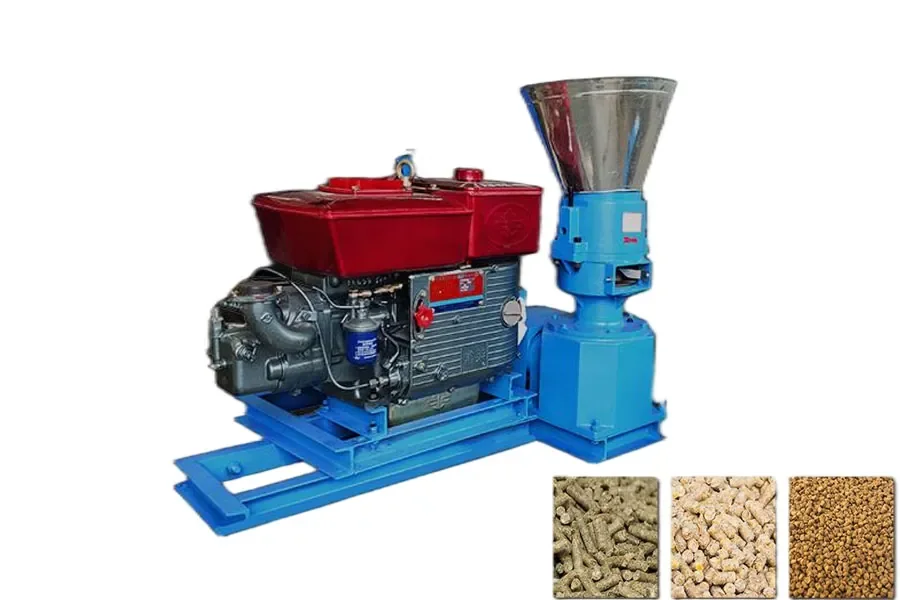
Diesel and PTO. Both layouts are available on a skid frame with a diesel engine, or on a three-point frame driven by a tractor PTO at 540 rpm. Diesel is the usual answer where three-phase power is missing; PTO is the usual answer where the mill has to travel to the material.
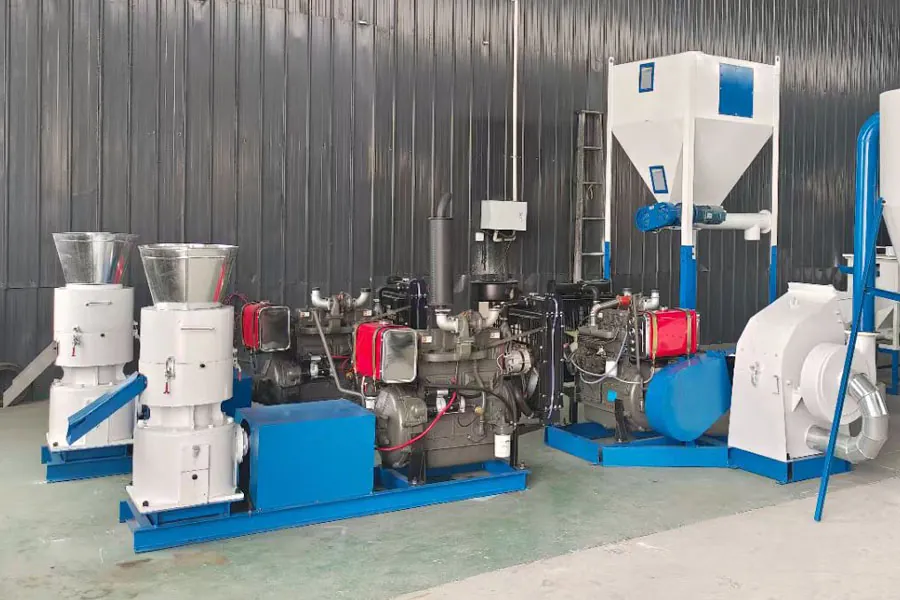
-
Die-driven, electric
PM-B series · 4–30 kW · 80–1,200 kg/h. Cheapest per kg/h, single-phase option on the two smallest sizes, standard for compound feed.
-
Roller-driven, electric
PM-DB series · 7.5–75 kW · 80–800 kg/h. Fixed die, orbiting rollers. Higher pellet density on sawdust, straw and other light material.
-
Diesel engine
D and PM-DA series · 10–110 hp. Electric start, fuel tank and belt guard on one skid. For sites with no three-phase supply.
-
PTO, tractor driven
PM-P series · 15–75 hp at 540 rpm. Three-point frame, no engine to service, one machine shared across several farms.
Every flat die model we build
Output figures are for compound feed at 12–14 % moisture. On sawdust, straw and husk expect 60–70 % of the feed figure — the material is lighter and less plastic. Every model can be supplied bare, on a frame, on a trailer, or as the press inside a complete line.
Electric drive, rotating die PM-B series
| Model | Motor | Output | Size L×W×H | Weight |
|---|---|---|---|---|
| PM-150B | 4 kW | 80–120 kg/h | 800 × 350 × 650 mm | 90 / 105 kg |
| PM-200B | 7.5 kW | 200–300 kg/h | 1050 × 540 × 1020 mm | 190 / 215 kg |
| PM-230B | 11 kW | 300–400 kg/h | 1200 × 530 × 1020 mm | 290 / 320 kg |
| PM-260B | 15 kW | 400–600 kg/h | 1260 × 530 × 1060 mm | 320 / 355 kg |
| PM-300B | 22 kW | 600–800 kg/h | 1360 × 560 × 1160 mm | 410 / 450 kg |
| PM-400B | 30 kW | 800–1,200 kg/h | 1500 × 760 × 1210 mm | 660 / 700 kg |
Electric drive, rotating roller PM-DB series
| Model | Motor | Output | Size L×W×H | Weight |
|---|---|---|---|---|
| PM-D225B | 7.5 kW | 80–120 kg/h | 1050 × 420 × 1180 mm | 210 / 240 kg |
| PM-D250B | 15 kW | 120–200 kg/h | 1200 × 500 × 1250 mm | 340 / 370 kg |
| PM-D300B | 22 kW | 250–350 kg/h | 1360 × 800 × 1250 mm | 530 / 570 kg |
| PM-D400B | 30 kW | 350–450 kg/h | 1500 × 760 × 1210 mm | 900 / 940 kg |
| PM-D450B | 45 kW | 450–600 kg/h | 2600 × 800 × 1300 mm | 1200 / 1270 kg |
| PM-D580B | 75 kW | 600–800 kg/h | 2800 × 800 × 1600 mm | 1400 / 1480 kg |
Diesel engine D / PM-DA series
| Model | Layout | Engine | Die Ø | Output |
|---|---|---|---|---|
| D150 | Rotating die | 10 hp diesel | Ø150 mm | 80–120 kg/h |
| D200 | Rotating die | 15 hp diesel | Ø200 mm | 200–300 kg/h |
| D230 | Rotating die | 22 hp diesel | Ø230 mm | 300–400 kg/h |
| D260 | Rotating die | 30 hp diesel | Ø260 mm | 400–600 kg/h |
| D300 | Rotating die | 41 hp diesel | Ø300 mm | 600–800 kg/h |
| D400 | Rotating die | 55 hp diesel | Ø360 mm | 800–1,200 kg/h |
| PM-D225A | Rotating roller | 15 hp diesel | Ø225 mm | 80–120 kg/h |
| PM-D250A | Rotating roller | 30 hp diesel | Ø250 mm | 120–200 kg/h |
| PM-D300A | Rotating roller | 41 hp diesel | Ø300 mm | 250–350 kg/h |
| PM-D400A | Rotating roller | 55 hp diesel | Ø400 mm | 350–450 kg/h |
| PM-D450A | Rotating roller | 62 hp diesel | Ø450 mm | 450–600 kg/h |
| PM-D580A | Rotating roller | 110 hp diesel | Ø580 mm | 600–800 kg/h |
Tractor PTO PM-P series
| Model | PTO power | Output | Weight |
|---|---|---|---|
| PM-225P | 15 hp at 540 rpm | 80–120 kg/h | 260 kg |
| PM-250P | 30 hp at 540 rpm | 120–200 kg/h | 320 kg |
| PM-300P | 41 hp at 540 rpm | 250–350 kg/h | 450 kg |
| PM-400P | 55 hp at 540 rpm | 350–450 kg/h | 600 kg |
| PM-450P | 75 hp at 540 rpm | 450–600 kg/h | 700 kg |
Sizes in mm, excluding the feed hopper and discharge chute. Weight is given as net / gross. Diesel models are measured with skid frame and fuel tank fitted. 60 Hz motors, other voltages, stainless contact parts and hardened dies for abrasive material are available on request.
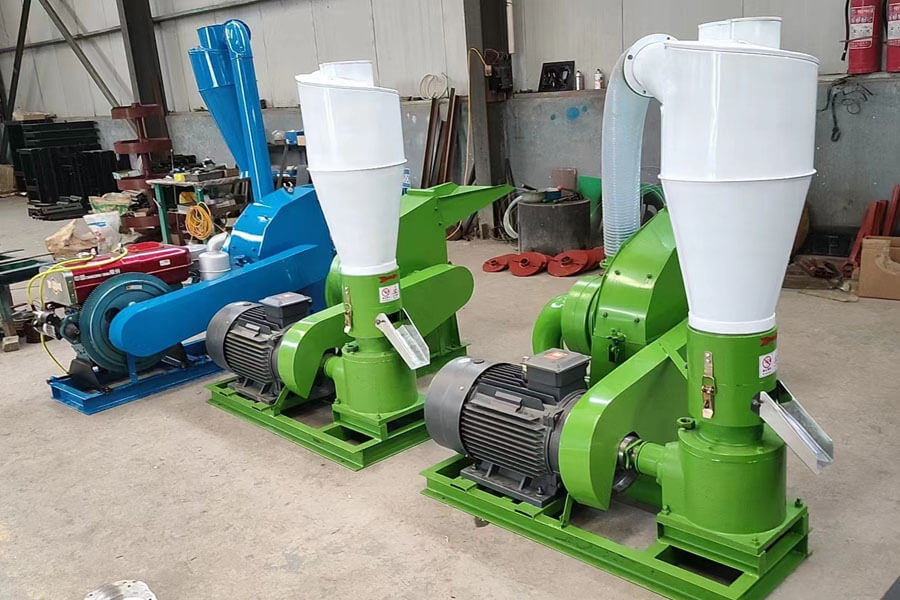
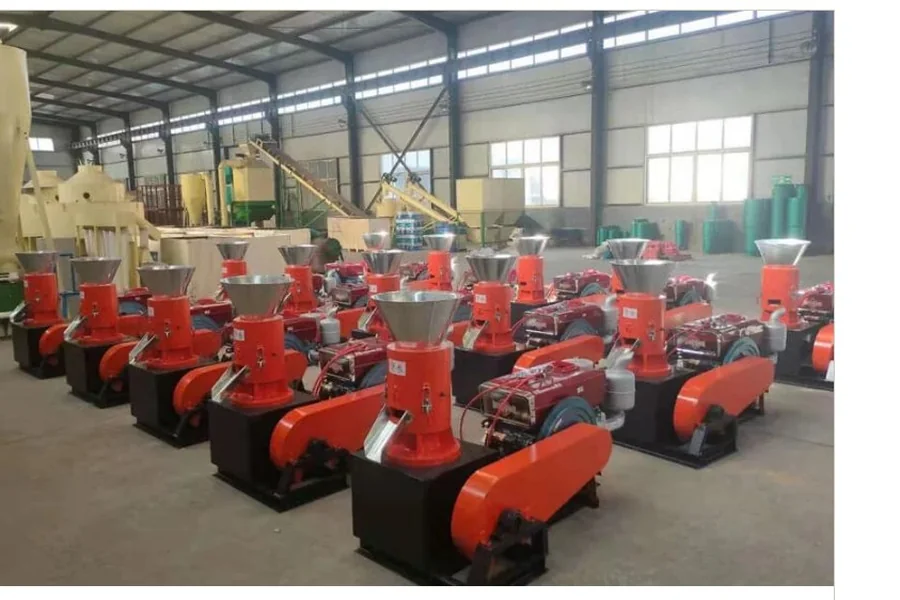
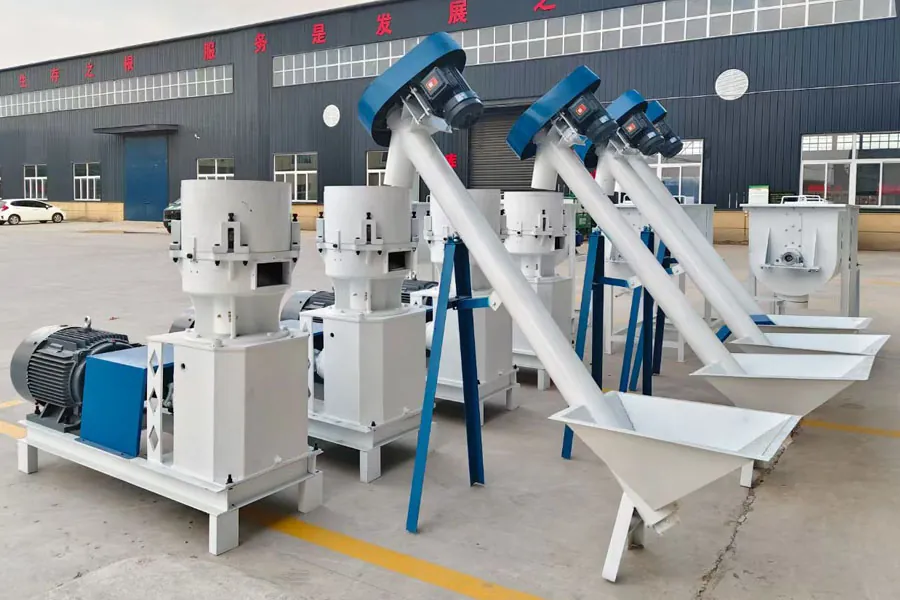
Every flat die model, and the drive that suits your site
One range, four drives: electric die-driven, electric roller-driven, diesel and PTO. The die and the material set the model; the site sets the drive, and nothing else does.
Send the material and the drive you have
The material, the moisture and the kg/h decide the model; whether you have three-phase power, an engine or a tractor decides the drive. Send those and we reply with the model, the die specification and a price.
Reply within one working day. No obligation.
Five steps from raw material to a bag of pellets
A flat die press is only the middle of the line. What happens on either side of it decides whether the pellets hold together.
Prepare
Crush to under 5 mm and dry to 12–18 %. A hammer mill and a dryer sit in front of the press in most lines.
Feed
A screw or belt feeder drops material into the chamber at a steady rate. Over-feeding stalls the rollers; under-feeding gives soft, crumbly pellets.
Press
Rollers force material through the tapered die holes. Pressure and friction raise it to 70–90 °C, which plasticises the lignin in wood and the starch in feed.
Cut
Adjustable knives under the die shear the extruding strands to length. Pellet length is set by knife position, not by die size.
Cool & bag
Pellets leave at 70–80 °C. Cool them to within 5 °C of ambient before bagging, or condensation softens them in the bag.
One platform, four very different jobs
The die and the roller gap change with the material; the frame, gearbox and drive do not. That is why the same press appears in a wood workshop and in a cattle feed plant.
Sawdust & wood shavings
Softwood and hardwood sawdust, sander dust, shavings and small chips. The largest flat die application — a 22 kW roller-driven unit handles 250–350 kg/h of dry sawdust.
Compound animal feed
Maize, soybean meal, bran, fish meal and premix. Pellet size follows the animal: 2–3 mm for poultry, 4–6 mm for cattle and pigs.
Straw, husk & EFB
Rice husk, wheat straw, corn stalk and palm fibre. Abrasive and bulky — use a roller-driven mill with a hardened die and expect the die to wear faster.
Start-up production
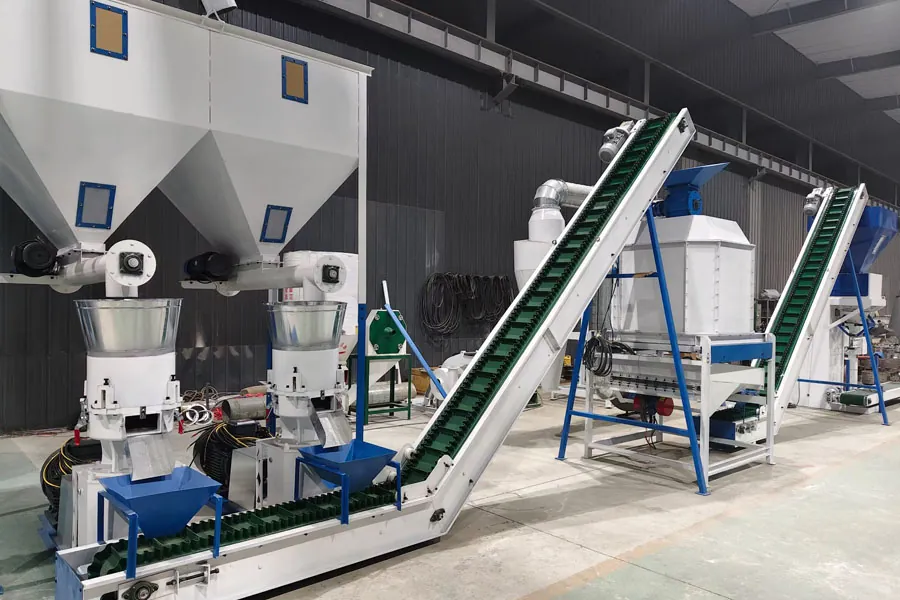
One press, one mixer and a bagging scale is already a business. Lines from 300 kg/h upward can be added module by module as volume grows.
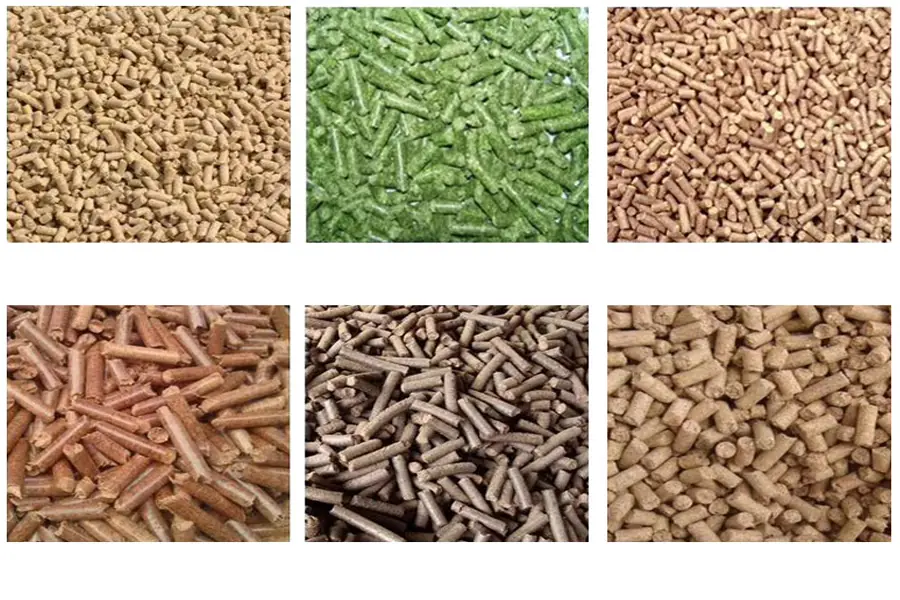
Pick the branch that matches your material
Every page below is a full specification page: models, dies, capacities, videos and the line it usually sits in.
Tell us the material and the output
Send the raw material, its moisture, the pellet diameter and the kg/h you need. We come back with a model, a die specification and a price.
Reply within one working day. No obligation.
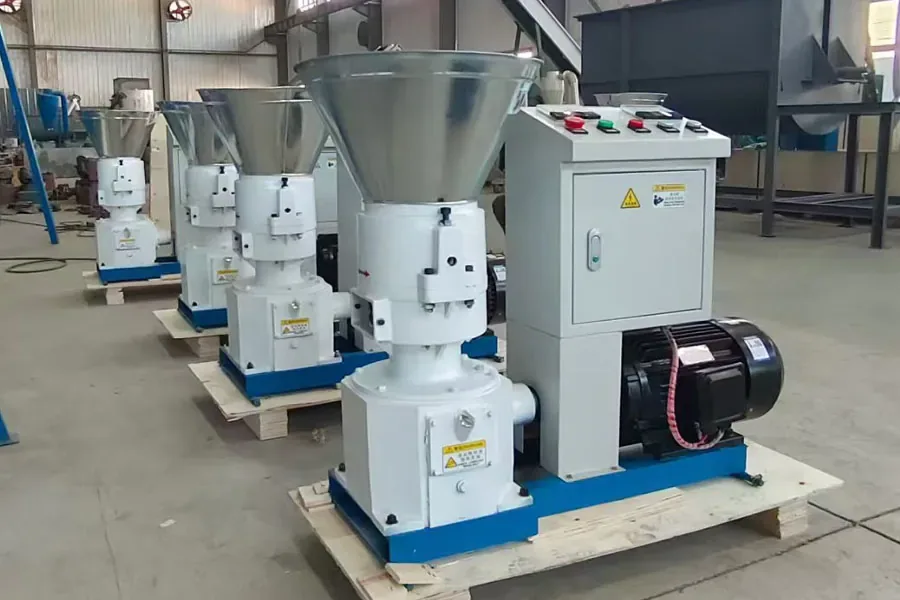
Flat die mills at work
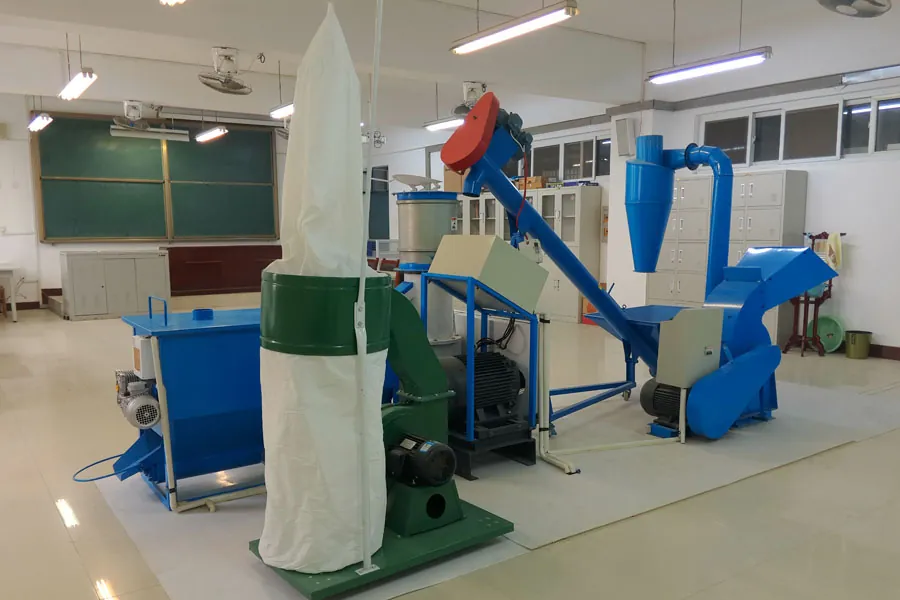
Test runs recorded in the workshop: the press on its own, the smallest model we build, and the lines a flat die usually ends up inside.


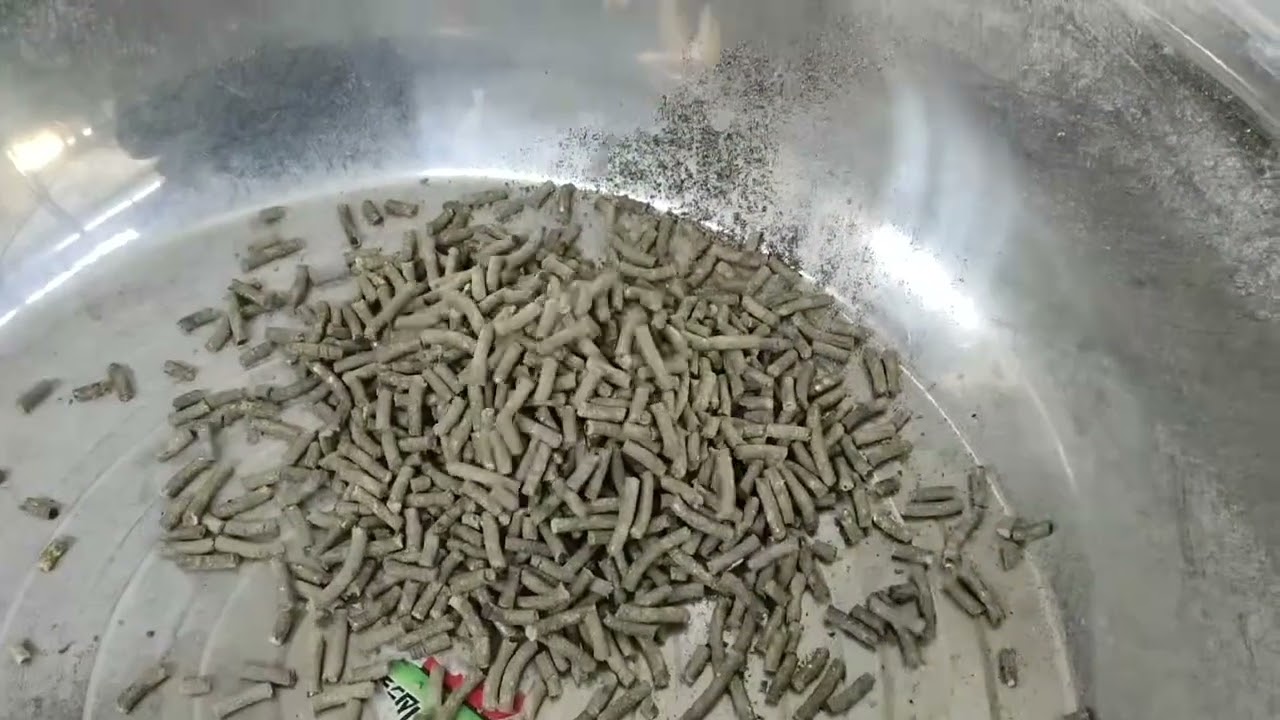


More test runs, shipping records and installation footage on our YouTube channel.
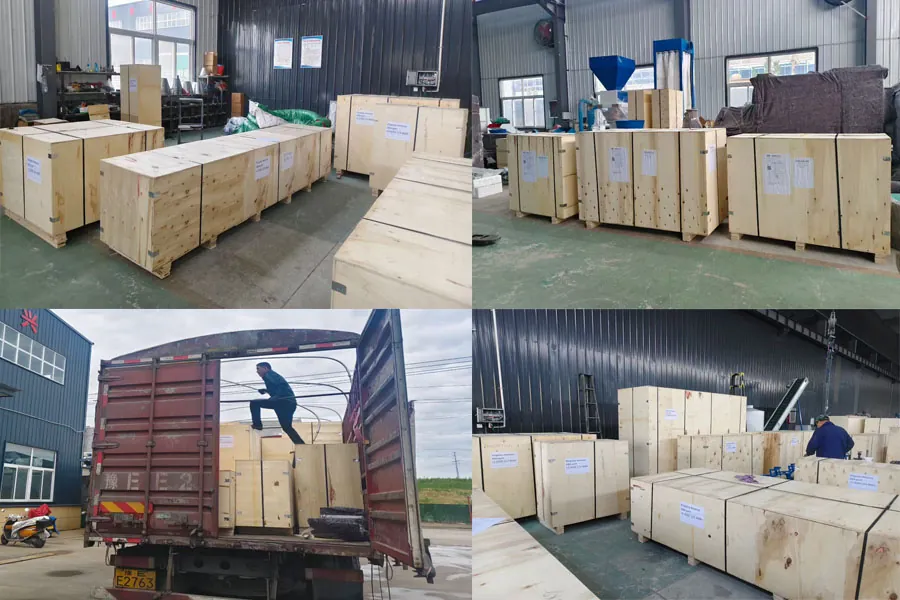
Assembled, run on material, then crated
Every press is run for at least 30 minutes on the material it was ordered for before it is released. If the die or the roller gap is wrong, we find out here and not at your site.
What buyers ask before ordering a flat die mill
What is the difference between a flat die and a ring die pellet mill?
A flat die uses a horizontal perforated plate with rollers on top; a ring die uses a vertical cylindrical die with rollers inside. The flat die is cheaper, shorter, easier to clean and tolerates wetter material. The ring die has a larger pressing area, so it produces more per kW and holds up better above roughly 1.5 t/h.
Can one machine make both wood pellets and animal feed?
Mechanically yes, practically you should not. Feed and wood need different die compression ratios, and residue from the previous material contaminates the next batch. Buyers who make both normally keep two dies and clean the chamber between runs — or, better, run two machines.
What moisture content does a flat die mill need?
12–18 % for most material. Below 12 % the pellets stay soft and dusty; above 18 % the press slips and the pellets smear. Sawdust at 15 % is the sweet spot. If your material is wetter, dry it first — a rotary dryer is the usual choice.
How long does a flat die last?
On clean sawdust, 300–500 hours per die before it is re-pressed; a die can usually be refurbished two or three times. On rice husk or straw with high silica content, expect 150–250 hours. Hardened and coated dies roughly double that at a higher price.
What is the smallest flat die mill you make?
PM-150B at 80–120 kg/h, 4 kW. It runs on single-phase power in many configurations and fits on a bench-height frame — the usual starting point for a farm making feed for its own livestock.
Do you supply diesel and PTO versions?
Yes. The diesel range covers 10–110 hp and the PTO range 15–75 hp at 540 rpm, both in rotating-die and rotating-roller layouts. Diesel units come on a skid with fuel tank and electric start; PTO units on a three-point frame.
Can I buy a complete line instead of just the press?
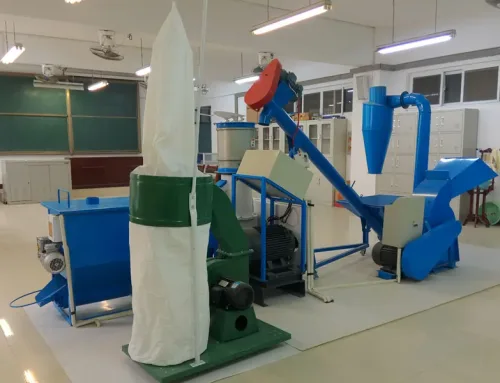
Yes — that is how most of our flat die machines ship. A typical line is hammer mill, mixer, screw conveyor, pellet press, cooler and bagging scale, sized from 300 kg/h to 2 t/h. Send the material and the target output and we will lay it out.
Send us your specification
Four numbers are enough to quote a flat die mill properly: material, moisture, pellet diameter and kg/h. If you do not know them yet, tell us what you want to produce and we will work backwards.
- Emailinfo@pelletmachines.net
- WhatsApp+86 186 0385 1787
- HoursMon–Sat, 08:00–20:00 (GMT+8)
Send a photo of your raw material and we will tell you the die compression ratio it needs.
What happens after you send this
We answer with the model, the die compression ratio and a price, then send a test-run video on your material before you pay a deposit.
Your details are not shared. One follow-up, no mailing list.