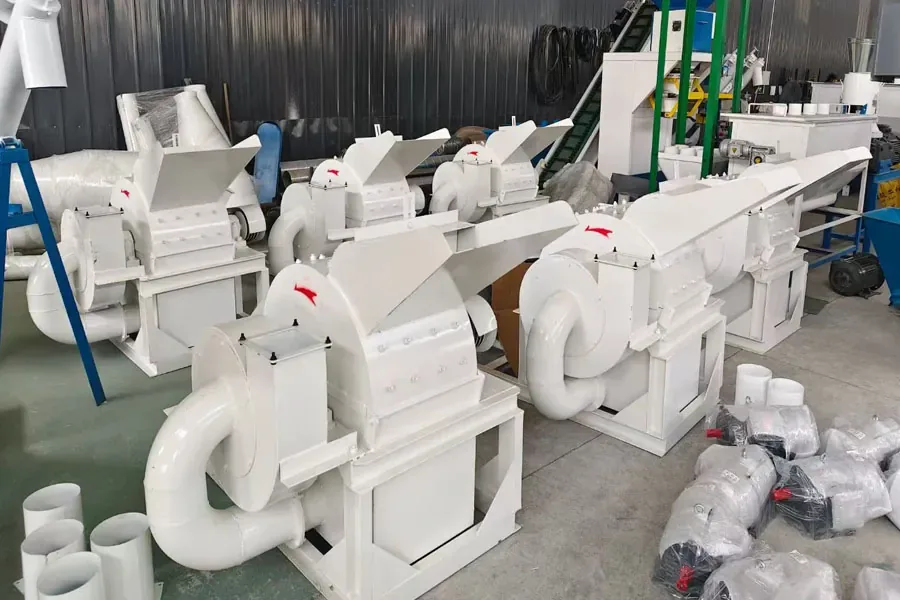
Diesel Hammer MillFS series — 250 to 1,600 kg/h on one engine
A diesel hammer mill turns wood chips, straw, stalks and husks into 3–5 mm powder on a site with no three-phase supply. Three frames from 15 to 55 hp, 250 to 1,600 kg/h, screen holes from 1.8 to 10 mm. Blower, cyclone and ducting ship in the crate.
- FS-420A, FS-50-40A and FS-50-60A — 15, 41 and 55 hp
- 250–500, 600–1,300 and 1,000–1,600 kg/h through a 3–5 mm screen
- Four rows of reversible carbon-alloy hammers on a balanced rotor
- Blower, cyclone, bolted ducting and a spare screen with every unit
Reply in 12 working hours · Screen and hammers ship with every unit · Delivered to 40+ countries
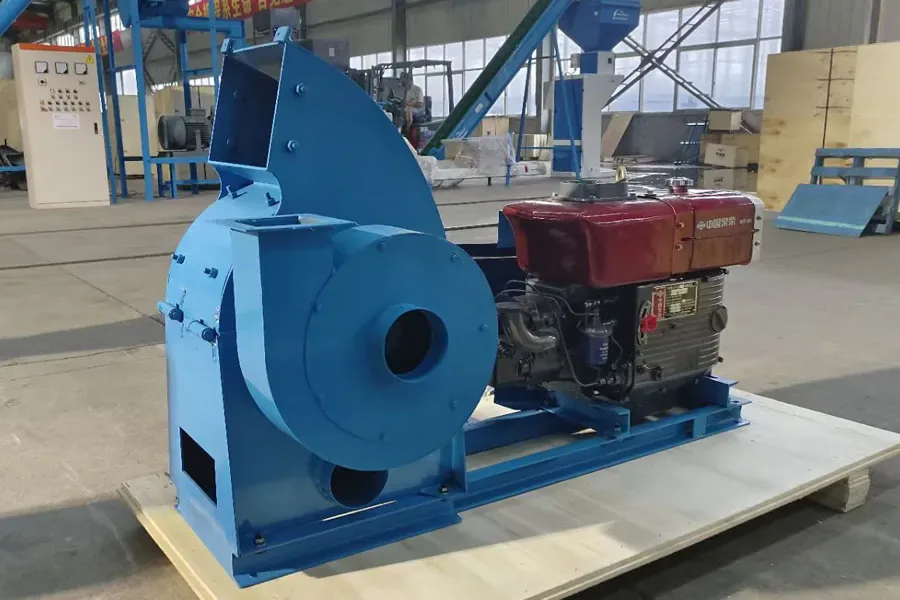
An engine on the crusher, because that is where the material is
A hammer mill is the one machine in a pellet line that has to go to the material. Chips, straw and husks are bulky and light — moving them to a mill costs more than moving the mill to them.
The chamber, the rotor and the screen are the same parts on both versions. What changes is the drive: a 15 to 55 hp diesel engine on a frame beside the chamber, coupled through belts, with a fuel tank and a battery where the electric version carries a motor, a guard and a starter box.
That matters where the grid is missing or stops. A 37 kW motor pulls six to seven times its rated current at start; a site that cannot carry that surge needs a generator sized for it, and the generator then runs all day at a fraction of its rating. An engine has no such problem — it idles when the hopper is empty and pulls when it is full.
The trade-off is running cost. Fuel and servicing per tonne are higher than grid power, and the engine adds noise you will want ear protection for. On a site with a steady three-phase supply the electric hammer mill is the better buy. On a plantation, a collection point or a farm with a weak line, the engine is the only version that keeps working.
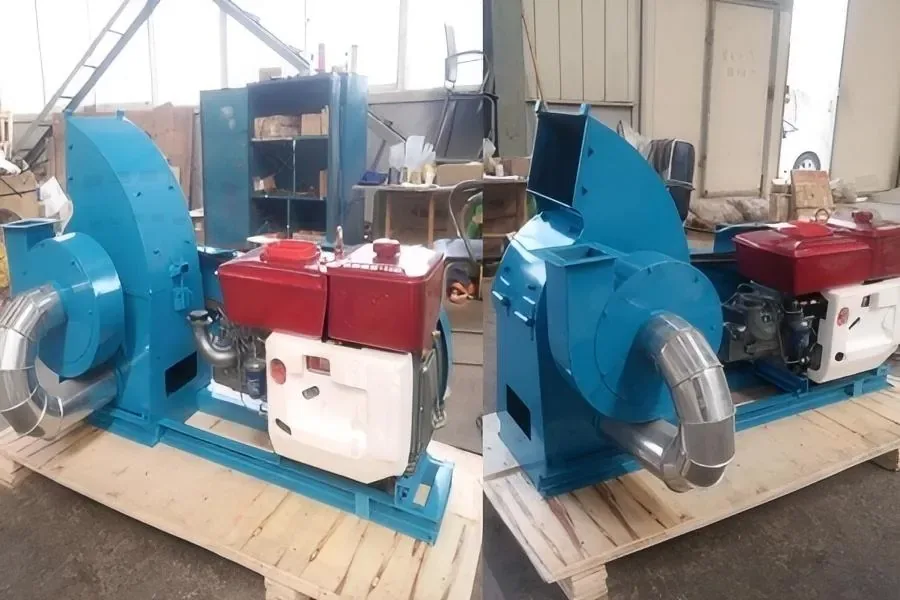
Three frames, 15 to 55 hp
Capacity is quoted on air-dry wood chips through a 3–5 mm screen. Straw, husk and stalk run higher on the same screen because they break down faster; wet or stringy material runs lower.
Diesel hammer mill, FS series engine-driven
| Model | Engine | Capacity, wood chips | Size L×W×H | Weight |
|---|---|---|---|---|
| FS-420A | 15 hp | 250–500 kg/h | 1650 × 800 × 1120 mm | 390 kg |
| FS-50-40A | 41 hp | 600–1,300 kg/h | 2400 × 900 × 1300 mm | 950 kg |
| FS-50-60A | 55 hp | 1,000–1,600 kg/h | 2600 × 1100 × 1300 mm | 1,200 kg |
The two larger frames are crated in two sections — chamber and engine frame travel as separate packages — so allow for two cases on site. Delivery is 7–15 working days depending on the engine; TT with 40 % deposit, balance before delivery; wooden or steel case. Screen holes from 1.8 to 10 mm are cut for the material you name, and the screen fitted is the screen you ordered.
Three frames, 15 to 55 hp, and the screen sets the powder
The engine only turns the rotor. What comes out is set by the screen in the bottom of the chamber, so the screen is the number to choose first.
Send the material and the screen size
Tell us the material, the size it arrives at and the powder you need. We reply with the model, the screen and a price — and a test-run video on your material before you pay a deposit.
Reply within one working day. No obligation.
Five steps from a chip to a bag
The order never changes. Every step below happens on the same frame, which is why the machine moves to the material instead of the other way round.
Feed hopper
Material under 50 mm goes in. A slide gate under the hopper sets the feed rate — running it wide open is how most chambers get blocked.
Hammers
The rotor turns at about 3,500 rpm with four rows of carbon-alloy hammers. Each hammer has two working faces, so a worn set is turned over rather than replaced.
Screen
The screen wraps 180° of the chamber and sets the powder size: 1.8 to 10 mm holes. One screen is fitted, one spare travels in the crate.
Blower
Air lifts the powder out of the chamber as it is made. Without it the screen blinds and output falls away inside twenty minutes.
Cyclone
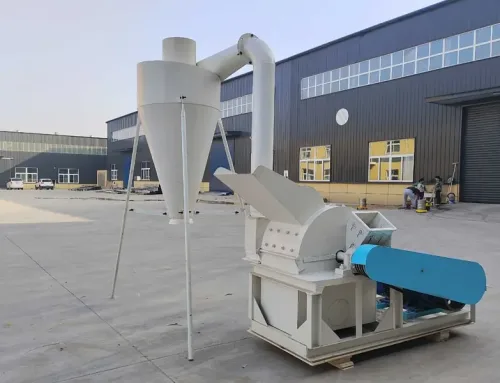
The cyclone drops the powder into a bag, a bin or the next machine. The ducting is bolted, not welded, so it can be re-routed to your layout.
One screen decides the powder, and the powder decides everything after it
The screen is the only setting most buyers ever change. It takes about ten minutes with the chamber door open, and it is what lets one machine cover feed work and biomass work.
| Screen hole | Powder | What it suits | Effect on output |
|---|---|---|---|
| 1.8–2 mm | Fine, flour-like | Compound feed, small briquettes | Lowest — about two thirds of the 3–4 mm figure |
| 3–4 mm | Standard | Wood pellets through a Ø6–8 mm die | The baseline in the table above |
| 5–6 mm | Coarse | Briquettes, bedding, pre-crush | Around 15 % above the 3–4 mm figure |
| 8–10 mm | Very coarse | First pass before a second grind | Highest — but too coarse to pellet on its own |
Two screens ship with the machine; more can be ordered with it. Hammer-to-screen clearance is set at the factory and checked again before crating — open it up and the powder gets coarser and the output drops, which is the most common self-inflicted fault on a hammer mill.
Same chamber, same rotor, same screen — only the drive changes
The question is not which is better. It is what your site can supply, and what it costs you per tonne when it does.
The electric version of the same frame — electric hammer mill, FS-198B to FS-50-60B — takes a 4 to 37 kW motor on 380 V three-phase. Above about 22 kW it is cheaper to buy than the diesel equivalent, cheaper to run wherever the grid is solid, and it has fewer parts to service: no fuel filter, no oil change, no battery to go flat between jobs.
The diesel version earns its price where the supply is absent or stops. Fuel per tonne runs two to three times grid power in most of the markets we ship to, so the engine only wins when the alternative is not crushing at all — or when the material is in a place the grid will never reach.
Both use the same base-plate pattern, so the cyclone, the ducting and the discharge height are identical on either version. If a grid connection arrives later, the chamber, rotor and frame carry over and only the drive end changes.
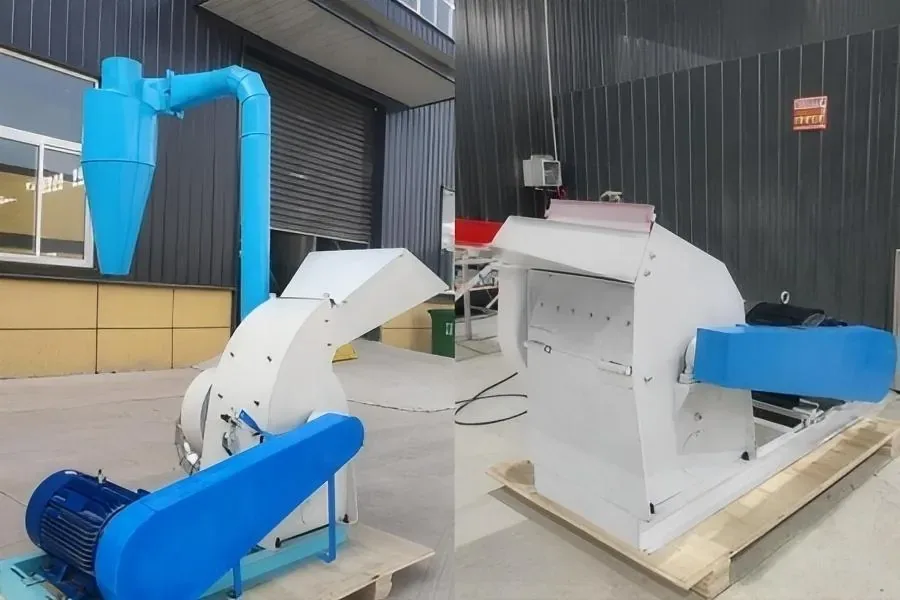
Before the dryer, or straight into the press
A hammer mill almost never works alone. Where it sits in the line decides the screen you order and the height the cyclone has to discharge at.
In a wood pellet line the mill comes first: chips in, powder out, then a wood dryer takes the moisture down before the flat die pellet mill presses it. Putting the mill ahead of the dryer is deliberate — the air the mill moves carries some moisture off, and a smaller particle dries faster in the drum.
On a farm making feed rather than fuel, the same machine runs ahead of a diesel flat die pellet mill on a 3–5 mm screen, and the cyclone discharges into a mixing bin instead of a bag. Change the screen and the machine moves between the two jobs.
If you want the crusher and the press on one base plate under one engine, that is a combined pellet mill and hammer mill — 100 to 350 kg/h, and the crusher runs whenever the press does. Above that output the two machines want separate drives, which is where a 500 kg/h wood pellet plant or a larger line starts. Powder finer than 1 mm is a different machine again: a wood powder machine.
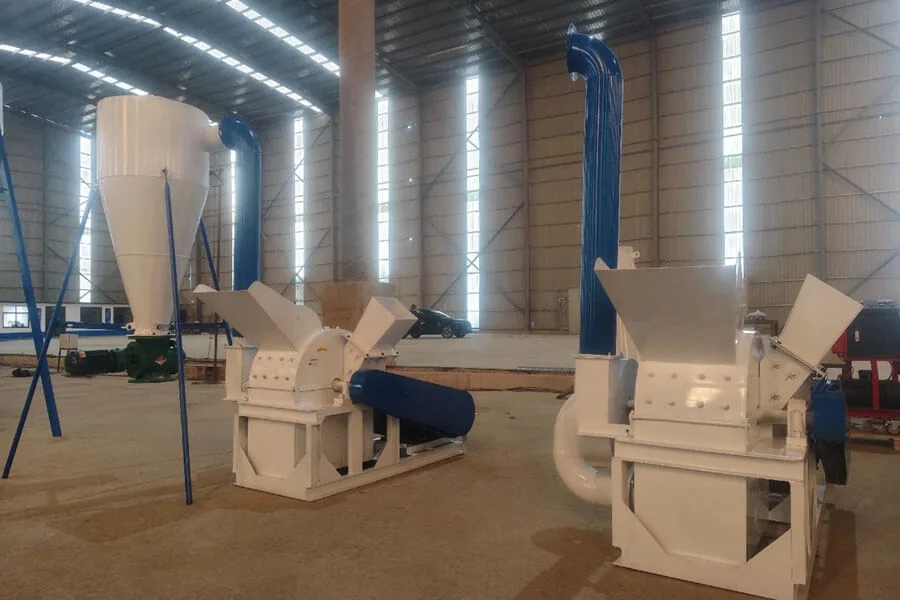
In the crate, on one frame
The unit leaves the workshop assembled and run on material. The larger frames travel as two packages, and the cyclone is bagged separately so the ducting is not crushed in transit.
-
Chamber and rotor
Four rows of carbon-alloy hammers, reversible, on a rotor balanced before assembly. Chamber door opens on hinges for a screen change.
-
Screen
One fitted to the material you name, one spare in the crate. Holes from 1.8 to 10 mm, cut to order.
-
Engine
15, 41 or 55 hp, air-cooled, with the fuel tank, battery and starting handle on the frame. Engine manual included.
-
Blower and cyclone
Blower on the chamber outlet, cyclone and bolted ducting to the discharge height you specify.
-
Belts, guards and tools
V-belts, guards over every pulley, a set of spanners and the spare parts list for hammers and screens.
Where this crusher sits in the range
A diesel hammer mill is the front end of a line, not the whole line. Below are the machines it feeds, the version to buy if you have power, and the frames above it.
Tell us the material and the capacity
Material, the largest piece that goes in, the powder size you need and what the site has for power. We reply with the frame, the screen and a price.
Reply within one working day. No obligation.
The crusher at work, and the line it feeds
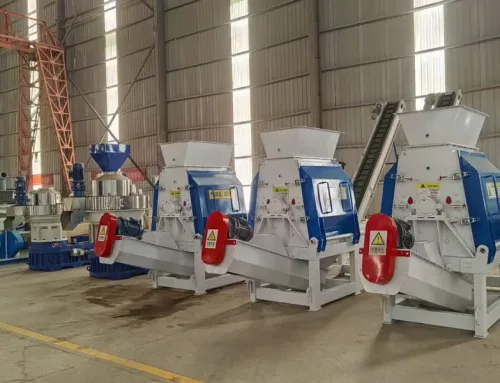
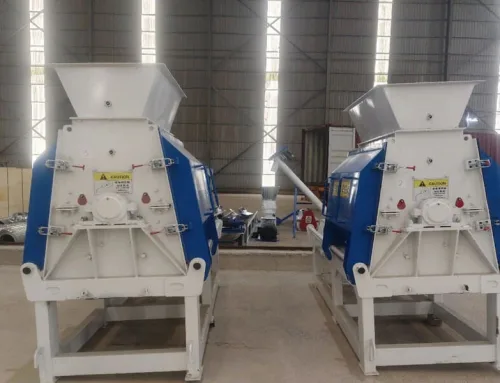
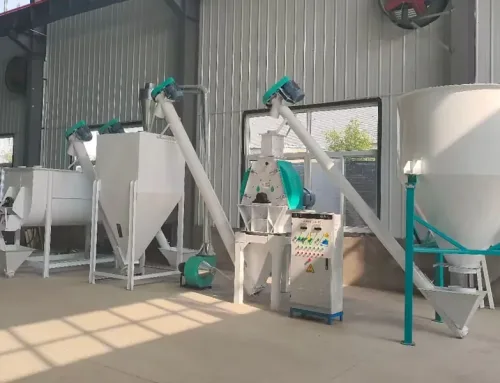
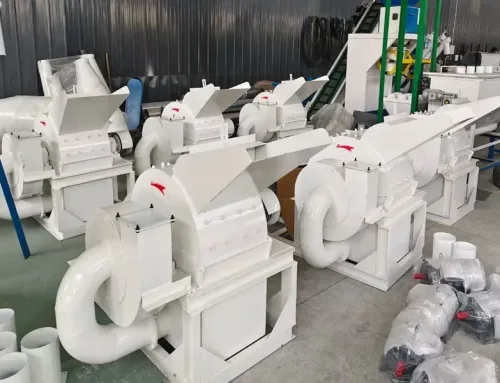
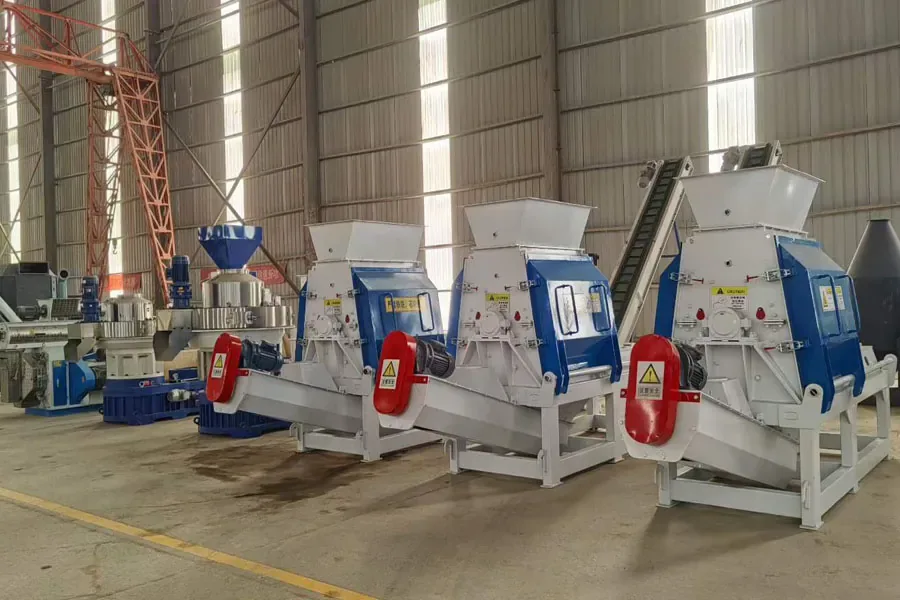
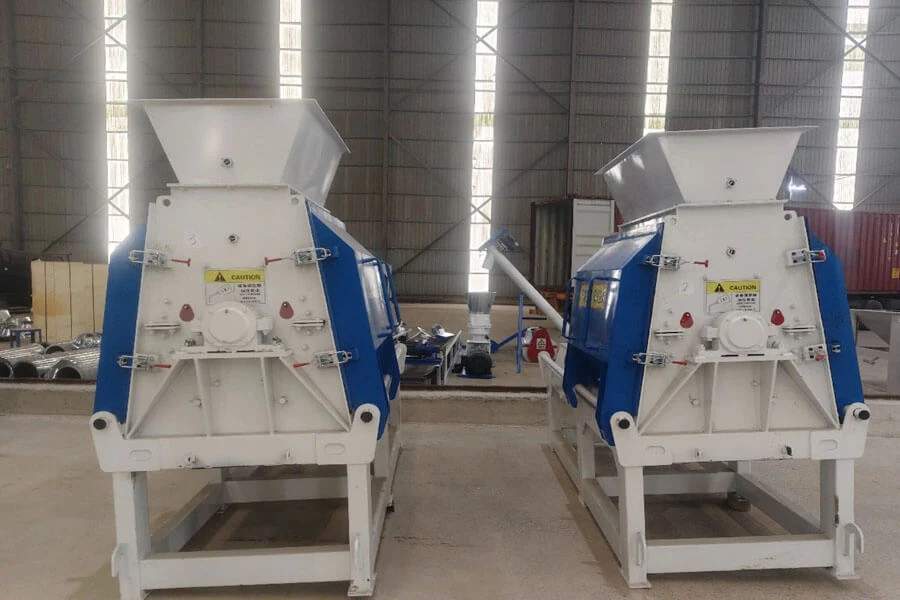
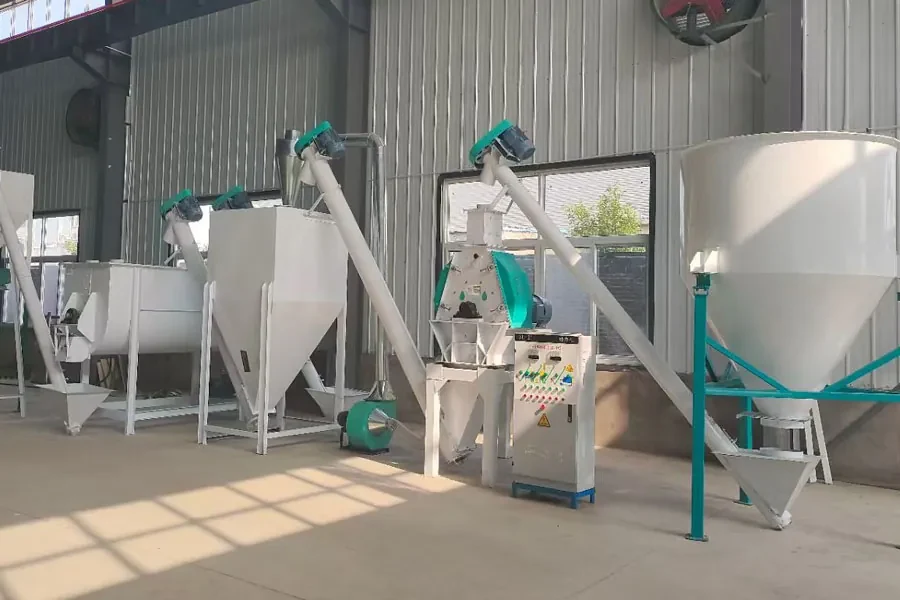
The FS chamber on its own, the same frame on a customer site, two test runs from the workshop, and the two places the powder goes next — a combined frame and a full pellet production line.


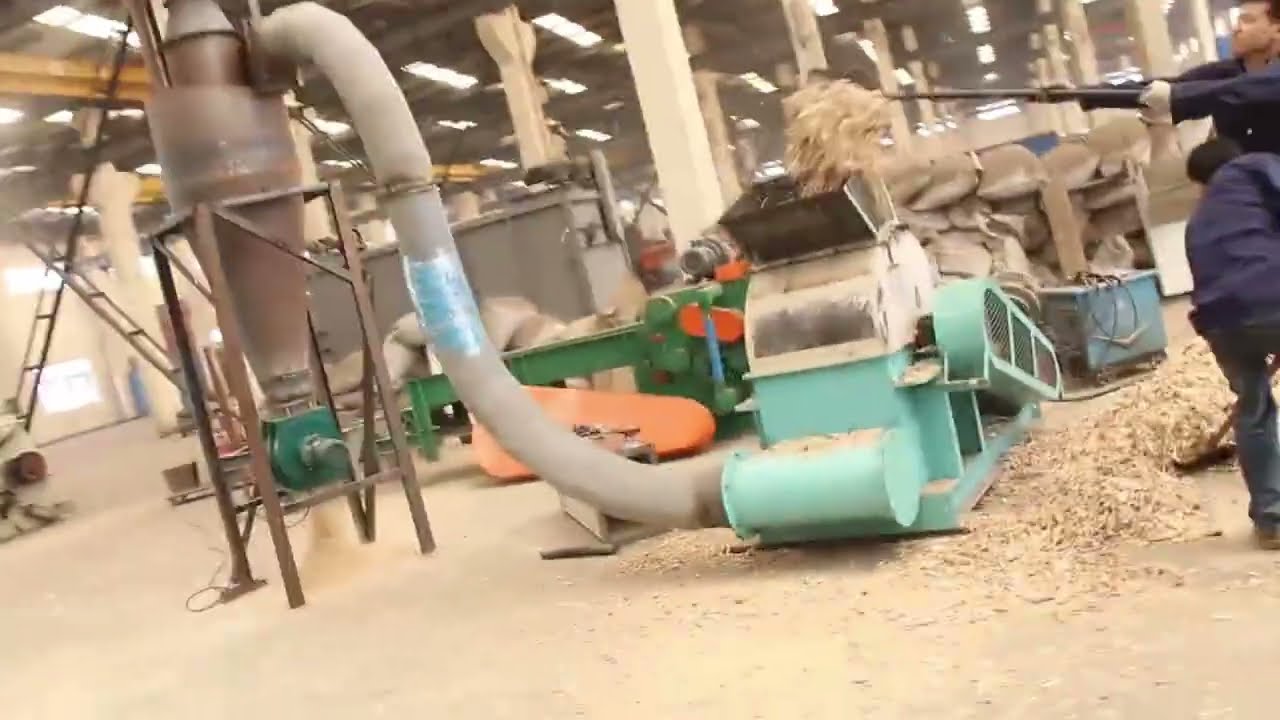

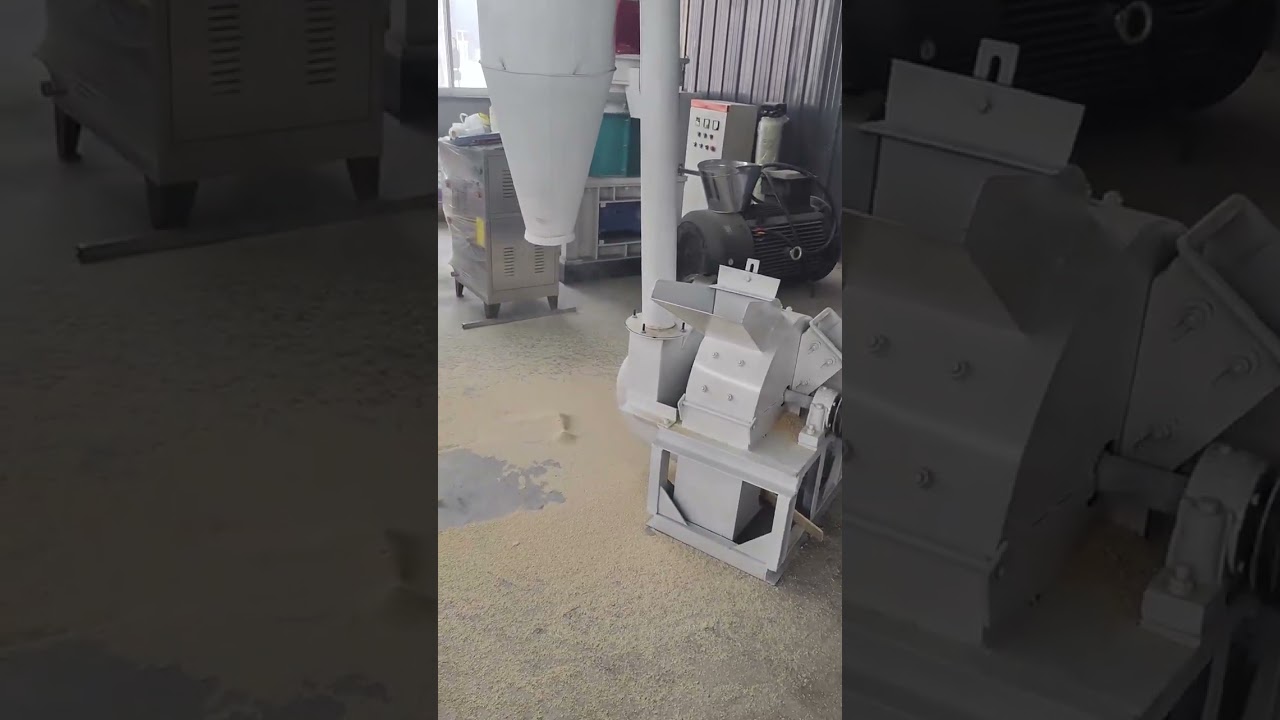
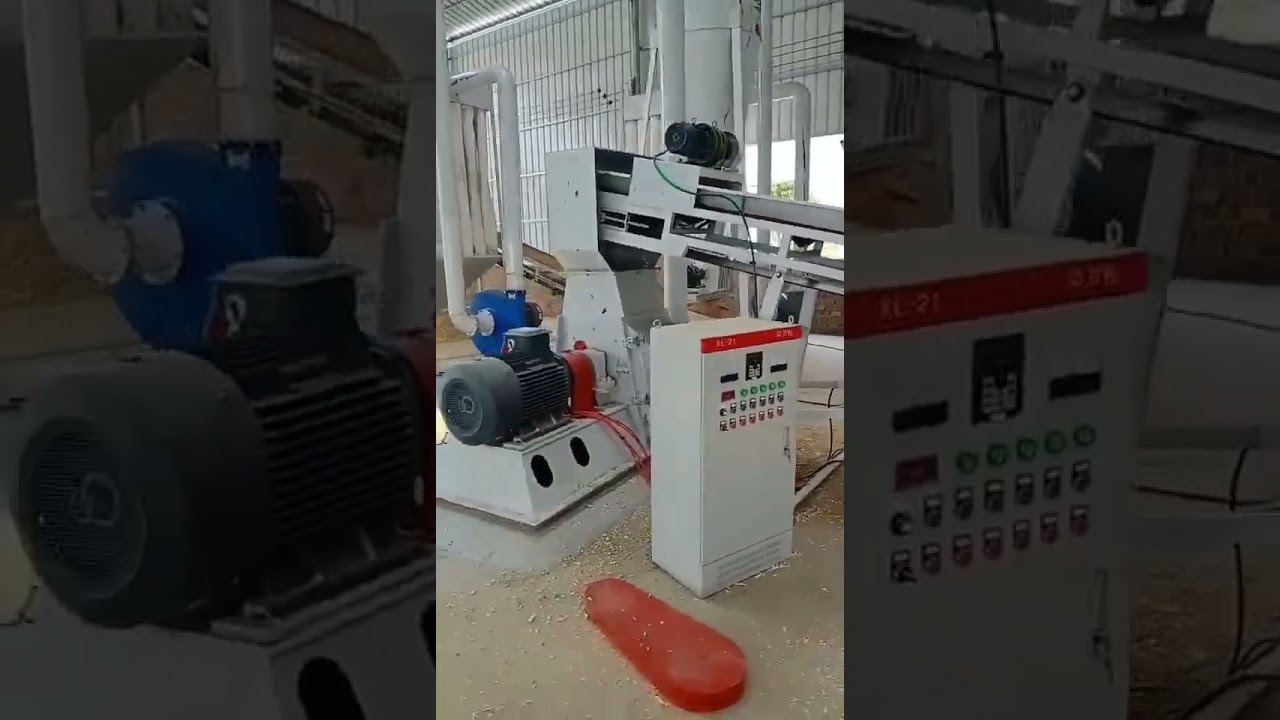
More test runs, shipping records and installation footage on our YouTube channel.
What buyers ask before ordering a diesel hammer mill
What is a diesel hammer mill used for?
Crushing material that is too coarse to pellet: wood chips, branches, straw, stalks, rice husk and corn cob, down to 3–5 mm powder. That powder then goes into a flat die pellet mill, a briquette press or a mixing bin. The diesel version exists for sites where the grid is absent, unreliable, or cannot carry the starting current of a large motor.
How much does a diesel hammer mill cost?
It depends on the frame and the engine — the 15 hp FS-420A and the 55 hp FS-50-60A are not in the same bracket, and the cyclone and ducting are quoted with the machine rather than separately. Send the material, the largest piece that goes in and the kg/h you need, and we quote the set: chamber, engine, screen, blower, cyclone and ducting.
What size material can it take?
Up to about 50 mm. Logs and pallets need a wood crusher or chipper first — a hammer mill is a grinder, not a chipper, and feeding it anything it has to saw is how hammers and screens get broken. Branches, offcuts and chips go straight in.
What powder size can I get?
Anything from 1.8 mm to 10 mm, set by the screen. 3–4 mm is the standard for wood pellets through a Ø6–8 mm die; 1.8–2 mm for compound feed and small briquettes. Two screens ship with the machine and more can be ordered with it.
Does the diesel version use the same frame as the electric one?
Yes. Same chamber, same rotor, same screen, same base-plate pattern, so the cyclone and the discharge height are identical. Only the drive end differs — engine, fuel tank and battery on one, motor, guard and starter box on the other.
Does it come with a cyclone?
Yes. Blower, cyclone and bolted ducting are part of the machine, not an extra. Tell us the discharge height you need — into a bag, a bin or the hopper of the next machine — and the ducting is cut to it.
How much fuel does it use?
Budget on the engine rating rather than a fixed figure: a 15 hp engine under load burns around 2–3 litres an hour, the 55 hp around 8–11, depending on the material and how hard the screen is working. Soft, dry material costs less per tonne than wet or stringy material.
How long is delivery?
7–15 working days after the deposit, depending on the engine and the screen. Payment is TT with 40 % in advance and the balance before delivery; packing is a wooden or steel case, and the two larger frames ship as two cases.
Send the material, not a model number
A photo of the material, the largest piece that goes in, the powder size you need and what the site has for power. Those four answers decide between the 15 hp frame and the 55 hp one — and between an engine and a motor.
- Emailinfo@pelletmachines.net
- WhatsApp+86 186 0385 1787
- HoursMon–Sat, 08:00–20:00 (GMT+8)
Send a photo of the material and a photo of the site and we will tell you which frame fits, which screen to order, and whether an engine is the right answer at all.
What happens after you send this
We answer with the frame, the engine, the screen and a price — then send a test-run video on your material before you pay a deposit.
Your details are not shared. One follow-up, no mailing list.