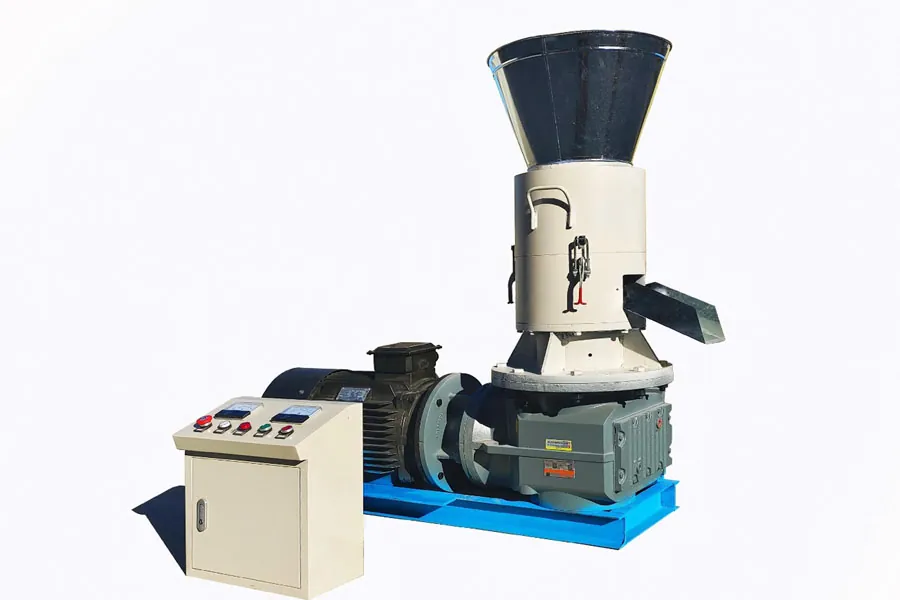
Diesel Flat Die Pellet Mill10 to 55 hp, 50 to 1,200 kg/h — no three-phase supply
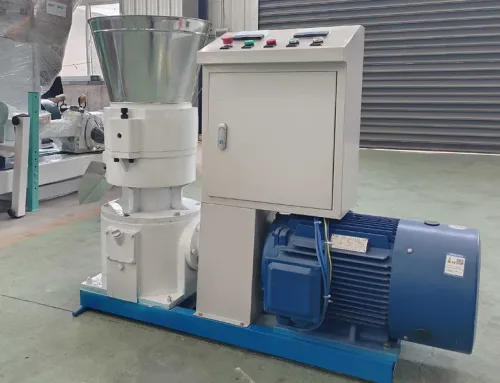
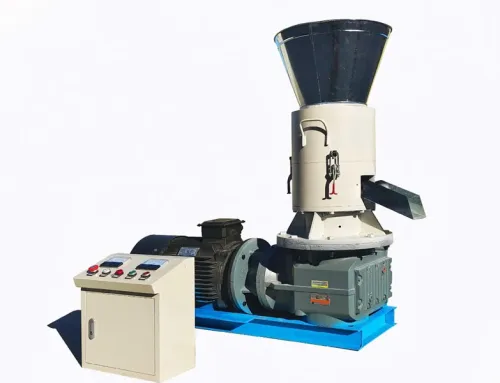
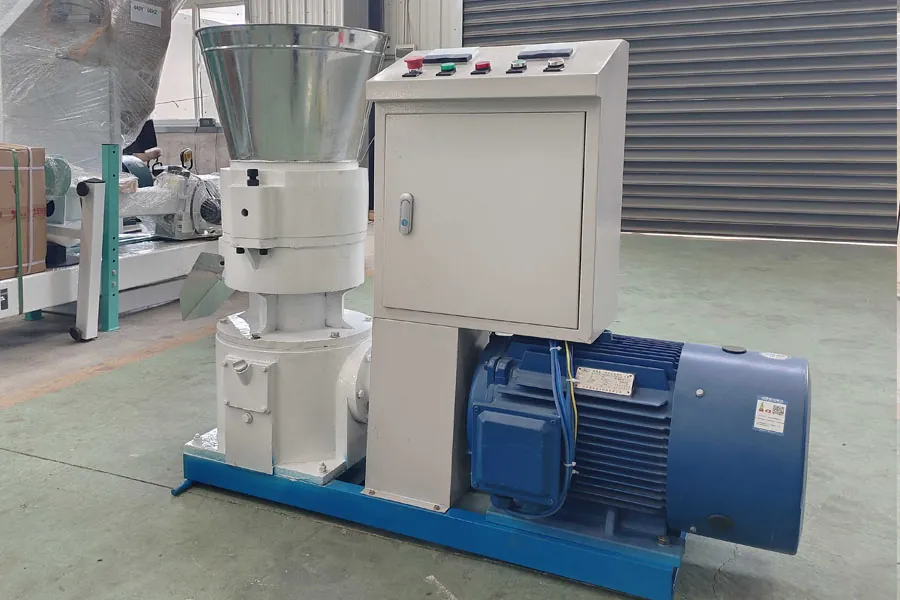
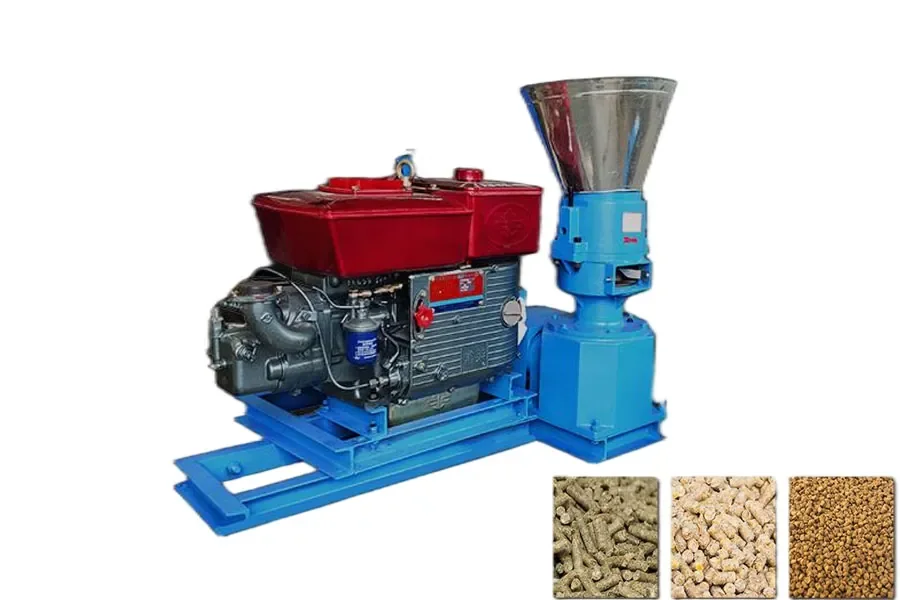
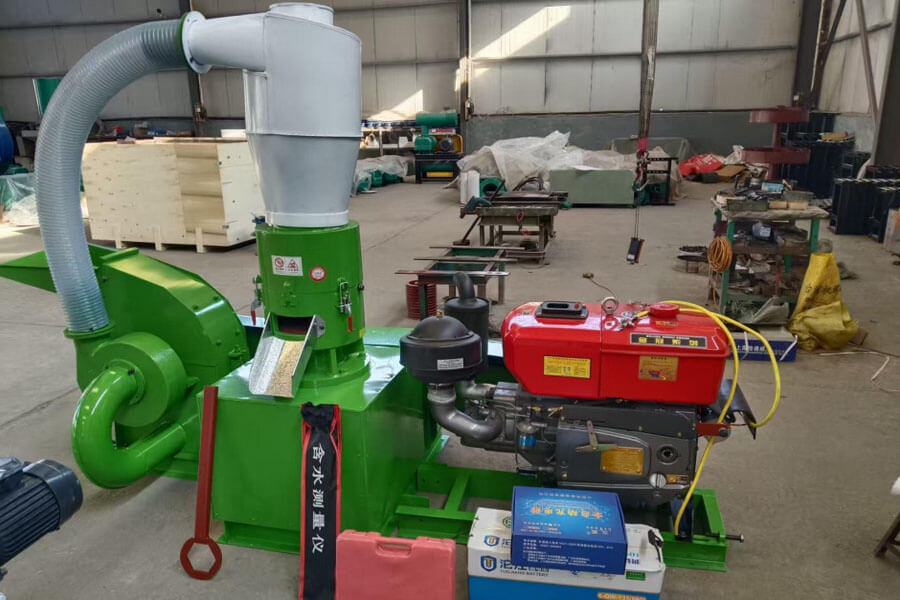
A diesel flat die pellet mill is the electric flat die pellet machine with the motor swapped for an engine on the same skid: belt drive, electric start, fuel tank and battery in one frame. People buy it when the site has no grid, when the grid is unreliable, or when the machine has to travel to the material instead of the material travelling to the machine.
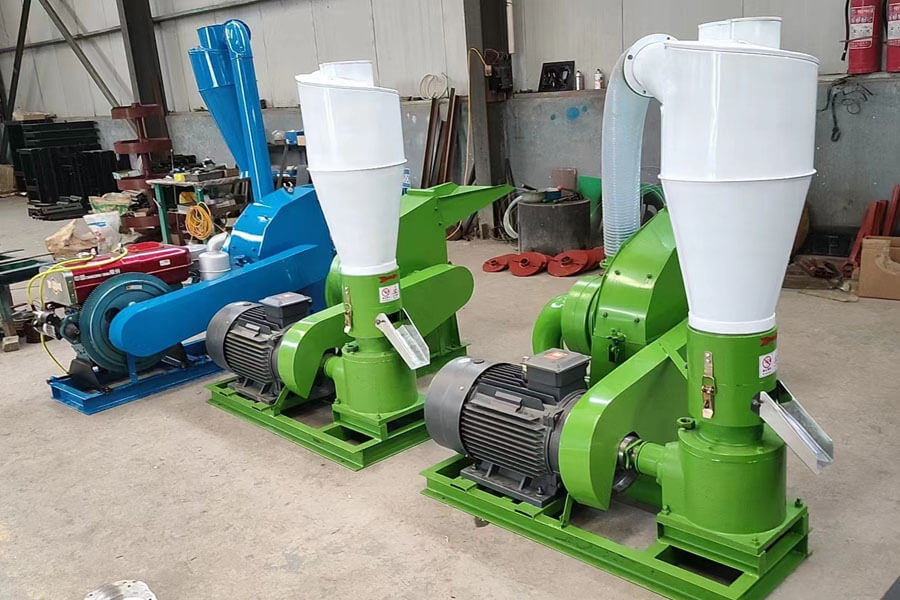
- D150 to D400 — 10 to 55 hp, 50–450 kg/h on wood sawdust, up to 1,200 kg/h on compound feed
- Skid frame with day tank, battery and 12 V electric start; two people and a pickup can move it
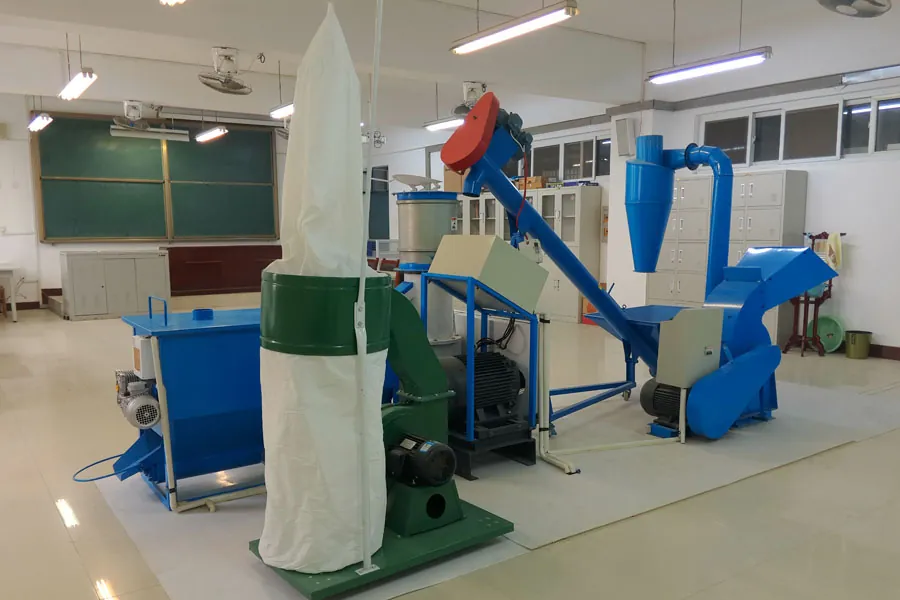
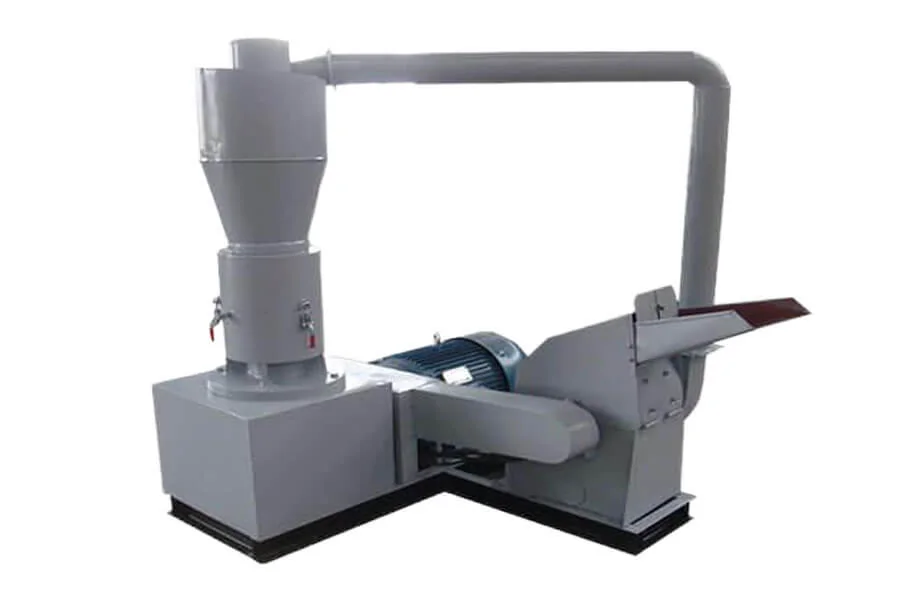
- Combined version — pellet mill and hammer mill on one frame, so chips go in one end and pellets come out the other
Reply in 12 working hours · Die and a spare roller set ship with every mill · Test run on your material before dispatch
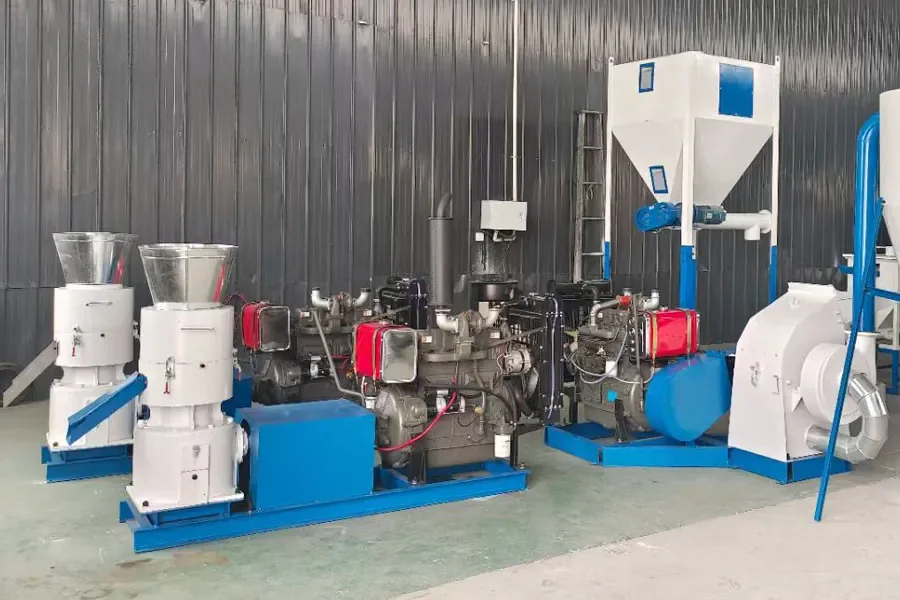
When an engine on the frame beats a cable to the grid
Three situations account for almost every diesel flat die pellet mill we ship. They have nothing to do with the press and everything to do with the site.
If the nearest three-phase connection is 400 metres of cable and a transformer, the engine has paid for itself before the first tonne.
- Engine
- 10 – 55 hp, single cylinder
- Starting
- 12 V electric start
- Drive
- V-belt, 2–3 grooves
- Die
- Ø150 – 360 mm
- Output on wood
- 50 – 450 kg/h
- Fuel tank
- day tank on the frame
No three-phase supply. This is the common case. A farm, a timber yard or a village workshop often has single-phase lighting and nothing else, and the cost of bringing in a transformer and a cable run is quoted in thousands before a single pellet is made. The diesel version needs no electrical work at all — the only wiring on the machine is the 12 V starting circuit.
A grid that stops. Where the supply drops for hours at a time, an electric press stops mid-batch and the die cools with material packed in it. Restarting means cleaning the die by hand. An engine does not care what the grid is doing.
A machine that moves. Contract crushing, a shared machine between two villages, or a press that follows the harvest — a skid unit goes on a pickup and is running again the same day. A three-phase machine needs an electrician at both ends.
What does not change is the working part. The die, the rollers and the compression ratio are the same as on the electric flat die pellet machine, and the pellet quality is identical. Only the first link in the chain is different: a belt from a pulley instead of a coupling from a motor.
Two diesel families: die-driven and roller-driven
Both burn diesel and both make pellets. The difference is which part turns, and that decides which material each one is good at.
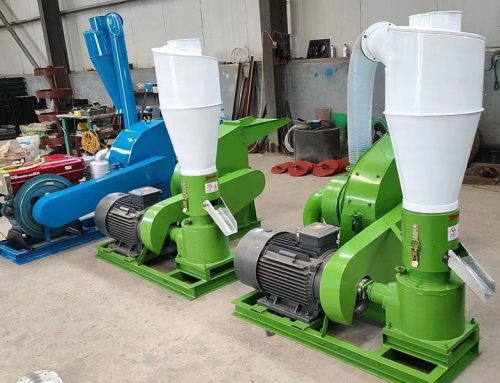
D series — the die turns. The die plate rotates on a vertical shaft and two rollers sit still on top of it, pressing down. Simpler, cheaper per kg/h, and the layout that suits compound feed best: feed is soft, it compacts easily, and the slightly lower pressure is not a limitation. D150 to D400, 10 to 55 hp.
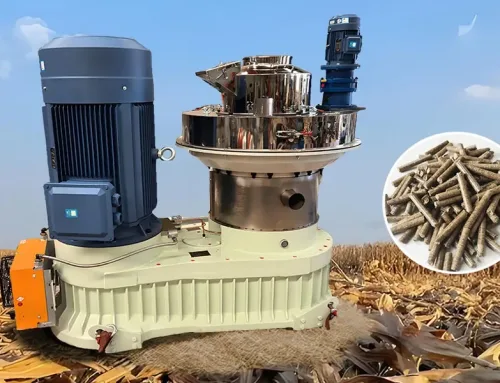
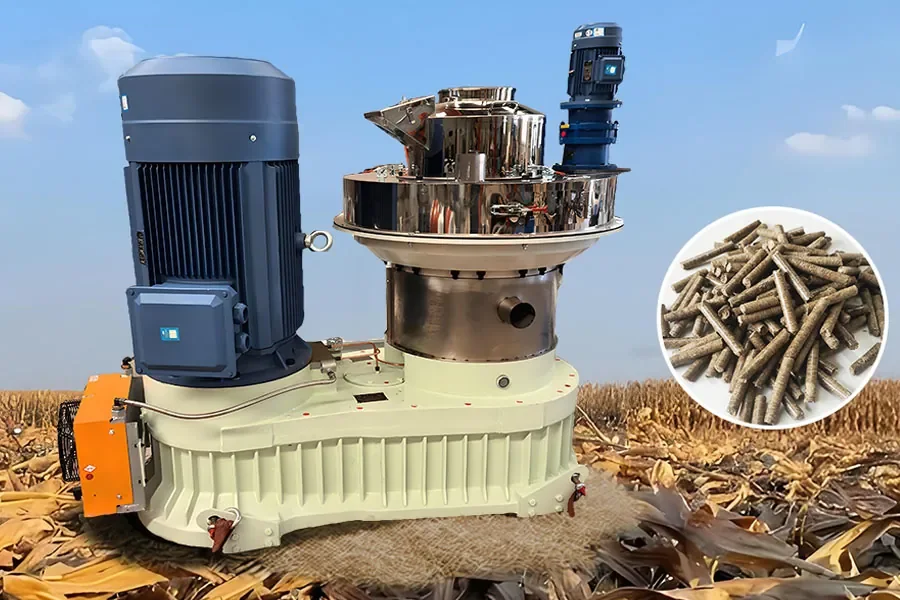
PM-DA series — the rollers turn. The die is fixed and the rollers orbit across it. Because the die cannot flex, the rollers can be loaded harder and the same die diameter makes a denser pellet — which is what wood, straw and husk need. PM-D225A to PM-D580A, 15 to 110 hp.
The practical rule we give buyers: if the material is feed or manure, take the D series and put the saving into a bigger die. If it is sawdust, shavings or rice husk, take the PM-DA — the extra pressure is the difference between a pellet that survives a bag and one that arrives as crumbs.
Both are built on the same skid pattern, both take the same dies within their series, and both can be supplied with a diesel hammer mill on the same frame.
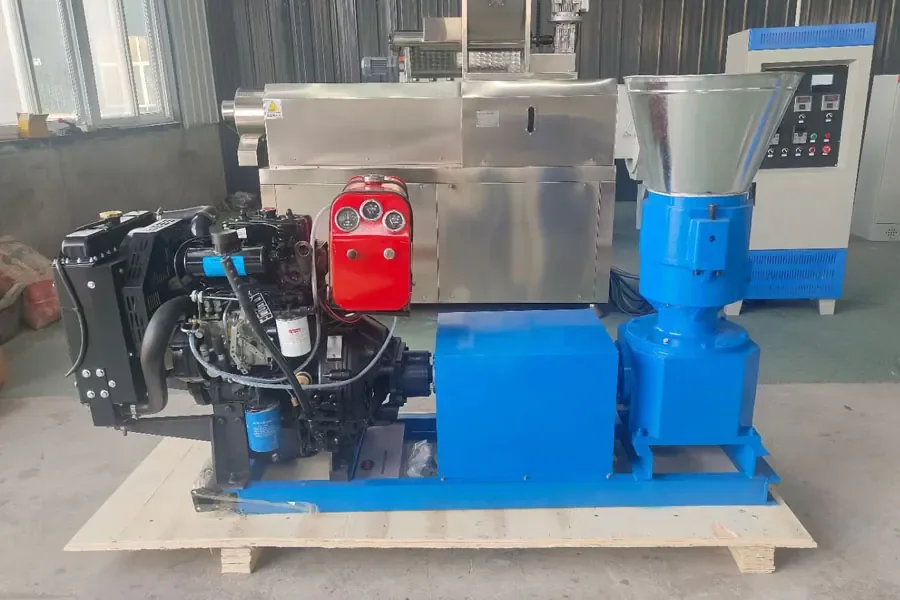
-
D series, die-driven
D150–D400 · 10–55 hp · 50–450 kg/h on wood, up to 1,200 kg/h on feed. The value choice for feed, manure and poultry litter.
-
PM-DA series, roller-driven
PM-D225A–PM-D580A · 15–110 hp · 80–800 kg/h on sawdust. Higher die pressure, denser pellet, the wood and biomass choice.
-
Combined with a hammer mill
Pellet press and CF198 diesel hammer mill on one base — 7.5 hp mill, 510 × 200 mm screen, 2–10 mm sieve. Chips in, pellets out, one engine bay.
-
On wheels
Any D-series unit can be built on a two-wheel trailer frame with a tow bar, for contractors who move between sites.
Six diesel models, two layouts, one frame pattern
Wood figures are quoted on sawdust at 12–20 % moisture through a Ø6–8 mm die. Feed figures are the same engine on compound feed at 12–14 % moisture — feed is lighter and compacts more easily, so the same horsepower moves roughly twice the capacity.
D series, die-driven 10–55 hp
| Model | Engine | Die Ø | Wood sawdust | Compound feed | Weight | Packing |
|---|---|---|---|---|---|---|
| D150 | 10 hp | Ø150 mm | 50–70 kg/h | 80–120 kg/h | 165 / 190 kg | 950 × 600 × 800 mm |
| D200 | 15 hp | Ø200 mm | 100–150 kg/h | 200–300 kg/h | 380 kg | 1240 × 800 × 1000 mm |
| D230 | 22 hp | Ø230 mm | 150–200 kg/h | 300–400 kg/h | 450 kg | 1240 × 850 × 1000 mm |
| D260 | 30 hp | Ø260 mm | 200–300 kg/h | 400–600 kg/h | 520 kg | 2000 × 800 × 1200 mm |
| D300 | 41 hp | Ø300 mm | 300–400 kg/h | 600–800 kg/h | 890 kg | 2300 × 800 × 1350 mm |
| D400 | 55 hp | Ø360 mm | 350–450 kg/h | 800–1,200 kg/h | 1,100 kg | 2300 × 800 × 1380 mm |
PM-DA series, roller-driven 15–110 hp
| Model | Engine | Output on sawdust | Weight |
|---|---|---|---|
| PM-D225A | 15 hp | 80–120 kg/h | 265 kg |
| PM-D250A | 30 hp | 120–200 kg/h | 320 kg |
| PM-D300A | 41 hp | 250–350 kg/h | 570 kg |
| PM-D400A | 55 hp | 350–450 kg/h | 940 kg |
| PM-D450A | 62 hp | 450–600 kg/h | 1,300 kg |
| PM-D580A | 110 hp | 600–800 kg/h | 1,500 kg |
The D400 is also quoted as the 360D: same 55 hp engine and same Ø360 mm die, on a narrower skid (1270 × 580 × 1150 mm packing) for buyers who want the whole unit inside a small room. There is no voltage to match: the drive is mechanical, and the only electrical part on the machine is the 12 V starter.
Output is a range, not a promise: hardwood, wet material, a worn die or a loose belt all pull the figure down. We test the mill on your material and record the actual kg/h before it is crated. Packing dimensions for every model are on the quotation.
Two diesel families, and the site decides between them
A diesel flat die pellet mill is bought on the material, the hours it runs and how far the fuel has to travel. Those three pick the family — rotating die or rotating roller — and then the frame size.
Send the material and the hours it runs
The material, the kg/h and how many hours a day the diesel flat die pellet mill will run are enough for a first answer: the family, the model, the die and the engine. We reply with the model, the die compression ratio and a price.
Reply within one working day. No obligation.
What the engine costs per tonne
Nobody buys a diesel pellet mill without asking what it burns. The answer is arithmetic, not a brochure figure — four inputs, one formula, and you can check it against your own fuel price.
Shaft power
Engine hp × 0.746 = kW at the shaft. A 55 hp engine is 41 kW, not 55.
Load factor
How hard the engine actually works. A correctly sized press runs at 70–85 %; a press that is too big for the job runs at 40 % and burns fuel for nothing.
Specific fuel use
0.22–0.28 litres per kWh at the shaft is the range for small single-cylinder industrial diesels. Take the figure from the engine datasheet that ships with the unit, not from a table.
Divide by output
Litres per hour ÷ tonnes per hour = litres per tonne. That is the only number worth comparing between machines.
Worked example, D400 55 hp, wood sawdust
| Step | Calculation | Result |
|---|---|---|
| Shaft power | 55 hp × 0.746 | 41 kW |
| At 80 % load | 41 kW × 0.80 | 32.8 kW |
| Fuel at 0.25 L/kWh | 32.8 kW × 0.25 | 8.2 L/h |
| Output on sawdust | — | 0.35 t/h |
| Fuel per tonne | 8.2 L/h ÷ 0.35 t/h | ≈ 23 L/t |
Multiply 23 L by your delivered diesel price to get cost per tonne, then compare it with kWh/t × your tariff for the electric version of the same flat die pellet mill. In most countries the electric pellet machine is cheaper per tonne; the diesel pellet machine wins on sites where the connection does not exist or cannot be relied on. Both statements are true at once, which is why we quote both versions.
Two things move this number more than anything else. Load factor: an oversized engine running at half load can burn 40 % more fuel per tonne than the same engine at 80 %. Die condition: a polished or worn die increases friction, and the engine answers by drinking more. Keep the die dressed and the number stays where you calculated it.
Four materials, four settings
The engine does not care what it is pressing. The die and the roller gap do.
Compound feed
Maize, soybean meal, wheat bran. 12–14 % moisture, no binder needed if the starch is conditioned. The same engine does roughly twice the capacity it manages on wood.
Wood sawdust
Pine, spruce, eucalyptus. 12–20 % moisture, particle size under 5 mm, lignin does the binding. Expect the lower half of the output range until the die is warm.
Straw & grass
Rice straw, wheat straw, alfalfa. Abrasive and light; a longer compression die and a slower feed rate, and the engine works harder for the same capacity.
Manure & litter
The D150 is usually sold for poultry litter and sheep manure at 50–70 kg/h. High moisture going in, so dry it to 15–18 % first or the die smears.
Everything on the frame, nothing left to wire
The point of a skid unit is that it arrives complete. This is what is bolted to it.
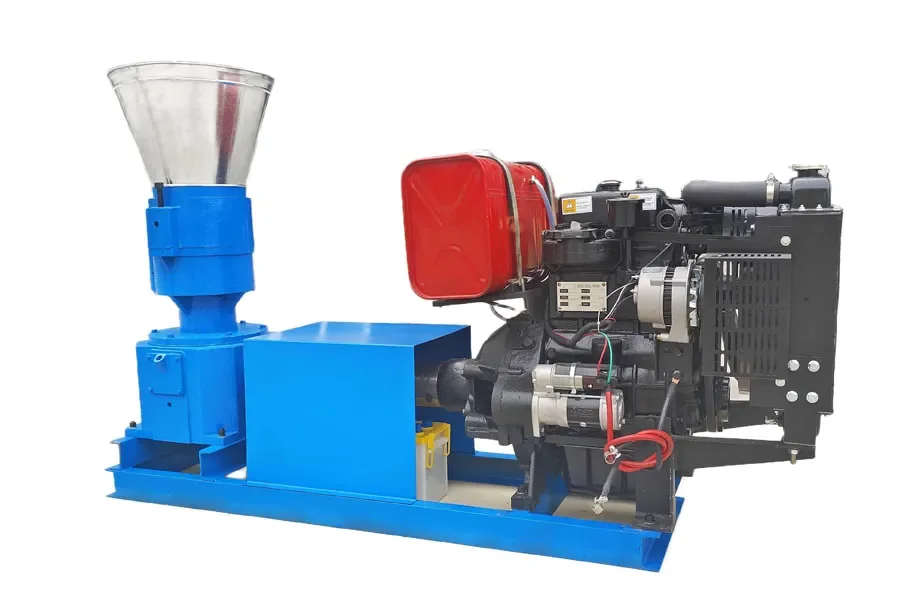
The engine sits on the same base plate as the press, coupled by a guarded V-belt. Next to it are the day tank, the 12 V battery and the starter panel — one key, one lever, and the die is turning. There is no control cabinet to install and no electrician on site.
What you add is the material and the bags. What you check daily is oil, fuel and belt tension; what you check weekly is the roller gap and the die surface. The engine manual that ships in the crate gives the service intervals for that specific engine, and they are shorter than a motor’s — which is the honest trade for not needing a supply.
-
Engine and starting
Single-cylinder diesel, 10–55 hp, 12 V electric start with a recoil handle as backup. Air filter and exhaust supplied with the unit.
-
Day tank
Mounted on the frame above the engine. Size it to the shift: at 8 L/h a 55 hp unit needs roughly 80 L for a ten-hour day.
-
Die and rollers
One die fitted to your material, one spare roller set in the crate, adjusting wrench and feeler gauge for the roller gap.
-
Belt guard and pulleys
Two or three V-belts on a guarded drive. Belt tension is the first thing to check when output drops.
-
Tool box
Die extractor, roller nut spanner, grease gun. Everything needed to change a die in the field.
-
Optional trailer
Two-wheel frame with a tow bar and lights, for contractors who move the machine between yards.
One engine drives the crusher and the press
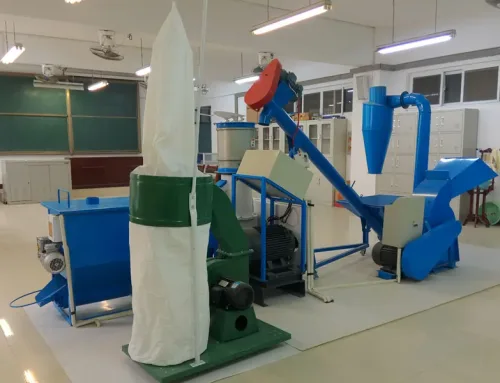
A diesel combined pellet mill puts a wood hammer mill and a flat die pellet mill on one frame, under one engine. Chips go in at one end, pellets come out at the other, and there is no second engine to buy, fuel, service or find room for.
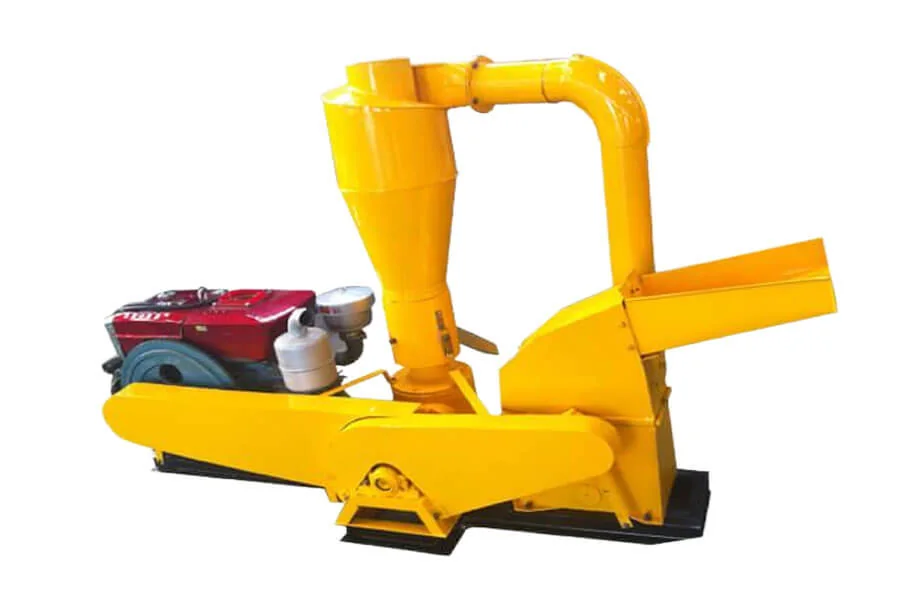
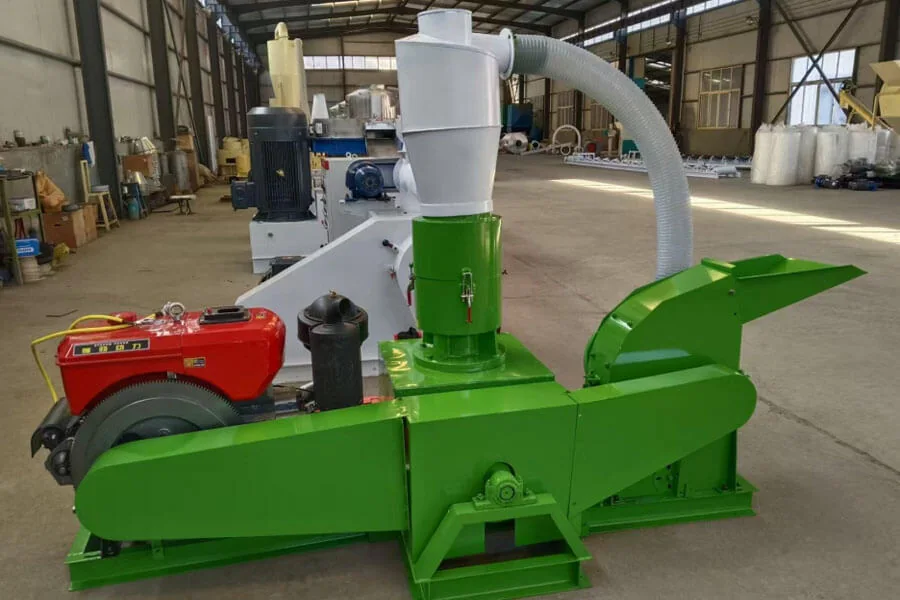
This is the machine most small buyers actually want. A flat die pellet mill on its own needs material that is already the right size, so the hammer mill ends up standing next to it — a second engine, a second fuel can, a second operator and twice the floor space. The combined unit bolts both to one base plate and drives them from one engine.
The crusher sits at one end with its own cyclone, the press at the other under the hopper, and belts from the engine pulley run both. The cyclone discharges straight into the press hopper, so the material is never bagged and shovelled twice. Change the screen and the same mill takes wood chips, straw, husks or stalks; change the die and the same press makes 6 mm or 8 mm pellets.
The trade-off is that crusher and press share one engine, so the crusher runs when the press runs. That suits a farm or a workshop that works a shift at a time, and it is why the combined unit is built from 100 to 350 kg/h and not larger. Above that the two machines want separate drives — which is where a pellet production line starts.
Combined pellet mill and hammer mill diesel and electric
| Model | Drive | Capacity, wood pellets | Size L×W×H | Weight |
|---|---|---|---|---|
| PH200 Diesel | 22 hp diesel | 100–150 kg/h | 2650 × 1850 × 1900 mm | 450 kg |
| PH250 Diesel | 30 hp diesel | 200–250 kg/h | 1450 × 650 × 1900 mm | 750 kg |
| PH300 Diesel | 40 hp diesel | 250–350 kg/h | 1750 × 950 × 2200 mm | 960 kg |
| PH200 Electric | 15 kW | 100–150 kg/h | 1600 × 1450 × 1800 mm | 380 kg |
| PH250 Electric | 22 kW | 200–250 kg/h | 1750 × 1600 × 1900 mm | 550 kg |
| PH300 Electric | 30 kW | 250–350 kg/h | 1800 × 1650 × 1900 mm | 700 kg |
Capacity is quoted on wood pellets from dry sawdust; compound feed runs higher on the same frame. The diesel PH250 and PH300 are crated as two sections, so the quotation lists a size for each. The engine, the die size and the screen decide the price — send us the material and we will quote the set.
Wood Crusher
Hammer mill with a cyclone, 510 × 200 mm screen and a 2–10 mm sieve. Takes chips and stalks down to the particle size the die needs.
Feeder
The cyclone drops straight into the press hopper. On the smaller frames a slide gate sets the feed rate by hand.
Pellet Press
Rollers force the material through the die; friction takes it to 70–90 °C and the lignin or the starch binds it.
Pellet Cooler
Pellets leave at 70–80 °C. Spread them on a floor or run them through a counter-flow pellet cooler before bagging.
Pellet Bagger
15–50 kg bags by weight. A bagging scale is the one accessory most buyers add after the first month.
Diesel or electric? Where there is power, the electric combined unit is the better buy: the same frame and the same output on 15–30 kW instead of 22–40 hp, a quieter machine, and a running cost per tonne that no engine can match. The diesel version wins on the sites this page is about — no three-phase supply, a grid that stops, or a machine that has to travel. We build both and will say which one fits your site.
Above 500 kg/h the combined frame stops making sense: the crusher and the press want separate drives, the line grows a conveyor and a pellet cooler, and the engine is replaced by a grid connection. That is where a vertical ring die pellet mill takes over — one 90–160 kW motor, 1–2.5 t/h, and a running cost per tonne a 55 hp engine cannot reach.
Where this diesel flat die pellet mill sits in the range
The diesel flat die pellet mill is one branch of the flat die family. Everything on this page is also built as an electric flat die pellet machine, and the dies are the same.
Tell us the material and the output
Material, moisture, pellet size and the kg/h you need — plus whether the site has any power at all. We reply with the model, the engine and a price.
Reply within one working day. No obligation.
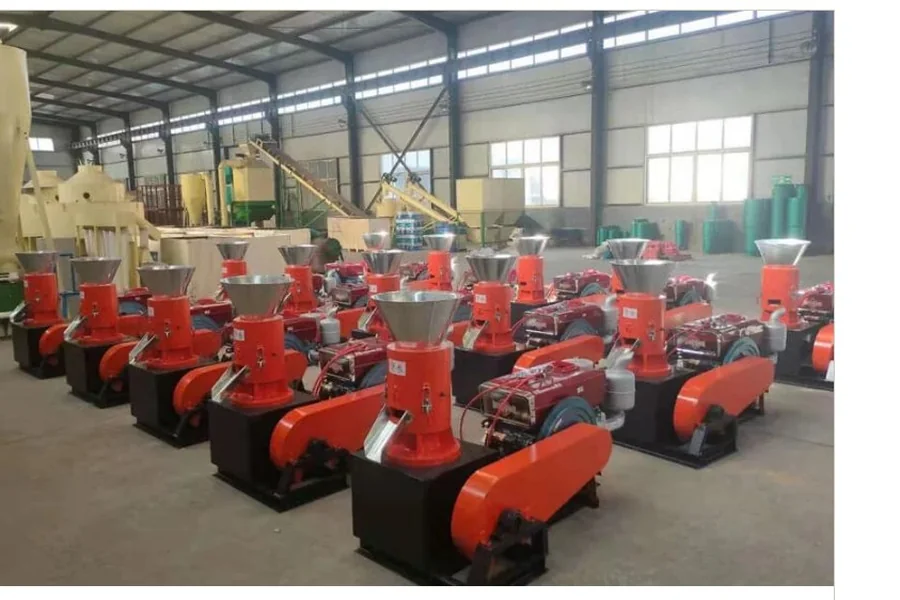
Diesel flat die pellet mills running
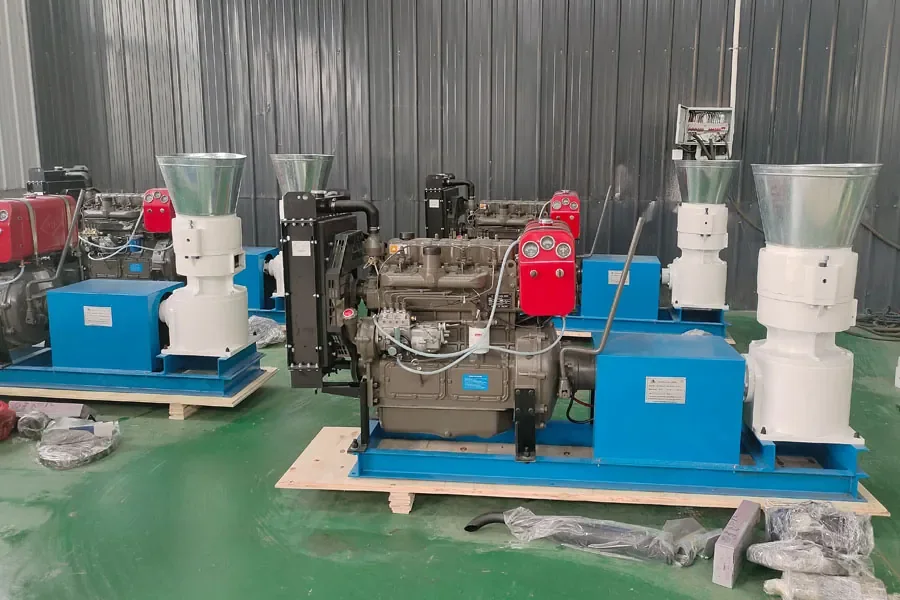
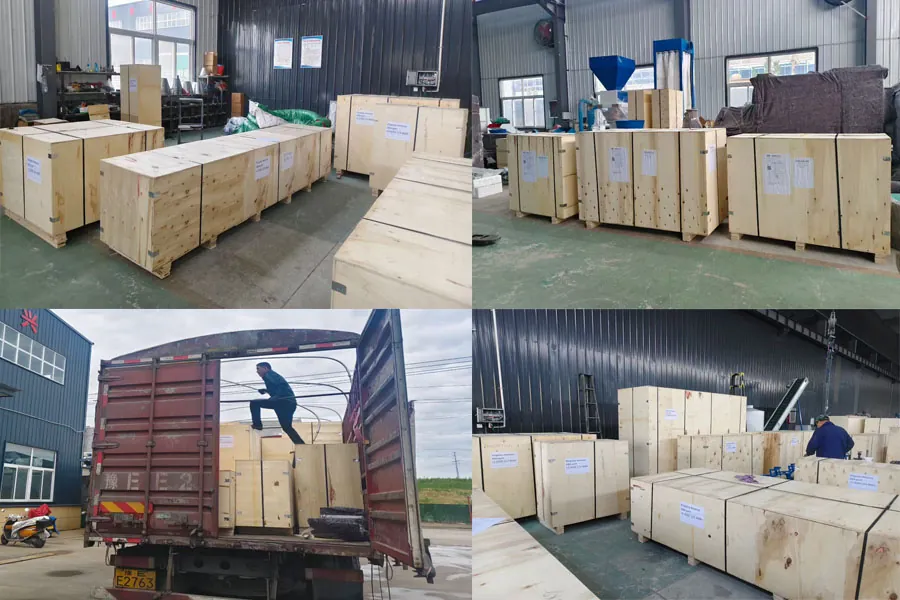
A test run on sawdust, the diesel unit under load, the combined pellet mill and hammer mill on one engine, and the machines that were ready to leave the workshop that week. The diesel version uses the same die, rollers and chamber as the electric flat die pellet machine; only the first link in the drive changes.
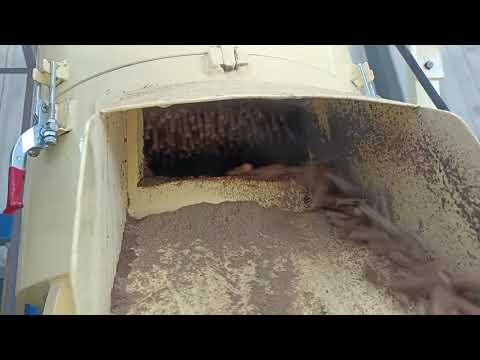


More test runs, shipping records and installation footage on our YouTube channel.
Run on your material, then crated
Every diesel unit is started, run for at least 30 minutes on the material it was ordered for, and photographed with the hour meter reading before it goes into the crate.
What buyers ask before ordering a diesel flat die pellet mill
Can a diesel pellet mill run all day?
Yes, at 70–85 % load with fuel and oil checked between shifts. The limit is the tank, not the engine: a 55 hp unit burns about 8 litres an hour, so a ten-hour day needs roughly 80 litres. Most buyers fit a larger day tank or refuel at lunch.
Is diesel cheaper than an electric motor on a generator?
Almost never. A generator converts fuel to electricity and then the motor converts it back to rotation — two losses instead of one. If a generator is the only way to get three-phase power, put the engine directly on the press and remove the generator and the motor from the chain.
What is the difference between the D series and the PM-DA series?
Which part turns. In the D series the die rotates and the rollers sit still — cheaper, and the right choice for feed and manure. In the PM-DA series the die is fixed and the rollers orbit, which allows higher pressure and a denser pellet for wood and husk.
How much maintenance does the engine need?
More than a motor and less than most people fear. Oil and oil filter at the interval in the engine manual — typically 100–200 hours for this class of single-cylinder diesel — plus air filter cleaning weekly in dusty conditions and belt tension every few days. The manual that ships in the crate is the authority for your specific engine.
Can I use the same die as the electric flat die pellet machine?
Yes within a series. A D300 diesel and a D300 electric take the same die plate and the same rollers, so a buyer who later adds an electric flat die pellet machine keeps one spare die inventory.
Will it start in cold weather?
Down to about 0 °C with the standard setup; below that use the decompression lever and a preheat, or specify a glow-plug head. Diesel gels in hard frost, so winter-grade fuel matters more than the starting system.
Can it be mounted on a trailer?
Yes. Any D-series unit can be built on a two-wheel frame with a tow bar, which is what contract crushers and shared-village machines usually order.
Tell us the site, not just the machine
Material, moisture, kg/h — and whether there is any power on site at all. Those four answers decide between a diesel D series, a diesel PM-DA and an electric flat die pellet machine with a generator, and they are the difference between a mill that runs and one that sits.
- Emailinfo@pelletmachines.net
- WhatsApp+86 186 0385 1787
- HoursMon–Sat, 08:00–20:00 (GMT+8)
Send a photo of the material and a photo of the site and we will tell you which of the two layouts fits before you order anything.
What happens after you send this
We answer with the model, the engine, the die ratio and a price — then send a test-run video on your material before you pay a deposit.
Your details are not shared. One follow-up, no mailing list.